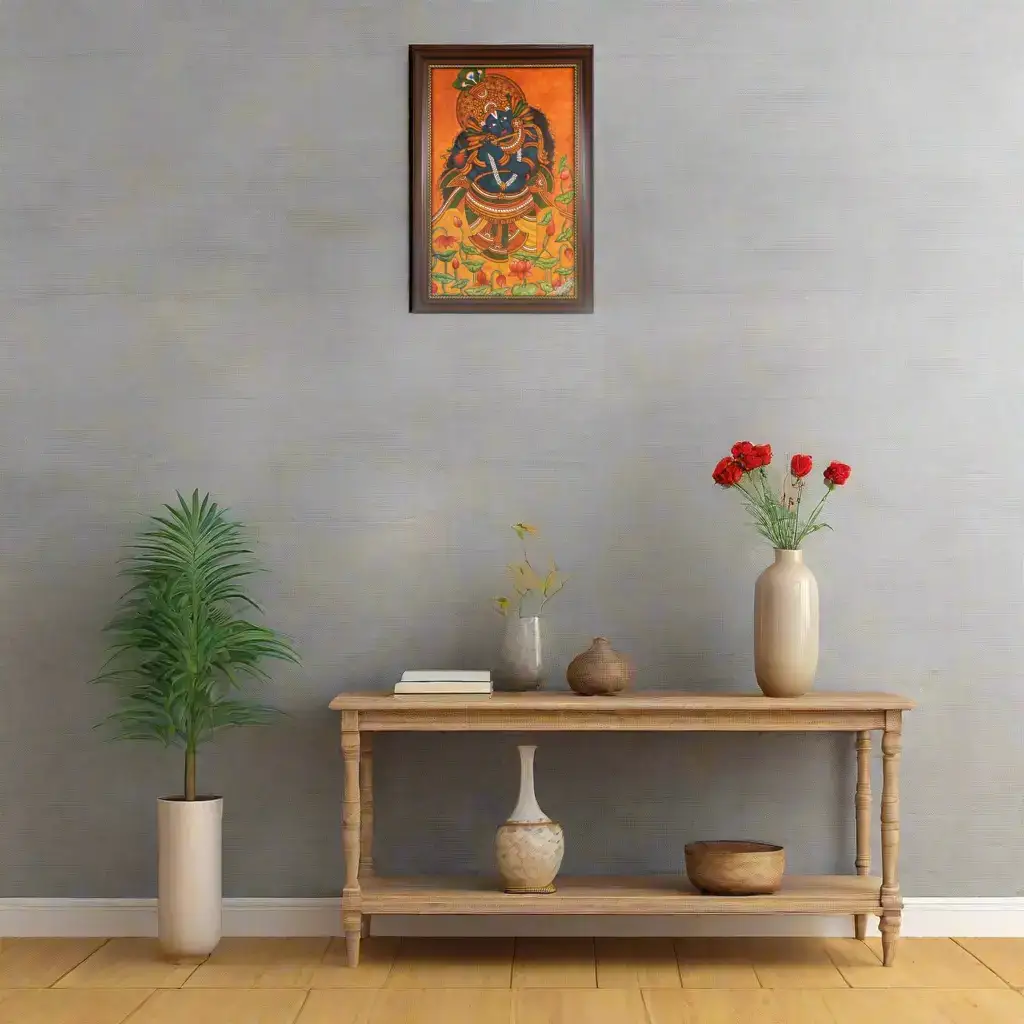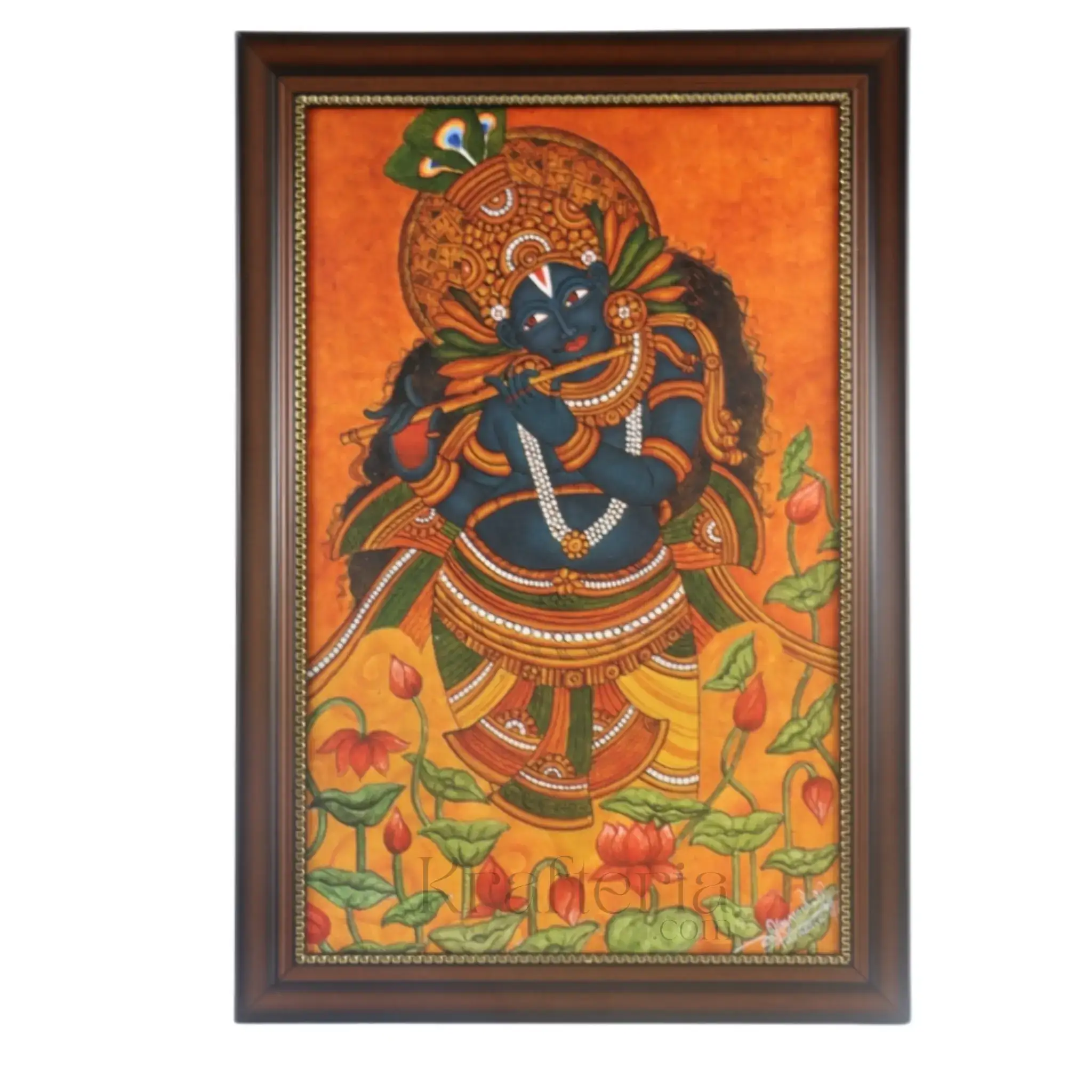
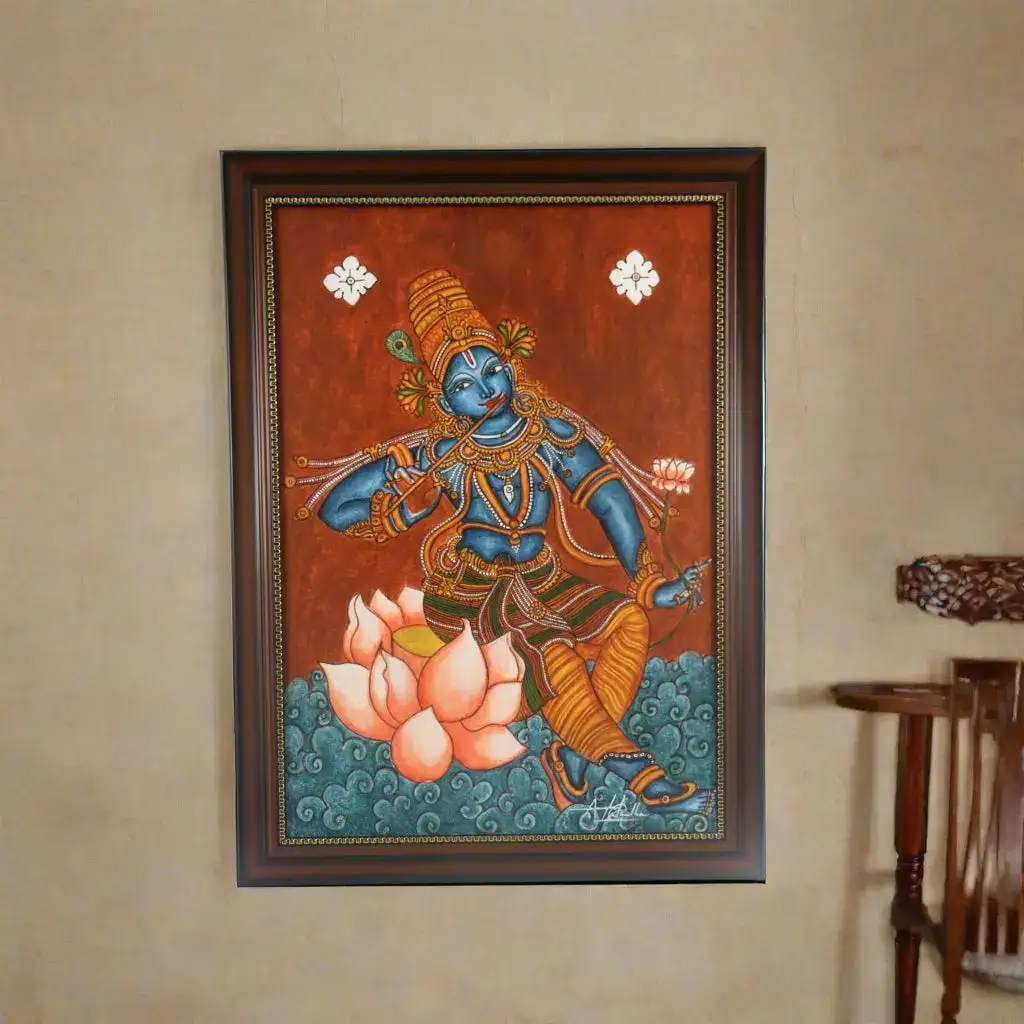
Padma Krishna – The Lotus-Seated Divine in Mural Form
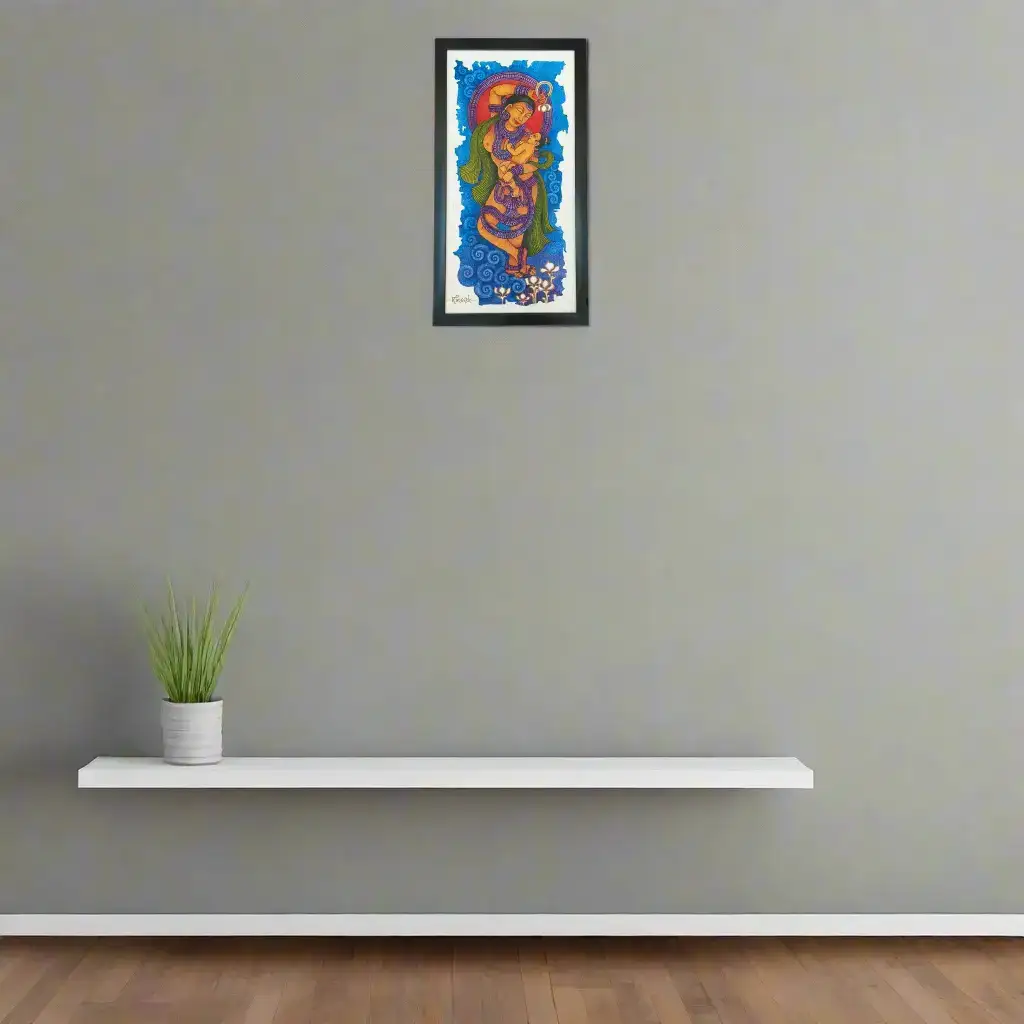
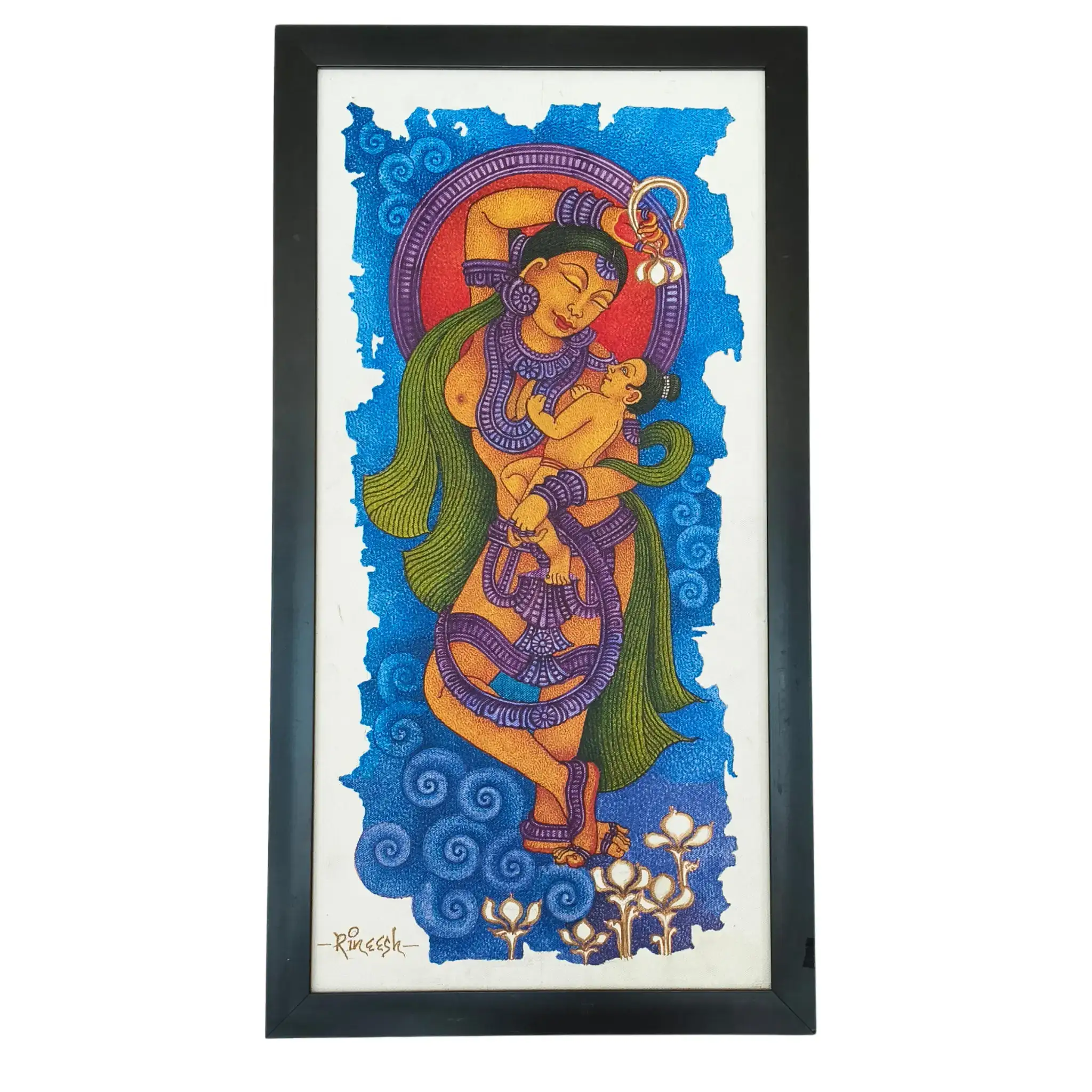
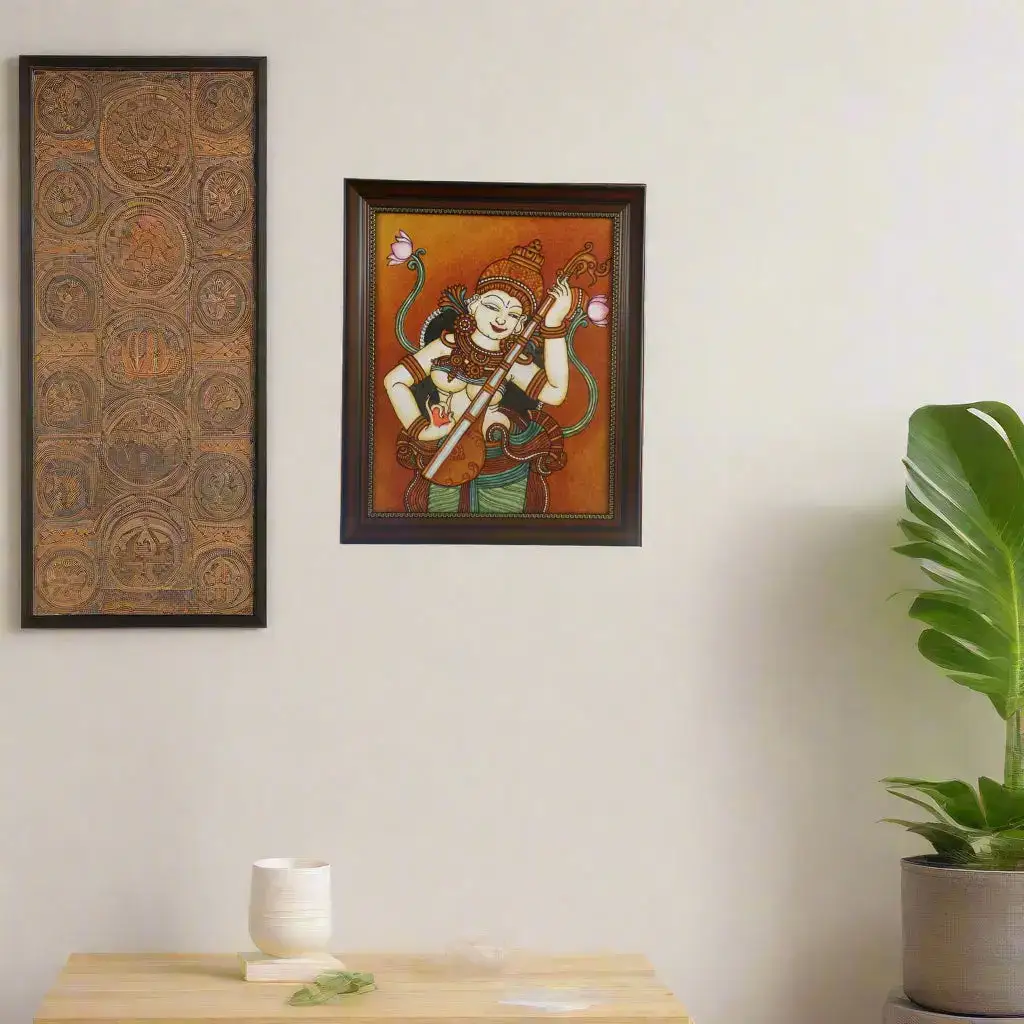
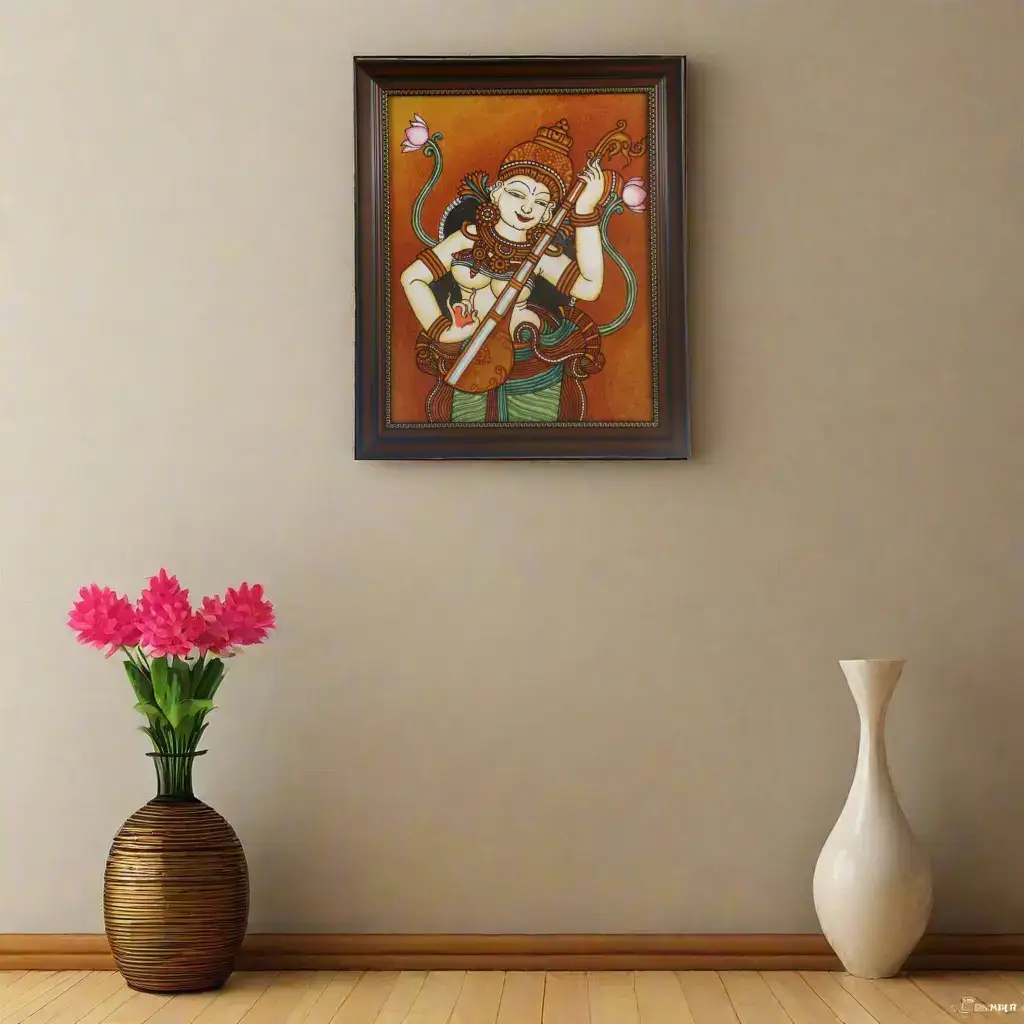
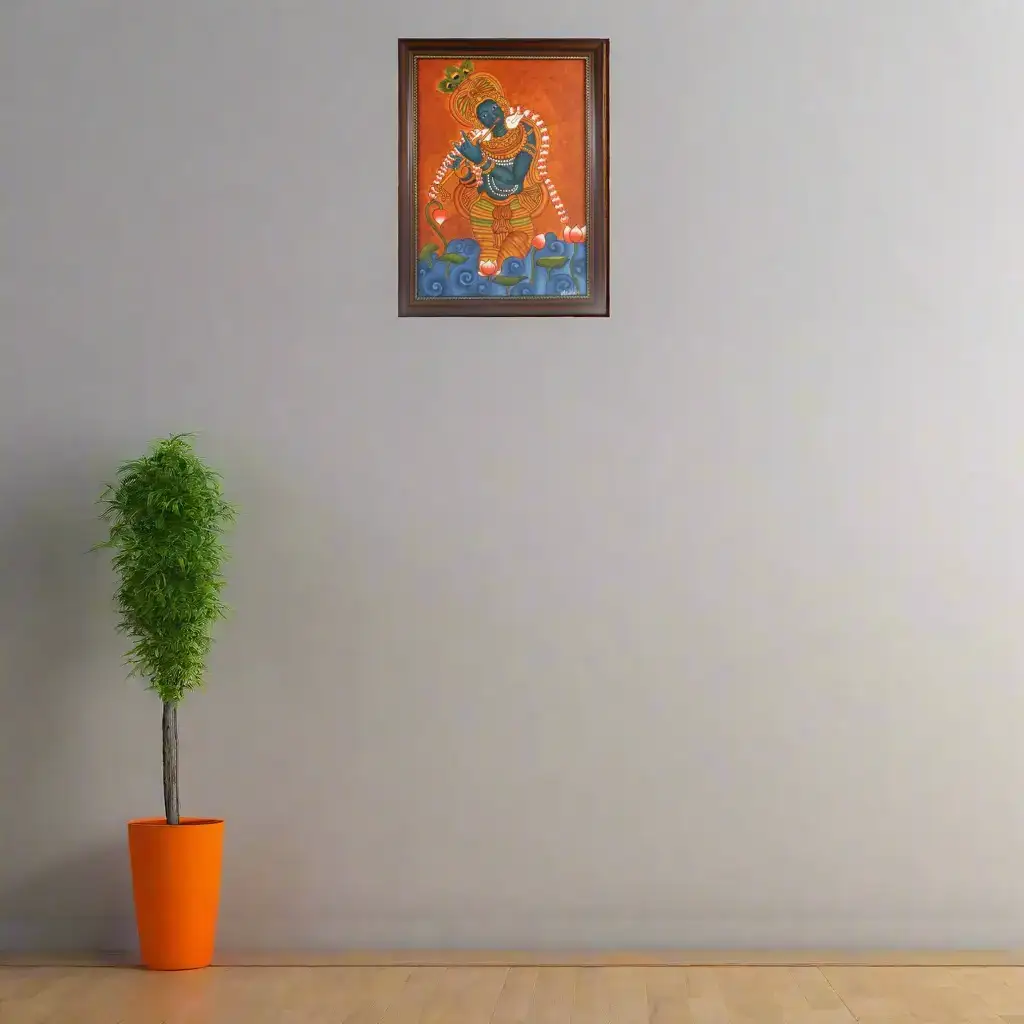
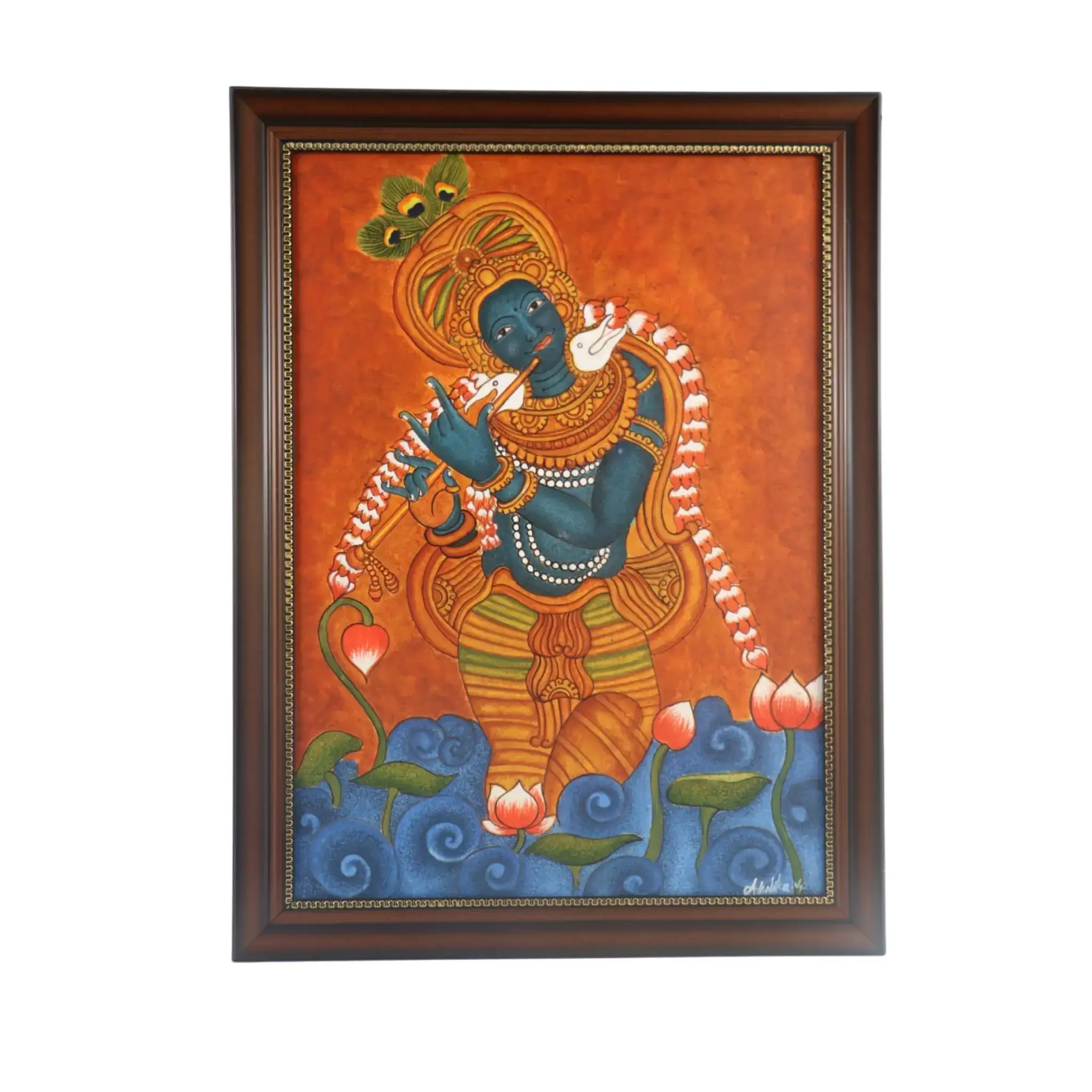
Padma Krishna Mural Painting on Lotus Kerala Mural Painting
20" H * 15" W
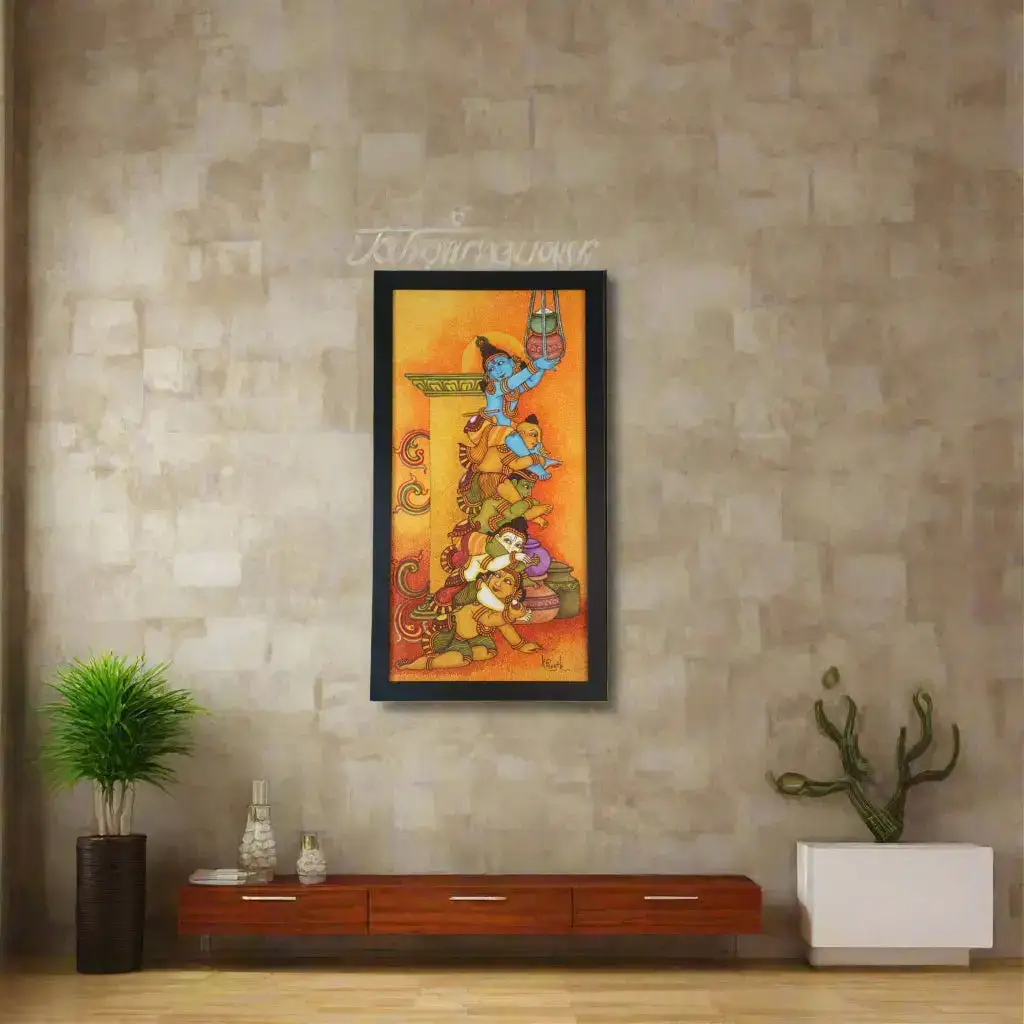
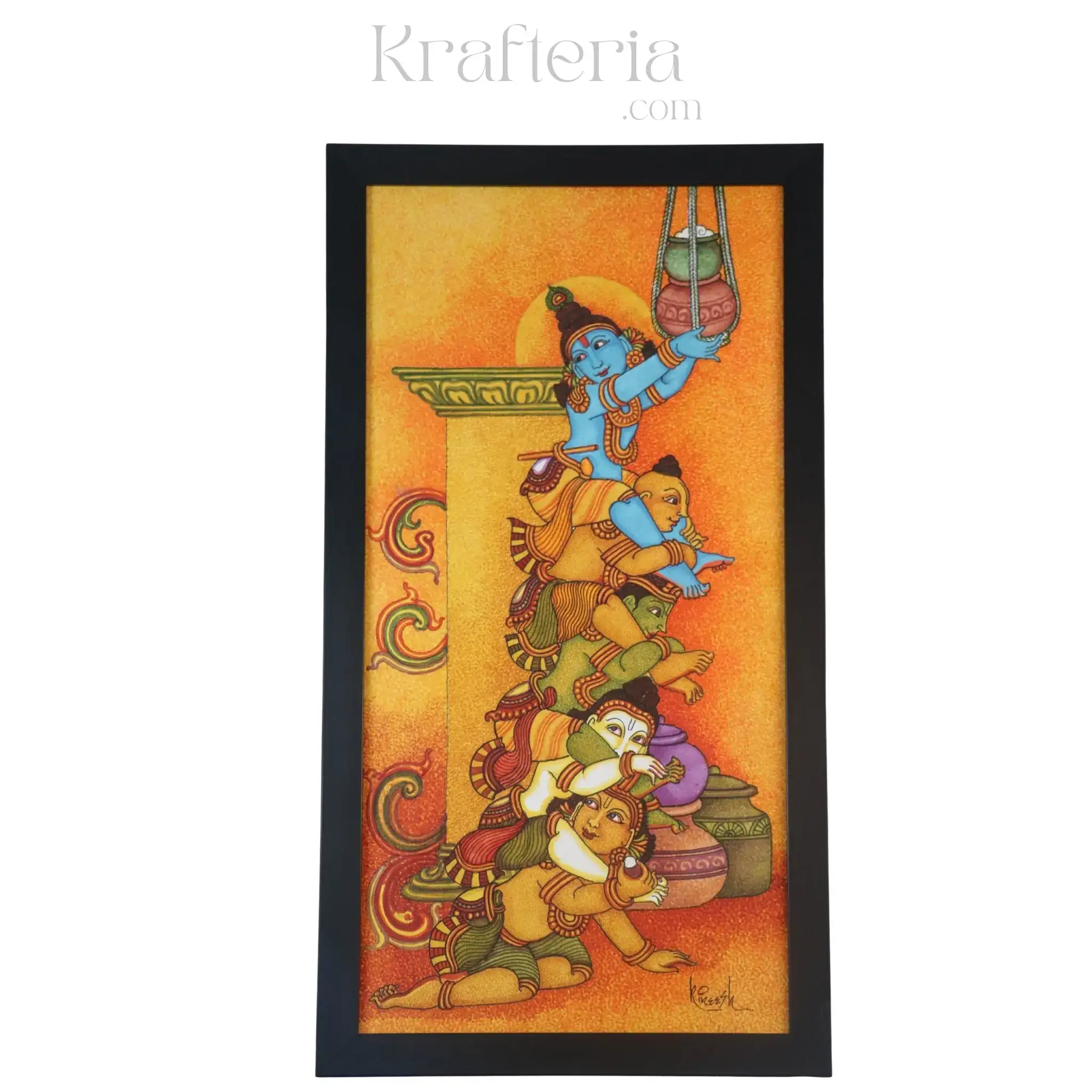
Kerala mural paintings have a rich and ancient history dating back to the 9th to 12th centuries CE. These murals flourished predominantly in the Kerala state and are deeply rooted in Hindu temple art traditions. This art form is known for its mythological themes, earthy colour palettes, and intricate detailing. The Padma Krishna Mural Painting stands as a renowned example of this vibrant artistic heritage and cultural expression.
Padma Krishna Mural Painting: Key Characteristics
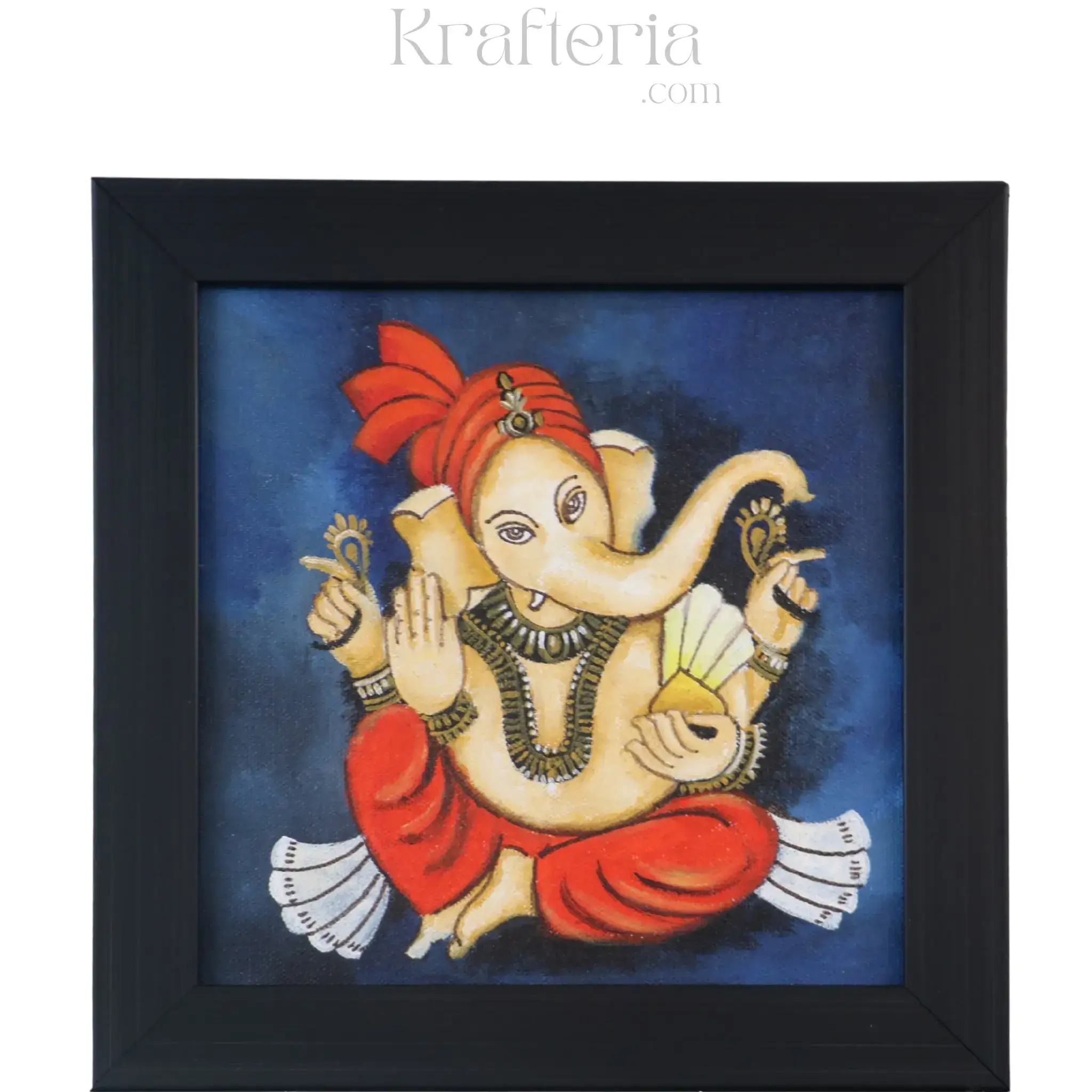
The Padma Krishna Mural Painting is a masterpiece in Traditional Kerala Mural Wall Art. It beautifully represents the sacred legacy of Indian artistry and cultural expression. The artwork is painted on lime-plastered walls using natural pigments and vegetable dyes. This Handcrafted Kerala Mural Krishna piece is appreciated for its organic material usage, which enhances both longevity and brilliance.
The lime plaster surface texture helps retain colours vividly for centuries. This preservation keeps the divine aura of the work alive across generations. The Padma Krishna Kerala mural art stands as a timeless treasure linking the past with the present. Its presence emphasizes the artistic sophistication of Kerala’s cultural traditions.
Technique and Style of Traditional Kerala Mural Wall Art
Artists use the fresco secco technique to create the Krishna Mural Painting. This method involves painting on dry plaster, which differs from the wet plaster technique used in Italian fresco art. The fresco secco technique allows for intricate brush strokes and highly detailed designs, giving the artwork its unique character.
The Kerala mural art is admired for its delicate finishing, meticulous strokes, and precise detailing. These features give the painting a majestic and refined look, reflecting the divine subject it represents. Padma Krishna is portrayed with spiritual elegance and serene beauty, making this piece special among collectors.
Color Palette in Padma Krishna Kerala Mural Art
Colour plays an essential role in the Mural Painting. There are five dominant colours derived entirely from natural sources. Each colour holds symbolic meaning and helps enhance the painting’s spiritual and aesthetic qualities.
- Red – made from laterite soil, symbolizing strength and energy
- Yellow – derived from yellow clay or turmeric, representing brightness and auspiciousness
- Green – obtained from plant sources, signifying fertility and life
- Black – produced using burnt coconut shells, used for outlining and adding depth
- White – pure lime, symbolizing purity and peace
These natural pigments blend harmoniously to create the warm, earthy feel that marks the Lotus-Seated Krishna Mural Art. The colours accentuate the divine presence of Lord Krishna seated gracefully on the lotus, adding to the artwork’s spiritual depth.
Themes in Krishna Painting
The central themes of Kerala murals often depict gods, goddesses, celestial beings, and animals from Hindu mythology. Figures are shown in idealized divine forms with elaborate costumes and stylized gestures. The Padma Krishna Kerala mural art is especially notable for featuring Krishna seated serenely on a lotus.
This lotus-seated Krishna motif symbolizes spiritual purity and tranquility. It conveys divinity, serenity, and a cosmic connection, resonating deeply with viewers. This beautiful Handcrafted Kerala Mural Krishna painting inspires spiritual bliss and reflects cultural richness unique to Kerala’s heritage.
The handcrafted technique and strong traditional fidelity link this artwork to Kerala’s cultural identity. Skilled artists continue this age-old practice with expertise, preserving a significant cultural heritage. The Mural Painting, therefore, carries immense cultural value and authenticity that appeals to art lovers and devotees alike.
This artwork bridges history, technique, and thematic storytelling into an impactful visual masterpiece. Its lotus symbolism and divine representation remain timeless, making it captivating and meaningful for spiritual spaces and home decoration. The Krishna Painting stands as a symbol of artistic legacy in Traditional Kerala Mural Wall Art.
Product Information
Product Information
Shipping & Returns
Shipping & Returns
Description
Padma Krishna Mural Painting on Lotus Kerala Mural Painting
20" H * 15" W
Kerala mural paintings have a rich and ancient history dating back to the 9th to 12th centuries CE. These murals flourished predominantly in the Kerala state and are deeply rooted in Hindu temple art traditions. This art form is known for its mythological themes, earthy colour palettes, and intricate detailing. The Padma Krishna Mural Painting stands as a renowned example of this vibrant artistic heritage and cultural expression.
Padma Krishna Mural Painting: Key Characteristics
The Padma Krishna Mural Painting is a masterpiece in Traditional Kerala Mural Wall Art. It beautifully represents the sacred legacy of Indian artistry and cultural expression. The artwork is painted on lime-plastered walls using natural pigments and vegetable dyes. This Handcrafted Kerala Mural Krishna piece is appreciated for its organic material usage, which enhances both longevity and brilliance.
The lime plaster surface texture helps retain colours vividly for centuries. This preservation keeps the divine aura of the work alive across generations. The Padma Krishna Kerala mural art stands as a timeless treasure linking the past with the present. Its presence emphasizes the artistic sophistication of Kerala’s cultural traditions.
Technique and Style of Traditional Kerala Mural Wall Art
Artists use the fresco secco technique to create the Krishna Mural Painting. This method involves painting on dry plaster, which differs from the wet plaster technique used in Italian fresco art. The fresco secco technique allows for intricate brush strokes and highly detailed designs, giving the artwork its unique character.
The Kerala mural art is admired for its delicate finishing, meticulous strokes, and precise detailing. These features give the painting a majestic and refined look, reflecting the divine subject it represents. Padma Krishna is portrayed with spiritual elegance and serene beauty, making this piece special among collectors.
Color Palette in Padma Krishna Kerala Mural Art
Colour plays an essential role in the Mural Painting. There are five dominant colours derived entirely from natural sources. Each colour holds symbolic meaning and helps enhance the painting’s spiritual and aesthetic qualities.
- Red – made from laterite soil, symbolizing strength and energy
- Yellow – derived from yellow clay or turmeric, representing brightness and auspiciousness
- Green – obtained from plant sources, signifying fertility and life
- Black – produced using burnt coconut shells, used for outlining and adding depth
- White – pure lime, symbolizing purity and peace
These natural pigments blend harmoniously to create the warm, earthy feel that marks the Lotus-Seated Krishna Mural Art. The colours accentuate the divine presence of Lord Krishna seated gracefully on the lotus, adding to the artwork’s spiritual depth.
Themes in Krishna Painting
The central themes of Kerala murals often depict gods, goddesses, celestial beings, and animals from Hindu mythology. Figures are shown in idealized divine forms with elaborate costumes and stylized gestures. The Padma Krishna Kerala mural art is especially notable for featuring Krishna seated serenely on a lotus.
This lotus-seated Krishna motif symbolizes spiritual purity and tranquility. It conveys divinity, serenity, and a cosmic connection, resonating deeply with viewers. This beautiful Handcrafted Kerala Mural Krishna painting inspires spiritual bliss and reflects cultural richness unique to Kerala’s heritage.
The handcrafted technique and strong traditional fidelity link this artwork to Kerala’s cultural identity. Skilled artists continue this age-old practice with expertise, preserving a significant cultural heritage. The Mural Painting, therefore, carries immense cultural value and authenticity that appeals to art lovers and devotees alike.
This artwork bridges history, technique, and thematic storytelling into an impactful visual masterpiece. Its lotus symbolism and divine representation remain timeless, making it captivating and meaningful for spiritual spaces and home decoration. The Krishna Painting stands as a symbol of artistic legacy in Traditional Kerala Mural Wall Art.