Yashoda Krishna – Kerala Mural Painting of Divine Bond
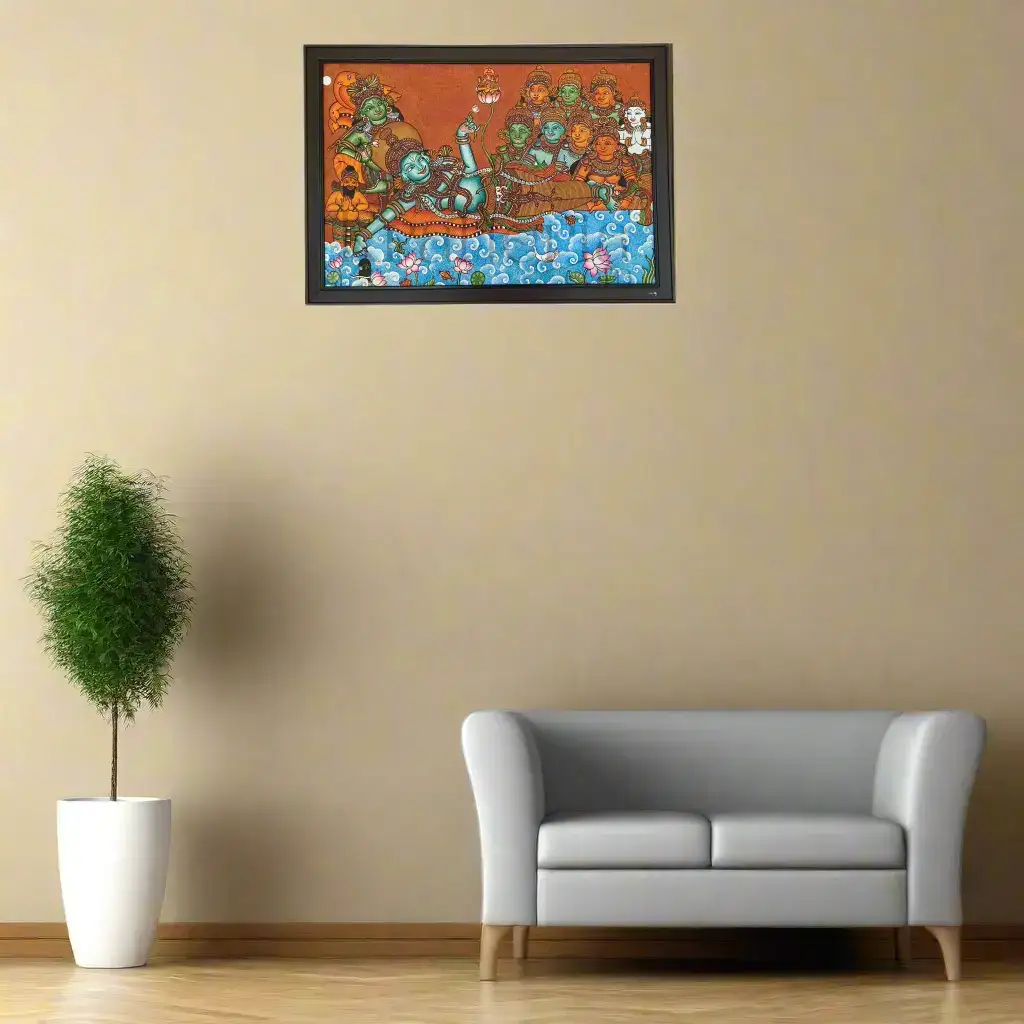
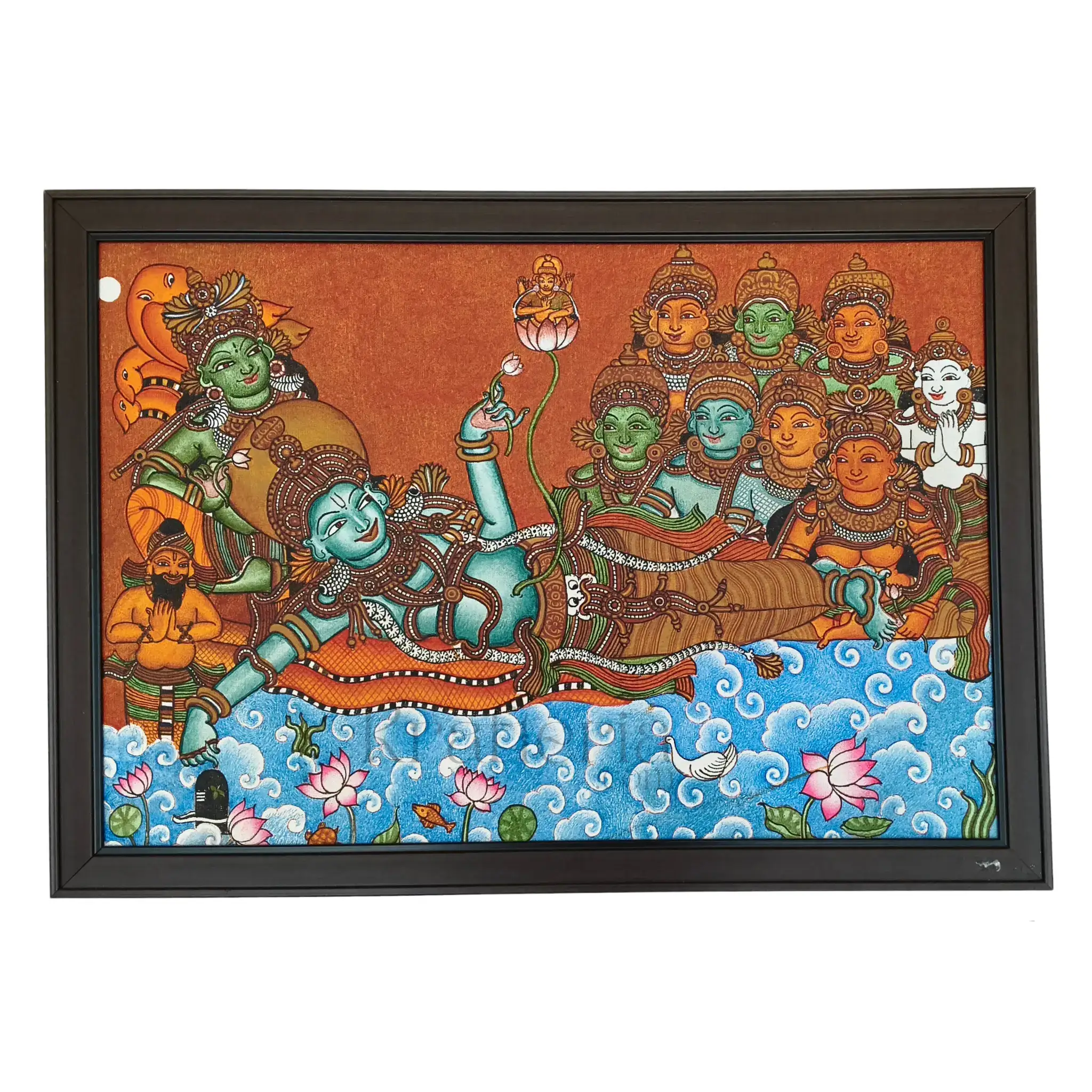
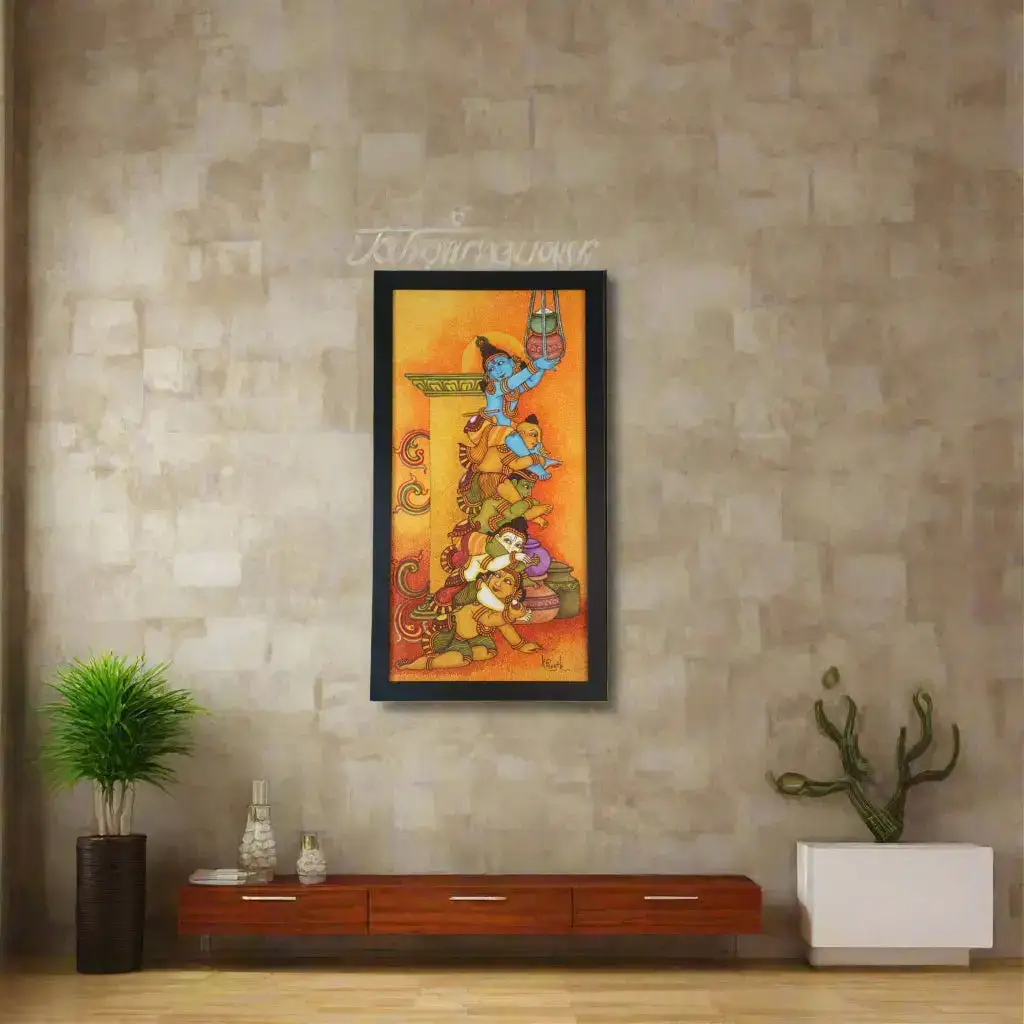
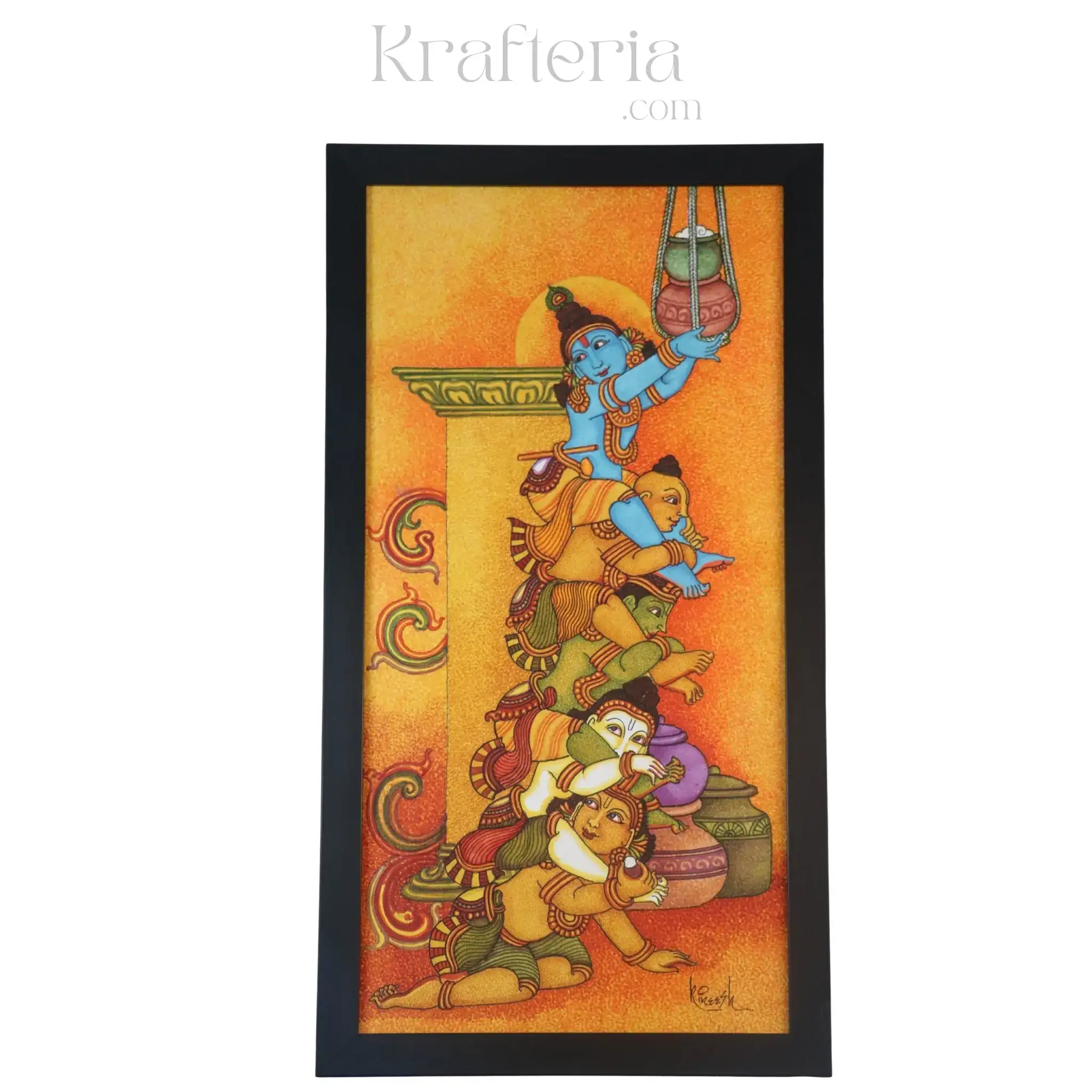
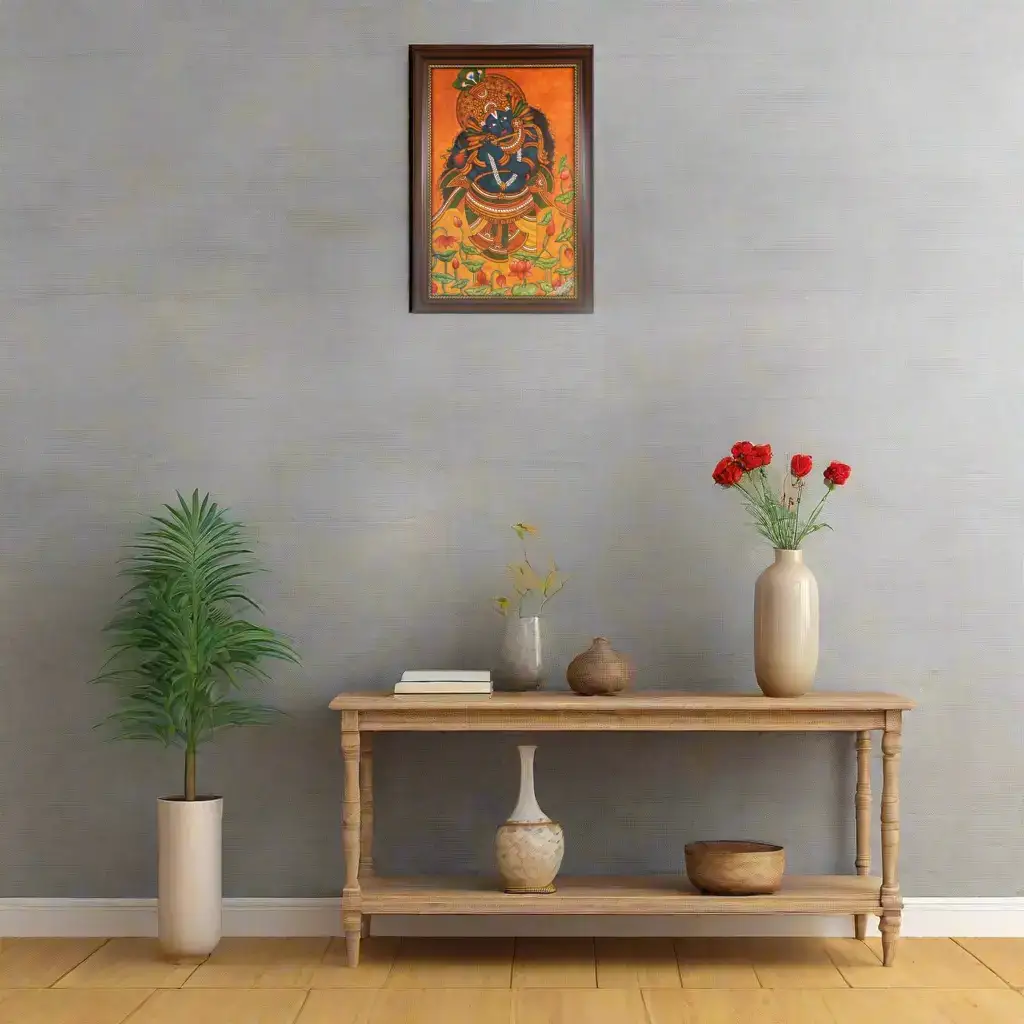
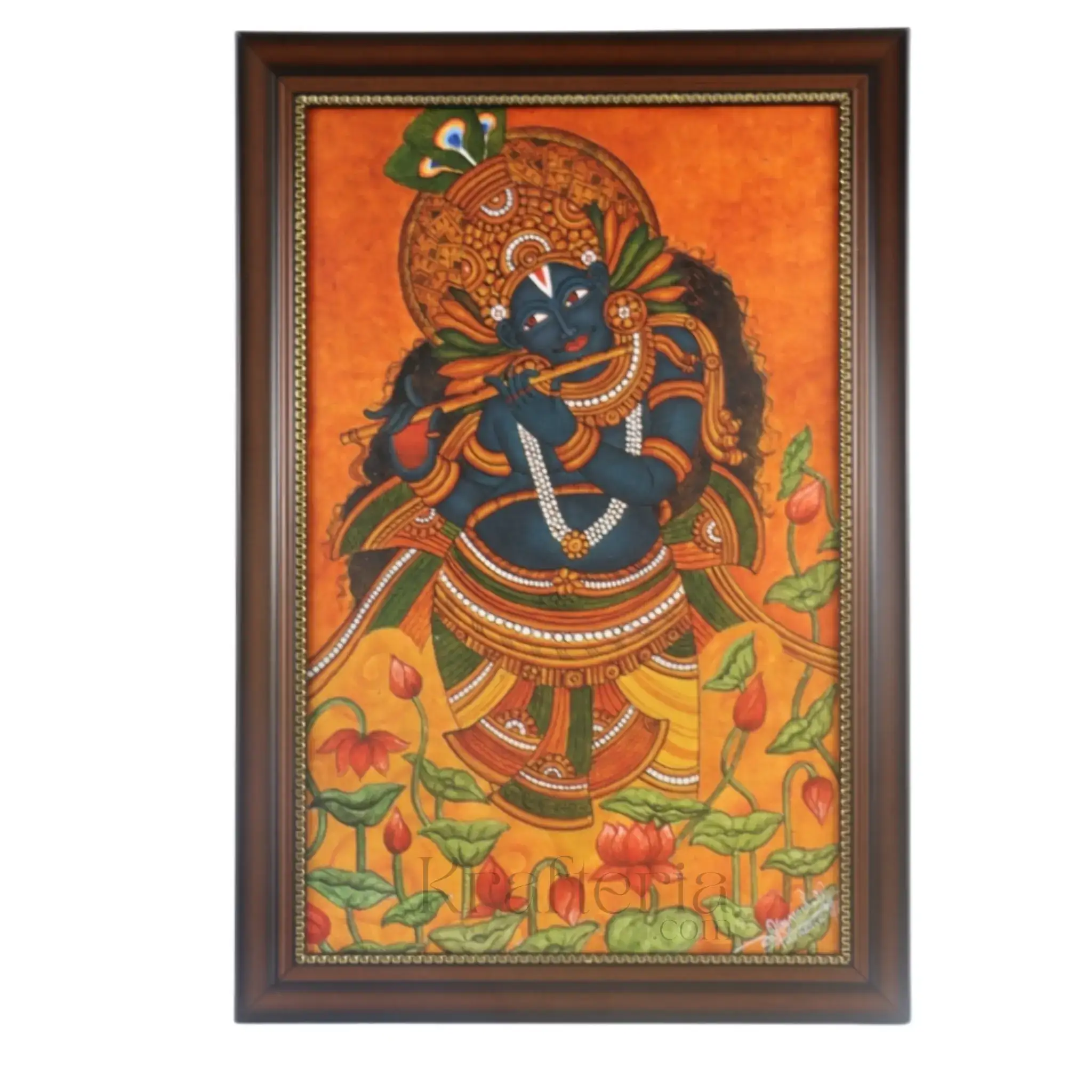
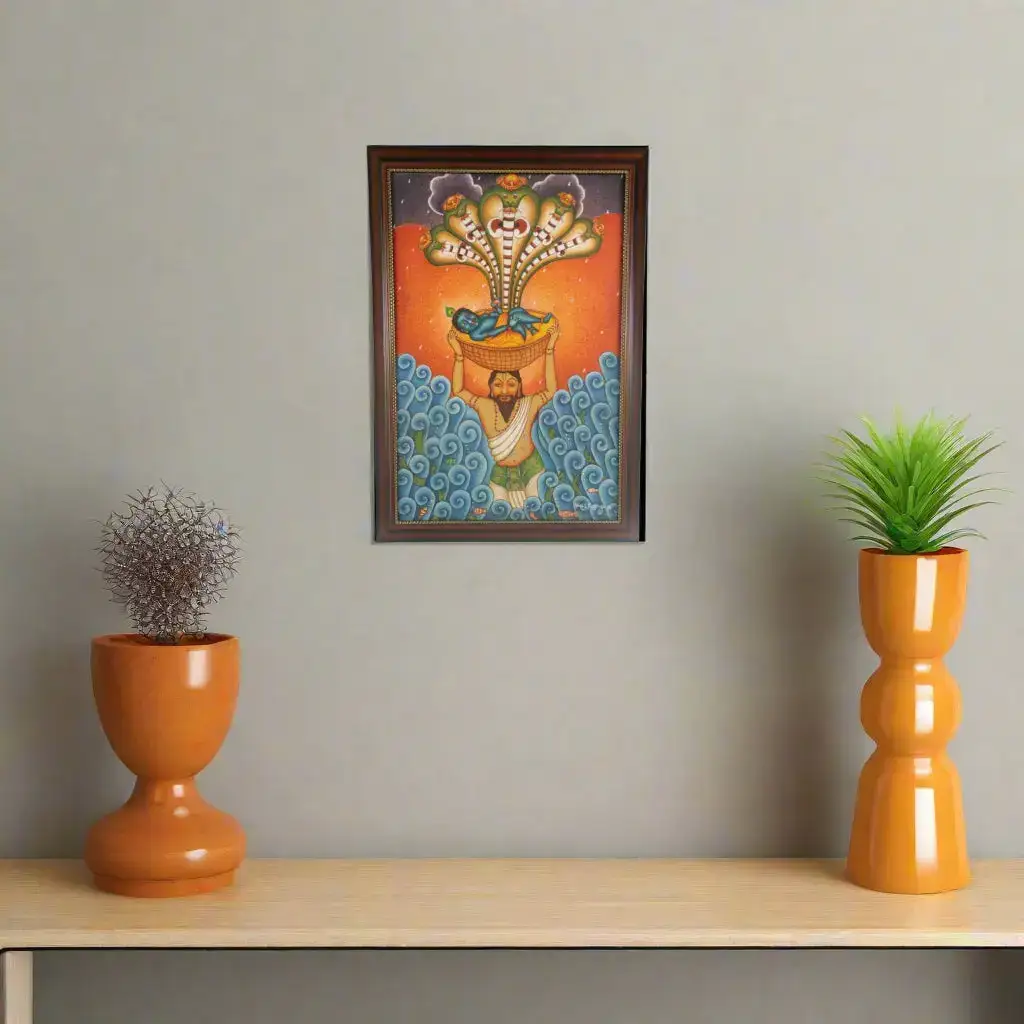
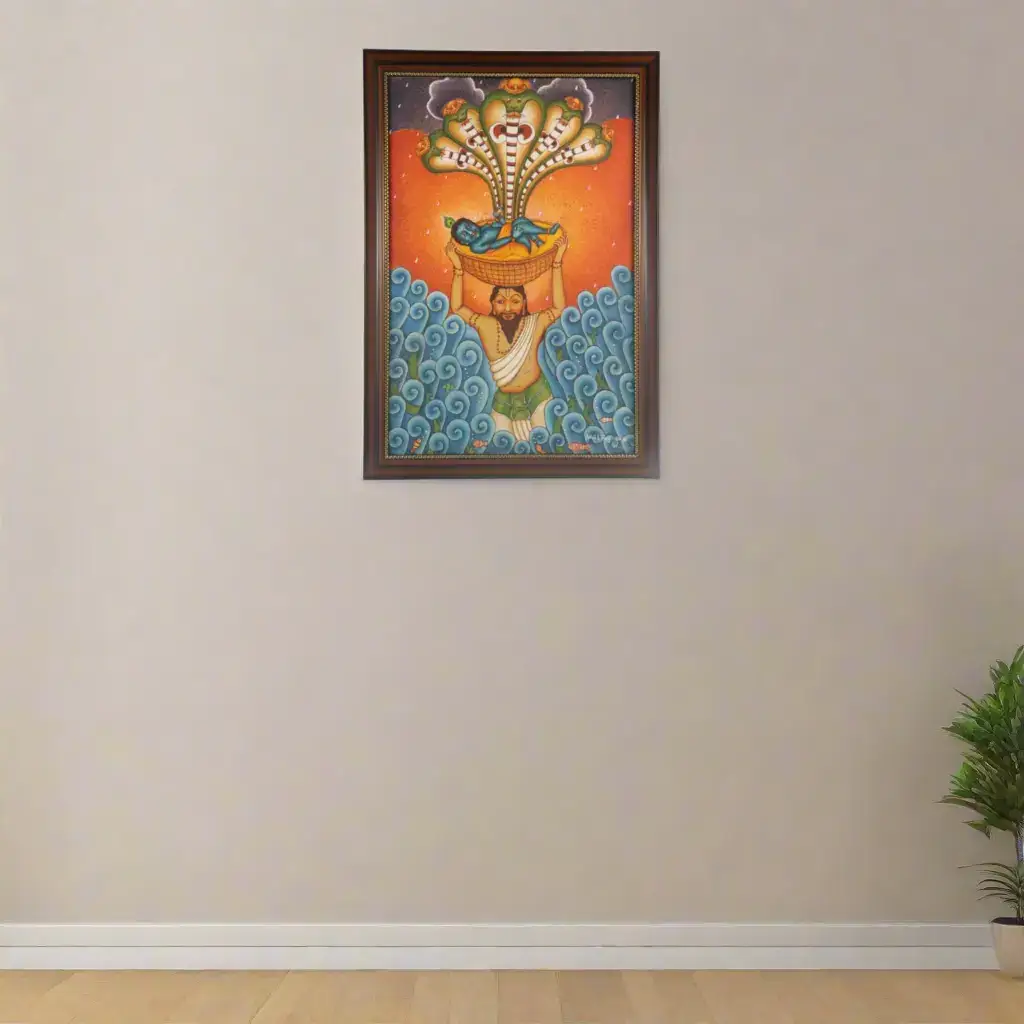
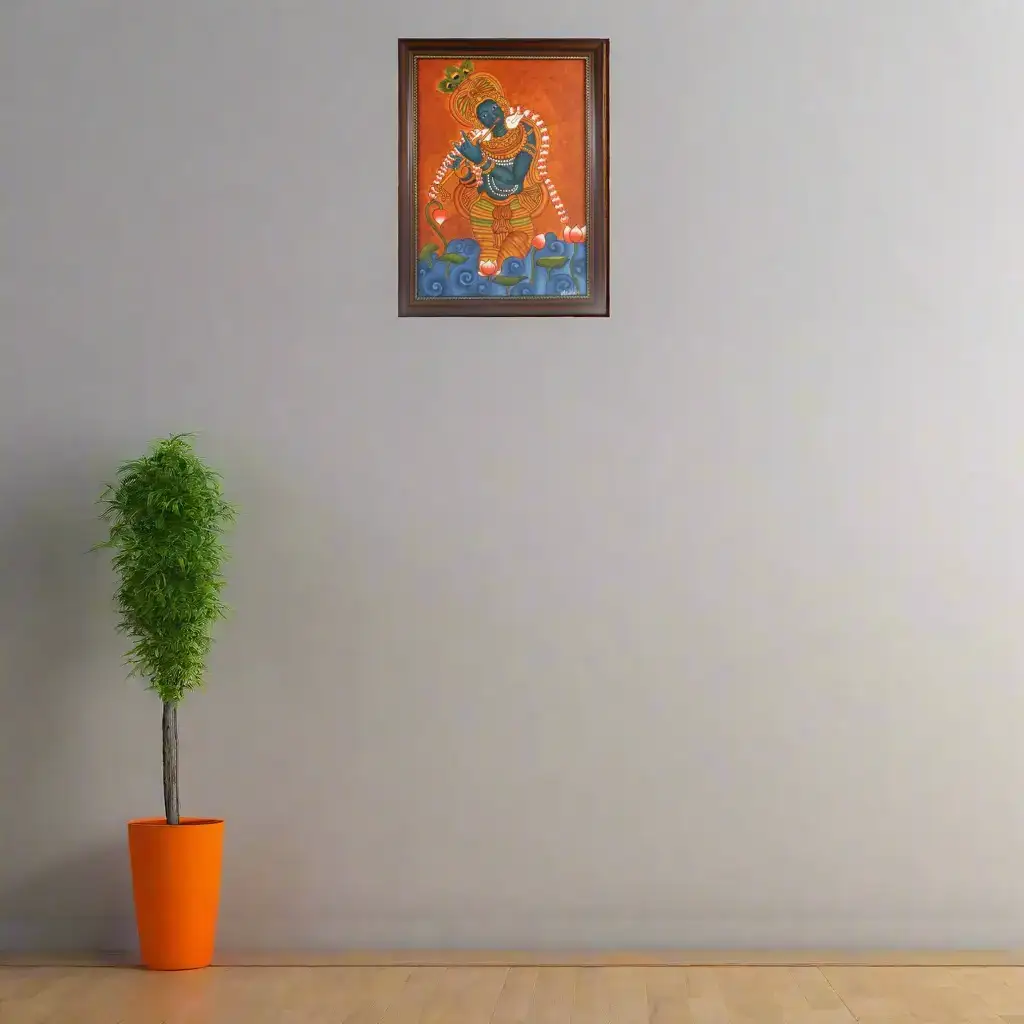
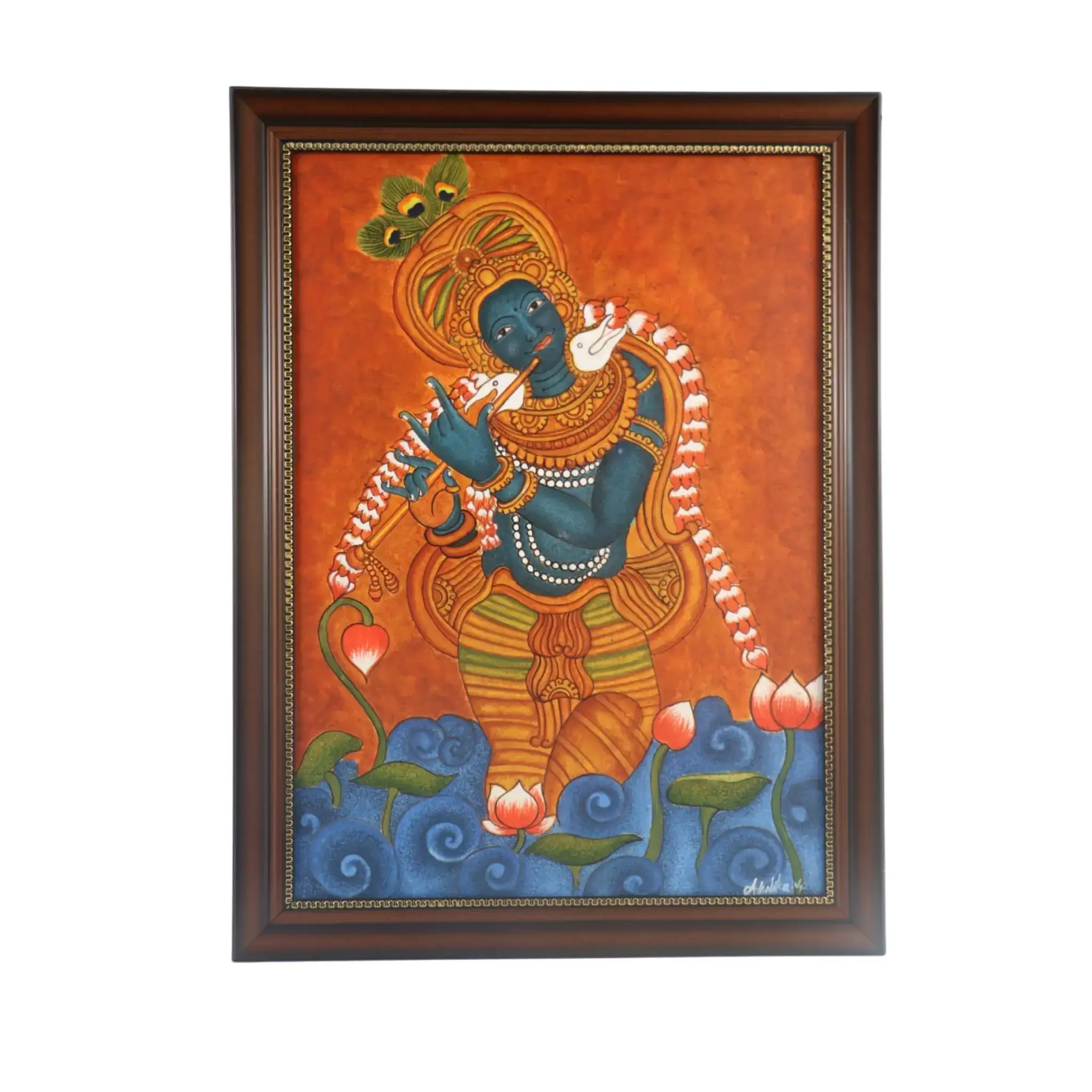
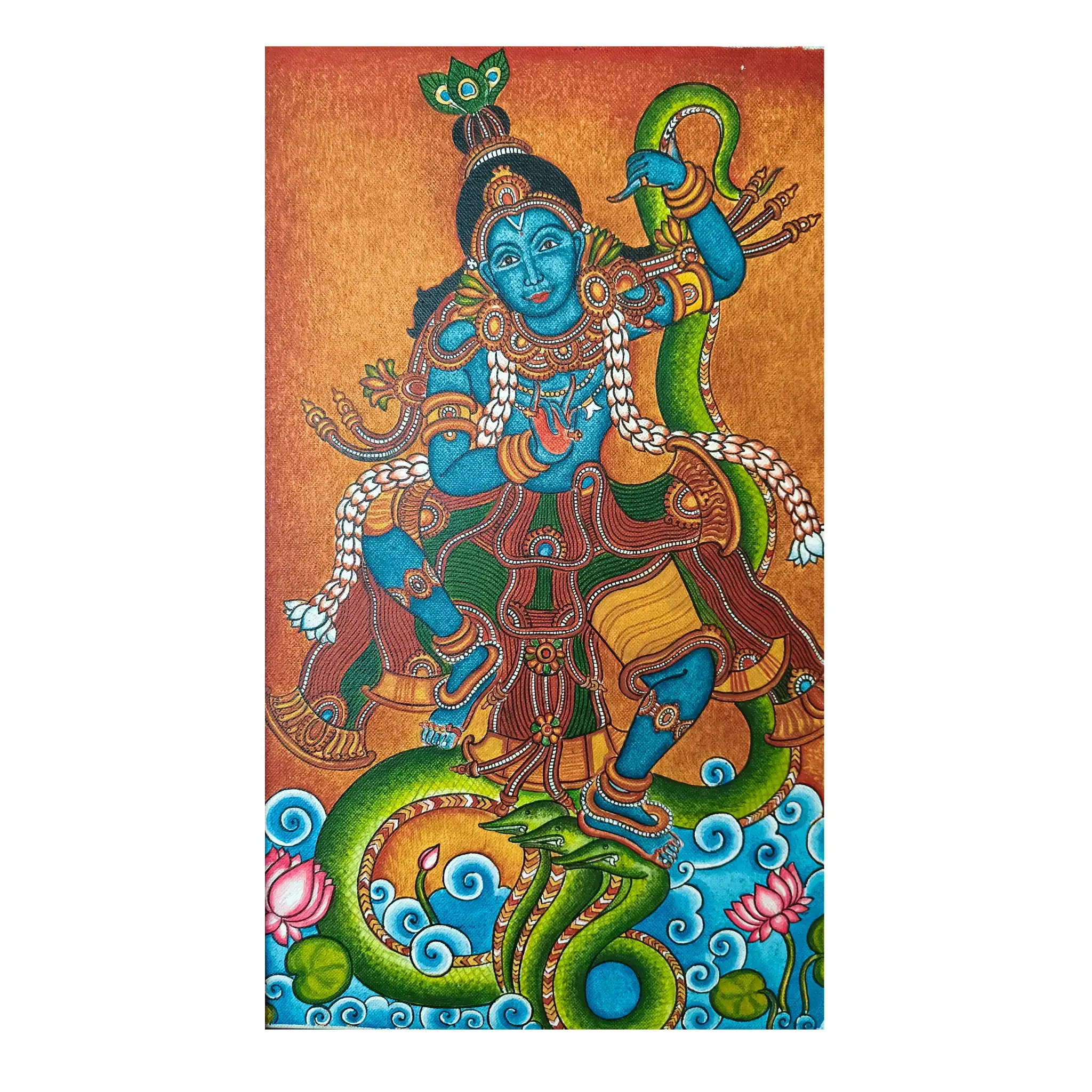
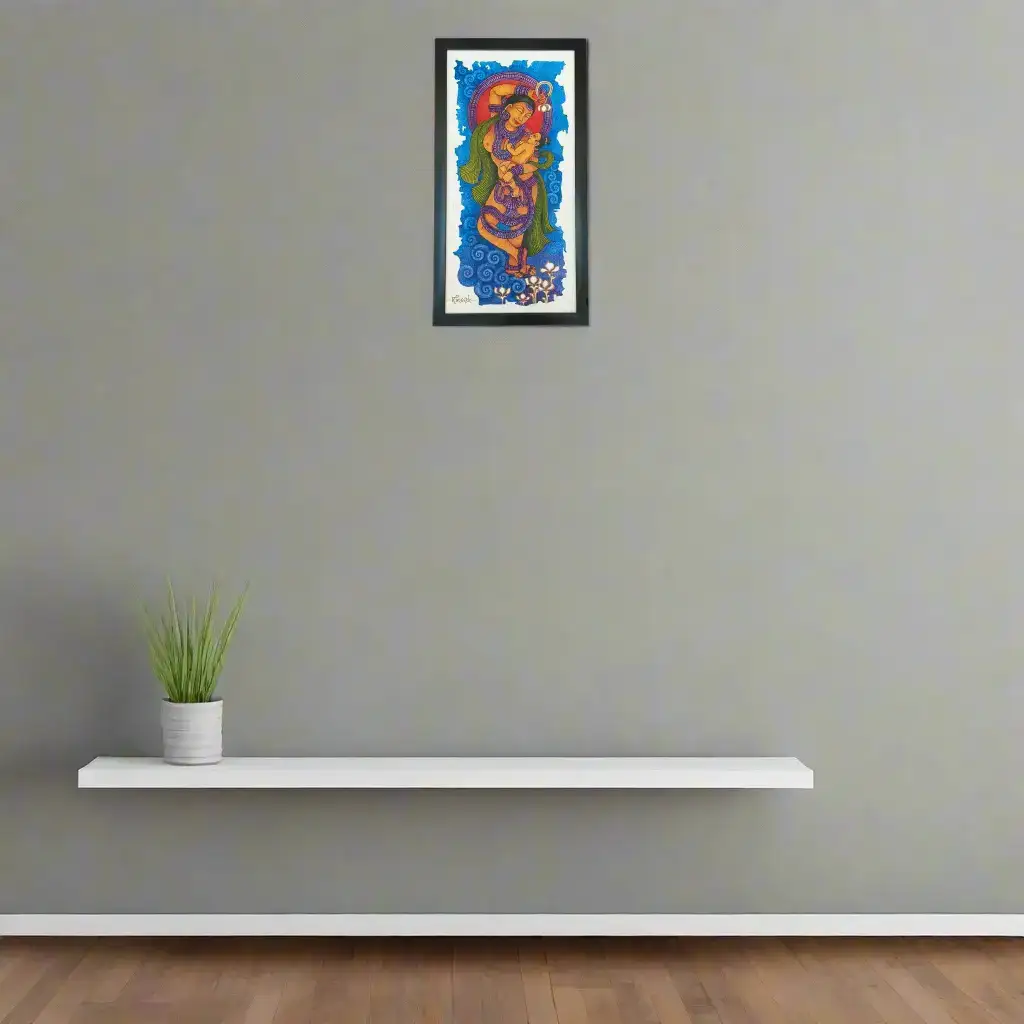
Keralam Authentic Mural Paint sourced from Artist direct ensures the highest quality and true authenticity. This artwork captures the essence of Kerala’s traditional mural artistry, bringing history and culture into your home. The Yashoda Krishna Mural Painting celebrates the divine bond with vivid colors and intricate details that make it truly special.
Yashoda Krishna Mural Painting: History of Kerala Mural Paintings
Kerala mural paintings represent a rich and vibrant tradition of wall paintings rooted in the Indian state of Kerala. Originating between the 9th and 12th centuries CE, these artworks flourished in many Hindu temples. The Yashoda Krishna Mural Painting captures an affectionate moment that remains an iconic theme. It beautifully portrays Mother Yashoda with Krishna, symbolizing love and devotion.
This tradition is known for its mythological themes, detailed artistry, and earthy yet radiant color palette. These paintings hold both spiritual and cultural significance, reflecting Kerala’s deep heritage. Each piece showcases the outstanding skills of Kerala's ancient mural artists and their mastery over religious symbolism.
Key Characteristics of Yashoda Krishna Painting
The murals are usually painted on lime-plastered walls prepared with great care. Natural pigments and vegetable dyes sourced from traditional ingredients are used to create each masterpiece. This technique preserves the cultural authenticity and original visual impact of the era.
Artists employ the fresco secco technique, meaning the painting is done on dry plaster. This contrasts with the Italian fresco method, which uses wet plaster. The dry approach offers finer control over colors and intricate detailing, making every stroke purposeful.
Color Palette and Materials
The color scheme in the Yashoda Krishna Painting is dominated by five natural pigments. These earthy tones lend timeless vibrancy and spiritual depth to the painting.
- Red – Derived from laterite soil, a characteristic Kerala hue.
- Yellow – Created from yellow clay or turmeric, adding warmth.
- Green – Extracted from specific plant sources to represent life.
- Black – Made from burnt coconut shells, providing sharp contrasts.
- White – Lime is used to highlight and bring brightness.
This palette harmoniously balances the spiritual imagery with nature’s motifs, reinforcing the divine stories depicted.
Themes in Yashoda Krishna Painting
The central focus of the Mural Painting is the tender and divine bond between Mother Yashoda and Krishna. This theme celebrates maternal love, innocence, and devotion, making it a deeply emotional and spiritual artwork. Various forms of Krishna painting also depict his childhood stories, emphasizing virtue and lore.
Figures in these murals often include gods, goddesses, celestial beings, and animals from Hindu mythology. They are portrayed in idealized forms, adorned with elaborate costumes and detailed gestures. This classical style is a hallmark of Traditional Krishna Mural Art from Kerala.
The backgrounds include natural elements like flora and fauna that carry symbolic meanings. Expressions on the characters’ faces vividly communicate the narrative’s spiritual emotions. This artistic technique engages viewers deeply and brings ancient myths to life on temple walls and cultural centers.
Artistic Techniques and Training
Artists who create these murals undergo rigorous training. They learn to prepare each natural pigment carefully and master the fresco secco method to achieve rich textural effects. They also study religious symbolism to imbue each painting with authentic spiritual significance.
This dedication maintains the tradition’s vibrancy and cultural importance. Each artist upholds the legacy that has been passed down through generations, ensuring the continued relevance of this exquisite form of religious art.
Tomorrows and Today: The Enduring Appeal
Today, Krishna Mural Painting attracts art lovers, collectors, and cultural historians worldwide. These murals serve not only as decorative pieces but also as visual documents of Kerala’s artistic excellence and devotion. The deep cultural resonance and aesthetic appeal make these paintings highly sought after.
The Mother Yashoda with Krishna Wall Art is especially prized for its spiritual depth and exquisite craftsmanship. It represents a unique intersection of art, religion, and heritage, beautifully enriching any sacred or personal space.
In summary, this Yashoda Krishna Painting embodies the divine love story with artistic mastery and cultural richness. It seamlessly connects viewers with ancient traditions while beautifying contemporary spaces with meaning and grace.
Original: $102.20
-70%$102.20
$30.66Product Information
Product Information
Shipping & Returns
Shipping & Returns
Description
Keralam Authentic Mural Paint sourced from Artist direct ensures the highest quality and true authenticity. This artwork captures the essence of Kerala’s traditional mural artistry, bringing history and culture into your home. The Yashoda Krishna Mural Painting celebrates the divine bond with vivid colors and intricate details that make it truly special.
Yashoda Krishna Mural Painting: History of Kerala Mural Paintings
Kerala mural paintings represent a rich and vibrant tradition of wall paintings rooted in the Indian state of Kerala. Originating between the 9th and 12th centuries CE, these artworks flourished in many Hindu temples. The Yashoda Krishna Mural Painting captures an affectionate moment that remains an iconic theme. It beautifully portrays Mother Yashoda with Krishna, symbolizing love and devotion.
This tradition is known for its mythological themes, detailed artistry, and earthy yet radiant color palette. These paintings hold both spiritual and cultural significance, reflecting Kerala’s deep heritage. Each piece showcases the outstanding skills of Kerala's ancient mural artists and their mastery over religious symbolism.
Key Characteristics of Yashoda Krishna Painting
The murals are usually painted on lime-plastered walls prepared with great care. Natural pigments and vegetable dyes sourced from traditional ingredients are used to create each masterpiece. This technique preserves the cultural authenticity and original visual impact of the era.
Artists employ the fresco secco technique, meaning the painting is done on dry plaster. This contrasts with the Italian fresco method, which uses wet plaster. The dry approach offers finer control over colors and intricate detailing, making every stroke purposeful.
Color Palette and Materials
The color scheme in the Yashoda Krishna Painting is dominated by five natural pigments. These earthy tones lend timeless vibrancy and spiritual depth to the painting.
- Red – Derived from laterite soil, a characteristic Kerala hue.
- Yellow – Created from yellow clay or turmeric, adding warmth.
- Green – Extracted from specific plant sources to represent life.
- Black – Made from burnt coconut shells, providing sharp contrasts.
- White – Lime is used to highlight and bring brightness.
This palette harmoniously balances the spiritual imagery with nature’s motifs, reinforcing the divine stories depicted.
Themes in Yashoda Krishna Painting
The central focus of the Mural Painting is the tender and divine bond between Mother Yashoda and Krishna. This theme celebrates maternal love, innocence, and devotion, making it a deeply emotional and spiritual artwork. Various forms of Krishna painting also depict his childhood stories, emphasizing virtue and lore.
Figures in these murals often include gods, goddesses, celestial beings, and animals from Hindu mythology. They are portrayed in idealized forms, adorned with elaborate costumes and detailed gestures. This classical style is a hallmark of Traditional Krishna Mural Art from Kerala.
The backgrounds include natural elements like flora and fauna that carry symbolic meanings. Expressions on the characters’ faces vividly communicate the narrative’s spiritual emotions. This artistic technique engages viewers deeply and brings ancient myths to life on temple walls and cultural centers.
Artistic Techniques and Training
Artists who create these murals undergo rigorous training. They learn to prepare each natural pigment carefully and master the fresco secco method to achieve rich textural effects. They also study religious symbolism to imbue each painting with authentic spiritual significance.
This dedication maintains the tradition’s vibrancy and cultural importance. Each artist upholds the legacy that has been passed down through generations, ensuring the continued relevance of this exquisite form of religious art.
Tomorrows and Today: The Enduring Appeal
Today, Krishna Mural Painting attracts art lovers, collectors, and cultural historians worldwide. These murals serve not only as decorative pieces but also as visual documents of Kerala’s artistic excellence and devotion. The deep cultural resonance and aesthetic appeal make these paintings highly sought after.
The Mother Yashoda with Krishna Wall Art is especially prized for its spiritual depth and exquisite craftsmanship. It represents a unique intersection of art, religion, and heritage, beautifully enriching any sacred or personal space.
In summary, this Yashoda Krishna Painting embodies the divine love story with artistic mastery and cultural richness. It seamlessly connects viewers with ancient traditions while beautifying contemporary spaces with meaning and grace.