Kaliyamardhanam – Kerala Mural Painting of Krishna Subduing Kaliya
Kaliyamardhanam Kerala Mural Painting: A Glimpse into Tradition
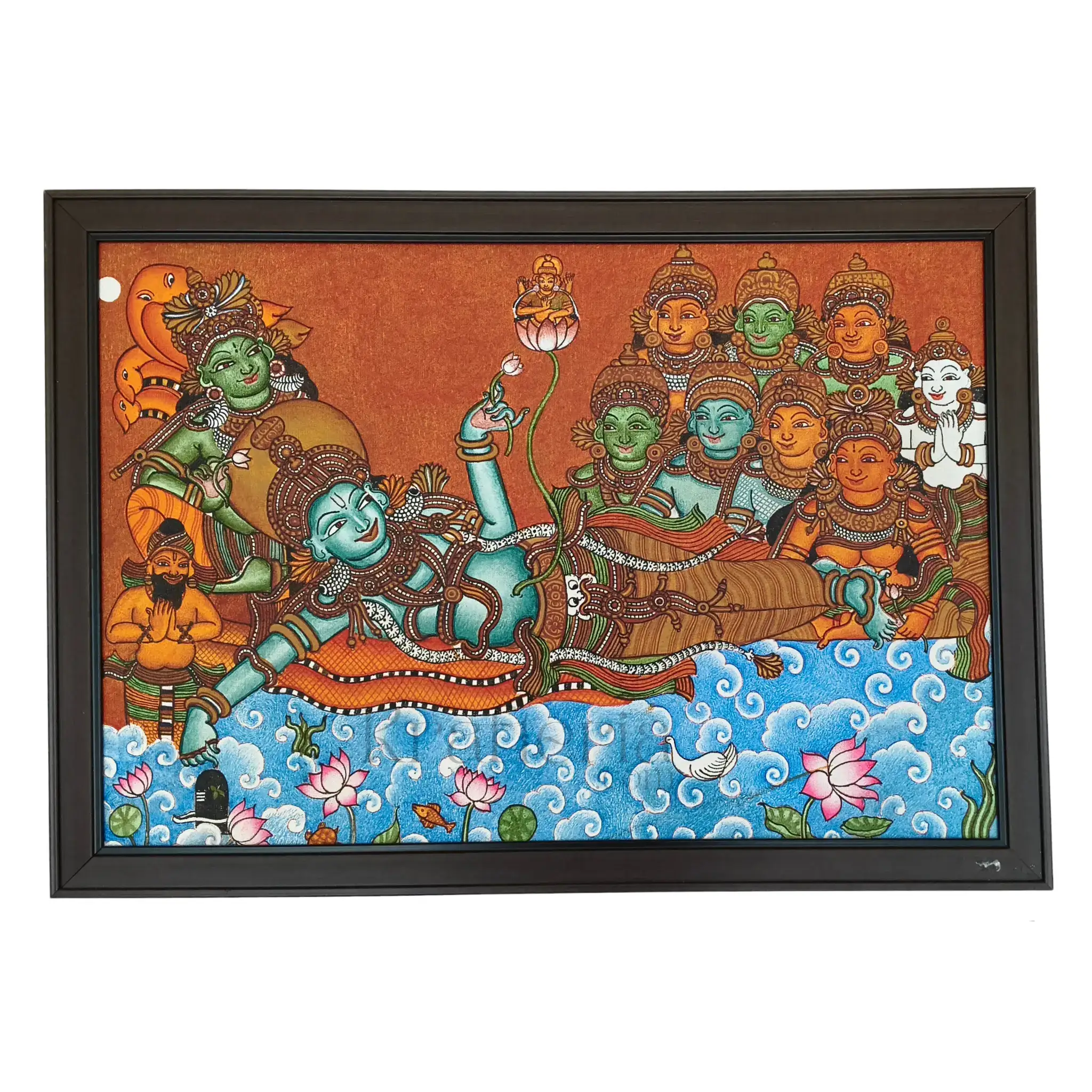
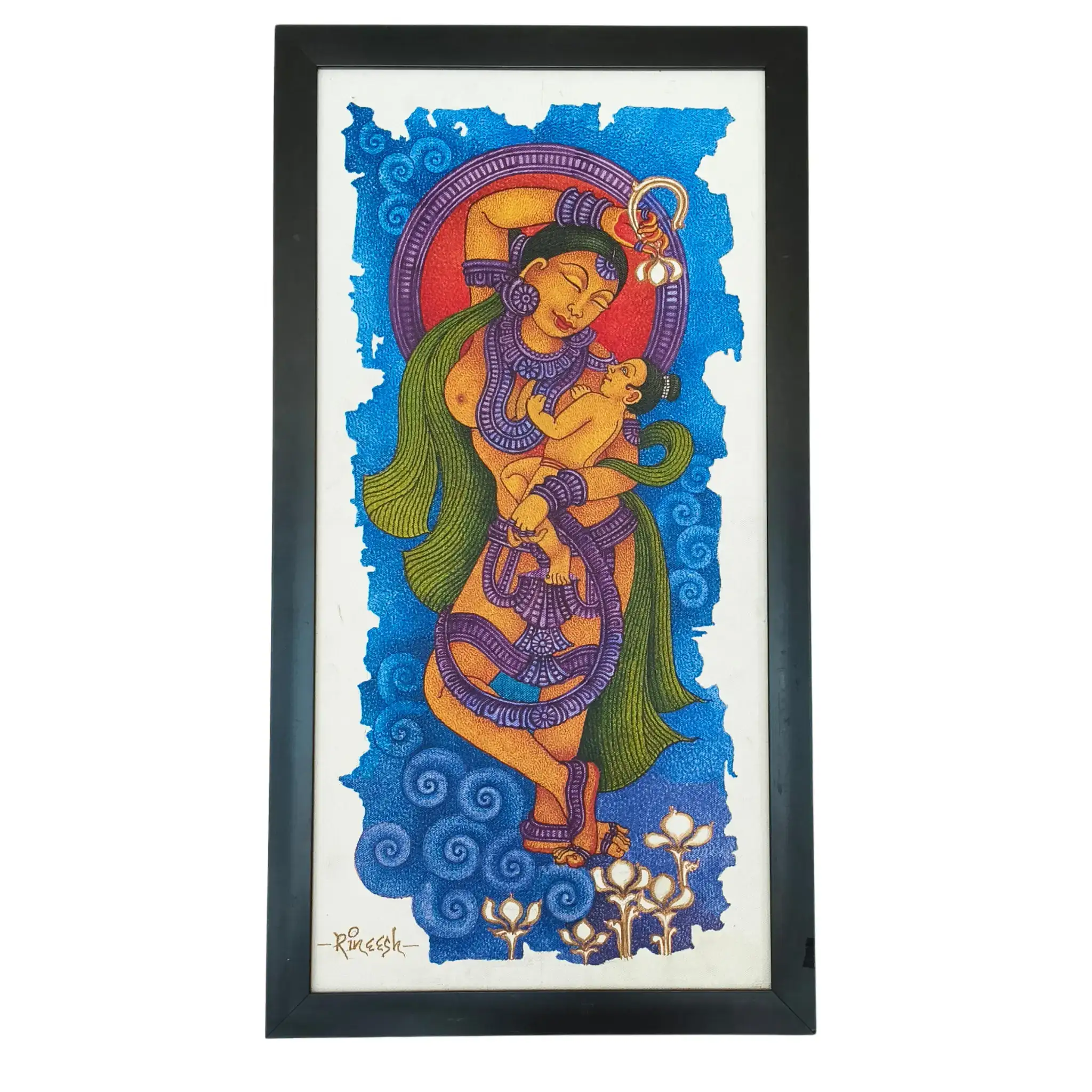
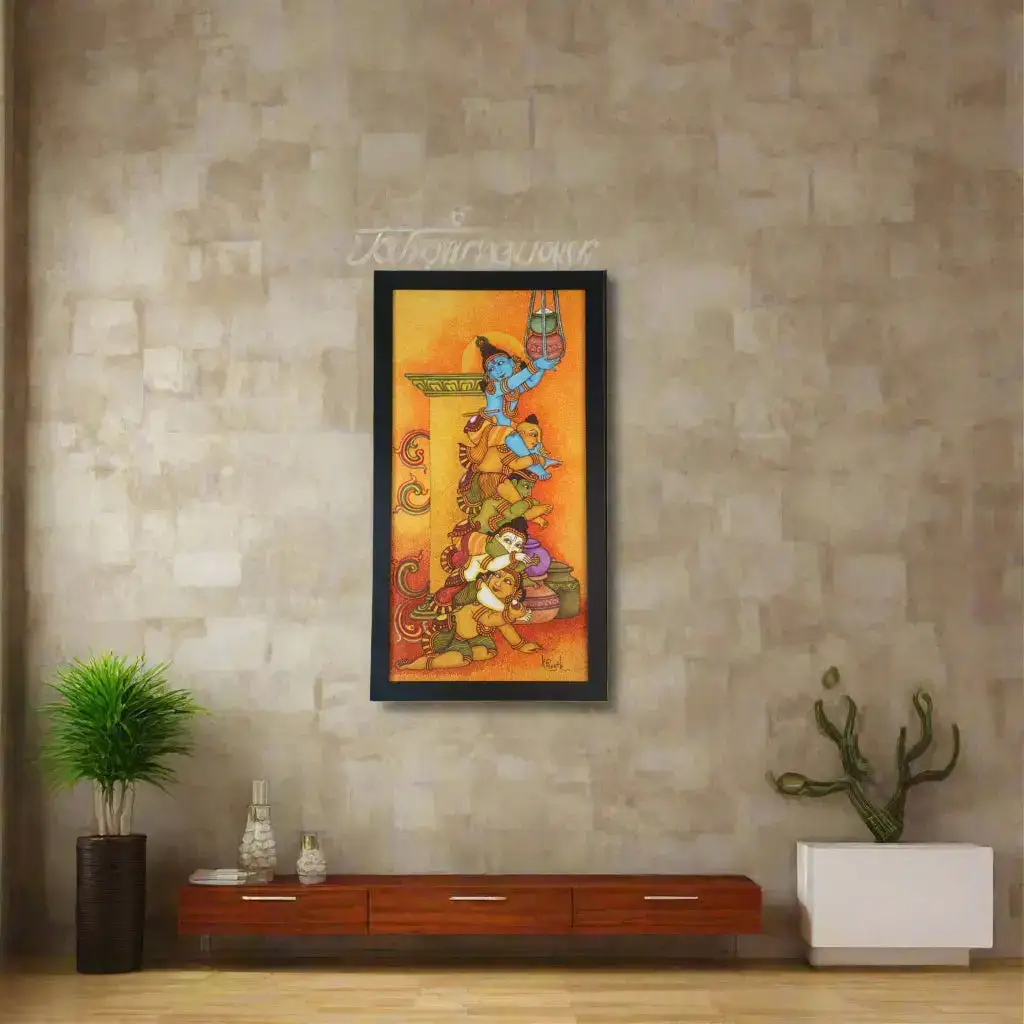
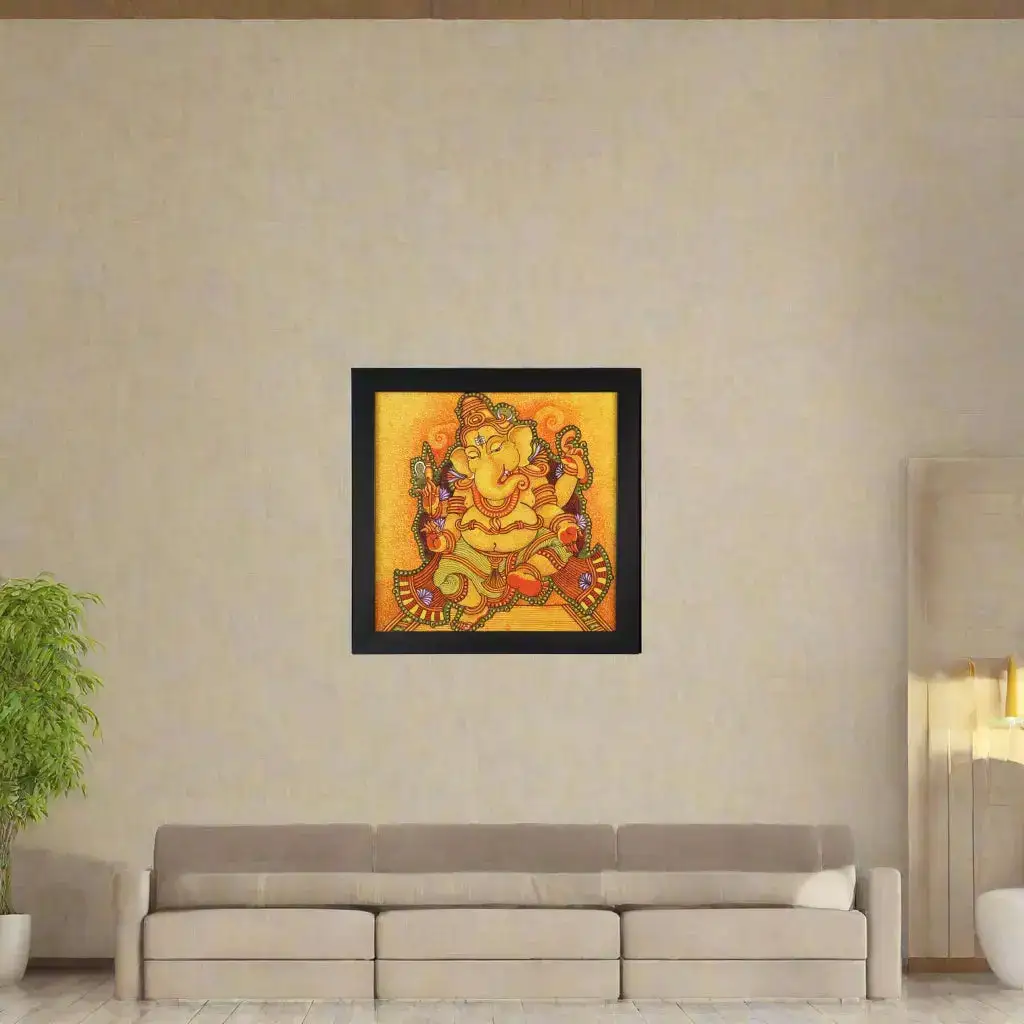
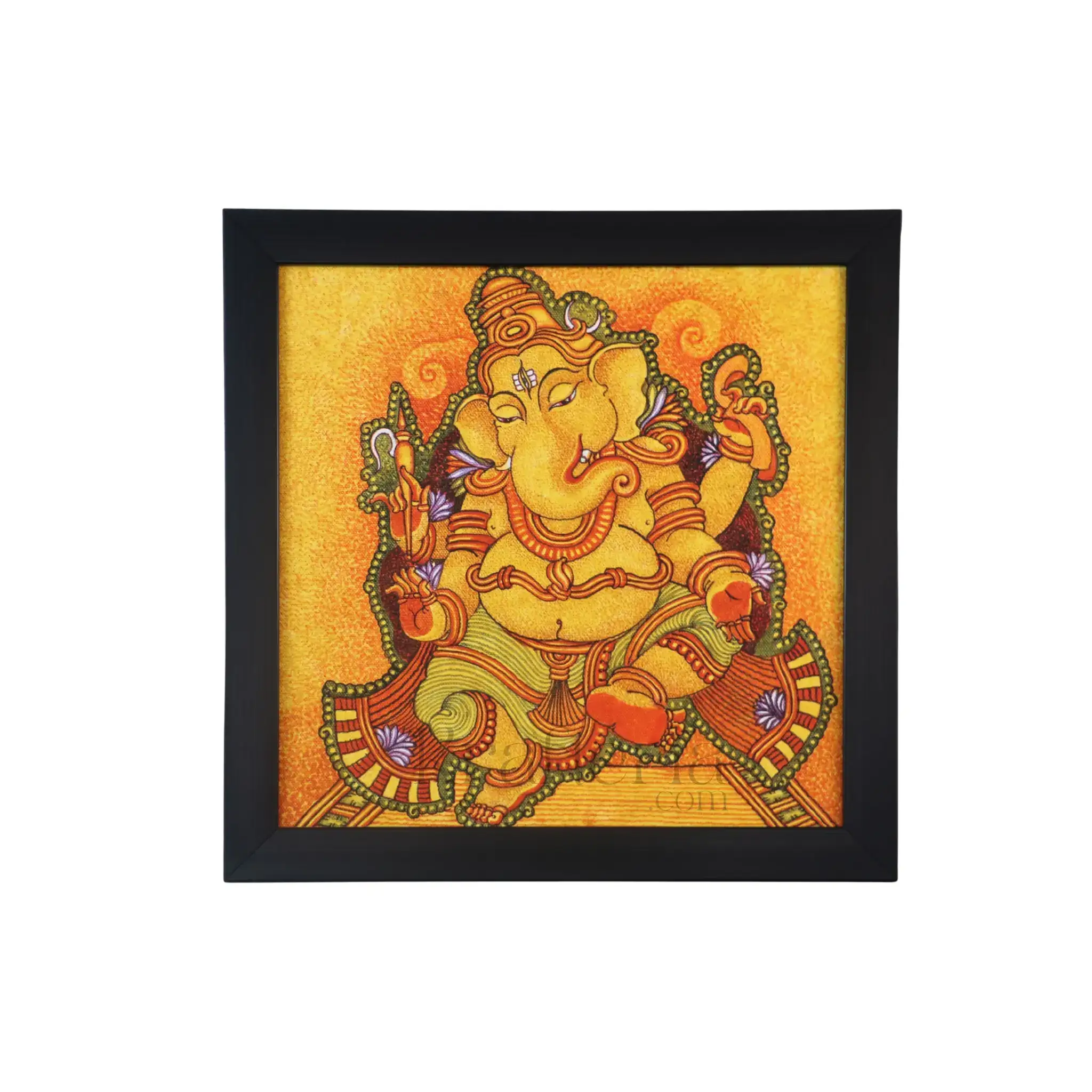
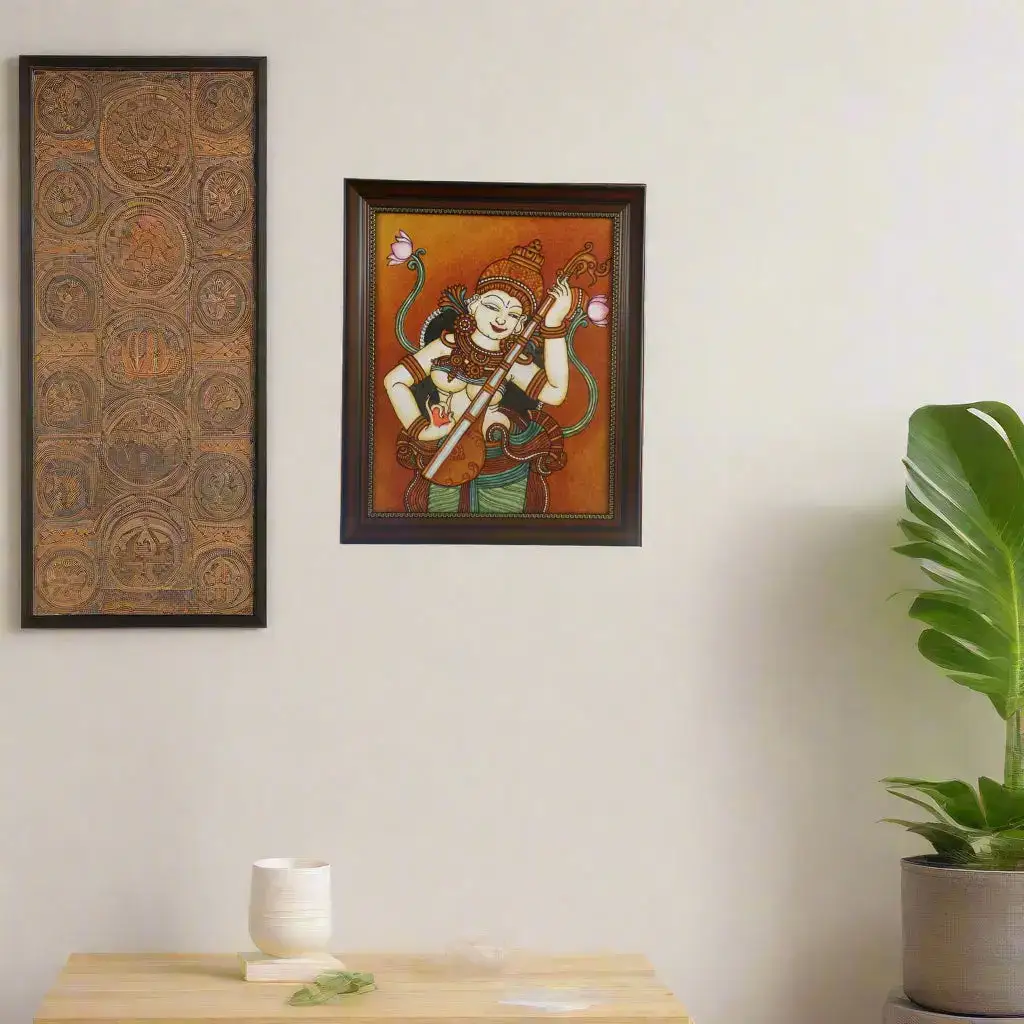
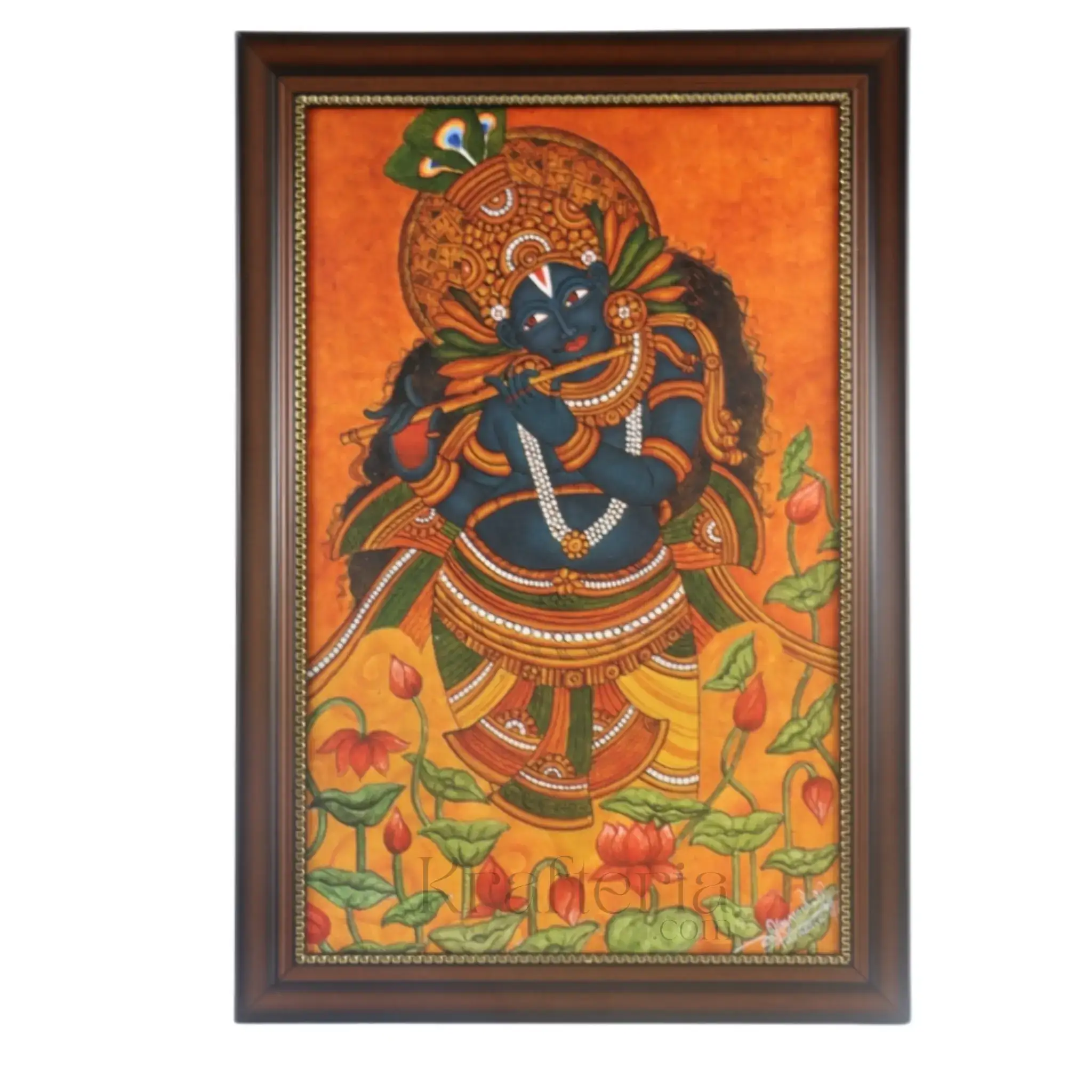
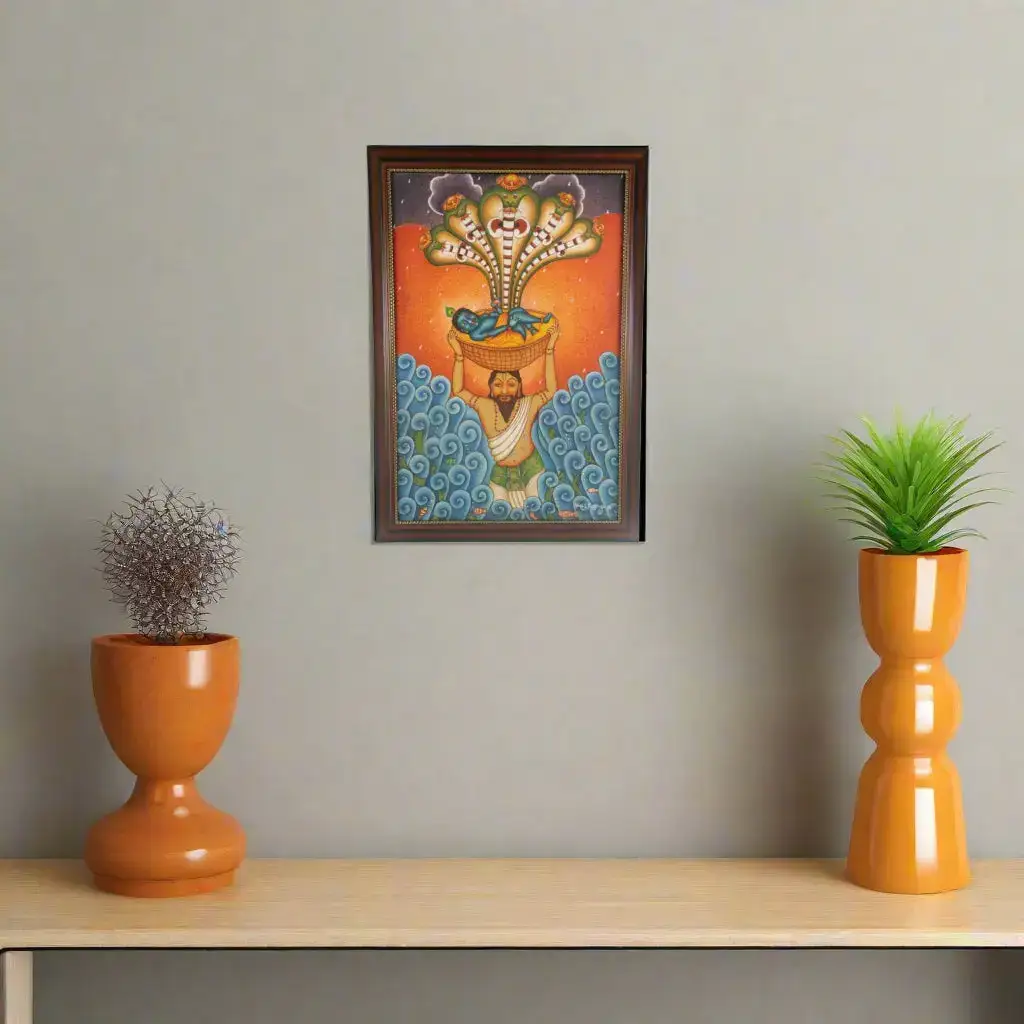
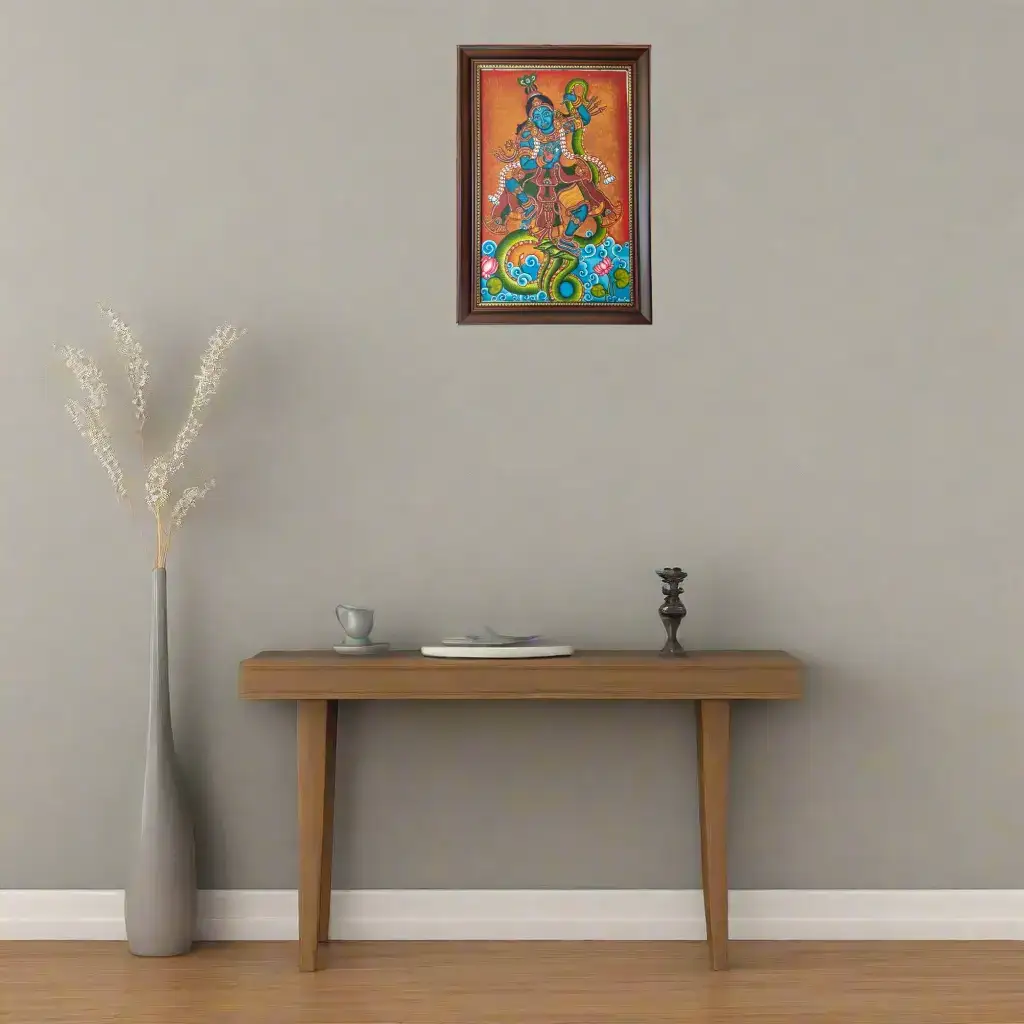
The Kaliyamardhanam Kerala Mural Painting beautifully represents an ancient art form that thrives in Kerala. These paintings are rich in history and capture vivid stories from Indian mythology. This particular painting portrays the legendary scene of Lord Krishna subduing the serpent Kaliya, making it a significant piece of spiritual art.
This artwork measures 19.5 inches in height and 13.5 inches in width, perfectly sized for displaying in homes or sacred spaces. The painting is deeply rooted in the cultural heritage of Kerala and reflects the painstaking efforts of skilled artisans.
History and Heritage of Kerala Mural Paintings
Kerala mural paintings have a fascinating history, dating back to between the 9th and 12th centuries CE. Originating within the temples of Kerala, these murals were an integral part of temple walls and depicted various mythological themes. The art form flourished during this period and continues to be celebrated today for its spiritual and cultural significance.
These murals are a reflection of Kerala’s rich artistic legacy and are regarded as one of the most vibrant mural traditions in India. The themes often focus on gods, goddesses, celestial beings, and mythical animals, rendered in eternal, divine forms.
Key Characteristics of Kaliyamardhanam Kerala Mural Painting
The Kaliyamardhanam Mural uses various traditional techniques and materials that define the Kerala mural style. The medium and surface are crucial, as these paintings are originally created on lime-plastered walls. Artists continue to preserve this tradition by using similar techniques on alternative surfaces today.
- Medium & Surface: Traditionally painted on lime-plastered walls, these murals employ natural pigments and vegetable dyes, providing rich earthy tones.
- Technique: The fresco secco technique is used, meaning artists paint on dry plaster rather than on wet plaster. This differentiates Kerala murals from Italian frescoes, which use the wet plaster method.
Natural Colors Defining Kerala Mural Art
A unique aspect of the Kaliyamardhanam Kerala Mural Painting is its color palette. The hues are derived from natural sources, making the artworks environmentally friendly and long-lasting. The five dominant colors hold symbolic and aesthetic value in the art.
- Red: Extracted from laterite stone, red adds warmth and vibrancy to the painting.
- Yellow: Derived from yellow clay or turmeric, yellow symbolizes brightness and energy.
- Green: Made from plant extracts, green vividly depicts nature and life.
- Black: Produced by burning coconut shells, black outlines figures and adds depth.
- White: Lime is used for white, which highlights details and contrasts with other colors.
Symbolism and Themes of the Kaliyamardhanam Mural
The central theme of Kerala murals is often religious and spiritual, rooted in Hindu mythology. In this painting, the scene depicts Krishna subduing Kaliya, a venomous serpent in the Yamuna river. This symbolizes the triumph of good over evil and divine protection.
The figures are rendered in an idealized form, showcasing divine beauty and strength. The detailed costumes and stylized gestures add to the storytelling, making it not just a painting but a visual scripture.
Such murals also serve as medium to convey cultural values, heroism, and spiritual devotion. The Krishna Subduing Kaliya Kerala Mural Art captures these elements perfectly, making it a meaningful addition to any collection.
Why Choose Kaliyamardhanam Mural Painting?
Artists dedicate numerous hours to hand-paint these masterpieces, ensuring that tradition is honored. The Kaliyamardhanam Painting represents both the art and a legacy that has been passed down through generations. It embodies the culture, history, and artistic excellence that Kerala murals are known for.
This painting is not only decorative but holds deep spiritual meaning. It invites viewers to appreciate both the artistic skill and the mythological narrative.
Adding this mural to a home or sacred space introduces an element of Kerala’s rich heritage and artistic tradition. It is a timeless work that celebrates mythology and spirituality through vibrant colors and exquisite details.
Product Information
Product Information
Shipping & Returns
Shipping & Returns
Description
Kaliyamardhanam Kerala Mural Painting: A Glimpse into Tradition
The Kaliyamardhanam Kerala Mural Painting beautifully represents an ancient art form that thrives in Kerala. These paintings are rich in history and capture vivid stories from Indian mythology. This particular painting portrays the legendary scene of Lord Krishna subduing the serpent Kaliya, making it a significant piece of spiritual art.
This artwork measures 19.5 inches in height and 13.5 inches in width, perfectly sized for displaying in homes or sacred spaces. The painting is deeply rooted in the cultural heritage of Kerala and reflects the painstaking efforts of skilled artisans.
History and Heritage of Kerala Mural Paintings
Kerala mural paintings have a fascinating history, dating back to between the 9th and 12th centuries CE. Originating within the temples of Kerala, these murals were an integral part of temple walls and depicted various mythological themes. The art form flourished during this period and continues to be celebrated today for its spiritual and cultural significance.
These murals are a reflection of Kerala’s rich artistic legacy and are regarded as one of the most vibrant mural traditions in India. The themes often focus on gods, goddesses, celestial beings, and mythical animals, rendered in eternal, divine forms.
Key Characteristics of Kaliyamardhanam Kerala Mural Painting
The Kaliyamardhanam Mural uses various traditional techniques and materials that define the Kerala mural style. The medium and surface are crucial, as these paintings are originally created on lime-plastered walls. Artists continue to preserve this tradition by using similar techniques on alternative surfaces today.
- Medium & Surface: Traditionally painted on lime-plastered walls, these murals employ natural pigments and vegetable dyes, providing rich earthy tones.
- Technique: The fresco secco technique is used, meaning artists paint on dry plaster rather than on wet plaster. This differentiates Kerala murals from Italian frescoes, which use the wet plaster method.
Natural Colors Defining Kerala Mural Art
A unique aspect of the Kaliyamardhanam Kerala Mural Painting is its color palette. The hues are derived from natural sources, making the artworks environmentally friendly and long-lasting. The five dominant colors hold symbolic and aesthetic value in the art.
- Red: Extracted from laterite stone, red adds warmth and vibrancy to the painting.
- Yellow: Derived from yellow clay or turmeric, yellow symbolizes brightness and energy.
- Green: Made from plant extracts, green vividly depicts nature and life.
- Black: Produced by burning coconut shells, black outlines figures and adds depth.
- White: Lime is used for white, which highlights details and contrasts with other colors.
Symbolism and Themes of the Kaliyamardhanam Mural
The central theme of Kerala murals is often religious and spiritual, rooted in Hindu mythology. In this painting, the scene depicts Krishna subduing Kaliya, a venomous serpent in the Yamuna river. This symbolizes the triumph of good over evil and divine protection.
The figures are rendered in an idealized form, showcasing divine beauty and strength. The detailed costumes and stylized gestures add to the storytelling, making it not just a painting but a visual scripture.
Such murals also serve as medium to convey cultural values, heroism, and spiritual devotion. The Krishna Subduing Kaliya Kerala Mural Art captures these elements perfectly, making it a meaningful addition to any collection.
Why Choose Kaliyamardhanam Mural Painting?
Artists dedicate numerous hours to hand-paint these masterpieces, ensuring that tradition is honored. The Kaliyamardhanam Painting represents both the art and a legacy that has been passed down through generations. It embodies the culture, history, and artistic excellence that Kerala murals are known for.
This painting is not only decorative but holds deep spiritual meaning. It invites viewers to appreciate both the artistic skill and the mythological narrative.
Adding this mural to a home or sacred space introduces an element of Kerala’s rich heritage and artistic tradition. It is a timeless work that celebrates mythology and spirituality through vibrant colors and exquisite details.