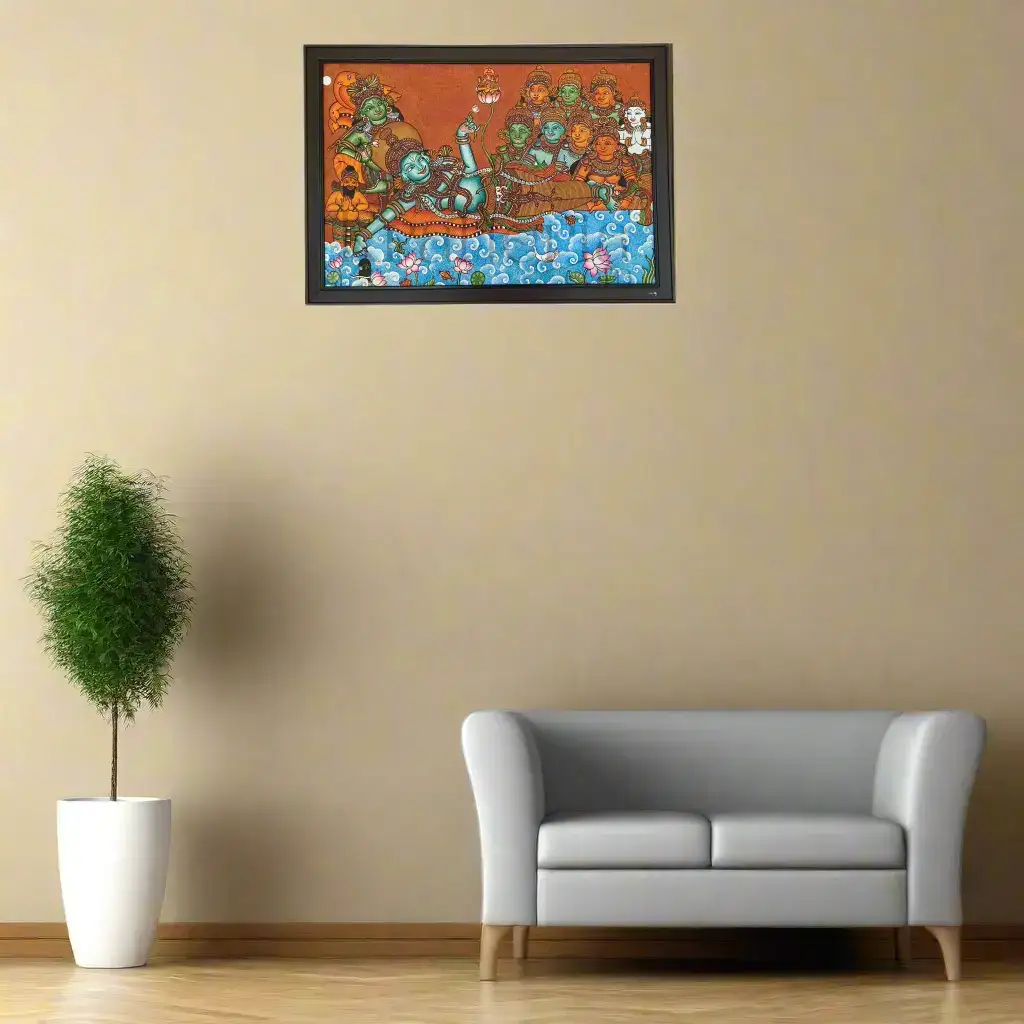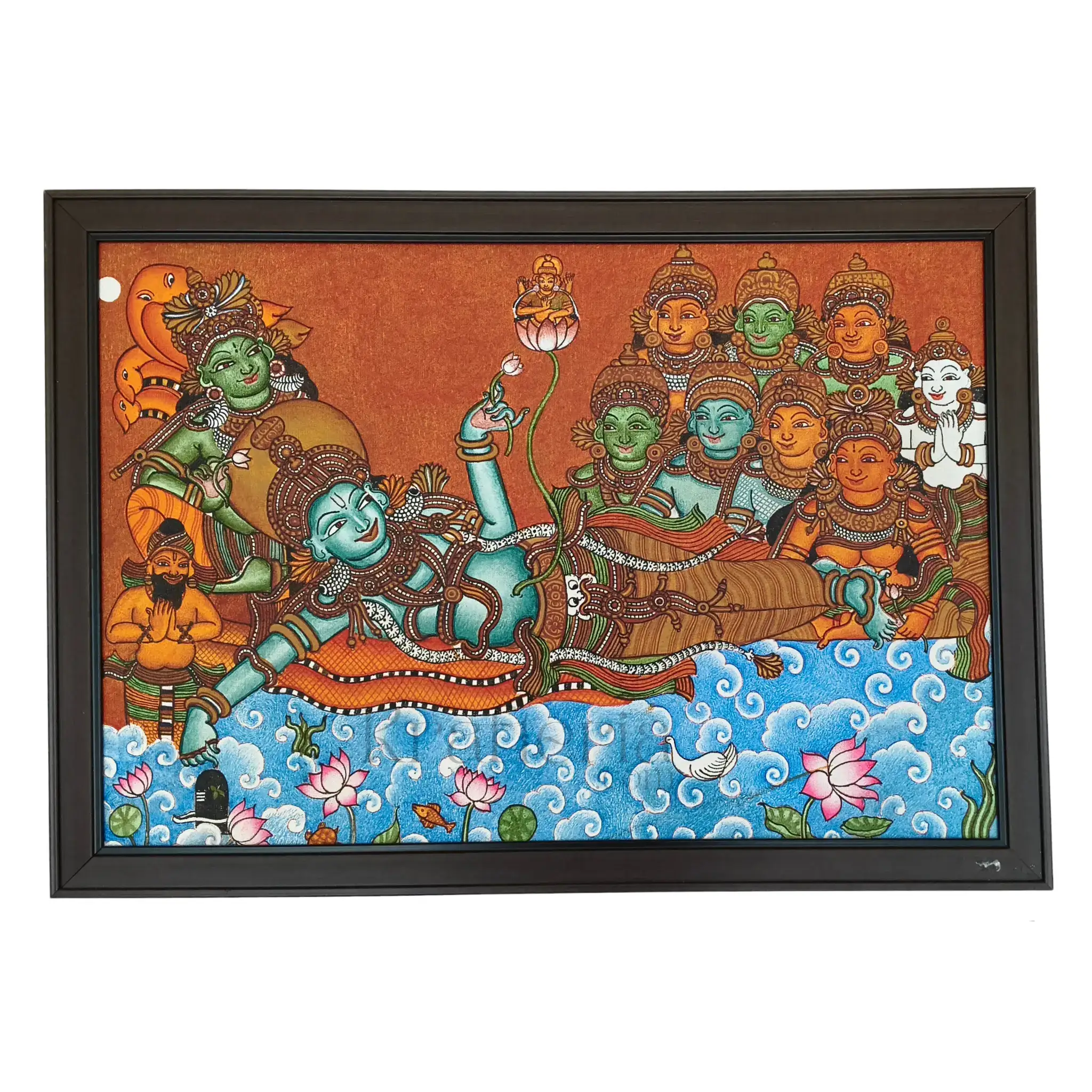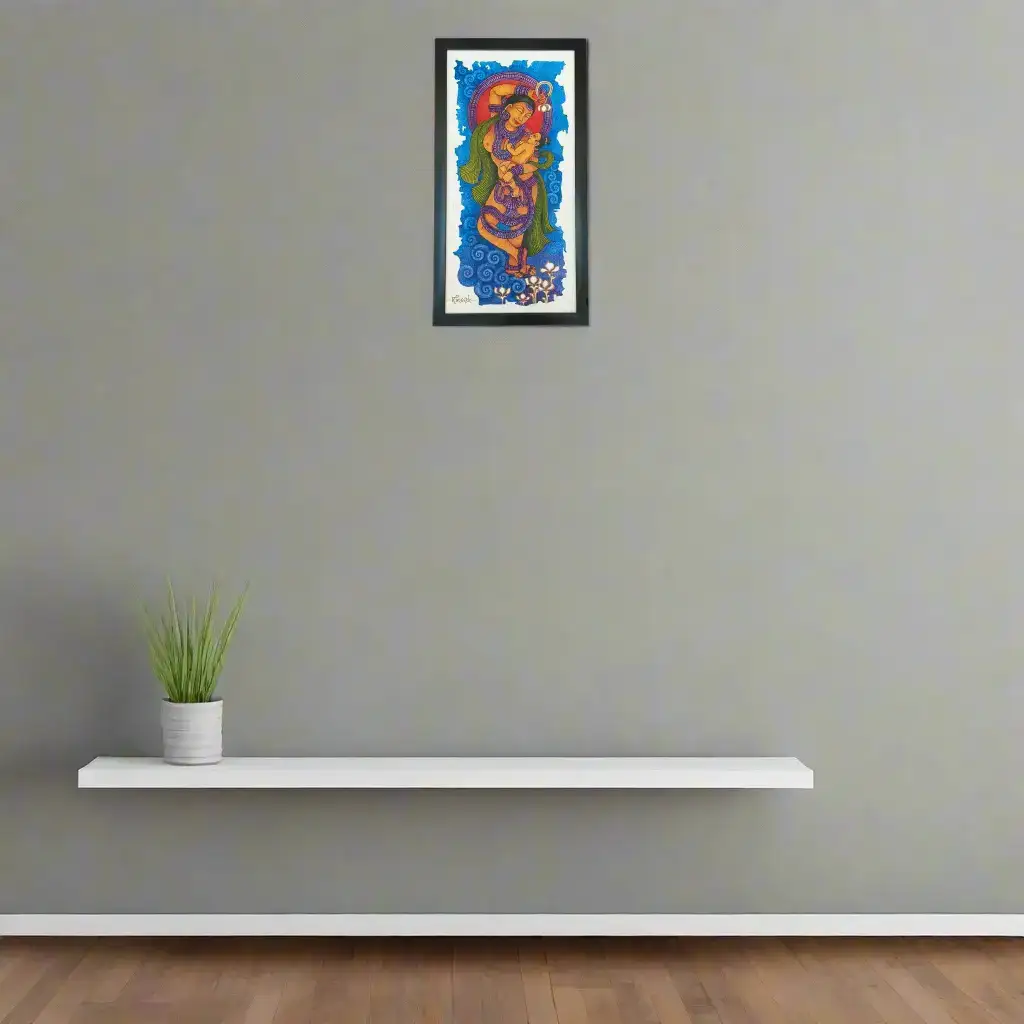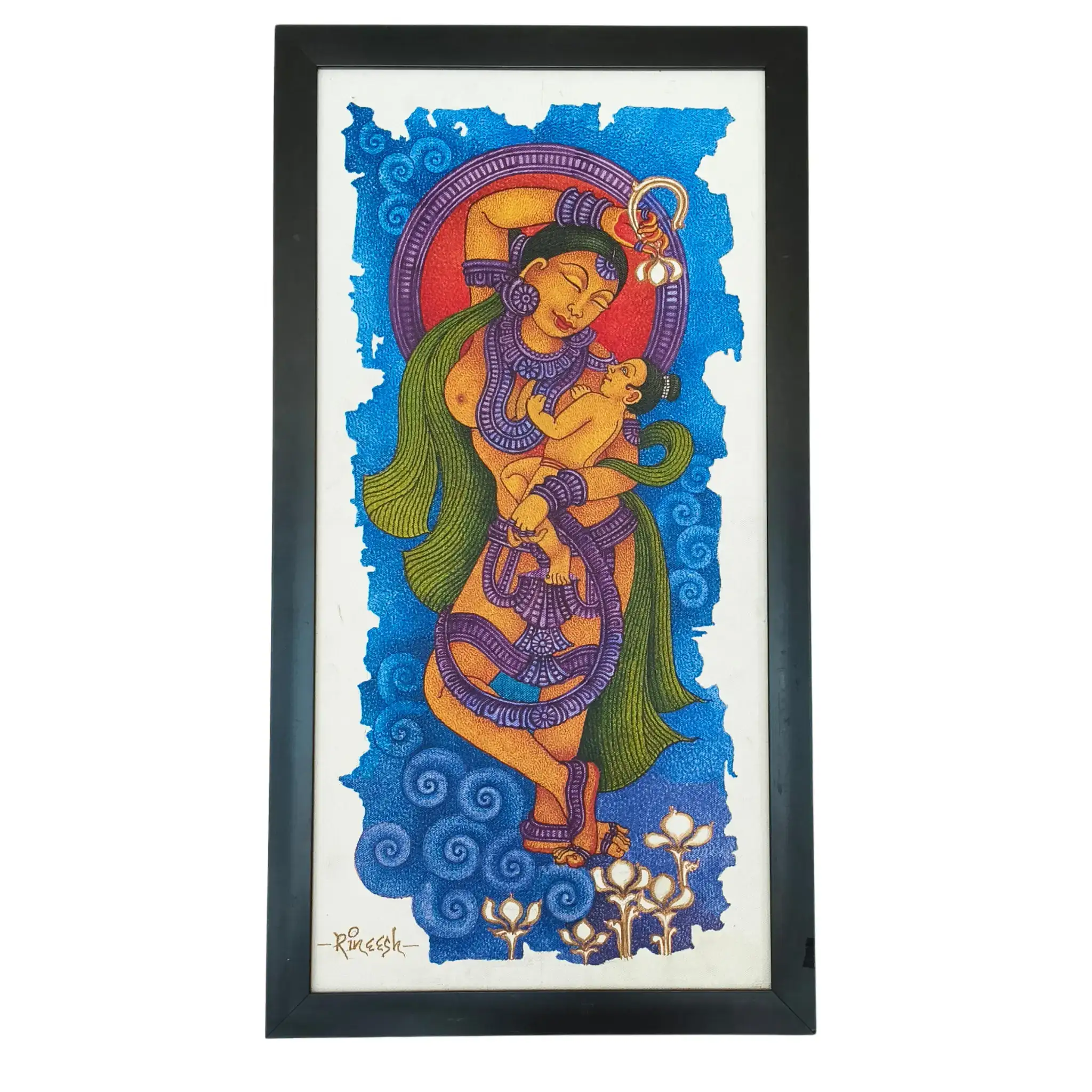
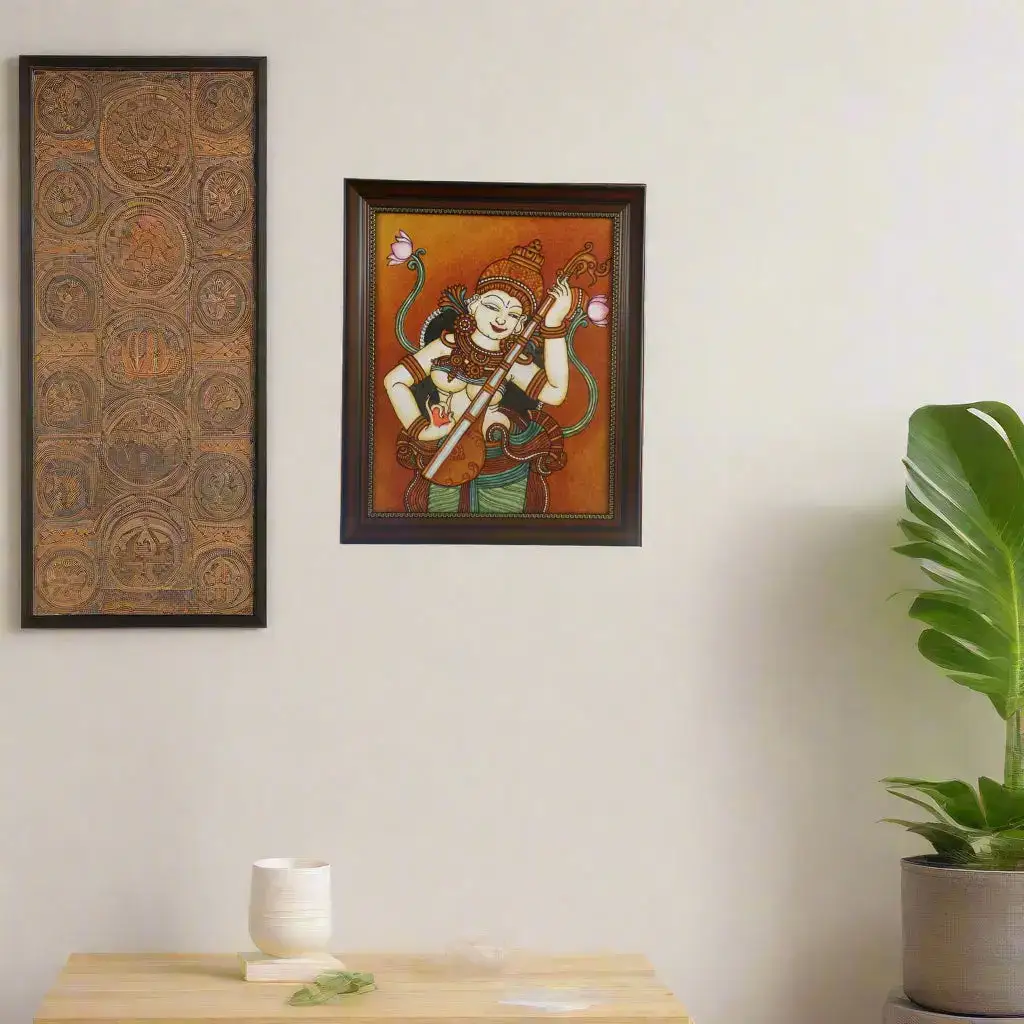
Goddess Saraswathi – Handcrafted Kerala Mural Painting
Saraswathi Kerala Mural Painting: An Artistic Heritage
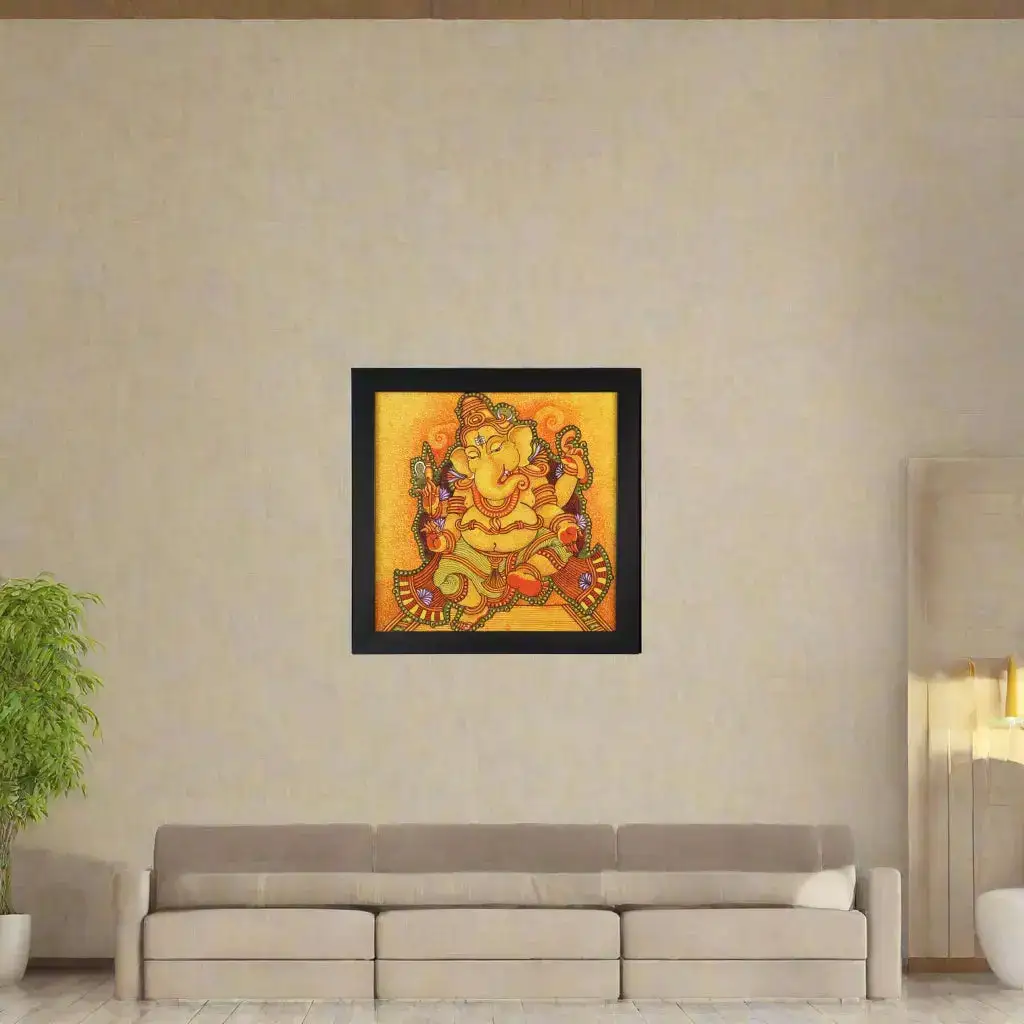
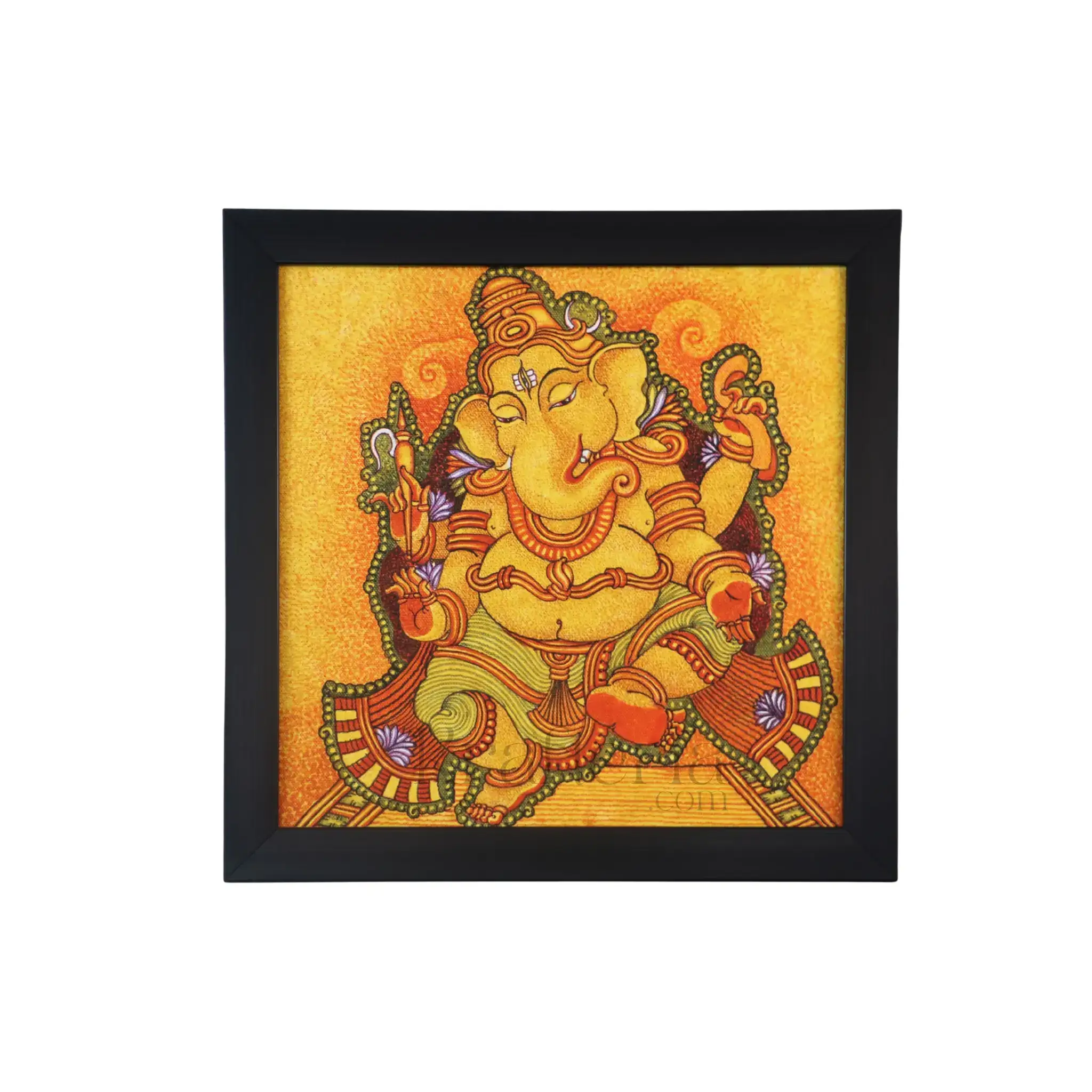
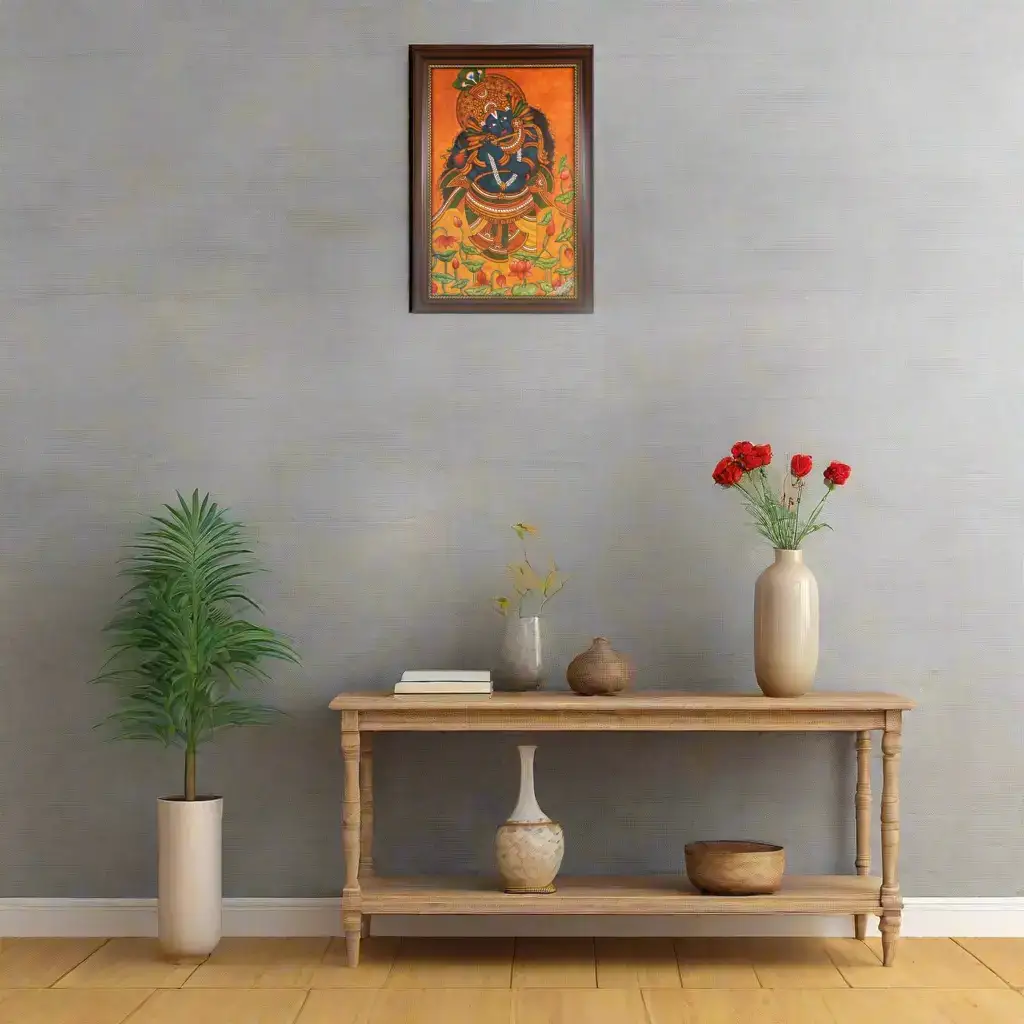
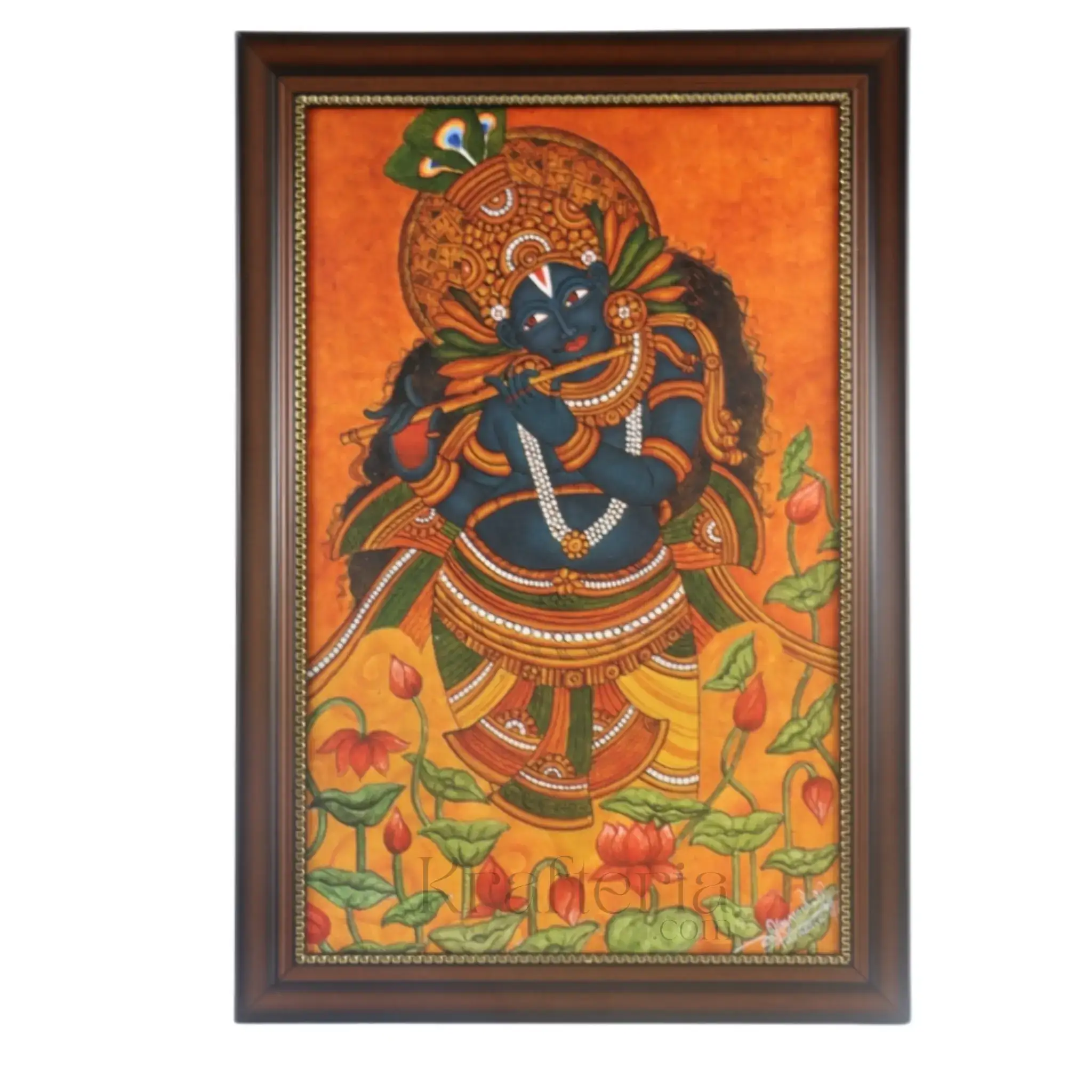
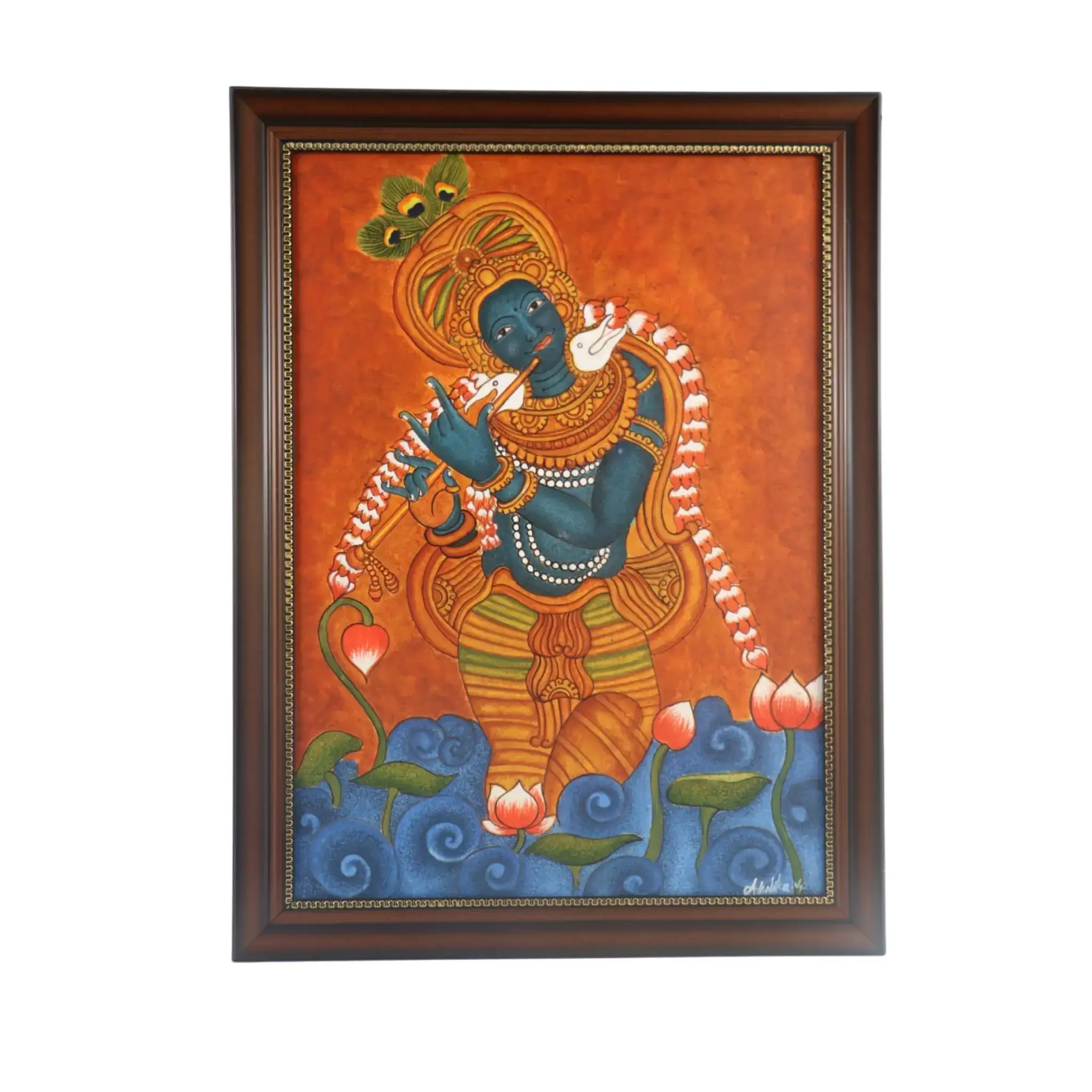
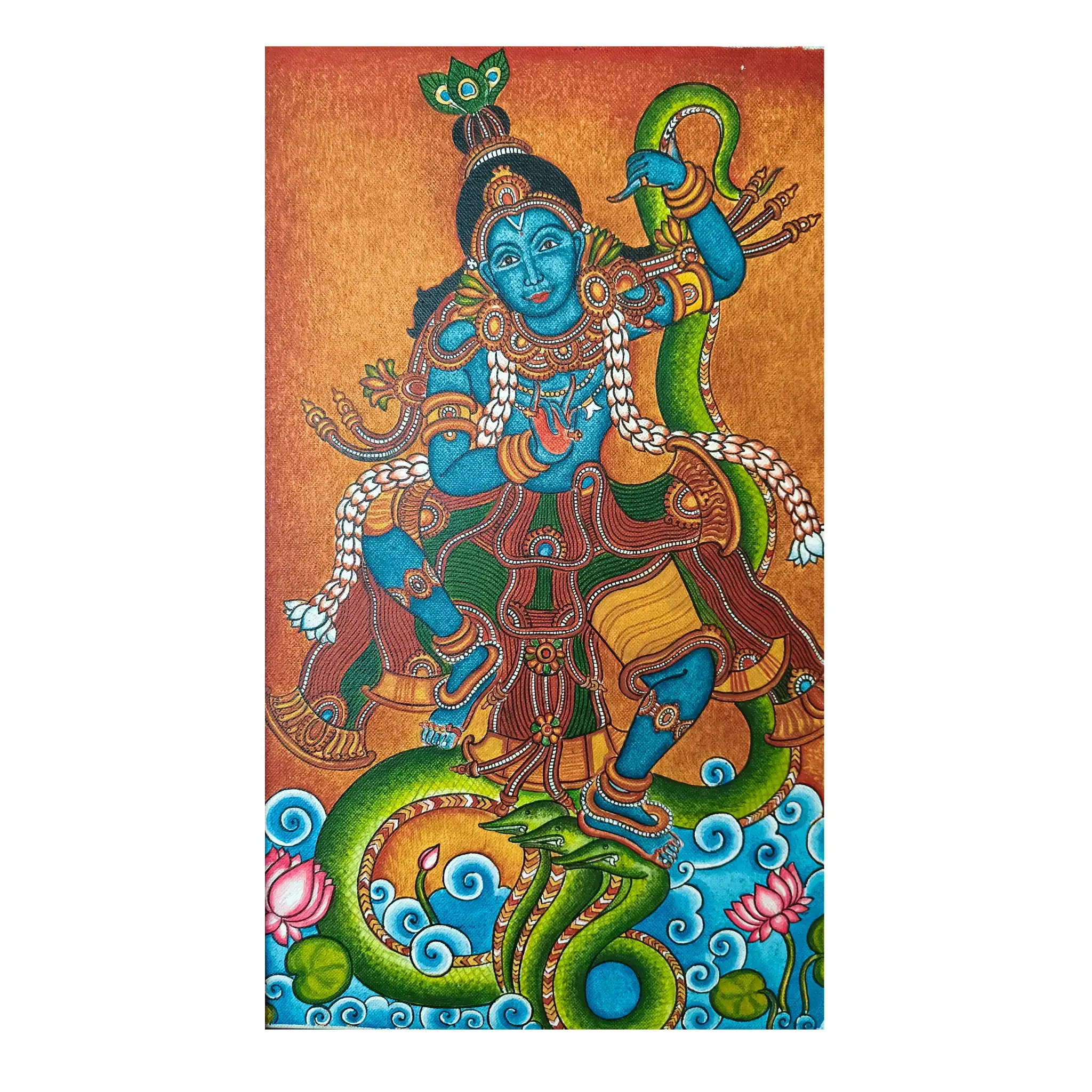
The Saraswathi Kerala Mural Painting is a traditional art form deeply rooted in the culture of Kerala. This painting depicts Goddess Saraswathi, the Hindu deity of knowledge, wisdom, music, and arts. It reflects the unique style and rich history of Kerala mural paintings that have been practiced for centuries.
Originating between the 9th and 12th centuries CE, Kerala mural wall art flourished primarily in Hindu temples. This sacred form of art is revered for its mythological themes, intricate details, and natural earthy color palette. Each artwork captures the essence of divine figures through elaborate costumes and symbolic gestures.
History of Kerala Mural Paintings
Kerala mural paintings represent an age-old tradition of wall art originating in the southern Indian state of Kerala. These murals blossomed between the 9th and 12th centuries CE. Their historic significance is tied to the religious and cultural heritage of this region, mainly adorning the walls of temples.
The art form is firmly rooted in Hindu mythology, showcasing gods, goddesses, celestial beings, and animals. Each element narrates stories from ancient scriptures and epics. The themes are not just artistic but also symbolic, reflecting spirituality and devotion.
Key Characteristics of Saraswathi Kerala Mural Painting
The Kerala Mural Painting employs unique techniques and materials that distinguish it from other mural traditions globally. Artists use natural pigments and vegetable dyes, making each painting vibrant and eco-friendly.
Typically painted on lime-plastered walls, these murals have stood the test of time due to their durable medium. The surfaces used for these murals contribute to their exceptional texture and lasting color brilliance.
Medium and Surface
The murals are created on lime-plastered walls or treated surfaces. This choice of medium enhances the mural's longevity and gives it an authentic earthy feel. Traditional artisans ensure the surface is well-prepared to absorb the natural colors deeply.
Technique Used
The fresco secco technique sets Kerala mural art apart from Italian frescoes. Instead of painting on wet plaster, Kerala artists paint on dry plaster. This method allows for precise detailing and layering of colors.
The Saraswathi Kerala Mural Painting especially benefits from this technique, as it helps emphasize the intricate patterns and elaborate motifs representing Goddess Saraswathi.
Color Palette in Saraswathi Kerala Mural Art
The color scheme in Kerala murals is dominated by five natural hues derived from local sources. Each color holds symbolic and cultural significance, enhancing the spiritual aura of the murals.
- Red – Obtained from laterite, symbolizing energy and divinity.
- Yellow – From yellow clay or turmeric, representing purity and wisdom.
- Green – Extracted from plants, signifying life and renewal.
- Black – Made from burnt coconut shells, adding depth and contrast.
- White – Lime, highlighting purity and clarity.
The combined use of these earthy colors gives the Goddess Saraswathi Kerala mural painting its distinctive look and feel. Each pigment contributes to an overall visual harmony.
Thematic Elements of Saraswathi Painting
The themes of these murals are predominantly mythological and religious. The central figures often include gods, goddesses, and celestial beings that are depicted in idealized divine forms. Saraswathi is a frequent subject owing to her importance in Hindu culture.
Costuming and stylized gestures play a key role in portraying these divine figures. Each gesture and decoration carries symbolic meaning, which enriches the narrative of the painting.
Saraswati Mural Painting Kerala Style: Cultural and Spiritual Significance
The Saraswathi Kerala Painting is not only an artistic expression but also a spiritual reminder. Goddess Saraswathi symbolizes wisdom, learning, creativity, and purity. This art form is highly auspicious and often used as decor in study rooms, libraries, and places dedicated to art and music.
Incorporating a Saraswati Mural Painting Kerala Style in living spaces adds a touch of cultural heritage. It infuses environments with a sense of calm and intellectual inspiration, true to the goddess’s symbolism.
Preservation of Kerala Mural Wall Art
Artisans of Kerala continue to preserve this traditional craft with great respect. They follow age-old methods to create authentic and original pieces. Each Saraswathi Mural Painting is handmade, capturing the spirit of Kerala’s rich cultural past.
Through such dedicated efforts, the legacy of Kerala mural art remains alive, educating and inspiring future generations.
Product Information
Product Information
Shipping & Returns
Shipping & Returns
Description
Saraswathi Kerala Mural Painting: An Artistic Heritage
The Saraswathi Kerala Mural Painting is a traditional art form deeply rooted in the culture of Kerala. This painting depicts Goddess Saraswathi, the Hindu deity of knowledge, wisdom, music, and arts. It reflects the unique style and rich history of Kerala mural paintings that have been practiced for centuries.
Originating between the 9th and 12th centuries CE, Kerala mural wall art flourished primarily in Hindu temples. This sacred form of art is revered for its mythological themes, intricate details, and natural earthy color palette. Each artwork captures the essence of divine figures through elaborate costumes and symbolic gestures.
History of Kerala Mural Paintings
Kerala mural paintings represent an age-old tradition of wall art originating in the southern Indian state of Kerala. These murals blossomed between the 9th and 12th centuries CE. Their historic significance is tied to the religious and cultural heritage of this region, mainly adorning the walls of temples.
The art form is firmly rooted in Hindu mythology, showcasing gods, goddesses, celestial beings, and animals. Each element narrates stories from ancient scriptures and epics. The themes are not just artistic but also symbolic, reflecting spirituality and devotion.
Key Characteristics of Saraswathi Kerala Mural Painting
The Kerala Mural Painting employs unique techniques and materials that distinguish it from other mural traditions globally. Artists use natural pigments and vegetable dyes, making each painting vibrant and eco-friendly.
Typically painted on lime-plastered walls, these murals have stood the test of time due to their durable medium. The surfaces used for these murals contribute to their exceptional texture and lasting color brilliance.
Medium and Surface
The murals are created on lime-plastered walls or treated surfaces. This choice of medium enhances the mural's longevity and gives it an authentic earthy feel. Traditional artisans ensure the surface is well-prepared to absorb the natural colors deeply.
Technique Used
The fresco secco technique sets Kerala mural art apart from Italian frescoes. Instead of painting on wet plaster, Kerala artists paint on dry plaster. This method allows for precise detailing and layering of colors.
The Saraswathi Kerala Mural Painting especially benefits from this technique, as it helps emphasize the intricate patterns and elaborate motifs representing Goddess Saraswathi.
Color Palette in Saraswathi Kerala Mural Art
The color scheme in Kerala murals is dominated by five natural hues derived from local sources. Each color holds symbolic and cultural significance, enhancing the spiritual aura of the murals.
- Red – Obtained from laterite, symbolizing energy and divinity.
- Yellow – From yellow clay or turmeric, representing purity and wisdom.
- Green – Extracted from plants, signifying life and renewal.
- Black – Made from burnt coconut shells, adding depth and contrast.
- White – Lime, highlighting purity and clarity.
The combined use of these earthy colors gives the Goddess Saraswathi Kerala mural painting its distinctive look and feel. Each pigment contributes to an overall visual harmony.
Thematic Elements of Saraswathi Painting
The themes of these murals are predominantly mythological and religious. The central figures often include gods, goddesses, and celestial beings that are depicted in idealized divine forms. Saraswathi is a frequent subject owing to her importance in Hindu culture.
Costuming and stylized gestures play a key role in portraying these divine figures. Each gesture and decoration carries symbolic meaning, which enriches the narrative of the painting.
Saraswati Mural Painting Kerala Style: Cultural and Spiritual Significance
The Saraswathi Kerala Painting is not only an artistic expression but also a spiritual reminder. Goddess Saraswathi symbolizes wisdom, learning, creativity, and purity. This art form is highly auspicious and often used as decor in study rooms, libraries, and places dedicated to art and music.
Incorporating a Saraswati Mural Painting Kerala Style in living spaces adds a touch of cultural heritage. It infuses environments with a sense of calm and intellectual inspiration, true to the goddess’s symbolism.
Preservation of Kerala Mural Wall Art
Artisans of Kerala continue to preserve this traditional craft with great respect. They follow age-old methods to create authentic and original pieces. Each Saraswathi Mural Painting is handmade, capturing the spirit of Kerala’s rich cultural past.
Through such dedicated efforts, the legacy of Kerala mural art remains alive, educating and inspiring future generations.