Kerala Mural Painting – Krishna in Vrindavan with Cows
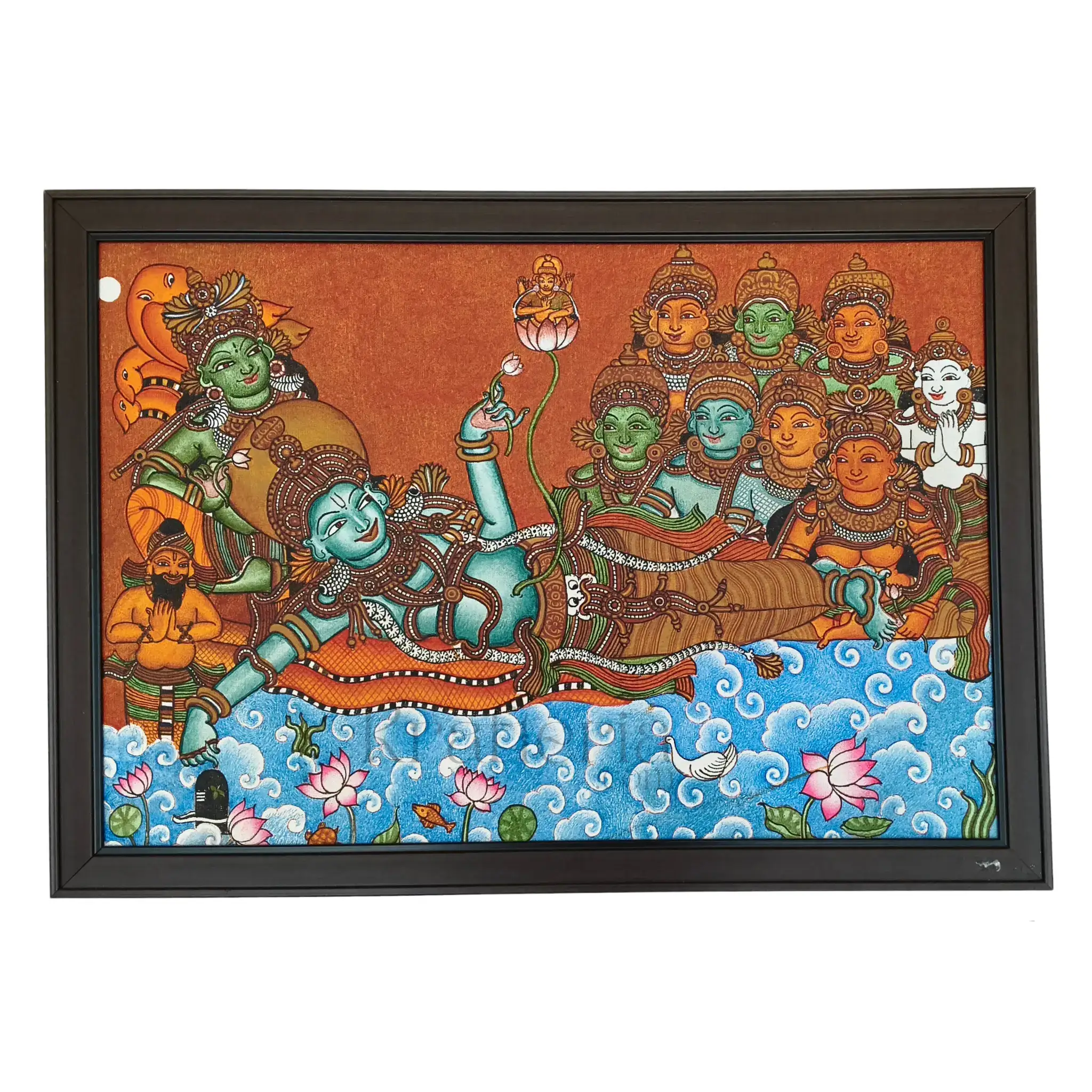
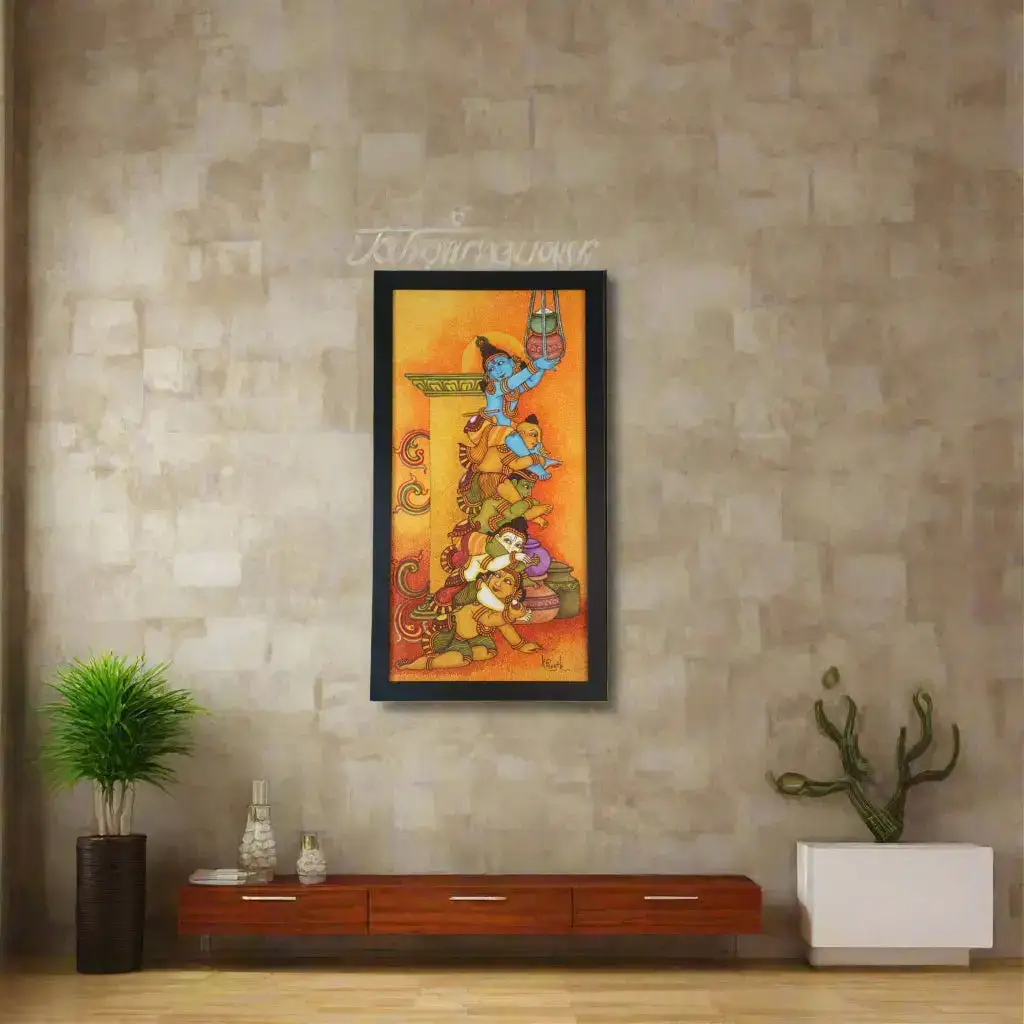
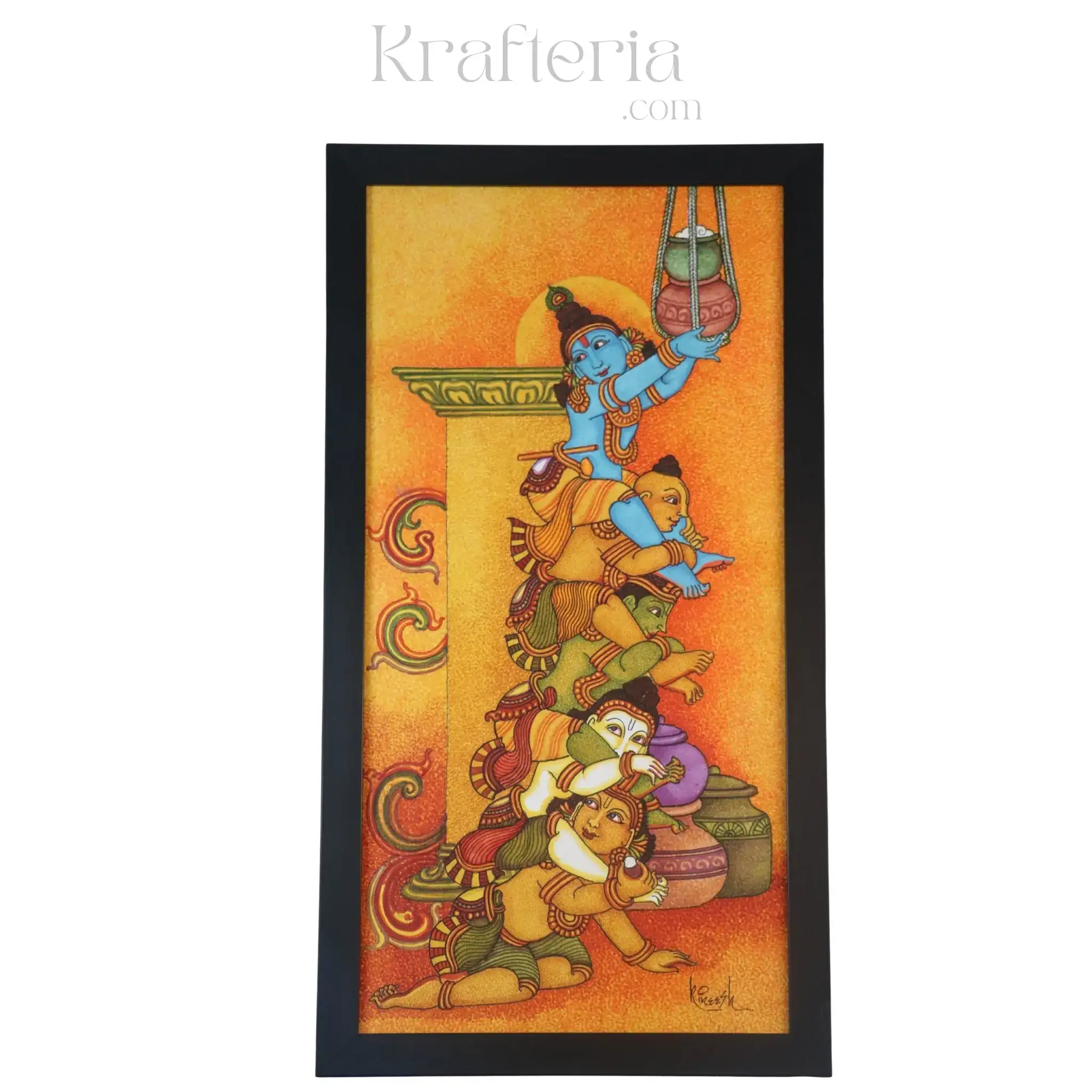
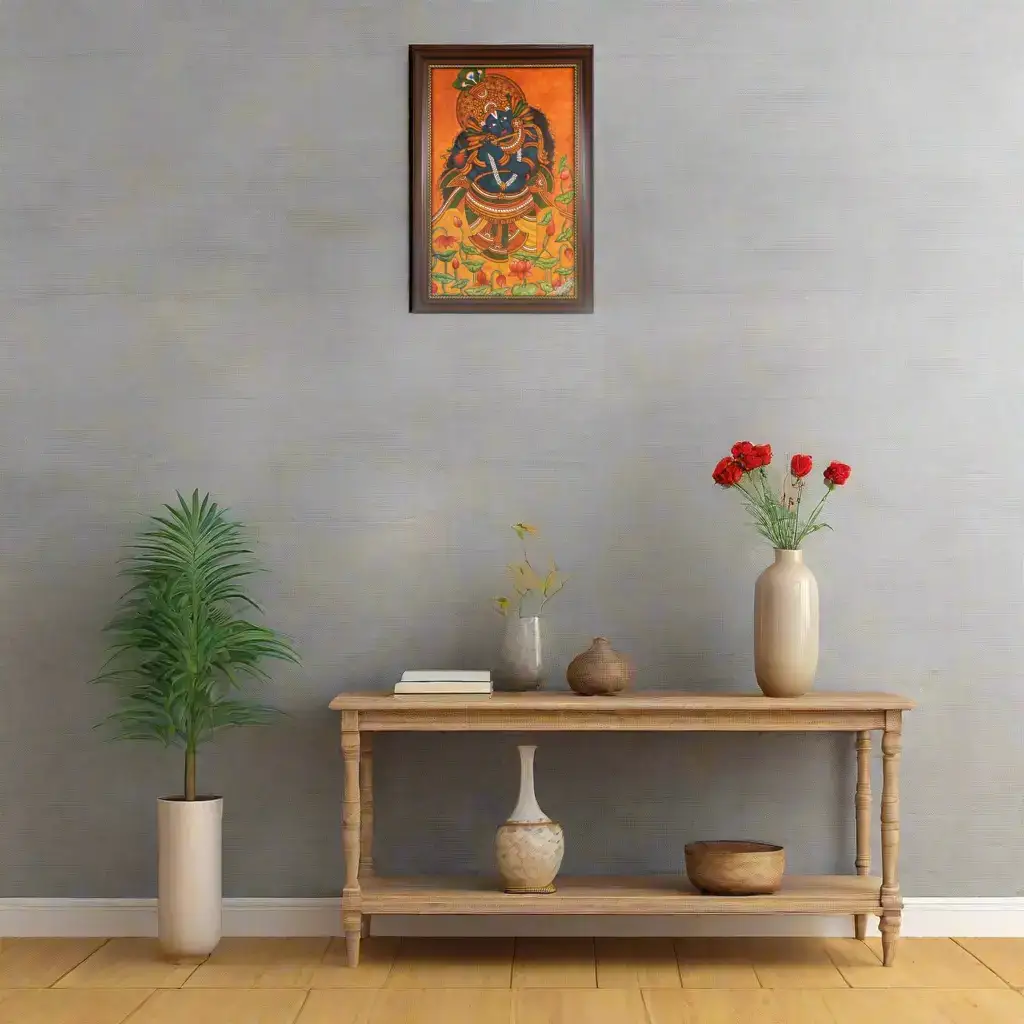
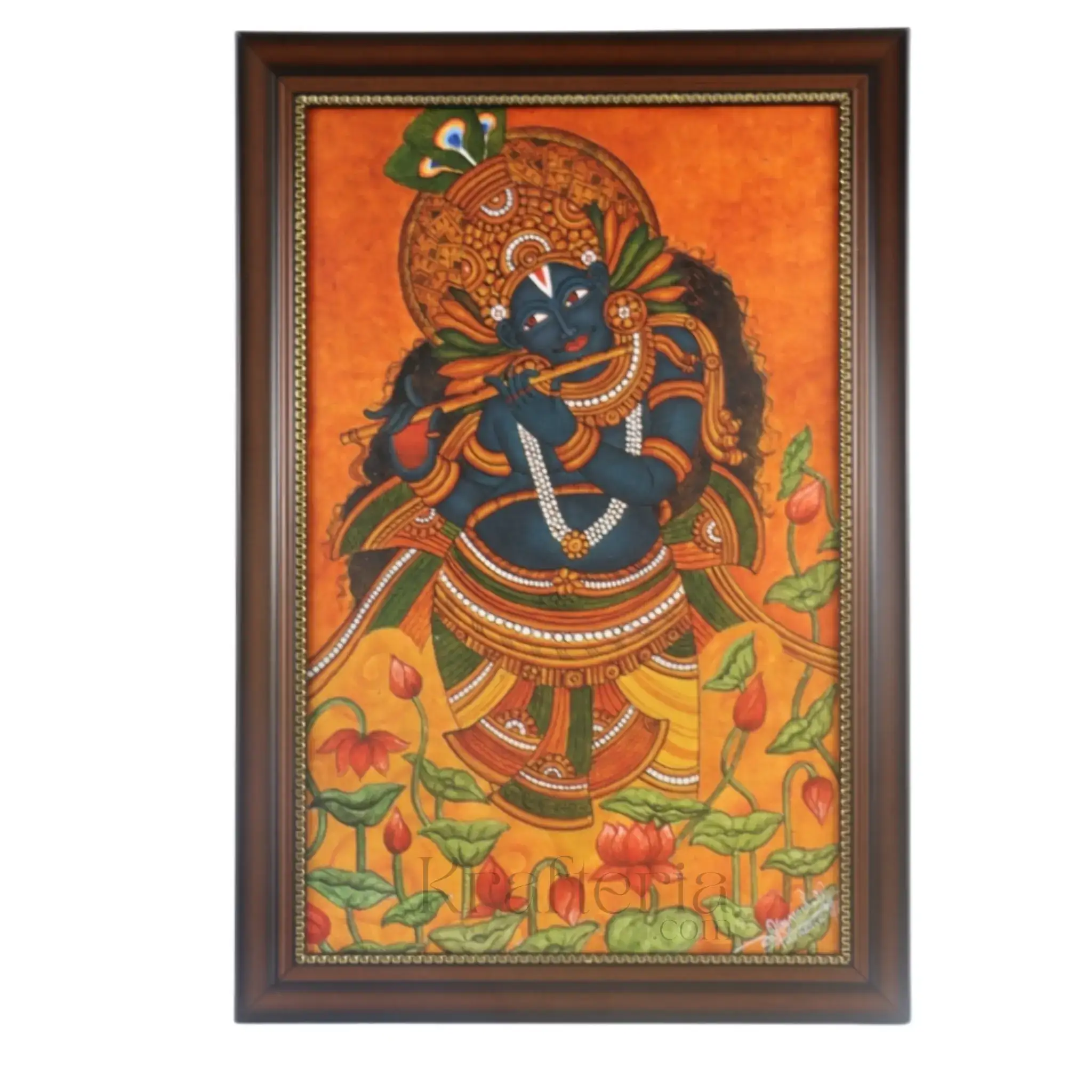
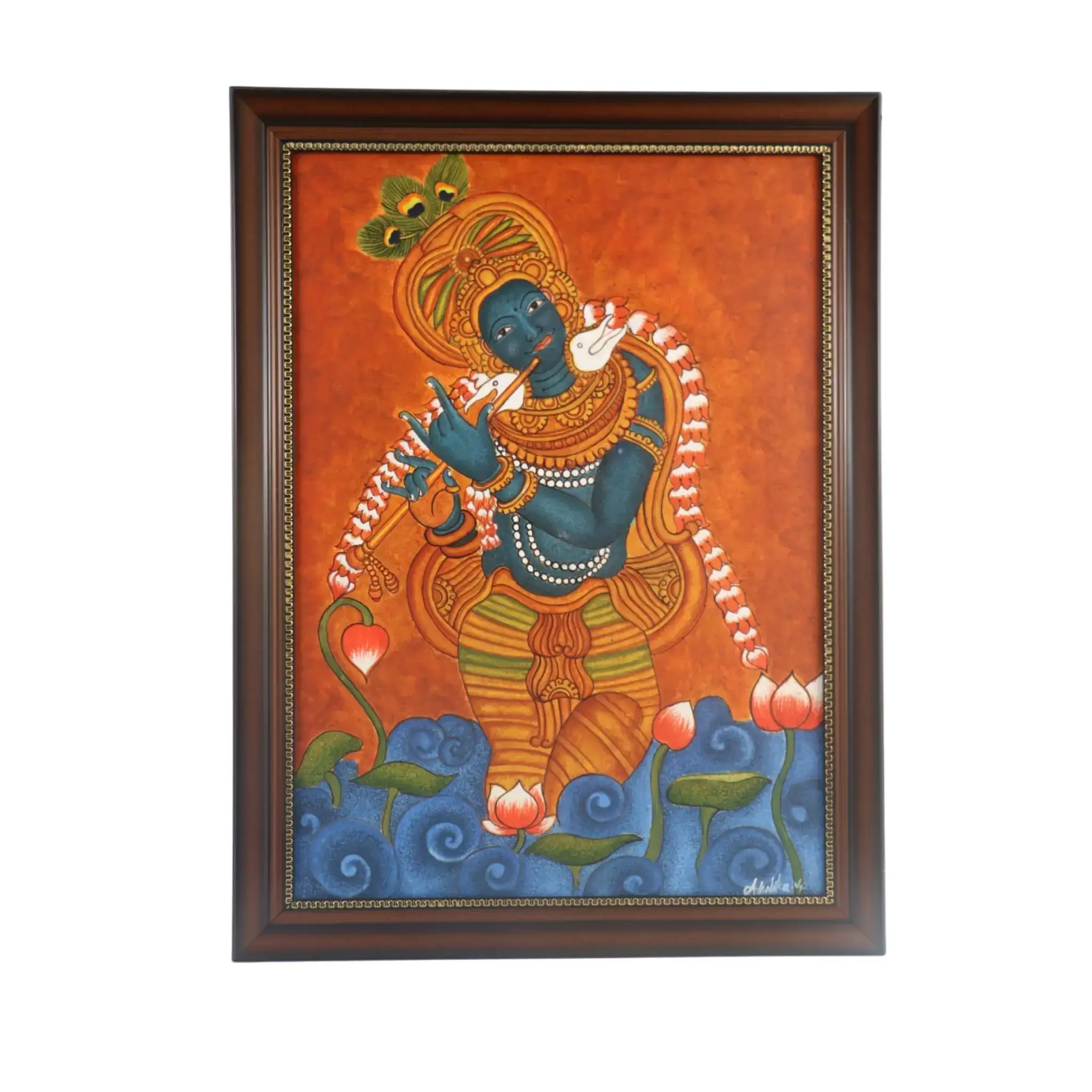
Discover the exquisite Kerala mural painting of Krishna with cows painting, a timeless piece that captures divine grace and cultural heritage. These original paintings are directly sourced from skilled artists who preserve the ancient art form's authenticity and beauty. With vibrant colors and intricate details, this artwork is a celebration of spirituality and tradition.
History of Kerala Mural
Kerala boasts a rich and vibrant tradition dating back to between the 9th and 12th centuries CE. These murals originated in the Indian state of Kerala, adorning the walls of many Hindu temples. This art form is deeply linked to Hindu temple art and mythology. Gods, goddesses, and celestial beings are portrayed with mythological themes and an earthy color palette that reflects the cultural and spiritual essence of Kerala.
Over centuries, Kerala mural paintings have been preserved with great care. Master artists use their skills to keep this heritage alive through artworks such as the iconic Kerala mural devotional Krishna art, an iconic representation of Lord Krishna’s pastoral life and divine charm.
Key Characteristics of Krishna painting
The Kerala mural painting technique is unique and involves specific materials and methods. The paintings are traditionally done on lime-plastered walls, providing a smooth surface for the artwork. Artists use natural pigments and vegetable dyes, ensuring that the colors remain vibrant yet eco-friendly. This ecological approach makes each work of art, including the Krishna with cows painting, truly special.
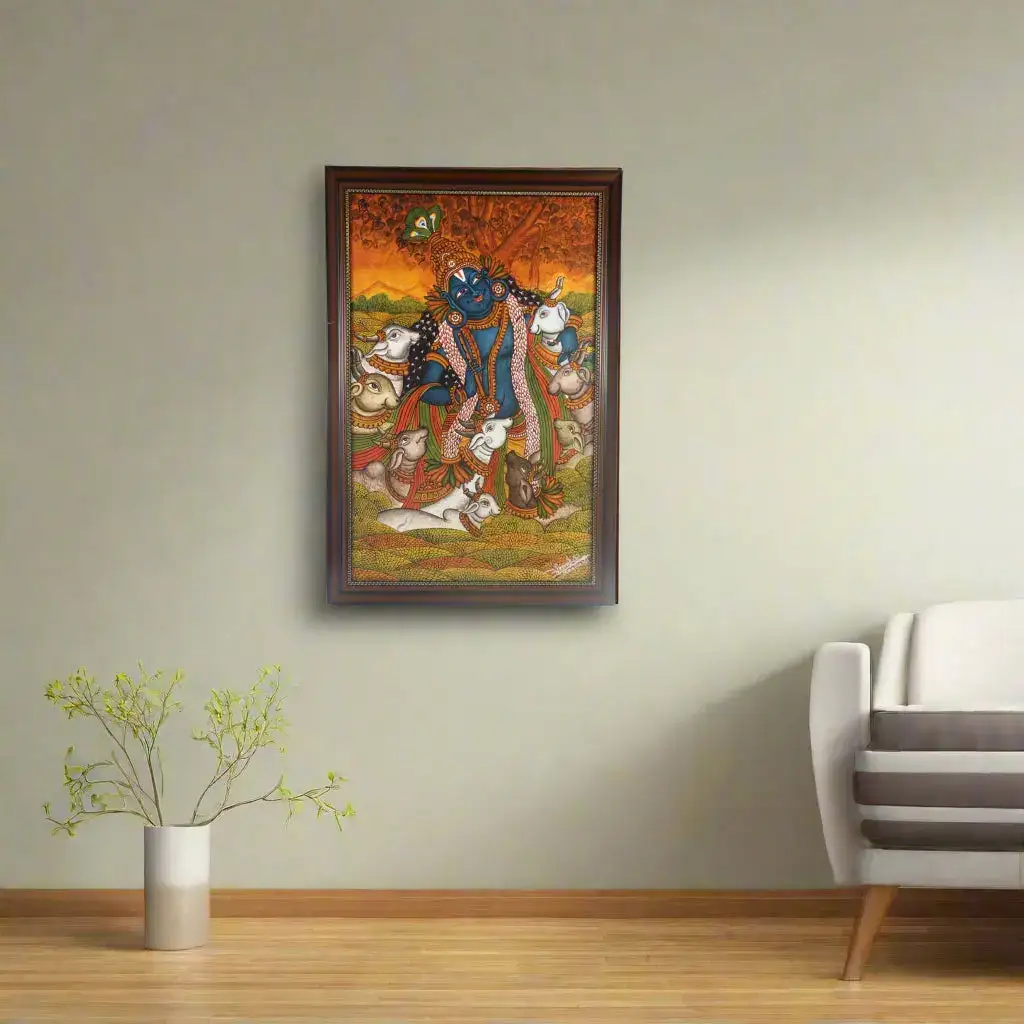
The depiction of cows alongside Krishna holds deep symbolic meaning. Cows are sacred animals in Hinduism, representing purity and abundance. In the artwork, Krishna is portrayed as the divine cowherd or Gopala, surrounded by affectionate cows, reflecting his connection with nature and his role as a protector.
Technique and Medium
The technique used in these murals is known as fresco secco. Unlike Italian fresco, which involves painting on wet plaster, Kerala artists paint on dry plaster. This method allows for fine detailing and is suitable for the natural pigments used. Fresco secco results in richly textured artwork where each brushstroke contributes to the painting's depth and character.
The medium includes lime plaster as the base and organic pigments derived from minerals and plants. This careful material selection ensures durability and maintains the painting’s earthy charm. The Krishna with cows painting beautifully showcases this technique through vibrant depictions of the divine and pastoral elements.
Colour Palette in Kerala Murals
One striking feature of Kerala mural, including the painting, is its distinctive color palette. It is dominated by five key colors, all derived from natural sources:
- Red – sourced from laterite, a common soil component in Kerala
- Yellow – made from yellow clay or turmeric, both known for their bright hues
- Green – extracted from plant sources, adding a natural vibrancy
- Black – created from burnt coconut shells, giving deep contrast
- White – derived from lime, used to highlight and soften features
This natural palette ensures the paintings remain harmonious and timeless. It connects the art to earth and nature, reinforcing the spiritual and cultural messages behind the themes.
Themes Depicted in Krishna Painting
The central figures in Kerala murals are usually gods, goddesses, celestial beings, and animals from Hindu mythology. The Krishna in Vrindavan mural painting gift captures Krishna in his divine, idealized form, surrounded by cows in Vrindavan. The cows symbolize prosperity and devotion, while Krishna’s gestures and costumes reflect his celestial status.
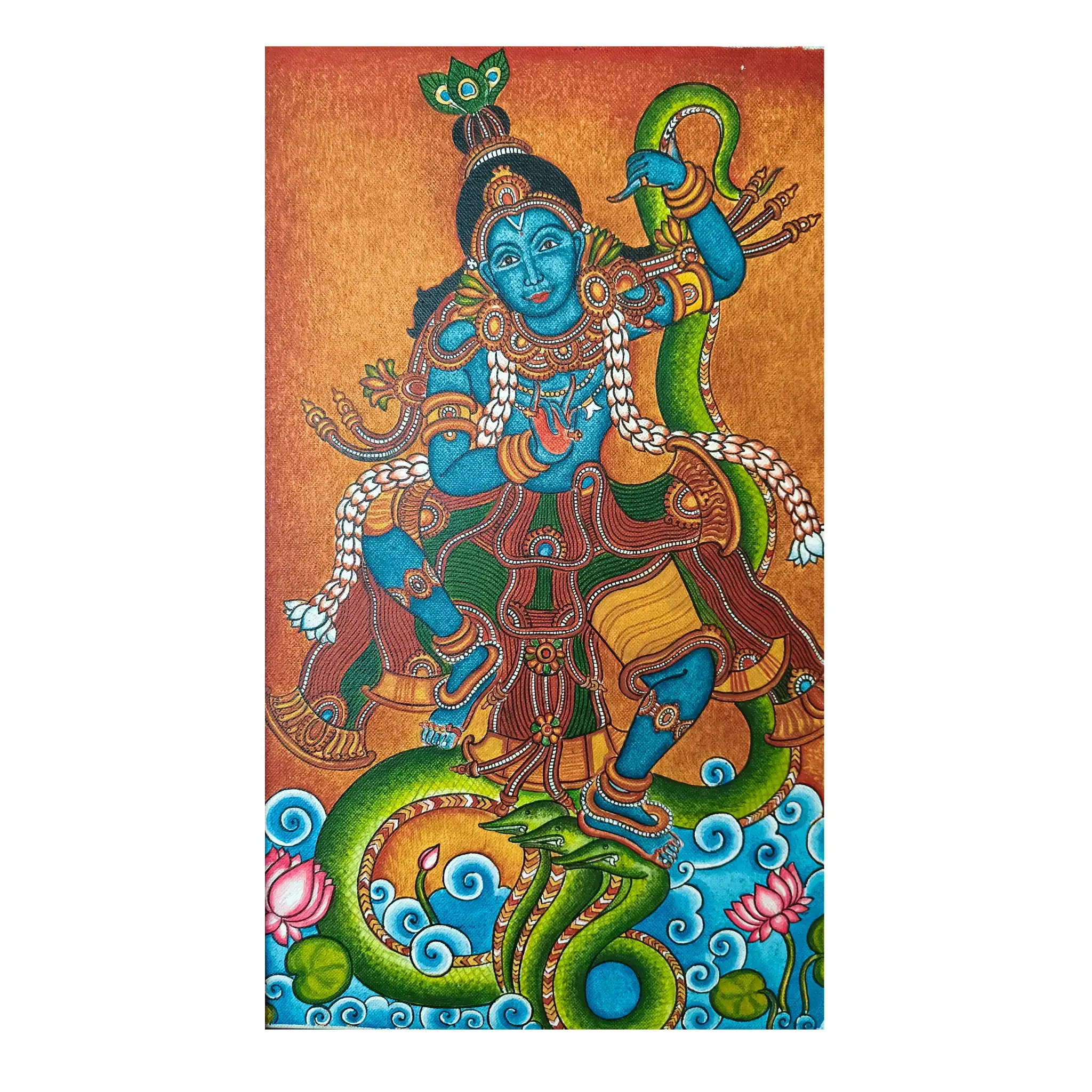
These murals typically feature elaborate costumes and stylized gestures. Figures are presented with intense detailing and artistic finesse. Krishna is shown with a blue complexion, a characteristic element conveying his divine nature. This iconic depiction is central to many spiritual homes and temples, evoking feelings of peace and devotion.
By celebrating Krishna alongside cows, this painting illustrates the pastoral beauty and spiritual significance of Krishna’s role as protector of cows and nature. As a favorite subject for art lovers and spiritual seekers, it embodies the essence of Hand painted Krishna in Vrindavan Kerala mural.
Product Information
Product Information
Shipping & Returns
Shipping & Returns
Description
Discover the exquisite Kerala mural painting of Krishna with cows painting, a timeless piece that captures divine grace and cultural heritage. These original paintings are directly sourced from skilled artists who preserve the ancient art form's authenticity and beauty. With vibrant colors and intricate details, this artwork is a celebration of spirituality and tradition.
History of Kerala Mural
Kerala boasts a rich and vibrant tradition dating back to between the 9th and 12th centuries CE. These murals originated in the Indian state of Kerala, adorning the walls of many Hindu temples. This art form is deeply linked to Hindu temple art and mythology. Gods, goddesses, and celestial beings are portrayed with mythological themes and an earthy color palette that reflects the cultural and spiritual essence of Kerala.
Over centuries, Kerala mural paintings have been preserved with great care. Master artists use their skills to keep this heritage alive through artworks such as the iconic Kerala mural devotional Krishna art, an iconic representation of Lord Krishna’s pastoral life and divine charm.
Key Characteristics of Krishna painting
The Kerala mural painting technique is unique and involves specific materials and methods. The paintings are traditionally done on lime-plastered walls, providing a smooth surface for the artwork. Artists use natural pigments and vegetable dyes, ensuring that the colors remain vibrant yet eco-friendly. This ecological approach makes each work of art, including the Krishna with cows painting, truly special.
The depiction of cows alongside Krishna holds deep symbolic meaning. Cows are sacred animals in Hinduism, representing purity and abundance. In the artwork, Krishna is portrayed as the divine cowherd or Gopala, surrounded by affectionate cows, reflecting his connection with nature and his role as a protector.
Technique and Medium
The technique used in these murals is known as fresco secco. Unlike Italian fresco, which involves painting on wet plaster, Kerala artists paint on dry plaster. This method allows for fine detailing and is suitable for the natural pigments used. Fresco secco results in richly textured artwork where each brushstroke contributes to the painting's depth and character.
The medium includes lime plaster as the base and organic pigments derived from minerals and plants. This careful material selection ensures durability and maintains the painting’s earthy charm. The Krishna with cows painting beautifully showcases this technique through vibrant depictions of the divine and pastoral elements.
Colour Palette in Kerala Murals
One striking feature of Kerala mural, including the painting, is its distinctive color palette. It is dominated by five key colors, all derived from natural sources:
- Red – sourced from laterite, a common soil component in Kerala
- Yellow – made from yellow clay or turmeric, both known for their bright hues
- Green – extracted from plant sources, adding a natural vibrancy
- Black – created from burnt coconut shells, giving deep contrast
- White – derived from lime, used to highlight and soften features
This natural palette ensures the paintings remain harmonious and timeless. It connects the art to earth and nature, reinforcing the spiritual and cultural messages behind the themes.
Themes Depicted in Krishna Painting
The central figures in Kerala murals are usually gods, goddesses, celestial beings, and animals from Hindu mythology. The Krishna in Vrindavan mural painting gift captures Krishna in his divine, idealized form, surrounded by cows in Vrindavan. The cows symbolize prosperity and devotion, while Krishna’s gestures and costumes reflect his celestial status.
These murals typically feature elaborate costumes and stylized gestures. Figures are presented with intense detailing and artistic finesse. Krishna is shown with a blue complexion, a characteristic element conveying his divine nature. This iconic depiction is central to many spiritual homes and temples, evoking feelings of peace and devotion.
By celebrating Krishna alongside cows, this painting illustrates the pastoral beauty and spiritual significance of Krishna’s role as protector of cows and nature. As a favorite subject for art lovers and spiritual seekers, it embodies the essence of Hand painted Krishna in Vrindavan Kerala mural.