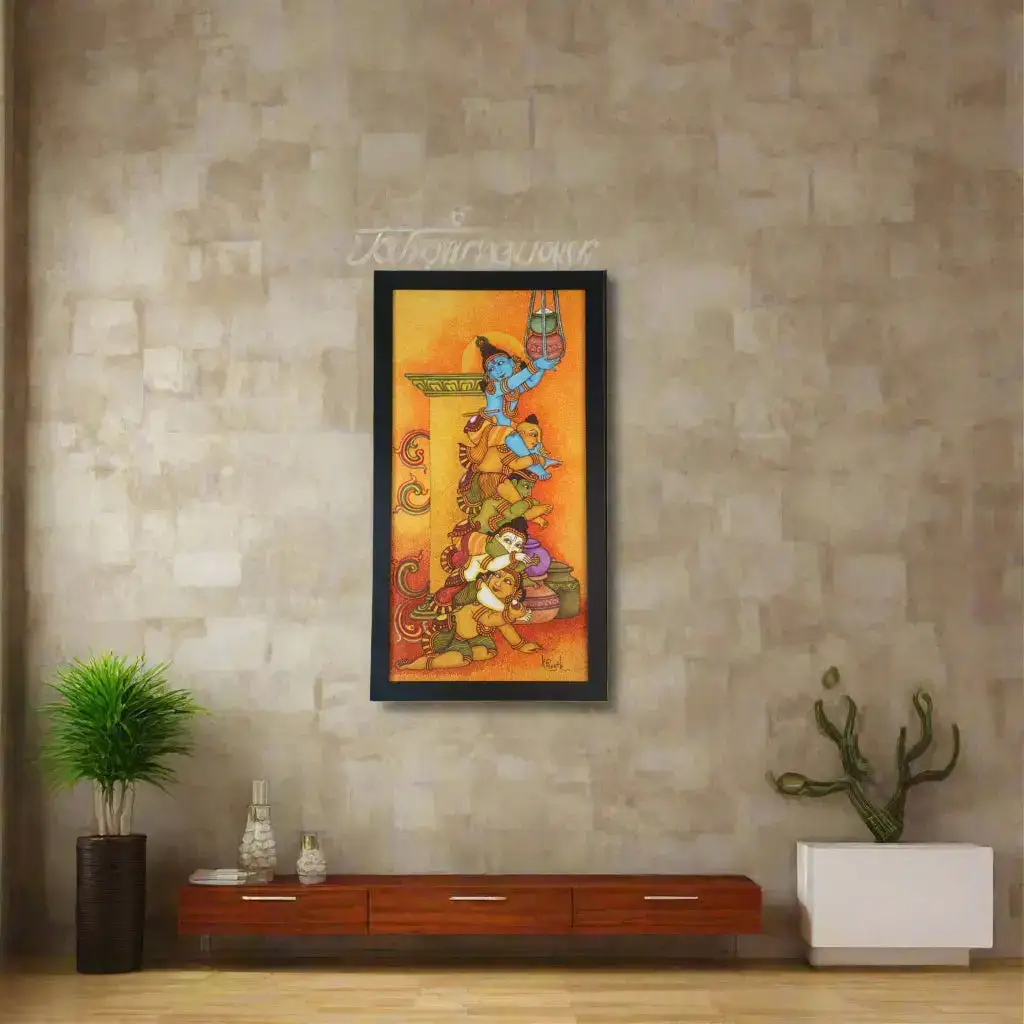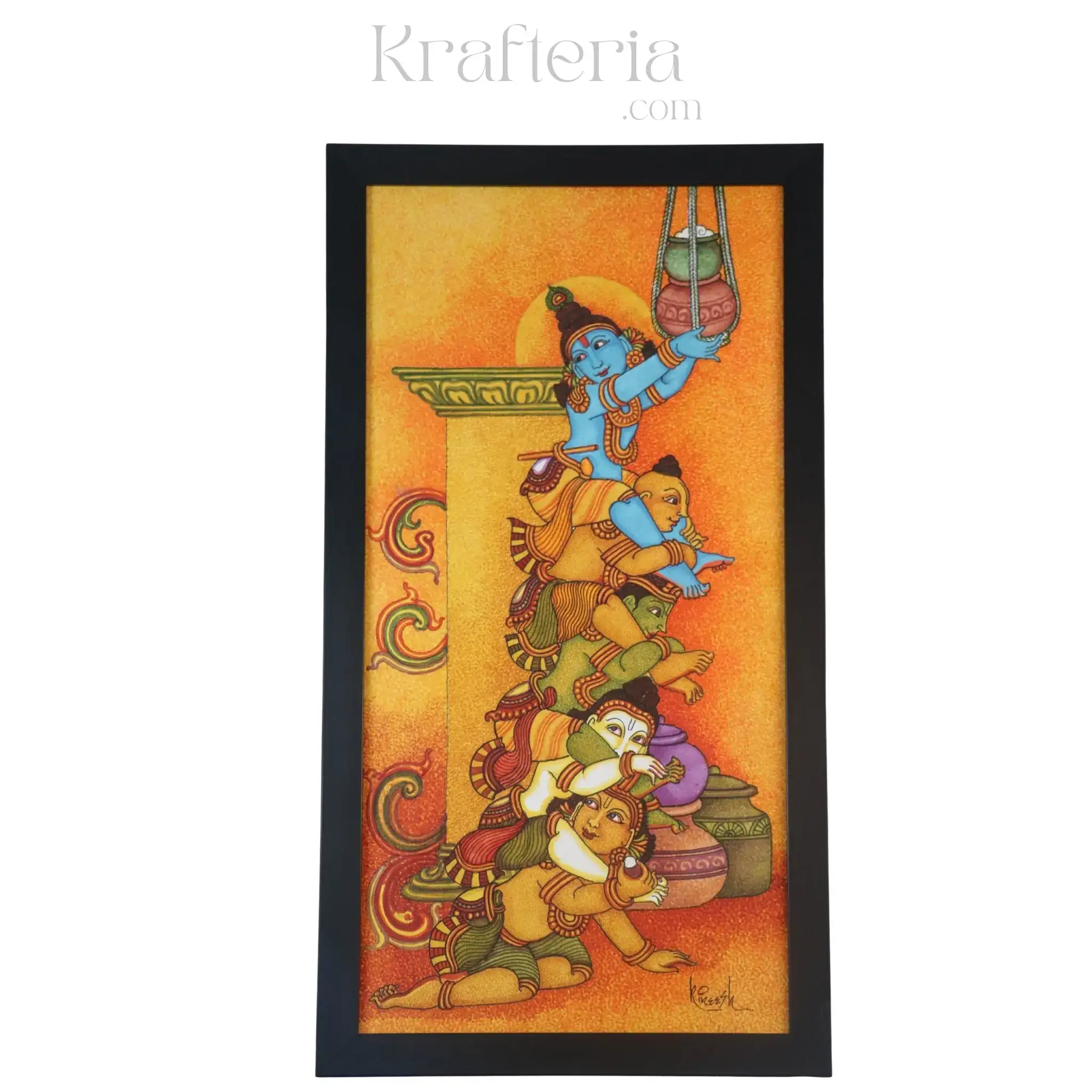
Nanda Gopala – Krishna in Vrindavan Pastures Frame
Nanda Gopala – Krishna in Vrindavan Frame: A Kerala Painting Masterpiece
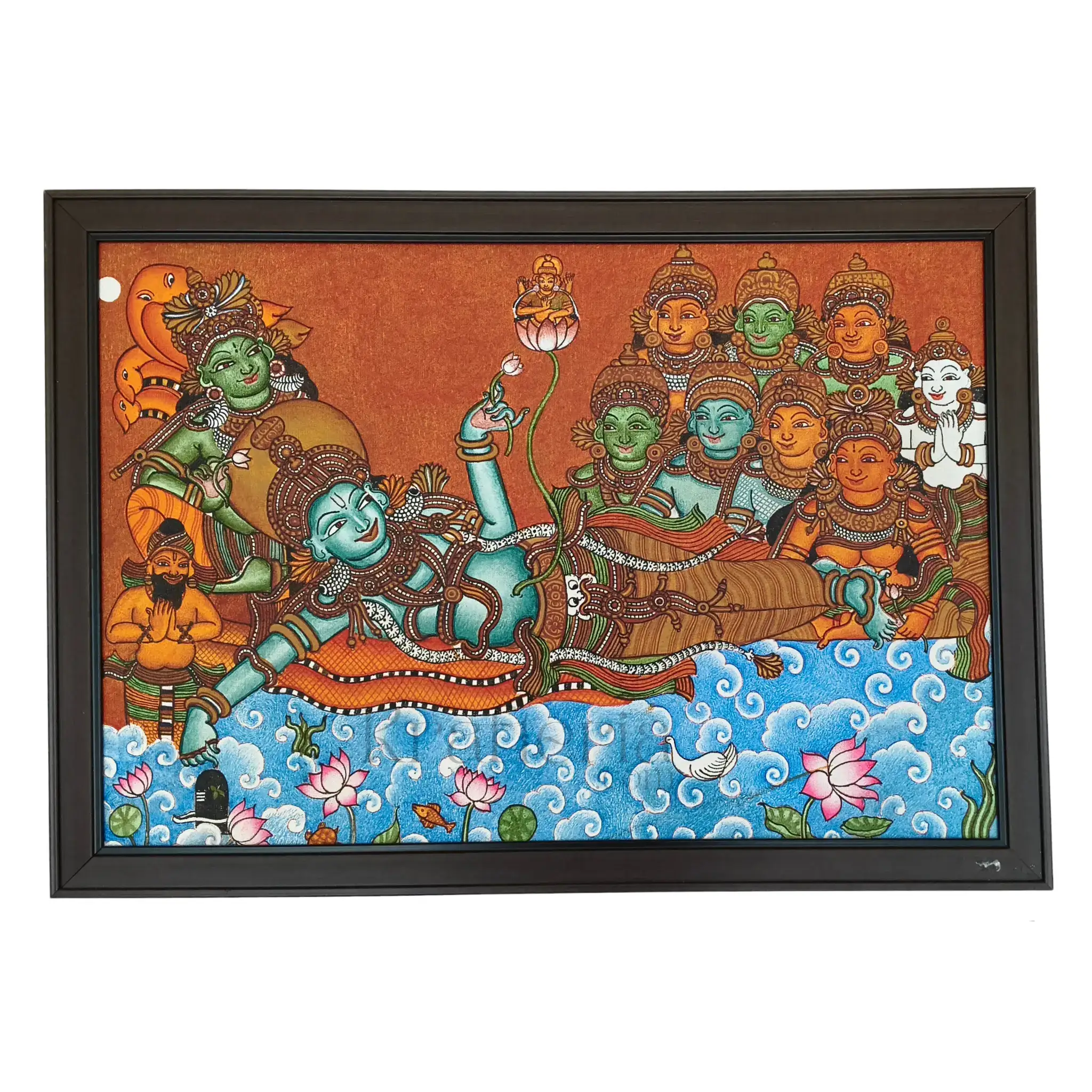
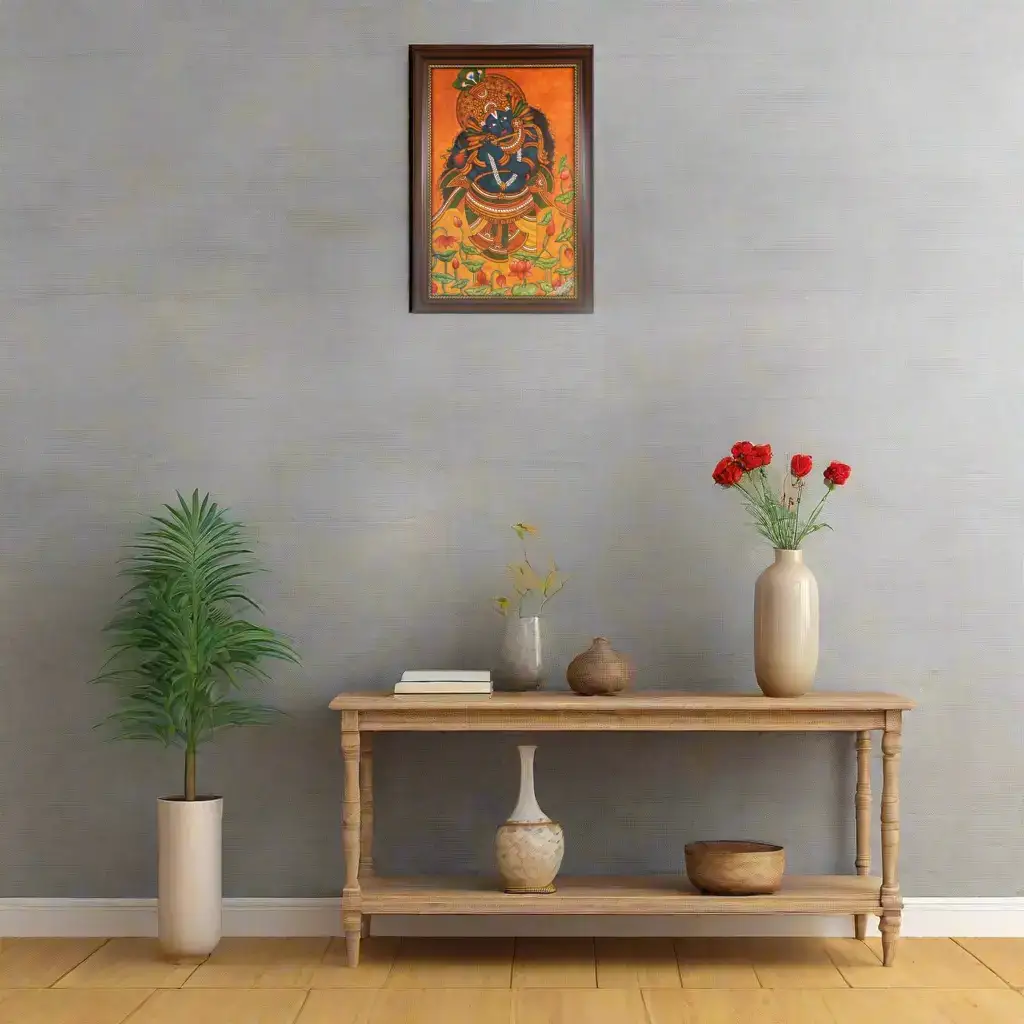
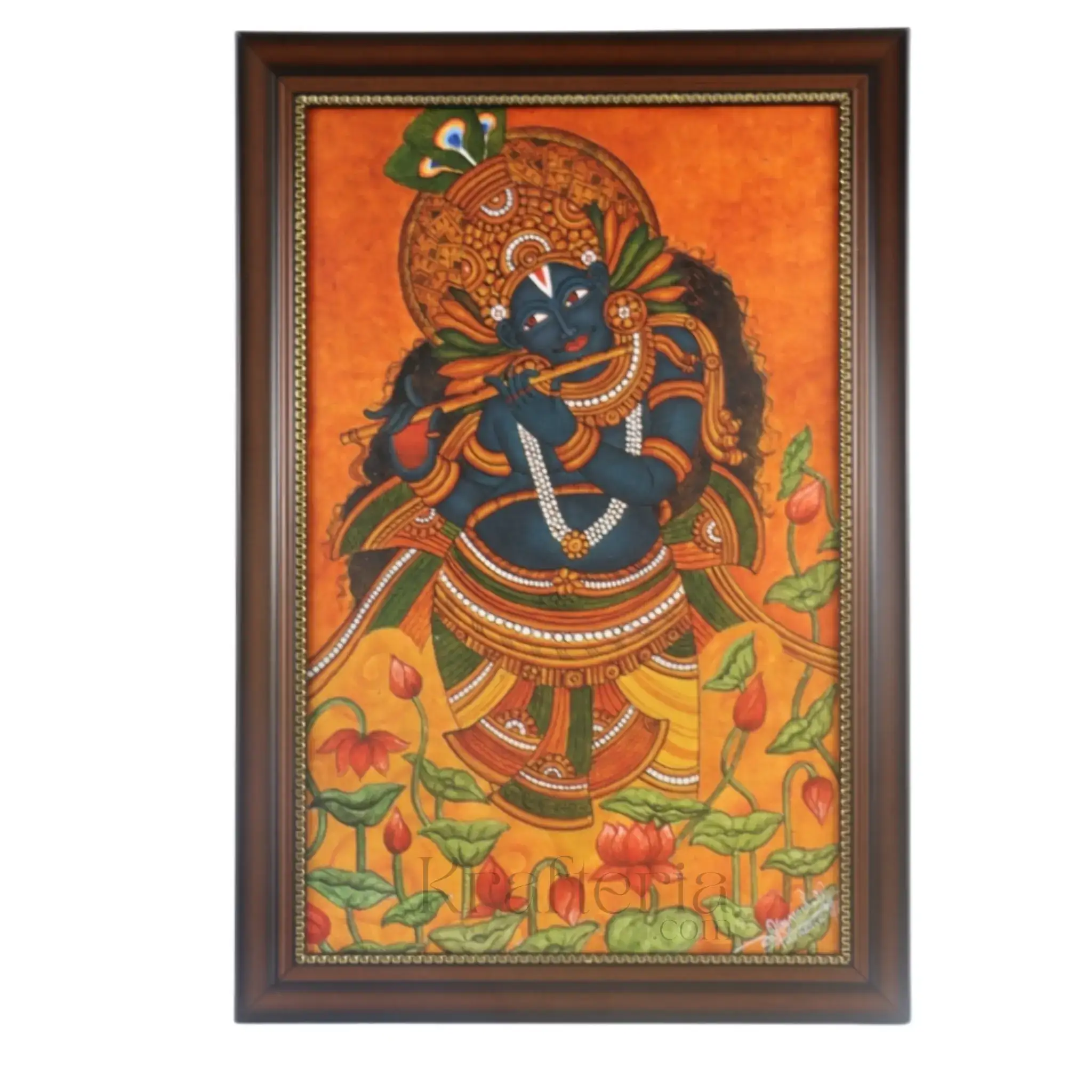
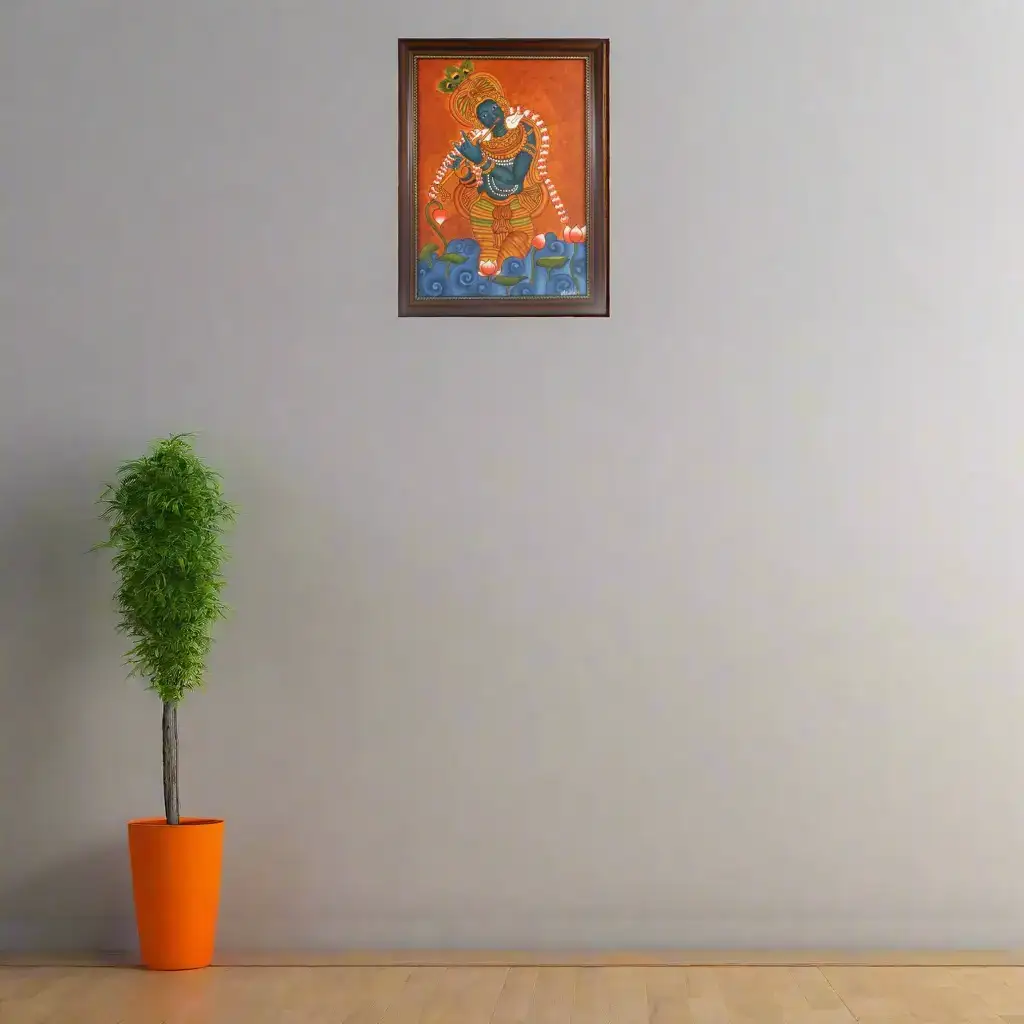
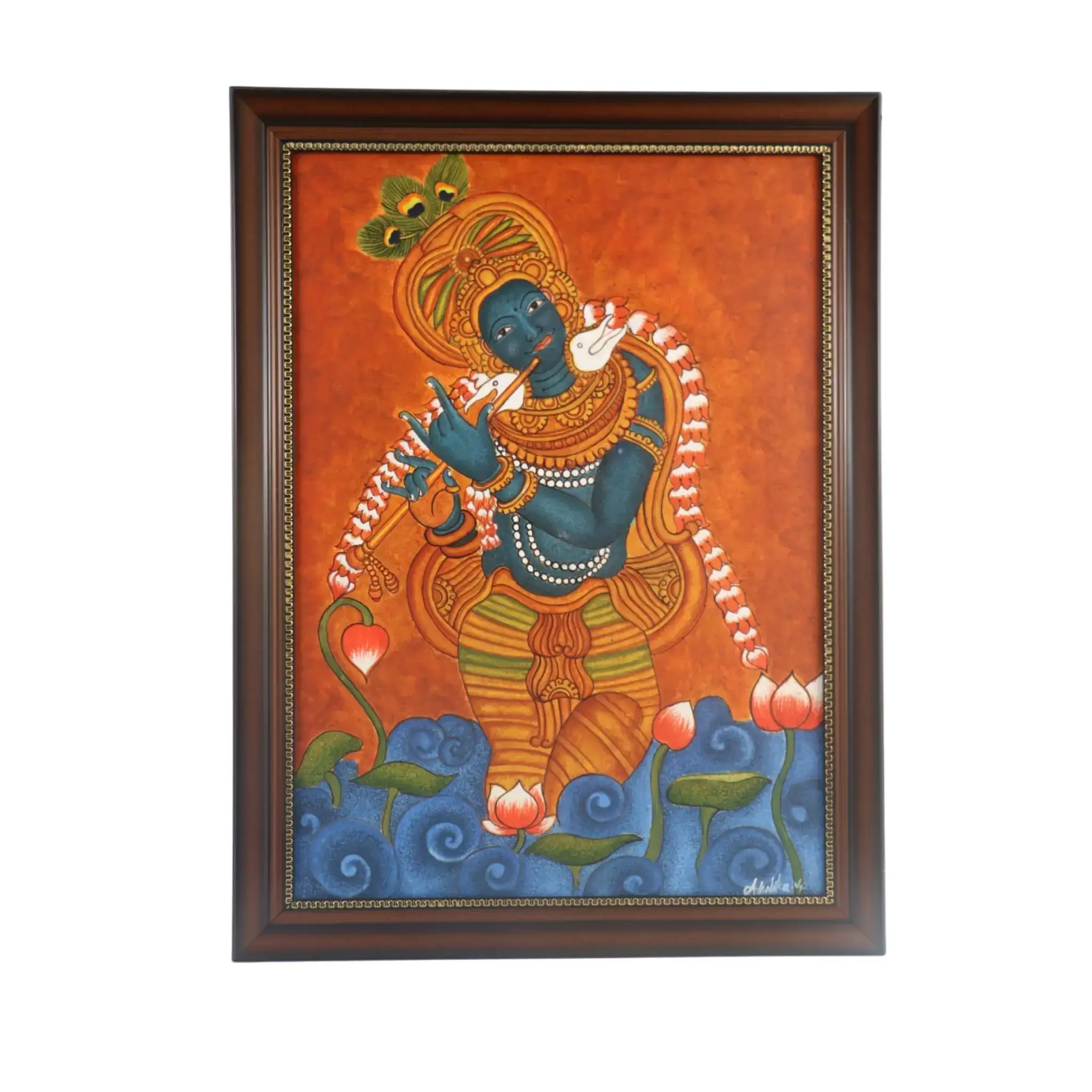
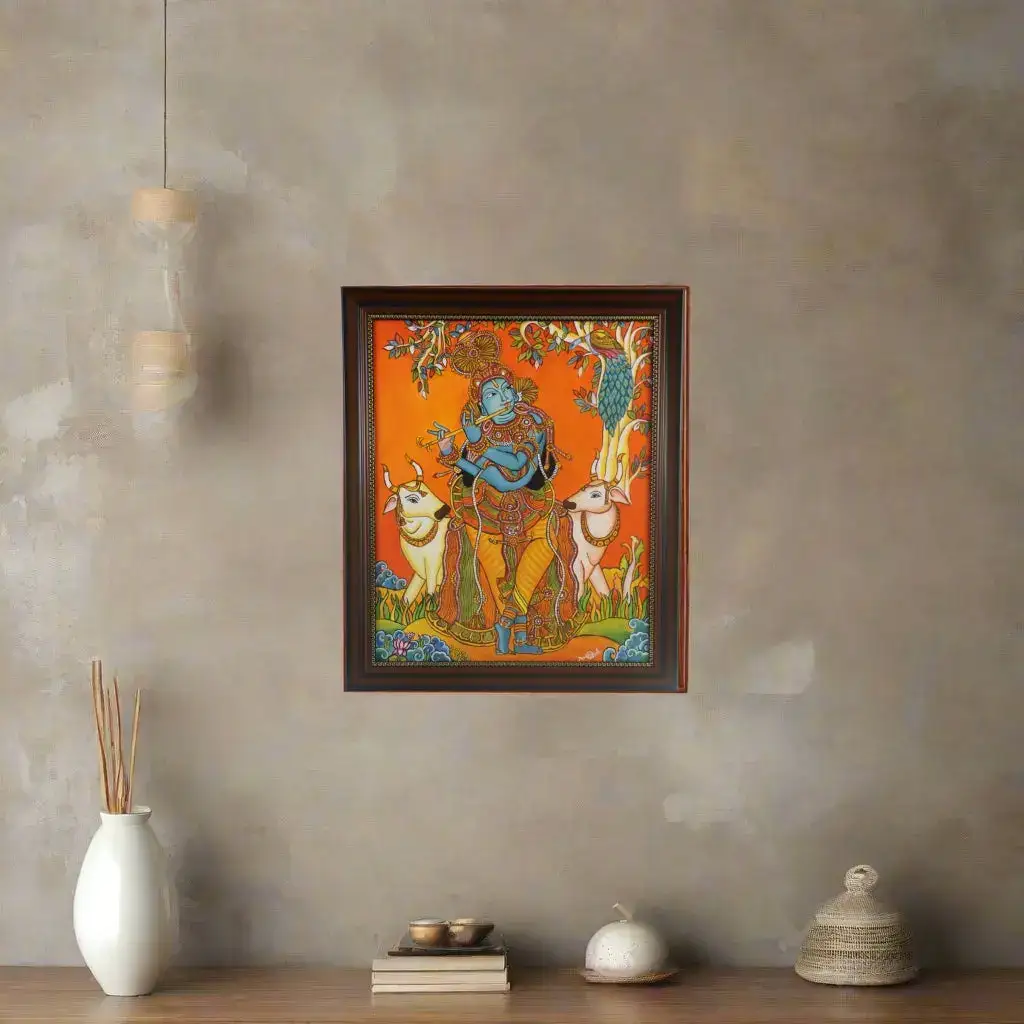
Krishna in Vrindavan Frame beautifully depicts the divine Lord Krishna as the cowherd in Vrindavan. This artwork is inspired by the rich heritage of Kerala mural paintings. These murals have a history dating back to between the 9th and 12th centuries CE in Kerala. They showcase mythological themes and vibrant depictions of gods, goddesses, and animals.
History and Significance of Kerala Painting
Kerala painting, especially the mural art, is deeply rooted in the religious and cultural fabric of the region. These murals were traditionally created on temple walls and depict stories primarily from Hindu mythology. The paintings are renowned for their vivid colors and intricate details that bring stories of gods and celestial beings to life.
The tradition of mural art flourished in Kerala during a significant period, from the 9th to the 12th century CE. This era saw the rise of temple art, where painters used natural materials and pigments to create lasting spiritual visuals. The Krishna in Vrindavan Frame is a celebration of this very ancient yet timeless art form.
Key Characteristics of the Krishna in Vrindavan Frame
The Krishna in Vrindavan Frame uses many of the core elements that define Kerala mural paintings. The medium typically involves painting on lime-plastered walls. The lime plaster surface allows the pigments to bond deeply, preserving the artwork's vibrancy for centuries.
Natural pigments and vegetable dyes are key ingredients in this mural art. Painters avoid synthetic colors to maintain authenticity. These natural colors not only enhance the beauty but also give the painting a unique earthy feel. This technique honors the environmental respect inherent to Kerala paintings.
Technique Behind the Mural Art
Artists use the fresco secco technique to create this artwork. This method involves painting on dry plaster rather than wet plaster, which is commonly seen in Italian frescoes. The fresco secco style lets artists work with intricate detail and layering, producing vivid and lasting results.
The Vrindavan Frame shows the mastery of artists who excel at this technique. Their ability to capture fine details such as Krishna’s divine ornaments, facial expressions, and the serene pastures of Vrindavan demonstrates exceptional skill in mural art.
Colour Palette Used in Krishna Frame
One of the defining features of Kerala painting is its limited but rich color palette. The artists use five main colors derived from natural sources, which makes the colors harmonious and balanced. These colors have symbolic meanings and enhance the narrative of the artwork.
- Red – Obtained from Laterite soil, this color signifies strength and energy.
- Yellow – Derived from yellow clay or turmeric, representing life and brightness.
- Green – Extracted from various plant extracts, symbolizing nature and fertility.
- Black – Made using burnt coconut shells, it adds depth and contrast.
- White – Comes from lime, representing purity and peace.
The interplay of these colors in the Vrindavan Frame brings out the divine and mystical aura of Lord Krishna amidst the natural beauty of Vrindavan’s pastures.
Thematic Elements in Kerala Mural Art
The themes in these murals usually center around divine and mythological stories. Gods, goddesses, celestial beings, and animals from Hindu mythology take center stage. The figures are portrayed in idealized forms, highlighting divinity and beauty through elaborate costumes and gestures.
In the Krishna Frame, Krishna is depicted as Nanda Gopala, the divine cowherd boy. He is surrounded by cows and the vibrant flora of Vrindavan, representing innocence, love, and divine joy. This theme connects the viewer to spiritual and cultural traditions of the region and the story of Lord Krishna.
Krishna and Vrindavan in Mural Art
The connection between krishna and vrindavan is a celebrated story in Hindu mythology, often represented in mural art. Vrindavan, known for its serene landscapes and sacred pastures, forms the perfect backdrop for Krishna's divine playfulness. Depicting this story through Kerala painting style adds a spiritual and aesthetic value to the artwork.
Each detail, from Krishna’s flute to the delicately painted cows and foliage, is rendered meticulously. This attention to detail reflects the reverence toward krishna and the natural beauty of vrindavan, celebrated throughout centuries in Indian art and spirituality.
Product Information
Product Information
Shipping & Returns
Shipping & Returns
Description
Nanda Gopala – Krishna in Vrindavan Frame: A Kerala Painting Masterpiece
Krishna in Vrindavan Frame beautifully depicts the divine Lord Krishna as the cowherd in Vrindavan. This artwork is inspired by the rich heritage of Kerala mural paintings. These murals have a history dating back to between the 9th and 12th centuries CE in Kerala. They showcase mythological themes and vibrant depictions of gods, goddesses, and animals.
History and Significance of Kerala Painting
Kerala painting, especially the mural art, is deeply rooted in the religious and cultural fabric of the region. These murals were traditionally created on temple walls and depict stories primarily from Hindu mythology. The paintings are renowned for their vivid colors and intricate details that bring stories of gods and celestial beings to life.
The tradition of mural art flourished in Kerala during a significant period, from the 9th to the 12th century CE. This era saw the rise of temple art, where painters used natural materials and pigments to create lasting spiritual visuals. The Krishna in Vrindavan Frame is a celebration of this very ancient yet timeless art form.
Key Characteristics of the Krishna in Vrindavan Frame
The Krishna in Vrindavan Frame uses many of the core elements that define Kerala mural paintings. The medium typically involves painting on lime-plastered walls. The lime plaster surface allows the pigments to bond deeply, preserving the artwork's vibrancy for centuries.
Natural pigments and vegetable dyes are key ingredients in this mural art. Painters avoid synthetic colors to maintain authenticity. These natural colors not only enhance the beauty but also give the painting a unique earthy feel. This technique honors the environmental respect inherent to Kerala paintings.
Technique Behind the Mural Art
Artists use the fresco secco technique to create this artwork. This method involves painting on dry plaster rather than wet plaster, which is commonly seen in Italian frescoes. The fresco secco style lets artists work with intricate detail and layering, producing vivid and lasting results.
The Vrindavan Frame shows the mastery of artists who excel at this technique. Their ability to capture fine details such as Krishna’s divine ornaments, facial expressions, and the serene pastures of Vrindavan demonstrates exceptional skill in mural art.
Colour Palette Used in Krishna Frame
One of the defining features of Kerala painting is its limited but rich color palette. The artists use five main colors derived from natural sources, which makes the colors harmonious and balanced. These colors have symbolic meanings and enhance the narrative of the artwork.
- Red – Obtained from Laterite soil, this color signifies strength and energy.
- Yellow – Derived from yellow clay or turmeric, representing life and brightness.
- Green – Extracted from various plant extracts, symbolizing nature and fertility.
- Black – Made using burnt coconut shells, it adds depth and contrast.
- White – Comes from lime, representing purity and peace.
The interplay of these colors in the Vrindavan Frame brings out the divine and mystical aura of Lord Krishna amidst the natural beauty of Vrindavan’s pastures.
Thematic Elements in Kerala Mural Art
The themes in these murals usually center around divine and mythological stories. Gods, goddesses, celestial beings, and animals from Hindu mythology take center stage. The figures are portrayed in idealized forms, highlighting divinity and beauty through elaborate costumes and gestures.
In the Krishna Frame, Krishna is depicted as Nanda Gopala, the divine cowherd boy. He is surrounded by cows and the vibrant flora of Vrindavan, representing innocence, love, and divine joy. This theme connects the viewer to spiritual and cultural traditions of the region and the story of Lord Krishna.
Krishna and Vrindavan in Mural Art
The connection between krishna and vrindavan is a celebrated story in Hindu mythology, often represented in mural art. Vrindavan, known for its serene landscapes and sacred pastures, forms the perfect backdrop for Krishna's divine playfulness. Depicting this story through Kerala painting style adds a spiritual and aesthetic value to the artwork.
Each detail, from Krishna’s flute to the delicately painted cows and foliage, is rendered meticulously. This attention to detail reflects the reverence toward krishna and the natural beauty of vrindavan, celebrated throughout centuries in Indian art and spirituality.