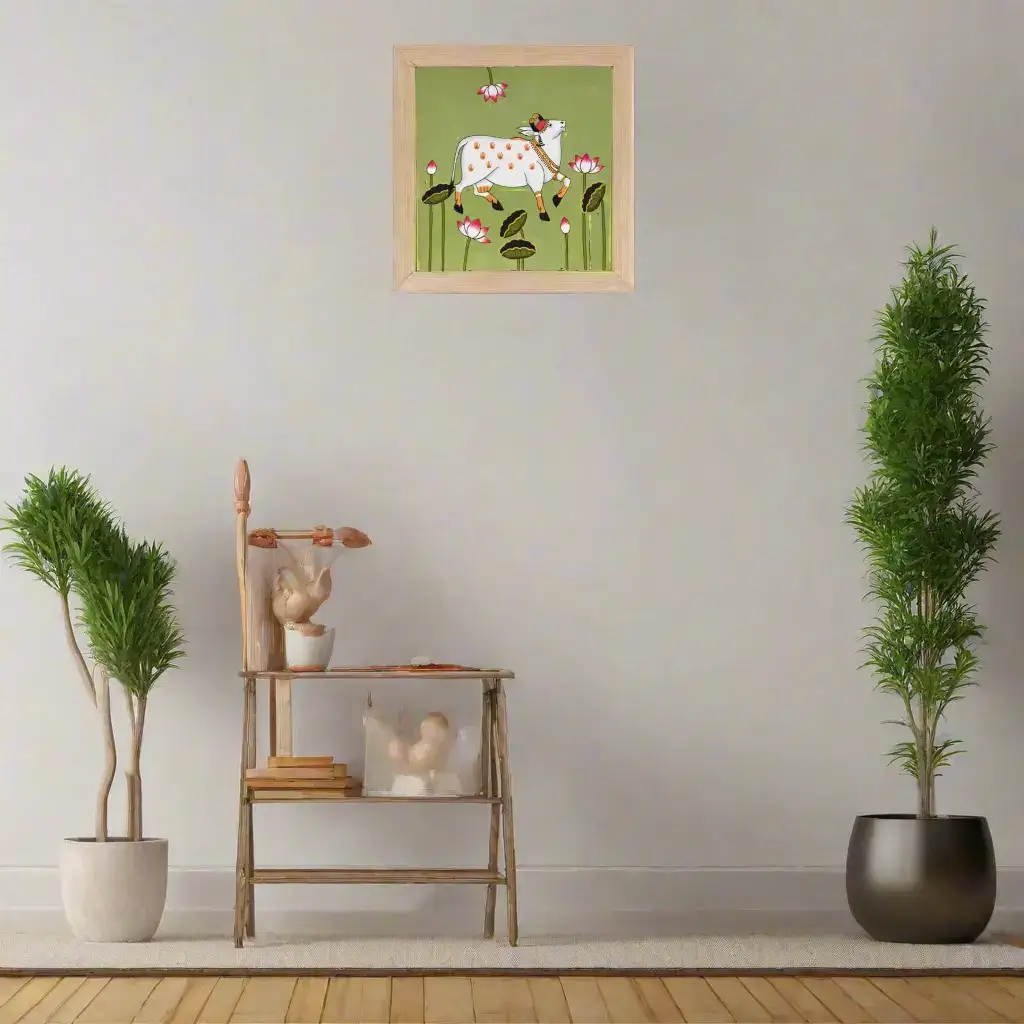
Kamdhenu in the Lotus Pond Pichwai Art
Kamdhenu in the Lotus Pond Pichwai Art
Kamdhenu Pichwai art is a stunning example of traditional Indian painting that originated in the 17th century. This style comes from Nathdwara, Rajasthan, a town known for its spiritual artworks. The term “Pichwai” is derived from two Sanskrit words: ‘pichh’ meaning back and ‘wai’ meaning hanging. These cloth paintings are traditionally hung behind the idol of Lord Shrinathji in temples, creating a sacred backdrop.
The Kamdhenu Pichwai artwork is deeply devotional and illustrates important episodes from the life of Lord Krishna. Shrinathji, a child form of Krishna, is the central theme for many Pichwai artists. Handmade with meticulous detail, these paintings are a cultural treasure that blend rich symbolism with vibrant colors. This art form not only decorates temples but also brings a sense of devotion into homes worldwide.
Historical Significance of Kamdhenu Pichwai Art
The roots of Kamdhenu Pichwai lie in the Pushtimarg sect of Hinduism, which focuses on gentle devotion to Lord Krishna. The paintings are closely tied to religious events and festivals such as Janmashtami, Annakut, Holi, Sharad Purnima, and Raslila. Each festival and story is represented through detailed imagery.
Kamdhenu, the divine cow, often features in these artworks, symbolizing abundance and spiritual prosperity. This connection gives the art both religious significance and aesthetic appeal. The Krishna Kamdhenu Pichwai painting showcases Krishna’s relationship with cows, gopis, and nature, highlighting themes of love, harmony, and divine protection.
Artistic Elements and Techniques
Traditional Pichwai art is known for its intricate brushwork and use of natural pigments. These include mineral and vegetable dyes, along with precious metals like gold and silver. The artisans work on handwoven cloths or canvases, ensuring the durability and richness of the artwork.
- Use of lush lotus motifs and peacocks
- Depiction of Krishna playing, lifting Govardhan hill, and engaging with cows
- Seasonal elements reflecting the time of the festivals
The creation process often involves multiple artisans specializing in sketching, coloring, and ornamentation. This teamwork brings the Kamdhenu art to life, combining spiritual meaning with fine artistic quality. The hand-painted Kamdhenu Pichwai is both a sacred item and a collectible piece for art lovers.
Kamdhenu Pichwai Artwork: A Living Tradition
Although rooted deeply in religious traditions, Kamdhenu Pichwai paintings has transcended temple walls. It is now widely appreciated as a form of fine art globally. Contemporary artists continue to revive this heritage by blending traditional methods with modern aesthetics.
This art form recently earned a Geographical Indication (GI) tag as Nathdwara Pichwai Painting (GI No. 748). This acknowledgment helps protect the regional identity and craftsmanship of Kamdhenu Pichwai artwork. It also boosts awareness and appreciation for this unique cultural legacy.
Collectors and devotees treasure the Pichwai artwork not only for its spiritual symbolism but also for its artistic finesse. Owning a hand-painted Kamdhenu artwork serves as a reminder of Rajasthan’s rich spiritual and artistic heritage. These paintings bring positive energy, auspiciousness, and beauty to any space.
The Symbolism in Kamdhenu Pichwai Painting
The divine cow Kamdhenu symbolizes generosity, purity, and abundance in Hindu beliefs. In this Pichwai art, Kamdhenu rests peacefully among lotus flowers in a serene pond. The lotus signifies purity and spiritual awakening.
By depicting Kamdhenu in this environment, the artwork conveys wishes for prosperity and divine blessings. These spiritual messages are subtly woven into the fine details and colors used by the artisans. The Pichwai art not only tells a story but also evokes devotion and peace in the viewer.
Dimensions and Display
This Kamdhenu Pichwai painting typically measures 6 inches in height and 5.5 inches in width. This size makes it perfect for both temple decoration and elegant home display. The artwork’s delicate canvas and vibrant hues are ideal for adding a traditional touch to living spaces.
Whether displayed behind idols or as a centerpiece in living rooms, the Kamdhenu artwork enriches the ambiance with cultural depth and spiritual meaning. Each piece is a testament to the skill and devotion of the artists preserving this sacred art form.
Product Information
Product Information
Shipping & Returns
Shipping & Returns
Description
Kamdhenu in the Lotus Pond Pichwai Art
Kamdhenu Pichwai art is a stunning example of traditional Indian painting that originated in the 17th century. This style comes from Nathdwara, Rajasthan, a town known for its spiritual artworks. The term “Pichwai” is derived from two Sanskrit words: ‘pichh’ meaning back and ‘wai’ meaning hanging. These cloth paintings are traditionally hung behind the idol of Lord Shrinathji in temples, creating a sacred backdrop.
The Kamdhenu Pichwai artwork is deeply devotional and illustrates important episodes from the life of Lord Krishna. Shrinathji, a child form of Krishna, is the central theme for many Pichwai artists. Handmade with meticulous detail, these paintings are a cultural treasure that blend rich symbolism with vibrant colors. This art form not only decorates temples but also brings a sense of devotion into homes worldwide.
Historical Significance of Kamdhenu Pichwai Art
The roots of Kamdhenu Pichwai lie in the Pushtimarg sect of Hinduism, which focuses on gentle devotion to Lord Krishna. The paintings are closely tied to religious events and festivals such as Janmashtami, Annakut, Holi, Sharad Purnima, and Raslila. Each festival and story is represented through detailed imagery.
Kamdhenu, the divine cow, often features in these artworks, symbolizing abundance and spiritual prosperity. This connection gives the art both religious significance and aesthetic appeal. The Krishna Kamdhenu Pichwai painting showcases Krishna’s relationship with cows, gopis, and nature, highlighting themes of love, harmony, and divine protection.
Artistic Elements and Techniques
Traditional Pichwai art is known for its intricate brushwork and use of natural pigments. These include mineral and vegetable dyes, along with precious metals like gold and silver. The artisans work on handwoven cloths or canvases, ensuring the durability and richness of the artwork.
- Use of lush lotus motifs and peacocks
- Depiction of Krishna playing, lifting Govardhan hill, and engaging with cows
- Seasonal elements reflecting the time of the festivals
The creation process often involves multiple artisans specializing in sketching, coloring, and ornamentation. This teamwork brings the Kamdhenu art to life, combining spiritual meaning with fine artistic quality. The hand-painted Kamdhenu Pichwai is both a sacred item and a collectible piece for art lovers.
Kamdhenu Pichwai Artwork: A Living Tradition
Although rooted deeply in religious traditions, Kamdhenu Pichwai paintings has transcended temple walls. It is now widely appreciated as a form of fine art globally. Contemporary artists continue to revive this heritage by blending traditional methods with modern aesthetics.
This art form recently earned a Geographical Indication (GI) tag as Nathdwara Pichwai Painting (GI No. 748). This acknowledgment helps protect the regional identity and craftsmanship of Kamdhenu Pichwai artwork. It also boosts awareness and appreciation for this unique cultural legacy.
Collectors and devotees treasure the Pichwai artwork not only for its spiritual symbolism but also for its artistic finesse. Owning a hand-painted Kamdhenu artwork serves as a reminder of Rajasthan’s rich spiritual and artistic heritage. These paintings bring positive energy, auspiciousness, and beauty to any space.
The Symbolism in Kamdhenu Pichwai Painting
The divine cow Kamdhenu symbolizes generosity, purity, and abundance in Hindu beliefs. In this Pichwai art, Kamdhenu rests peacefully among lotus flowers in a serene pond. The lotus signifies purity and spiritual awakening.
By depicting Kamdhenu in this environment, the artwork conveys wishes for prosperity and divine blessings. These spiritual messages are subtly woven into the fine details and colors used by the artisans. The Pichwai art not only tells a story but also evokes devotion and peace in the viewer.
Dimensions and Display
This Kamdhenu Pichwai painting typically measures 6 inches in height and 5.5 inches in width. This size makes it perfect for both temple decoration and elegant home display. The artwork’s delicate canvas and vibrant hues are ideal for adding a traditional touch to living spaces.
Whether displayed behind idols or as a centerpiece in living rooms, the Kamdhenu artwork enriches the ambiance with cultural depth and spiritual meaning. Each piece is a testament to the skill and devotion of the artists preserving this sacred art form.