Sacred Cow in a Lotus Garden Pichwai Art
Sacred Cow in a Lotus Garden Pichwai Art: An Exquisite Cow Pichwai Painting
Lotus Garden Pichwai Art is a timeless traditional painting style from Nathdwara, Rajasthan, India, dating back to the 17th century. The term "Pichwai" comes from the Sanskrit words ‘pichh’ (back) and ‘wai’ (hanging), referring to cloth paintings placed behind Lord Shrinathji’s idol in temples. These devotional artworks primarily depict episodes from Lord Krishna's life, especially his child form as Shrinathji. They present deep spiritual narratives and cultural heritage.Cow pichwai Painting.
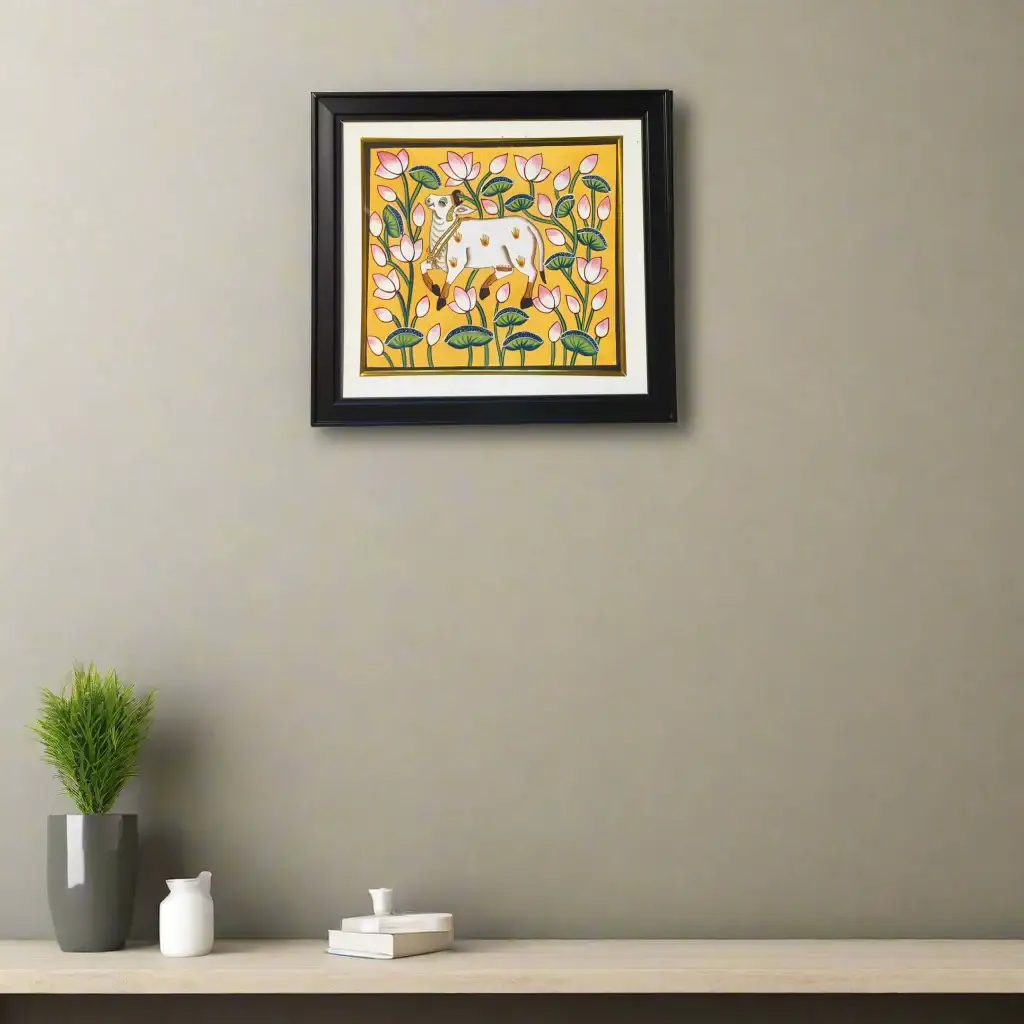
This cow Pichwai painting perfectly captures this tradition. The sacred cow stands out, symbolizing purity and divinity, set beautifully within a peaceful lotus garden. The lotus garden’s charm emphasizes the artwork's visual appeal and also stands for spiritual purity and enlightenment, which are key themes of Pichwai art.
Historical Background and Cultural Significance of Pichwai Paintings
Pichwai paintings have close ties to the Pushtimarg sect, a devotional tradition associated with Lord Krishna. These artworks illustrate important religious festivals like Janmashtami, Annakut, Holi, Sharad Purnima, and Raslila. The festivals inspire unique motifs and bright colors, brought vividly to life by skilled artisans using time-honored techniques.
The sacred cow plays a vital role in many stories depicted. It is often seen alongside Krishna during divine moments. In lotus garden Pichwai art, the cow symbolizes abundance, compassion, and nurturing qualities. This connection enriches the artwork’s spiritual meaning and attracts admirers of Indian spirituality and tradition.
Artistic Techniques and Materials Used in Pichwai Painting
Traditional Pichwais are created on handwoven cloth using natural dyes and pigments. Materials such as gold and silver add a sacred and luxurious effect. Artists use meticulous brushwork to detail intricate patterns with great care.
Every cow Pichwai painting is a result of skilled collaboration. Artisans specialize in sketching, coloring, and embellishing. This teamwork ensures each element—from the sacred cow to the lotus flowers—is given exceptional attention and detail.
The particular cow painting shown illustrates those age-old techniques. It highlights the technical skill and devotional dedication invested behind every stroke. The depiction of the sacred cow in the lotus garden conveys calmness and divine essence, hallmark traits of Pichwai paintings.
Symbolism in Lotus Garden Pichwai Art
The lotus garden in this painting signifies enlightenment, spiritual purity, and detachment. The lotus flower blooms in muddy waters yet remains unstained, symbolizing inner peace and resilience. Such symbolism resonates with teachings linked to Lord Krishna and the sacred cow.
The cow itself stands for divine nurture, prosperity, and compassion. Together, the lotus garden and the sacred cow form a harmonious and balanced representation. They blend nature’s beauty with profound spiritual teachings.
This symbolism is why lotus garden Pichwai art is cherished so deeply. It remains visually striking while rich with cultural and religious meaning.
Why Choose This Pichwai Cow Painting Gift?
This authentic painting gift is ideal for spiritual art collectors and enthusiasts. It reflects India’s rich cultural traditions along with Rajasthan’s artistic heritage. Such a gift inspires devotion and peace in any environment.
The painting suits events celebrating Indian spirituality, festivals, or special occasions. Its detailed design and deep symbolism provide a unique and thoughtful present for any recipient.
Contemporary Recognition and Revival of Pichwai Art
The cow painting form has moved beyond temple boundaries and found global recognition as fine art. Nathdwara Pichwai painting received a Geographical Indication (GI) tag, GI No. 748, honoring its cultural and regional identity while safeguarding authenticity.
Modern artisans persist in reviving and innovating within these traditional styles. Their dedication sustains Rajasthan’s spiritual and artistic legacy, inspiring generations to come.
Owning this sacred cow in a lotus garden Pichwai art connects collectors to an ongoing cultural story. It celebrates India’s spiritual essence through the revered Pichwai painting tradition.
Original: $75.30
-70%$75.30
$22.59Product Information
Product Information
Shipping & Returns
Shipping & Returns
Description
Sacred Cow in a Lotus Garden Pichwai Art: An Exquisite Cow Pichwai Painting
Lotus Garden Pichwai Art is a timeless traditional painting style from Nathdwara, Rajasthan, India, dating back to the 17th century. The term "Pichwai" comes from the Sanskrit words ‘pichh’ (back) and ‘wai’ (hanging), referring to cloth paintings placed behind Lord Shrinathji’s idol in temples. These devotional artworks primarily depict episodes from Lord Krishna's life, especially his child form as Shrinathji. They present deep spiritual narratives and cultural heritage.Cow pichwai Painting.
This cow Pichwai painting perfectly captures this tradition. The sacred cow stands out, symbolizing purity and divinity, set beautifully within a peaceful lotus garden. The lotus garden’s charm emphasizes the artwork's visual appeal and also stands for spiritual purity and enlightenment, which are key themes of Pichwai art.
Historical Background and Cultural Significance of Pichwai Paintings
Pichwai paintings have close ties to the Pushtimarg sect, a devotional tradition associated with Lord Krishna. These artworks illustrate important religious festivals like Janmashtami, Annakut, Holi, Sharad Purnima, and Raslila. The festivals inspire unique motifs and bright colors, brought vividly to life by skilled artisans using time-honored techniques.
The sacred cow plays a vital role in many stories depicted. It is often seen alongside Krishna during divine moments. In lotus garden Pichwai art, the cow symbolizes abundance, compassion, and nurturing qualities. This connection enriches the artwork’s spiritual meaning and attracts admirers of Indian spirituality and tradition.
Artistic Techniques and Materials Used in Pichwai Painting
Traditional Pichwais are created on handwoven cloth using natural dyes and pigments. Materials such as gold and silver add a sacred and luxurious effect. Artists use meticulous brushwork to detail intricate patterns with great care.
Every cow Pichwai painting is a result of skilled collaboration. Artisans specialize in sketching, coloring, and embellishing. This teamwork ensures each element—from the sacred cow to the lotus flowers—is given exceptional attention and detail.
The particular cow painting shown illustrates those age-old techniques. It highlights the technical skill and devotional dedication invested behind every stroke. The depiction of the sacred cow in the lotus garden conveys calmness and divine essence, hallmark traits of Pichwai paintings.
Symbolism in Lotus Garden Pichwai Art
The lotus garden in this painting signifies enlightenment, spiritual purity, and detachment. The lotus flower blooms in muddy waters yet remains unstained, symbolizing inner peace and resilience. Such symbolism resonates with teachings linked to Lord Krishna and the sacred cow.
The cow itself stands for divine nurture, prosperity, and compassion. Together, the lotus garden and the sacred cow form a harmonious and balanced representation. They blend nature’s beauty with profound spiritual teachings.
This symbolism is why lotus garden Pichwai art is cherished so deeply. It remains visually striking while rich with cultural and religious meaning.
Why Choose This Pichwai Cow Painting Gift?
This authentic painting gift is ideal for spiritual art collectors and enthusiasts. It reflects India’s rich cultural traditions along with Rajasthan’s artistic heritage. Such a gift inspires devotion and peace in any environment.
The painting suits events celebrating Indian spirituality, festivals, or special occasions. Its detailed design and deep symbolism provide a unique and thoughtful present for any recipient.
Contemporary Recognition and Revival of Pichwai Art
The cow painting form has moved beyond temple boundaries and found global recognition as fine art. Nathdwara Pichwai painting received a Geographical Indication (GI) tag, GI No. 748, honoring its cultural and regional identity while safeguarding authenticity.
Modern artisans persist in reviving and innovating within these traditional styles. Their dedication sustains Rajasthan’s spiritual and artistic legacy, inspiring generations to come.
Owning this sacred cow in a lotus garden Pichwai art connects collectors to an ongoing cultural story. It celebrates India’s spiritual essence through the revered Pichwai painting tradition.