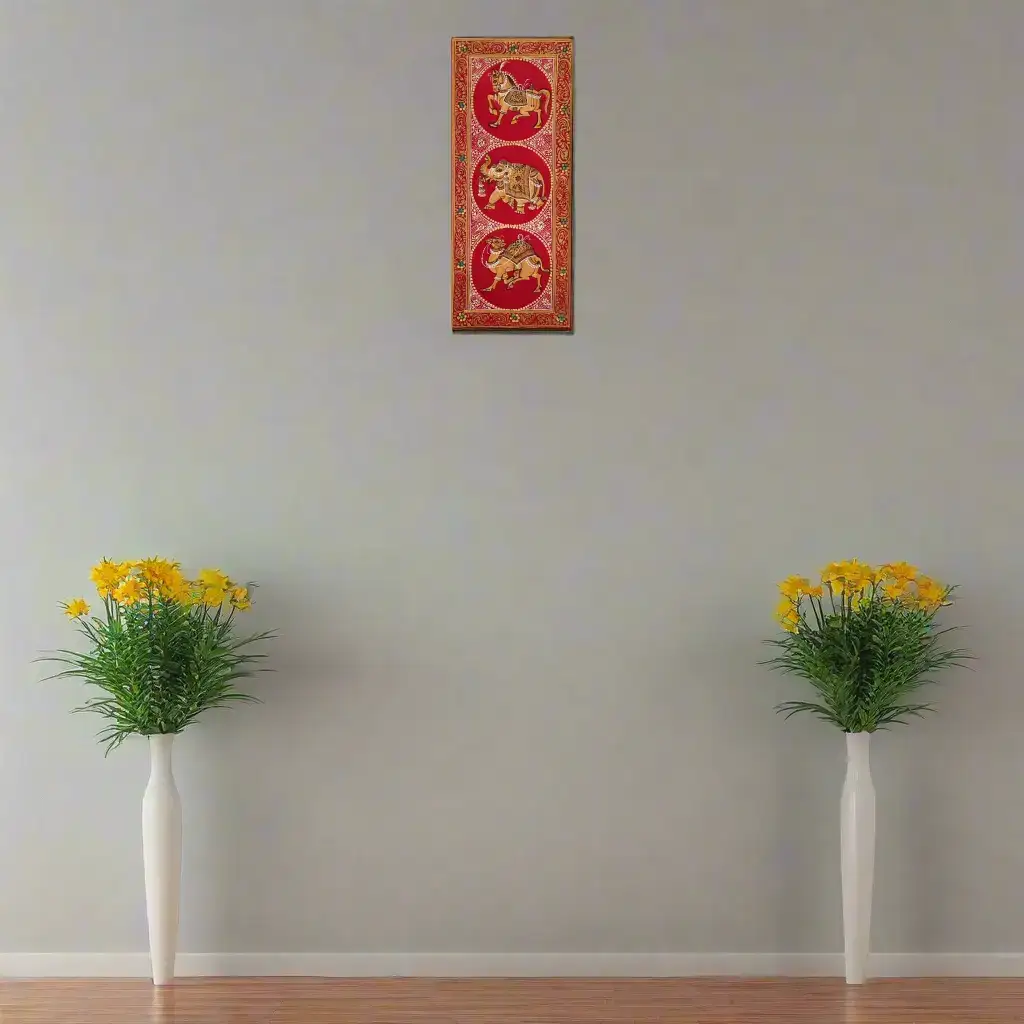
Regal Animalia - A Triptych of Indian Processionals Miniature Painting
Regal Animalia - A Triptych of Indian Processionals Miniature Painting
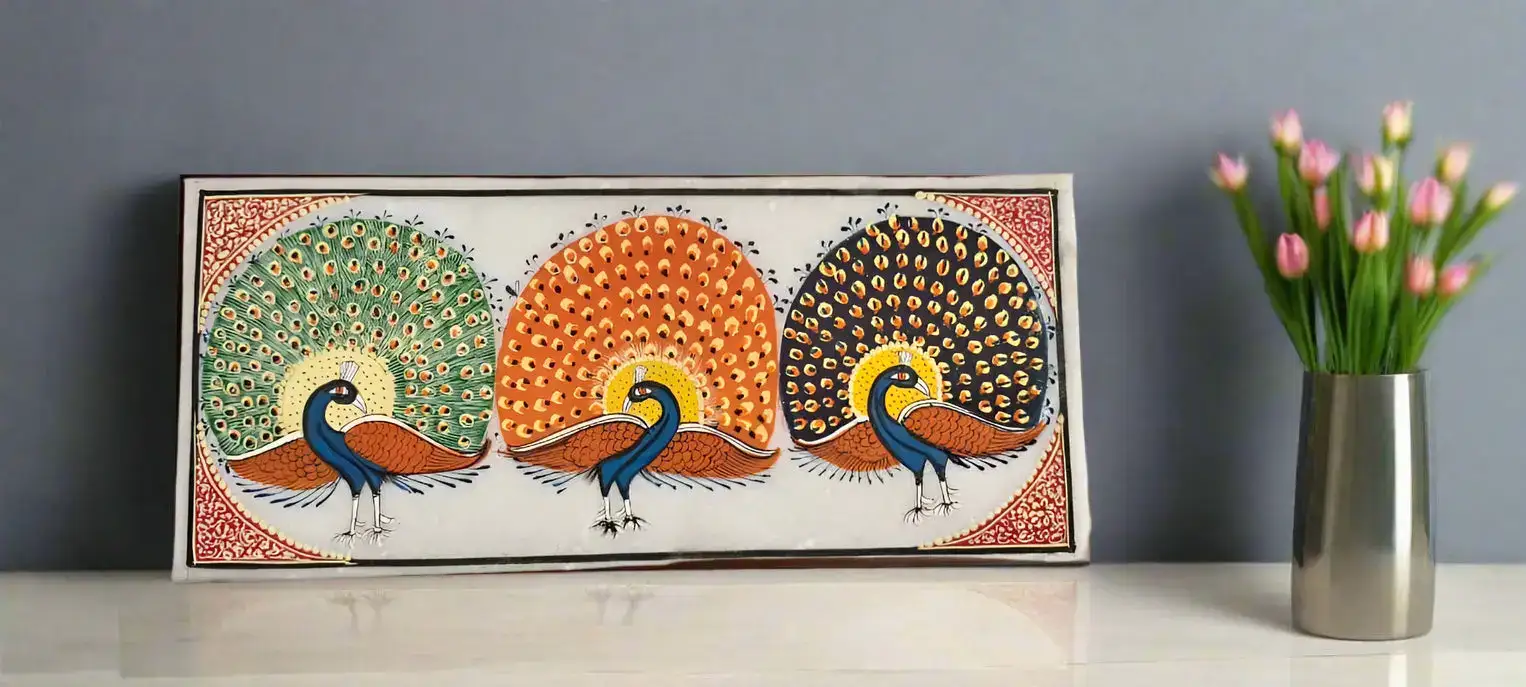
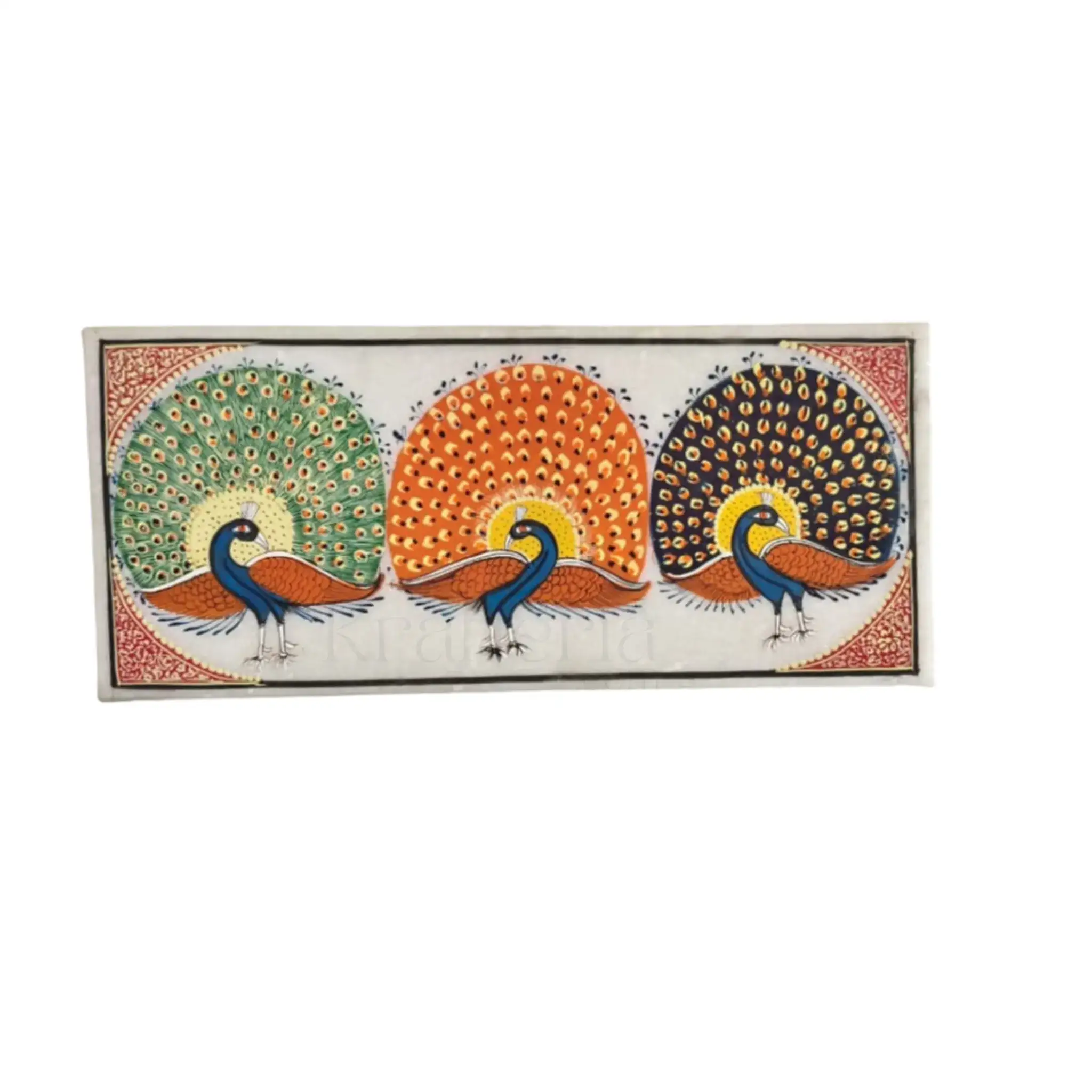
Triptych of Indian Processionals Miniature Painting is a captivating example of the rich and vibrant style of Indian miniature painting. This art form flourished in the royal courts of Rajasthan starting from the 16th century. Deeply rooted in Indian traditions, it celebrates themes such as mythology, epics, love stories, royal life, and folk culture.
The paintings are characterized by bold lines, bright colors, and intricate detailing. Artists often used natural dyes and pigments derived from minerals, vegetables, and precious stones. These traditional materials provide a lasting and luminous quality to each painting, allowing the artwork to preserve its brilliance over time.
The Distinct Schools of Miniature Painting in Rajasthan
The Triptych Miniature Painting style is broadly categorized into several schools, each with unique stylistic elements and themes. These schools include Mewar, Marwar, Bundi, Kota, Kishangarh, Bikaner, and Jaipur. Each school reflects its region’s culture and artistic focus.
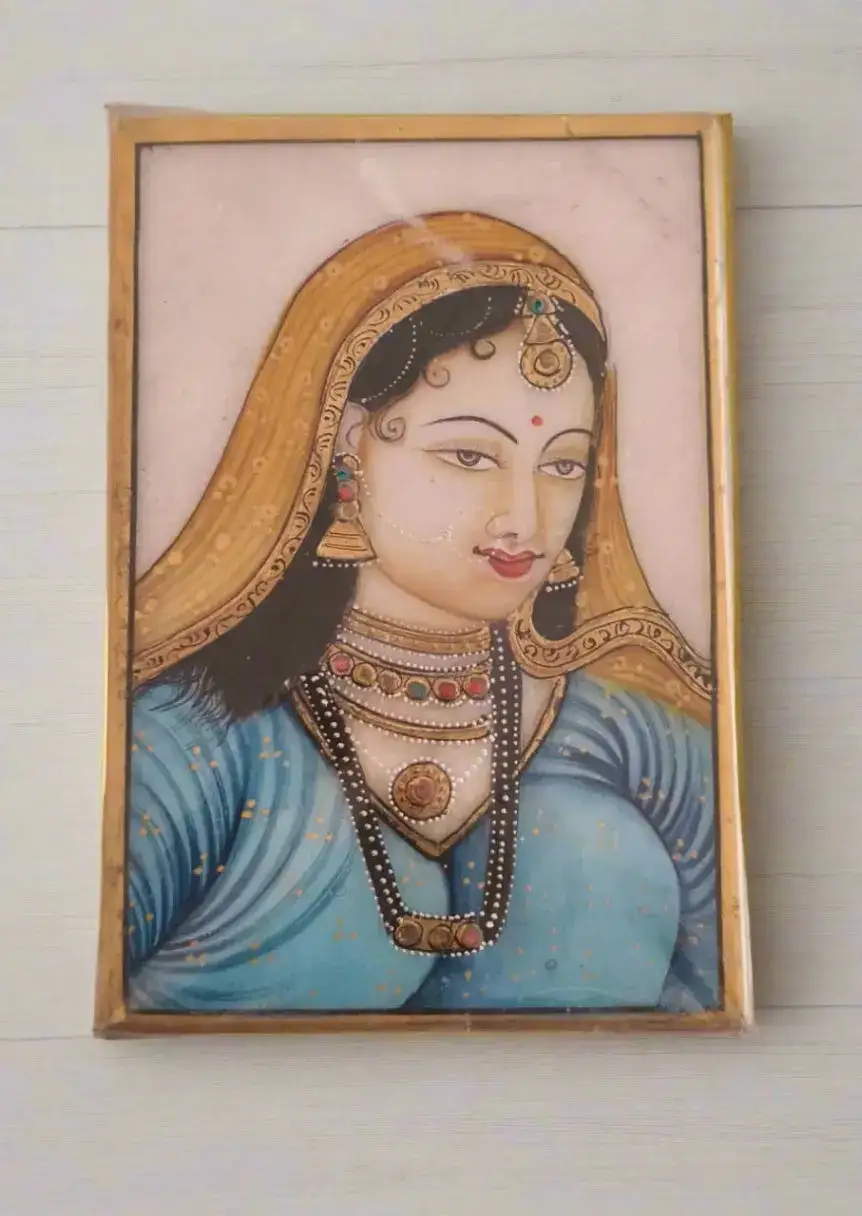
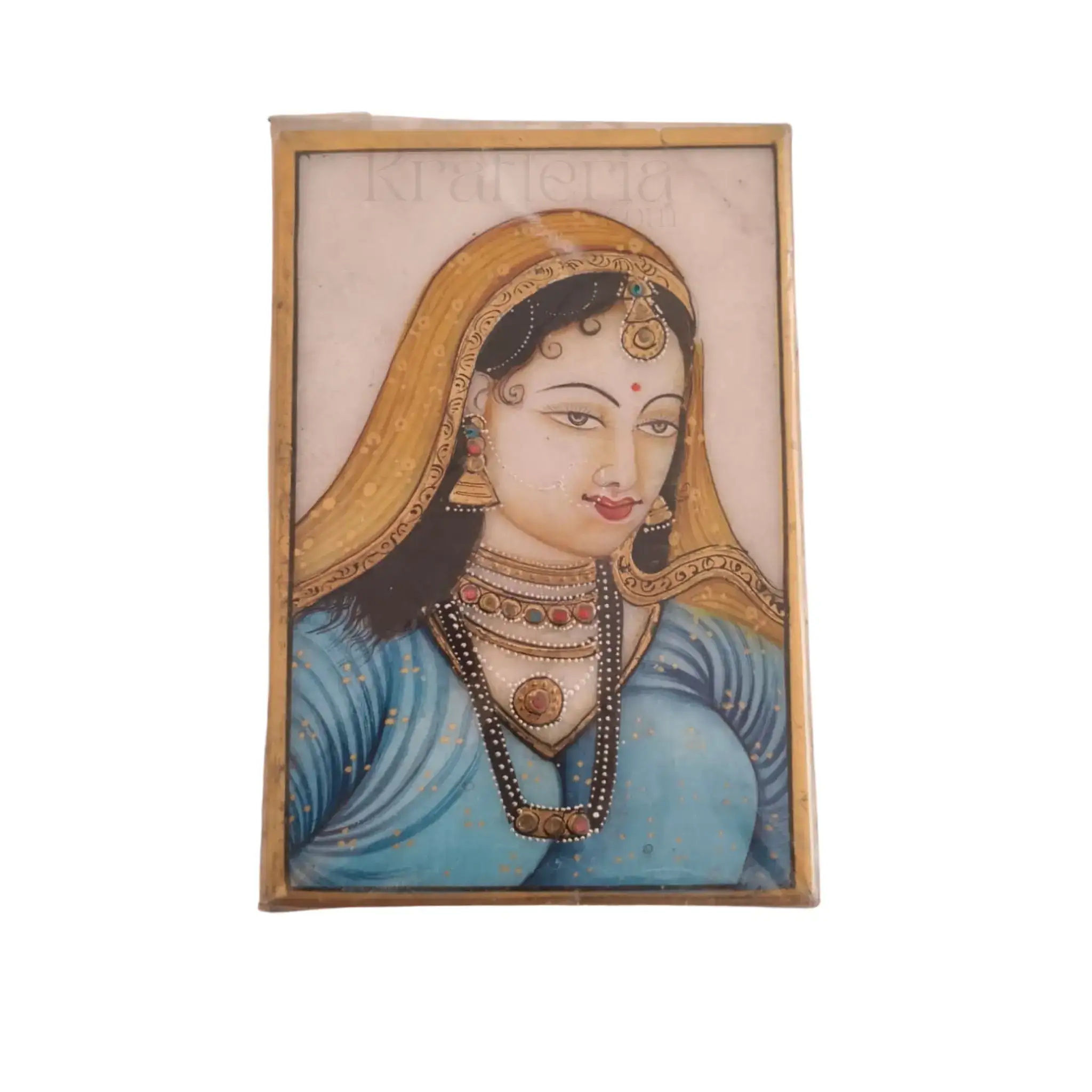
For instance, the Kishangarh school is renowned for its romantic depictions of Radha and Krishna. It particularly highlights the iconic image of Bani Thani, admired for its delicate features and serene expressions. Mewar paintings frequently portray court scenes, heroic tales, and deeply religious themes, creating a vivid narrative of the royal lifestyle.
On the other hand, Bundi and Kota paintings focus on lush landscapes and hunting scenes. Their use of nature and wildlife creates dramatic and engaging visuals, making them essential parts of the broader miniature painting tradition.
Exploring the Triptych Miniature Painting Tradition
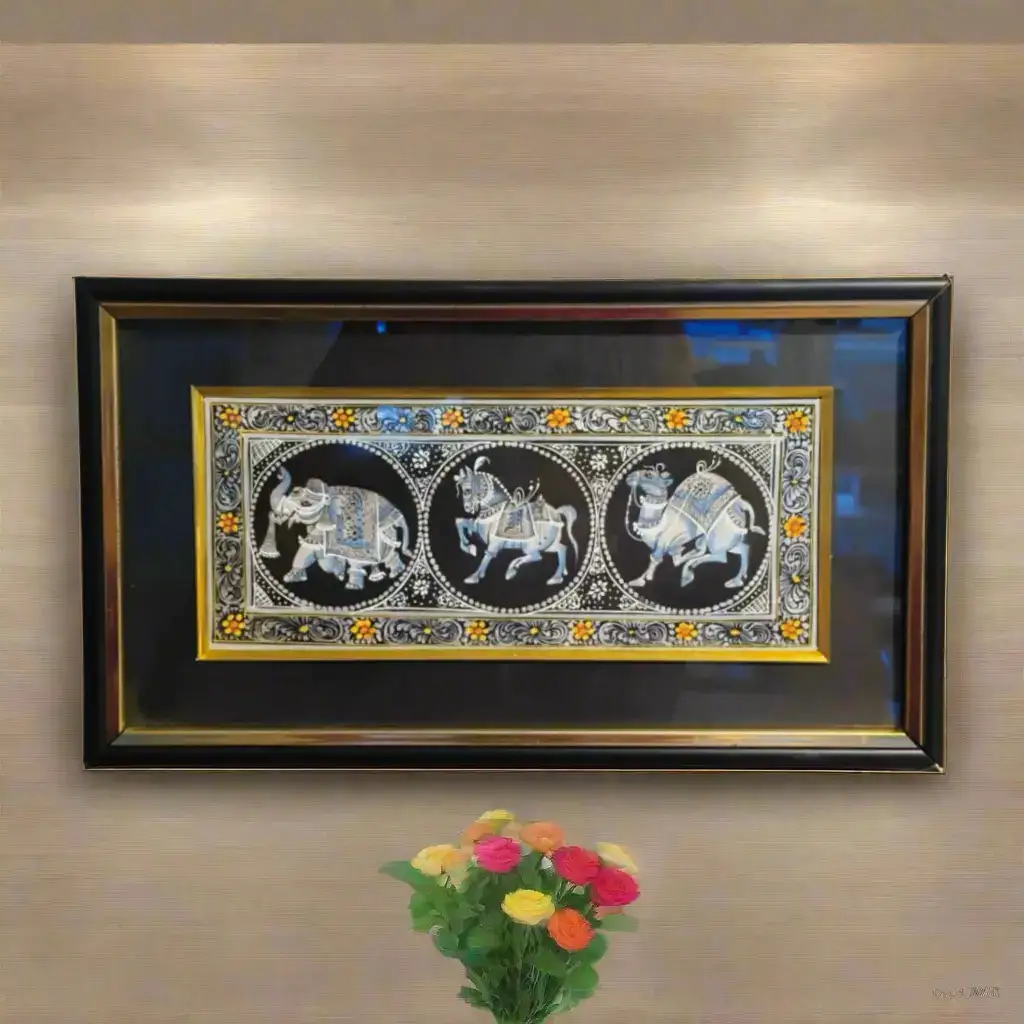
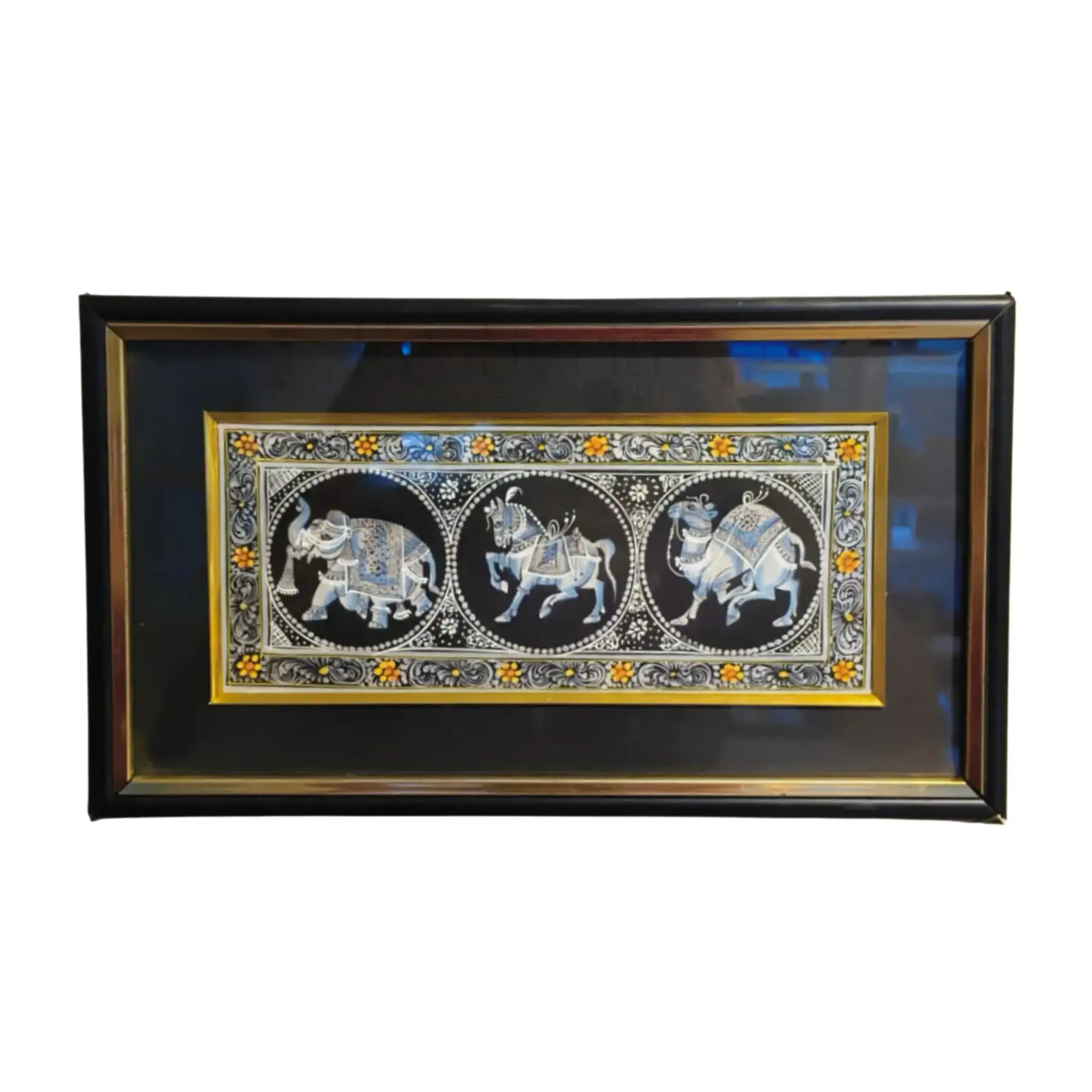
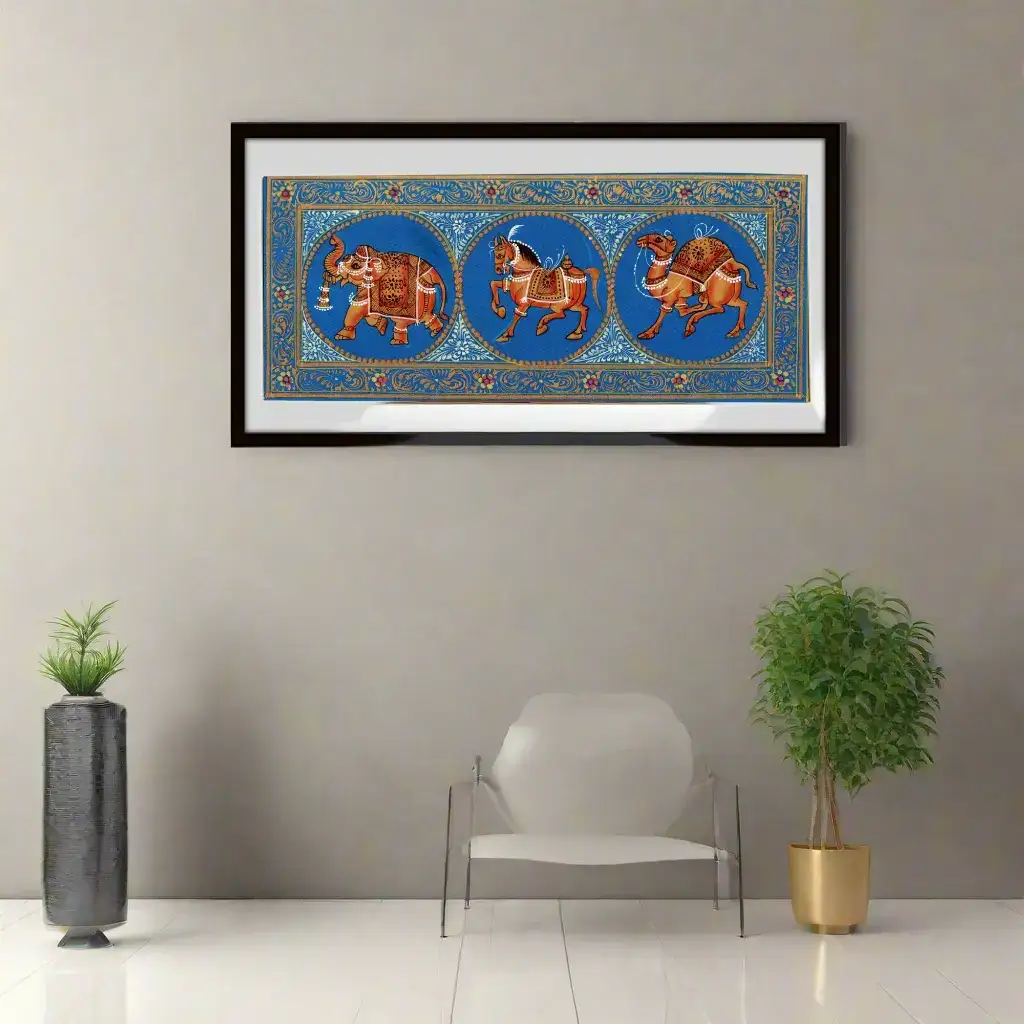
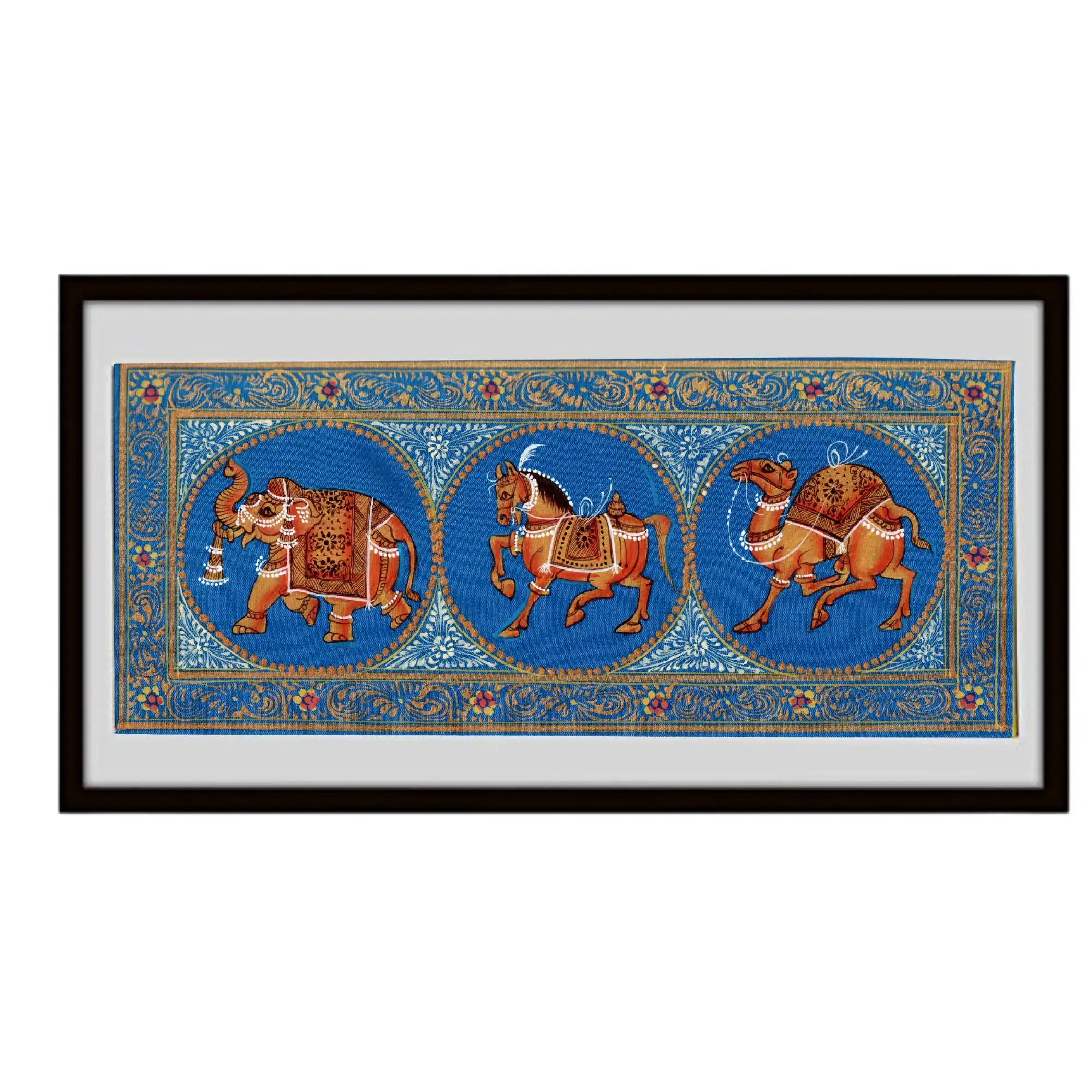
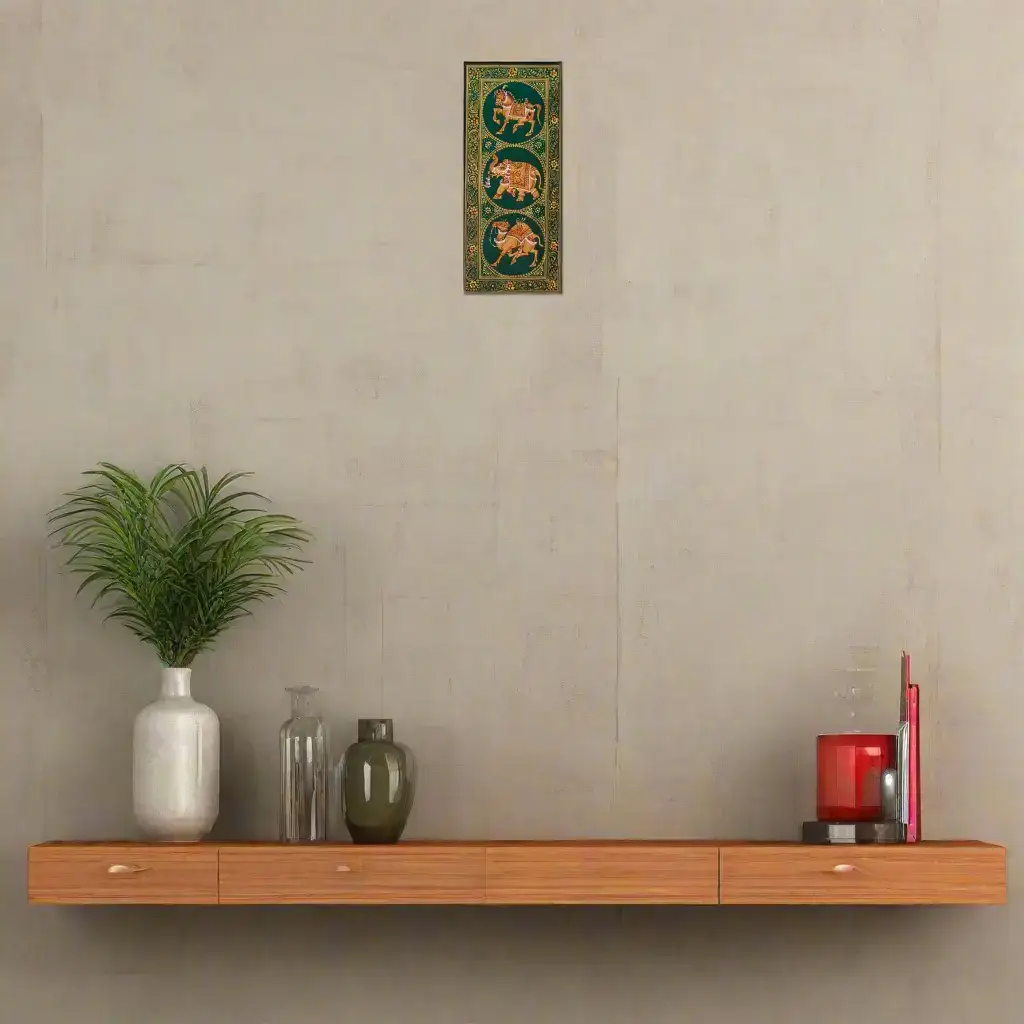
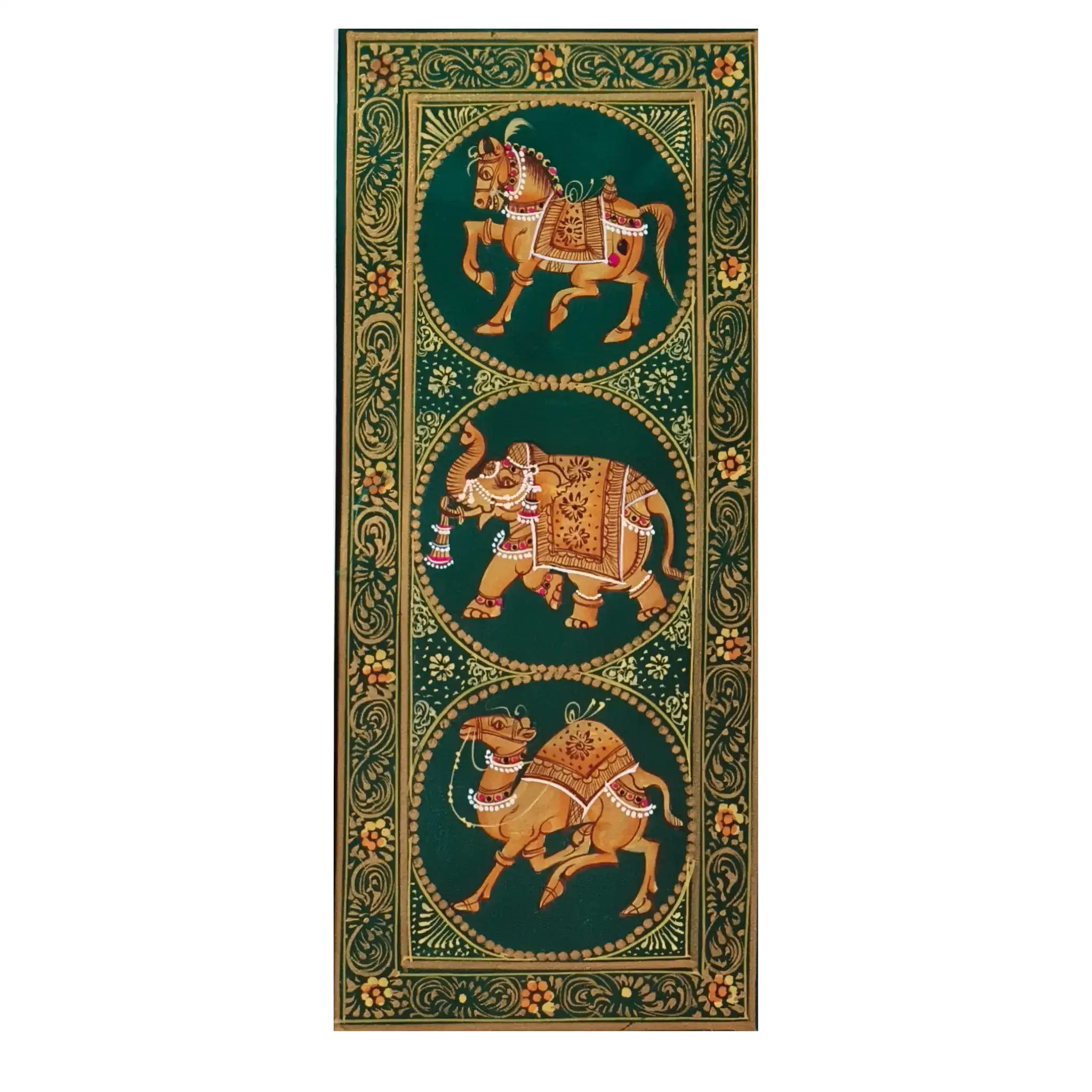
The Triptych Painting format involves three connected panels forming a cohesive visual story. This triptych indian miniature painting technique symbolizes harmony and progression, drawing viewers into a narrative that unfolds across the panels. In the context of this product, the Miniature Painting beautifully captures a royal animal procession.
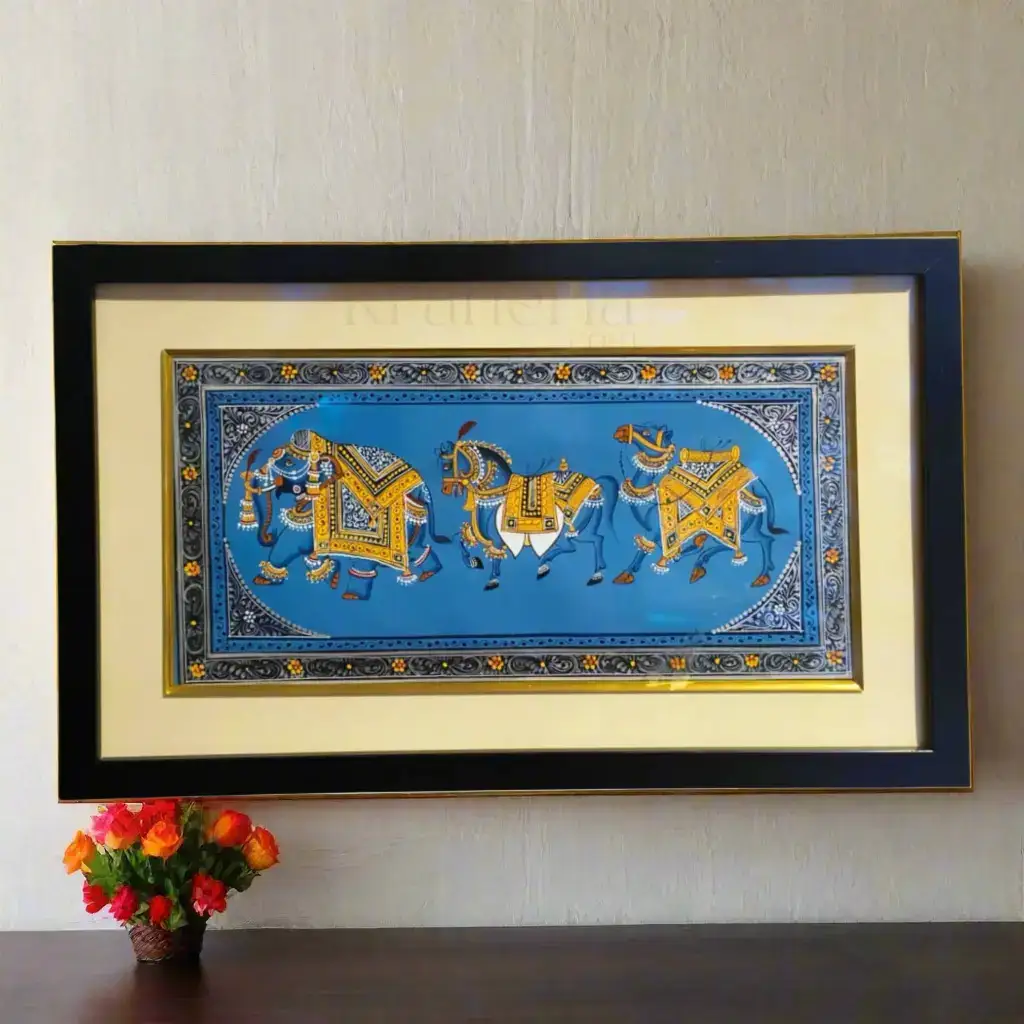
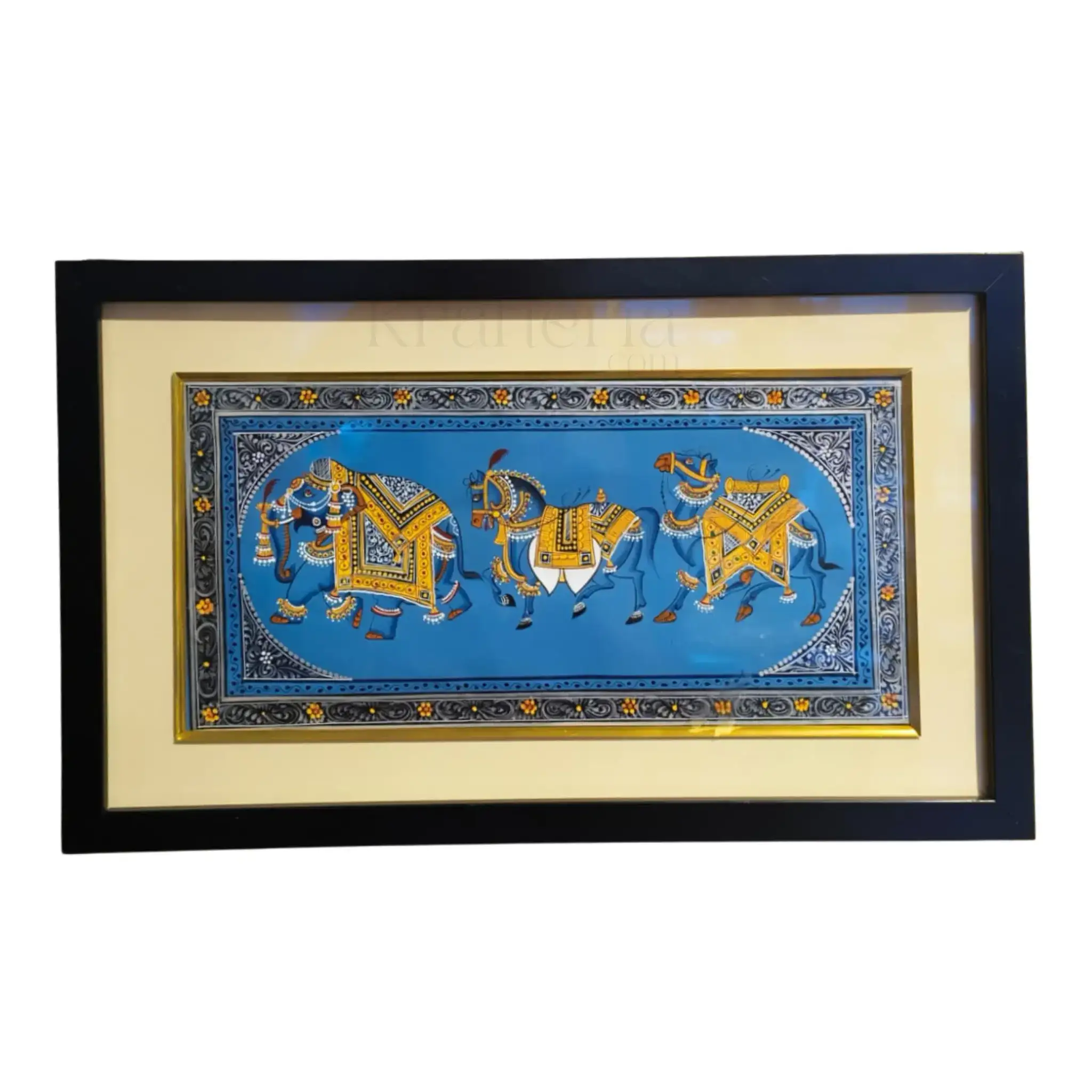
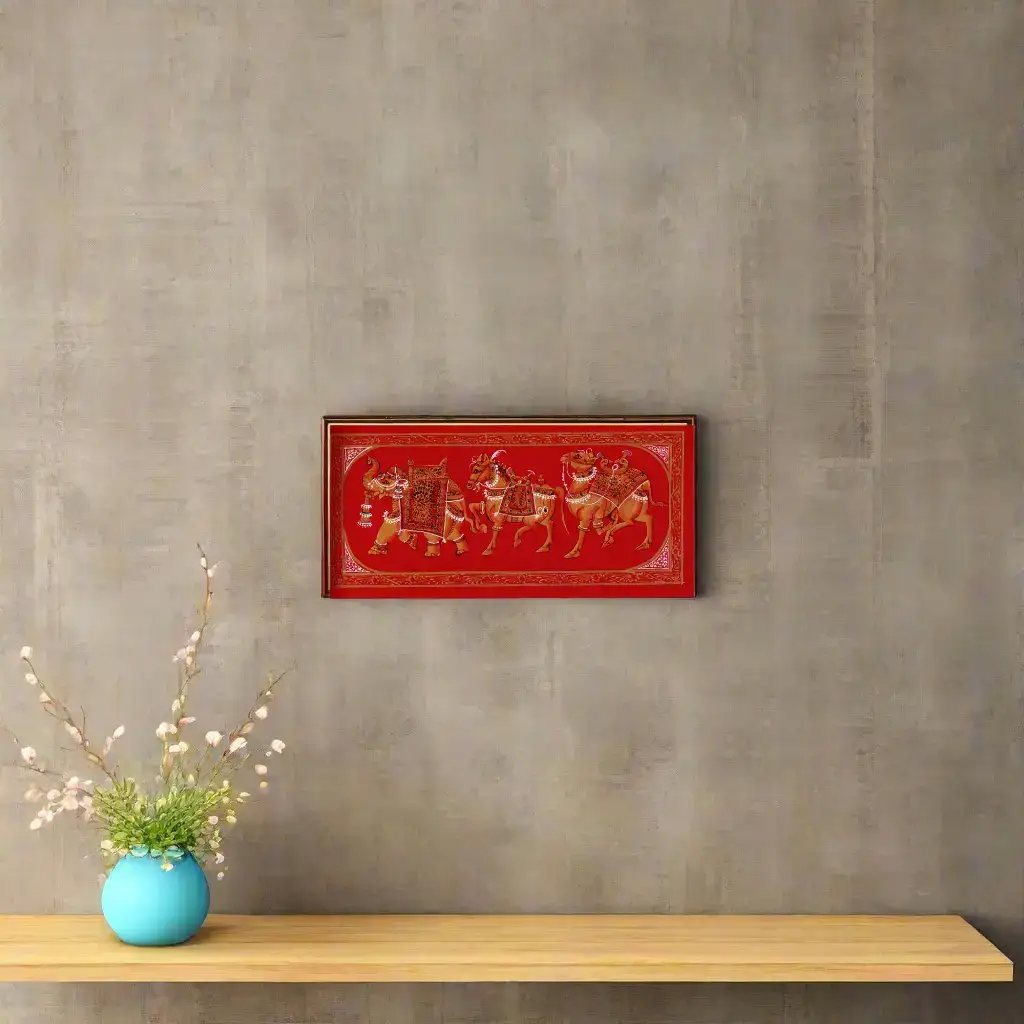
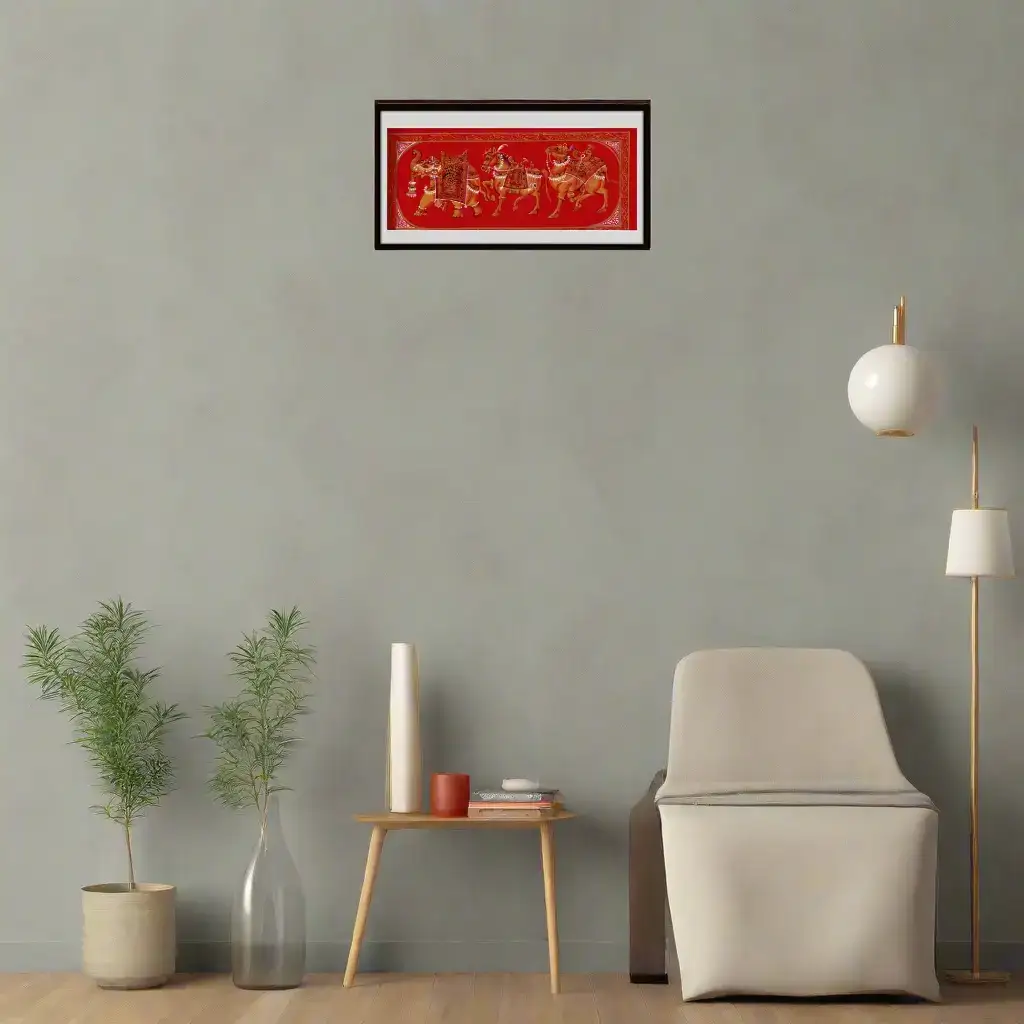
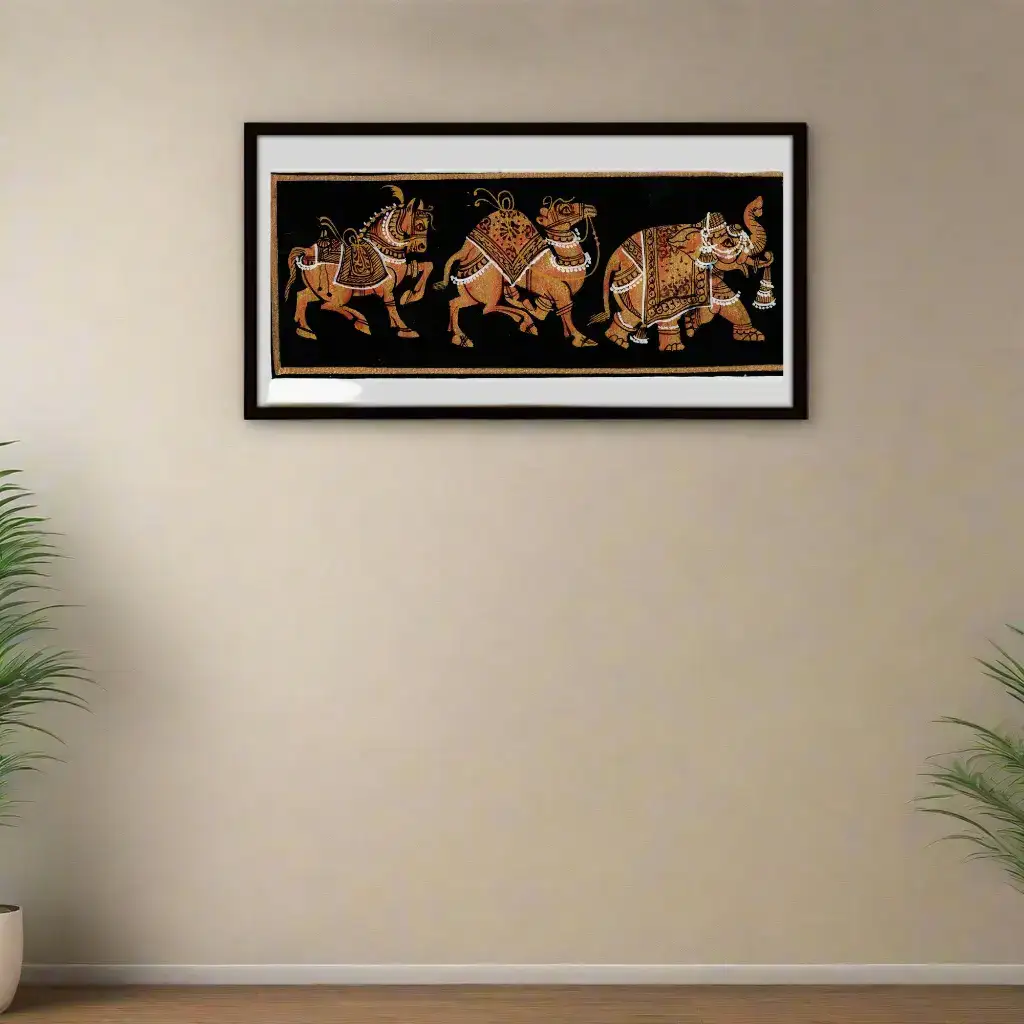
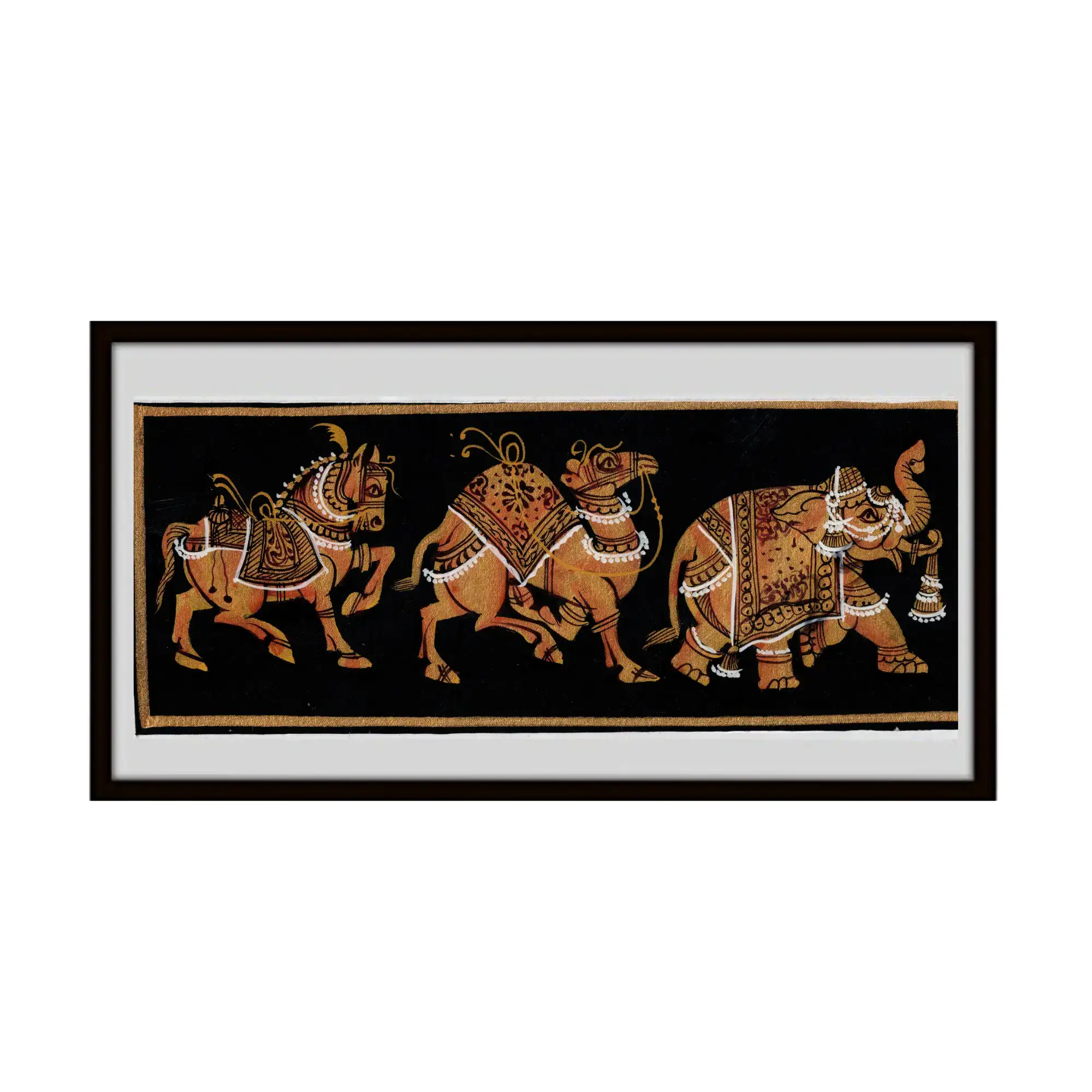
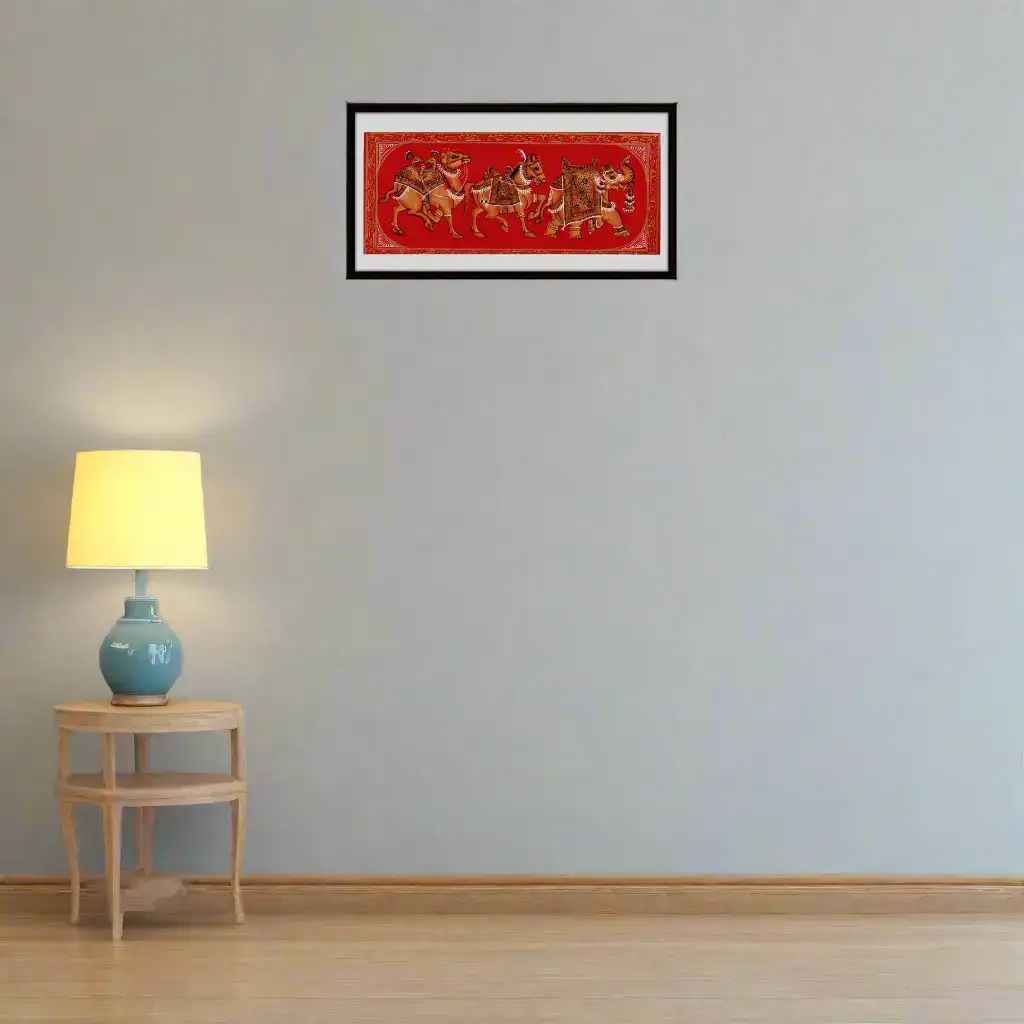
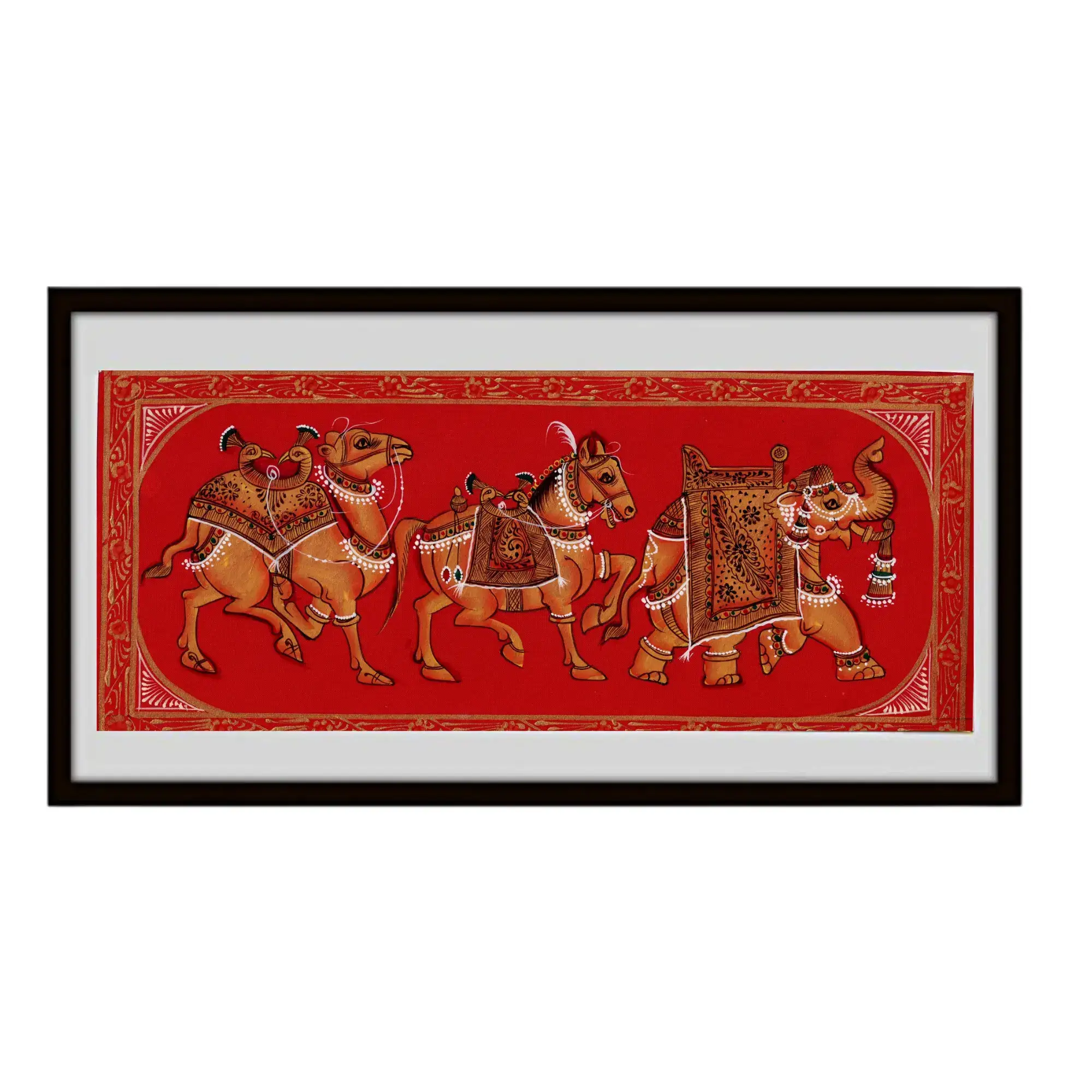
This royal animal procession painting India style is a spectacle of decorated elephants, horses, and camels, adorned in sumptuous royal attire. The animals are presented in ceremonial contexts, embodying grandeur and tradition. This animals miniature painting celebrates India's cultural heritage with a focus on royal pageantry.
Artistic Techniques and Materials Used in This Painting
The skillful artisans employ traditional miniature painting techniques to create these exquisite works. Every detail is meticulously hand-painted using fine brushes and natural pigments. The use of bright, natural colors enhances the intricate designs and delicate patterns.
The bold lines and vibrant hues bring the scene to life, allowing the viewer to appreciate the depth and texture created by the artisans. These elements make this painting a timeless piece suitable for collectors and those who admire Indian art forms.
The Cultural Significance of the Triptych Miniature artwork
This form of painting serves not only as decoration but also as a storyteller of India's rich traditions. The triptych format particularly lends a sense of narrative flow and connection between each panel, guiding the observer through a visual journey. The historical and cultural context enriches the value of this artwork.
Regal animal procession painting India, featured here, reflects the splendor and majesty of royal courts. It commemorates ceremonial events, festivities, and the social importance of animals in royal symbolism. These themes are a testament to the artistry and heritage of Indian miniature painting.
Why Choose This Triptych Miniature Paintings?
- Authentic representation of traditional Rajasthani miniature painting
- Handcrafted by skilled artisans using natural dyes and pigments
- Beautiful triptych indian miniature painting format that tells a cohesive story
- Colors and details that preserve the richness of royal life and cultural heritage
This painting is an excellent addition to your art collection or home décor. Its vibrant depiction of royal animals and ceremonial processions will add elegance and cultural value to any setting. Whether displayed in a living room, gallery, or office, this triptych miniature art will surely captivate attention.
Final Thoughts on the Triptych Painting Style
The tradition of miniature painting in India, particularly the miniature painting style, represents a rich tapestry of history, culture, and artistry. From royal themes to pastoral landscapes, these paintings offer a window into India's diverse artistic heritage. This piece continues that tradition, honoring the beauty of Indian processionals and royal animals.
Engage with this timeless animals miniature painting and own a part of Indian culture that has lasted for centuries. Its intricate detailing, vibrant colors, and storytelling make it a unique and treasured artwork for all art lovers.
Product Information
Product Information
Shipping & Returns
Shipping & Returns
Description
Regal Animalia - A Triptych of Indian Processionals Miniature Painting
Triptych of Indian Processionals Miniature Painting is a captivating example of the rich and vibrant style of Indian miniature painting. This art form flourished in the royal courts of Rajasthan starting from the 16th century. Deeply rooted in Indian traditions, it celebrates themes such as mythology, epics, love stories, royal life, and folk culture.
The paintings are characterized by bold lines, bright colors, and intricate detailing. Artists often used natural dyes and pigments derived from minerals, vegetables, and precious stones. These traditional materials provide a lasting and luminous quality to each painting, allowing the artwork to preserve its brilliance over time.
The Distinct Schools of Miniature Painting in Rajasthan
The Triptych Miniature Painting style is broadly categorized into several schools, each with unique stylistic elements and themes. These schools include Mewar, Marwar, Bundi, Kota, Kishangarh, Bikaner, and Jaipur. Each school reflects its region’s culture and artistic focus.
For instance, the Kishangarh school is renowned for its romantic depictions of Radha and Krishna. It particularly highlights the iconic image of Bani Thani, admired for its delicate features and serene expressions. Mewar paintings frequently portray court scenes, heroic tales, and deeply religious themes, creating a vivid narrative of the royal lifestyle.
On the other hand, Bundi and Kota paintings focus on lush landscapes and hunting scenes. Their use of nature and wildlife creates dramatic and engaging visuals, making them essential parts of the broader miniature painting tradition.
Exploring the Triptych Miniature Painting Tradition
The Triptych Painting format involves three connected panels forming a cohesive visual story. This triptych indian miniature painting technique symbolizes harmony and progression, drawing viewers into a narrative that unfolds across the panels. In the context of this product, the Miniature Painting beautifully captures a royal animal procession.
This royal animal procession painting India style is a spectacle of decorated elephants, horses, and camels, adorned in sumptuous royal attire. The animals are presented in ceremonial contexts, embodying grandeur and tradition. This animals miniature painting celebrates India's cultural heritage with a focus on royal pageantry.
Artistic Techniques and Materials Used in This Painting
The skillful artisans employ traditional miniature painting techniques to create these exquisite works. Every detail is meticulously hand-painted using fine brushes and natural pigments. The use of bright, natural colors enhances the intricate designs and delicate patterns.
The bold lines and vibrant hues bring the scene to life, allowing the viewer to appreciate the depth and texture created by the artisans. These elements make this painting a timeless piece suitable for collectors and those who admire Indian art forms.
The Cultural Significance of the Triptych Miniature artwork
This form of painting serves not only as decoration but also as a storyteller of India's rich traditions. The triptych format particularly lends a sense of narrative flow and connection between each panel, guiding the observer through a visual journey. The historical and cultural context enriches the value of this artwork.
Regal animal procession painting India, featured here, reflects the splendor and majesty of royal courts. It commemorates ceremonial events, festivities, and the social importance of animals in royal symbolism. These themes are a testament to the artistry and heritage of Indian miniature painting.
Why Choose This Triptych Miniature Paintings?
- Authentic representation of traditional Rajasthani miniature painting
- Handcrafted by skilled artisans using natural dyes and pigments
- Beautiful triptych indian miniature painting format that tells a cohesive story
- Colors and details that preserve the richness of royal life and cultural heritage
This painting is an excellent addition to your art collection or home décor. Its vibrant depiction of royal animals and ceremonial processions will add elegance and cultural value to any setting. Whether displayed in a living room, gallery, or office, this triptych miniature art will surely captivate attention.
Final Thoughts on the Triptych Painting Style
The tradition of miniature painting in India, particularly the miniature painting style, represents a rich tapestry of history, culture, and artistry. From royal themes to pastoral landscapes, these paintings offer a window into India's diverse artistic heritage. This piece continues that tradition, honoring the beauty of Indian processionals and royal animals.
Engage with this timeless animals miniature painting and own a part of Indian culture that has lasted for centuries. Its intricate detailing, vibrant colors, and storytelling make it a unique and treasured artwork for all art lovers.