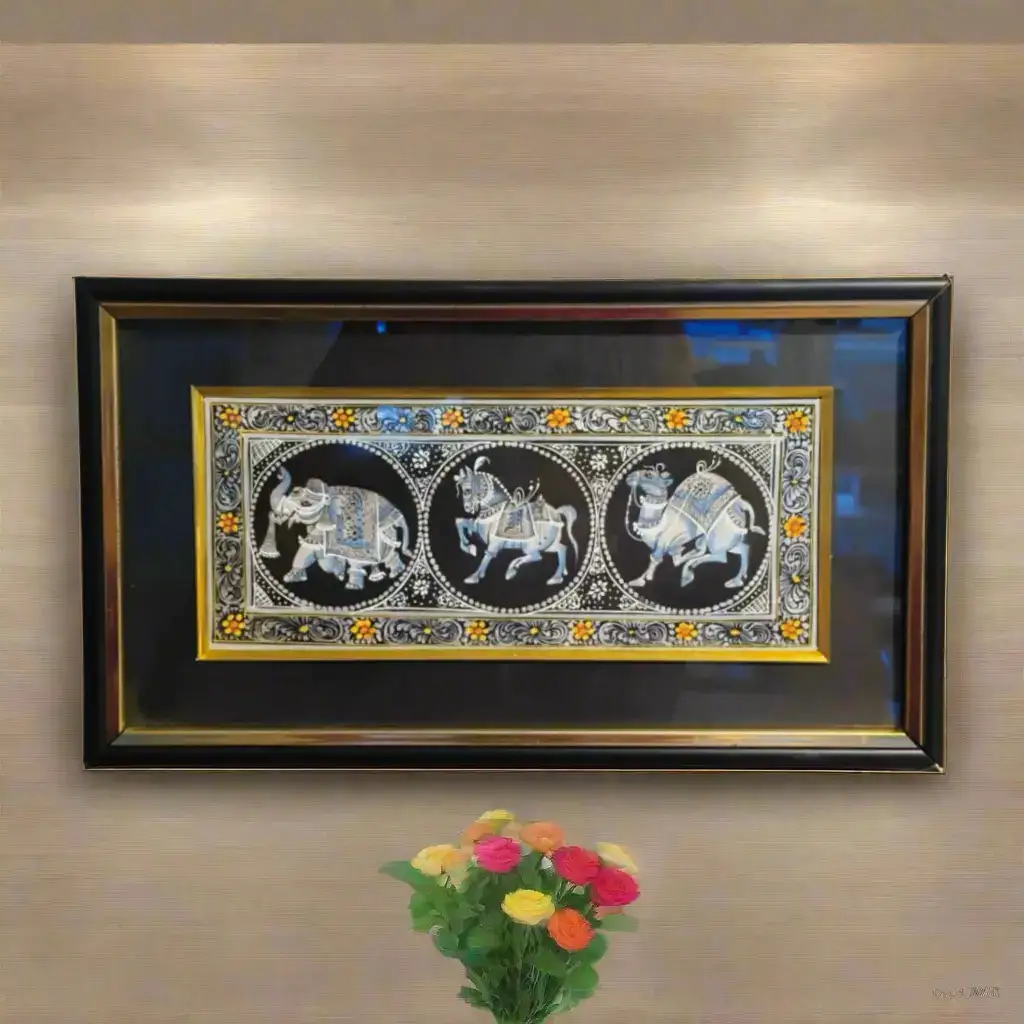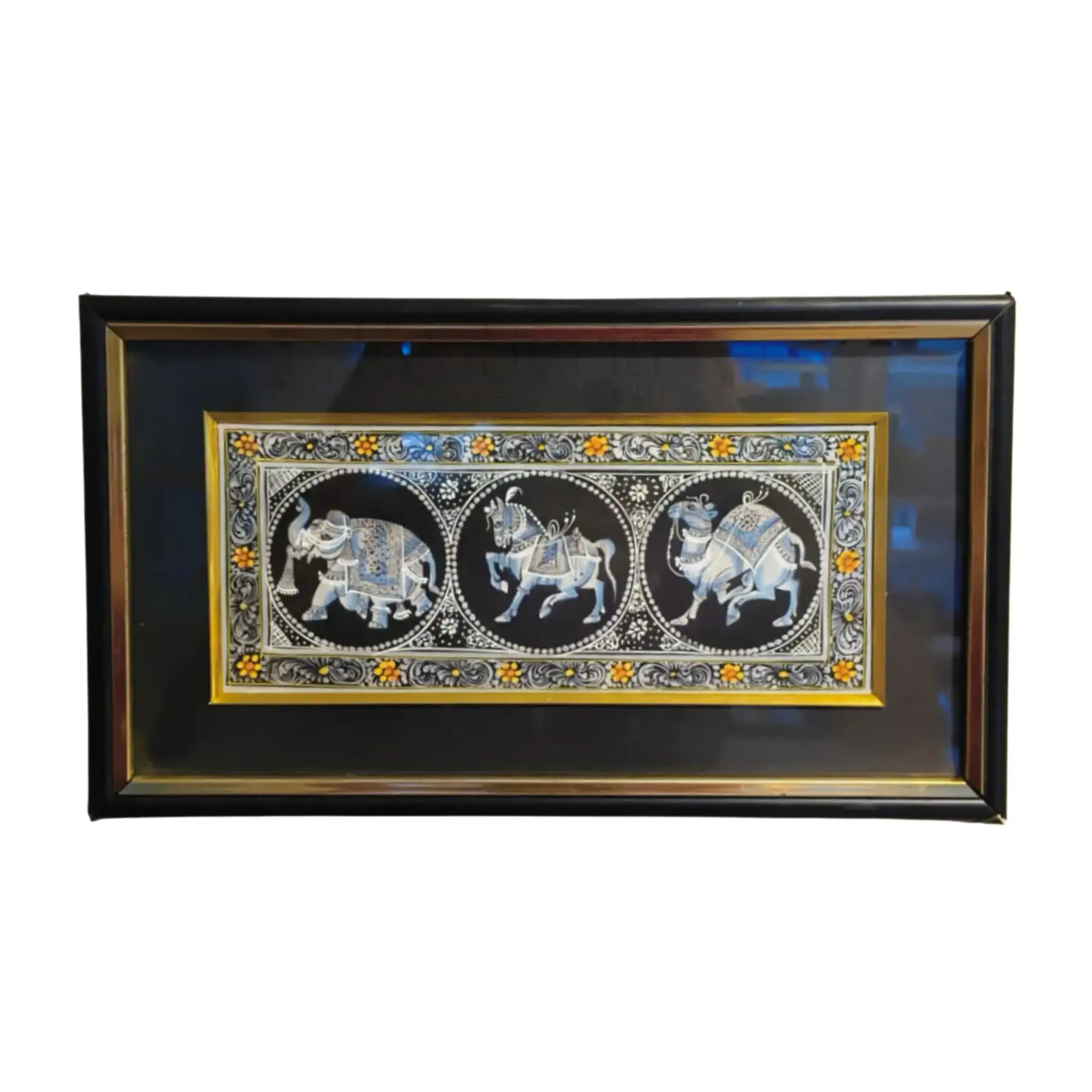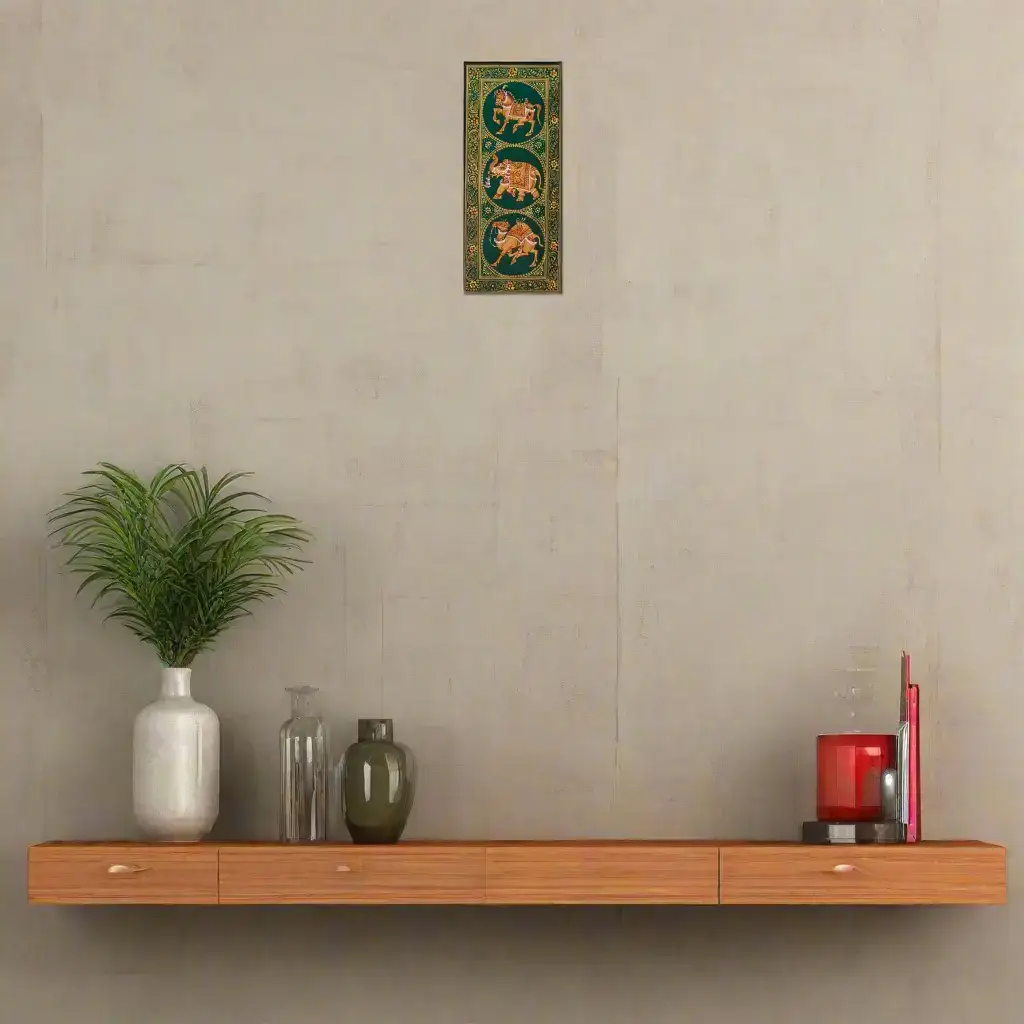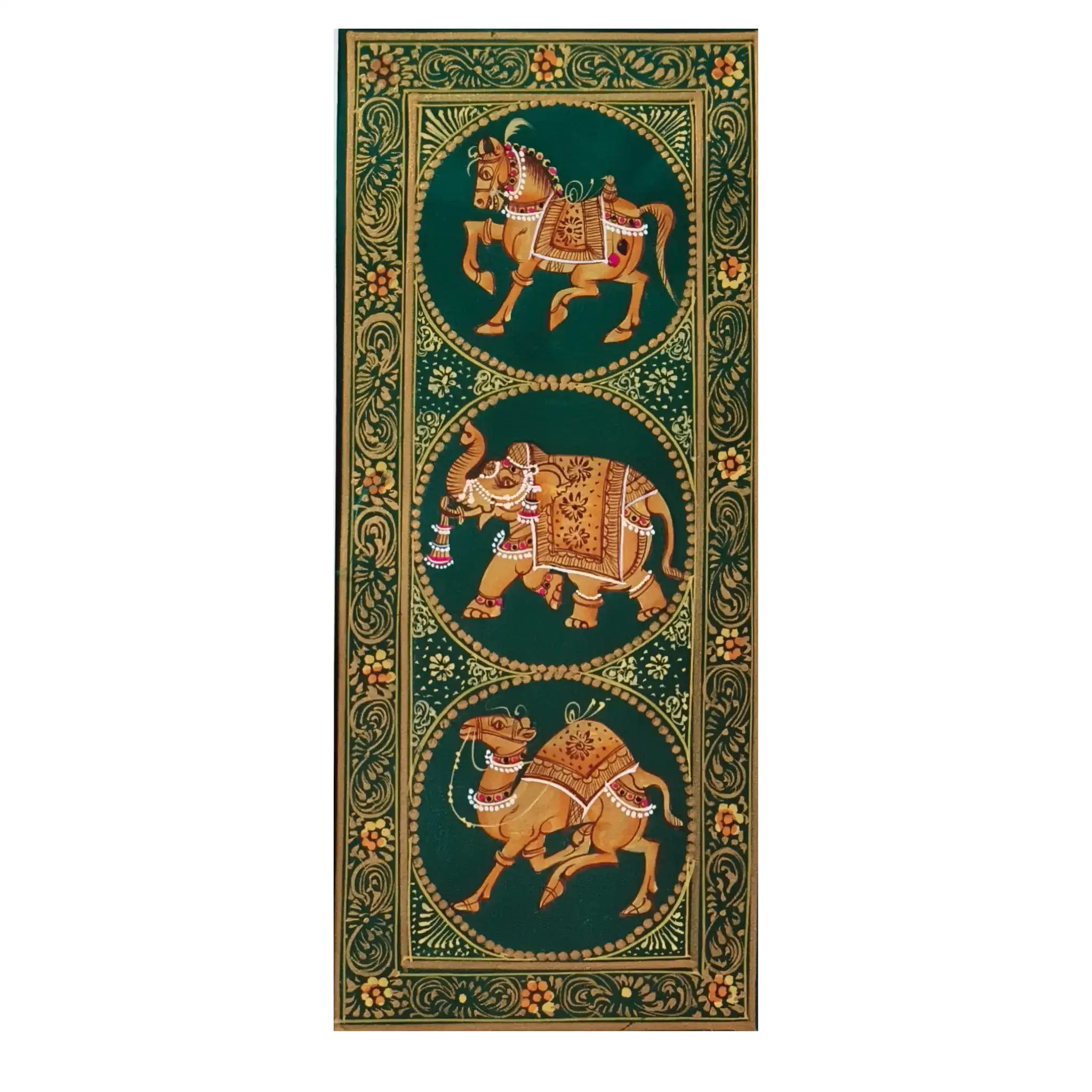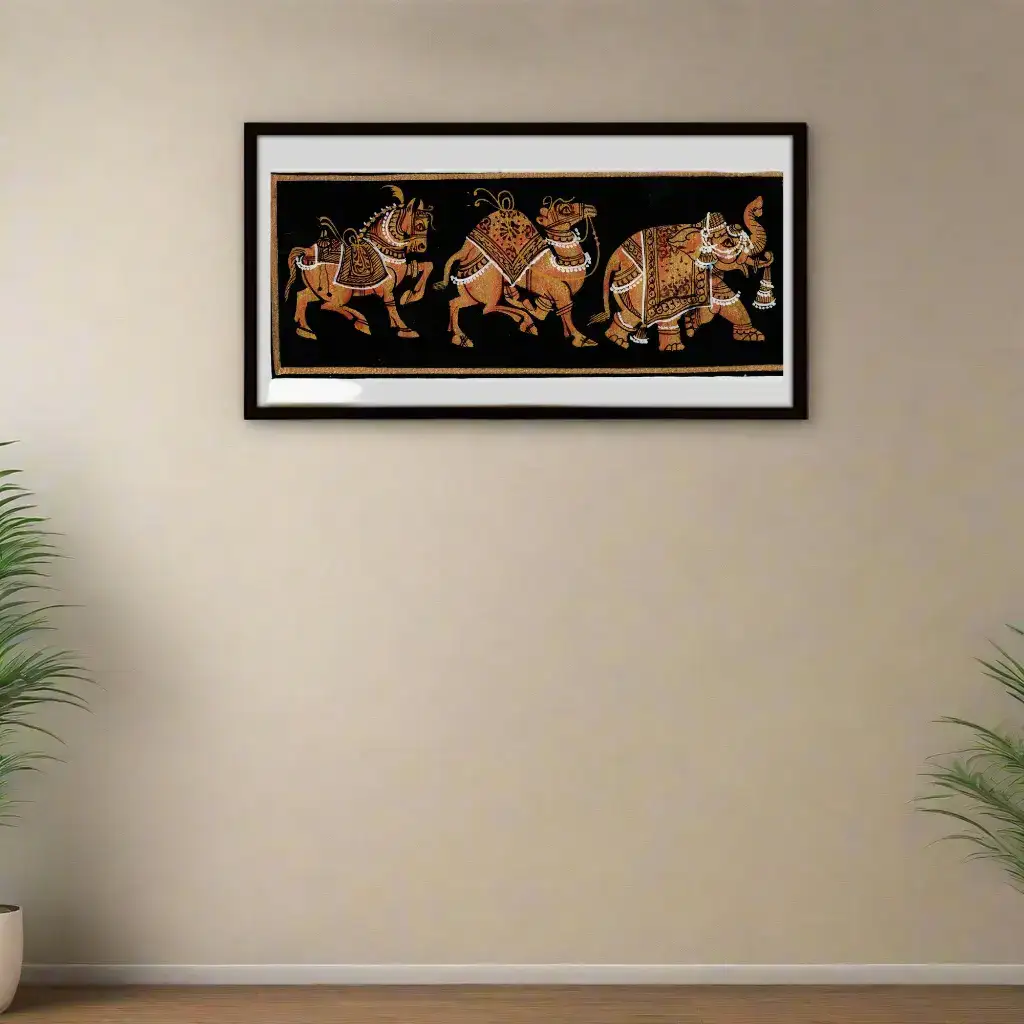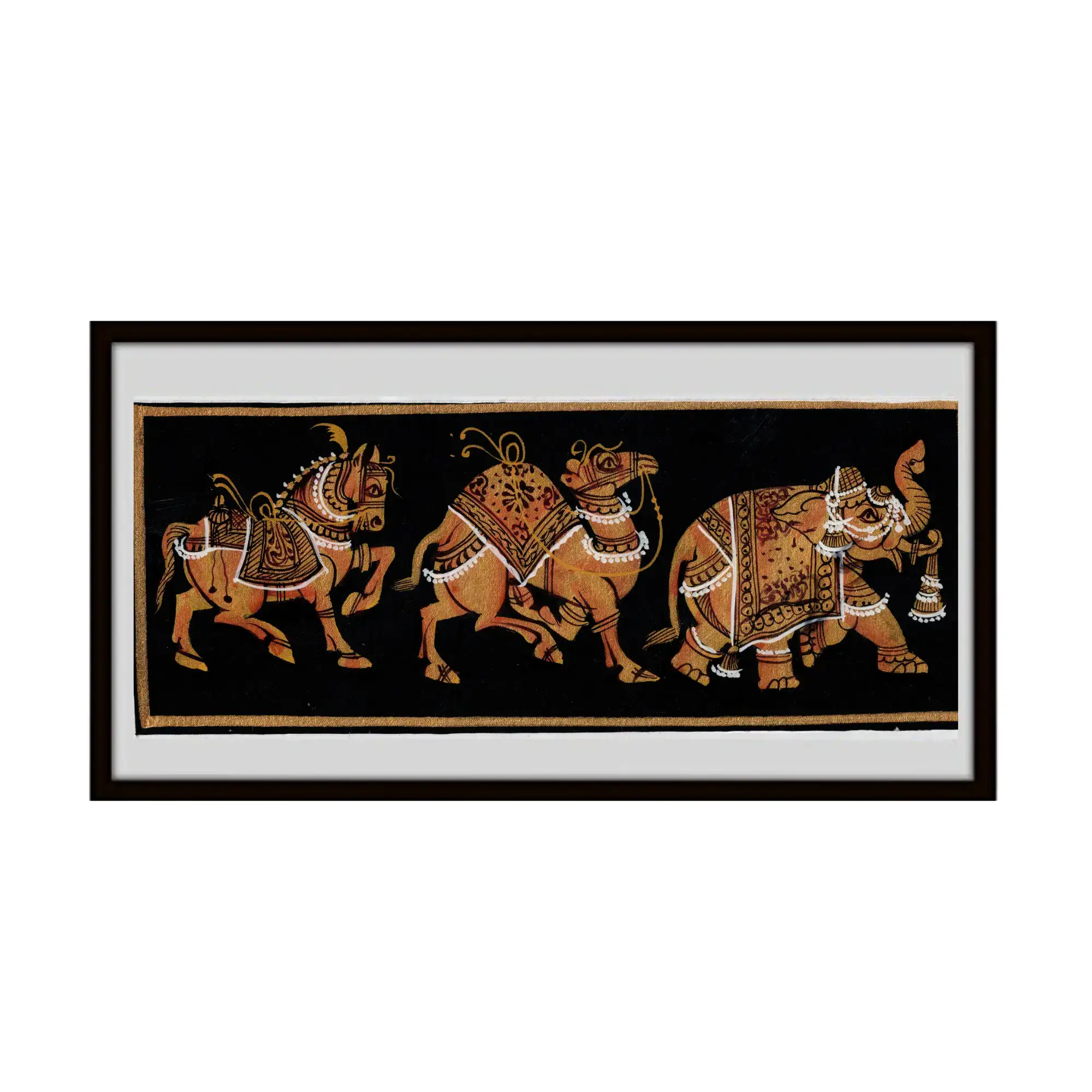
Rajasthan Dance of the Soul Miniature Art
Rajasthan Dance of the Soul Miniature Art – Dance Miniature Painting
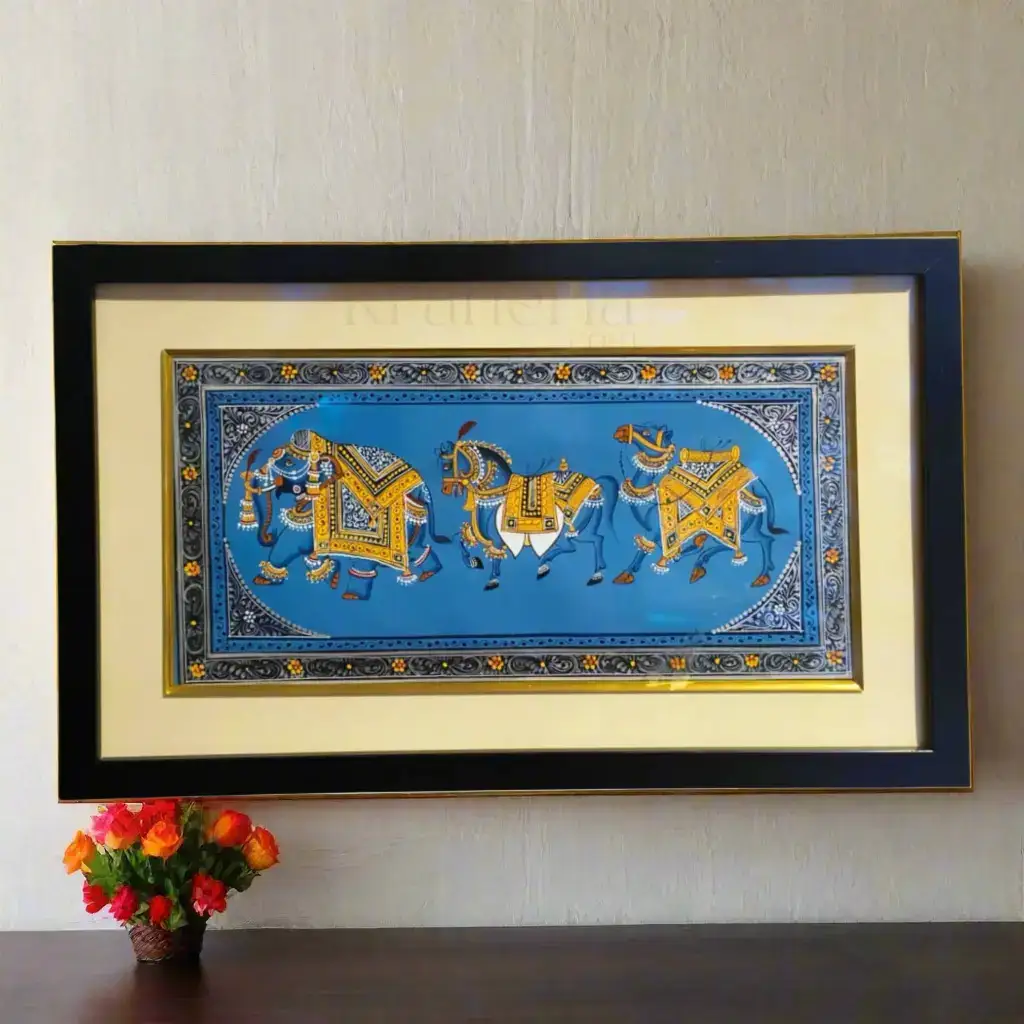
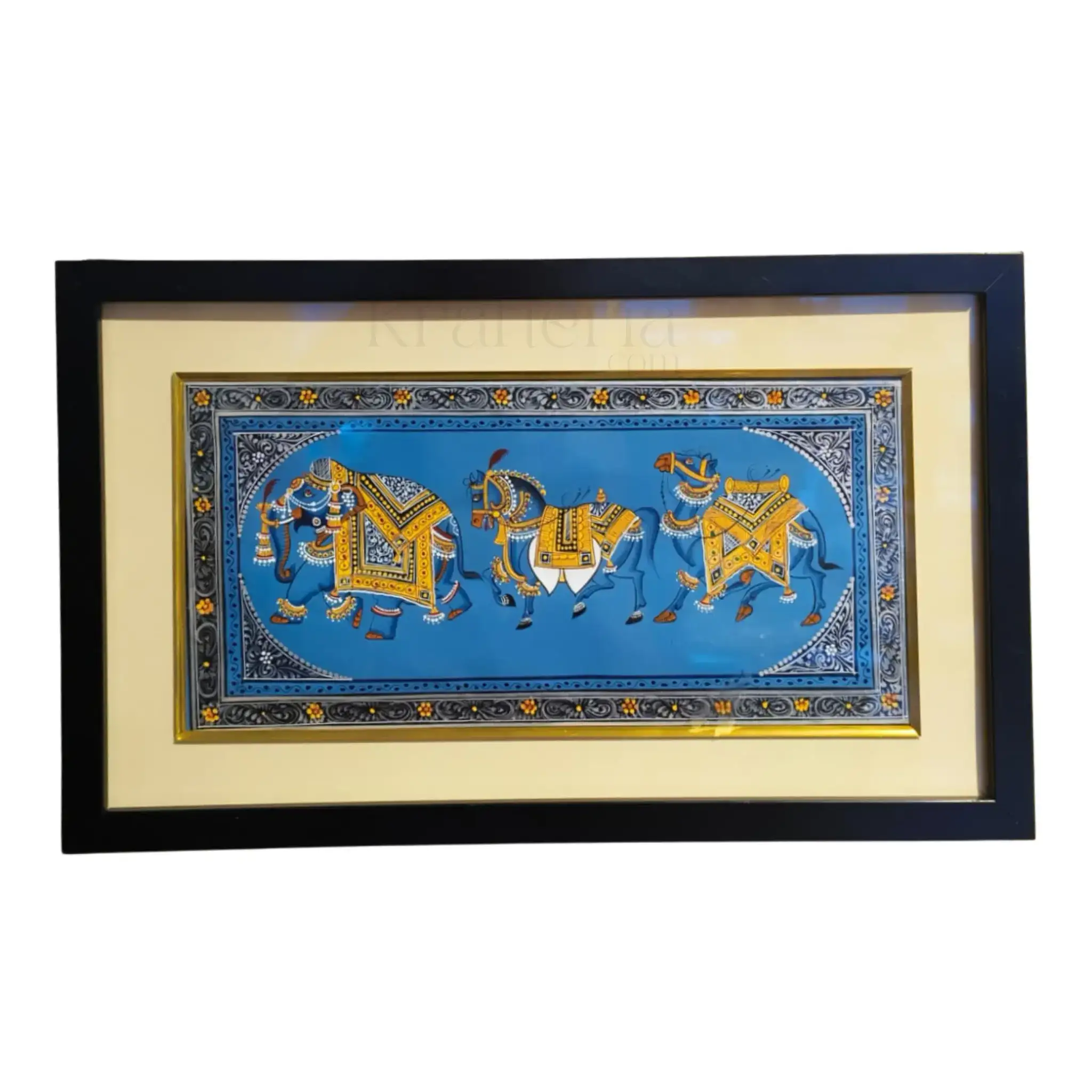
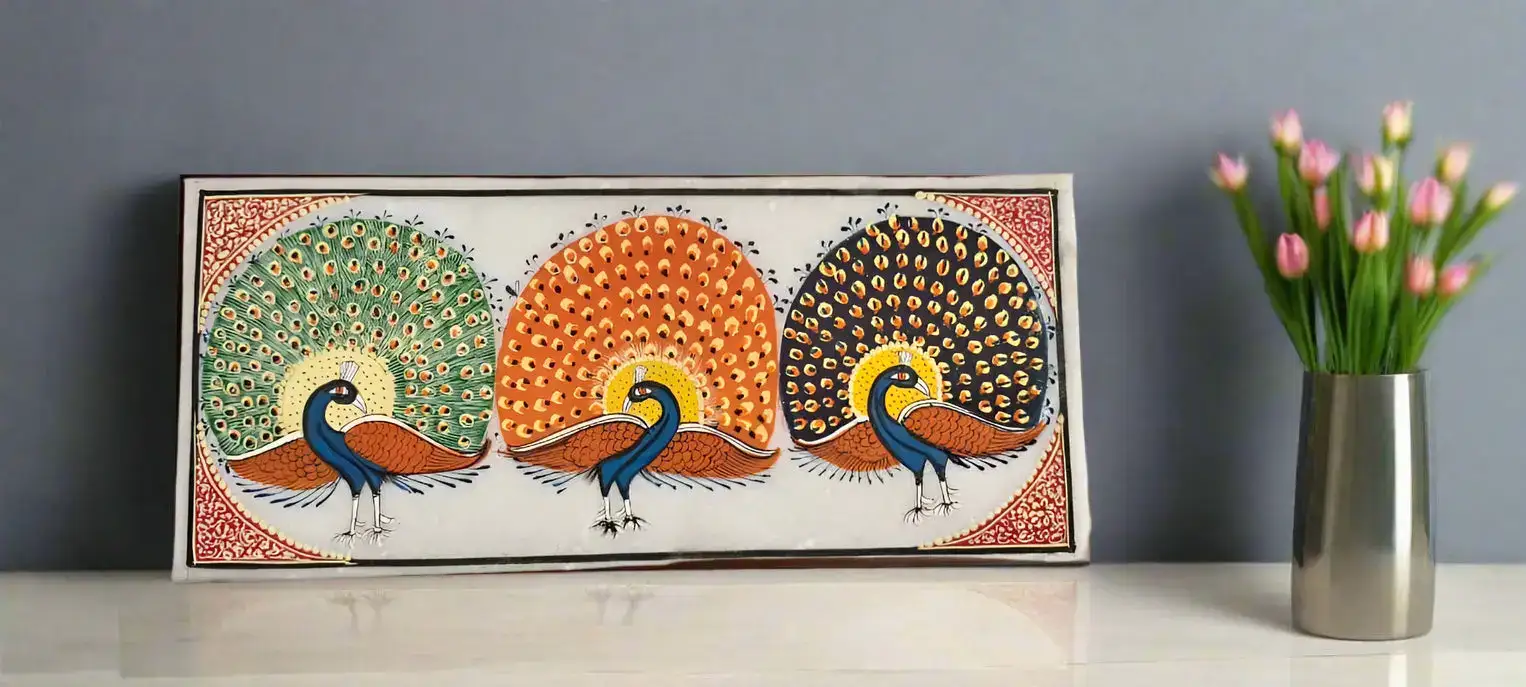
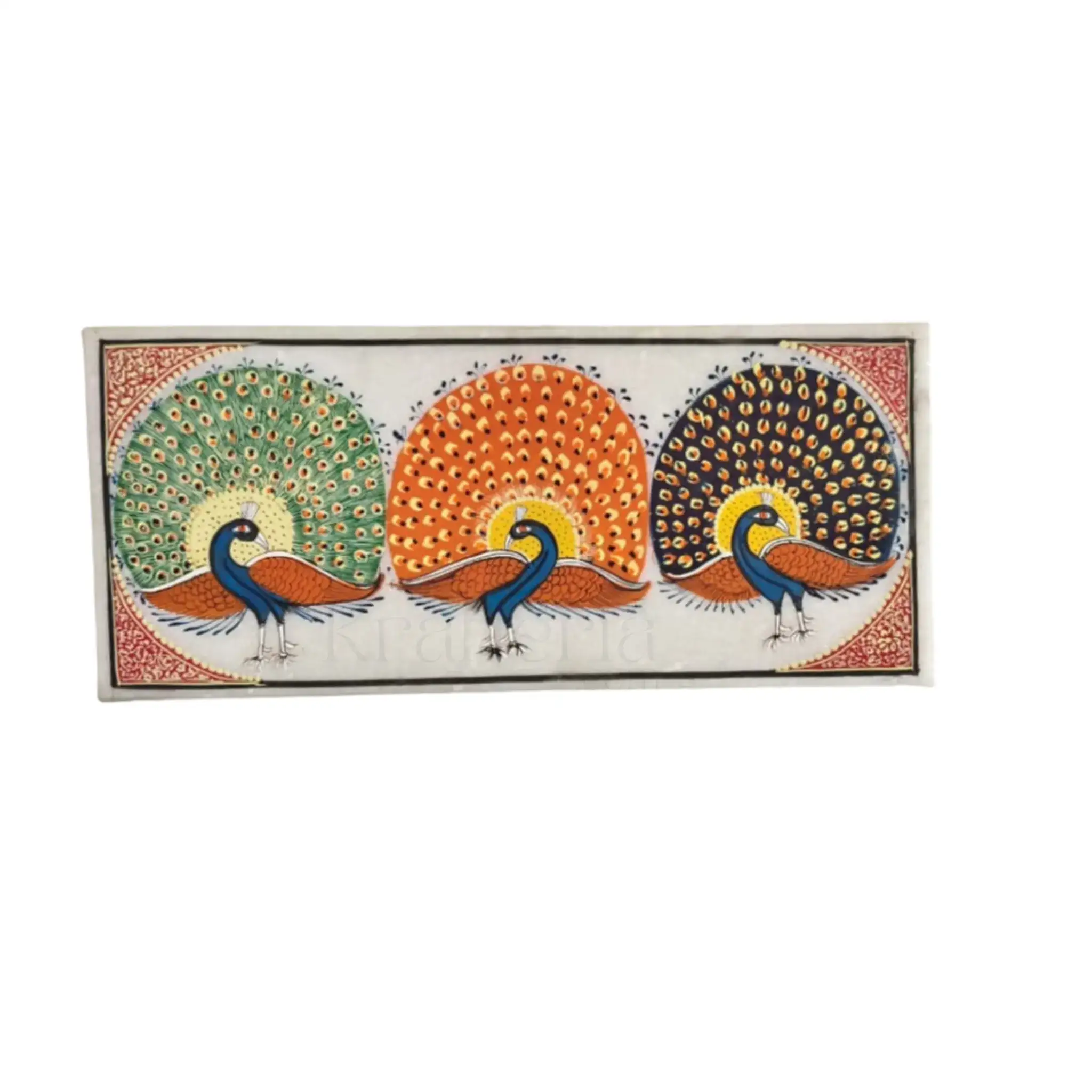
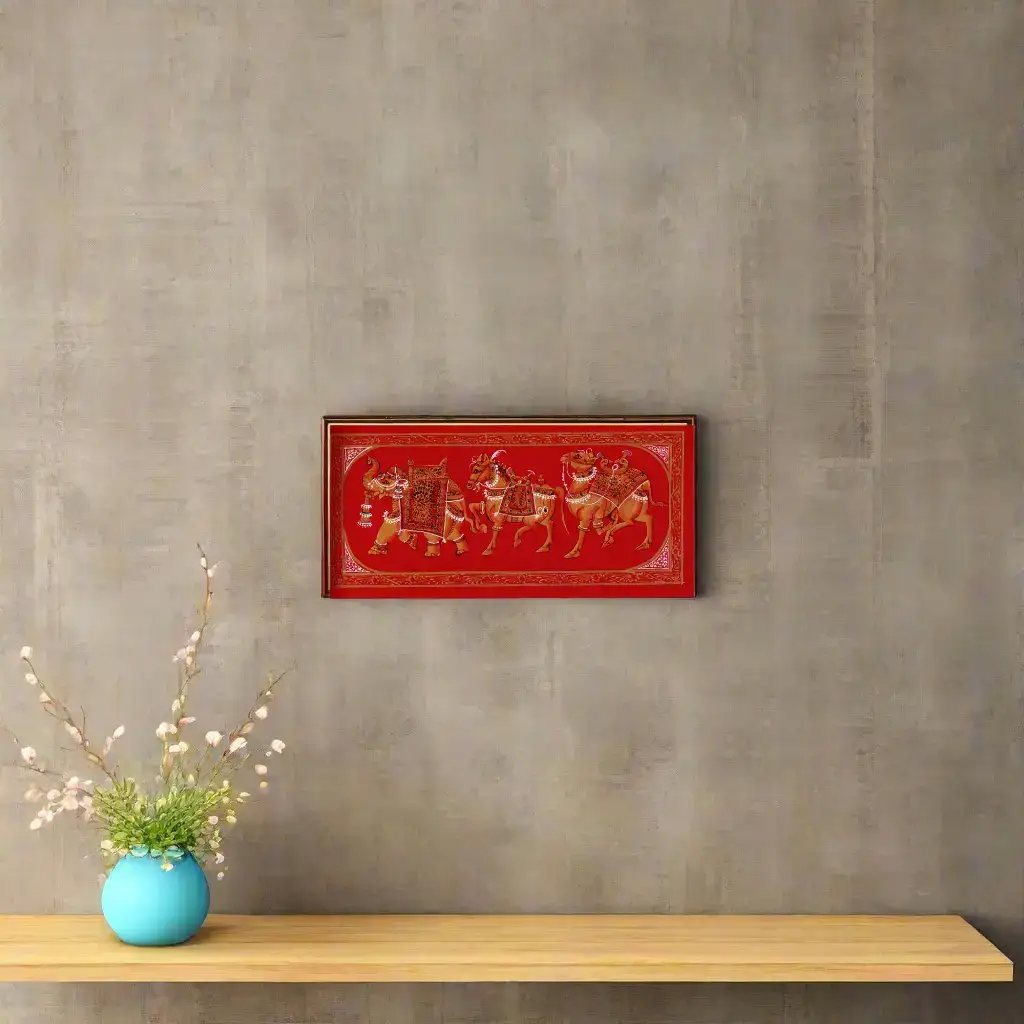
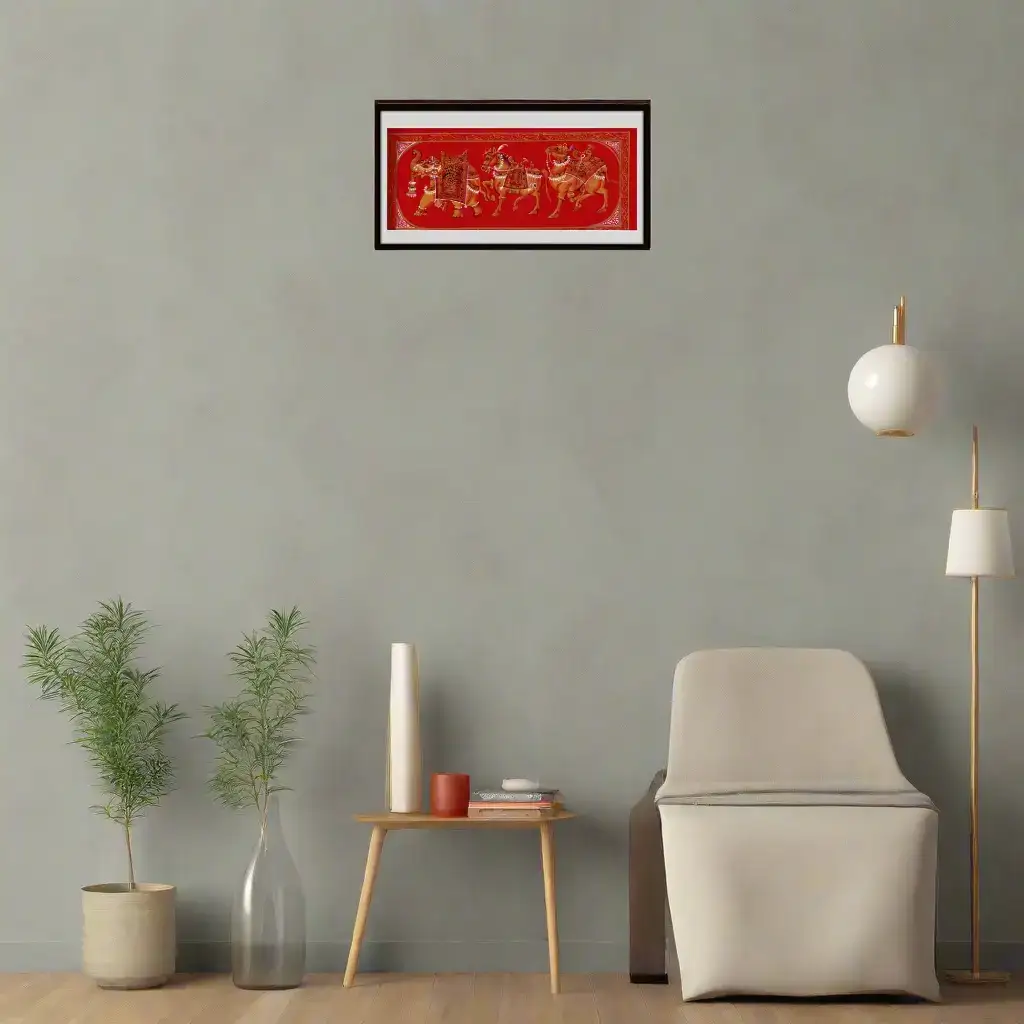
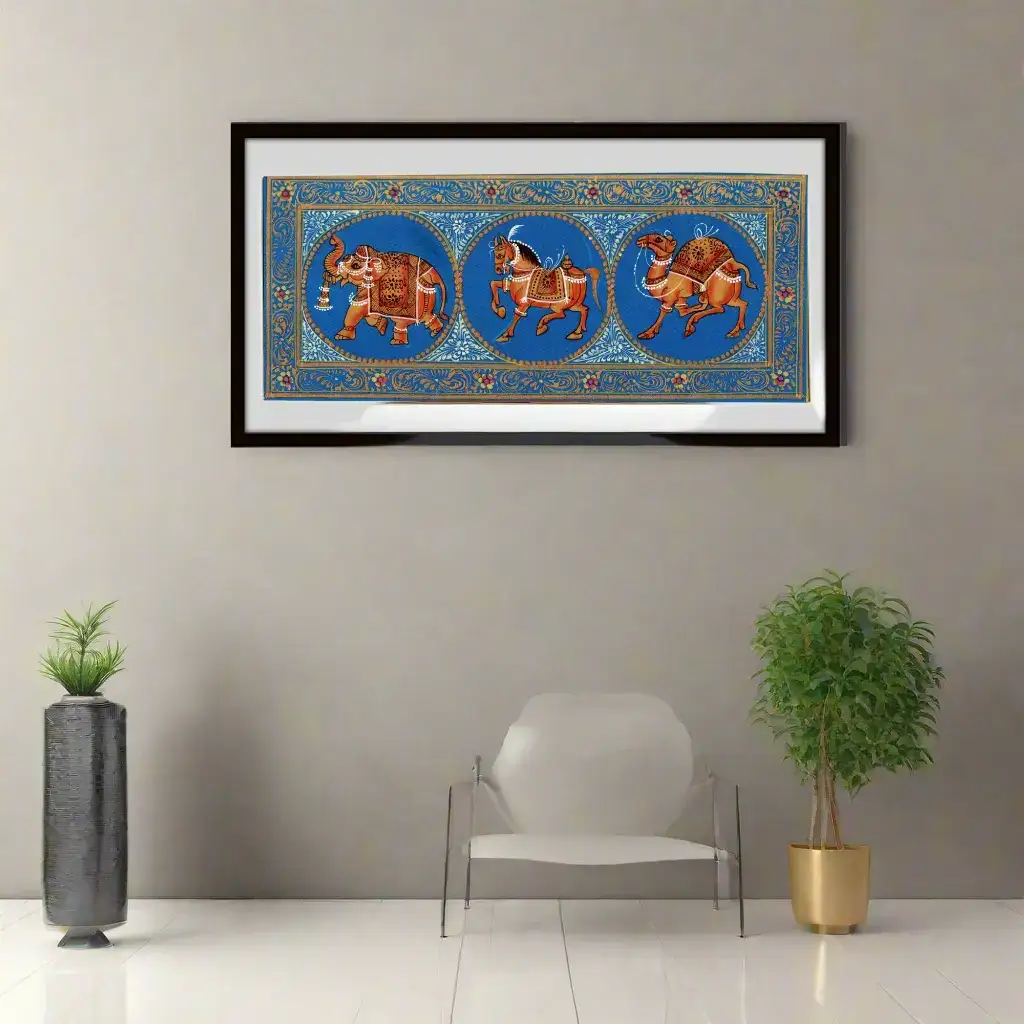
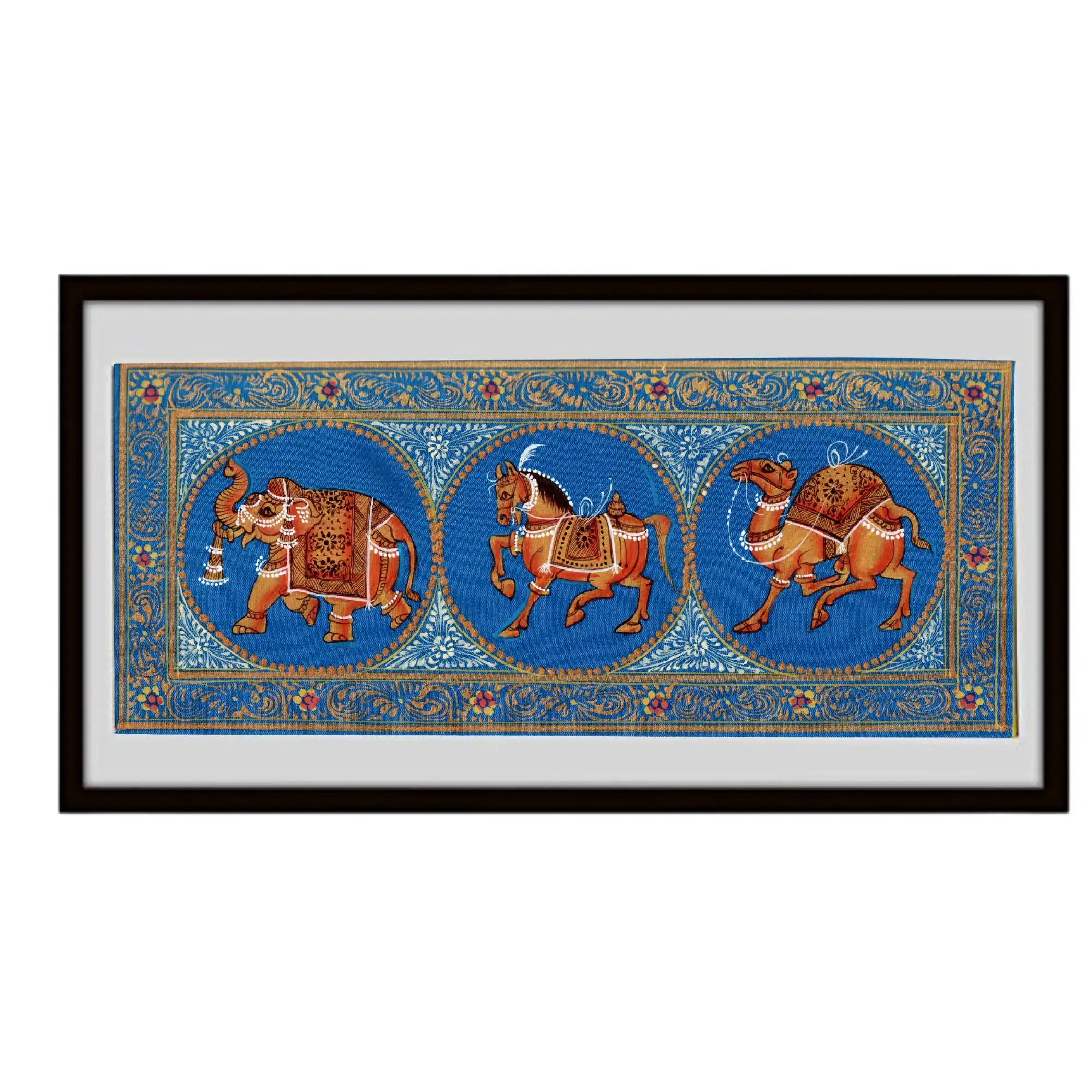
Dance of the Soul Miniature Art Rajasthani Painting is a rich and vibrant style of Indian miniature painting. This art form flourished mainly in the royal courts of Rajasthan starting from the 16th century. It is deeply rooted in centuries-old Indian traditions and culture. The artwork represents themes such as mythology, epics, love stories, royal life, and folk culture, making it timeless and deeply engaging.
The signature of this miniature art lies in its bold lines, bright colors, and intricate detailing. Artists traditionally use natural dyes and pigments made from minerals, vegetables, and precious stones. These elements give the paintings a lasting and luminous quality. The delicate brushwork used in this dance miniature painting style ensures each stroke captures the essence of movement and emotion perfectly.
Distinct Schools of Dance Miniature Painting in Rajasthan
This beautiful art form is divided into several regional schools, each with unique characteristics. The main schools include Mewar, Marwar, Bundi, Kota, Kishangarh, Bikaner, and Jaipur. These styles differ based on subject focus, color schemes, and artistic techniques. Each school offers a different perspective on the traditional Rajasthani dancer painting.
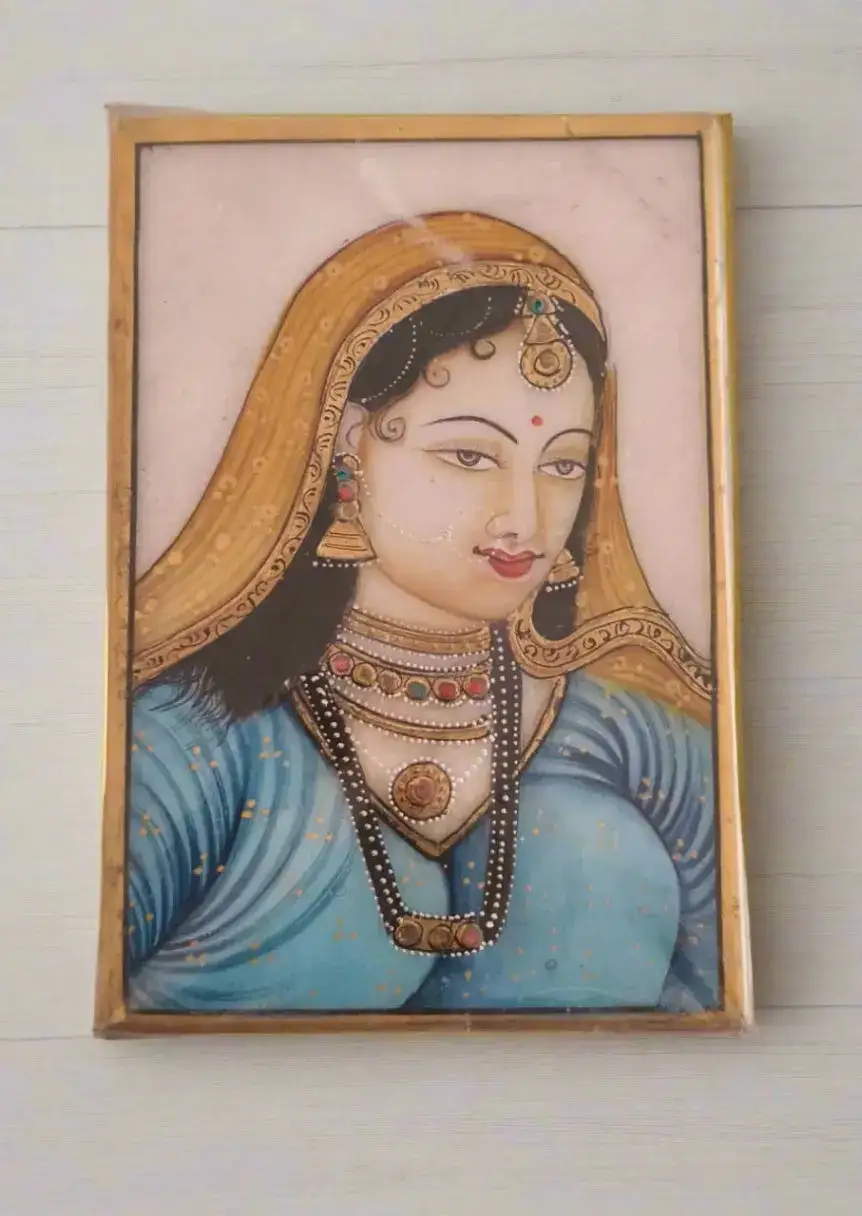
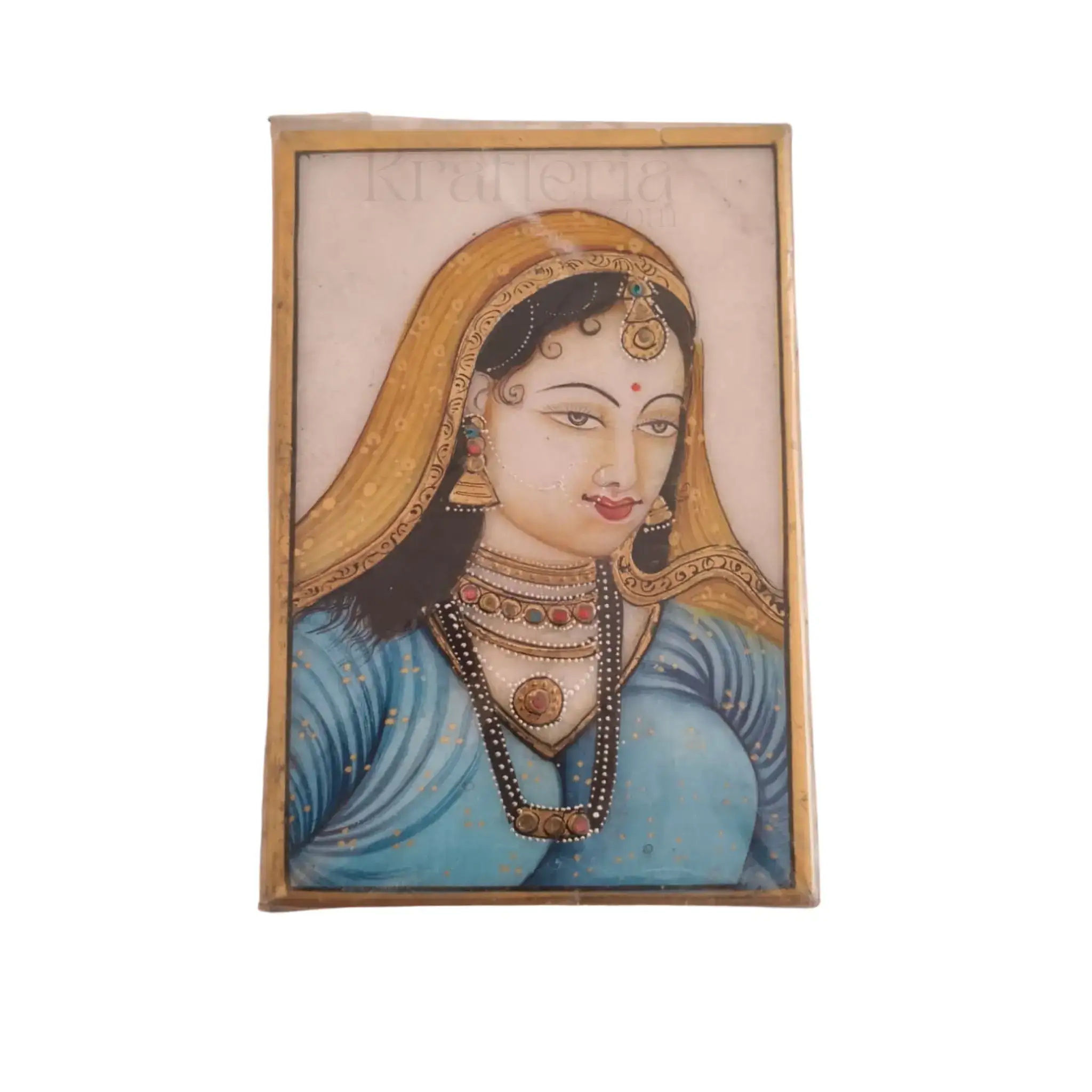
- Kishangarh: Famous for its romantic portrayal of Radha and Krishna. It is also renowned for the iconic image of Bani Thani. This school emphasizes graceful beauty and delicate expressions.
- Mewar: Known for depicting court scenes, heroic tales, and religious themes. The paintings often celebrate royal grandeur and spiritual devotion.
- Bundi and Kota: These schools are celebrated for lush landscapes and detailed hunting scenes. They bring nature and royal leisure into vivid focus.
Characteristics of Dance Miniature Painting
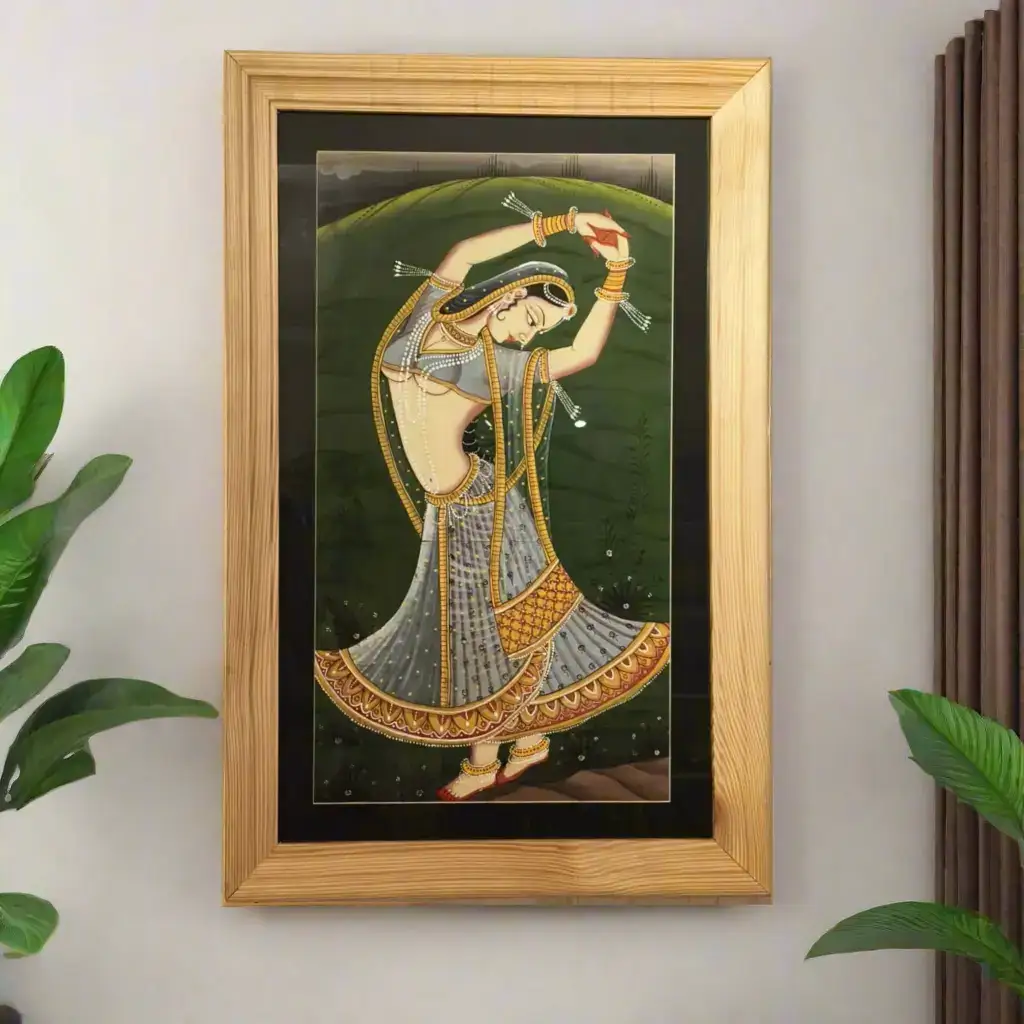
The Rajasthan Dance of the Soul Miniature Art highlights traditional dance and cultural expressions. It captures the grace and rhythm of the folk and classical dances that are unique to Rajasthan. This type of Rajasthani cultural artwork conveys a story with every detail, from hand gestures to facial expressions.
Since it is a dance artwork form, the dynamic posture and flow of garments are meticulously represented. The key is to portray movement while keeping the delicate nature of miniature art intact. This balance is what makes the dance miniature paintings style so admired.
Techniques and Materials Used in This Painting
The creation of these paintings involves highly skilled artisans. They use fine brushes and traditional colors on a carefully prepared surface. The resulting miniature art of dancers is both intricate and expressive. Artists pay close attention to details such as jewelry, fabric patterns, and scenic backgrounds.
Natural colors and mineral pigments add a unique brightness and longevity to the artwork. This traditional technique preserves the authenticity and richness of every piece. The use of natural dyes also connects the artwork to nature and cultural heritage.
Significance of Rajasthani Dance Artwork Culture
Rajasthani dance artwork is not only decorative but also symbolic. It preserves the cultural heritage and celebrates the spirit of Rajasthan. The dance miniature art style reflects the soulful folk and classical dances of the region through vivid, hand-painted art.
Each painting narrates tales of devotion, joy, and festivity. It brings to life the rhythm and emotions of traditional dances such as Ghoomar and Kalbeliya. This makes it a valuable piece for collectors and lovers of ethnic Indian art.
The Cultural Impact of the Miniature Painting
This dance painting captures more than just movement. It celebrates identity, history, and spirituality. Collectors often appreciate these works for their ability to transport viewers to a regal and artistic Rajasthan. Whether showcased in homes, galleries, or cultural centers, these paintings enrich any space.
The lasting beauty and detailed craftsmanship keep the tradition alive. It inspires artists and art enthusiasts to cherish Rajasthani cultural artwork as a vital part of India’s artistic legacy.
This Rajasthan Dance of the Soul miniature art is a true collector’s treasure. Rich in meaning and technique, it remains one of the finest examples of Indian miniature art. Owning this art means celebrating the timeless dance, culture, and history of Rajasthan through exquisite painting.
Product Information
Product Information
Shipping & Returns
Shipping & Returns
Description
Rajasthan Dance of the Soul Miniature Art – Dance Miniature Painting
Dance of the Soul Miniature Art Rajasthani Painting is a rich and vibrant style of Indian miniature painting. This art form flourished mainly in the royal courts of Rajasthan starting from the 16th century. It is deeply rooted in centuries-old Indian traditions and culture. The artwork represents themes such as mythology, epics, love stories, royal life, and folk culture, making it timeless and deeply engaging.
The signature of this miniature art lies in its bold lines, bright colors, and intricate detailing. Artists traditionally use natural dyes and pigments made from minerals, vegetables, and precious stones. These elements give the paintings a lasting and luminous quality. The delicate brushwork used in this dance miniature painting style ensures each stroke captures the essence of movement and emotion perfectly.
Distinct Schools of Dance Miniature Painting in Rajasthan
This beautiful art form is divided into several regional schools, each with unique characteristics. The main schools include Mewar, Marwar, Bundi, Kota, Kishangarh, Bikaner, and Jaipur. These styles differ based on subject focus, color schemes, and artistic techniques. Each school offers a different perspective on the traditional Rajasthani dancer painting.
- Kishangarh: Famous for its romantic portrayal of Radha and Krishna. It is also renowned for the iconic image of Bani Thani. This school emphasizes graceful beauty and delicate expressions.
- Mewar: Known for depicting court scenes, heroic tales, and religious themes. The paintings often celebrate royal grandeur and spiritual devotion.
- Bundi and Kota: These schools are celebrated for lush landscapes and detailed hunting scenes. They bring nature and royal leisure into vivid focus.
Characteristics of Dance Miniature Painting
The Rajasthan Dance of the Soul Miniature Art highlights traditional dance and cultural expressions. It captures the grace and rhythm of the folk and classical dances that are unique to Rajasthan. This type of Rajasthani cultural artwork conveys a story with every detail, from hand gestures to facial expressions.
Since it is a dance artwork form, the dynamic posture and flow of garments are meticulously represented. The key is to portray movement while keeping the delicate nature of miniature art intact. This balance is what makes the dance miniature paintings style so admired.
Techniques and Materials Used in This Painting
The creation of these paintings involves highly skilled artisans. They use fine brushes and traditional colors on a carefully prepared surface. The resulting miniature art of dancers is both intricate and expressive. Artists pay close attention to details such as jewelry, fabric patterns, and scenic backgrounds.
Natural colors and mineral pigments add a unique brightness and longevity to the artwork. This traditional technique preserves the authenticity and richness of every piece. The use of natural dyes also connects the artwork to nature and cultural heritage.
Significance of Rajasthani Dance Artwork Culture
Rajasthani dance artwork is not only decorative but also symbolic. It preserves the cultural heritage and celebrates the spirit of Rajasthan. The dance miniature art style reflects the soulful folk and classical dances of the region through vivid, hand-painted art.
Each painting narrates tales of devotion, joy, and festivity. It brings to life the rhythm and emotions of traditional dances such as Ghoomar and Kalbeliya. This makes it a valuable piece for collectors and lovers of ethnic Indian art.
The Cultural Impact of the Miniature Painting
This dance painting captures more than just movement. It celebrates identity, history, and spirituality. Collectors often appreciate these works for their ability to transport viewers to a regal and artistic Rajasthan. Whether showcased in homes, galleries, or cultural centers, these paintings enrich any space.
The lasting beauty and detailed craftsmanship keep the tradition alive. It inspires artists and art enthusiasts to cherish Rajasthani cultural artwork as a vital part of India’s artistic legacy.
This Rajasthan Dance of the Soul miniature art is a true collector’s treasure. Rich in meaning and technique, it remains one of the finest examples of Indian miniature art. Owning this art means celebrating the timeless dance, culture, and history of Rajasthan through exquisite painting.