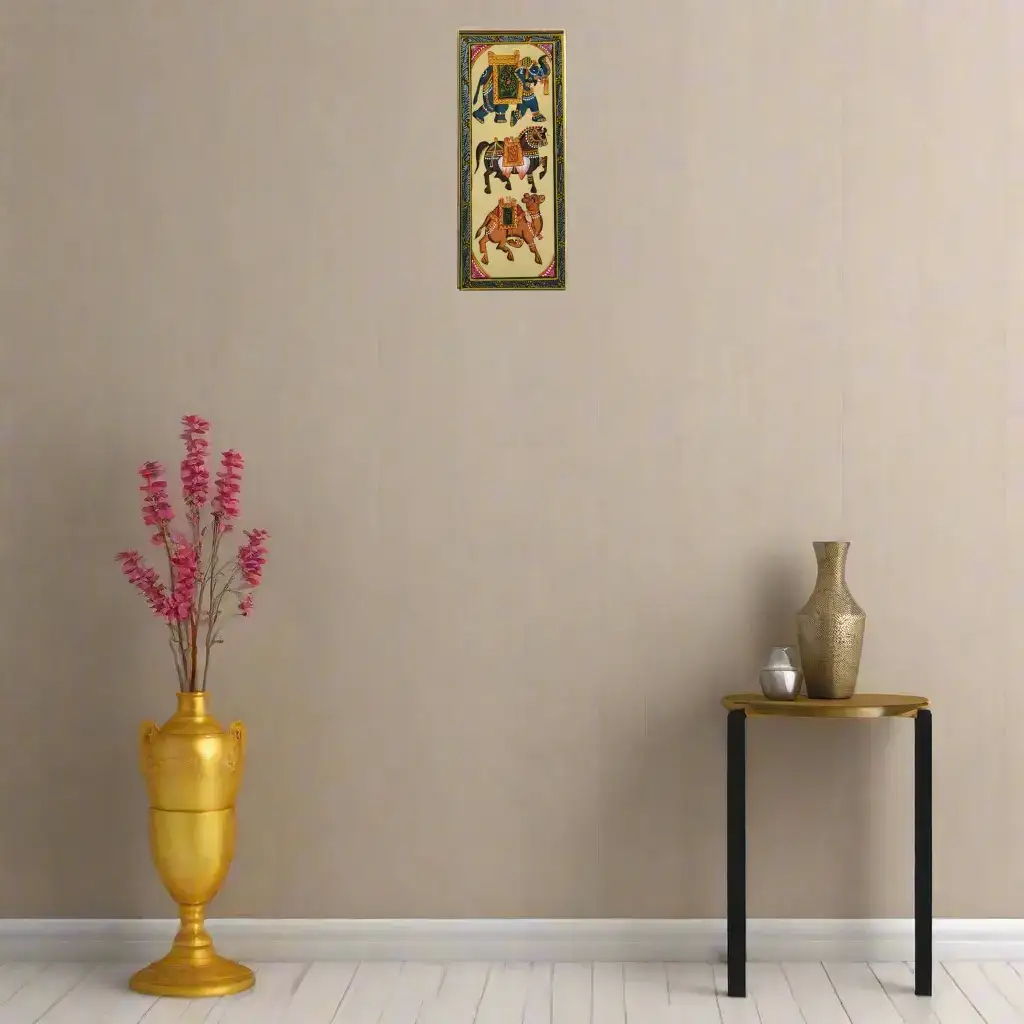
Traditional Indian Miniatures - A Triptych of Royal Carriers
Traditional Indian Miniatures - A Triptych of Royal Carriers
Traditional Indian Miniatures Rajasthani Painting is a rich and vibrant style of Indian miniature painting that has flourished in the royal courts of Rajasthan since the 16th century. This art form is deeply rooted in Indian traditions and reflects the cultural heritage of the region. It portrays various themes such as mythology, epics, love stories, royal life, and folk culture with great finesse. Each painting is distinguished by bold lines, bright colors, and intricate detailing that capture the viewer's imagination.
The colors used in Traditional Indian Miniatures are derived from natural dyes and pigments. These pigments are made from minerals, vegetables, and precious stones. This use of natural materials gives the artwork a lasting and luminous quality. These qualities make this traditional art form timeless and highly valued by collectors and enthusiasts alike.
Distinct Schools of Rajasthani Royal Animal Miniature Artwork
This art form is divided into several schools, each with a unique style and subject focus. The most prominent ones include Mewar, Marwar, Bundi, Kota, Kishangarh, Bikaner, and Jaipur. Each school represents a different facet of the rich artistic tradition of Rajasthan, through different techniques and themes that highlight its diversity in miniature painting.
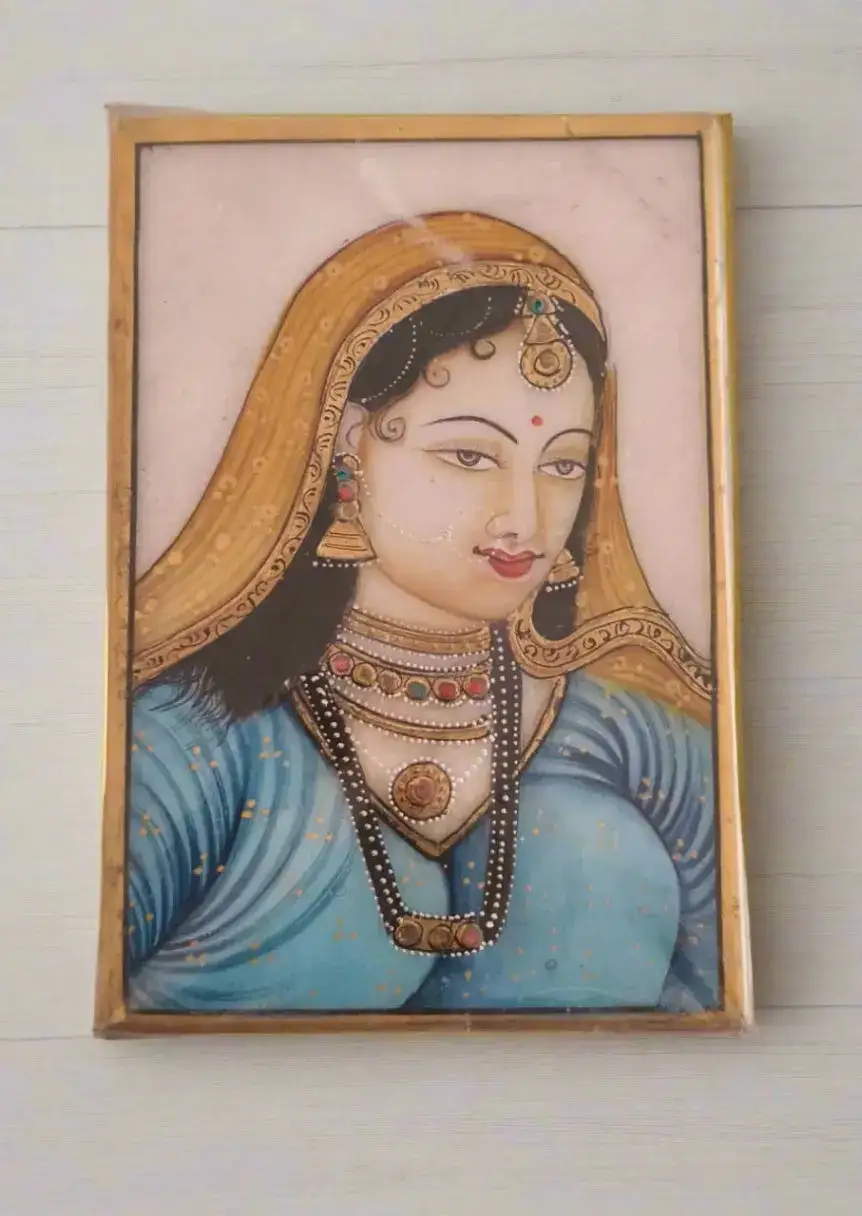
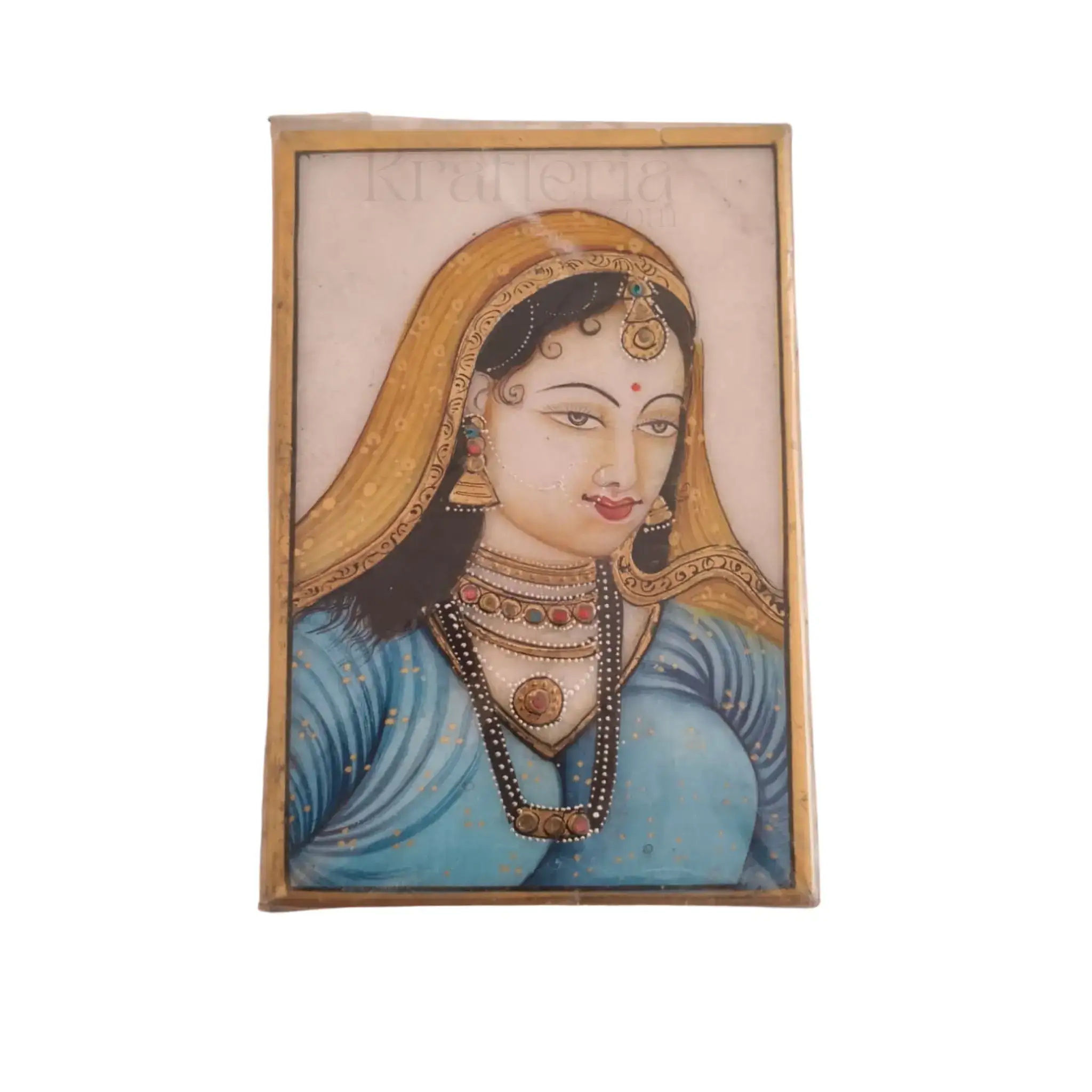
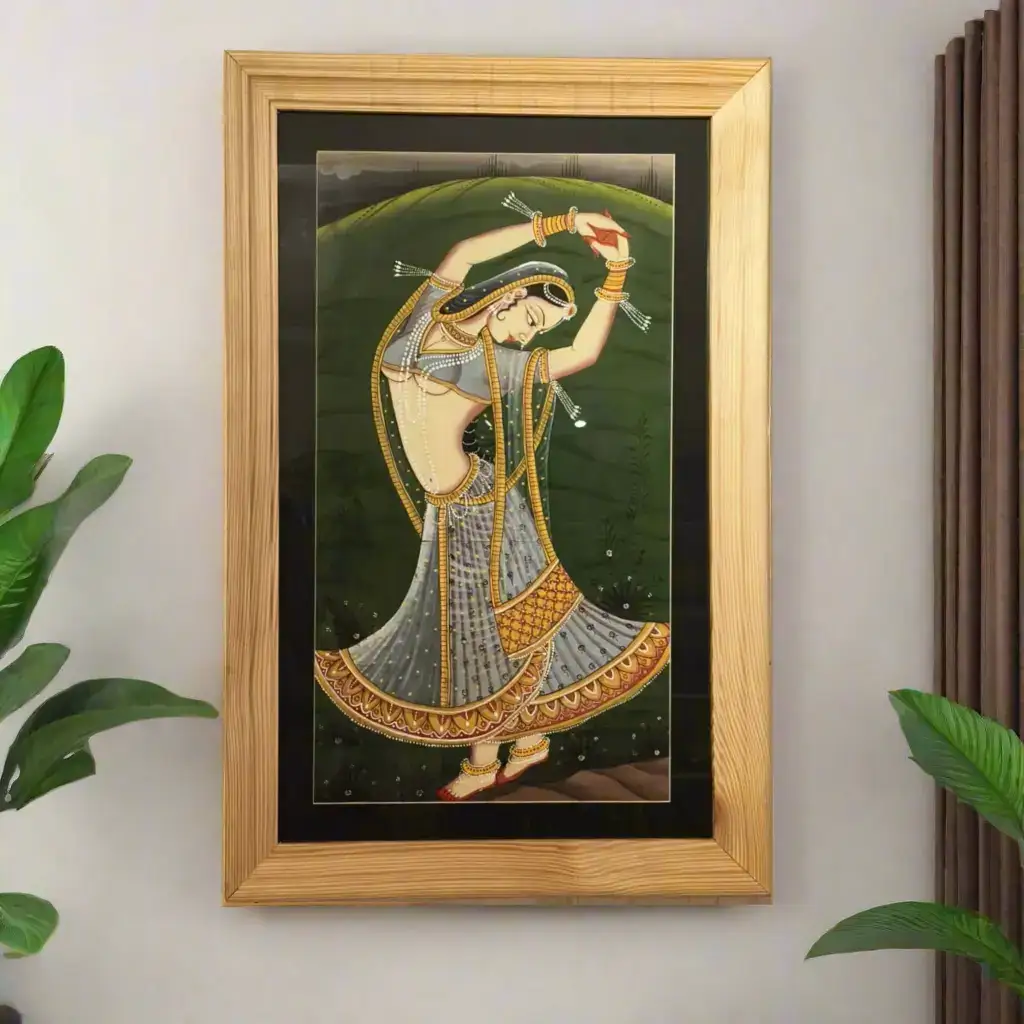
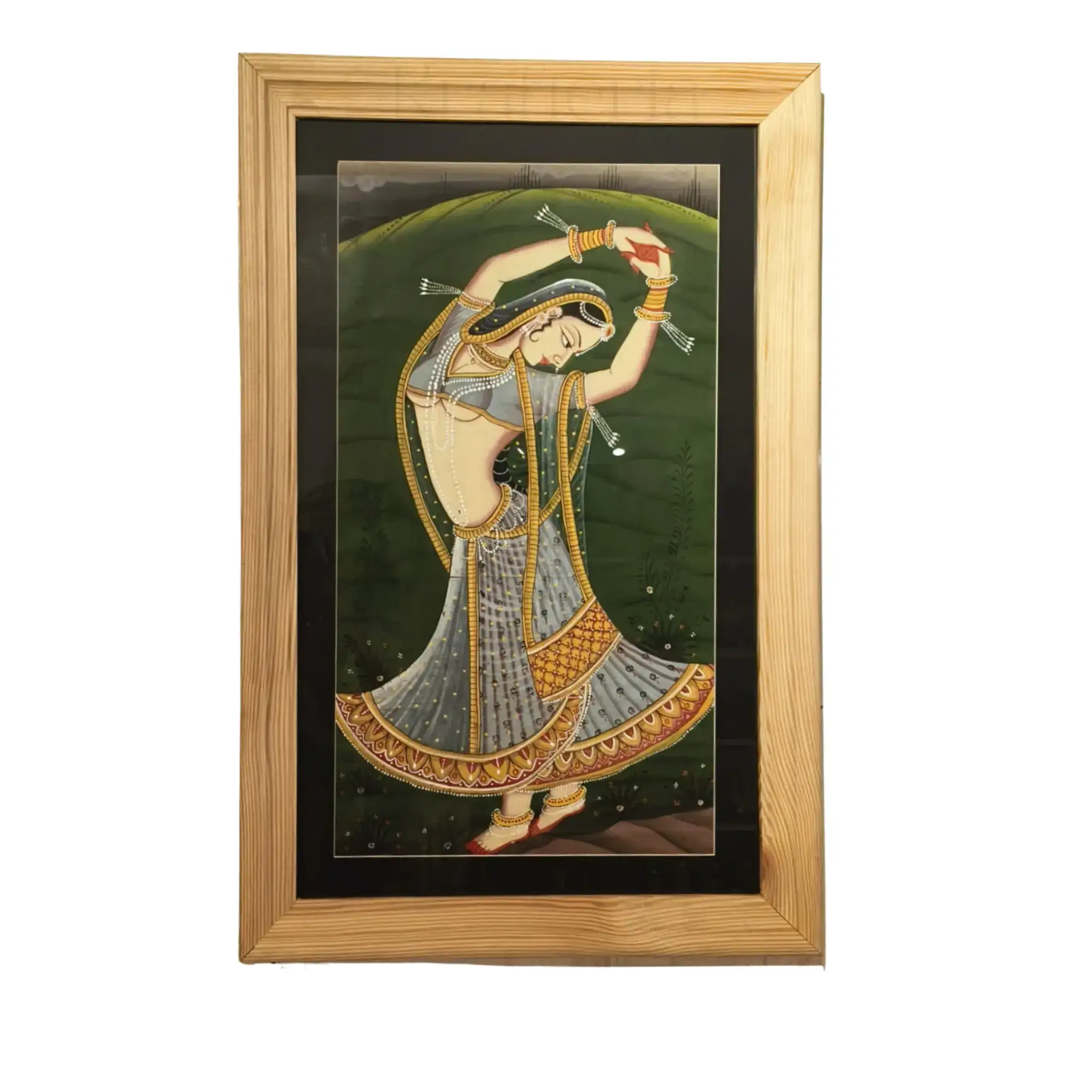
For instance, the Kishangarh school is especially famous for its romantic portrayal of Radha and Krishna. The iconic image of Bani Thani, often regarded as the Indian Mona Lisa, originates from here. The Mewar school is notable for paintings that depict court scenes, heroic tales, and religious themes, showcasing the valor and piety of the era.
Meanwhile, Bundi and Kota schools focus on lush landscapes and hunting scenes. These schools brought nature and royal sporting life vividly to canvas, embodying the spirit of Rajasthan’s royal courts. The Jaipur school, on the other hand, is renowned for its detailed depictions of festivals, royal processions, and grand architecture.
The Triptych of Royal Carriers Miniature Painting
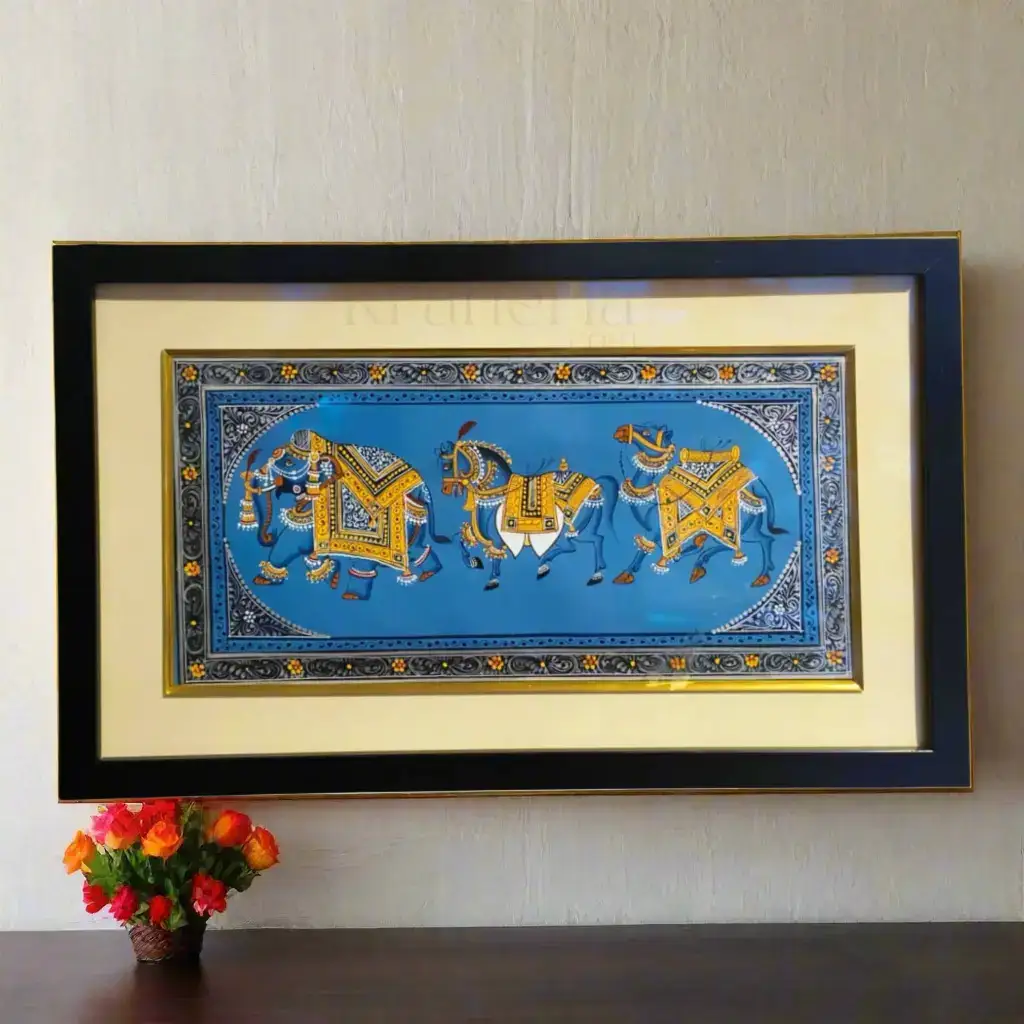
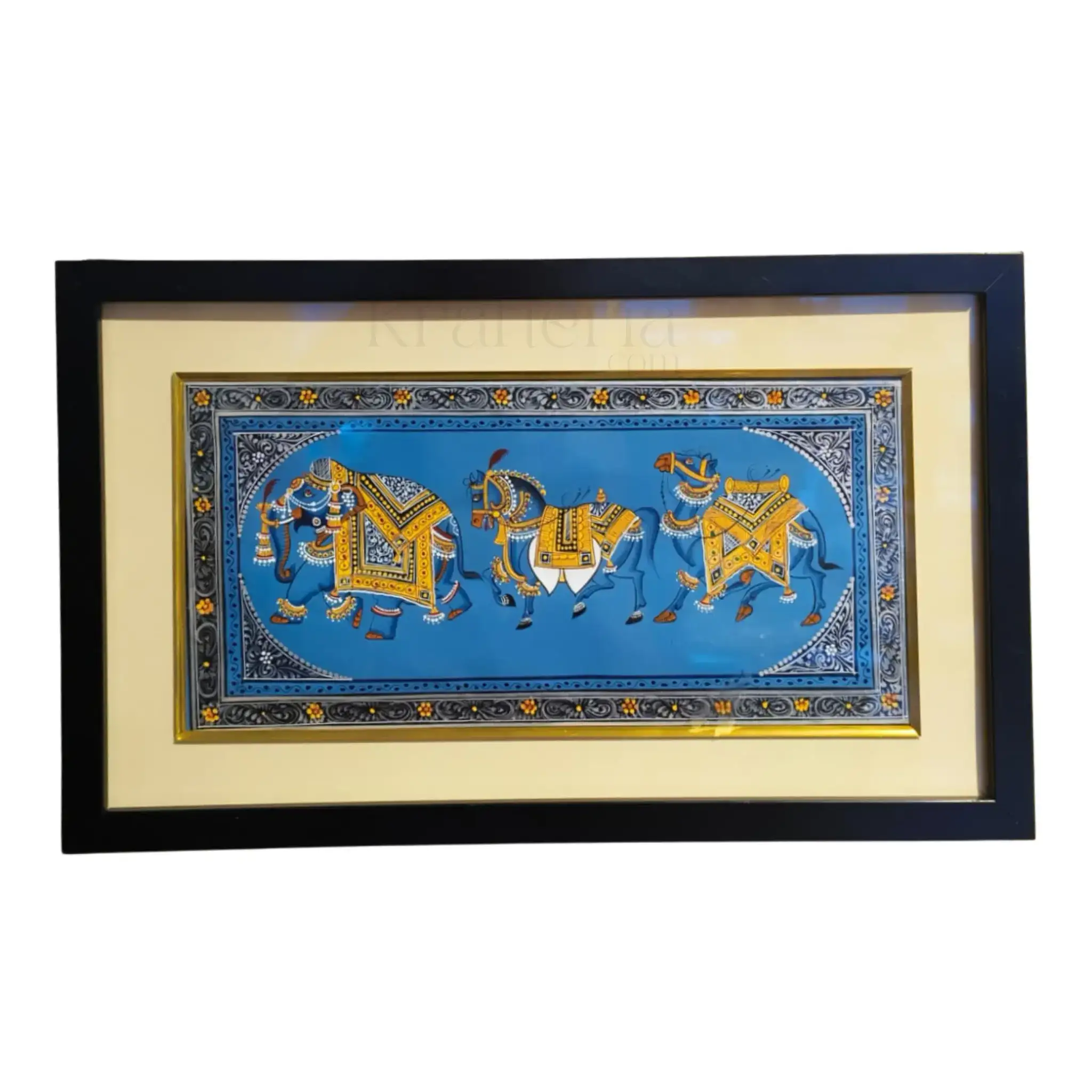
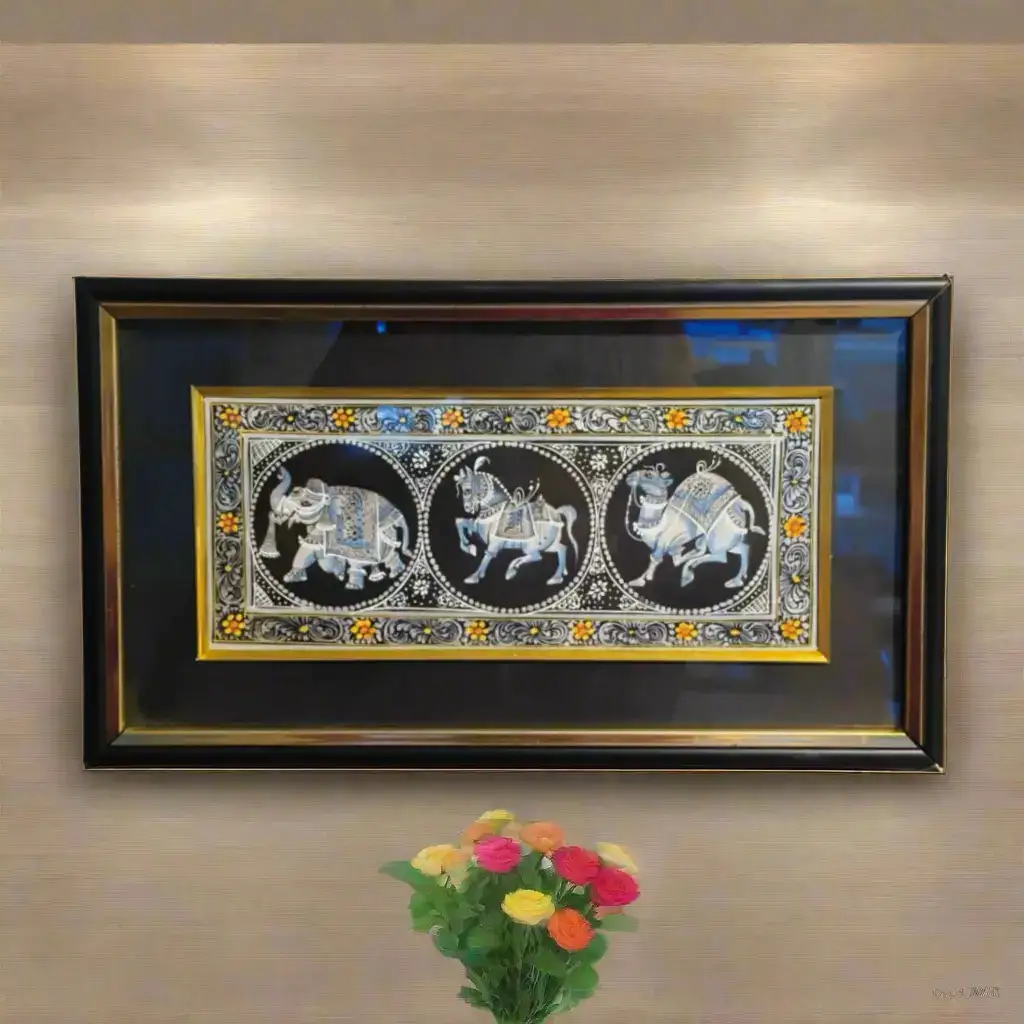
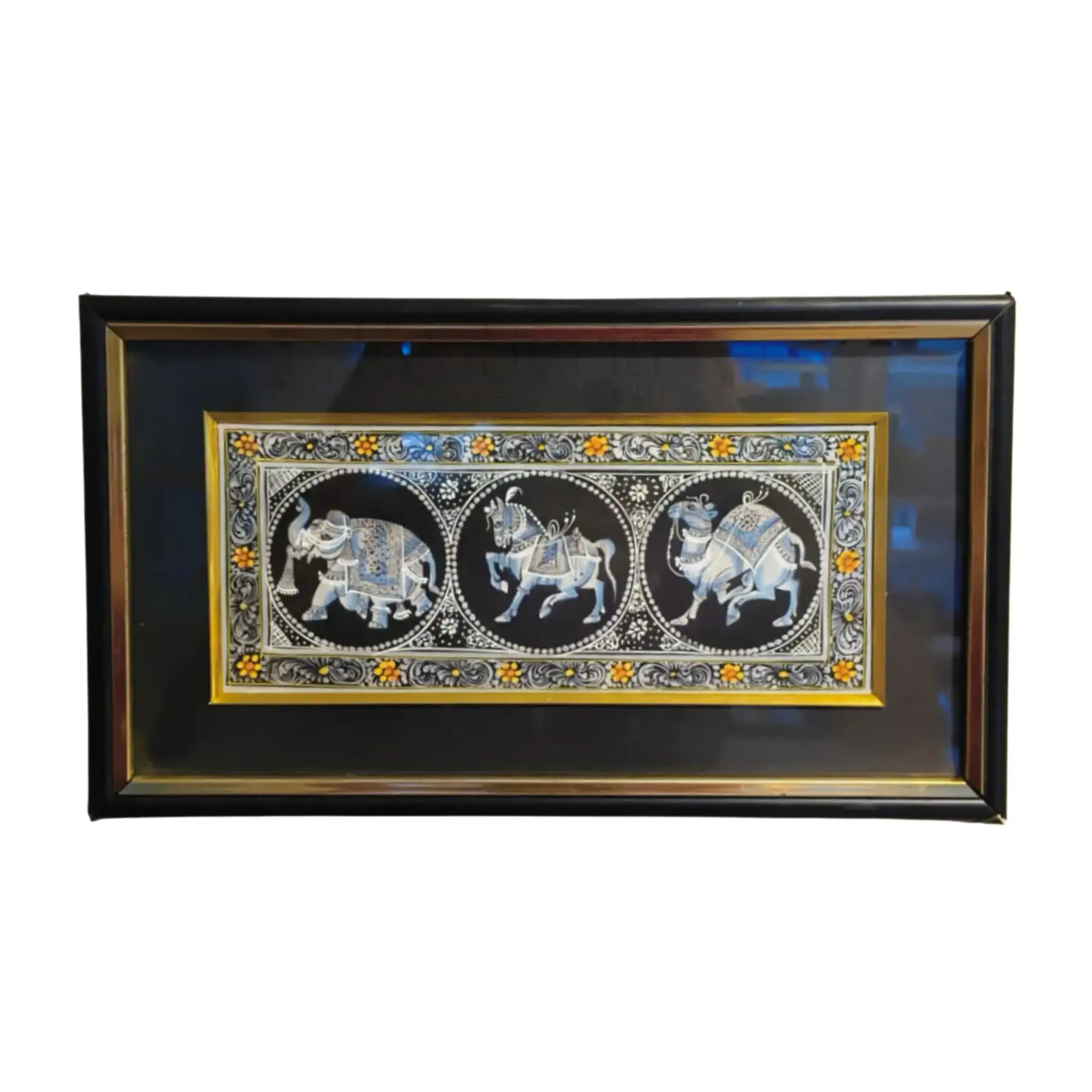
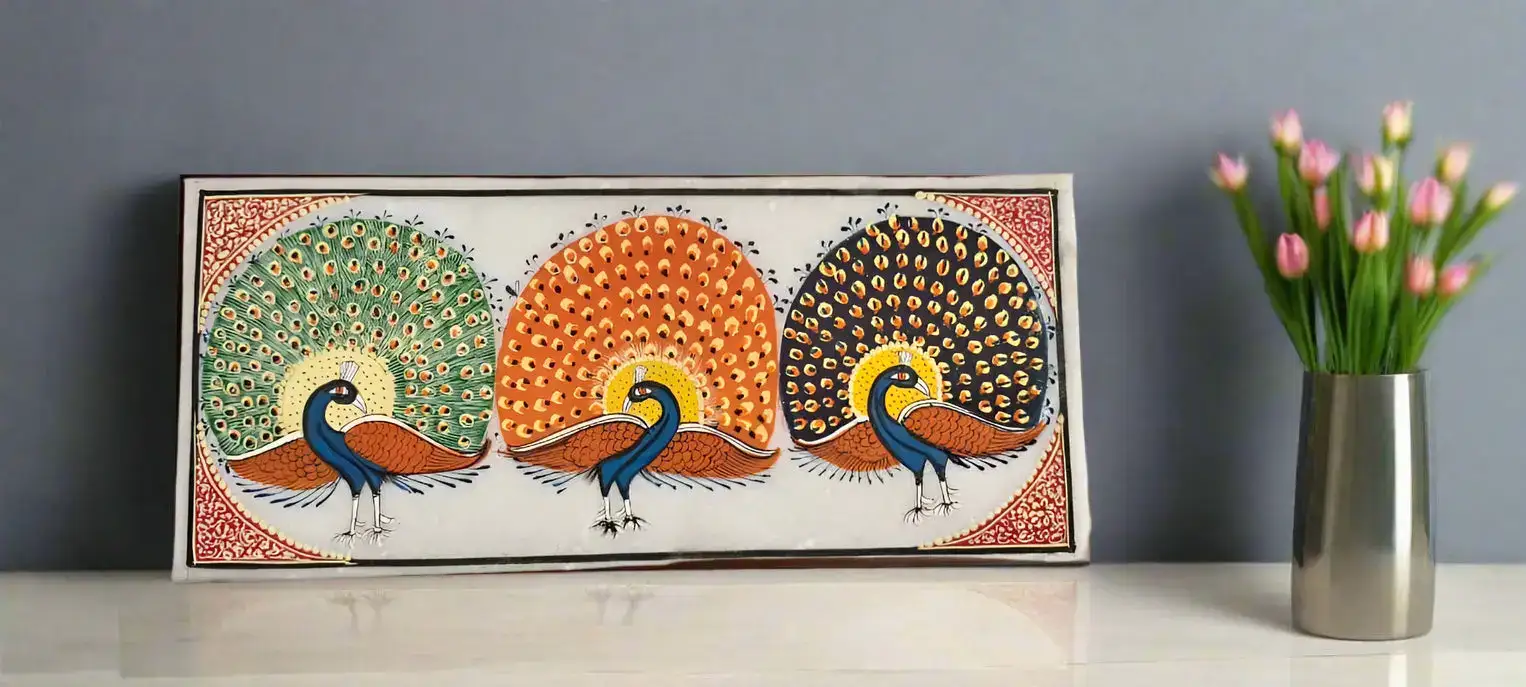
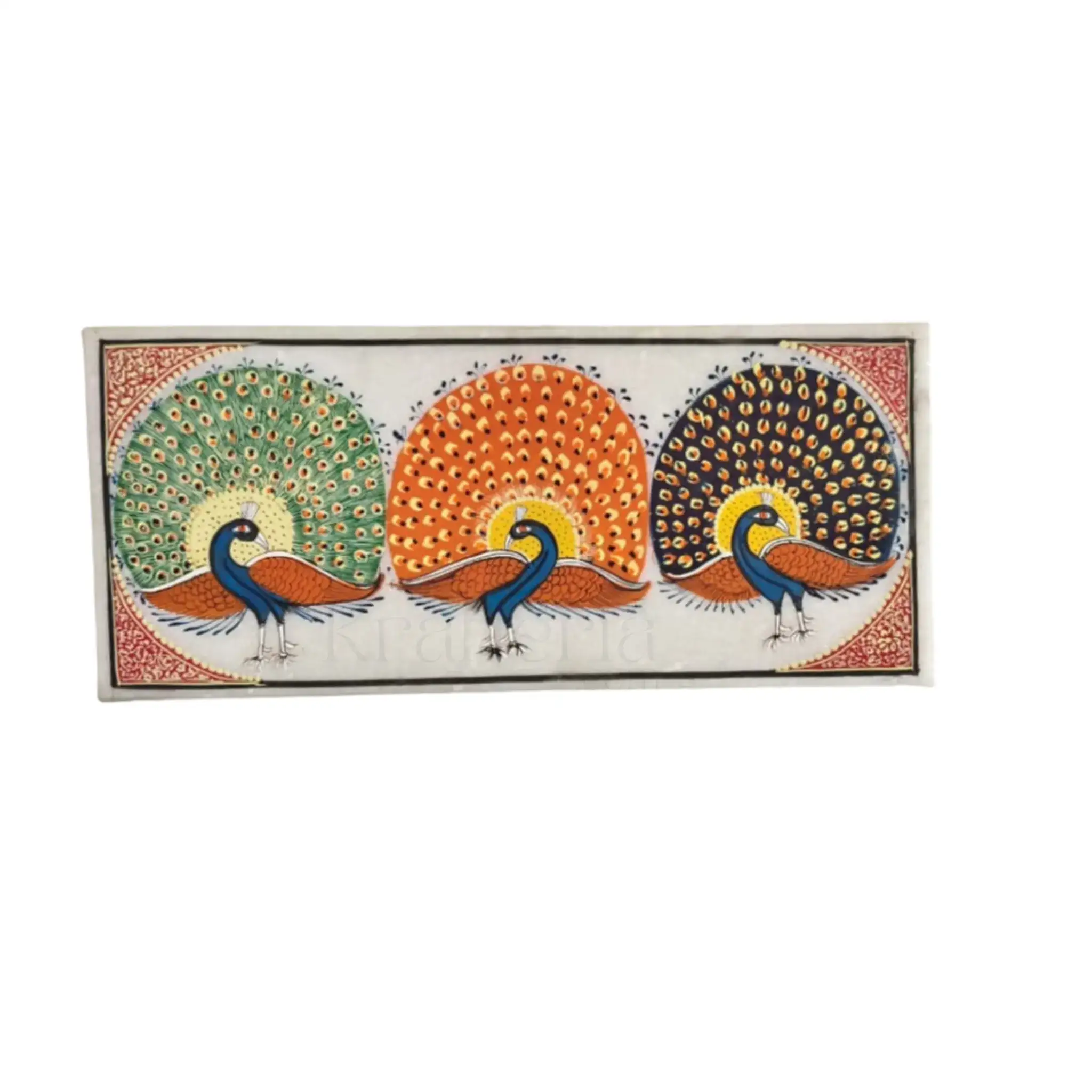
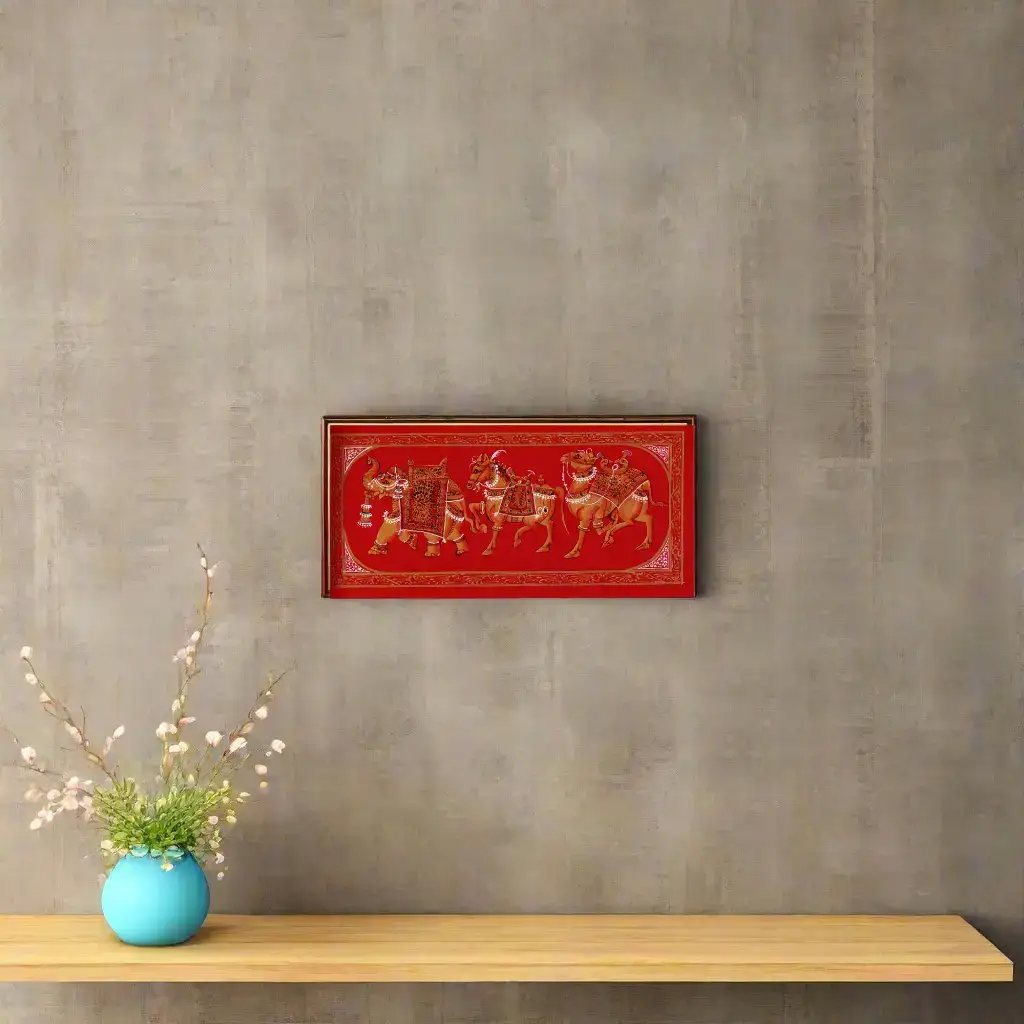
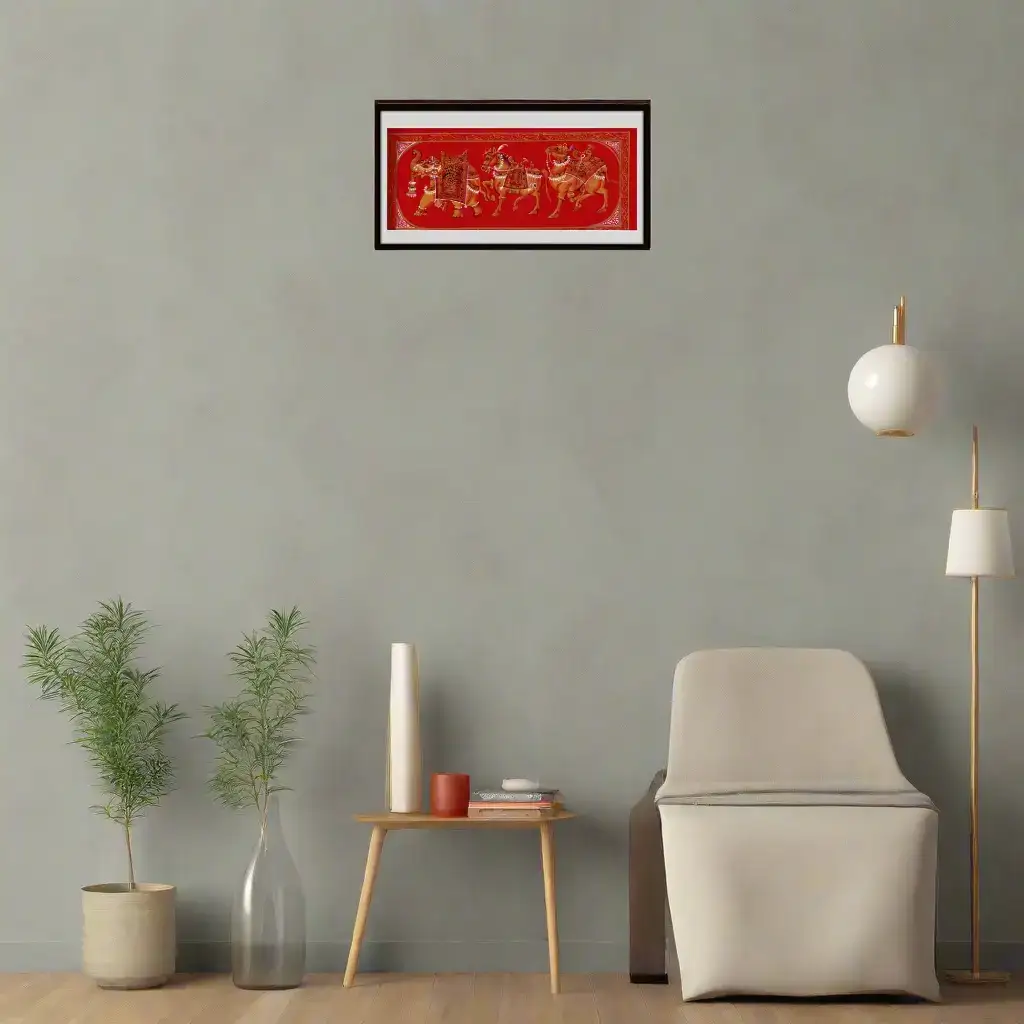
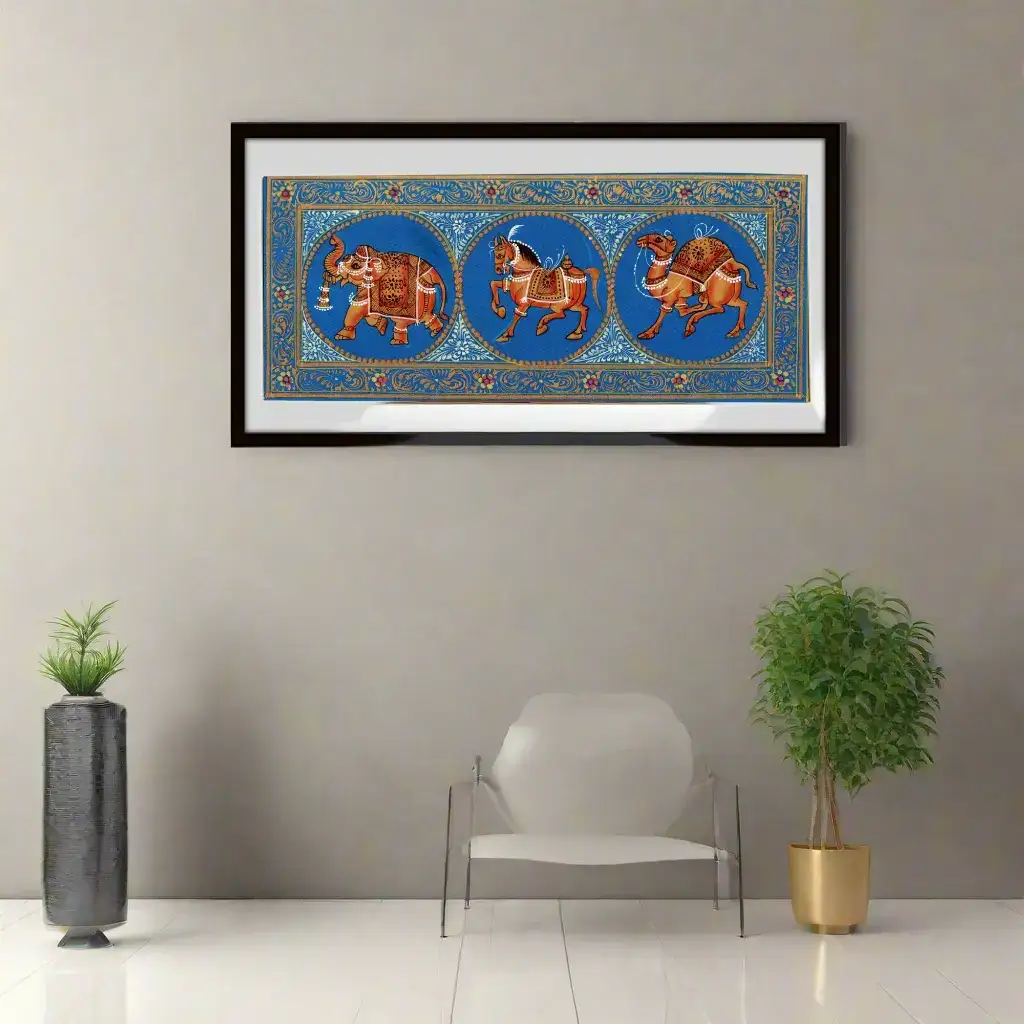
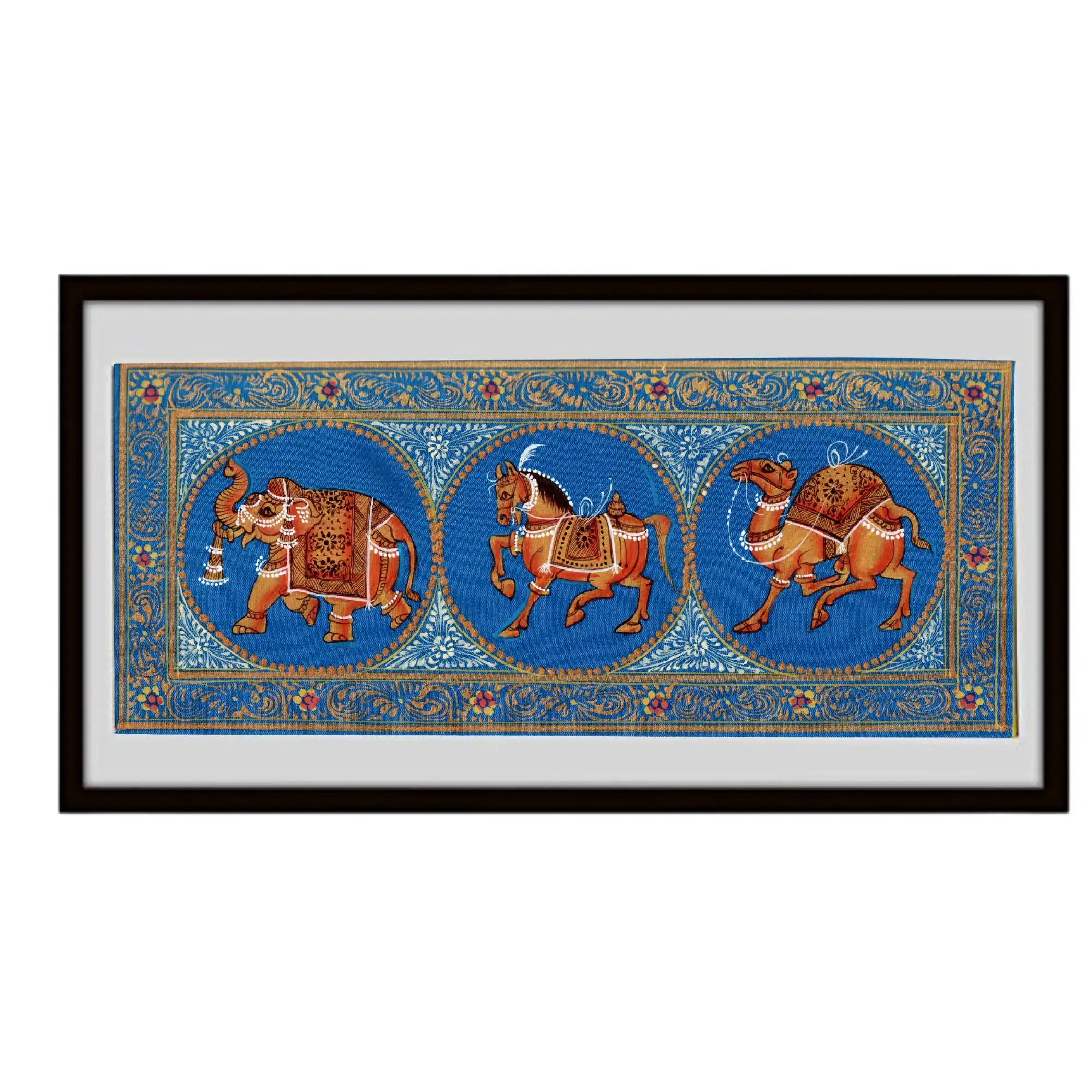
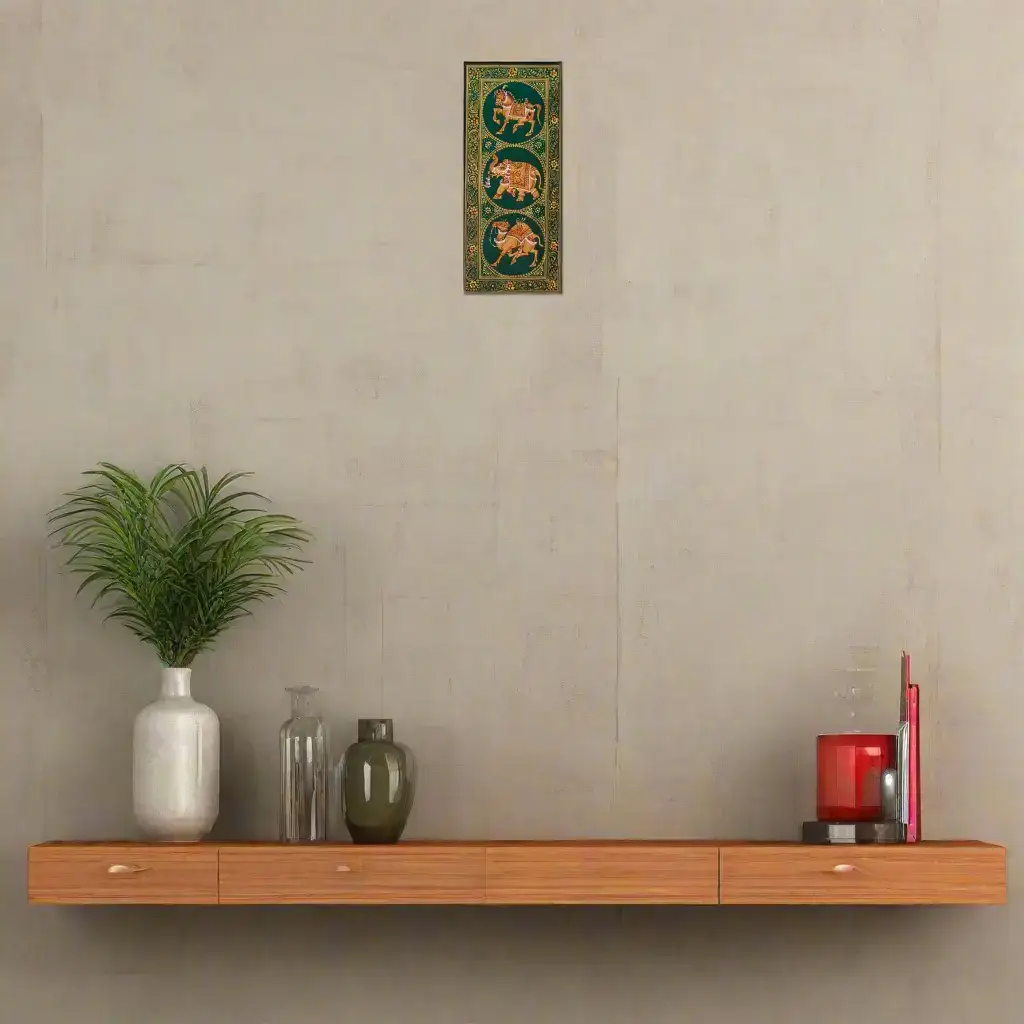
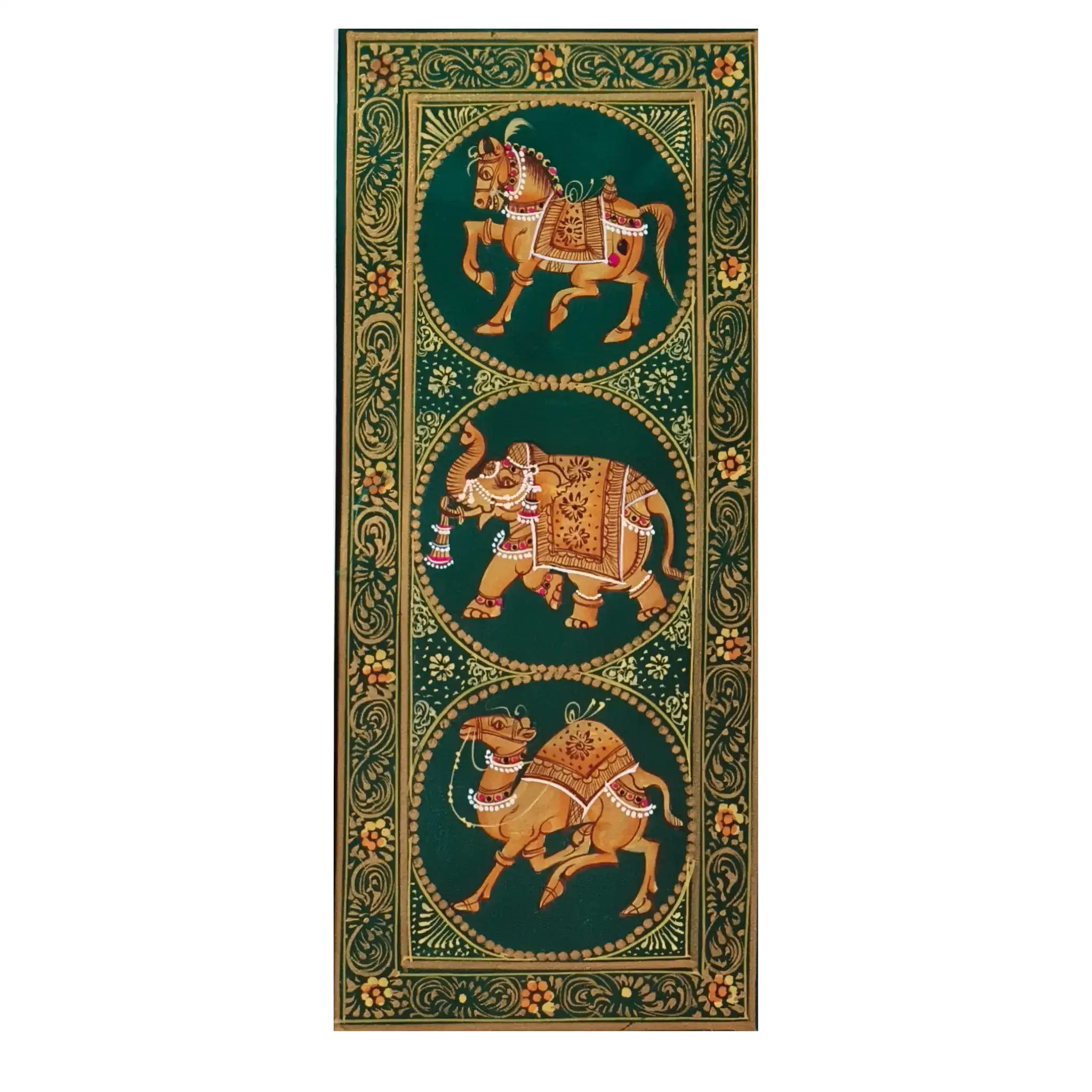
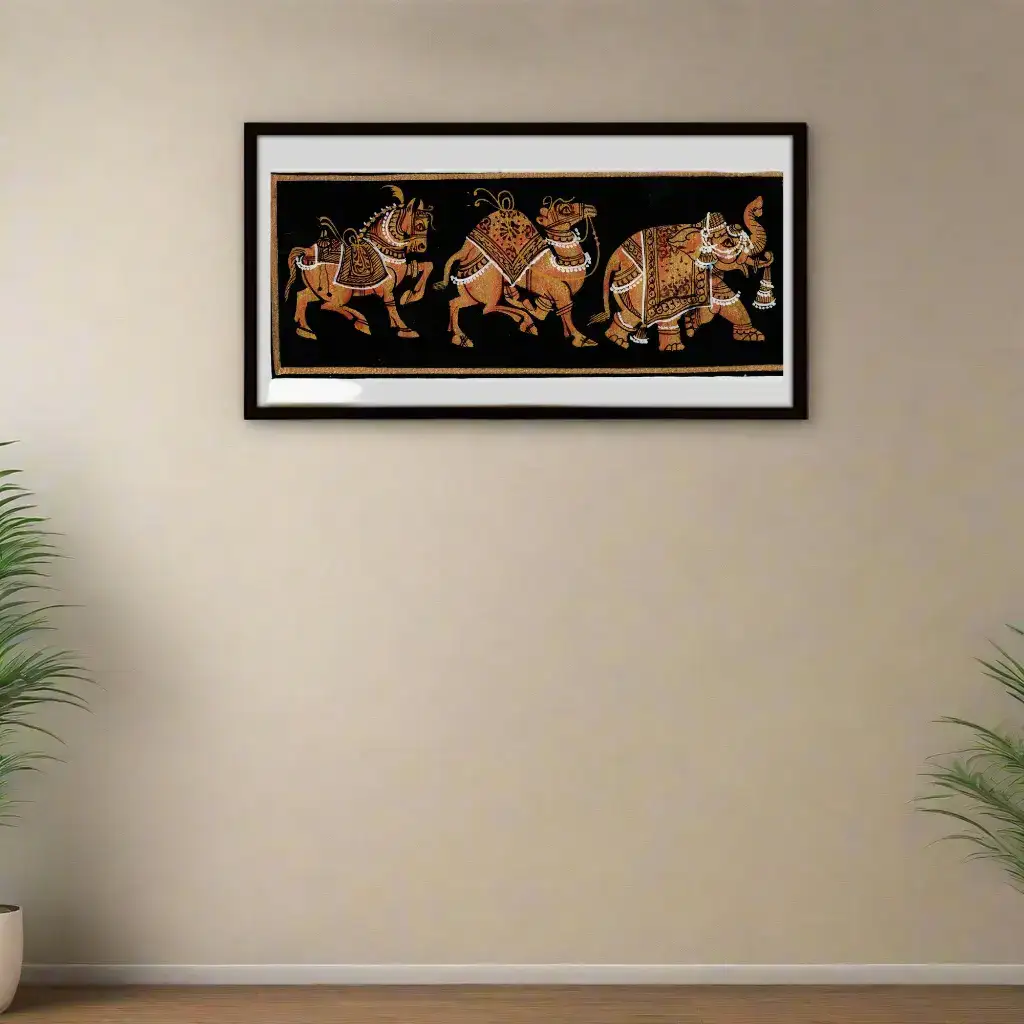
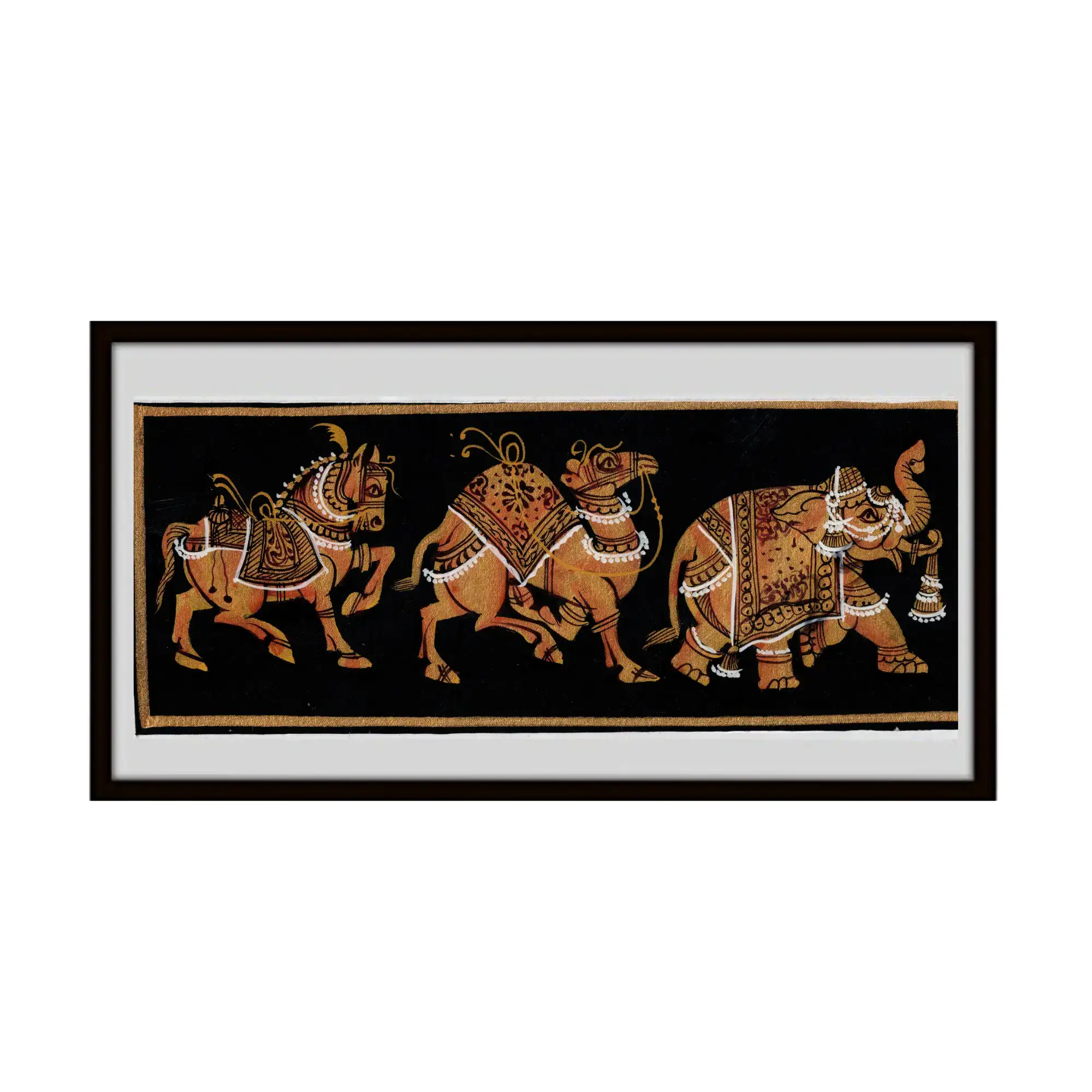
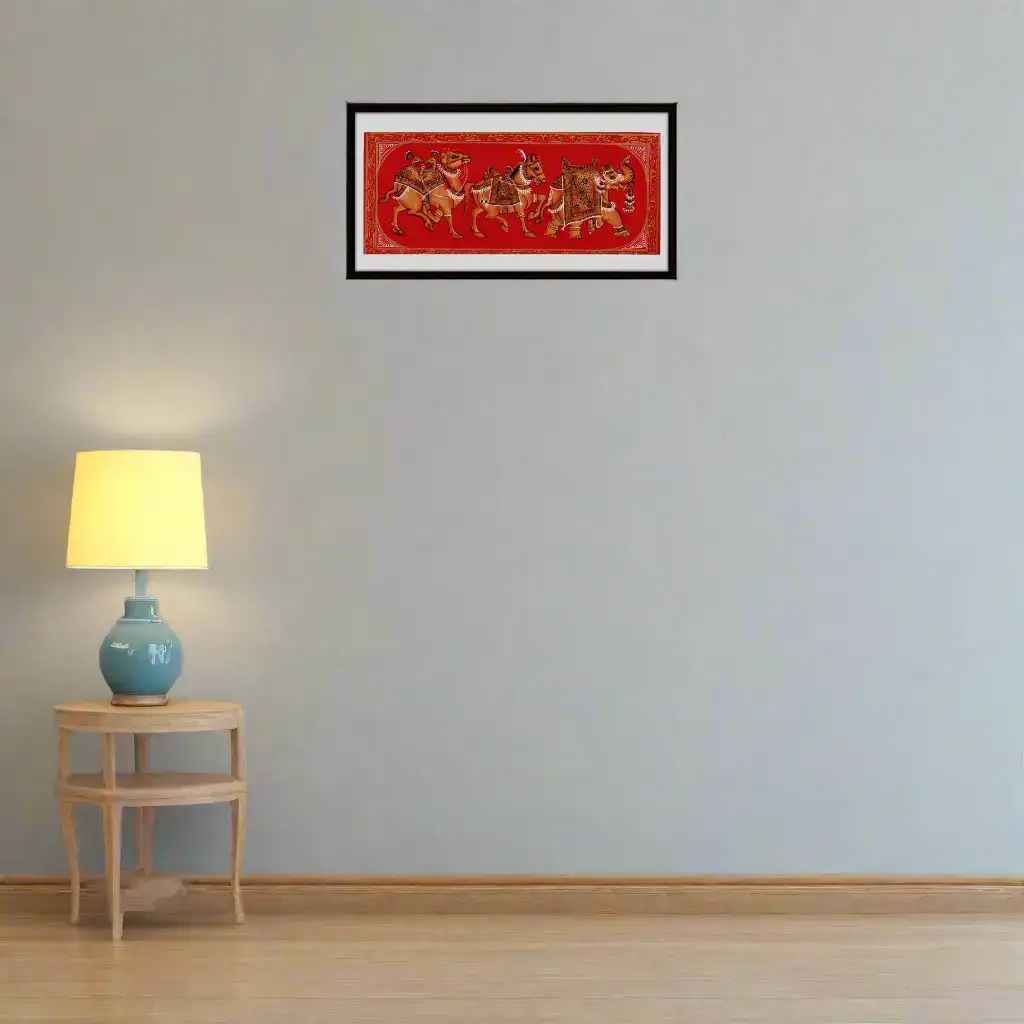
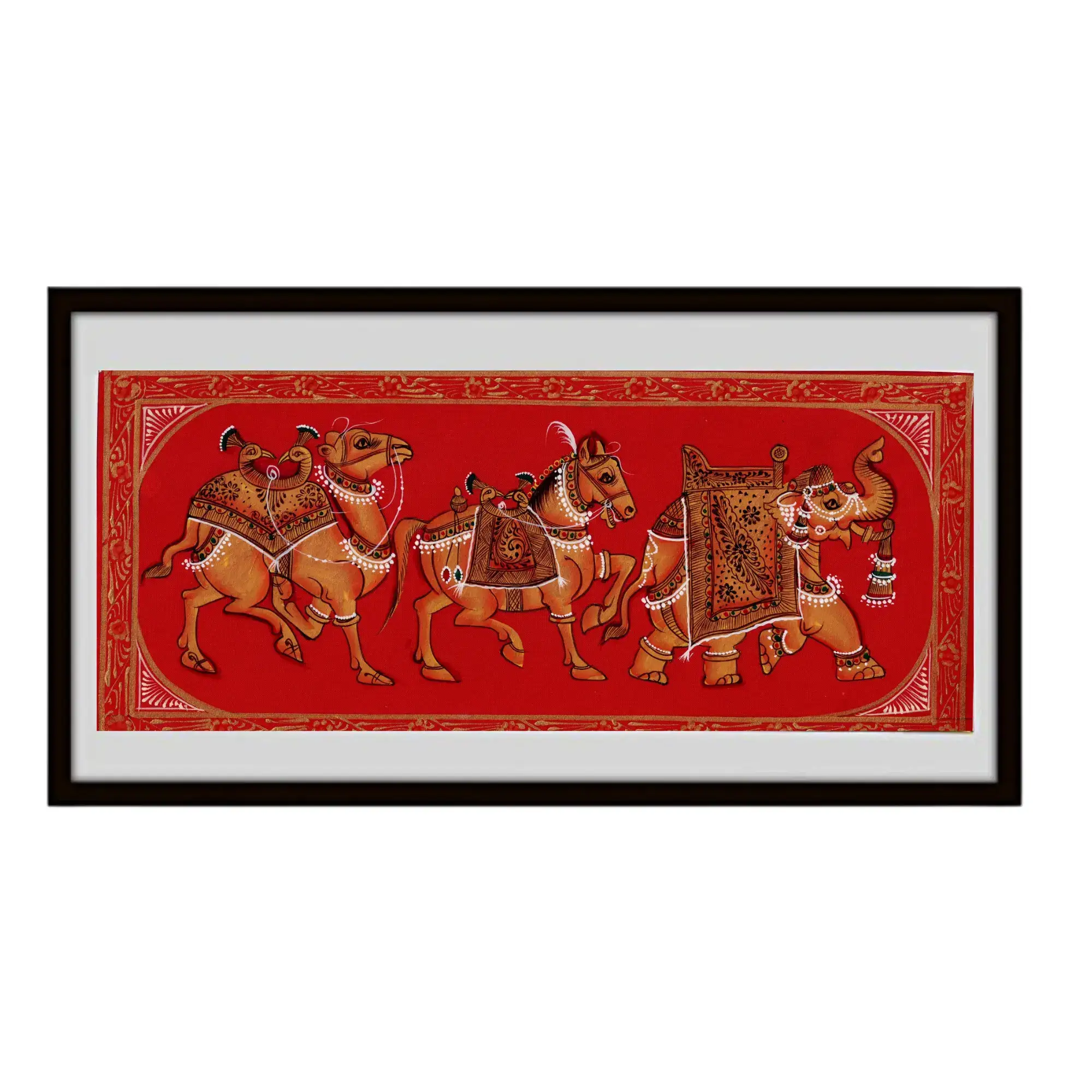
A fascinating subset of Traditional Indian Miniatures is the triptych of royal carriers miniature painting. This piece features three panels presenting royal carriers such as elephants, horses, and camels. These animals are adorned with ceremonial ornaments and textiles, symbolizing royal grandeur and the importance of these carriers in traditional Indian courts.
This triptych format allows the artists to tell a unified story across three coordinated panels. It often portrays harmony and movement while highlighting the ceremonial significance of the animals within the royal processions. The meticulous hand-painted miniature art India brings these majestic animals and their accessories to vivid life.
Hand Painted Miniature Art India: An Enduring Legacy
The timeless tradition of hand painted miniature art India continues to thrive today. Skilled artisans use age-old techniques passed down through generations to create each painting. The use of natural colors and precise brushwork requires immense patience and expertise. This careful craftsmanship ensures that every piece is unique and authentic.
Collectors and connoisseurs highly value Traditional Indian Miniatures for their artistic mastery and cultural significance. These paintings serve as windows into the opulence and intricate court lifestyles of historical Rajasthan. In addition, they preserve stories from Indian mythology and folklore, keeping ancient narratives alive through art.
Importance of Traditional Miniatures in Indian Art
Indian Miniatures occupy a significant place in Indian art history. They represent not just artistic expression but also social, political, and spiritual life within the royal courts. Through detailed imagery and symbolism, these miniatures convey values and stories cherished by generations.
The blend of natural pigments, intricate line work, and rich subject matter sets these artworks apart. They inspire other Indian art forms and continue influencing modern artists worldwide. Embracing both tradition and innovation, this miniature painting style keeps the cultural heritage vibrant and relevant.
- Rich use of natural colors derived from minerals and vegetables
- Distinct artistic schools within Rajasthan, like Mewar and Kishangarh
- Depictions of mythology, royal processions, and folk culture
- Triptych format showing royal carriers like elephants and camels
- Hand painted miniature art India crafted by skilled artisans
In summary, Traditional Miniatures celebrate the royal and cultural legacy of Rajasthan. This rajasthani royal animal miniature artwork combines historical themes with stunning visual techniques. Its enduring appeal makes it a treasured element of Indian art and heritage.
Product Information
Product Information
Shipping & Returns
Shipping & Returns
Description
Traditional Indian Miniatures - A Triptych of Royal Carriers
Traditional Indian Miniatures Rajasthani Painting is a rich and vibrant style of Indian miniature painting that has flourished in the royal courts of Rajasthan since the 16th century. This art form is deeply rooted in Indian traditions and reflects the cultural heritage of the region. It portrays various themes such as mythology, epics, love stories, royal life, and folk culture with great finesse. Each painting is distinguished by bold lines, bright colors, and intricate detailing that capture the viewer's imagination.
The colors used in Traditional Indian Miniatures are derived from natural dyes and pigments. These pigments are made from minerals, vegetables, and precious stones. This use of natural materials gives the artwork a lasting and luminous quality. These qualities make this traditional art form timeless and highly valued by collectors and enthusiasts alike.
Distinct Schools of Rajasthani Royal Animal Miniature Artwork
This art form is divided into several schools, each with a unique style and subject focus. The most prominent ones include Mewar, Marwar, Bundi, Kota, Kishangarh, Bikaner, and Jaipur. Each school represents a different facet of the rich artistic tradition of Rajasthan, through different techniques and themes that highlight its diversity in miniature painting.
For instance, the Kishangarh school is especially famous for its romantic portrayal of Radha and Krishna. The iconic image of Bani Thani, often regarded as the Indian Mona Lisa, originates from here. The Mewar school is notable for paintings that depict court scenes, heroic tales, and religious themes, showcasing the valor and piety of the era.
Meanwhile, Bundi and Kota schools focus on lush landscapes and hunting scenes. These schools brought nature and royal sporting life vividly to canvas, embodying the spirit of Rajasthan’s royal courts. The Jaipur school, on the other hand, is renowned for its detailed depictions of festivals, royal processions, and grand architecture.
The Triptych of Royal Carriers Miniature Painting
A fascinating subset of Traditional Indian Miniatures is the triptych of royal carriers miniature painting. This piece features three panels presenting royal carriers such as elephants, horses, and camels. These animals are adorned with ceremonial ornaments and textiles, symbolizing royal grandeur and the importance of these carriers in traditional Indian courts.
This triptych format allows the artists to tell a unified story across three coordinated panels. It often portrays harmony and movement while highlighting the ceremonial significance of the animals within the royal processions. The meticulous hand-painted miniature art India brings these majestic animals and their accessories to vivid life.
Hand Painted Miniature Art India: An Enduring Legacy
The timeless tradition of hand painted miniature art India continues to thrive today. Skilled artisans use age-old techniques passed down through generations to create each painting. The use of natural colors and precise brushwork requires immense patience and expertise. This careful craftsmanship ensures that every piece is unique and authentic.
Collectors and connoisseurs highly value Traditional Indian Miniatures for their artistic mastery and cultural significance. These paintings serve as windows into the opulence and intricate court lifestyles of historical Rajasthan. In addition, they preserve stories from Indian mythology and folklore, keeping ancient narratives alive through art.
Importance of Traditional Miniatures in Indian Art
Indian Miniatures occupy a significant place in Indian art history. They represent not just artistic expression but also social, political, and spiritual life within the royal courts. Through detailed imagery and symbolism, these miniatures convey values and stories cherished by generations.
The blend of natural pigments, intricate line work, and rich subject matter sets these artworks apart. They inspire other Indian art forms and continue influencing modern artists worldwide. Embracing both tradition and innovation, this miniature painting style keeps the cultural heritage vibrant and relevant.
- Rich use of natural colors derived from minerals and vegetables
- Distinct artistic schools within Rajasthan, like Mewar and Kishangarh
- Depictions of mythology, royal processions, and folk culture
- Triptych format showing royal carriers like elephants and camels
- Hand painted miniature art India crafted by skilled artisans
In summary, Traditional Miniatures celebrate the royal and cultural legacy of Rajasthan. This rajasthani royal animal miniature artwork combines historical themes with stunning visual techniques. Its enduring appeal makes it a treasured element of Indian art and heritage.