Mysore Yashodha Painting With Krishna | 22KT Gold Leaf
Mysore Yashodha Painting With Krishna | 22KT Gold Leaf
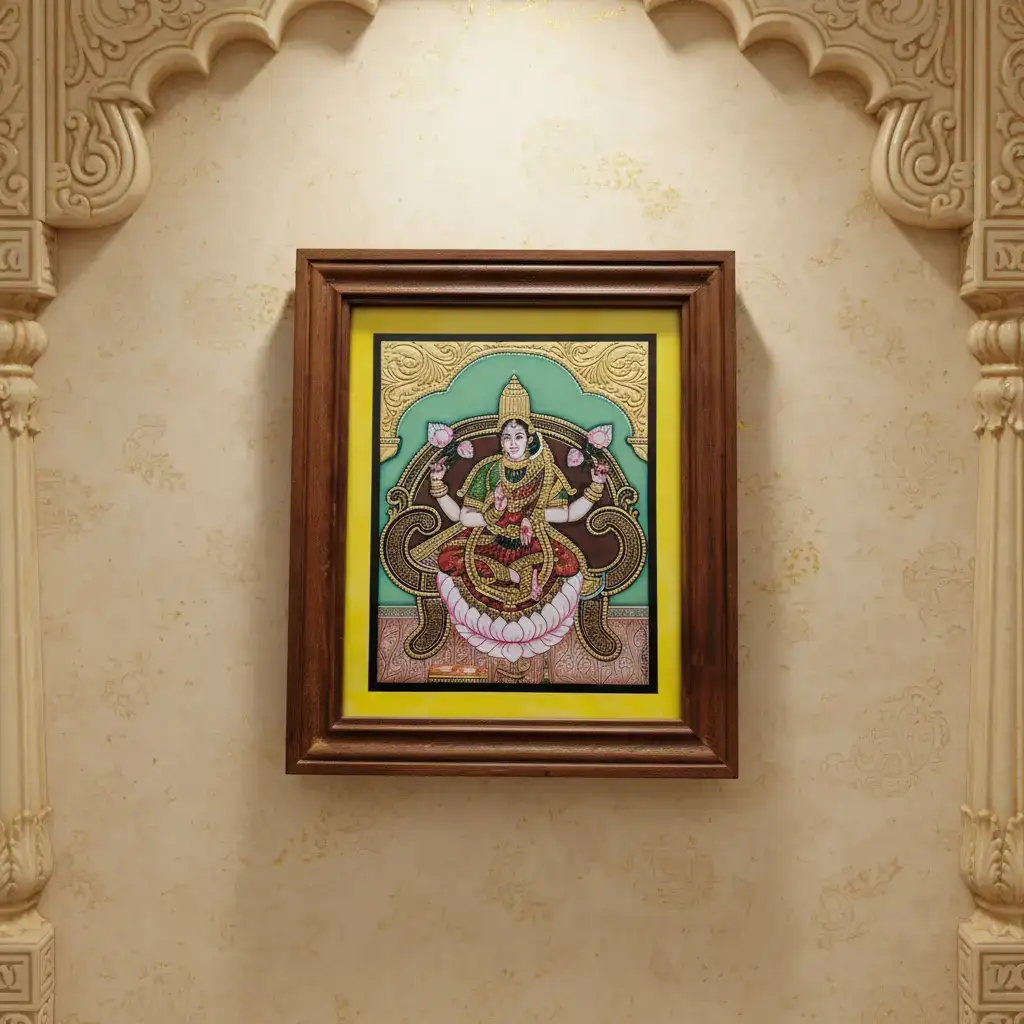
Mysore Yashodha Painting originates from Karnataka and boasts a rich history dating back to the Ajanta period. This classical art form evolved over centuries, developing distinct styles across South India. Among the most renowned are the Mysore and Tanjore styles, both celebrated for their cultural importance and artistic allure.
Dimensions: 14" H * 12" W
The Vijayanagar kings were pivotal patrons of art and architecture. Their royal support allowed painters and sculptors to thrive, enriching the region's cultural heritage. This strong encouragement was essential in fostering Mysore style artworks, helping the tradition flourish for generations.
Following the Vijayanagar empire's decline, many skilled artists moved to various parts of South India, including Tanjore and Surpur. This migration introduced fresh local influences, leading to diverse art forms like Tanjore painting and Kerala mural art. Mysore creations remain closely linked with this historical and cultural exchange.
The Significance of Mysore Yashodha Painting
The Mysore style is highly regarded for sophistication, vibrant colors, and meticulous craftsmanship. This art form is famous for its delicate application of gold leaf, which adds radiance and elegance. The tradition has been carefully preserved, with each generation passing down techniques that celebrate Mysore’s artistic heritage.
Sadly, many original murals and paintings found in temples and palaces were lost during wars involving British forces and regional rulers such as Hyder Ali and Tippu Sultan. Nonetheless, surviving Mysore Yashodha Paintings retain immense cultural significance. They continue to be treasured by art lovers worldwide.
Most surviving works date to the reign of Mummadi Krishnaraja Wodeyar III (1799–1868 AD). His era marked a cultural renaissance, raising painting, sculpture, music, and dance to new heights. Artworks with 22KT gold leaf from this period are highly prized for their quality and beauty.
King Krishnaraja Wodeyar III actively supported artists known as Chitrakars by commissioning the pictorial masterpiece 'Sritattvanidhi'. This guide features detailed depictions of gods, goddesses, and mythological scenes. It acted as an artistic manual ensuring the survival and refinement of the Mysore style.
Artistic Flourish of Mysore Works
Beyond mythological stories, Mysore art features impressive portraits of rulers, their families, and notable historical figures. These paintings adorned palace walls and temples, reflecting Mysore’s grandeur and rich history. The artworks offer a vivid glimpse into the region's cultural past.
Materials and techniques were meticulously prepared. Artists hand-ground natural pigments and mixed them with glue derived from Arabic gum crystals. Brushes made from squirrel hair or special grasses enabled precise, delicate strokes. This expert method contributes to the fresh appearance and longevity seen in Mysore artistry.
Distinctive Features of Yashodha And Krishna Painting
One hallmark is the subtle use of natural colors combined with precise line work. The ornamental gold leaf detailing is raised and carefully applied, adding luxury unique to this style. These features differentiate Mysore paintings from other traditional South Indian art forms.
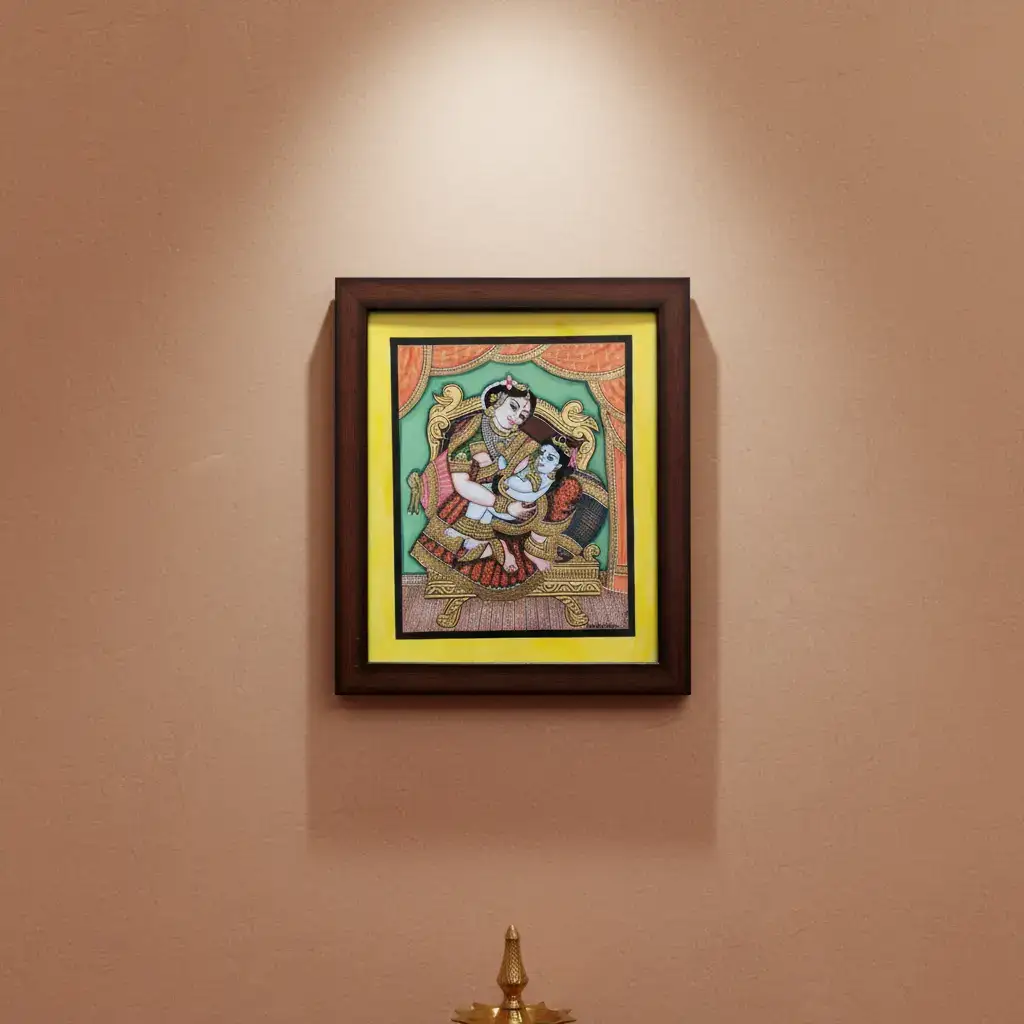
The Yashodha Painting especially celebrates the divine bond between mother Yashodha and baby Krishna. This beloved theme conveys warmth, devotion, and tenderness. The vibrant colors paired with shimmering gold leaf enchant viewers and art lovers alike, making these works treasured masterpieces.
- Use of natural pigments and handcrafted materials
- Exquisite fine lines paired with ornamental gold foil detailing
- Strong historical ties to Mysore’s royal heritage and mythology
The continuity of Mysore Yashodha Painting featuring Krishna's themes owes much to generations of passionate artists. Their dedication to preserving this cultural legacy has kept these masterpieces relevant and admired today. This lasting tradition makes Mysore artworks priceless cultural treasures.
In summary, Mysore Yashodha Painting seamlessly blends historical grandeur with artistic finesse. Its delicate brushwork and rich symbolism continue to inspire both traditional and modern admirers of Mysore Paintings with 22KT gold leaf work.
Original: $150.62
-70%$150.62
$45.19Product Information
Product Information
Shipping & Returns
Shipping & Returns
Description
Mysore Yashodha Painting With Krishna | 22KT Gold Leaf
Mysore Yashodha Painting originates from Karnataka and boasts a rich history dating back to the Ajanta period. This classical art form evolved over centuries, developing distinct styles across South India. Among the most renowned are the Mysore and Tanjore styles, both celebrated for their cultural importance and artistic allure.
Dimensions: 14" H * 12" W
The Vijayanagar kings were pivotal patrons of art and architecture. Their royal support allowed painters and sculptors to thrive, enriching the region's cultural heritage. This strong encouragement was essential in fostering Mysore style artworks, helping the tradition flourish for generations.
Following the Vijayanagar empire's decline, many skilled artists moved to various parts of South India, including Tanjore and Surpur. This migration introduced fresh local influences, leading to diverse art forms like Tanjore painting and Kerala mural art. Mysore creations remain closely linked with this historical and cultural exchange.
The Significance of Mysore Yashodha Painting
The Mysore style is highly regarded for sophistication, vibrant colors, and meticulous craftsmanship. This art form is famous for its delicate application of gold leaf, which adds radiance and elegance. The tradition has been carefully preserved, with each generation passing down techniques that celebrate Mysore’s artistic heritage.
Sadly, many original murals and paintings found in temples and palaces were lost during wars involving British forces and regional rulers such as Hyder Ali and Tippu Sultan. Nonetheless, surviving Mysore Yashodha Paintings retain immense cultural significance. They continue to be treasured by art lovers worldwide.
Most surviving works date to the reign of Mummadi Krishnaraja Wodeyar III (1799–1868 AD). His era marked a cultural renaissance, raising painting, sculpture, music, and dance to new heights. Artworks with 22KT gold leaf from this period are highly prized for their quality and beauty.
King Krishnaraja Wodeyar III actively supported artists known as Chitrakars by commissioning the pictorial masterpiece 'Sritattvanidhi'. This guide features detailed depictions of gods, goddesses, and mythological scenes. It acted as an artistic manual ensuring the survival and refinement of the Mysore style.
Artistic Flourish of Mysore Works
Beyond mythological stories, Mysore art features impressive portraits of rulers, their families, and notable historical figures. These paintings adorned palace walls and temples, reflecting Mysore’s grandeur and rich history. The artworks offer a vivid glimpse into the region's cultural past.
Materials and techniques were meticulously prepared. Artists hand-ground natural pigments and mixed them with glue derived from Arabic gum crystals. Brushes made from squirrel hair or special grasses enabled precise, delicate strokes. This expert method contributes to the fresh appearance and longevity seen in Mysore artistry.
Distinctive Features of Yashodha And Krishna Painting
One hallmark is the subtle use of natural colors combined with precise line work. The ornamental gold leaf detailing is raised and carefully applied, adding luxury unique to this style. These features differentiate Mysore paintings from other traditional South Indian art forms.
The Yashodha Painting especially celebrates the divine bond between mother Yashodha and baby Krishna. This beloved theme conveys warmth, devotion, and tenderness. The vibrant colors paired with shimmering gold leaf enchant viewers and art lovers alike, making these works treasured masterpieces.
- Use of natural pigments and handcrafted materials
- Exquisite fine lines paired with ornamental gold foil detailing
- Strong historical ties to Mysore’s royal heritage and mythology
The continuity of Mysore Yashodha Painting featuring Krishna's themes owes much to generations of passionate artists. Their dedication to preserving this cultural legacy has kept these masterpieces relevant and admired today. This lasting tradition makes Mysore artworks priceless cultural treasures.
In summary, Mysore Yashodha Painting seamlessly blends historical grandeur with artistic finesse. Its delicate brushwork and rich symbolism continue to inspire both traditional and modern admirers of Mysore Paintings with 22KT gold leaf work.