Mysore Saraswathi Painting | 22KT Gold Leaf
Mysore Saraswathi Painting is a timeless reflection of Karnataka’s rich artistic heritage and culture. This traditional painting style has roots that date back to the Ajanta period. Over centuries, it has showcased the evolution and progression of Karnataka painting, becoming a celebrated art form across South India. Mysore Painting is deeply influential, inspiring various regional styles such as Tanjore and Kerala mural paintings.
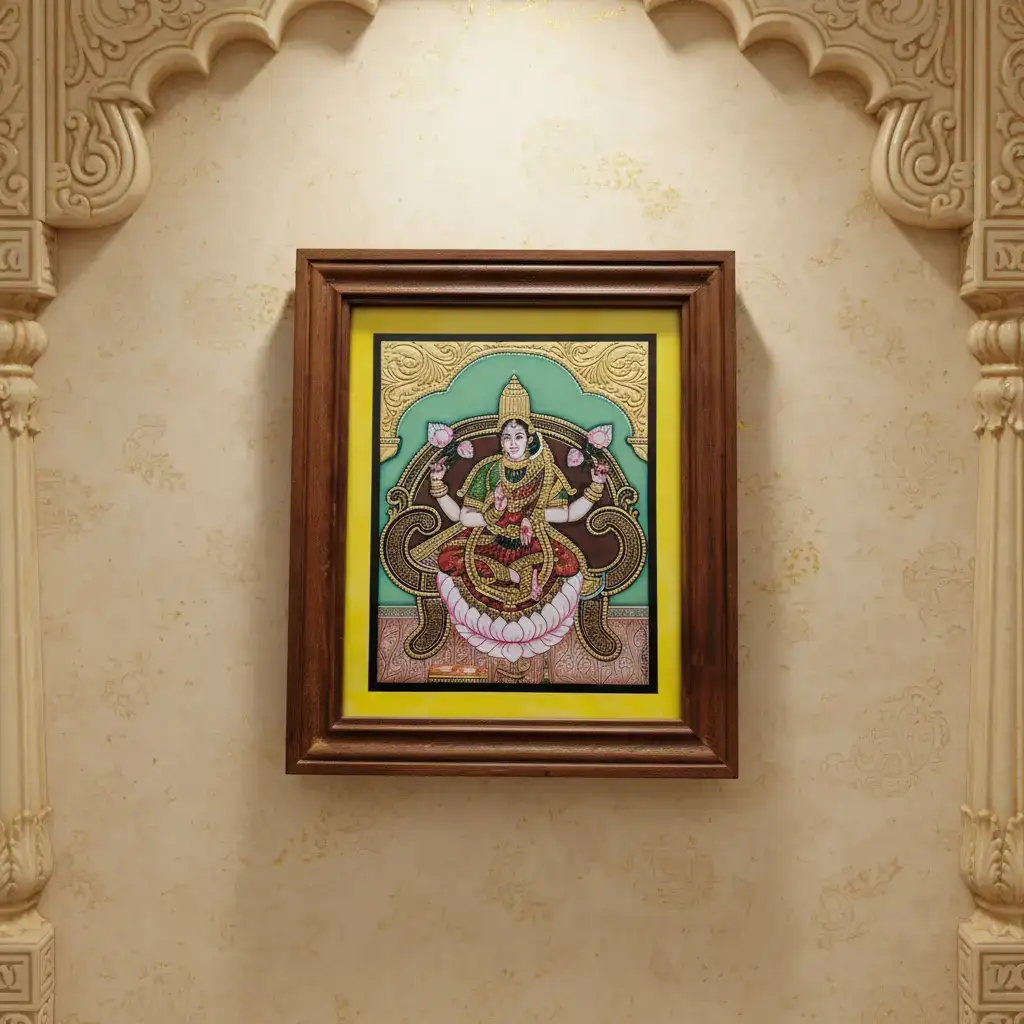
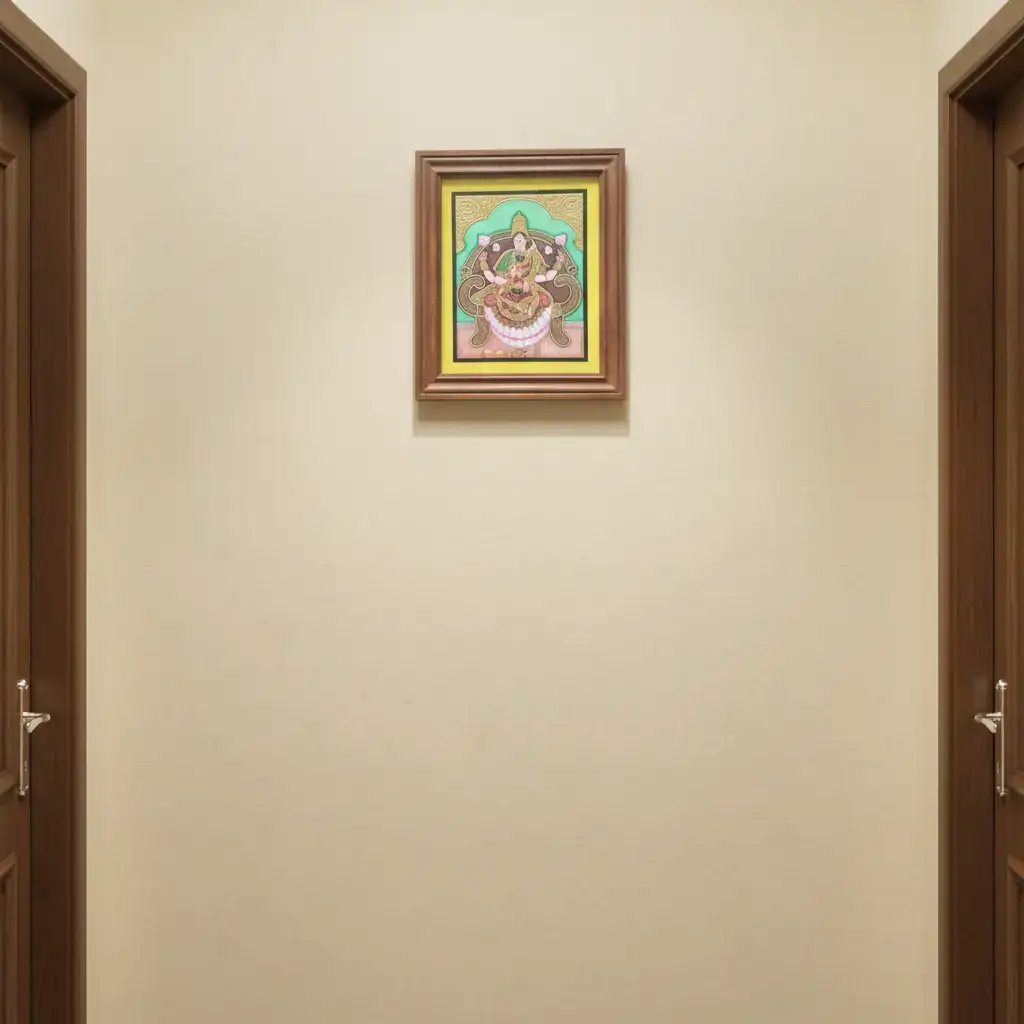
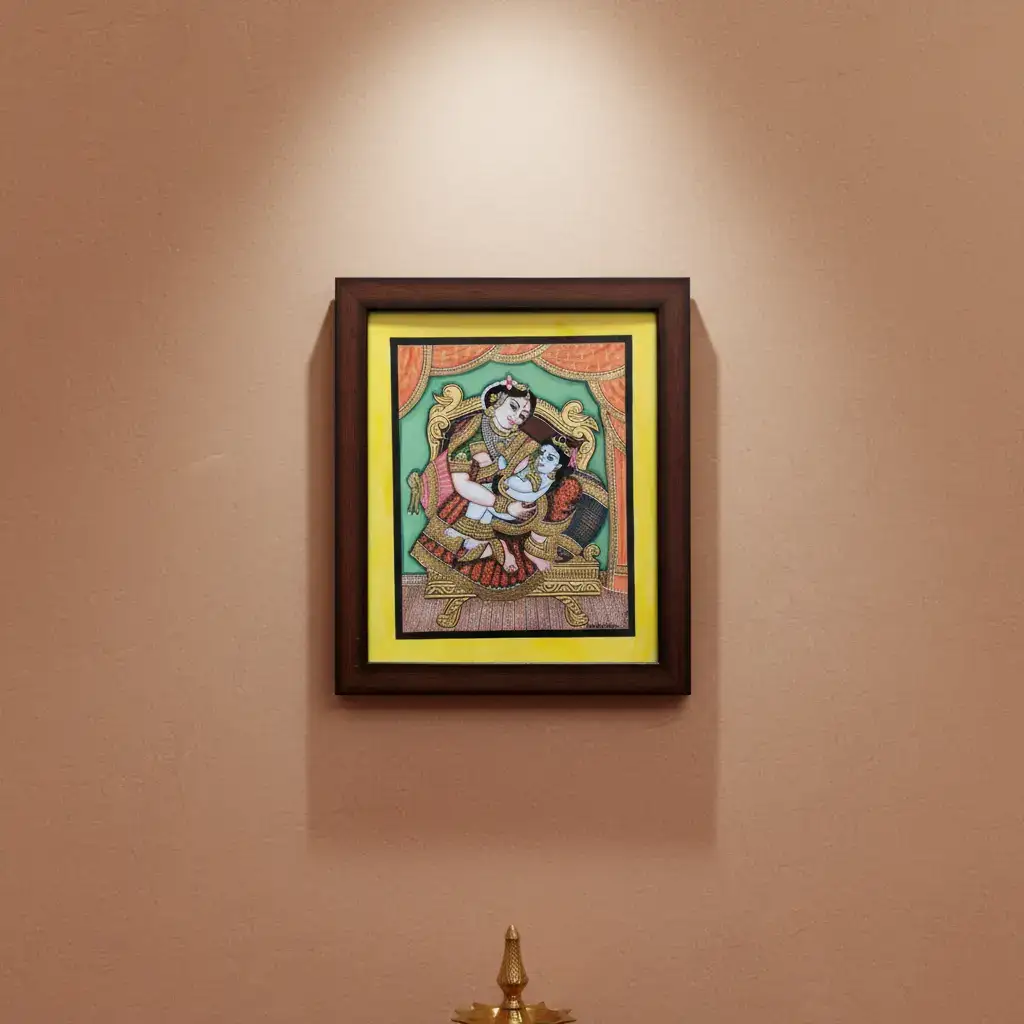
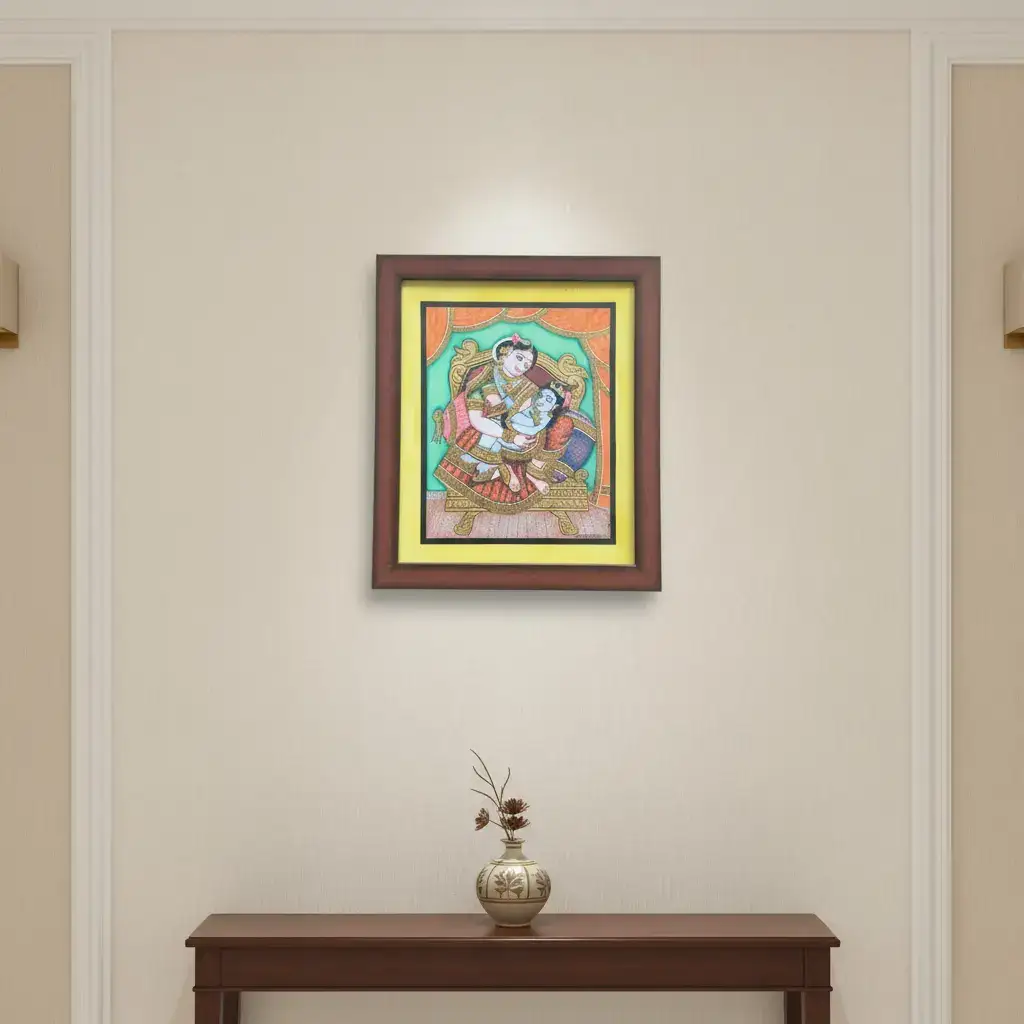
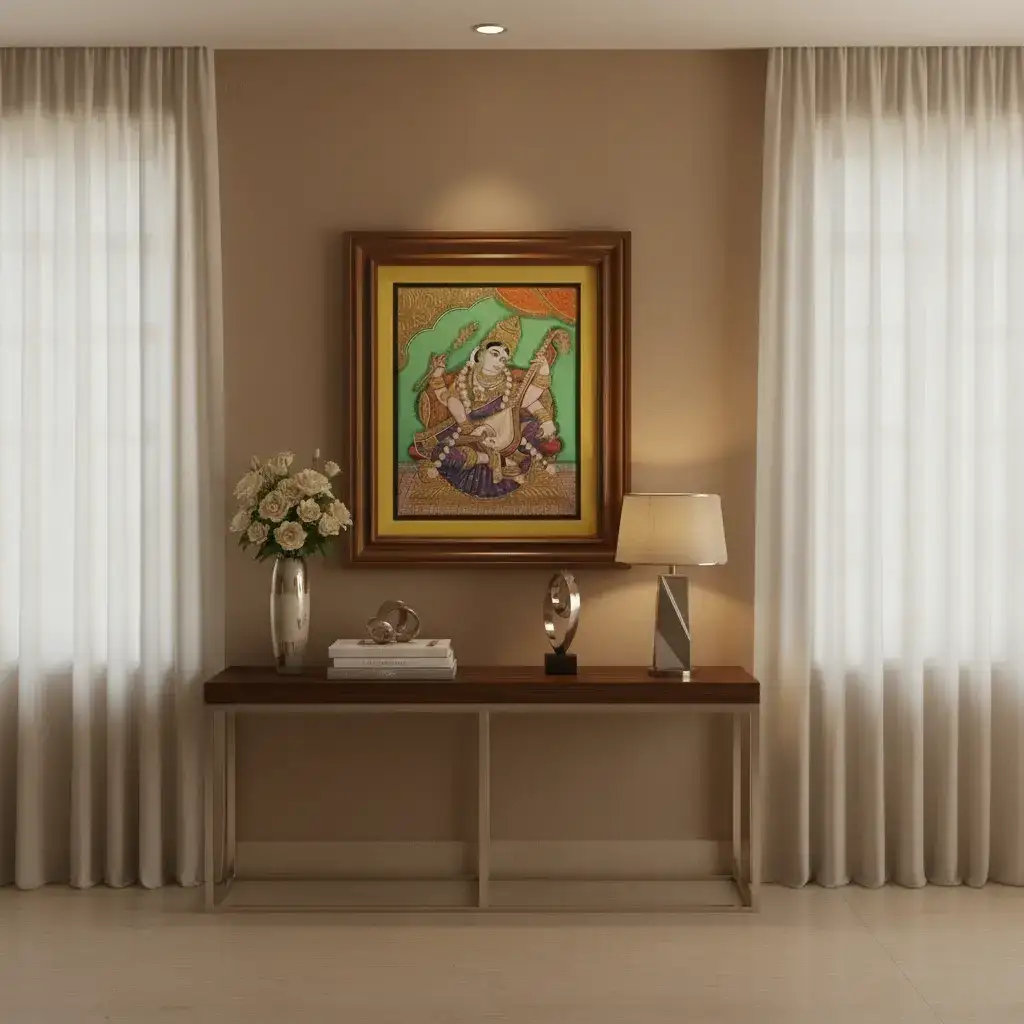
The exquisite artwork measures 14 inches in length and 12 inches in width. These dimensions make it a perfect piece to highlight the intricate beauty and delicate craftsmanship of traditional art. Mysore Saraswathi Painting is widely known for its vibrant and natural colors, detailed gold leaf work, and fine brush strokes. This makes every painting a masterpiece filled with cultural value and artistic finesse.
Mysore Saraswathi Painting Tradition and Legacy
The tradition of Mysore Painting flourished greatly under the patronage of the Vijayanagar kings. Their generous support contributed to major advancements in art and architecture in Karnataka. After the fall of the Vijayanagar empire, many artists moved to regions like Tanjore and Surpur. They blended local influences with the classic Mysore style, creating diverse new artistic forms.
This migration preserved the core grace and elegance of Mysore style paintings, even as fresh styles evolved. Mysore paintings are easily recognized for their smooth, graceful appearance. They also stand out through the rich use of colors and the intricate gold embellishments applied to the artwork. The focus on fine details is one of the features that clearly distinguish Saraswathi Painting from ordinary works.
Unfortunately, many temple and palace murals featuring mythological themes were lost during wars between the British and Hyder Ali/Tippu Sultan. However, surviving paintings mainly date back to the reign of Mummadi Krishnaraja Wodeyar III (1799–1868 AD). This era is marked by a flourishing of music, sculpture, painting, dance, and literature in Mysore.
The Mystique of Saraswathi Painting
Mummadi Krishnaraja Wodeyar III was a prominent patron who revitalized Mysore artists known as Chitrakars. His magnum opus, Sritattvanidhi, served as a detailed pictorial manual for artists. It contains illustrations of gods, goddesses, and mythological figures along with precise artistic instructions.
This manual was crucial in preserving the unique Mysore Painting style while encouraging creativity. Portraits of Mysore rulers, their families, and important historical personalities gained popularity too. Many murals decorated temples and palaces, creating lasting visual legacies of Mysore’s rich artistic heritage and brilliance.
Materials and Techniques Used in Saraswathi Painting
The materials used in Mysore Painting are equally significant as the intricate designs. Colors are traditionally hand-ground using natural ingredients, ensuring purity and longevity. Artists use glue made from Arabic gum crystals to bind pigments, which ensures long-lasting brilliance and color stability throughout the years.
Brushes crafted from squirrel hair or special grass types provide the delicate touch required for fine detailing. These traditional methods ensure the freshness and vibrancy of Mysore paintings, even centuries later. Authentic Mysore Saraswathi wall Paintings beautifully showcase these remarkable techniques handed down through generations of skilled artisans.
Saraswathi Painting remains highly valued for its spiritual and cultural meaning. The depiction of Goddess Saraswathi symbolizes knowledge, wisdom, creativity, and learning. This makes Saraswathi Painting an ideal choice for homes, study rooms, and temples, where it adds positive energy and artistic elegance.
Saraswathi Mysore Painting as a Cultural Treasure
This form of painting reflects not only artistic skills but cultural heritage itself. Emerging from Mysore painting traditions, Saraswathi Mysore Painting represents timeless beauty and deep devotion. Each piece is a fully handmade work of art, capturing the essence of Mysore’s royal legacy and artistic excellence.
Collectors and art lovers deeply appreciate the unique combination of natural colors, embossed 22KT gold leaf detailing, and mythological storytelling. These elements make Saraswathi Painting a perfect blend of artistic mastery and spiritual depth. It is truly an exceptional representation of Mysore Painting traditions and cultural artistry.
Original: $161.37
-70%$161.37
$48.41Product Information
Product Information
Shipping & Returns
Shipping & Returns
Description
Mysore Saraswathi Painting is a timeless reflection of Karnataka’s rich artistic heritage and culture. This traditional painting style has roots that date back to the Ajanta period. Over centuries, it has showcased the evolution and progression of Karnataka painting, becoming a celebrated art form across South India. Mysore Painting is deeply influential, inspiring various regional styles such as Tanjore and Kerala mural paintings.
The exquisite artwork measures 14 inches in length and 12 inches in width. These dimensions make it a perfect piece to highlight the intricate beauty and delicate craftsmanship of traditional art. Mysore Saraswathi Painting is widely known for its vibrant and natural colors, detailed gold leaf work, and fine brush strokes. This makes every painting a masterpiece filled with cultural value and artistic finesse.
Mysore Saraswathi Painting Tradition and Legacy
The tradition of Mysore Painting flourished greatly under the patronage of the Vijayanagar kings. Their generous support contributed to major advancements in art and architecture in Karnataka. After the fall of the Vijayanagar empire, many artists moved to regions like Tanjore and Surpur. They blended local influences with the classic Mysore style, creating diverse new artistic forms.
This migration preserved the core grace and elegance of Mysore style paintings, even as fresh styles evolved. Mysore paintings are easily recognized for their smooth, graceful appearance. They also stand out through the rich use of colors and the intricate gold embellishments applied to the artwork. The focus on fine details is one of the features that clearly distinguish Saraswathi Painting from ordinary works.
Unfortunately, many temple and palace murals featuring mythological themes were lost during wars between the British and Hyder Ali/Tippu Sultan. However, surviving paintings mainly date back to the reign of Mummadi Krishnaraja Wodeyar III (1799–1868 AD). This era is marked by a flourishing of music, sculpture, painting, dance, and literature in Mysore.
The Mystique of Saraswathi Painting
Mummadi Krishnaraja Wodeyar III was a prominent patron who revitalized Mysore artists known as Chitrakars. His magnum opus, Sritattvanidhi, served as a detailed pictorial manual for artists. It contains illustrations of gods, goddesses, and mythological figures along with precise artistic instructions.
This manual was crucial in preserving the unique Mysore Painting style while encouraging creativity. Portraits of Mysore rulers, their families, and important historical personalities gained popularity too. Many murals decorated temples and palaces, creating lasting visual legacies of Mysore’s rich artistic heritage and brilliance.
Materials and Techniques Used in Saraswathi Painting
The materials used in Mysore Painting are equally significant as the intricate designs. Colors are traditionally hand-ground using natural ingredients, ensuring purity and longevity. Artists use glue made from Arabic gum crystals to bind pigments, which ensures long-lasting brilliance and color stability throughout the years.
Brushes crafted from squirrel hair or special grass types provide the delicate touch required for fine detailing. These traditional methods ensure the freshness and vibrancy of Mysore paintings, even centuries later. Authentic Mysore Saraswathi wall Paintings beautifully showcase these remarkable techniques handed down through generations of skilled artisans.
Saraswathi Painting remains highly valued for its spiritual and cultural meaning. The depiction of Goddess Saraswathi symbolizes knowledge, wisdom, creativity, and learning. This makes Saraswathi Painting an ideal choice for homes, study rooms, and temples, where it adds positive energy and artistic elegance.
Saraswathi Mysore Painting as a Cultural Treasure
This form of painting reflects not only artistic skills but cultural heritage itself. Emerging from Mysore painting traditions, Saraswathi Mysore Painting represents timeless beauty and deep devotion. Each piece is a fully handmade work of art, capturing the essence of Mysore’s royal legacy and artistic excellence.
Collectors and art lovers deeply appreciate the unique combination of natural colors, embossed 22KT gold leaf detailing, and mythological storytelling. These elements make Saraswathi Painting a perfect blend of artistic mastery and spiritual depth. It is truly an exceptional representation of Mysore Painting traditions and cultural artistry.