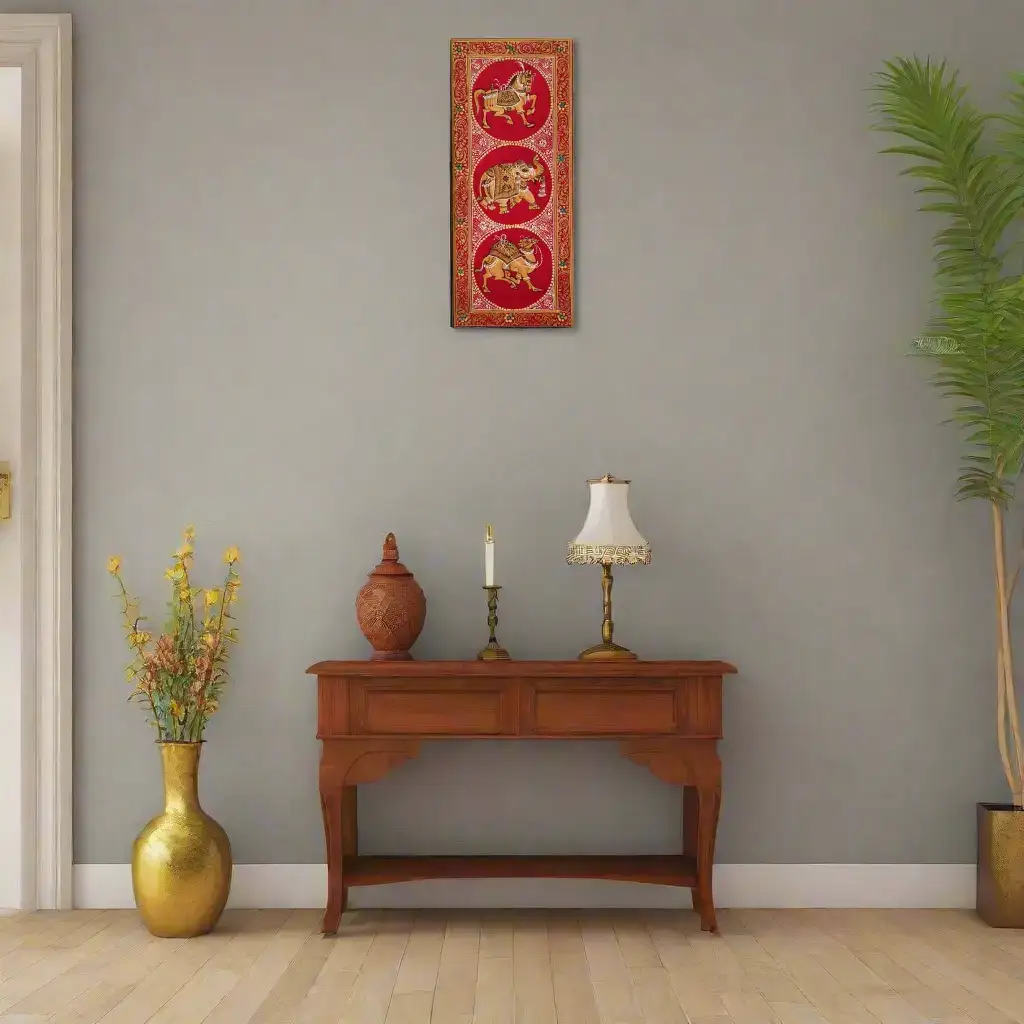
The Maharajs Mounts Miniature Painting
The Maharajs Mounts Miniature Painting
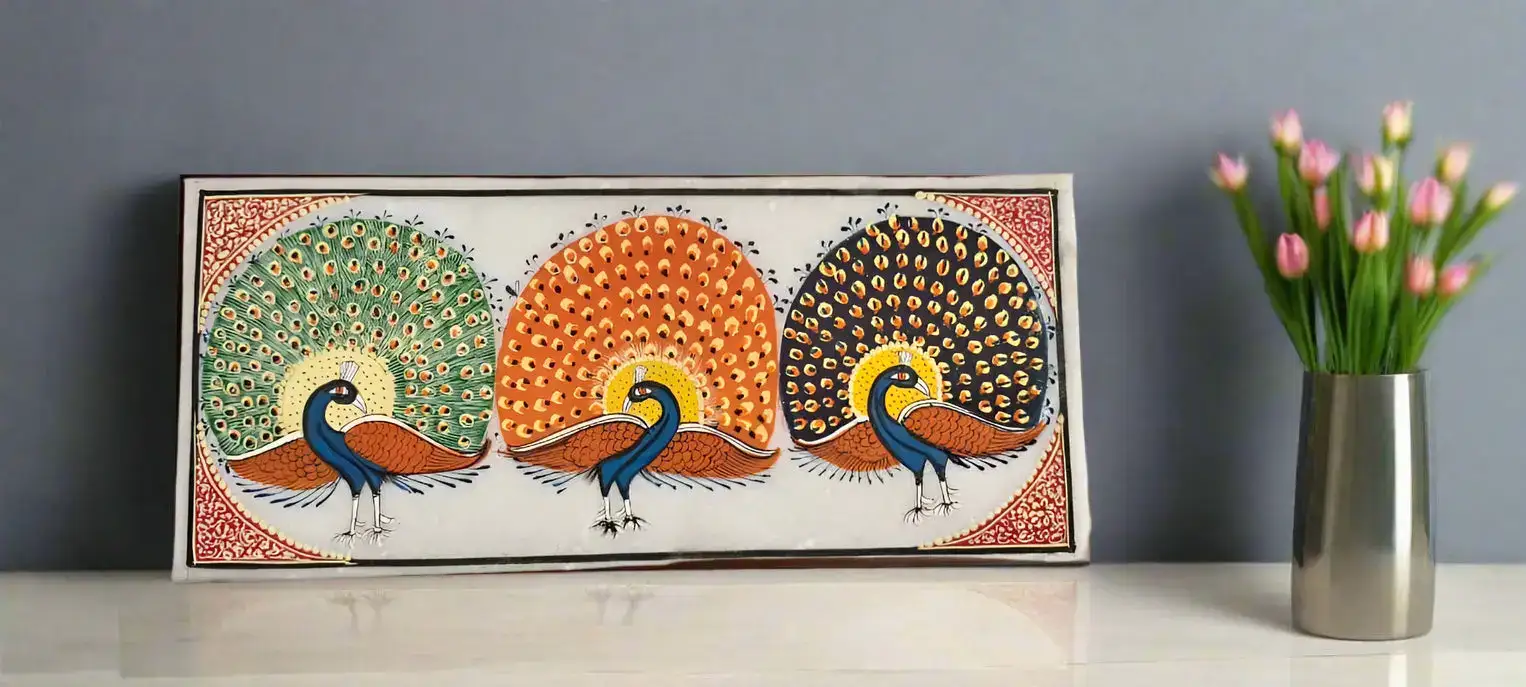
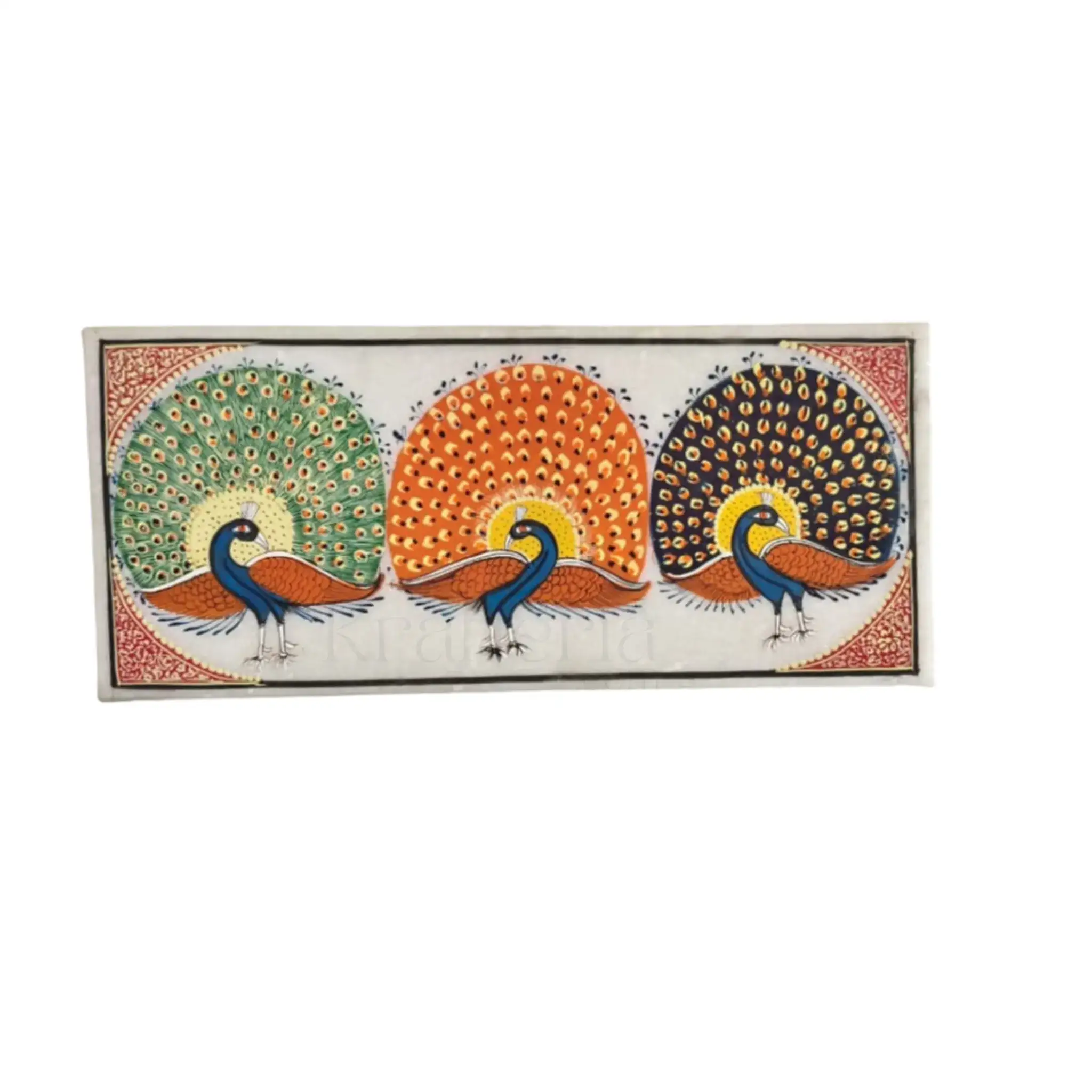
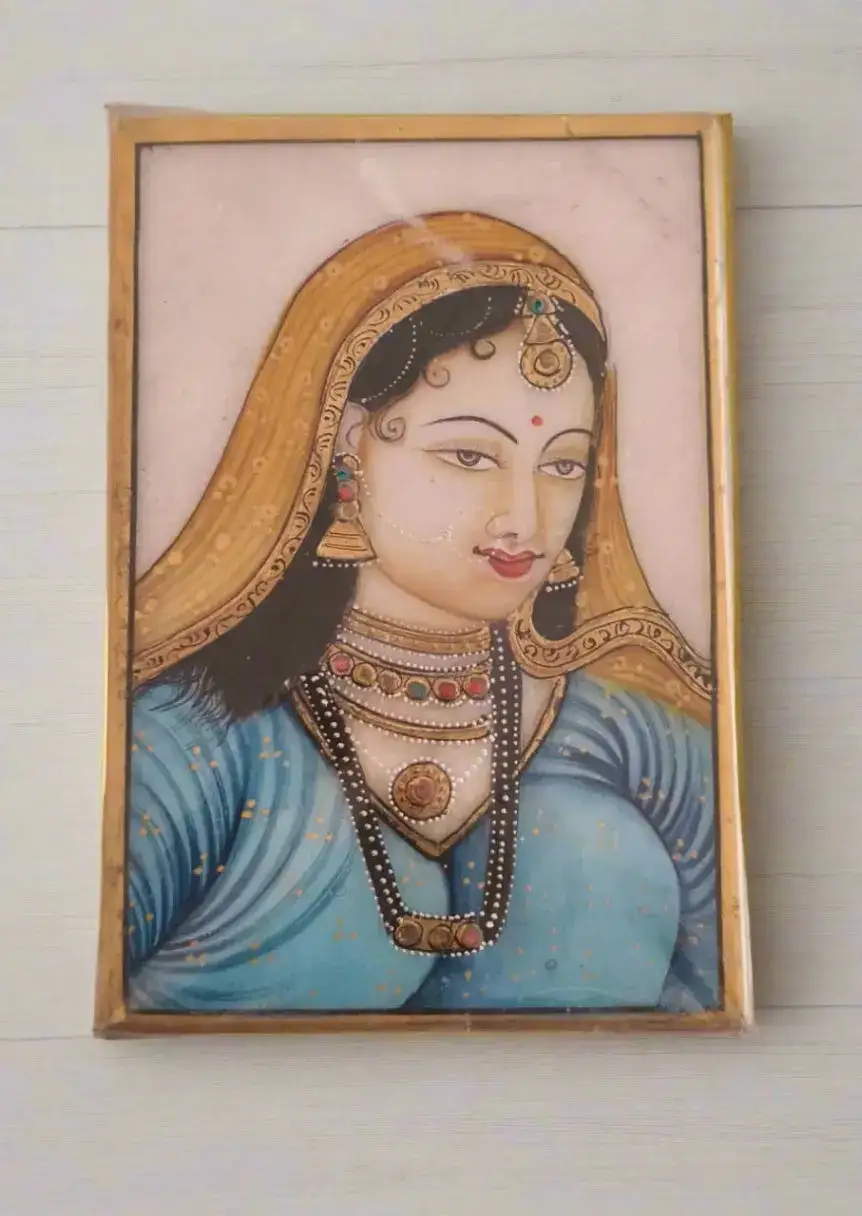
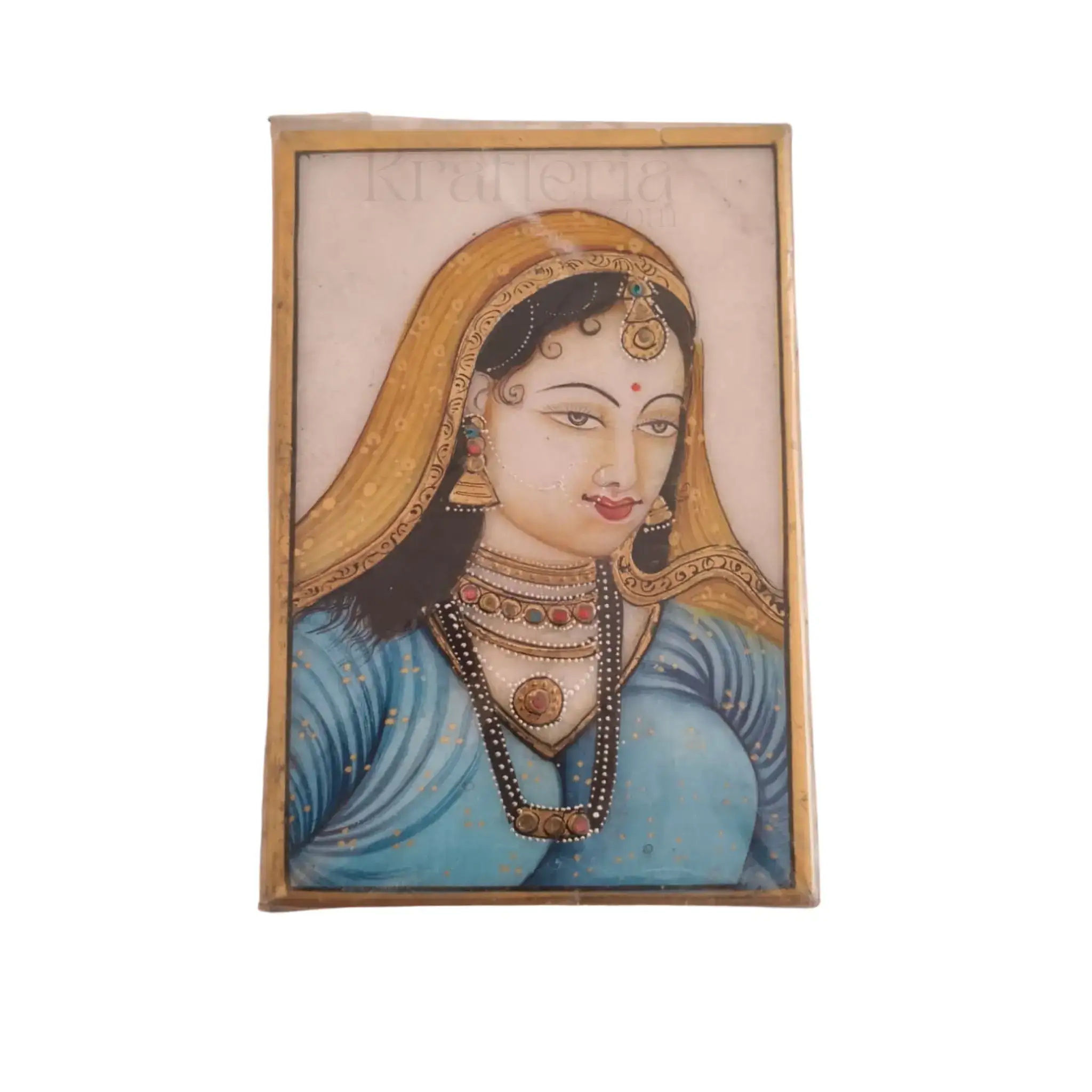
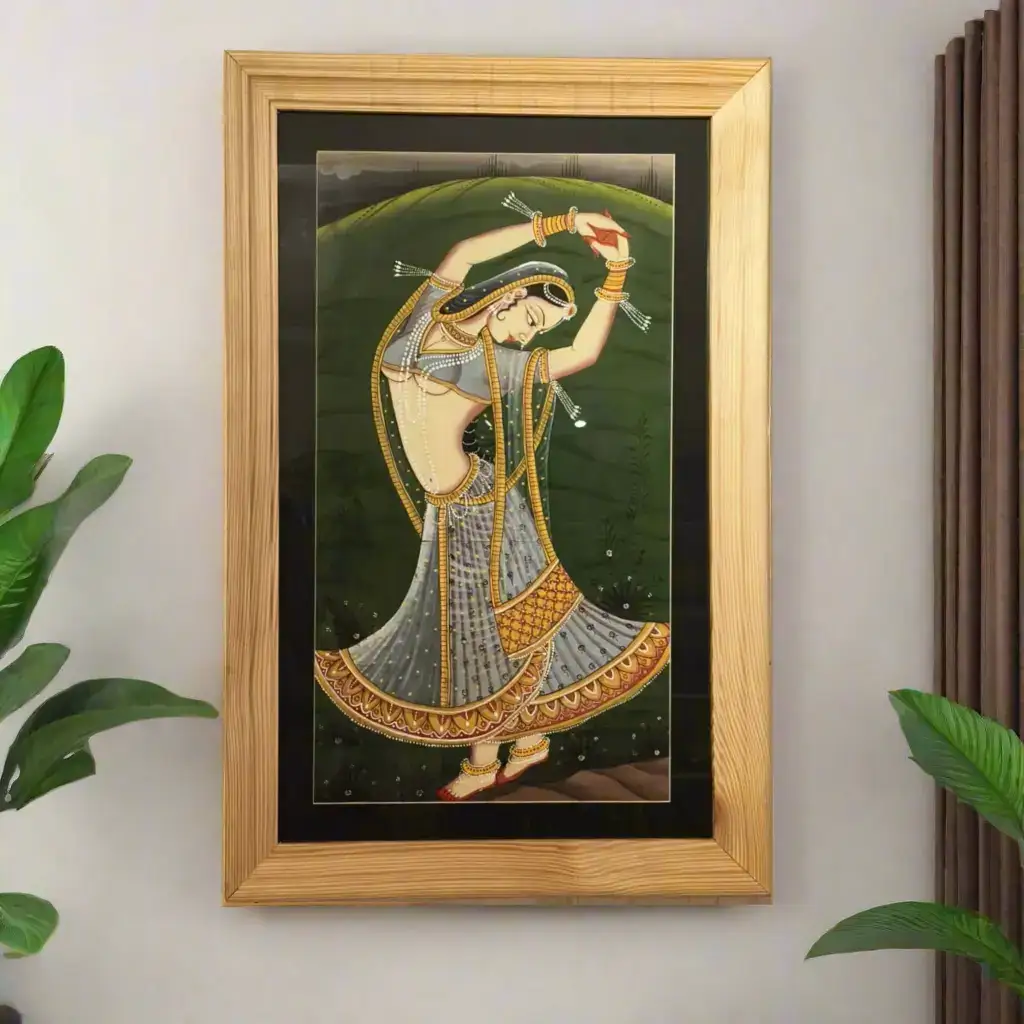
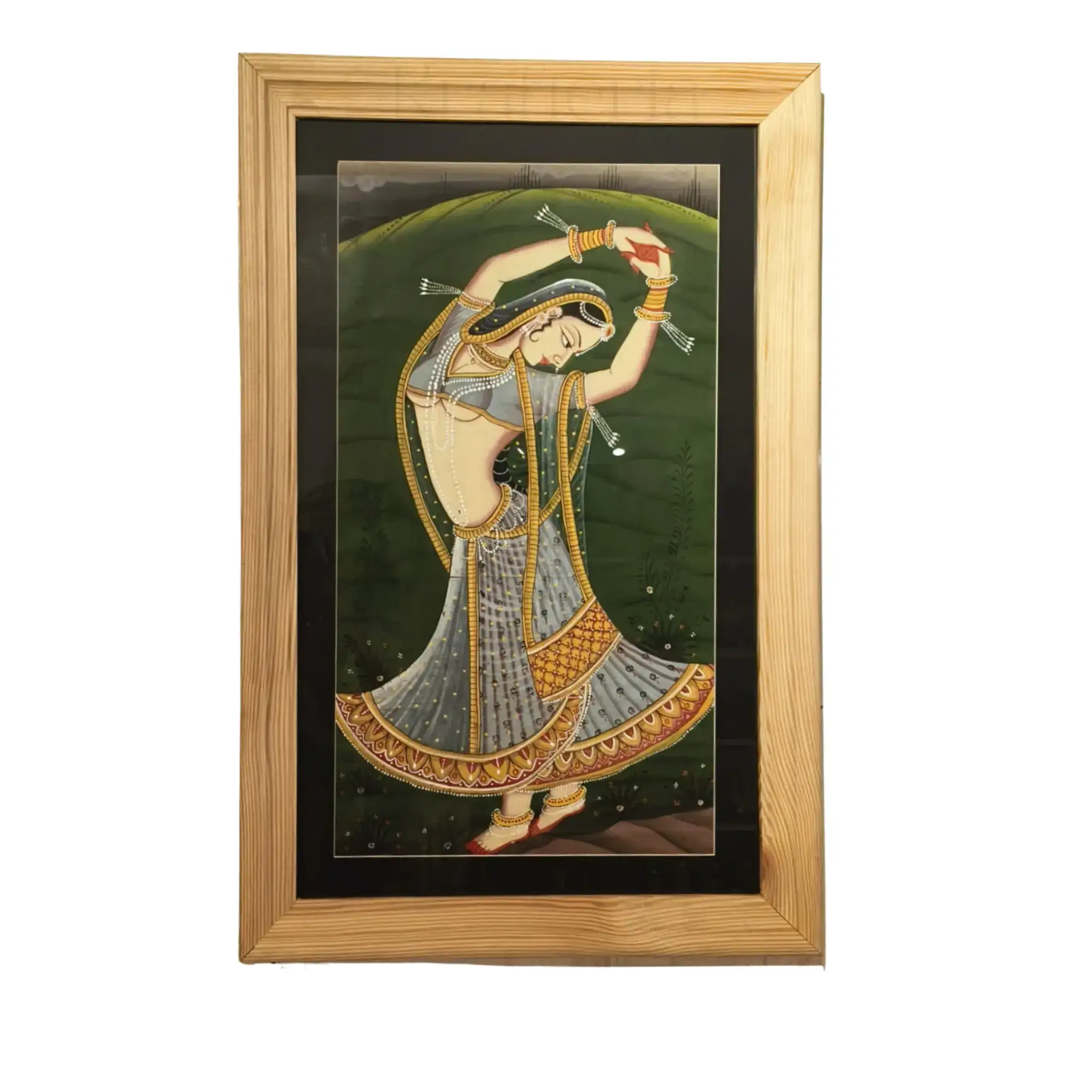
Maharajs Mounts Miniature Painting Rajasthani Painting is a rich and vibrant Indian art form that blossomed in the royal courts of Rajasthan from the 16th century onward. Rooted deeply in Indian culture and tradition, this style highlights themes from mythology, epics, royal life, love stories, and folk culture. Known for its bold lines and bright colors, the maharajas miniature painting stands out with its intricate detailing and timeless appeal.
The use of natural dyes and pigments made from minerals, vegetables, and precious stones gives these works their lasting and luminous quality. These materials ensure that each painting preserves the essence and brilliance of traditional artistry. Skilled artists apply these elements meticulously to create masterpieces that celebrate the rich heritage of Rajasthan.
Distinct Schools of Maharajas Miniature Painting
This art form is divided into several schools, each with a unique style and subject focus. These schools include Mewar, Marwar, Bundi, Kota, Kishangarh, Bikaner, and Jaipur. Each region produced works that reflected its local culture and royal preferences.
For example, Kishangarh is famed for its romantic depictions of Radha and Krishna. It is especially known for the iconic Bani Thani image, a classic example of this miniature tradition. Mewar works often capture intricate court scenes, heroic tales, and religious themes, celebrating valor and devotion.
Mewar, Bundi, and Kota: Diversity in Royal Mounts Art
Bundi and Kota schools are known for their lush landscapes, often portraying nature and hunting scenes with detailed animal depictions. These forms of rajasthani royal animal artwork illustrate the luxurious and dynamic life of the royals through vivid representations of flora and fauna.
The style frequently includes royal mounts and animals, highlighting their significance in the royal processions and daily palace life. These artworks serve as both visual storytelling and documentation of the grandeur associated with the Maharajas and their courts.
Maharajas Miniature Painting: Celebrating Royal Mounts
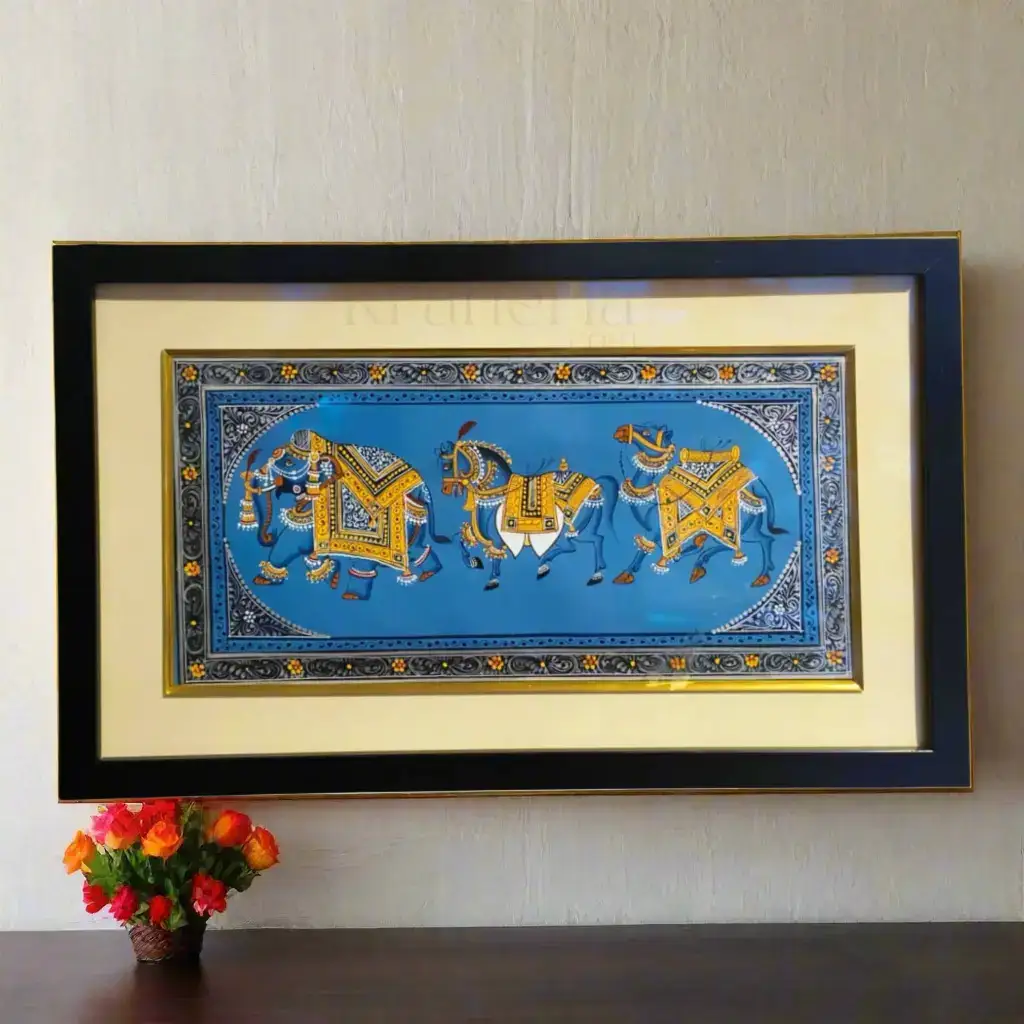
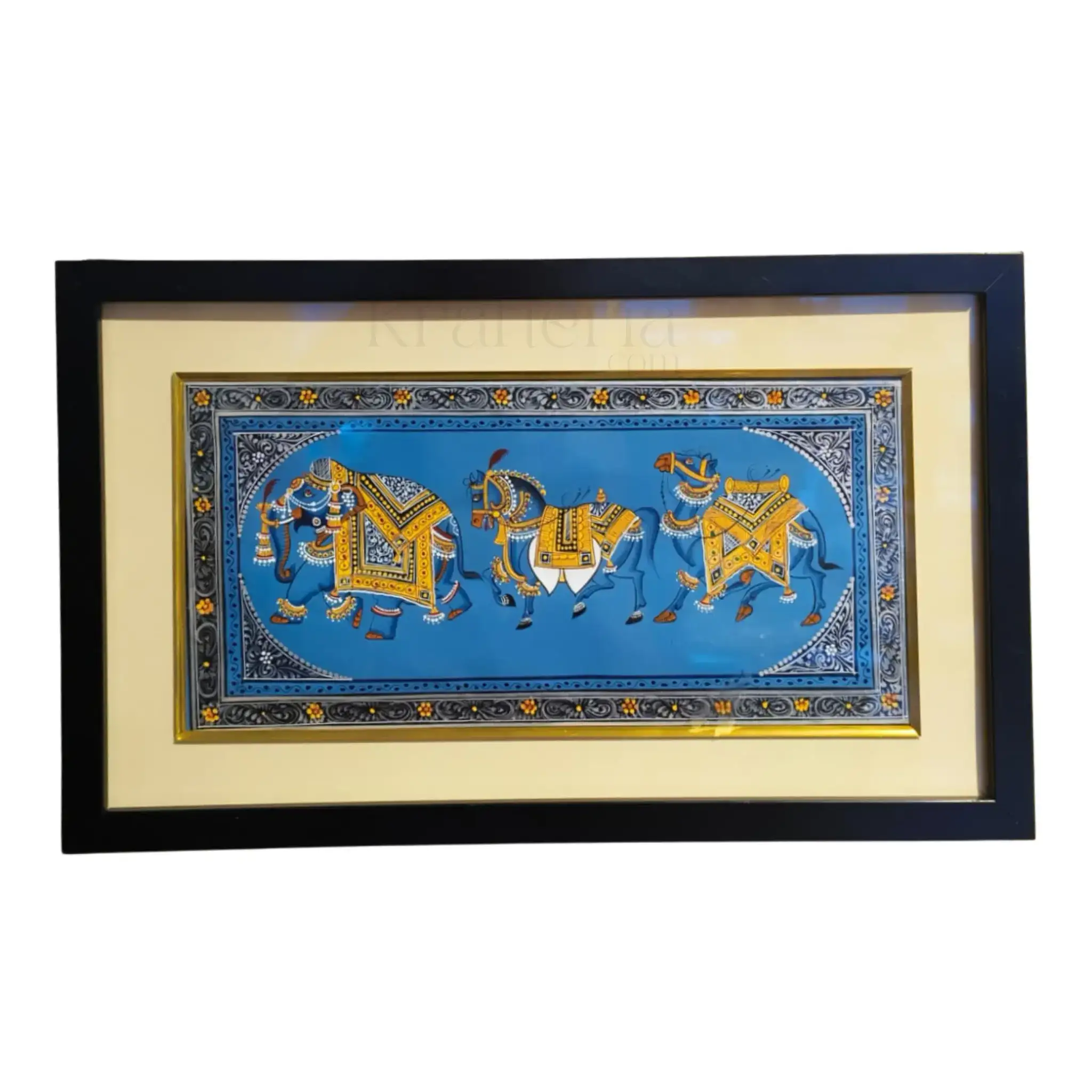
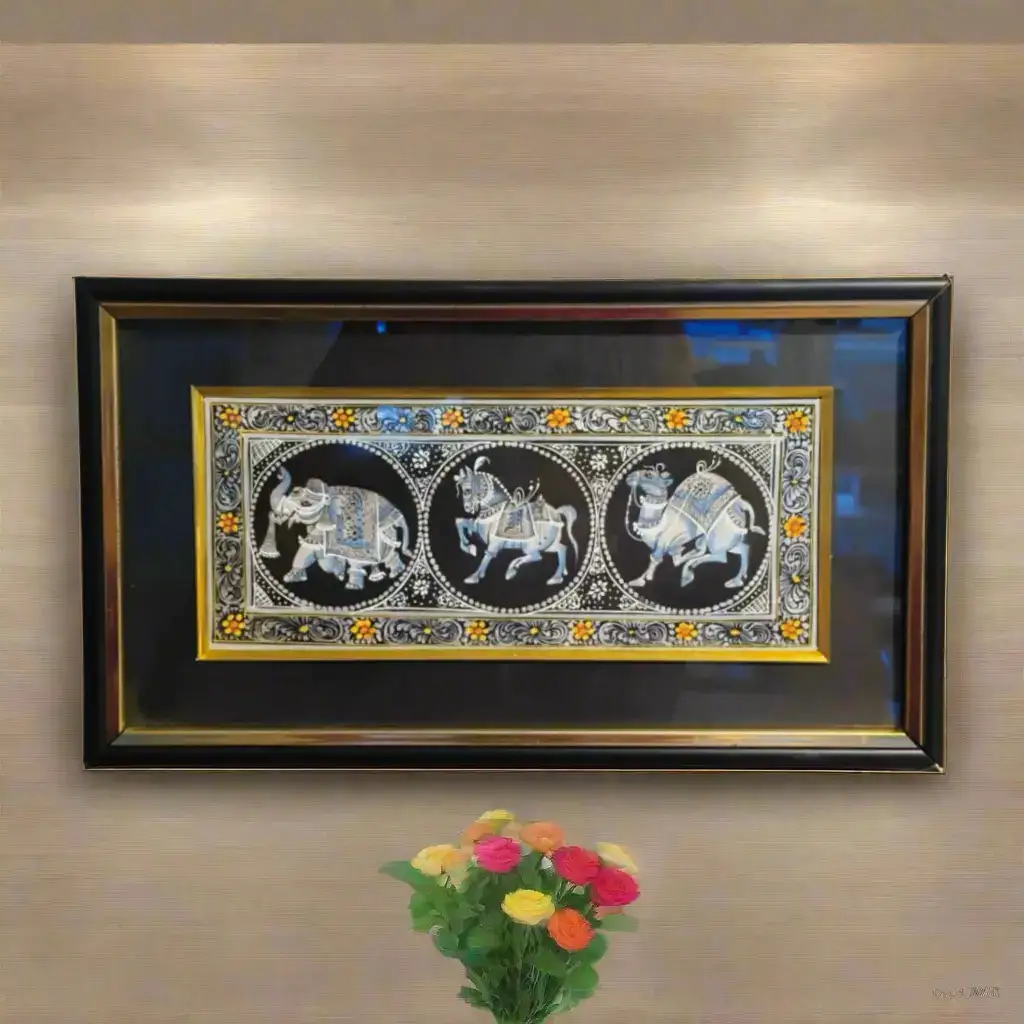
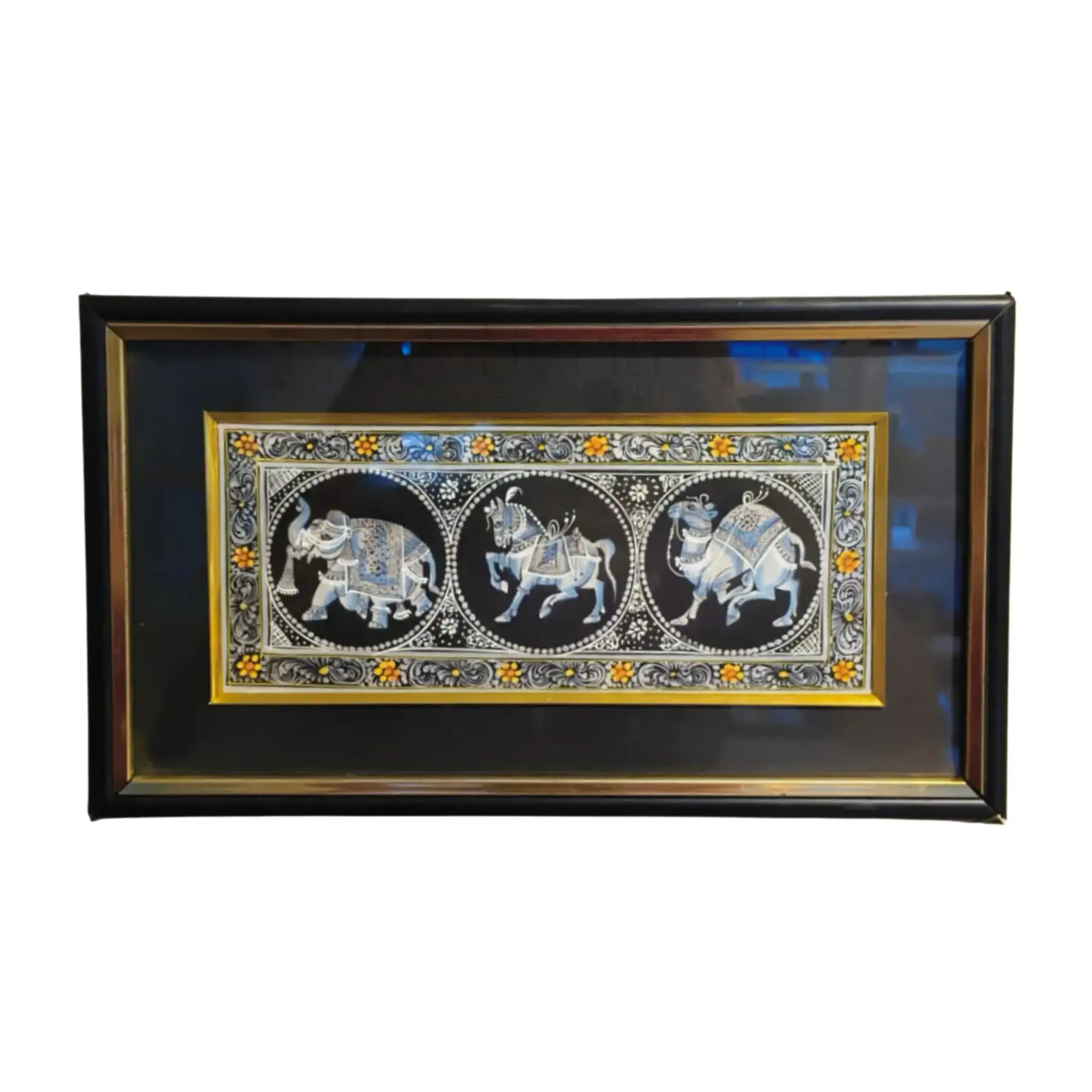
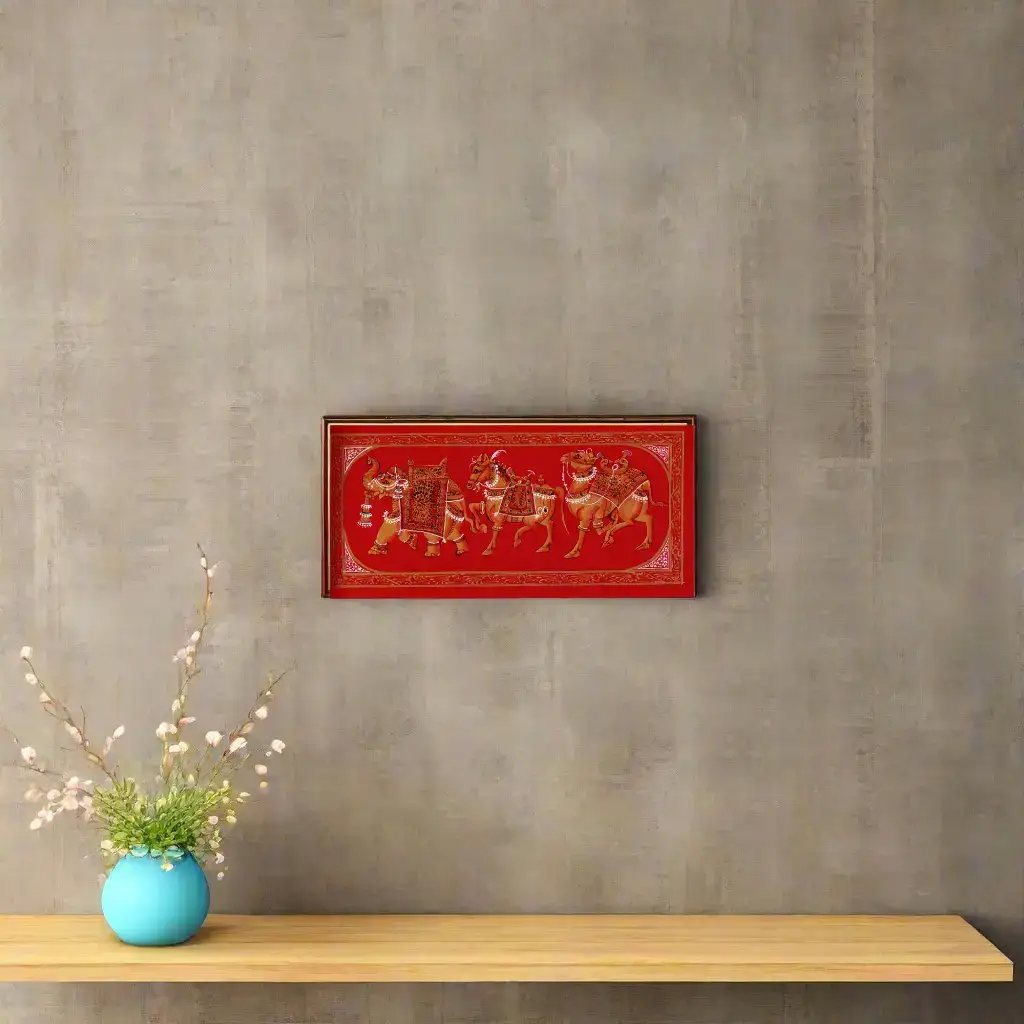
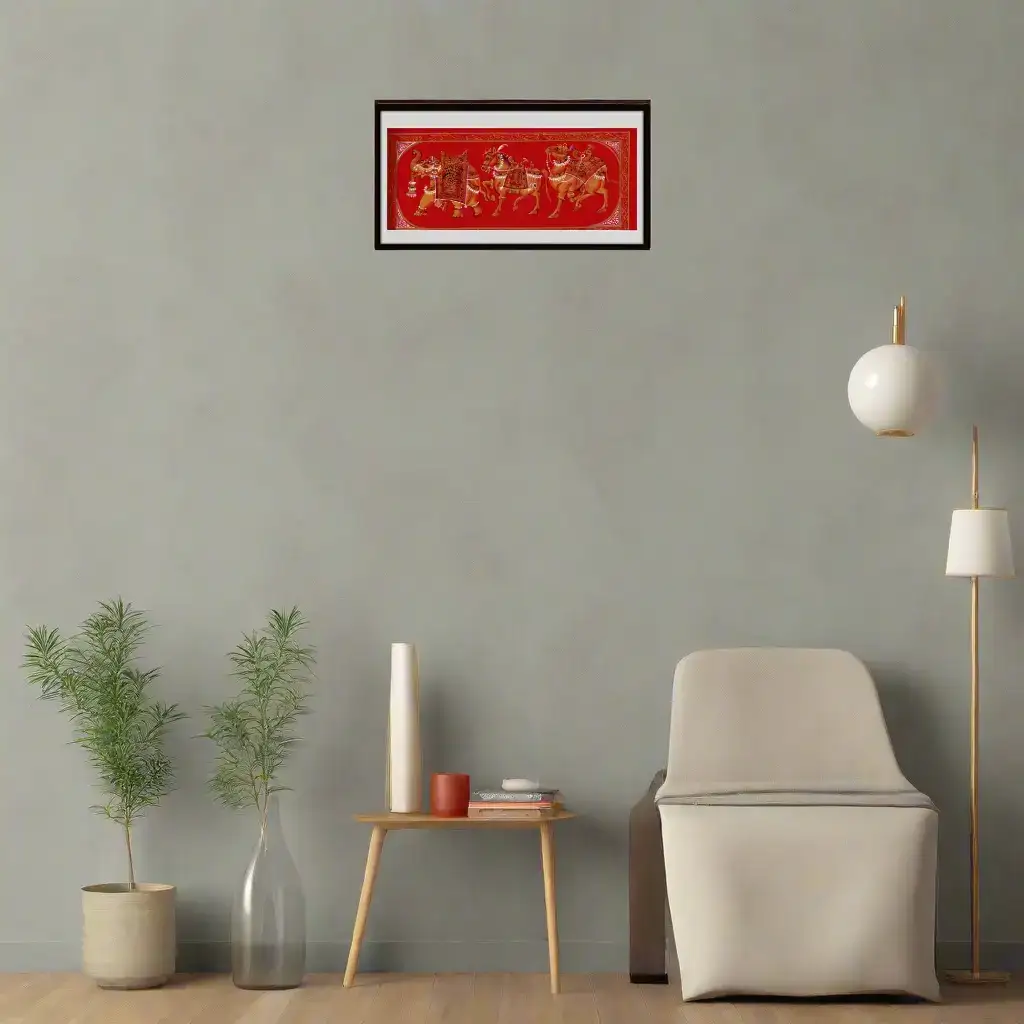
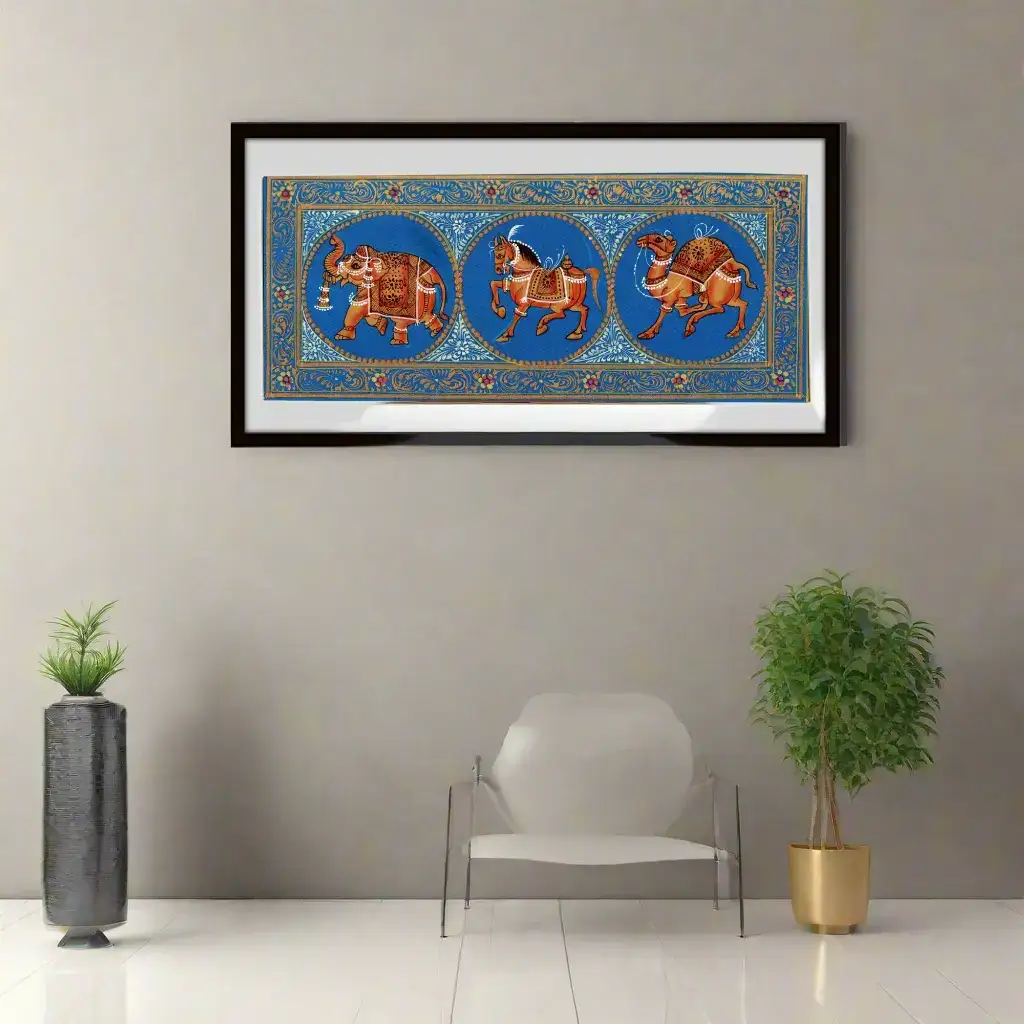
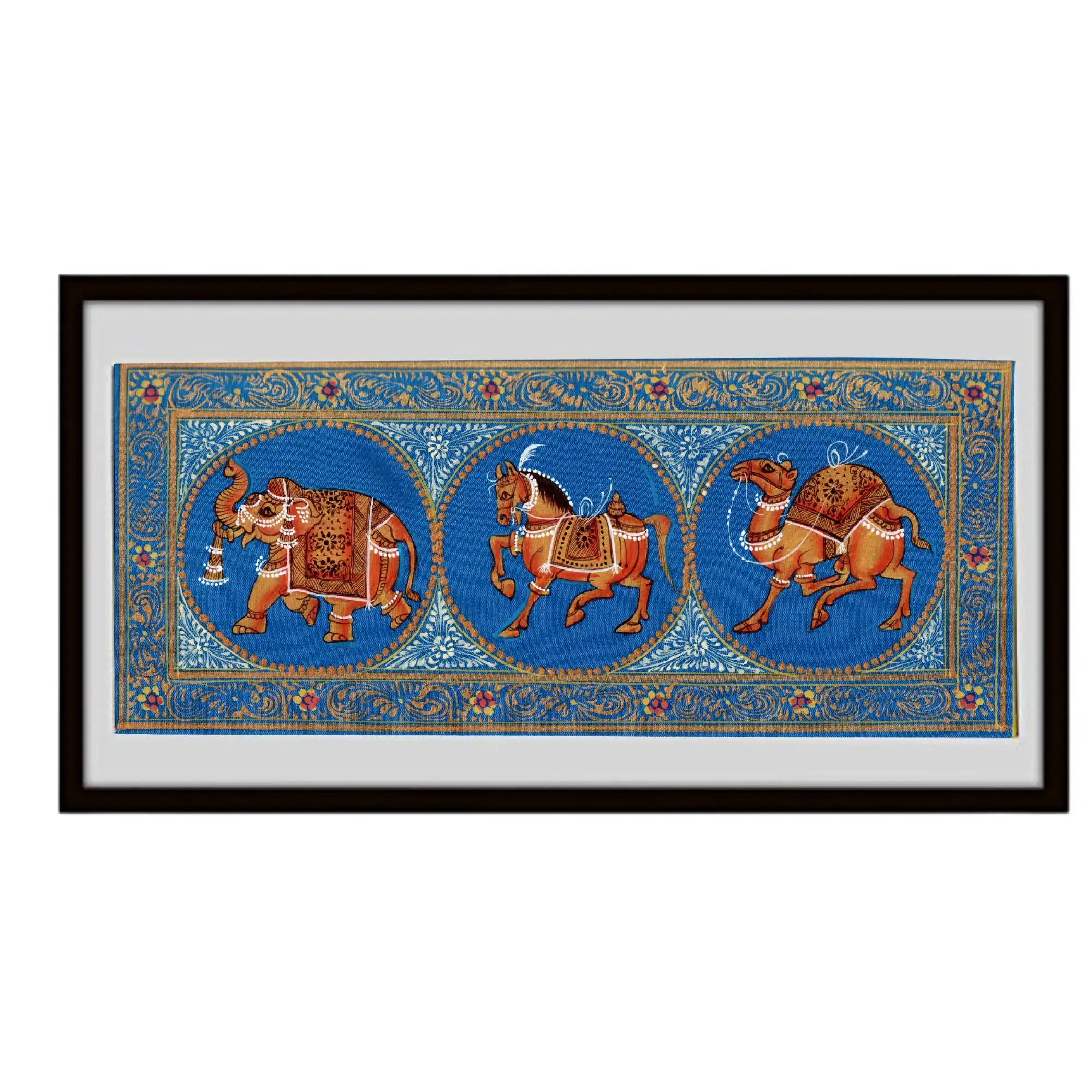
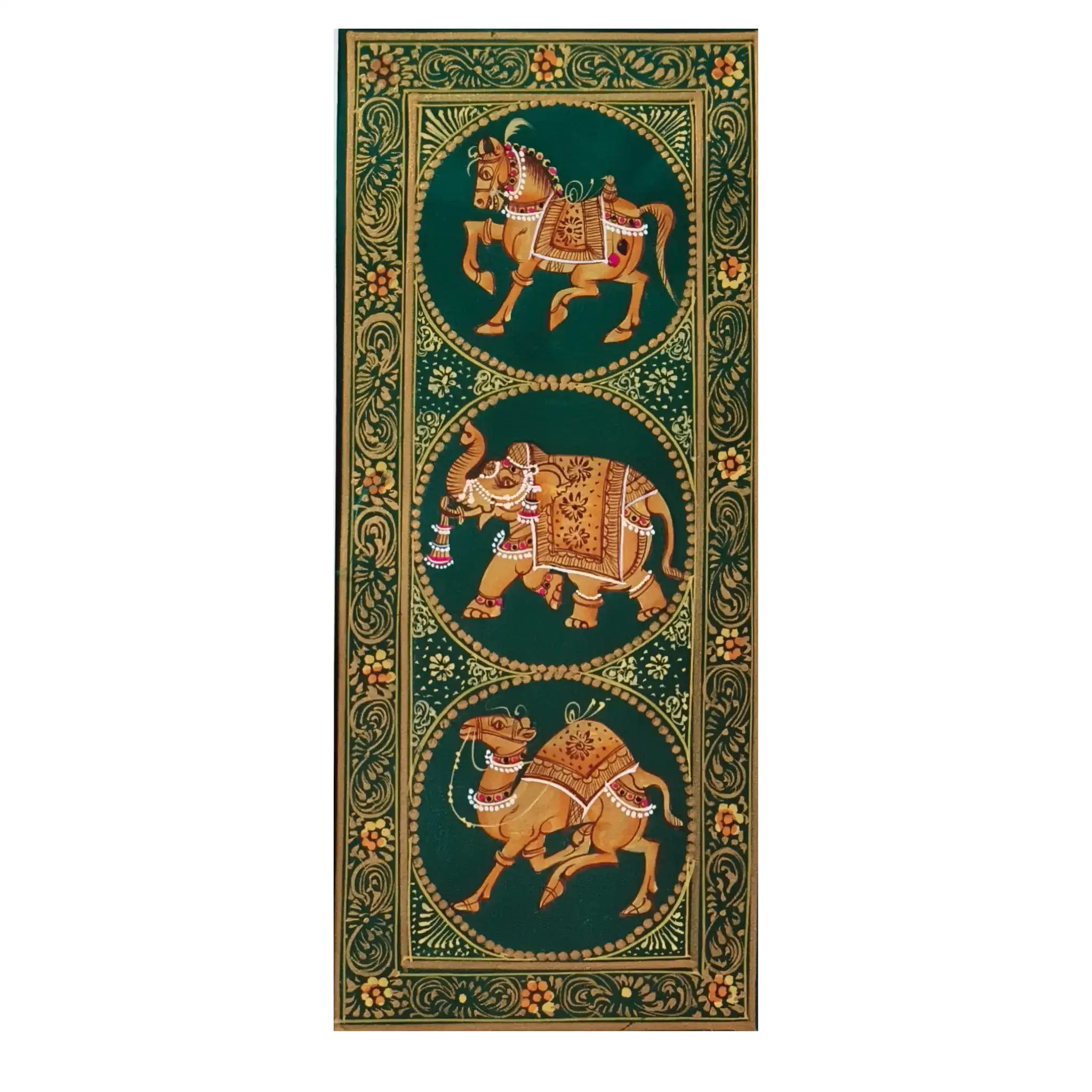
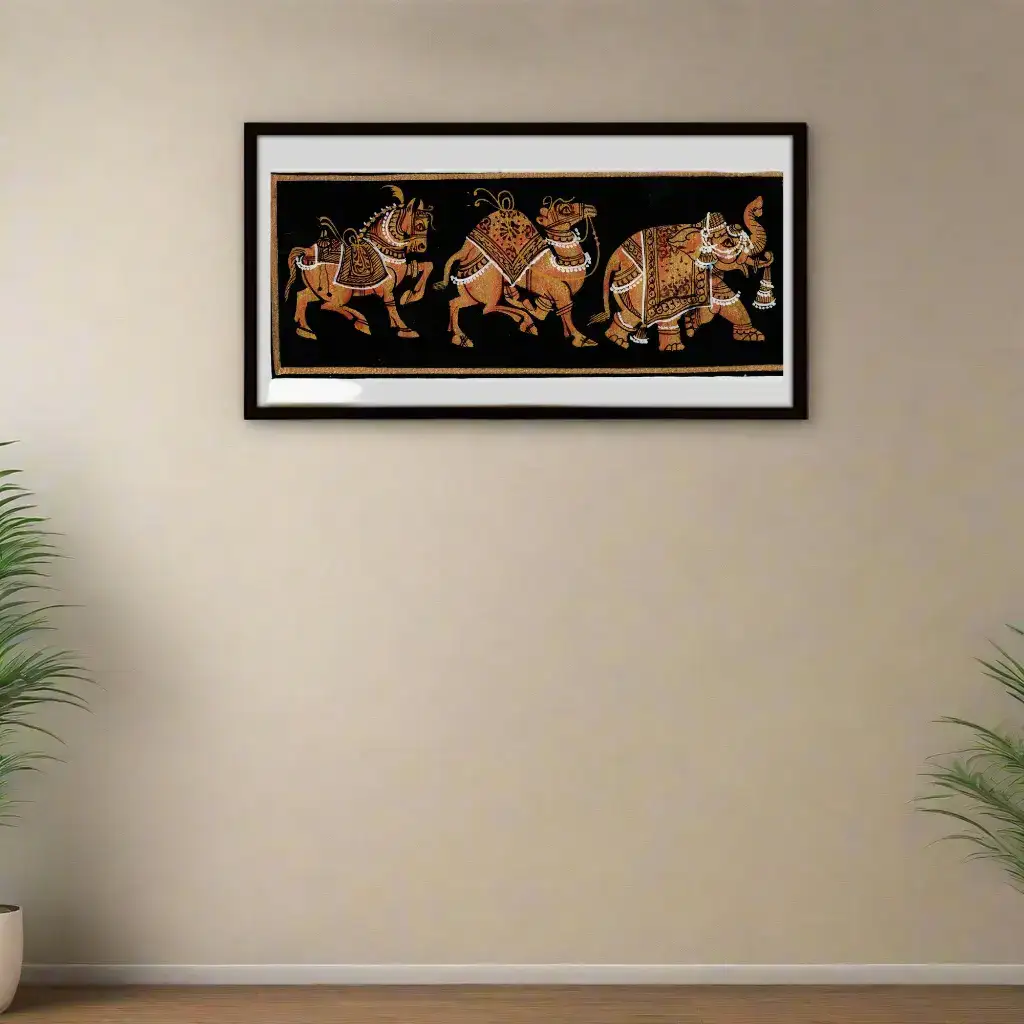
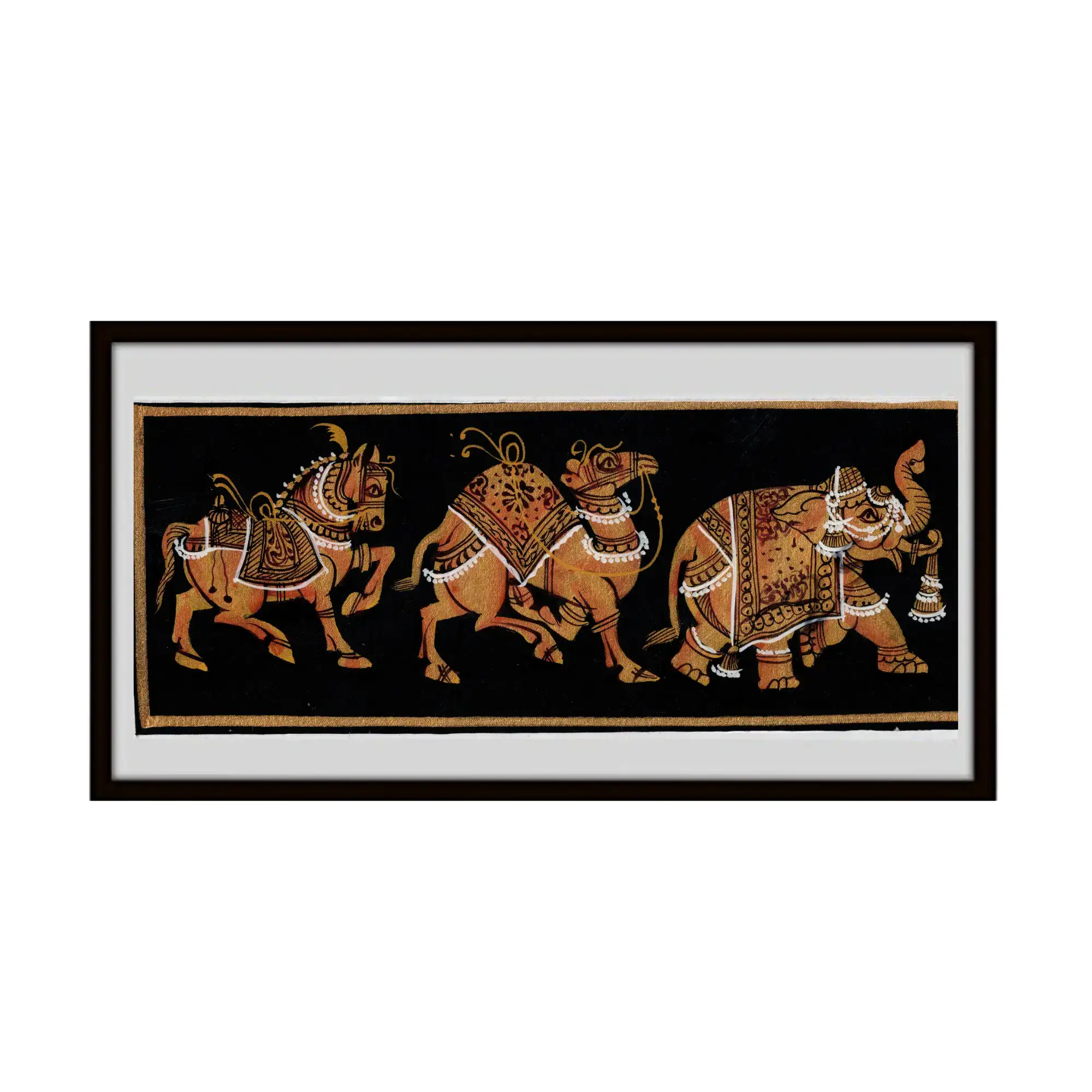
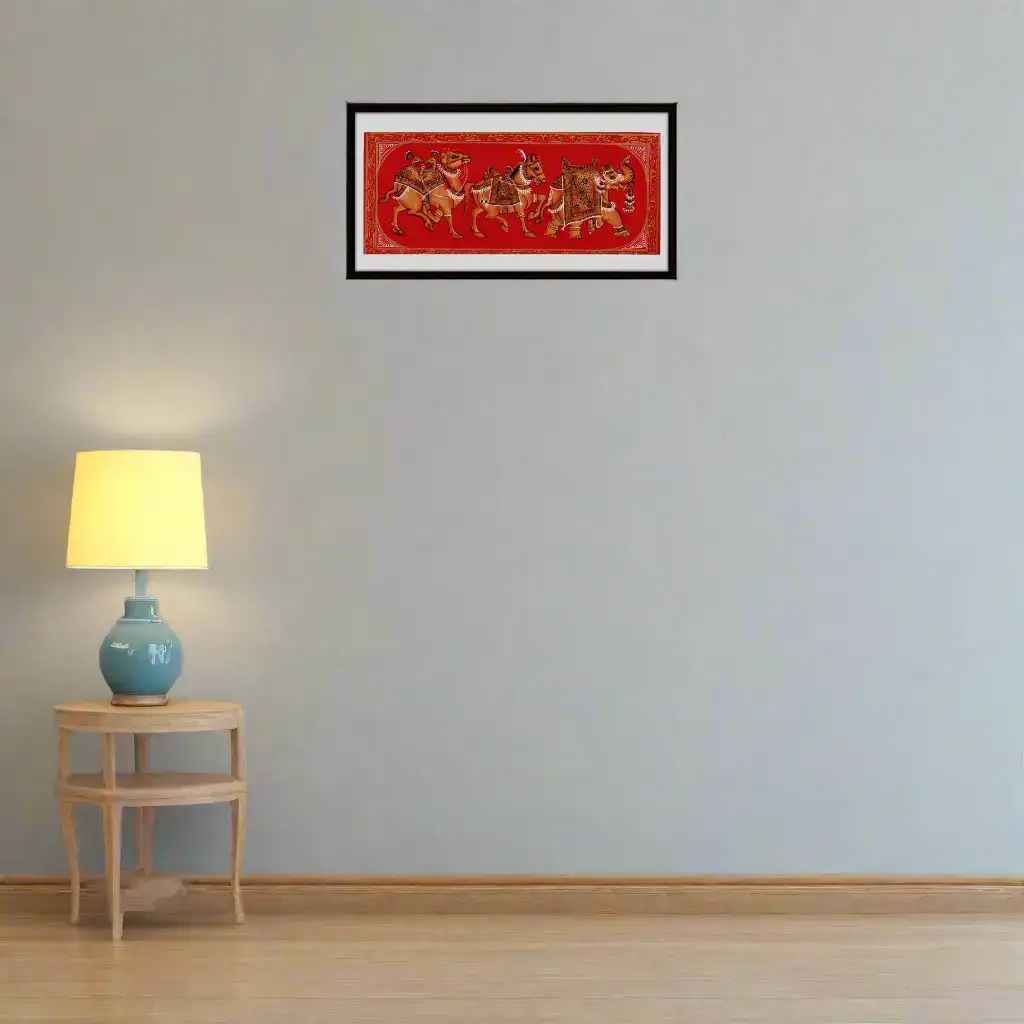
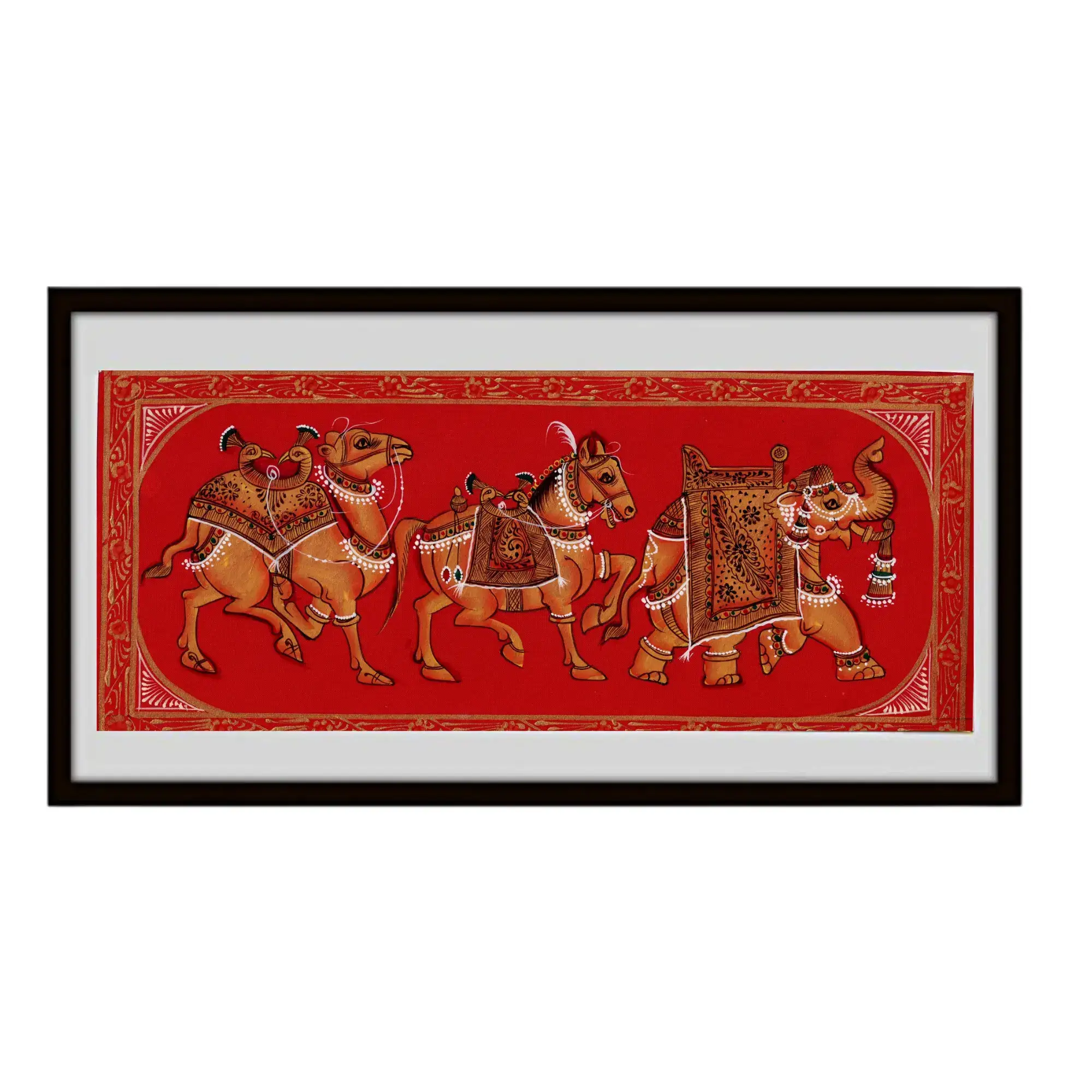
The main subject of this art style often includes animals such as horses, elephants, and camels. Known as royal mounts miniature art, these depictions showcase the regalia and ceremonial decorations adorned by these majestic animals. Their symbolic presence reflects power, prestige, and the cultural richness of the royal household.
Each animal depiction highlights its unique attributes, with artists paying close attention to colors, ornaments, and textiles. This commitment emphasizes the splendor of the maharaja procession animal painting tradition and enhances the overall royal ambiance communicated through the art.
Artistic Techniques and Materials
Traditional maharajas miniature painting involves delicate brushwork using extremely fine brushes. Artisans commonly employ handmade paper or silk as the canvas for these masterpieces. The choice of medium depends on the intended use and artistic preference.
Mineral, vegetable, and stone-based pigments give the works their characteristic vibrancy and depth. These natural materials ensure longevity and contribute to the vividness crucial for representing royal life and mythology.
The Cultural and Historical Significance
This style of miniature art is not just artistic expression but a cultural treasure. It documents historical events, royal ceremonies, and important myths related to Rajasthan's heritage. These portraits preserve the legacy of Maharajas and their royal courts through visually rich storytelling.
Through the maharajas miniature painting, viewers gain insight into the era’s social structure, beliefs, and aesthetics. It serves as an educational tool and an artistic expression that honors India's royal history.
Legacy and Artistic Value
Overall, Maharajs Mounts Miniature Painting continues to capture the imagination of art lovers and collectors. Its vibrant colors, detailed lines, and rich cultural themes make it a valued collectible. The combination of tradition, history, and artistry encapsulates the essence of Rajasthan’s royal heritage.
If you appreciate the richness of Indian miniature art, this style is a true representation of the grandeur that defined the Maharajas and their majestic mounts.
Product Information
Product Information
Shipping & Returns
Shipping & Returns
Description
The Maharajs Mounts Miniature Painting
Maharajs Mounts Miniature Painting Rajasthani Painting is a rich and vibrant Indian art form that blossomed in the royal courts of Rajasthan from the 16th century onward. Rooted deeply in Indian culture and tradition, this style highlights themes from mythology, epics, royal life, love stories, and folk culture. Known for its bold lines and bright colors, the maharajas miniature painting stands out with its intricate detailing and timeless appeal.
The use of natural dyes and pigments made from minerals, vegetables, and precious stones gives these works their lasting and luminous quality. These materials ensure that each painting preserves the essence and brilliance of traditional artistry. Skilled artists apply these elements meticulously to create masterpieces that celebrate the rich heritage of Rajasthan.
Distinct Schools of Maharajas Miniature Painting
This art form is divided into several schools, each with a unique style and subject focus. These schools include Mewar, Marwar, Bundi, Kota, Kishangarh, Bikaner, and Jaipur. Each region produced works that reflected its local culture and royal preferences.
For example, Kishangarh is famed for its romantic depictions of Radha and Krishna. It is especially known for the iconic Bani Thani image, a classic example of this miniature tradition. Mewar works often capture intricate court scenes, heroic tales, and religious themes, celebrating valor and devotion.
Mewar, Bundi, and Kota: Diversity in Royal Mounts Art
Bundi and Kota schools are known for their lush landscapes, often portraying nature and hunting scenes with detailed animal depictions. These forms of rajasthani royal animal artwork illustrate the luxurious and dynamic life of the royals through vivid representations of flora and fauna.
The style frequently includes royal mounts and animals, highlighting their significance in the royal processions and daily palace life. These artworks serve as both visual storytelling and documentation of the grandeur associated with the Maharajas and their courts.
Maharajas Miniature Painting: Celebrating Royal Mounts
The main subject of this art style often includes animals such as horses, elephants, and camels. Known as royal mounts miniature art, these depictions showcase the regalia and ceremonial decorations adorned by these majestic animals. Their symbolic presence reflects power, prestige, and the cultural richness of the royal household.
Each animal depiction highlights its unique attributes, with artists paying close attention to colors, ornaments, and textiles. This commitment emphasizes the splendor of the maharaja procession animal painting tradition and enhances the overall royal ambiance communicated through the art.
Artistic Techniques and Materials
Traditional maharajas miniature painting involves delicate brushwork using extremely fine brushes. Artisans commonly employ handmade paper or silk as the canvas for these masterpieces. The choice of medium depends on the intended use and artistic preference.
Mineral, vegetable, and stone-based pigments give the works their characteristic vibrancy and depth. These natural materials ensure longevity and contribute to the vividness crucial for representing royal life and mythology.
The Cultural and Historical Significance
This style of miniature art is not just artistic expression but a cultural treasure. It documents historical events, royal ceremonies, and important myths related to Rajasthan's heritage. These portraits preserve the legacy of Maharajas and their royal courts through visually rich storytelling.
Through the maharajas miniature painting, viewers gain insight into the era’s social structure, beliefs, and aesthetics. It serves as an educational tool and an artistic expression that honors India's royal history.
Legacy and Artistic Value
Overall, Maharajs Mounts Miniature Painting continues to capture the imagination of art lovers and collectors. Its vibrant colors, detailed lines, and rich cultural themes make it a valued collectible. The combination of tradition, history, and artistry encapsulates the essence of Rajasthan’s royal heritage.
If you appreciate the richness of Indian miniature art, this style is a true representation of the grandeur that defined the Maharajas and their majestic mounts.