
The Golden Steed – Pride of the Crimson Court Miniature Painting
The Golden Steed – Pride of the Crimson Court Miniature Painting
Crimson Court Miniature Painting Rajasthani Painting is a rich and vibrant style of Indian miniature painting that flourished in the royal courts of Rajasthan from the 16th century onwards. This art form is known for its bold lines, bright colors, and detailed craftsmanship. Each piece is a celebration of Indian culture, drawing from mythology, epics, love stories, royal life, and folk culture. The use of natural dyes and pigments, derived from minerals, vegetables, and precious stones, adds a lasting and luminous quality to these works.
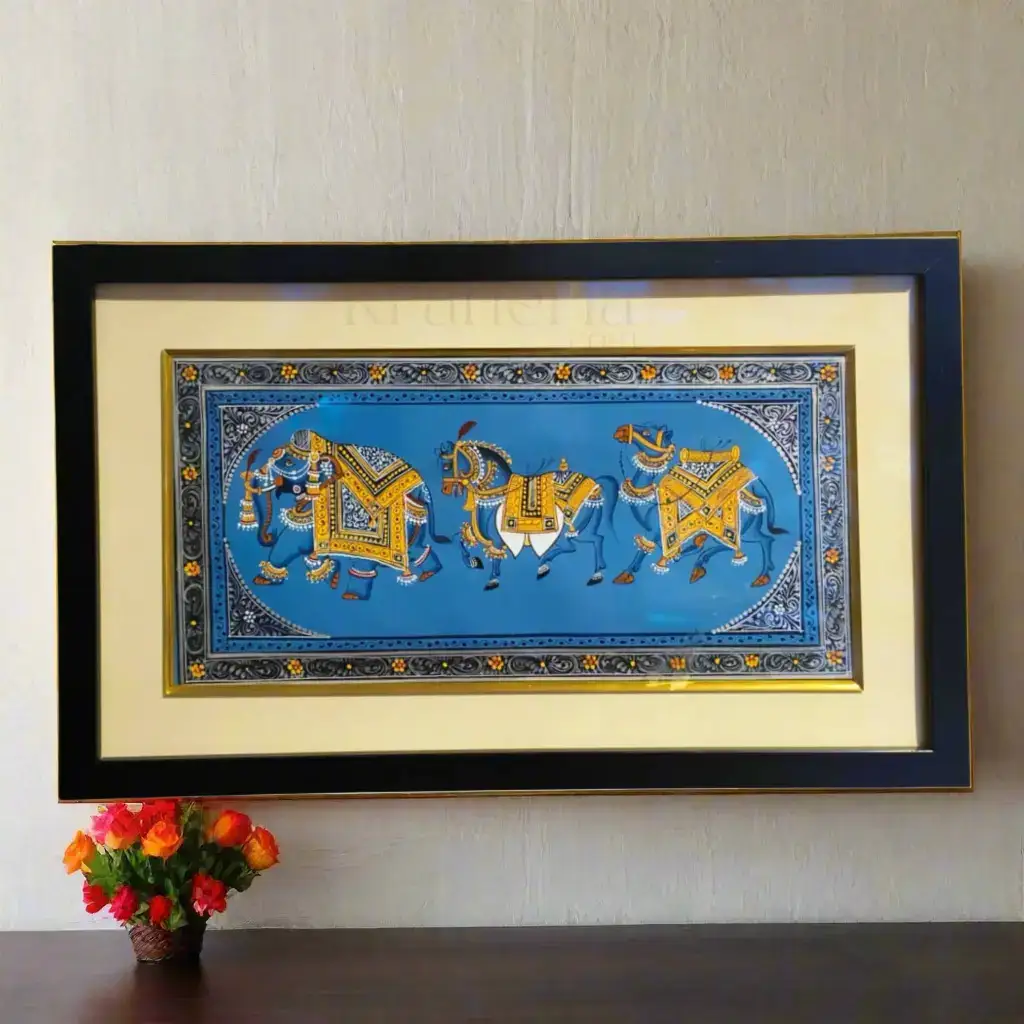
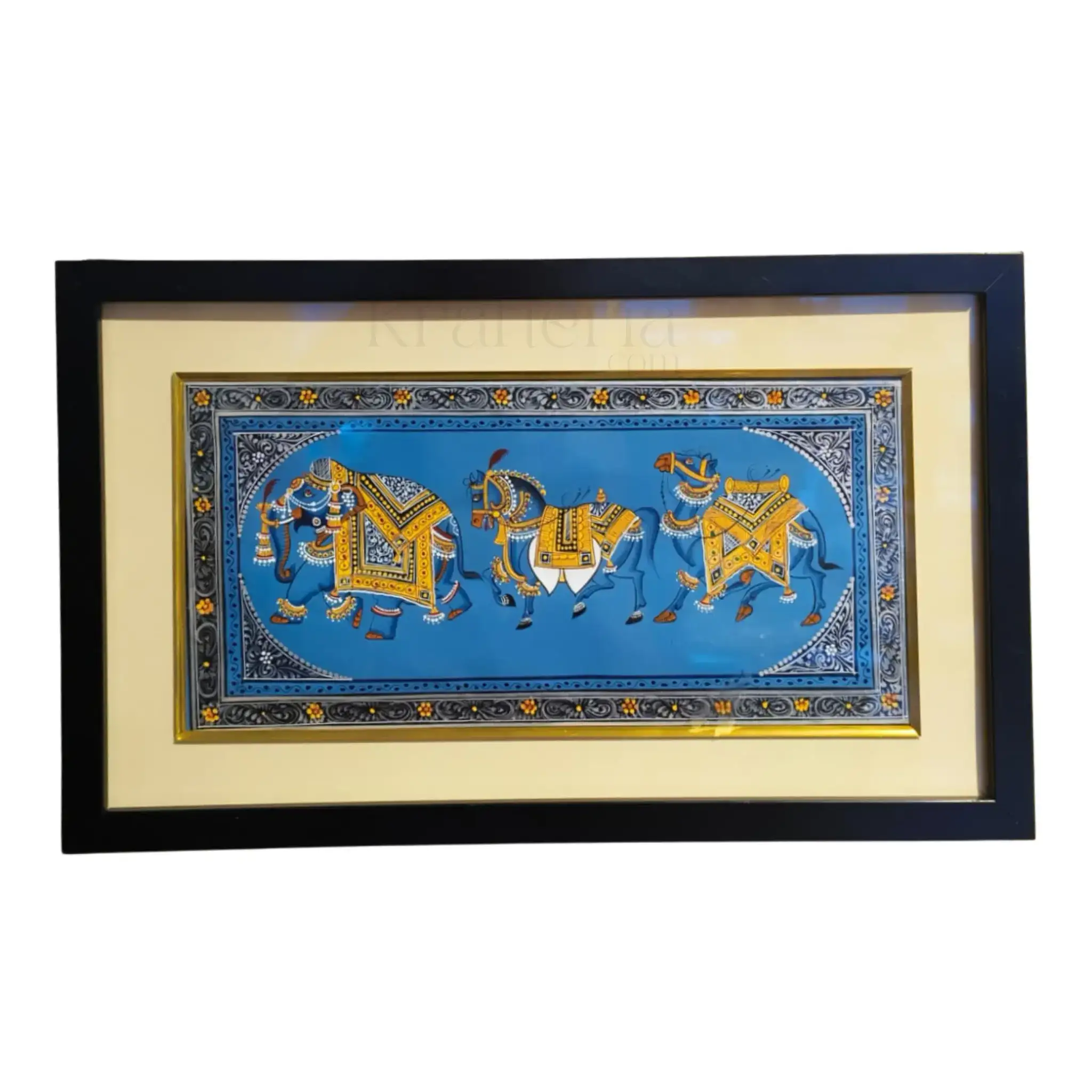
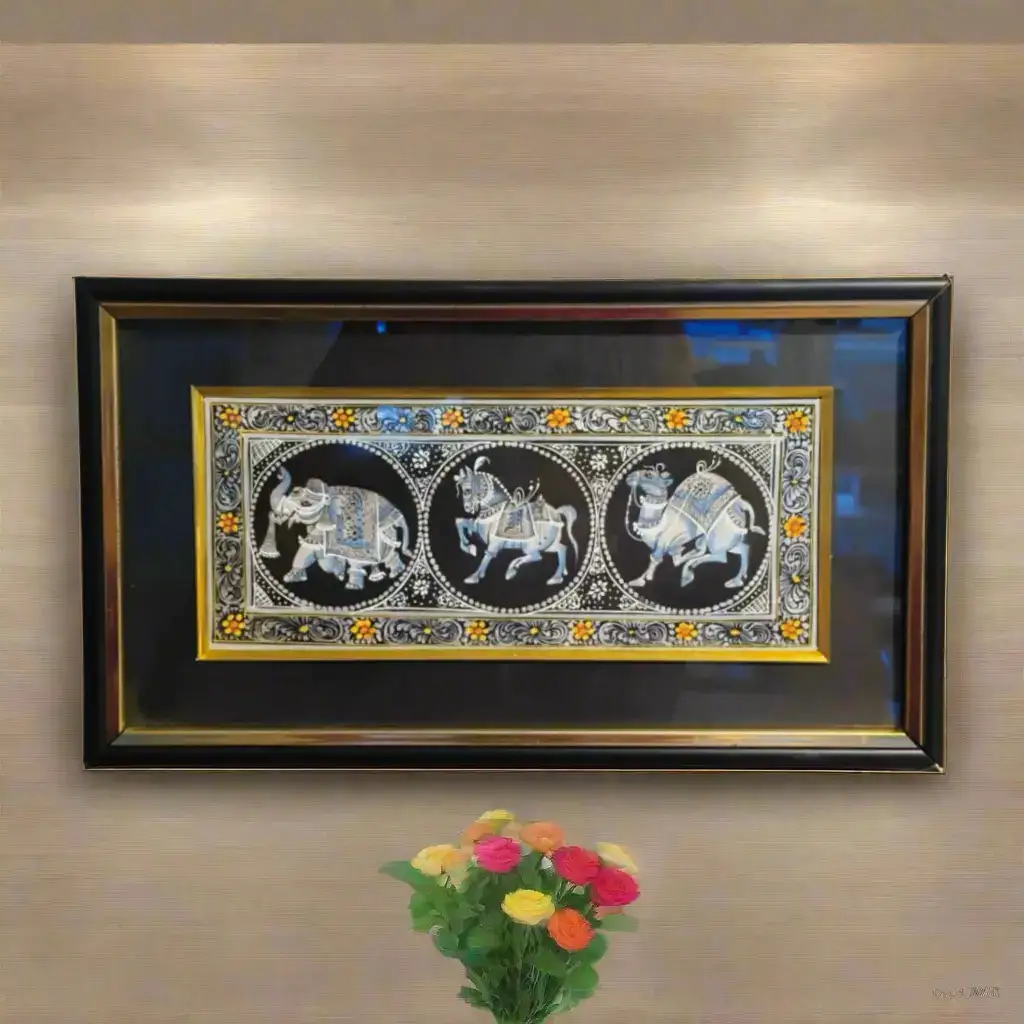
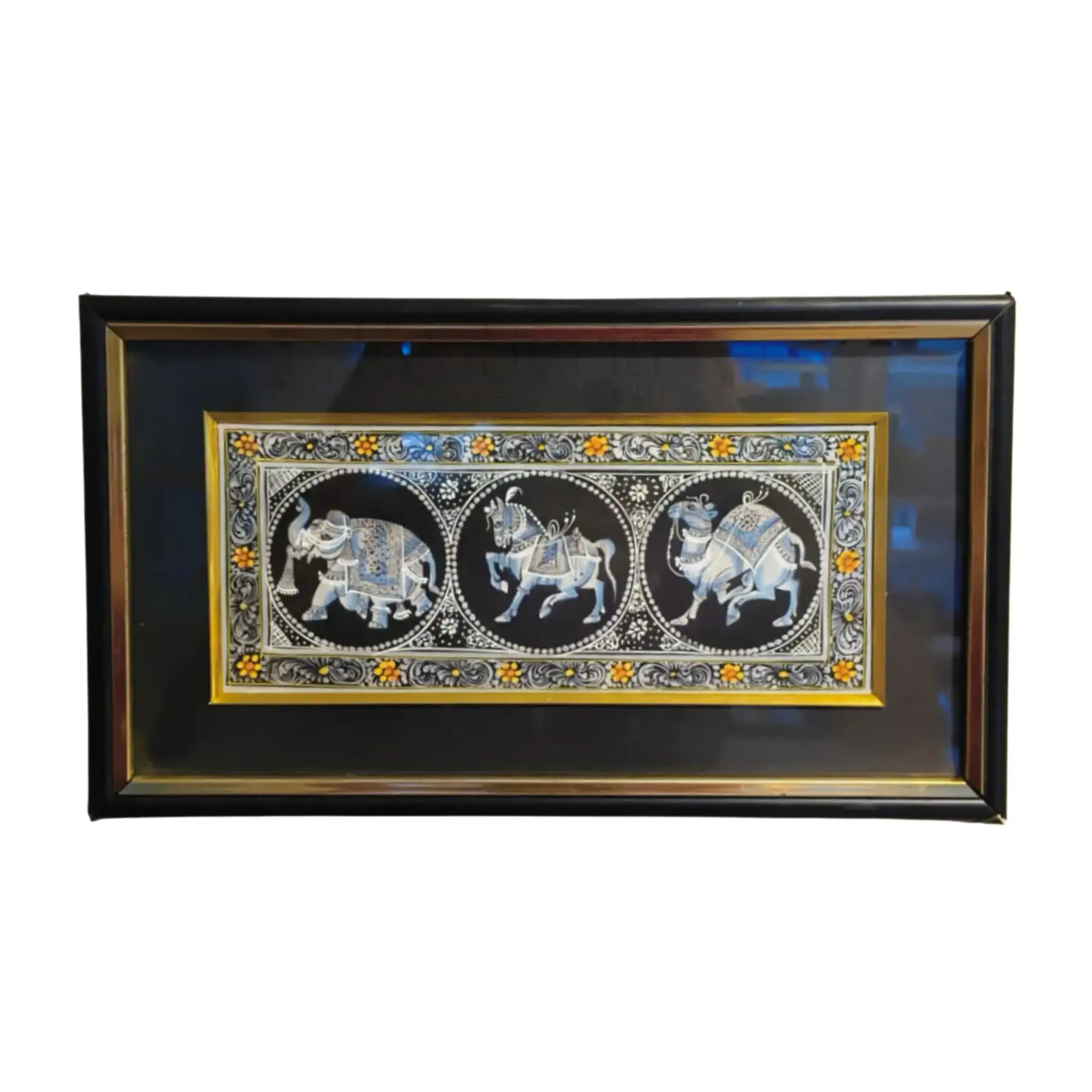
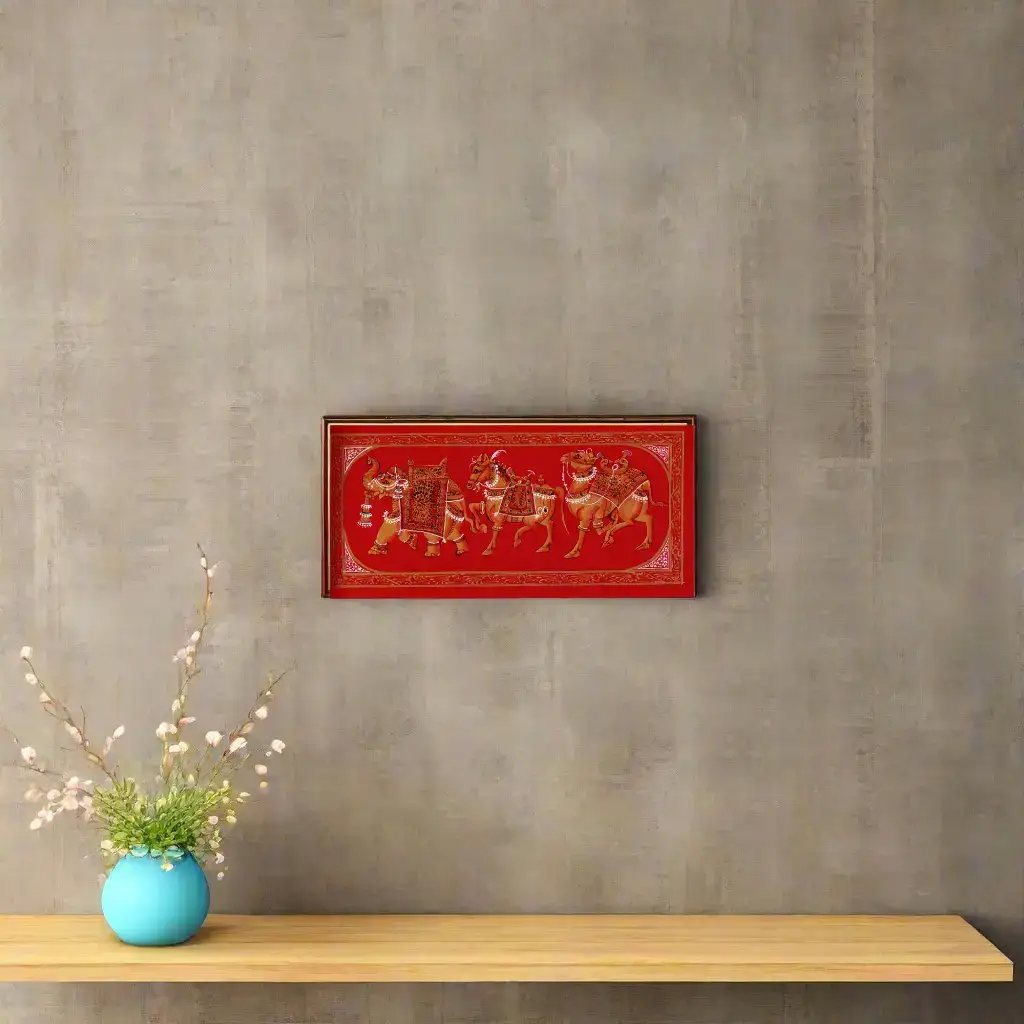
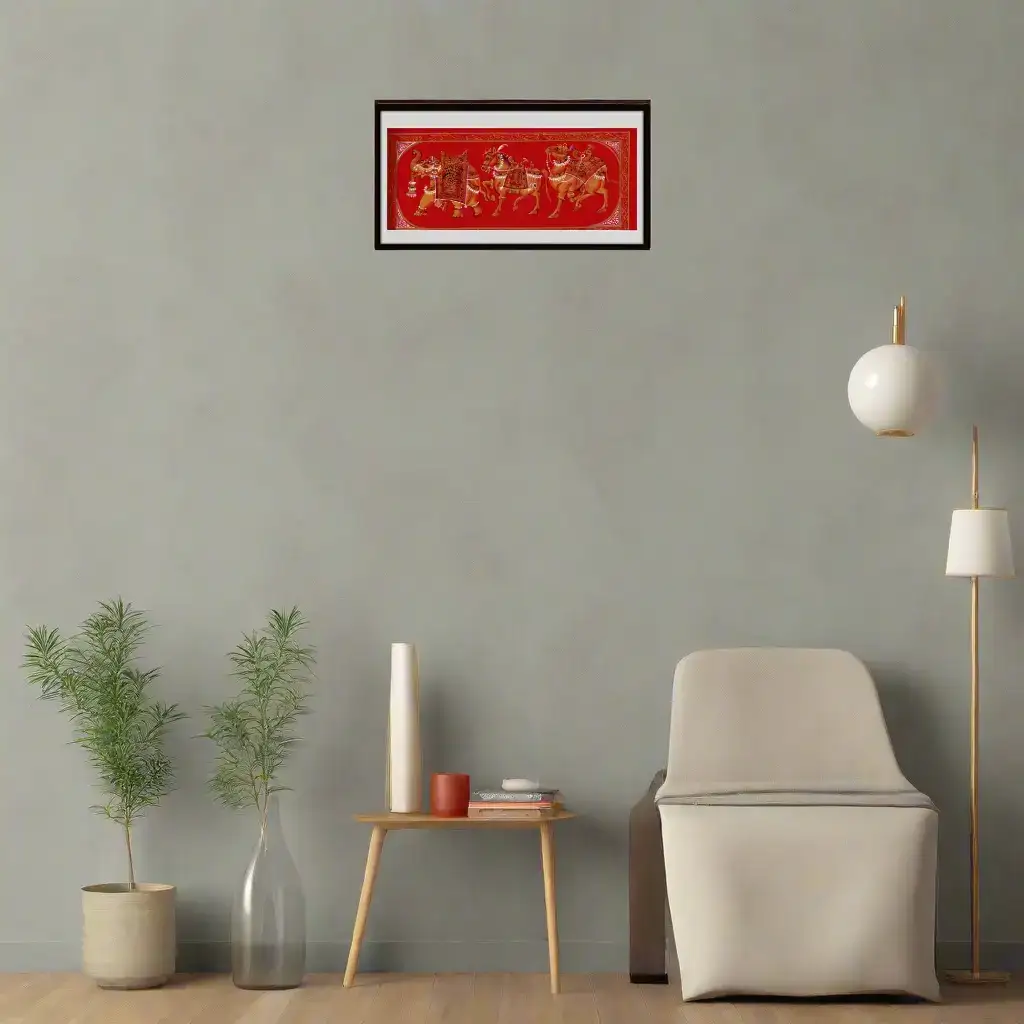
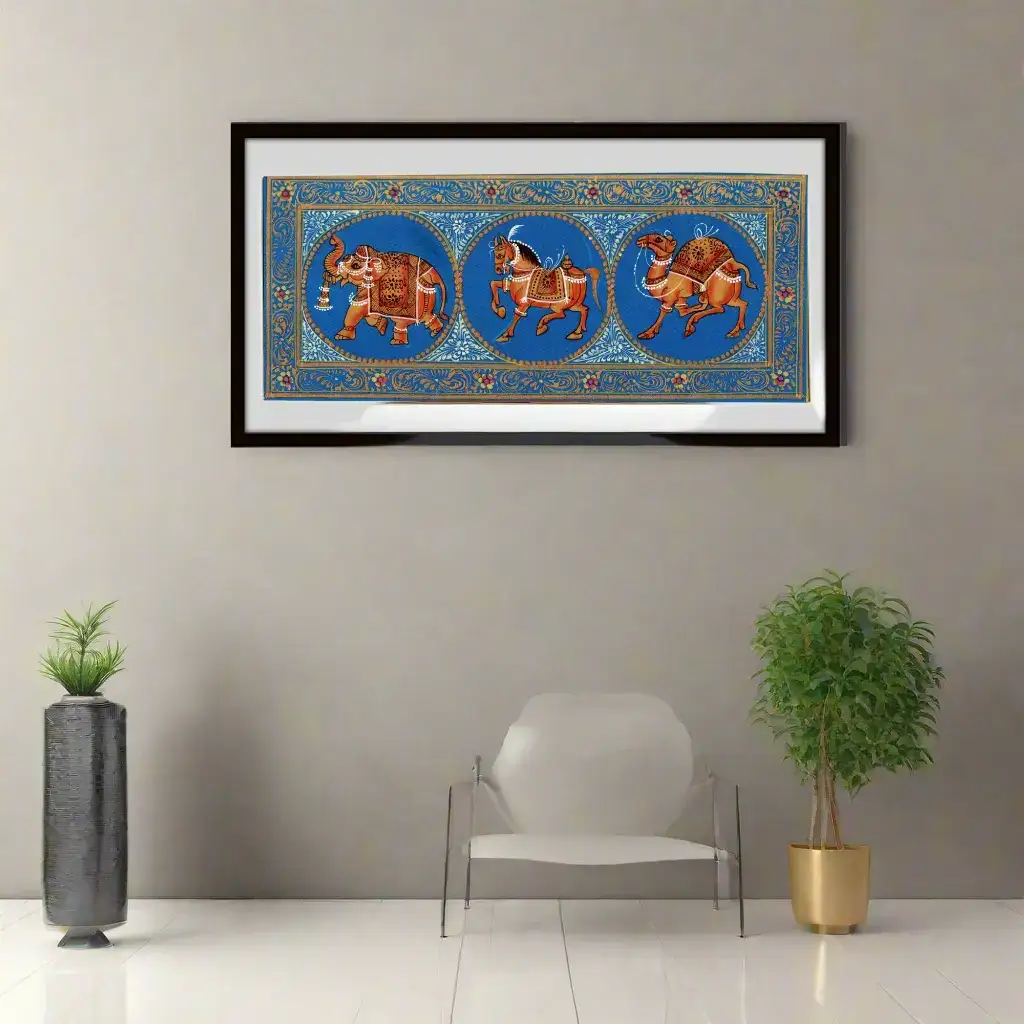
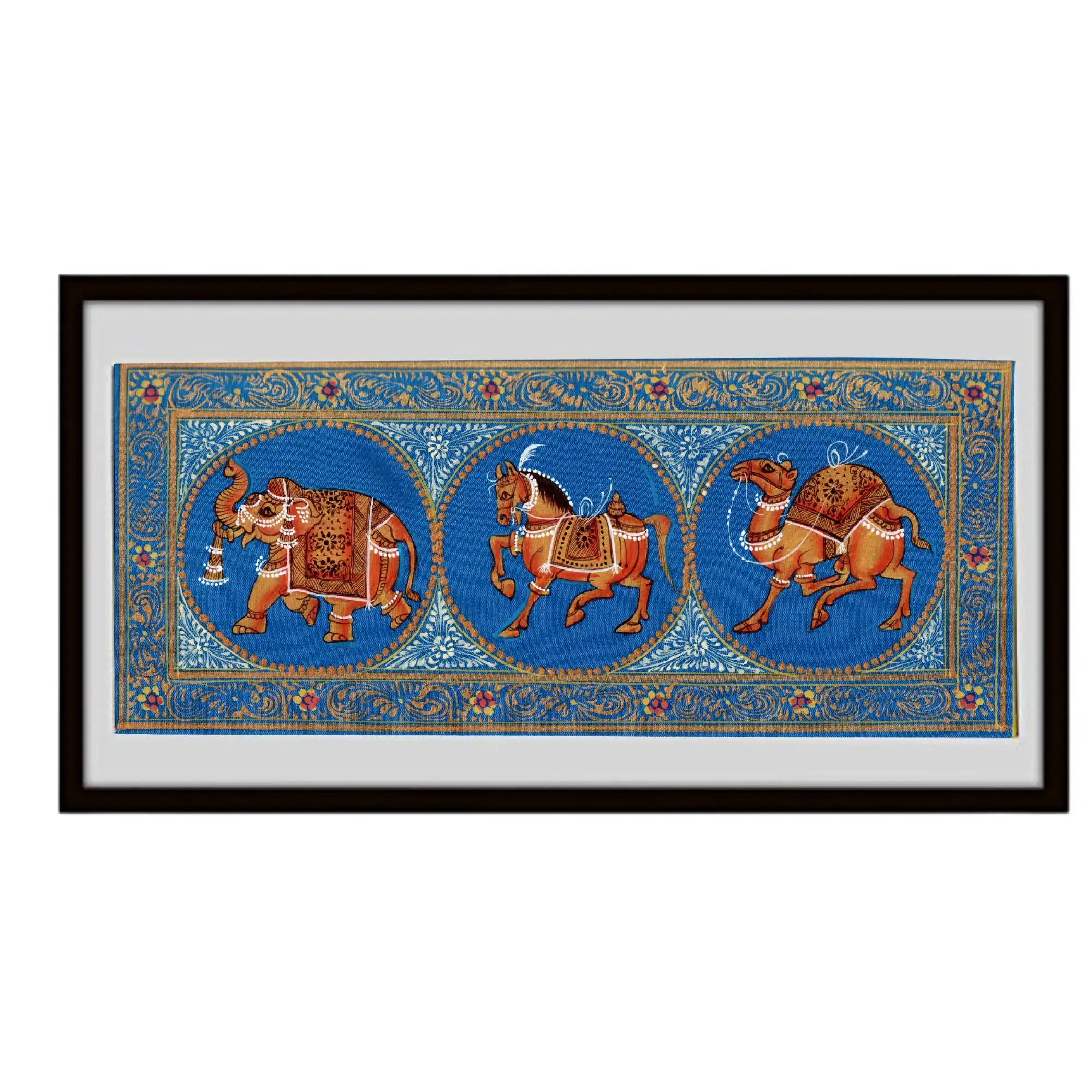
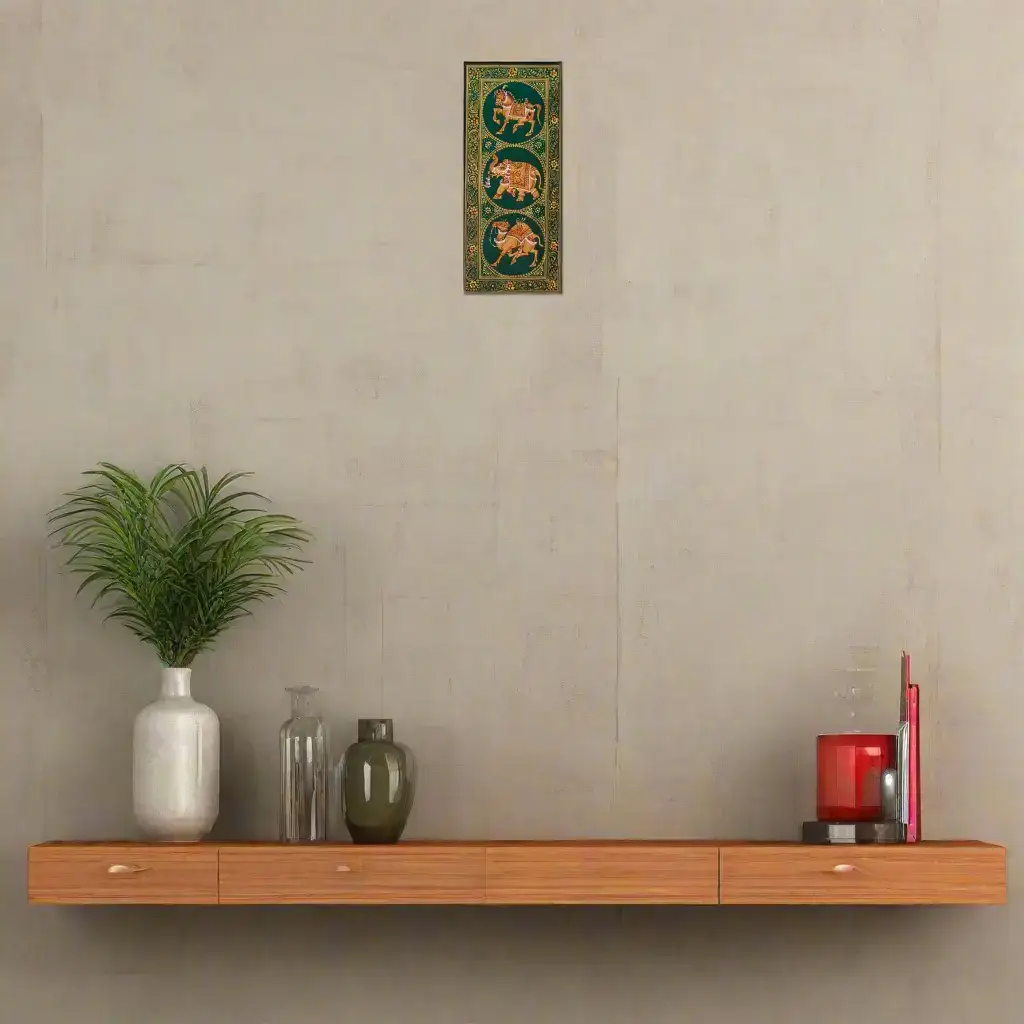
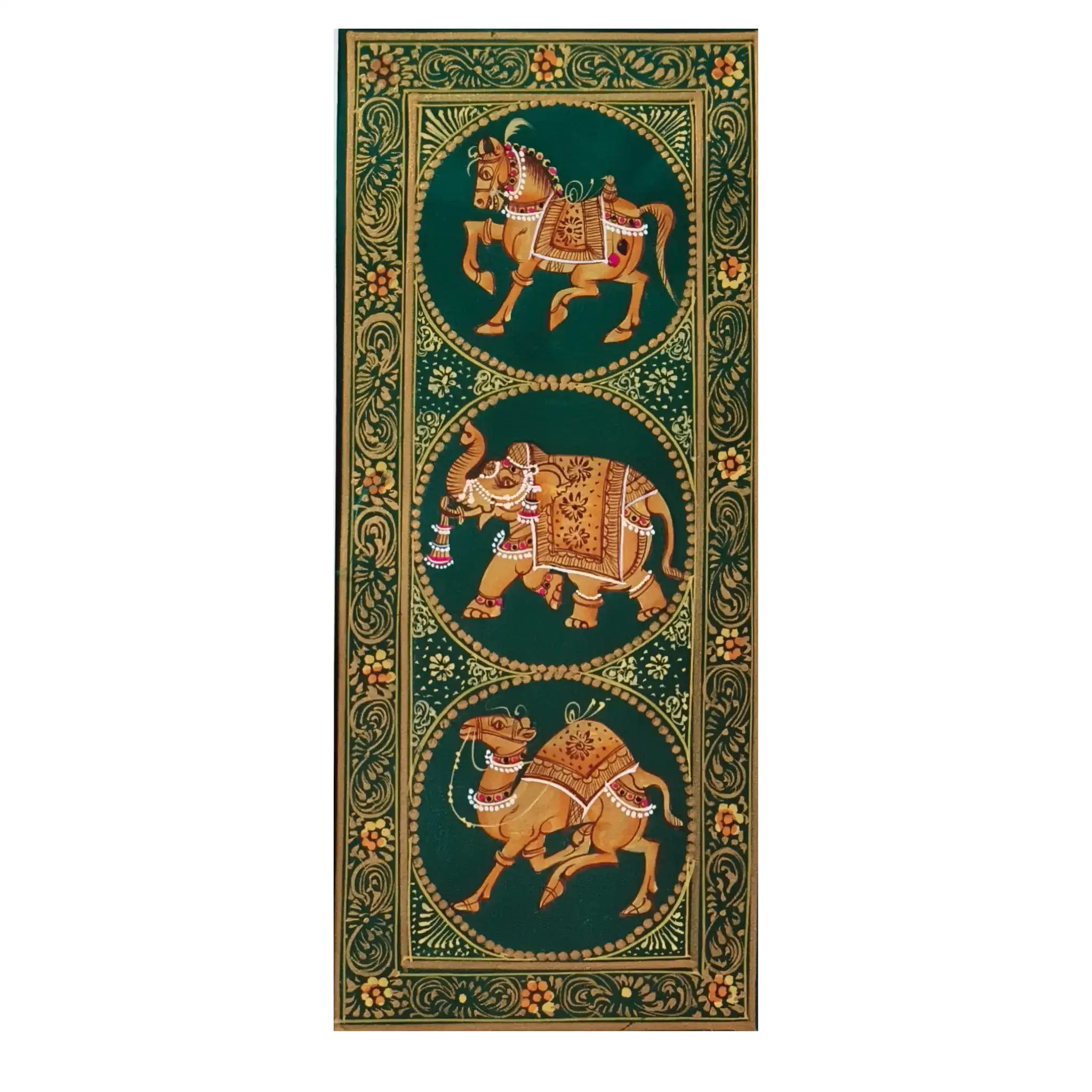
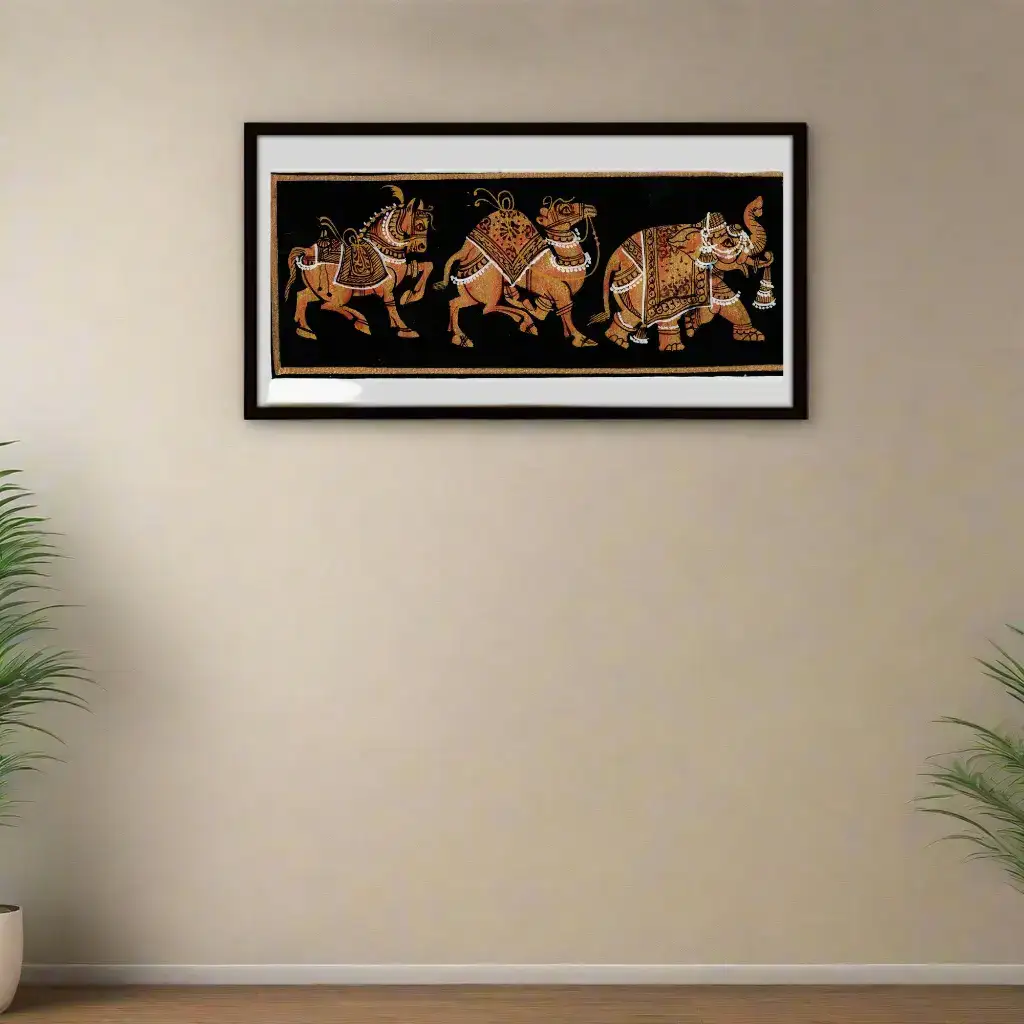
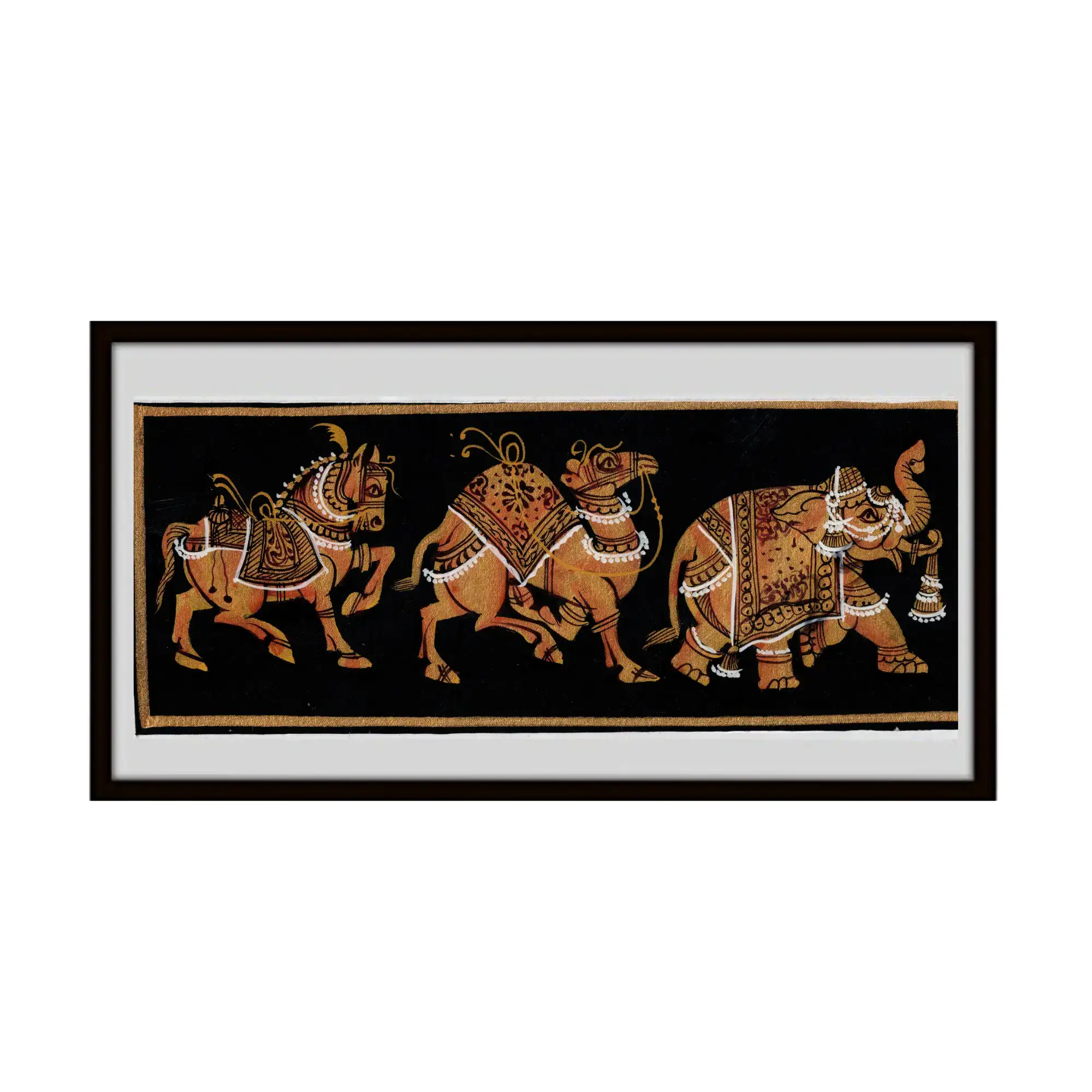
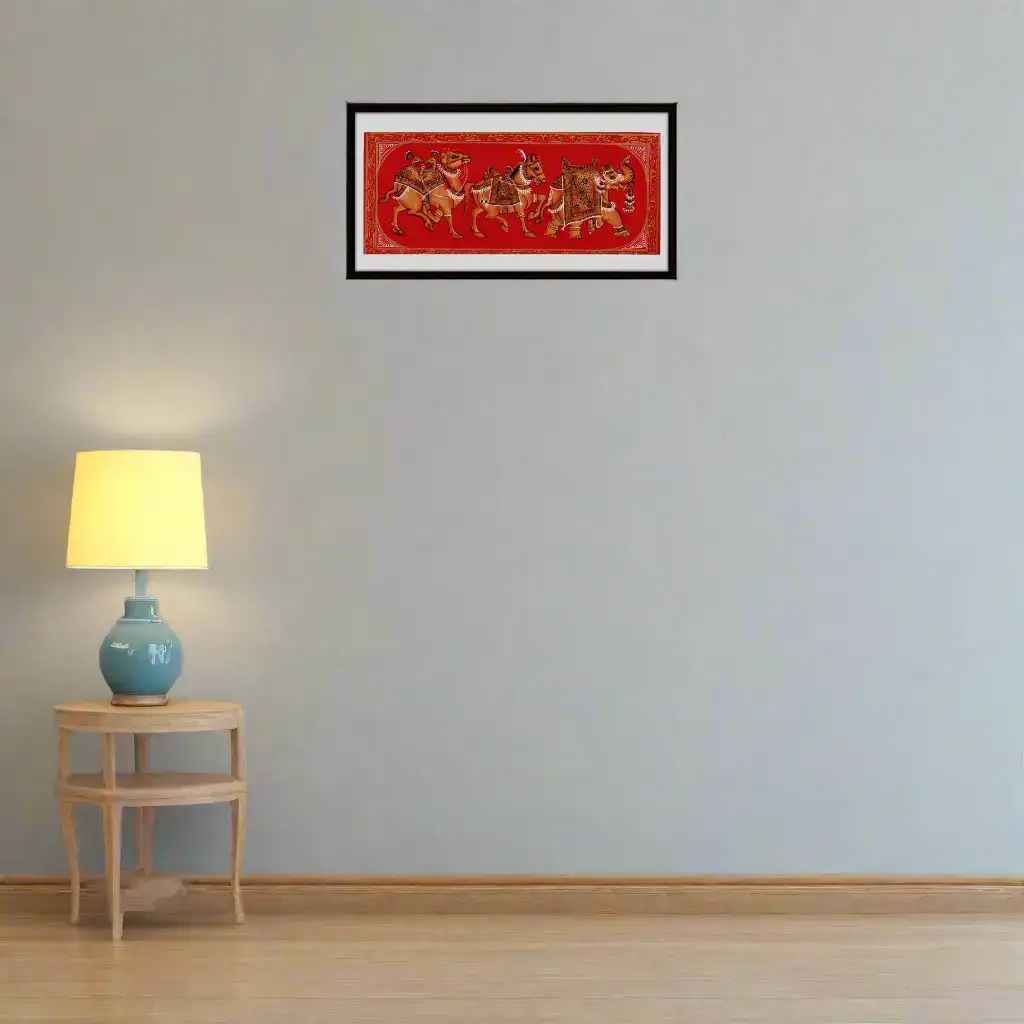
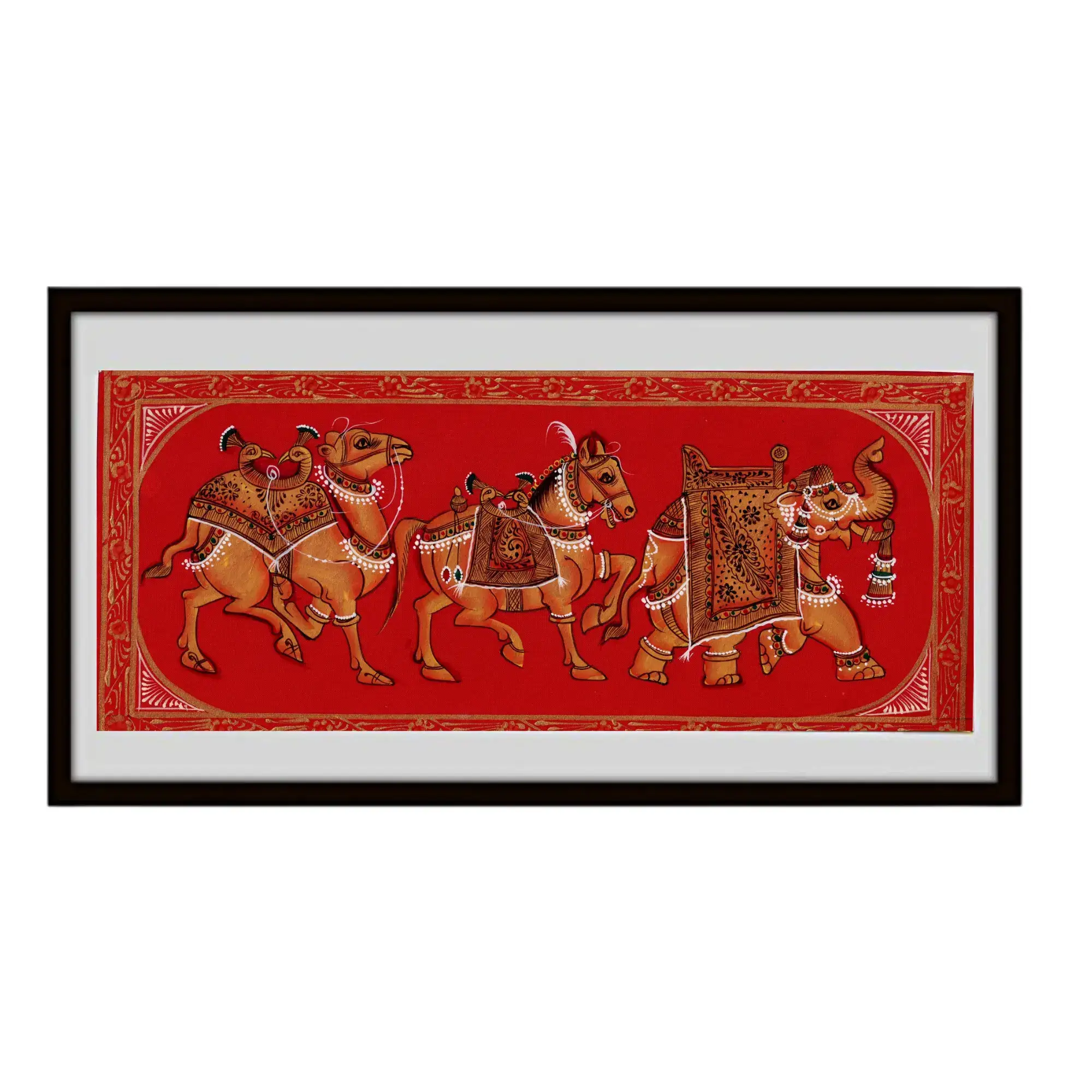
The Golden Steed miniature painting is a fine example of these traditional techniques. It beautifully captures the regal essence of a majestic horse, symbolizing pride and power. This horse artwork stands out due to its intricate depiction and the striking crimson background, which enhances the overall visual impact. Such detailed illustrations showcase the mastery involved in Indian miniature painting and make the piece a prized possession for collectors and art enthusiasts.
Origins and Historical Significance of Rajasthani Miniature Painting
The art of miniature painting in Rajasthan traces back to royal patronage, where artists were commissioned to depict stories from mythology and royal history. Over the centuries, this art evolved into several distinct schools, each with its unique style and theme. The Golden Steed miniature paintings belongs to this rich tradition, reflecting the luxurious lifestyle and ceremonial grandeur of Rajasthan’s royal courts.
These paintings served not only decorative purposes but also documented the cultural and religious heritage of the region. They often portrayed tales of valor, romance, and divine intervention, making painting a visual storytelling tradition. The Rajasthani horse miniature, such as the Golden Steed, symbolizes nobility, strength, and loyalty, all key attributes in royal symbolism.
Distinct Schools of Crimson Court Painting
This art form is divided into several prominent schools including Mewar, Marwar, Bundi, Kota, Kishangarh, Bikaner, and Jaipur. Each school has its unique style, subject matter, and color palette. These variations represent the diverse cultural influences and artistic innovations that flourished in Rajasthan’s royal courts.
- Mewar: Known for court scenes, religious themes, and heroic tales.
- Marwar: Characterized by bold lines and vibrant colors.
- Bundi and Kota: Renowned for lush landscapes and hunting scenes.
- Kishangarh: Famous for romantic depictions of Radha and Krishna, including the iconic Bani Thani image.
- Bikaner and Jaipur: Known for intricate detailing and ornamental borders.
The Golden Steed miniature exemplifies influences from various schools, blending themes of nature and courtly splendor. The artist has infused the horse artwork with fine detailing and vibrant tones, making it a captivating piece that honors Rajasthan’s miniature legacy.
Materials and Techniques Behind the Miniature artwork
The creation of these miniature art involves a meticulous process using handmade Wasli paper. Artisans apply natural pigments sourced from minerals, vegetables, and precious stones. This careful selection of materials contributes to the durability and brilliance of the artwork.
Gold accents are often added to highlight aspects of the composition, enhancing the regal look. The Golden Steed miniature art features such gold detailing, which complements the crimson color scheme beautifully. This traditional approach connects contemporary viewers with centuries-old artistic heritage.
The Symbolism of Colors and Motifs in the Golden Steed Painting
The color palette plays a vital role in conveying meaning in Indian miniature paintings. The prominent use of crimson in this painting symbolizes valor, power, and ceremonial elegance. It is the perfect backdrop for the golden horse, which represents wealth, prosperity, and royal authority.
This Rajasthani horse miniature captures these symbolic elements through its dynamic posing and ornamental border. Together, they exemplify the pride and grandeur associated with the Crimson Court tradition. The horse artwork thus becomes not only a decorative piece but a cultural emblem rich with meaning.
Why Collectors Cherish the Golden Steed Painting
Collectors and art lovers appreciate this painting for its exquisite execution and cultural significance. It offers a glimpse into royal Rajasthan’s art and lifestyle, making it a valuable addition to homes and galleries alike. The Golden Steed painting appeals to those who admire traditional Indian art and seek to preserve this heritage.
Owning such a piece connects people with the history and stories that shaped Rajasthan’s artistic identity. It is a timeless artwork that combines beauty, history, and skilled craftsmanship.
Original: $9.67
-70%$9.67
$2.90Product Information
Product Information
Shipping & Returns
Shipping & Returns
Description
The Golden Steed – Pride of the Crimson Court Miniature Painting
Crimson Court Miniature Painting Rajasthani Painting is a rich and vibrant style of Indian miniature painting that flourished in the royal courts of Rajasthan from the 16th century onwards. This art form is known for its bold lines, bright colors, and detailed craftsmanship. Each piece is a celebration of Indian culture, drawing from mythology, epics, love stories, royal life, and folk culture. The use of natural dyes and pigments, derived from minerals, vegetables, and precious stones, adds a lasting and luminous quality to these works.
The Golden Steed miniature painting is a fine example of these traditional techniques. It beautifully captures the regal essence of a majestic horse, symbolizing pride and power. This horse artwork stands out due to its intricate depiction and the striking crimson background, which enhances the overall visual impact. Such detailed illustrations showcase the mastery involved in Indian miniature painting and make the piece a prized possession for collectors and art enthusiasts.
Origins and Historical Significance of Rajasthani Miniature Painting
The art of miniature painting in Rajasthan traces back to royal patronage, where artists were commissioned to depict stories from mythology and royal history. Over the centuries, this art evolved into several distinct schools, each with its unique style and theme. The Golden Steed miniature paintings belongs to this rich tradition, reflecting the luxurious lifestyle and ceremonial grandeur of Rajasthan’s royal courts.
These paintings served not only decorative purposes but also documented the cultural and religious heritage of the region. They often portrayed tales of valor, romance, and divine intervention, making painting a visual storytelling tradition. The Rajasthani horse miniature, such as the Golden Steed, symbolizes nobility, strength, and loyalty, all key attributes in royal symbolism.
Distinct Schools of Crimson Court Painting
This art form is divided into several prominent schools including Mewar, Marwar, Bundi, Kota, Kishangarh, Bikaner, and Jaipur. Each school has its unique style, subject matter, and color palette. These variations represent the diverse cultural influences and artistic innovations that flourished in Rajasthan’s royal courts.
- Mewar: Known for court scenes, religious themes, and heroic tales.
- Marwar: Characterized by bold lines and vibrant colors.
- Bundi and Kota: Renowned for lush landscapes and hunting scenes.
- Kishangarh: Famous for romantic depictions of Radha and Krishna, including the iconic Bani Thani image.
- Bikaner and Jaipur: Known for intricate detailing and ornamental borders.
The Golden Steed miniature exemplifies influences from various schools, blending themes of nature and courtly splendor. The artist has infused the horse artwork with fine detailing and vibrant tones, making it a captivating piece that honors Rajasthan’s miniature legacy.
Materials and Techniques Behind the Miniature artwork
The creation of these miniature art involves a meticulous process using handmade Wasli paper. Artisans apply natural pigments sourced from minerals, vegetables, and precious stones. This careful selection of materials contributes to the durability and brilliance of the artwork.
Gold accents are often added to highlight aspects of the composition, enhancing the regal look. The Golden Steed miniature art features such gold detailing, which complements the crimson color scheme beautifully. This traditional approach connects contemporary viewers with centuries-old artistic heritage.
The Symbolism of Colors and Motifs in the Golden Steed Painting
The color palette plays a vital role in conveying meaning in Indian miniature paintings. The prominent use of crimson in this painting symbolizes valor, power, and ceremonial elegance. It is the perfect backdrop for the golden horse, which represents wealth, prosperity, and royal authority.
This Rajasthani horse miniature captures these symbolic elements through its dynamic posing and ornamental border. Together, they exemplify the pride and grandeur associated with the Crimson Court tradition. The horse artwork thus becomes not only a decorative piece but a cultural emblem rich with meaning.
Why Collectors Cherish the Golden Steed Painting
Collectors and art lovers appreciate this painting for its exquisite execution and cultural significance. It offers a glimpse into royal Rajasthan’s art and lifestyle, making it a valuable addition to homes and galleries alike. The Golden Steed painting appeals to those who admire traditional Indian art and seek to preserve this heritage.
Owning such a piece connects people with the history and stories that shaped Rajasthan’s artistic identity. It is a timeless artwork that combines beauty, history, and skilled craftsmanship.