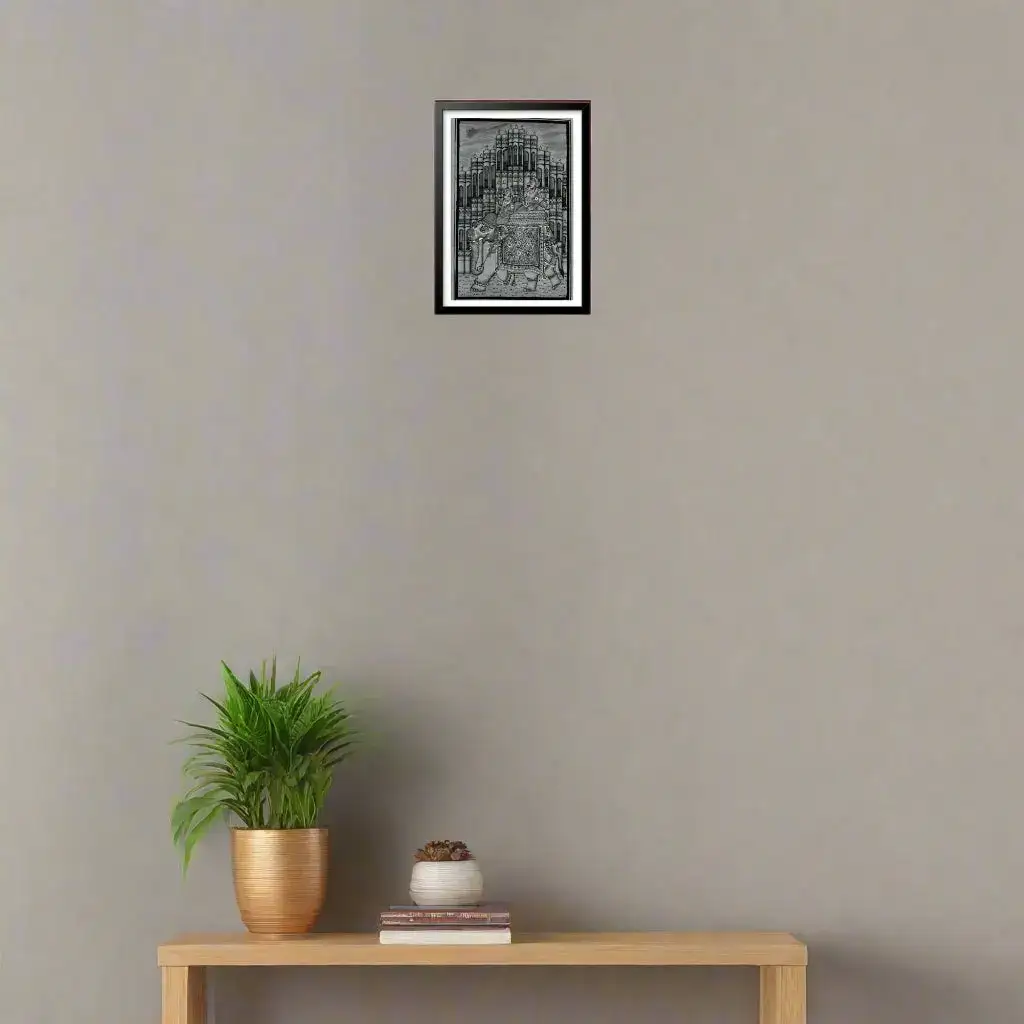
Royal Procession on an Elephant - Indian Miniature Painting in Black and White
Royal Procession on an Elephant - Indian Miniature Painting in Black and White
Miniature Painting in Black and White Rajasthani Painting is a rich and vibrant style of Indian miniature painting. It flourished in the royal courts of Rajasthan from the 16th century onwards. Deeply rooted in Indian traditions, this art form portrays themes of mythology, epics, love stories, royal life, and folk culture. The paintings are renowned for their bold lines, bright colors, and intricate detailing. Traditional artists use natural dyes and pigments made from minerals, vegetables, and precious stones. These materials give the artwork a lasting and luminous quality that stands the test of time.Elephant Miniature Painting.
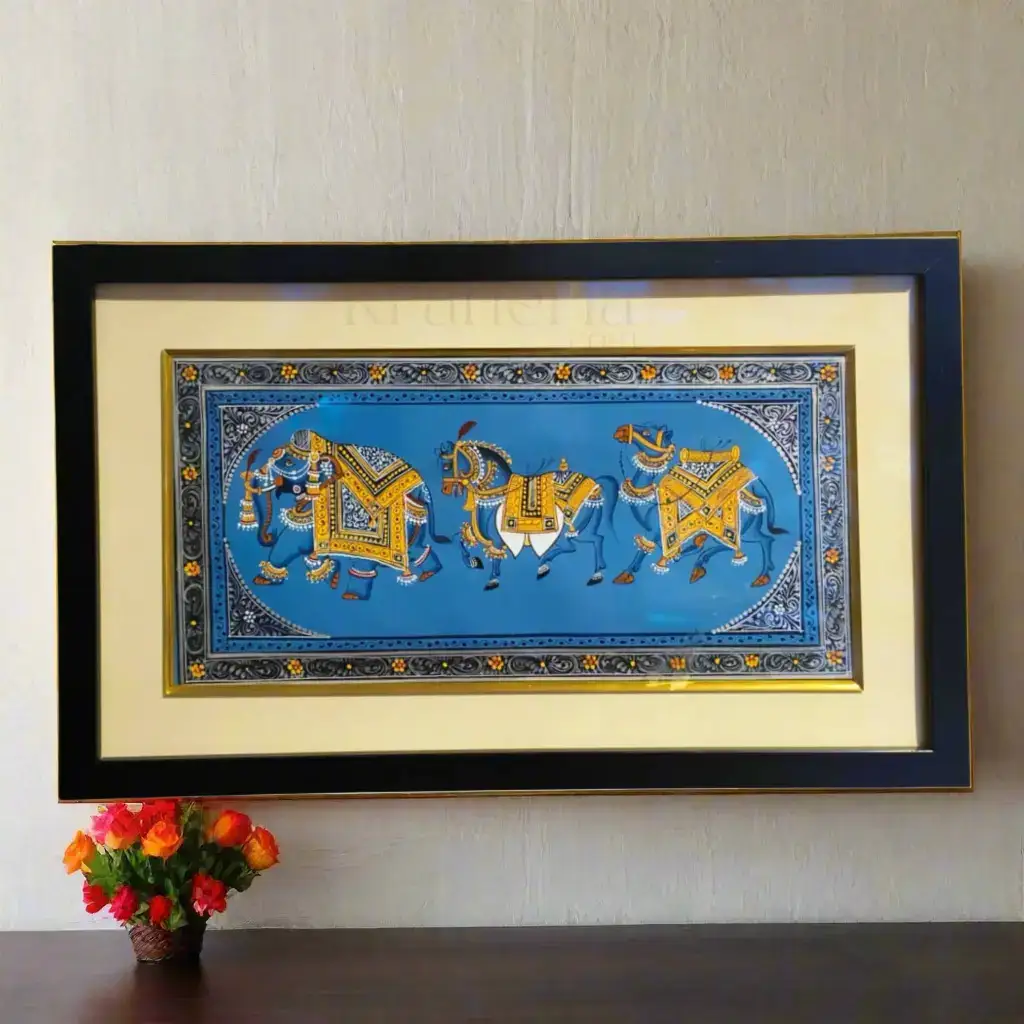
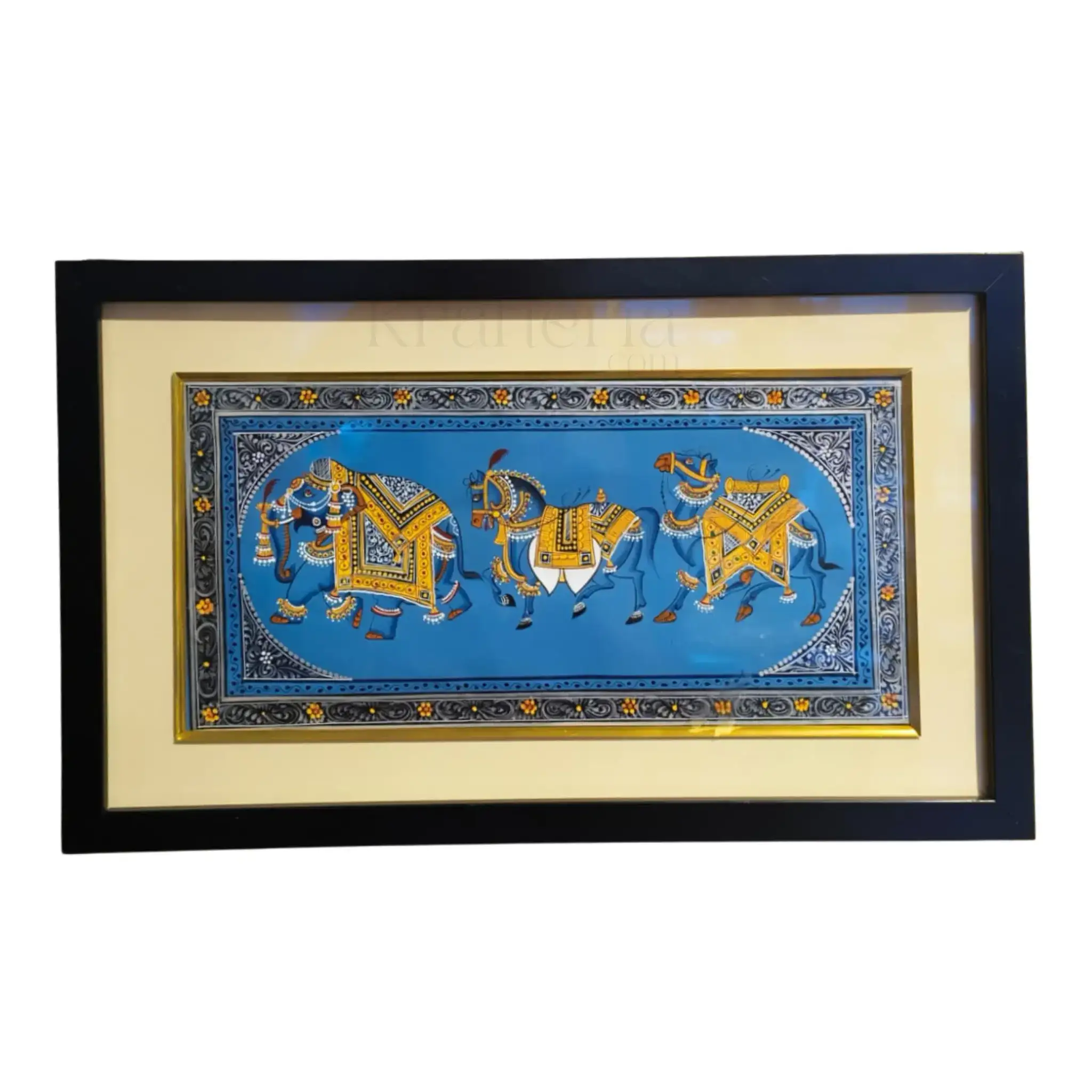
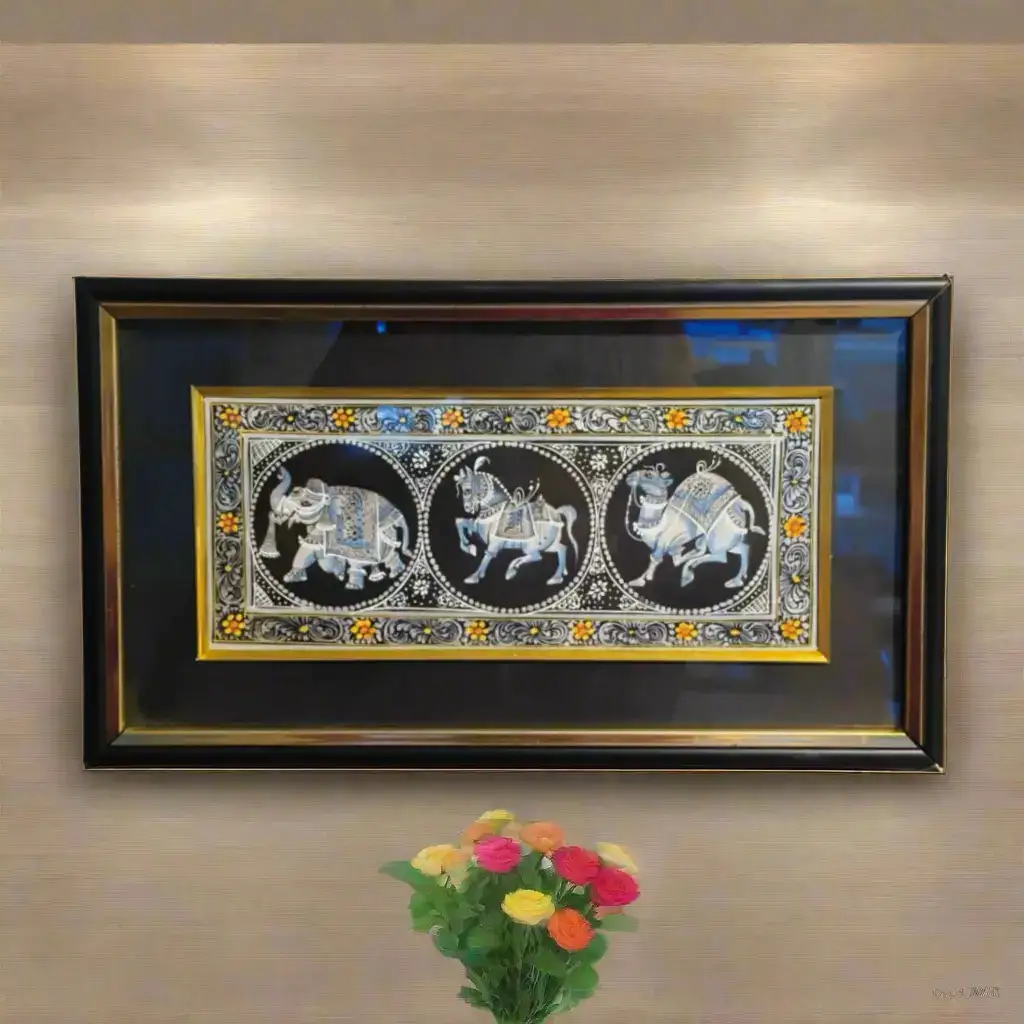
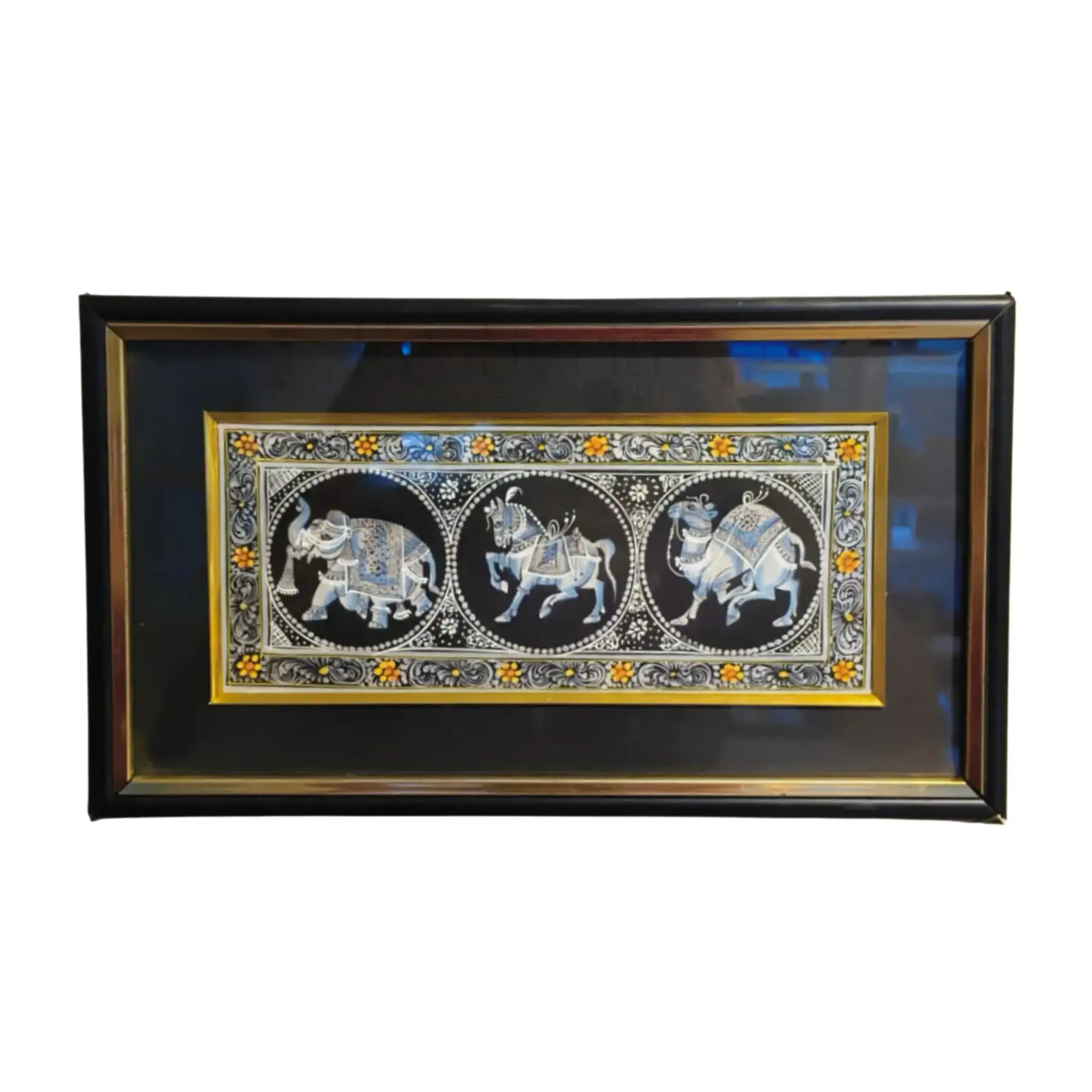
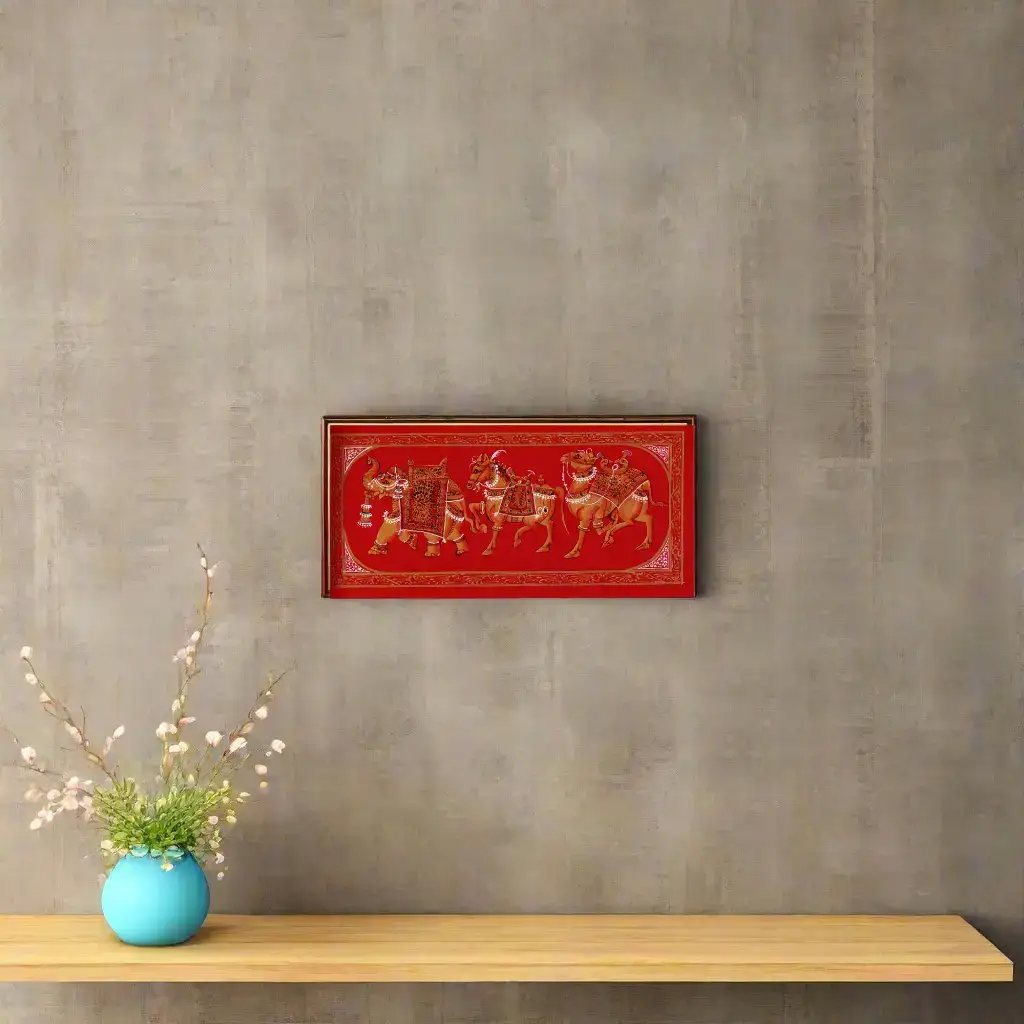
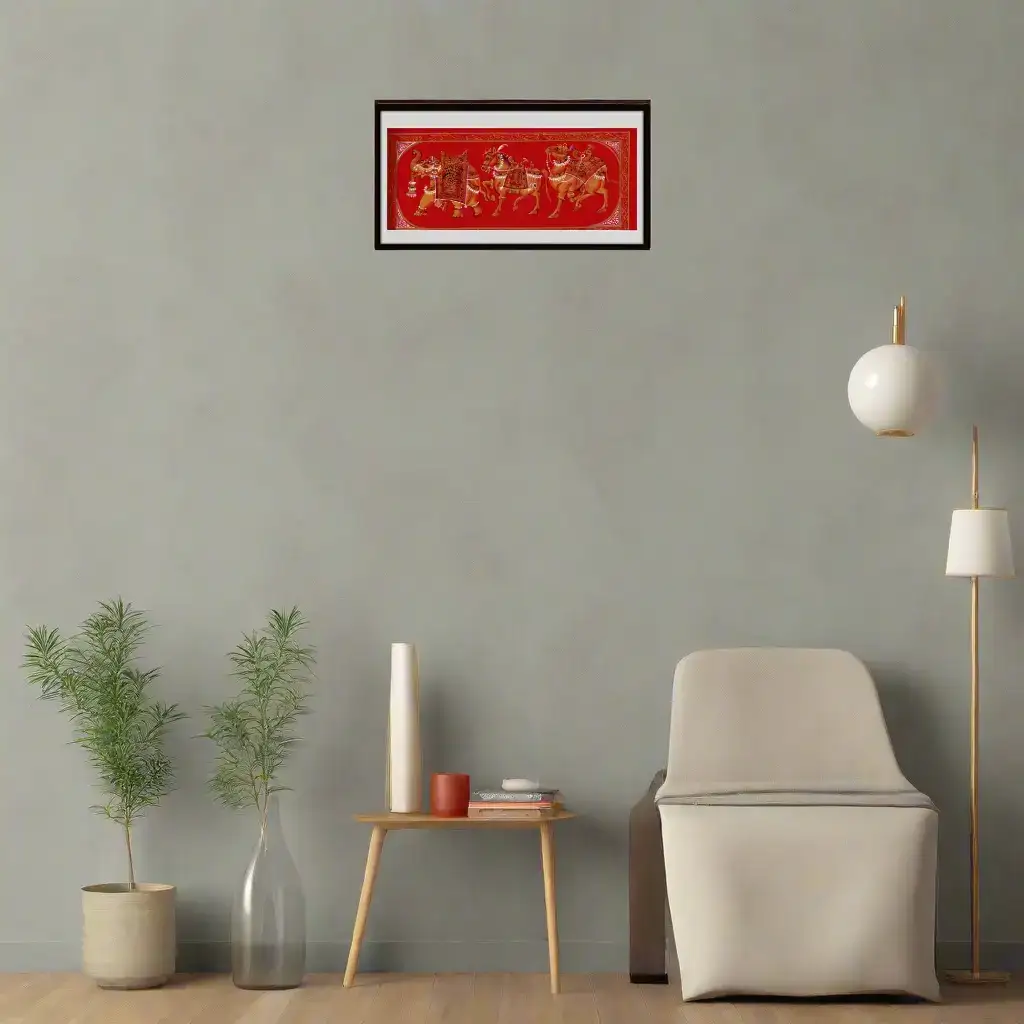
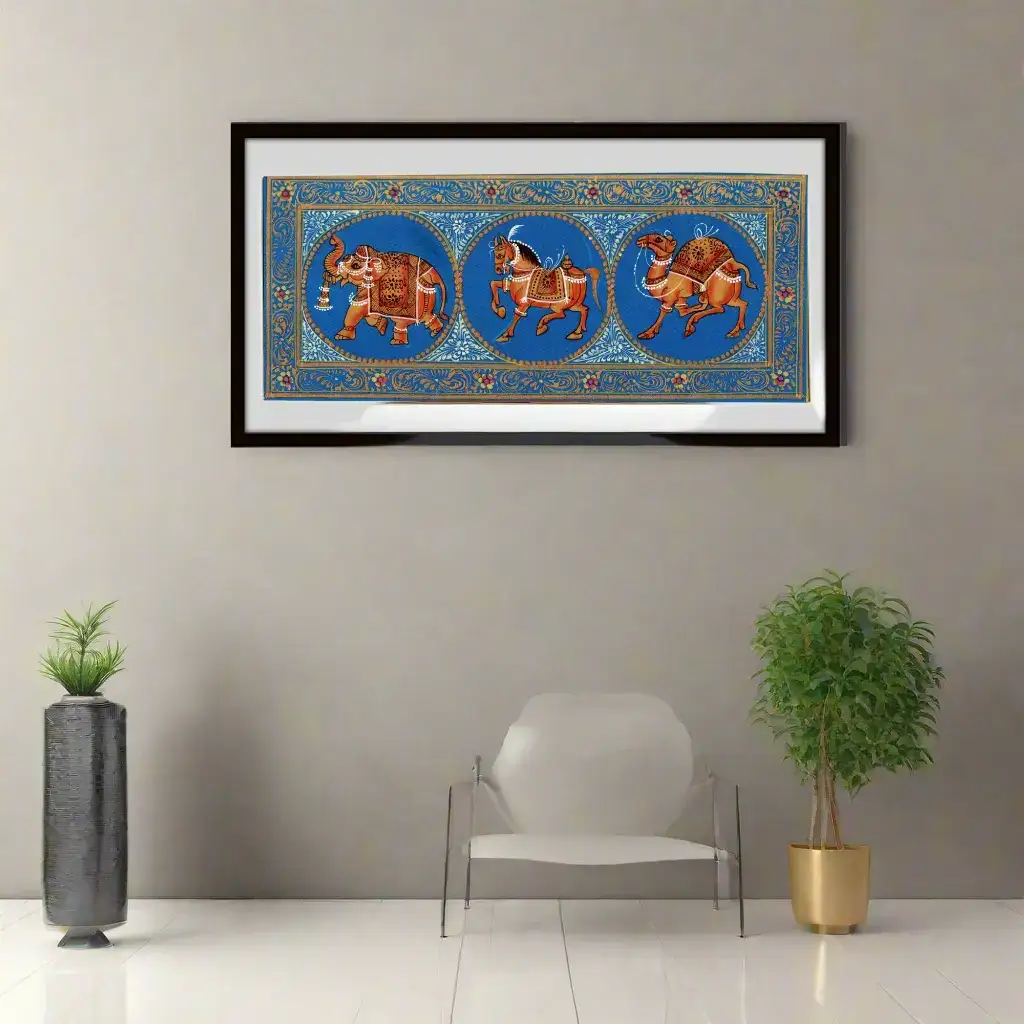
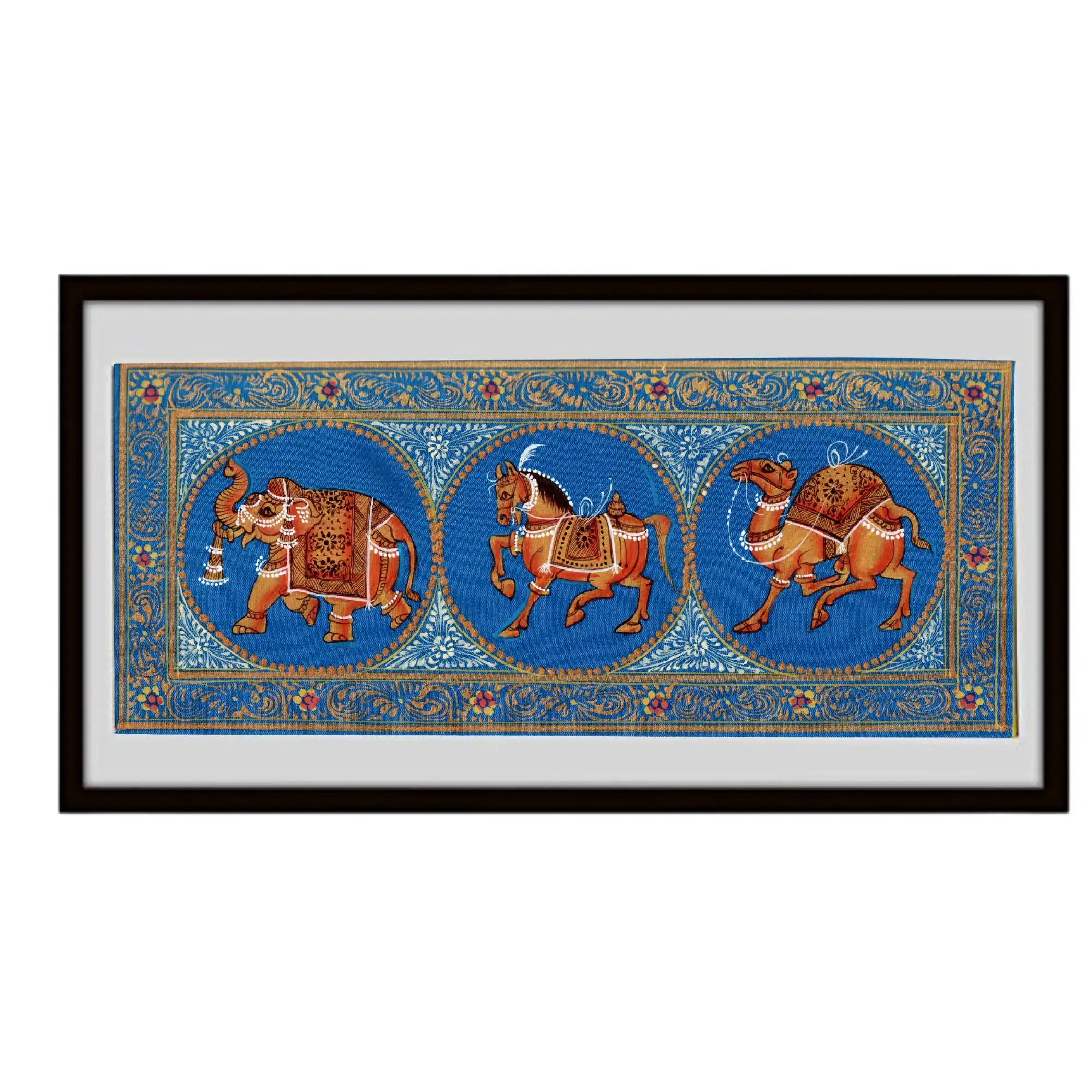
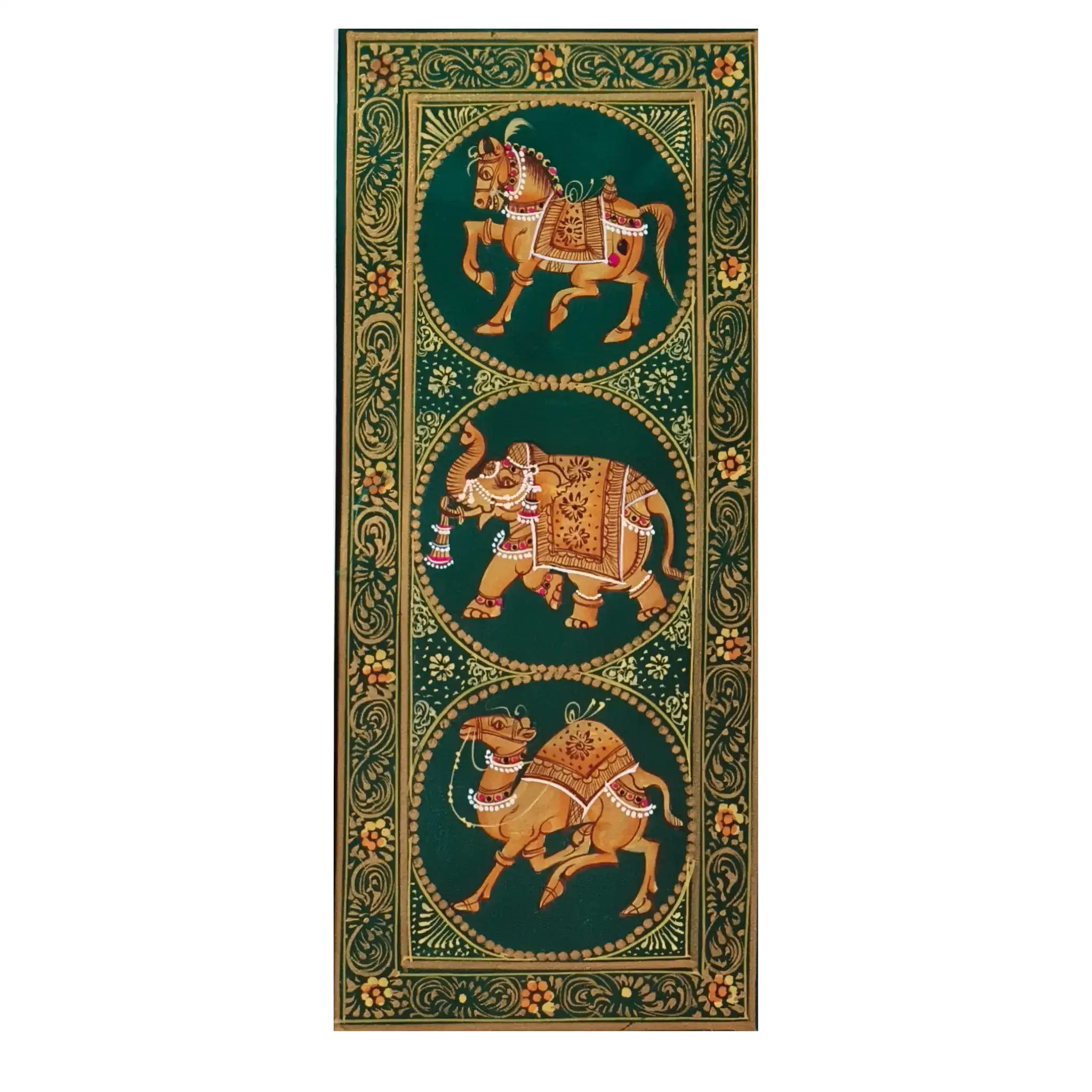
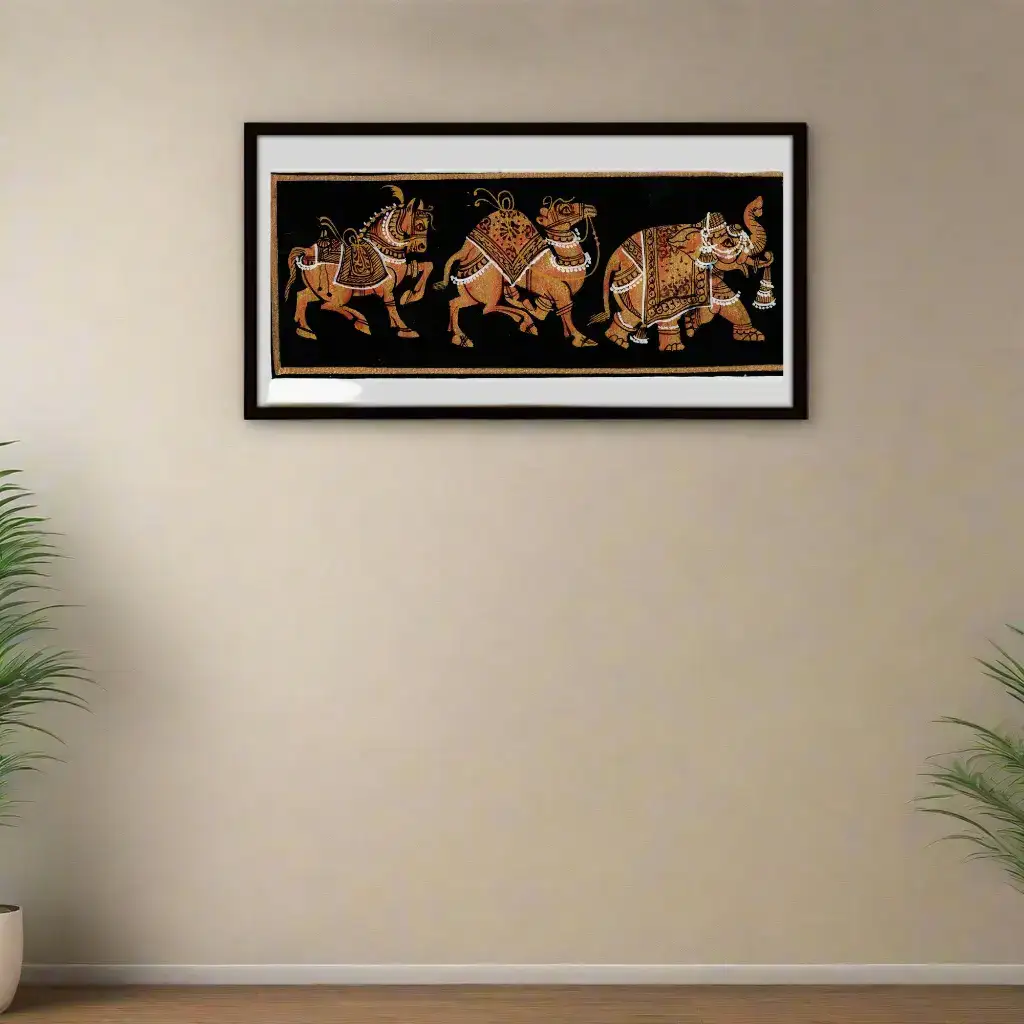
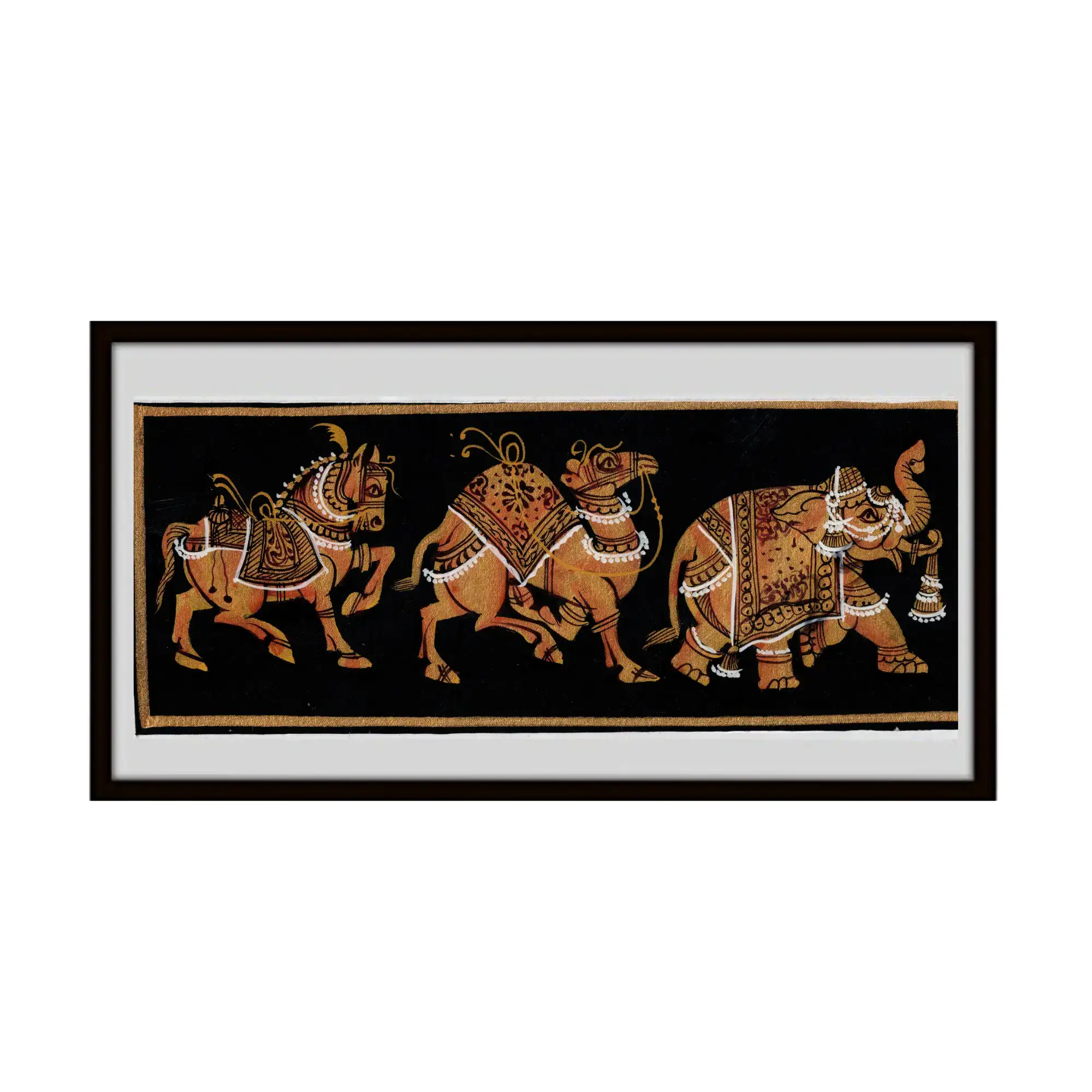
This particular elephant miniature painting showcases a royal procession, symbolizing grandeur and cultural heritage. The majestic elephant represents power and authority in Indian tradition. Rendered in black and white, this piece highlights line work and fine detailing, focusing the viewer's attention on form and narrative over color. The monochrome palette adds a timeless elegance to the composition, exemplifying the beauty of Black and white miniature painting from Rajasthan.
Distinct Schools of Rajasthani Miniature Painting
The art form of Rajasthani miniature painting is divided into several prominent schools. These include Mewar, Marwar, Bundi, Kota, Kishangarh, Bikaner, and Jaipur. Each school offers a unique style and thematic focus. For example, the Kishangarh style is well known for its romantic and delicate portrayal of Radha and Krishna. The iconic image of Bani Thani is one of Kashmir's notable achievements in miniature art.
Mewar paintings often depict elaborate court scenes, heroic tales, and religious themes. In contrast, Bundi and Kota paintings are celebrated for their lush landscapes and dynamic hunting scenes. This rich variety allows collectors and art lovers to appreciate the diverse cultural tapestry within the genre. This elephant miniature painting ties in beautifully with such traditions, offering a detailed glimpse into royal life and ceremonies.
Elephant Royal Procession Artwork India: Symbolism and Significance
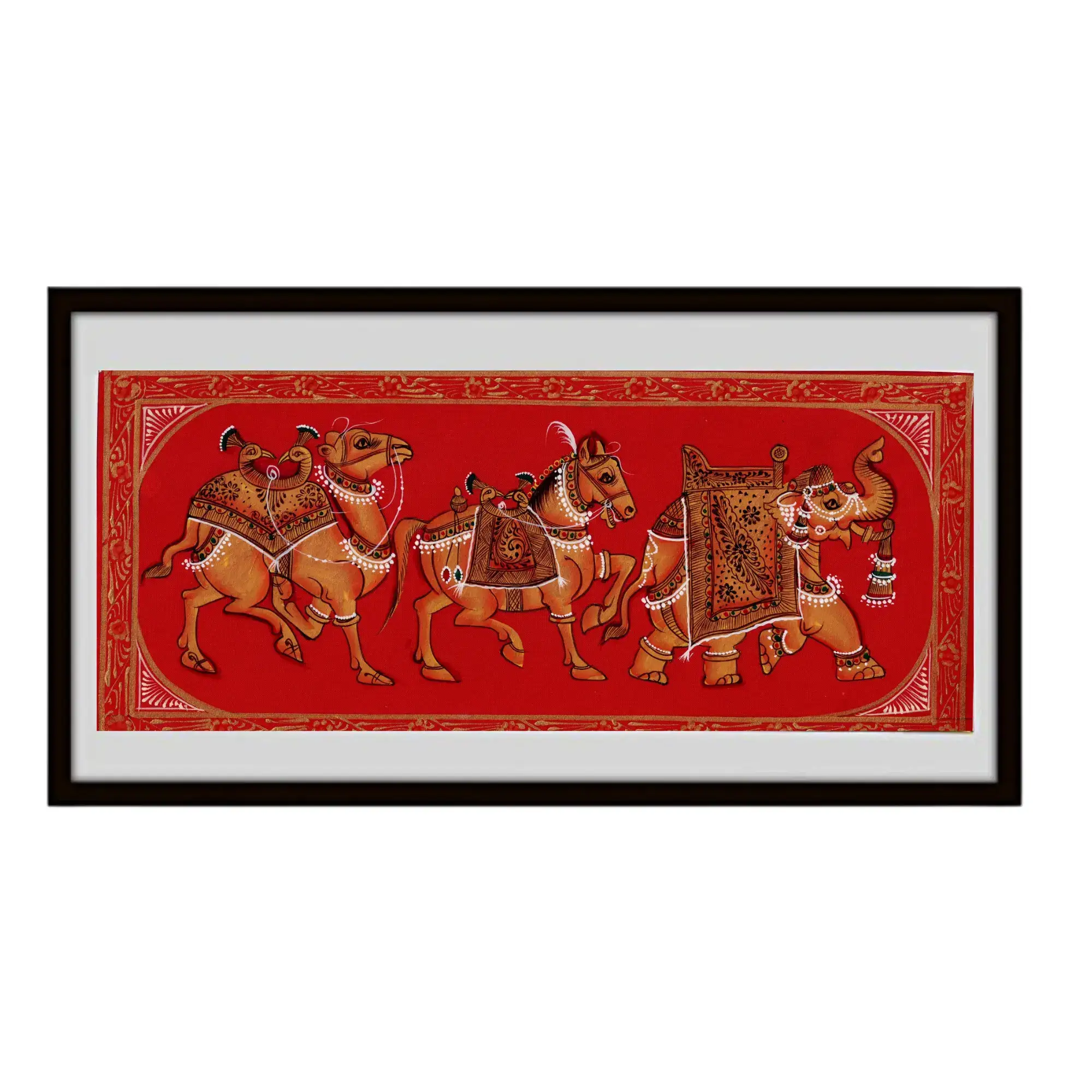
Elephants hold a revered place in Indian culture. They symbolize royalty, strength, and ceremonial importance. This Elephant royal procession artwork India captures the elephant as a central figure in a grand parade. The intricate patterns and decorations on the elephant highlight the painstaking craftsmanship involved in miniature painting.
The artwork portrays the solemnity and splendor of a royal procession, celebrating India's heritage. Seen in many historical contexts, elephants were vital to kings and nobles during celebrations and battles. Their representation in miniature paintings elevates the status of such art pieces, connecting them to India’s rich history.
Elephant Miniature Painting: Technique and Style
This piece is a fine example of traditional Indian miniature painting techniques adapted to a black and white scheme. The artist skillfully uses fine brushes to create crisp, bold lines that emphasize the intricate details of the elephant and the royal procession. Every stroke is deliberate, showcasing the delicate balance between form and storytelling.
The elephant miniature painting style allows for ornate patterns on textiles, jewelry, and architectural elements to be highlighted with exceptional clarity. Using natural inks and pigments ensures that the artwork retains its vibrancy and durability. The monochromatic approach allows the viewer to focus on the spiritual and cultural symbolism embedded within the scene.
Contextual Themes in Rajasthani Royal Procession Miniature
This painting connects with the larger tradition of Rajasthani royal procession miniature art, which centers on celebratory events in royal life. Such paintings often feature figures dressed in royal attire, sumptuous landscapes, and symbolic animals like the elephant. The emphasis is on narrative depth and expressive detail.
As an artifact, the painting offers insight into the ceremonial roles elephants played in India’s history. It also serves as a cultural document, preserving the aesthetics and values of the time. The piece is perfect for heritage decor enthusiasts and collectors of fine Indian art. It reflects both artistic excellence and rich cultural storytelling.
The Beauty of Elephant Ceremonial Procession Art
Elephant ceremonial procession art occupies a special place in Indian miniature paintings. The ceremonial importance of elephants makes them highly favored subjects. This artwork’s black and white style heightens the dramatic effect of the scene, highlighting the elephant’s grandeur and the elaborate regalia it carries.
Through this focused depiction, the painting captures a harmonious blend of tradition, ritual, and artistic mastery. It invites viewers to appreciate the cultural significance of elephants in Indian ceremonies and the artistic heritage preserved through careful brushwork.
- Rich tradition of Rajasthani miniature painting dating back to the 16th century
- Detailed portrayal of royal ceremonies and mythology
- Distinct styles from schools like Mewar, Bundi, and Kishangarh
- Symbolism of elephants as power and ceremonial icons
- Handcrafted using natural pigments and fine brushes
- Elegant black and white palette emphasizing form and detail
This elephant painting reflects centuries of Indian artistic tradition. It beautifully symbolizes royal heritage through its intricate and timeless composition.
Original: $10.75
-70%$10.75
$3.23Product Information
Product Information
Shipping & Returns
Shipping & Returns
Description
Royal Procession on an Elephant - Indian Miniature Painting in Black and White
Miniature Painting in Black and White Rajasthani Painting is a rich and vibrant style of Indian miniature painting. It flourished in the royal courts of Rajasthan from the 16th century onwards. Deeply rooted in Indian traditions, this art form portrays themes of mythology, epics, love stories, royal life, and folk culture. The paintings are renowned for their bold lines, bright colors, and intricate detailing. Traditional artists use natural dyes and pigments made from minerals, vegetables, and precious stones. These materials give the artwork a lasting and luminous quality that stands the test of time.Elephant Miniature Painting.
This particular elephant miniature painting showcases a royal procession, symbolizing grandeur and cultural heritage. The majestic elephant represents power and authority in Indian tradition. Rendered in black and white, this piece highlights line work and fine detailing, focusing the viewer's attention on form and narrative over color. The monochrome palette adds a timeless elegance to the composition, exemplifying the beauty of Black and white miniature painting from Rajasthan.
Distinct Schools of Rajasthani Miniature Painting
The art form of Rajasthani miniature painting is divided into several prominent schools. These include Mewar, Marwar, Bundi, Kota, Kishangarh, Bikaner, and Jaipur. Each school offers a unique style and thematic focus. For example, the Kishangarh style is well known for its romantic and delicate portrayal of Radha and Krishna. The iconic image of Bani Thani is one of Kashmir's notable achievements in miniature art.
Mewar paintings often depict elaborate court scenes, heroic tales, and religious themes. In contrast, Bundi and Kota paintings are celebrated for their lush landscapes and dynamic hunting scenes. This rich variety allows collectors and art lovers to appreciate the diverse cultural tapestry within the genre. This elephant miniature painting ties in beautifully with such traditions, offering a detailed glimpse into royal life and ceremonies.
Elephant Royal Procession Artwork India: Symbolism and Significance
Elephants hold a revered place in Indian culture. They symbolize royalty, strength, and ceremonial importance. This Elephant royal procession artwork India captures the elephant as a central figure in a grand parade. The intricate patterns and decorations on the elephant highlight the painstaking craftsmanship involved in miniature painting.
The artwork portrays the solemnity and splendor of a royal procession, celebrating India's heritage. Seen in many historical contexts, elephants were vital to kings and nobles during celebrations and battles. Their representation in miniature paintings elevates the status of such art pieces, connecting them to India’s rich history.
Elephant Miniature Painting: Technique and Style
This piece is a fine example of traditional Indian miniature painting techniques adapted to a black and white scheme. The artist skillfully uses fine brushes to create crisp, bold lines that emphasize the intricate details of the elephant and the royal procession. Every stroke is deliberate, showcasing the delicate balance between form and storytelling.
The elephant miniature painting style allows for ornate patterns on textiles, jewelry, and architectural elements to be highlighted with exceptional clarity. Using natural inks and pigments ensures that the artwork retains its vibrancy and durability. The monochromatic approach allows the viewer to focus on the spiritual and cultural symbolism embedded within the scene.
Contextual Themes in Rajasthani Royal Procession Miniature
This painting connects with the larger tradition of Rajasthani royal procession miniature art, which centers on celebratory events in royal life. Such paintings often feature figures dressed in royal attire, sumptuous landscapes, and symbolic animals like the elephant. The emphasis is on narrative depth and expressive detail.
As an artifact, the painting offers insight into the ceremonial roles elephants played in India’s history. It also serves as a cultural document, preserving the aesthetics and values of the time. The piece is perfect for heritage decor enthusiasts and collectors of fine Indian art. It reflects both artistic excellence and rich cultural storytelling.
The Beauty of Elephant Ceremonial Procession Art
Elephant ceremonial procession art occupies a special place in Indian miniature paintings. The ceremonial importance of elephants makes them highly favored subjects. This artwork’s black and white style heightens the dramatic effect of the scene, highlighting the elephant’s grandeur and the elaborate regalia it carries.
Through this focused depiction, the painting captures a harmonious blend of tradition, ritual, and artistic mastery. It invites viewers to appreciate the cultural significance of elephants in Indian ceremonies and the artistic heritage preserved through careful brushwork.
- Rich tradition of Rajasthani miniature painting dating back to the 16th century
- Detailed portrayal of royal ceremonies and mythology
- Distinct styles from schools like Mewar, Bundi, and Kishangarh
- Symbolism of elephants as power and ceremonial icons
- Handcrafted using natural pigments and fine brushes
- Elegant black and white palette emphasizing form and detail
This elephant painting reflects centuries of Indian artistic tradition. It beautifully symbolizes royal heritage through its intricate and timeless composition.