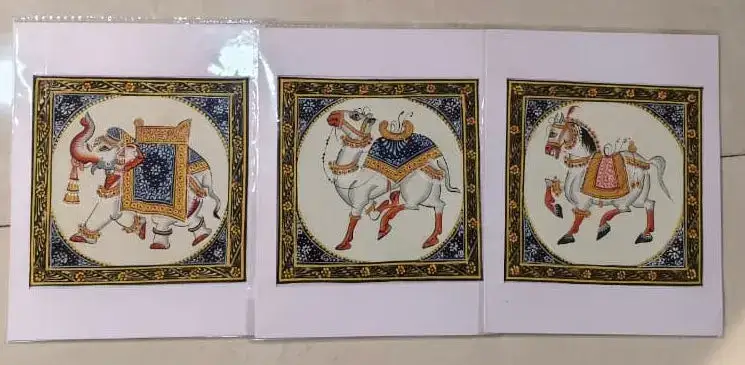
Royal Procession Trio Rajasthani Miniature – Elephant, Camel, and Horse in Style
Royal Procession Trio Rajasthani Miniature – Elephant, Camel, and Horse in Style: Elephant camel horse artwork
Elephant camel horse artwork is a rich and vibrant style of Indian miniature painting. This art form thrived in the royal courts of Rajasthan starting from the 16th century. Deeply rooted in Indian traditions, it beautifully portrays mythology, epics, love stories, royal life, and folk culture. This artwork is an essential part of Traditional Indian miniature painting heritage, celebrated for bold lines, bright colors, and intricate detailing.
Artists who specialize in this craft traditionally used natural dyes and pigments from minerals, vegetables, and precious stones. Such materials create a lasting and luminous effect that stands the test of time. Each painting is a testimony to the skill and dedication of these artisans.
Distinct Schools of artwork
The tradition divides into several famous schools including Mewar, Marwar, Bundi, Kota, Kishangarh, Bikaner, and Jaipur. Each school boasts a unique style and thematic focus. For example, Kishangarh is renowned for romantic depictions of Radha and Krishna, especially the iconic Bani Thani painting.
Mewar paintings often showcase court scenes, heroic tales, and religious themes. Meanwhile, Bundi and Kota schools emphasize lush landscapes and hunting scenes, capturing Rajasthan’s cultural diversity. These variations highlight the depth of the artistic styles within Indian miniature art.
Celebrating Elephant camel horse artwork in Rajasthani Miniature Art
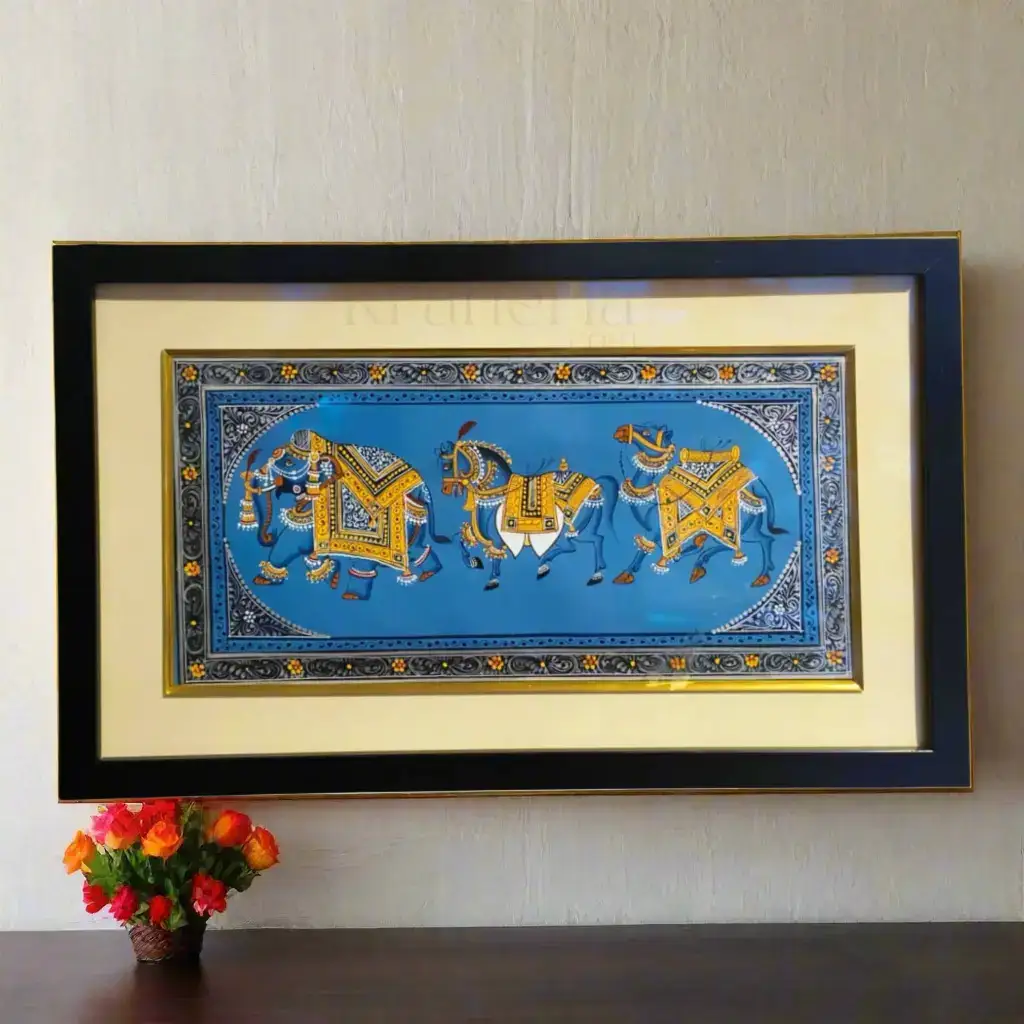
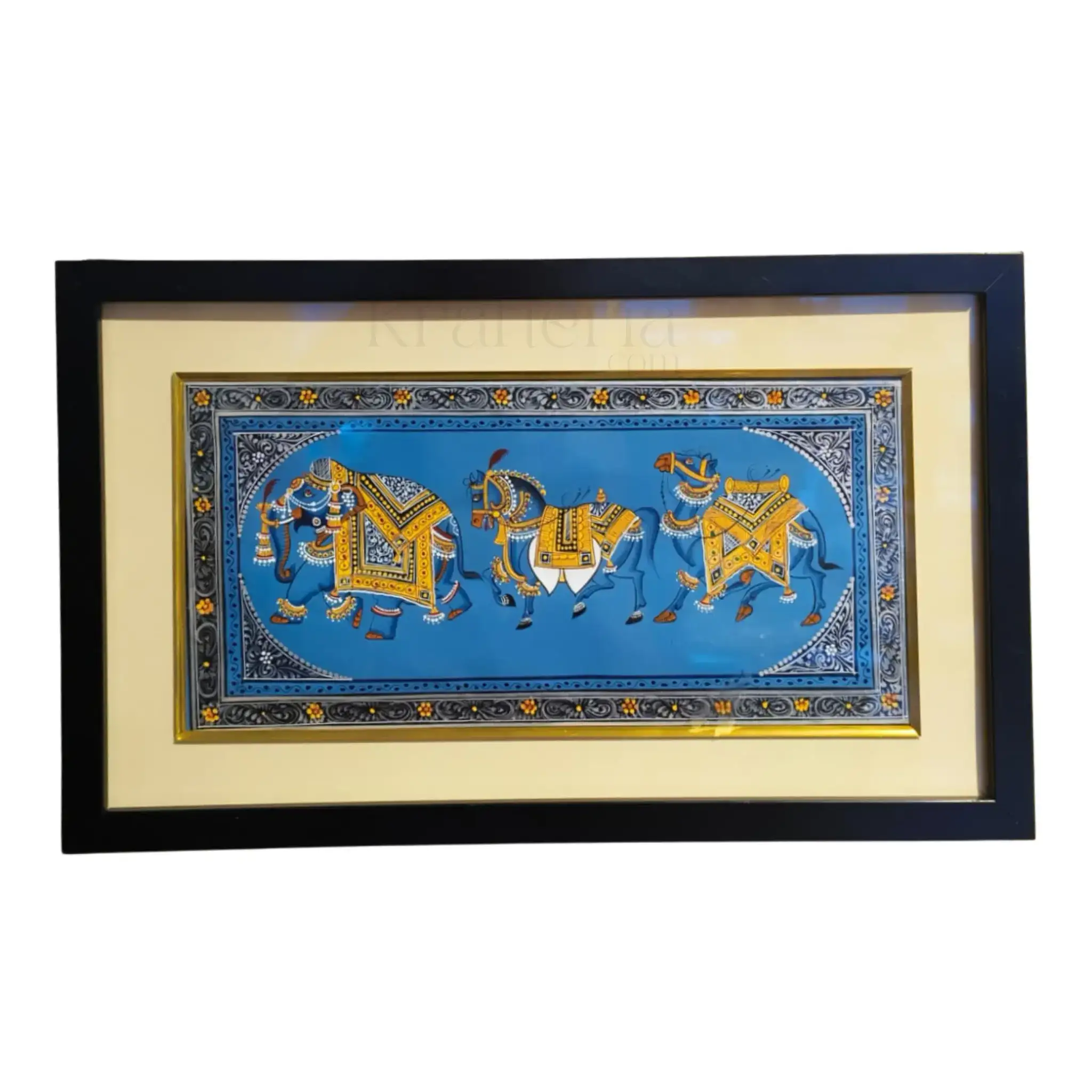
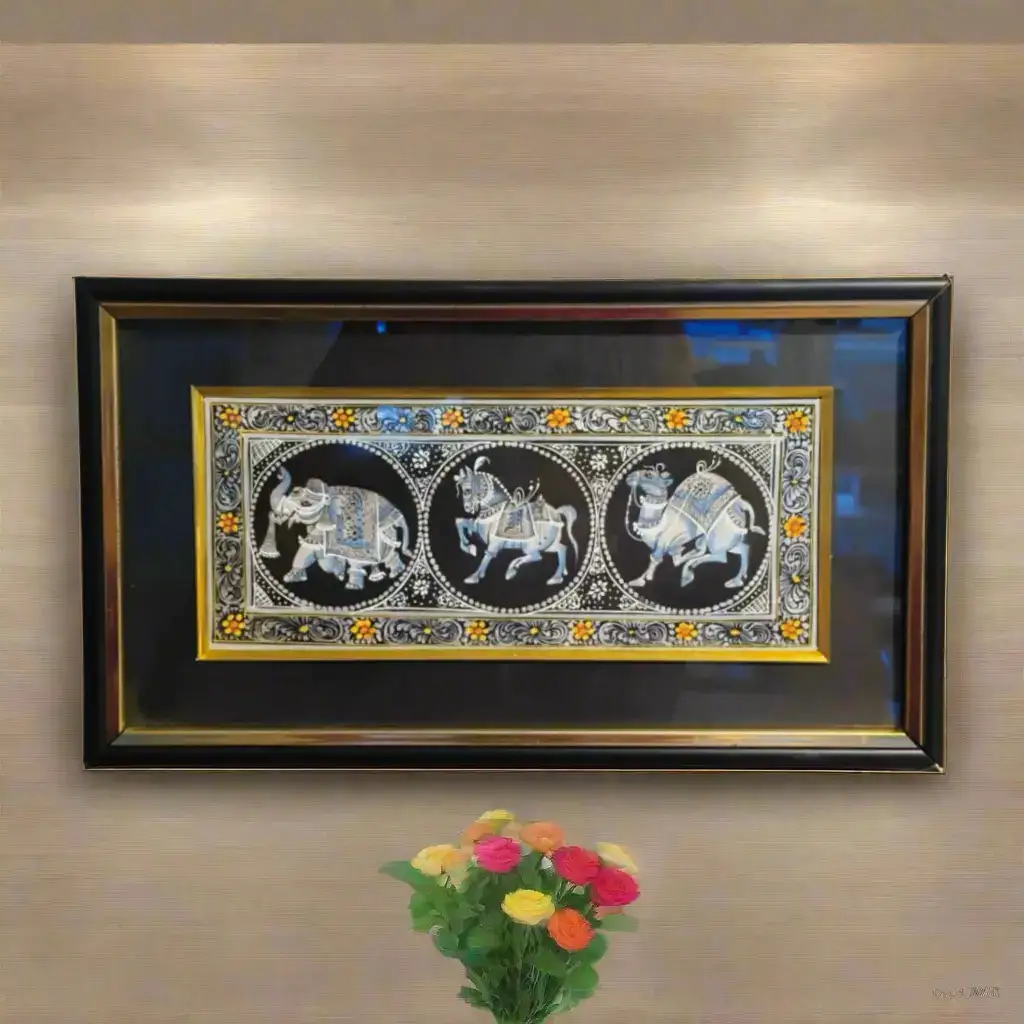
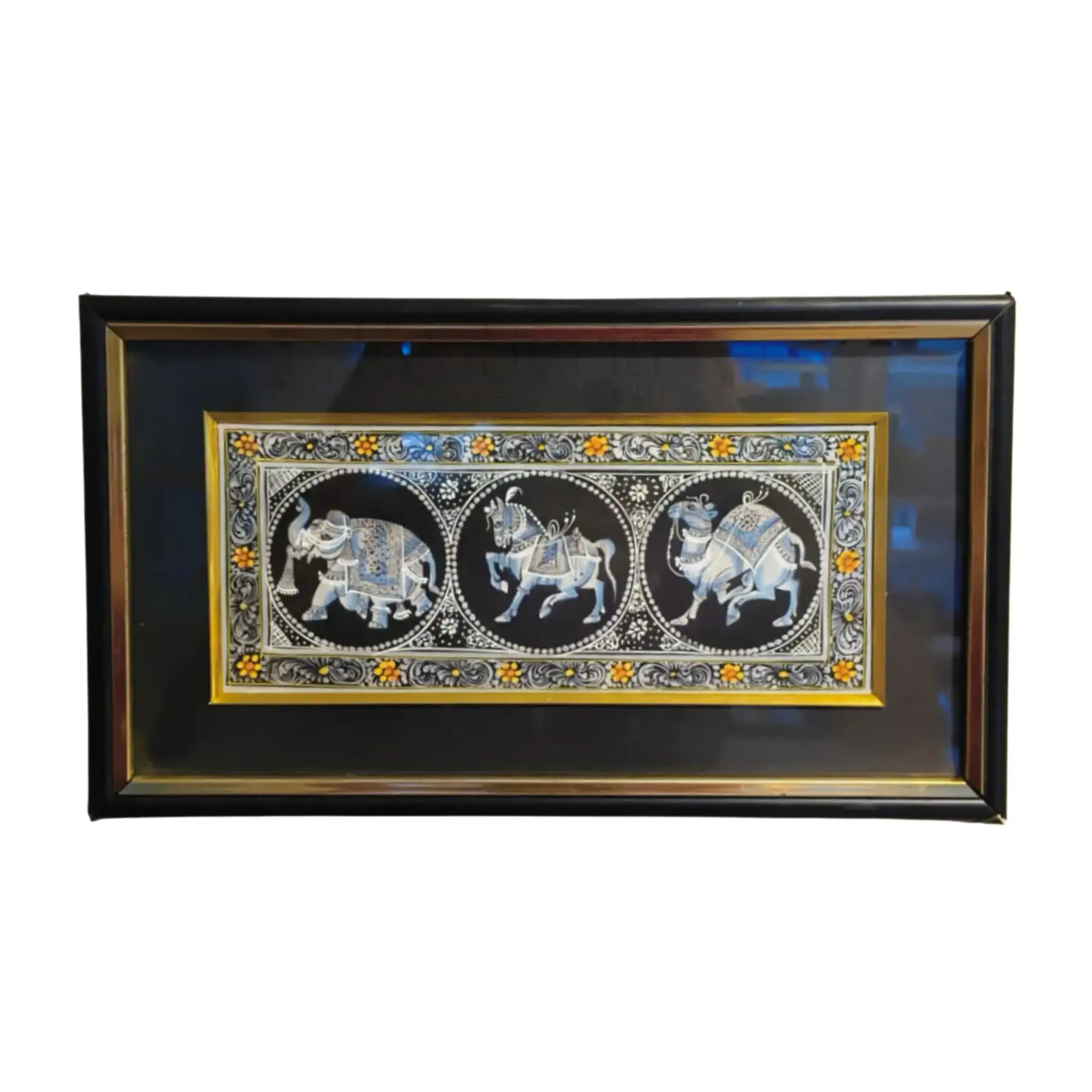
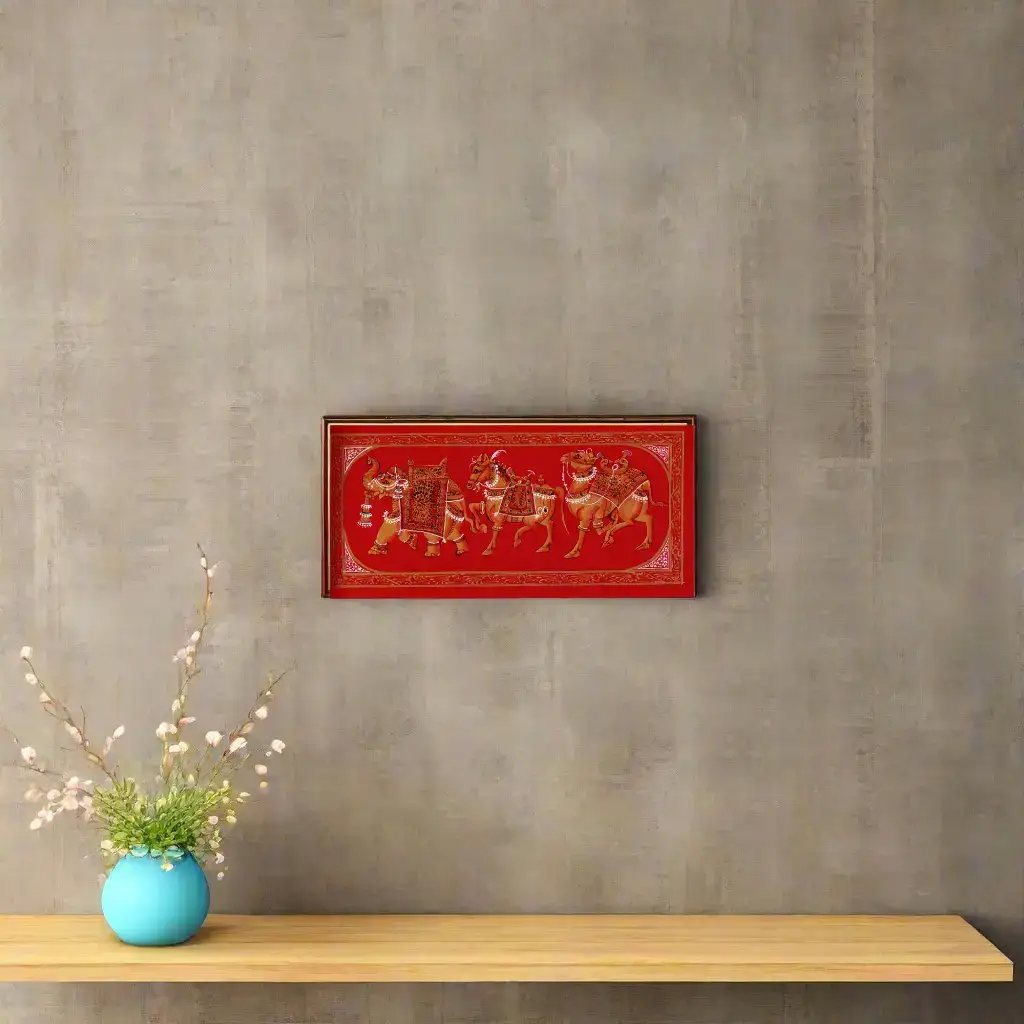
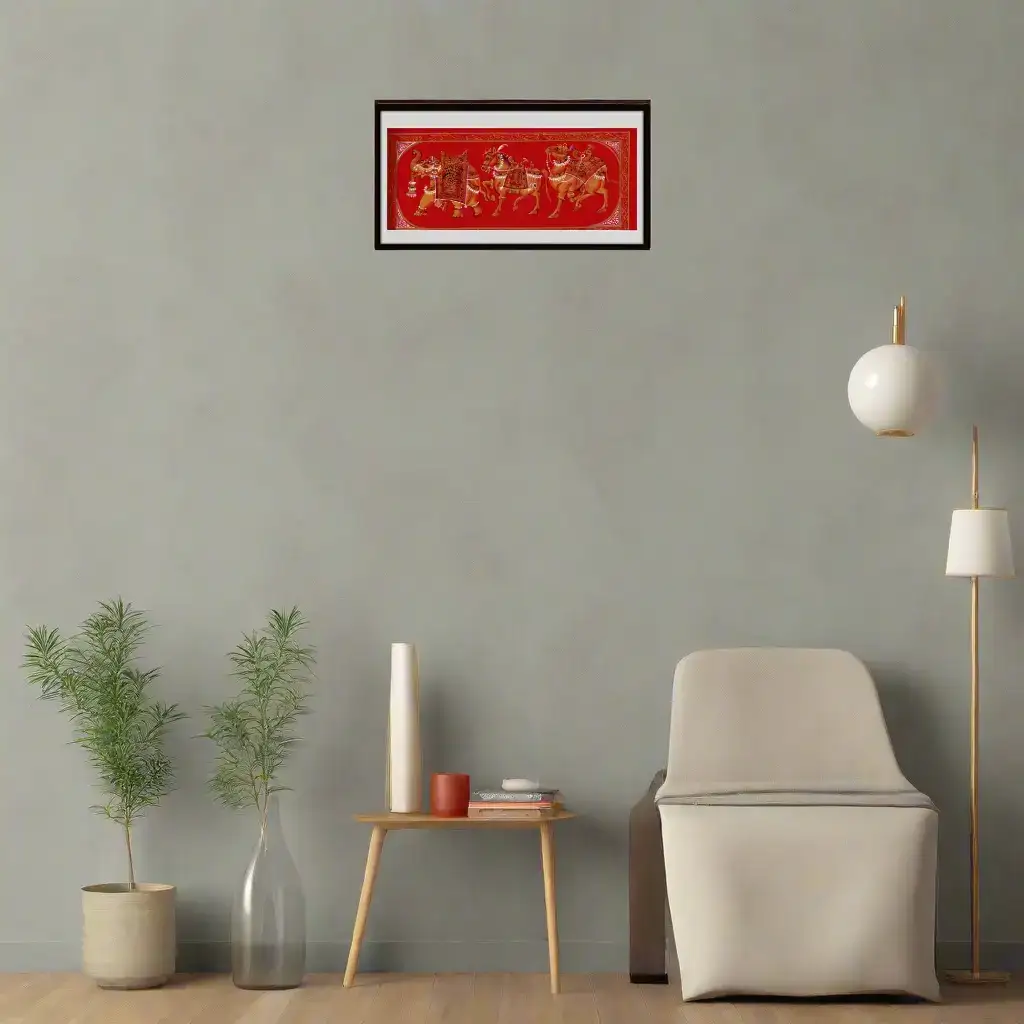
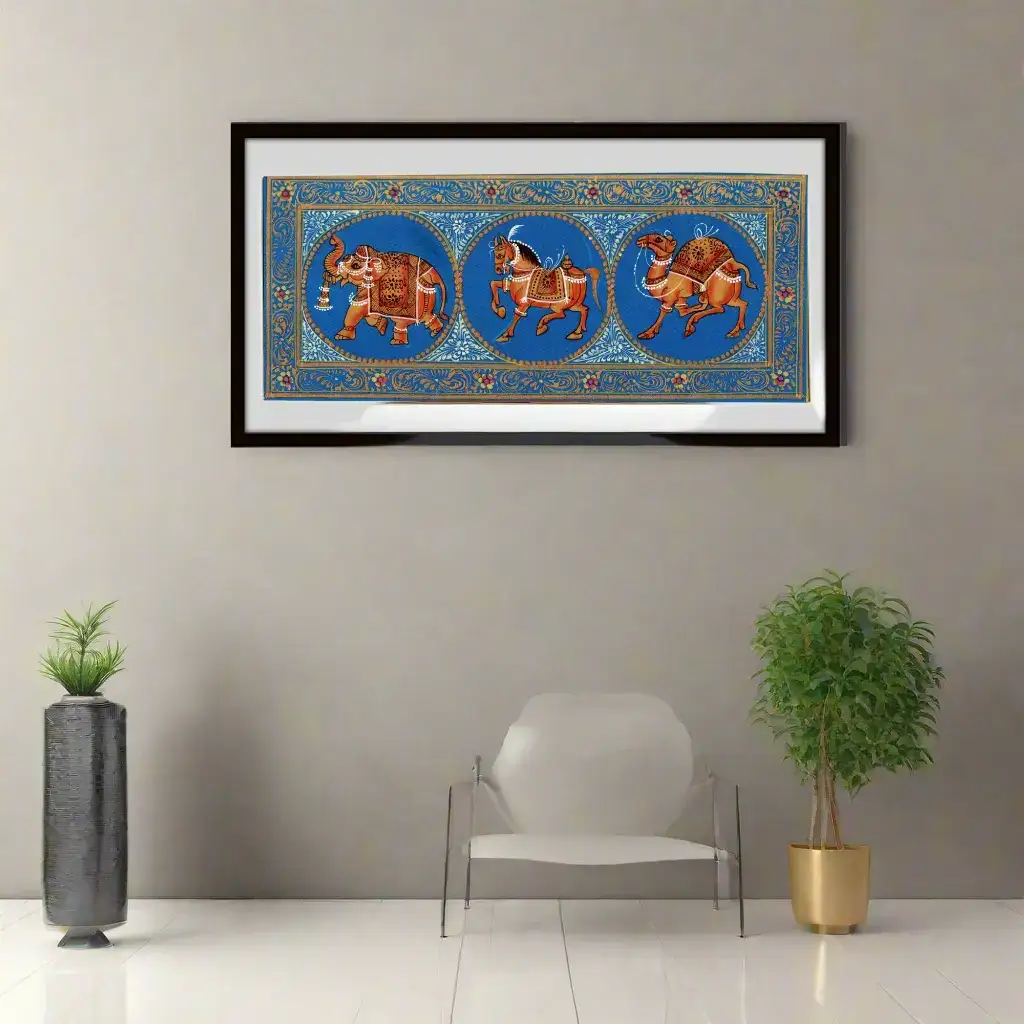
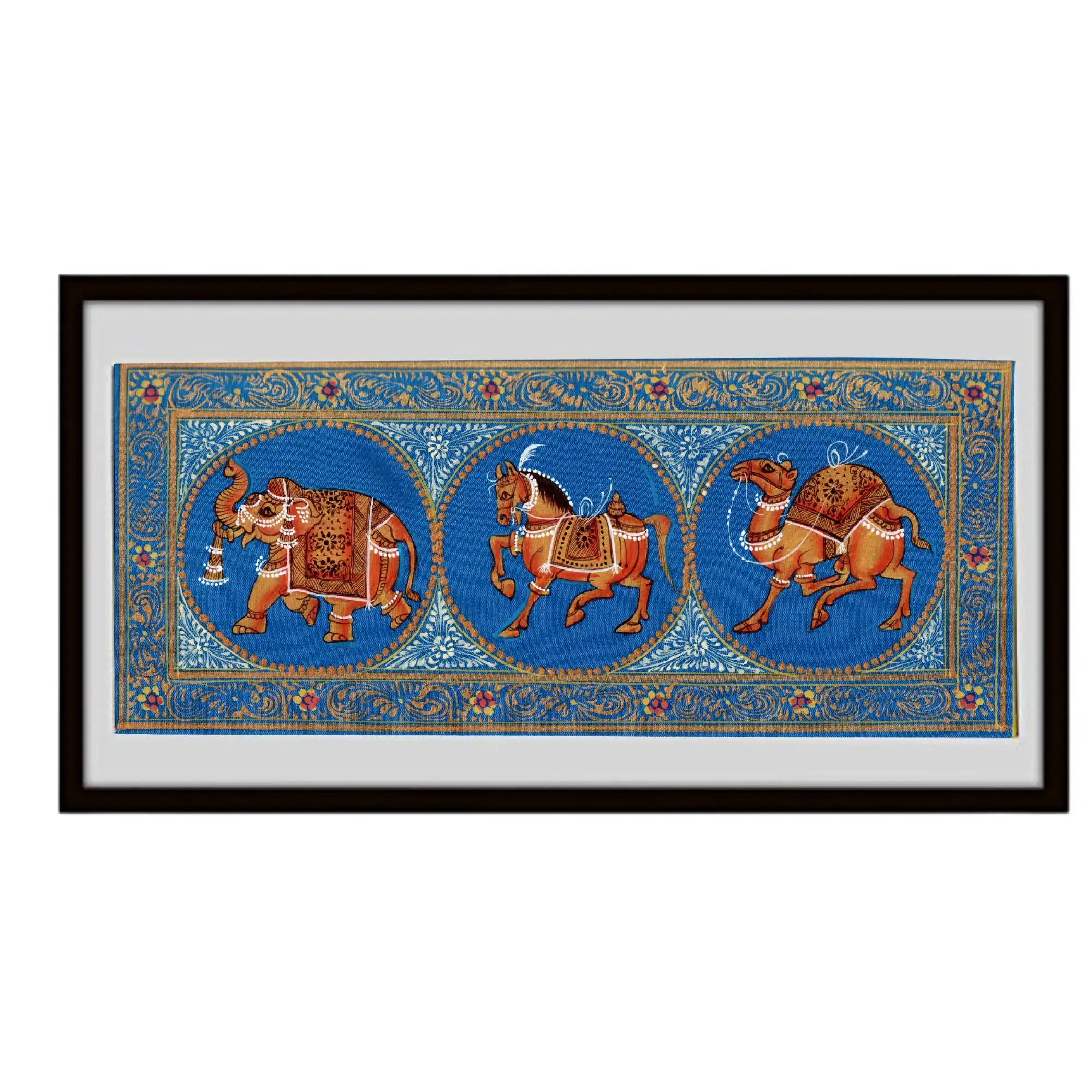
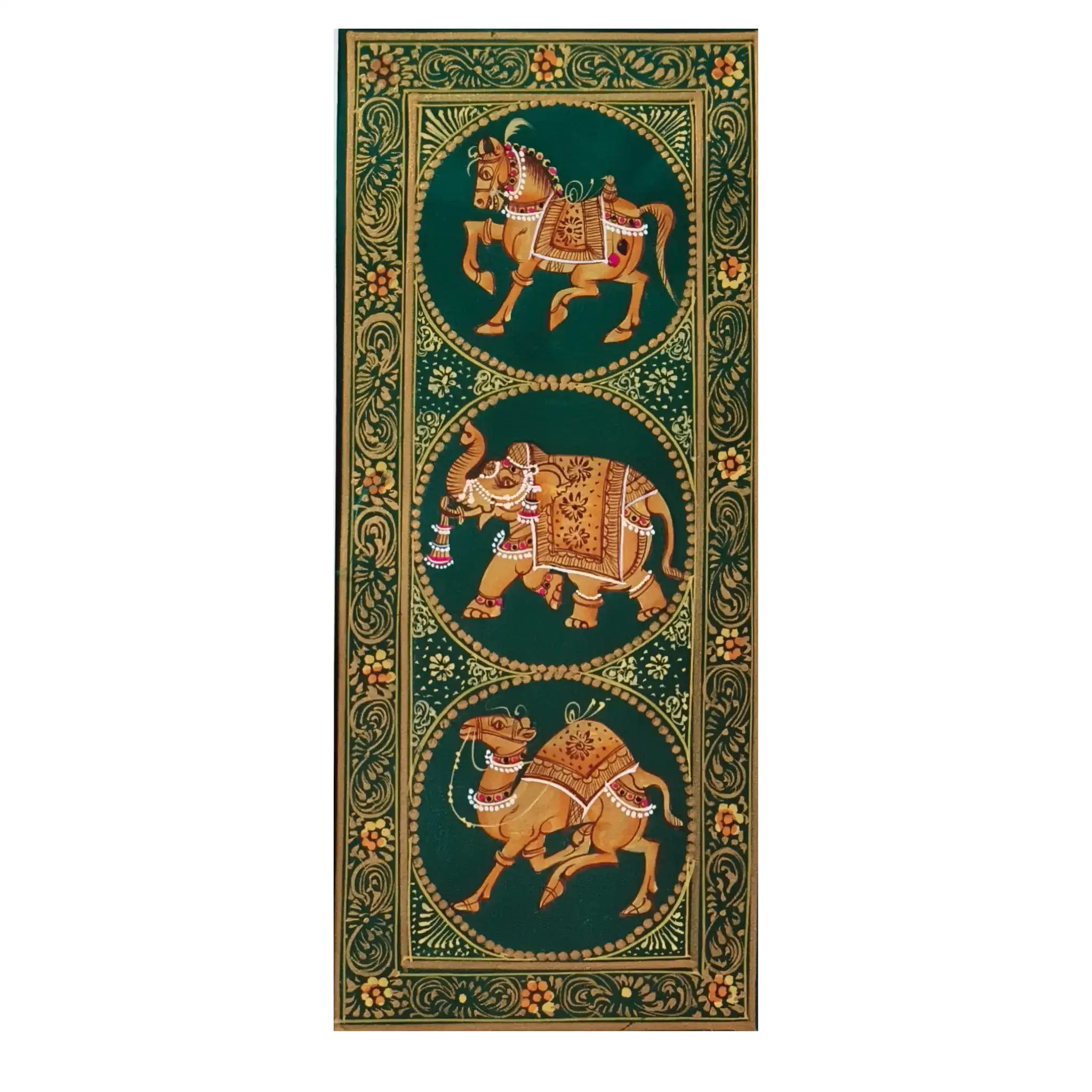
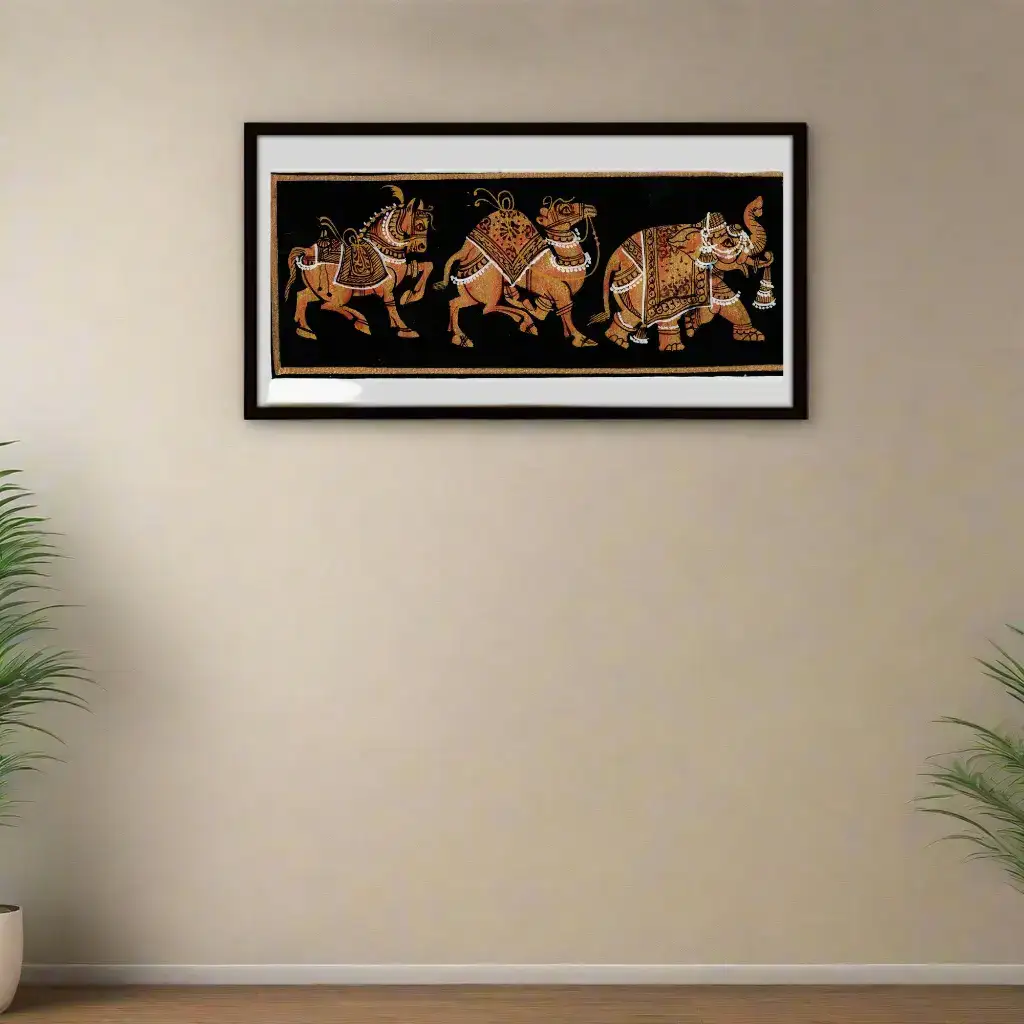
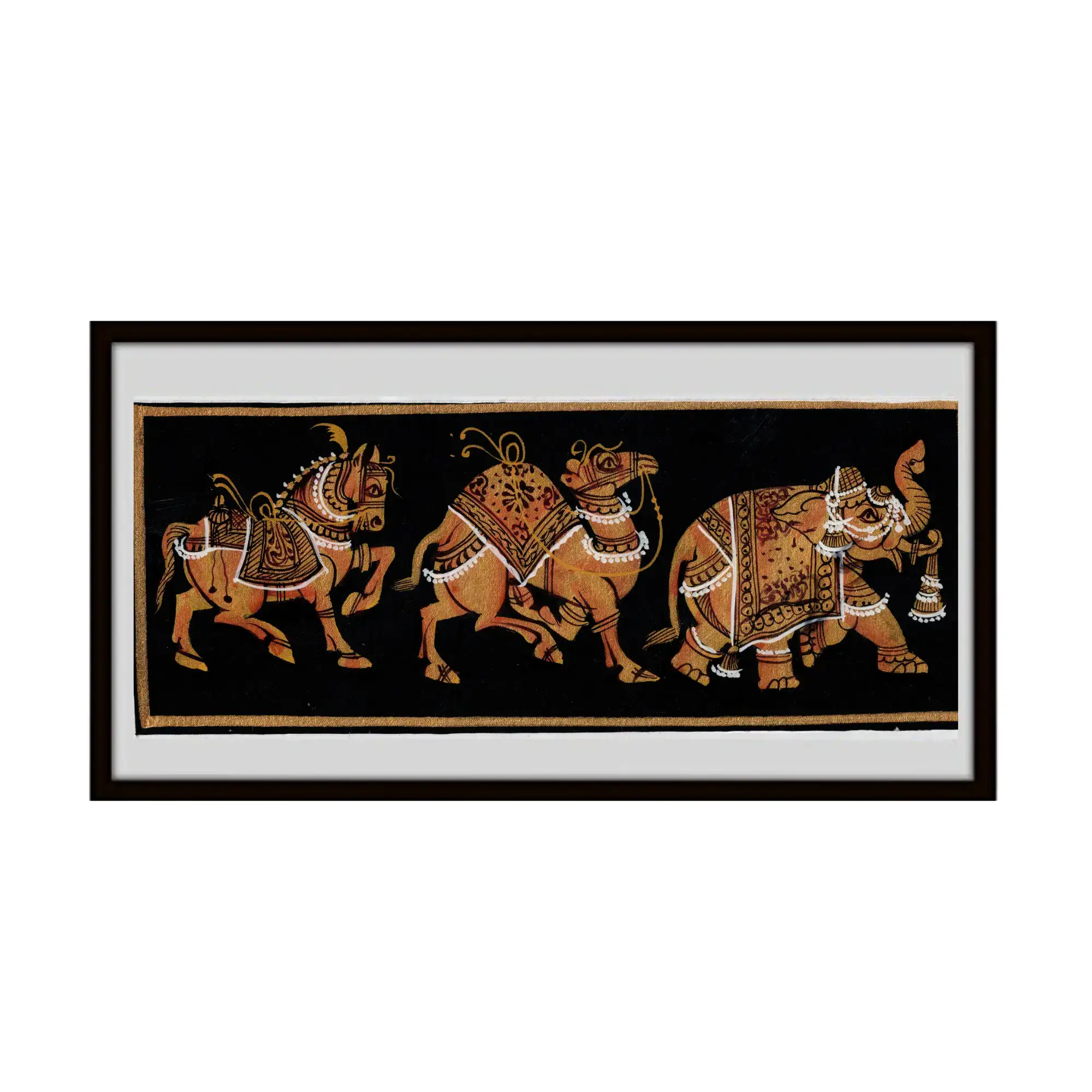
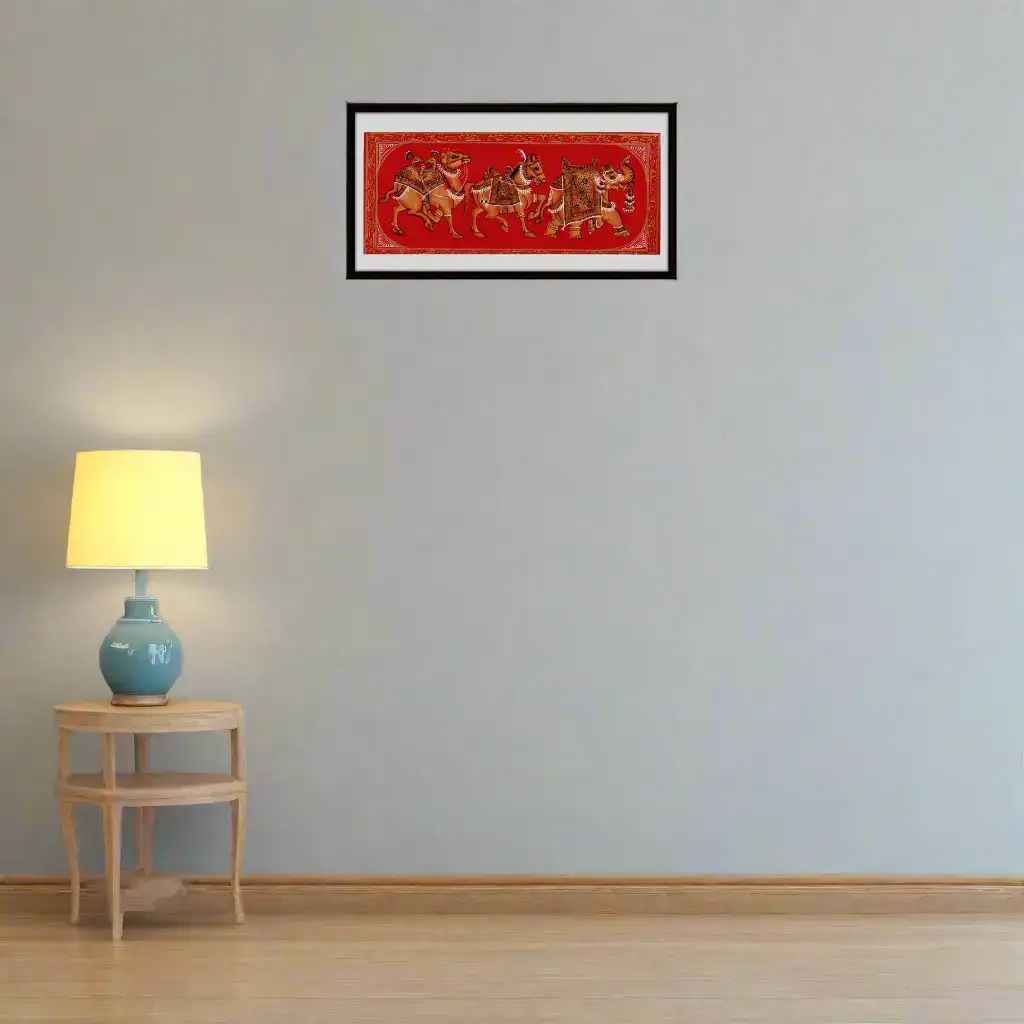
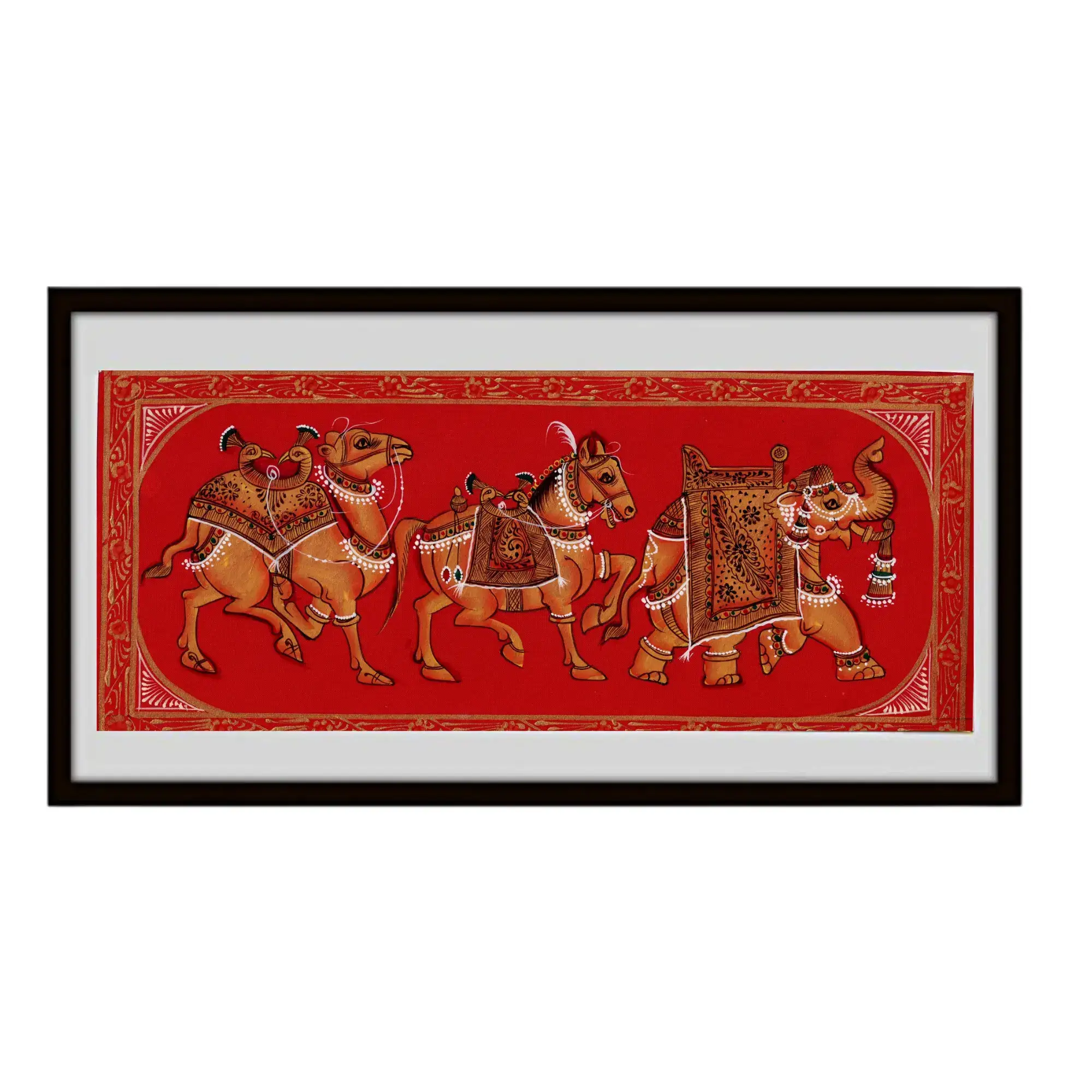
The significance of Elephant camel horse is its vivid portrayal of royal processions and cultural traditions. The majestic animals—the elephant, camel, and horse—feature prominently in these paintings. They highlight their important roles in Rajasthan’s royal history and ceremonies.
The elephant symbolizes grand royal authority, wisdom, and majesty. The camel embodies endurance and resilience, vital for survival in harsh desert regions. The horse signifies valor, speed, and royal prestige, especially in the context of royal processions and battles.
This miniature art is part of a larger Traditional Indian miniature painting style, which emphasizes intricate detailing, vibrant colors, and delicate brushwork. Artists use precise strokes to add texture and depth, often illustrating elaborate decorations on these noble animals.
Each animal’s posture and expression contribute to the storytelling in the paintings. These details express the mood and splendor of royal ceremonies, bringing the scenes to life for viewers to appreciate.
Techniques and materials used in Elephant camel horse art work
The unique luminous effect results from the use of natural materials. Primary pigments are derived from minerals, vegetables, and precious stones, ensuring vibrancy and longevity across centuries. Artists grind these pigments finely using gum Arabic to create the perfect paint consistency for surfaces like paper or cloth.
The preparation of raw materials is meticulous and requires skilled artistry. The forms of the elephant, camel, and horse are carefully rendered to convey narrative significance. The posture of each animal often highlights mood and meaning in the artwork. These traditional techniques help preserve the authenticity and quality of the art.
Historical context and cultural significance of Elephant camel horse art work
Rajasthani miniature art enhanced by artwork reflects the social and political settings of its era. These artworks demonstrate royal power, record significant events, and preserve oral traditions. The elephants represent majesty and royal authority, evoking strength and dignity.
The camel symbolizes endurance on long desert journeys, embodying resilience in harsh environments. The horse stands for speed, strength, and heroism, key qualities in royal ceremonies and warfare.
Paintings that combine these animals in intricate royal processions capture the ceremonial grandeur of Rajasthan. They convey the cultural complexity of the era and celebrate the richness of royal court life. This artistic tradition continues to attract art lovers and collectors worldwide, preserving Rajasthan’s legacy.
Overall, the exquisite balance between Elephant camel horse artwork and Traditional Indian miniature painting creates a distinct cultural identity. These artworks offer more than visual appeal; they serve as historical documents. They embody aesthetic values, cultural preferences, and technical excellence of their time. Their enduring charm ensures lasting appreciation for Rajasthan’s treasured artistry.
Product Information
Product Information
Shipping & Returns
Shipping & Returns
Description
Royal Procession Trio Rajasthani Miniature – Elephant, Camel, and Horse in Style: Elephant camel horse artwork
Elephant camel horse artwork is a rich and vibrant style of Indian miniature painting. This art form thrived in the royal courts of Rajasthan starting from the 16th century. Deeply rooted in Indian traditions, it beautifully portrays mythology, epics, love stories, royal life, and folk culture. This artwork is an essential part of Traditional Indian miniature painting heritage, celebrated for bold lines, bright colors, and intricate detailing.
Artists who specialize in this craft traditionally used natural dyes and pigments from minerals, vegetables, and precious stones. Such materials create a lasting and luminous effect that stands the test of time. Each painting is a testimony to the skill and dedication of these artisans.
Distinct Schools of artwork
The tradition divides into several famous schools including Mewar, Marwar, Bundi, Kota, Kishangarh, Bikaner, and Jaipur. Each school boasts a unique style and thematic focus. For example, Kishangarh is renowned for romantic depictions of Radha and Krishna, especially the iconic Bani Thani painting.
Mewar paintings often showcase court scenes, heroic tales, and religious themes. Meanwhile, Bundi and Kota schools emphasize lush landscapes and hunting scenes, capturing Rajasthan’s cultural diversity. These variations highlight the depth of the artistic styles within Indian miniature art.
Celebrating Elephant camel horse artwork in Rajasthani Miniature Art
The significance of Elephant camel horse is its vivid portrayal of royal processions and cultural traditions. The majestic animals—the elephant, camel, and horse—feature prominently in these paintings. They highlight their important roles in Rajasthan’s royal history and ceremonies.
The elephant symbolizes grand royal authority, wisdom, and majesty. The camel embodies endurance and resilience, vital for survival in harsh desert regions. The horse signifies valor, speed, and royal prestige, especially in the context of royal processions and battles.
This miniature art is part of a larger Traditional Indian miniature painting style, which emphasizes intricate detailing, vibrant colors, and delicate brushwork. Artists use precise strokes to add texture and depth, often illustrating elaborate decorations on these noble animals.
Each animal’s posture and expression contribute to the storytelling in the paintings. These details express the mood and splendor of royal ceremonies, bringing the scenes to life for viewers to appreciate.
Techniques and materials used in Elephant camel horse art work
The unique luminous effect results from the use of natural materials. Primary pigments are derived from minerals, vegetables, and precious stones, ensuring vibrancy and longevity across centuries. Artists grind these pigments finely using gum Arabic to create the perfect paint consistency for surfaces like paper or cloth.
The preparation of raw materials is meticulous and requires skilled artistry. The forms of the elephant, camel, and horse are carefully rendered to convey narrative significance. The posture of each animal often highlights mood and meaning in the artwork. These traditional techniques help preserve the authenticity and quality of the art.
Historical context and cultural significance of Elephant camel horse art work
Rajasthani miniature art enhanced by artwork reflects the social and political settings of its era. These artworks demonstrate royal power, record significant events, and preserve oral traditions. The elephants represent majesty and royal authority, evoking strength and dignity.
The camel symbolizes endurance on long desert journeys, embodying resilience in harsh environments. The horse stands for speed, strength, and heroism, key qualities in royal ceremonies and warfare.
Paintings that combine these animals in intricate royal processions capture the ceremonial grandeur of Rajasthan. They convey the cultural complexity of the era and celebrate the richness of royal court life. This artistic tradition continues to attract art lovers and collectors worldwide, preserving Rajasthan’s legacy.
Overall, the exquisite balance between Elephant camel horse artwork and Traditional Indian miniature painting creates a distinct cultural identity. These artworks offer more than visual appeal; they serve as historical documents. They embody aesthetic values, cultural preferences, and technical excellence of their time. Their enduring charm ensures lasting appreciation for Rajasthan’s treasured artistry.