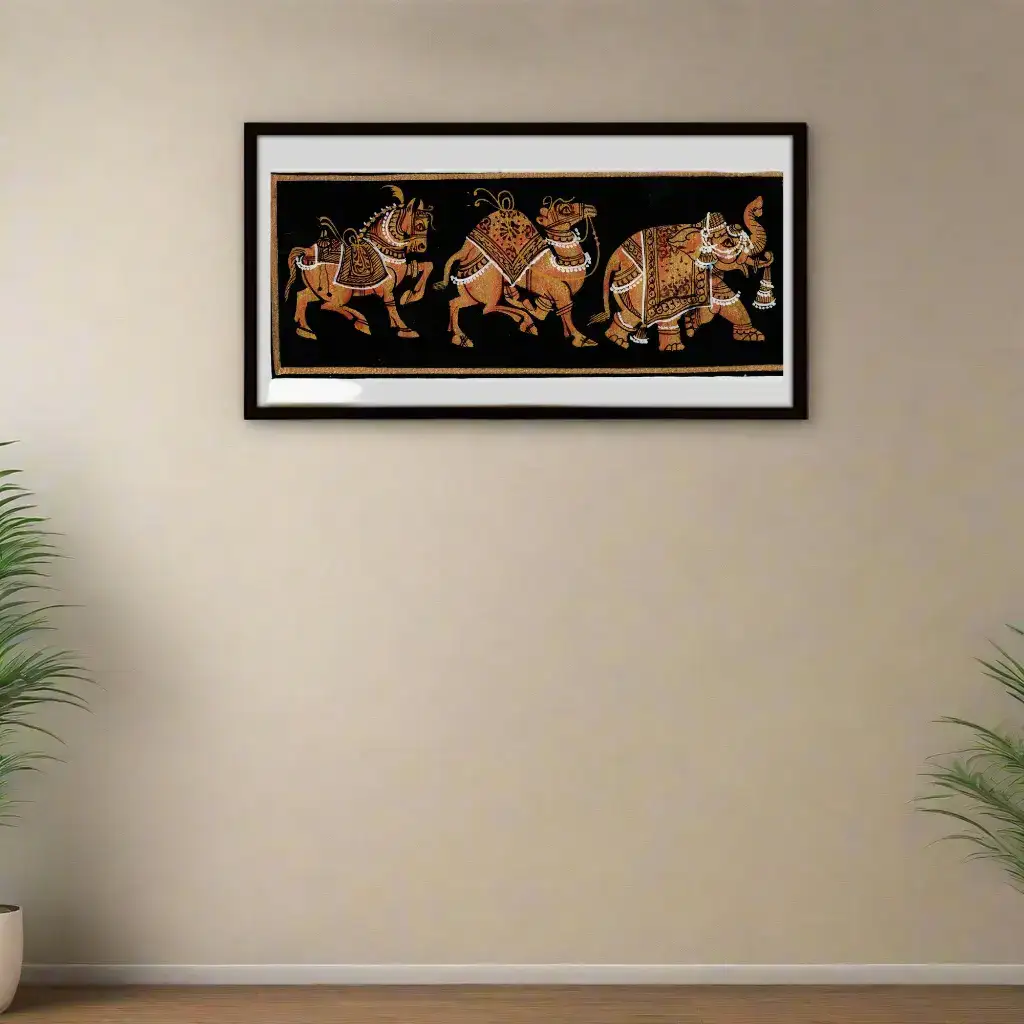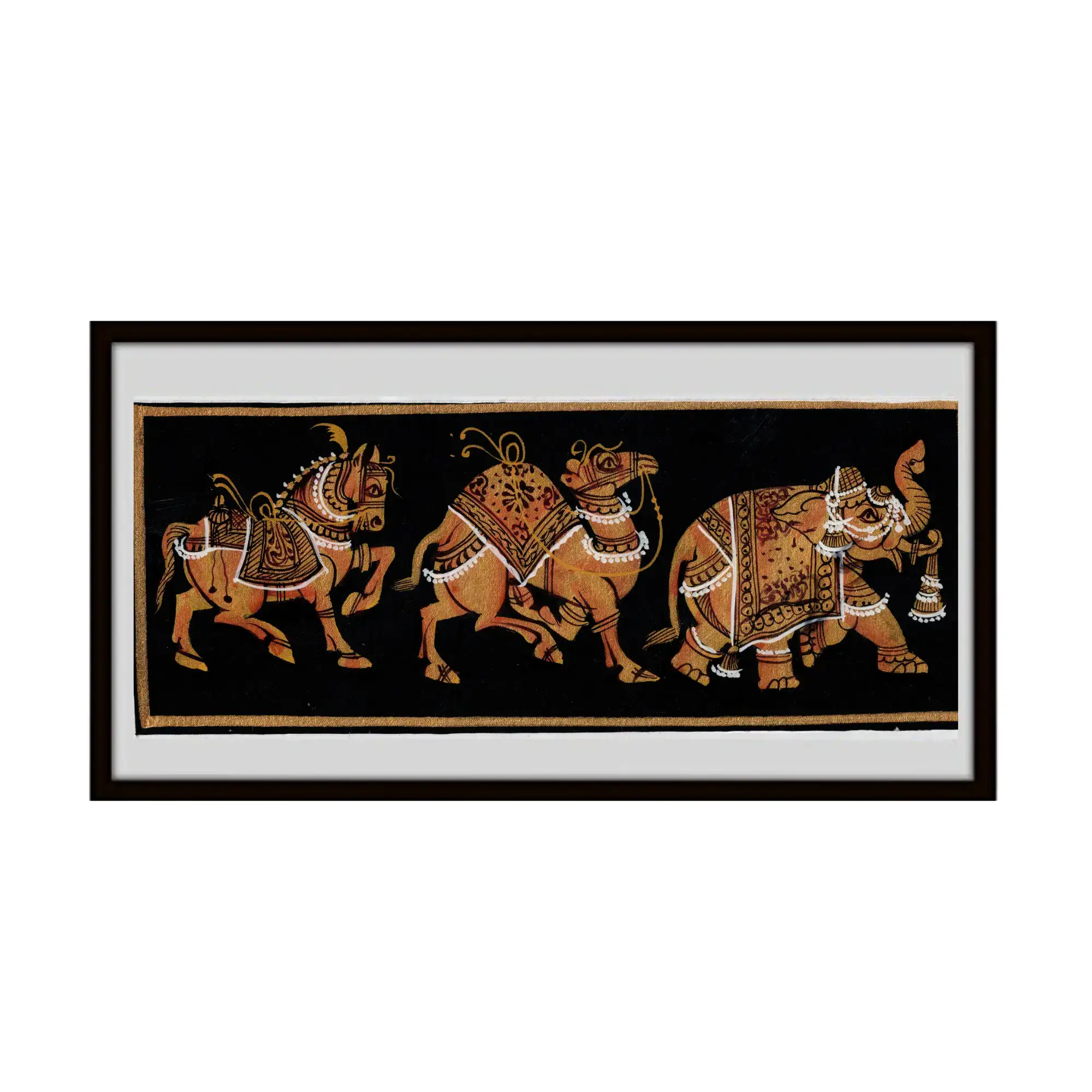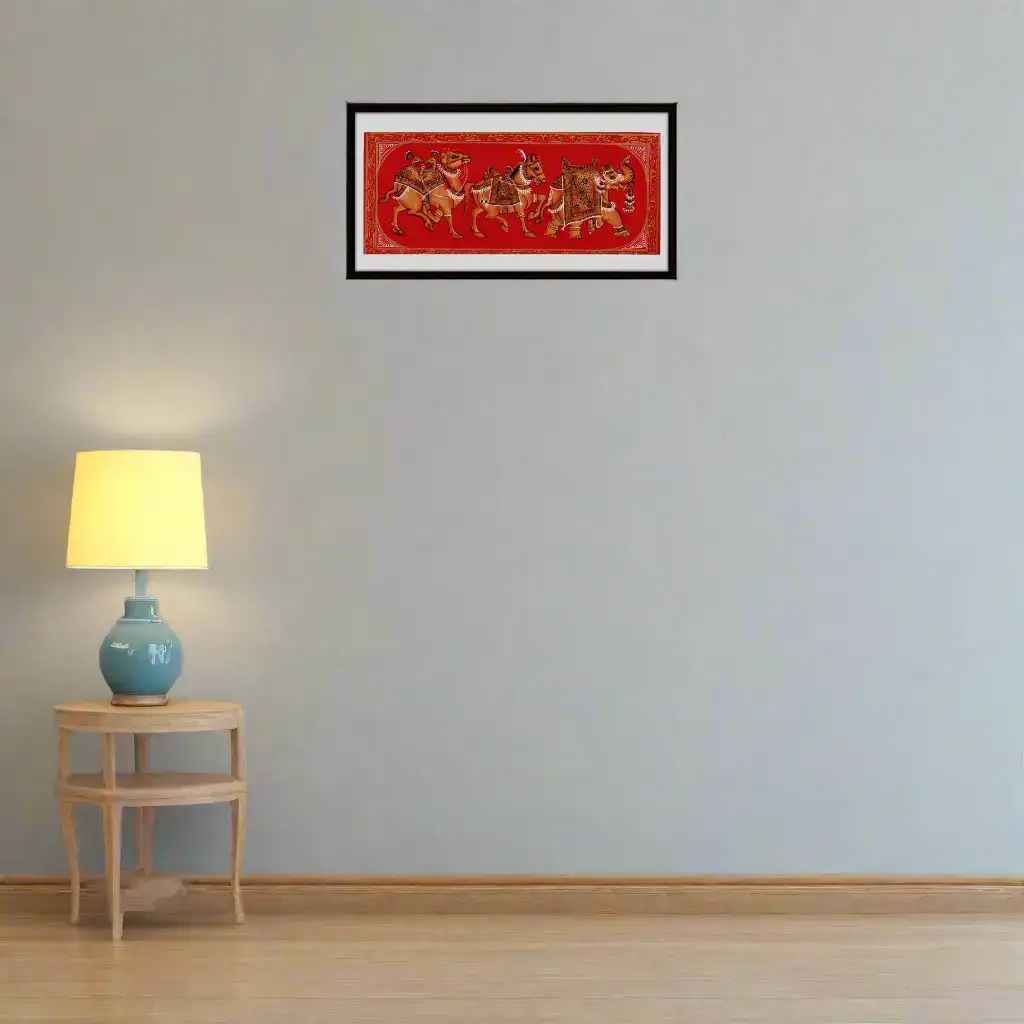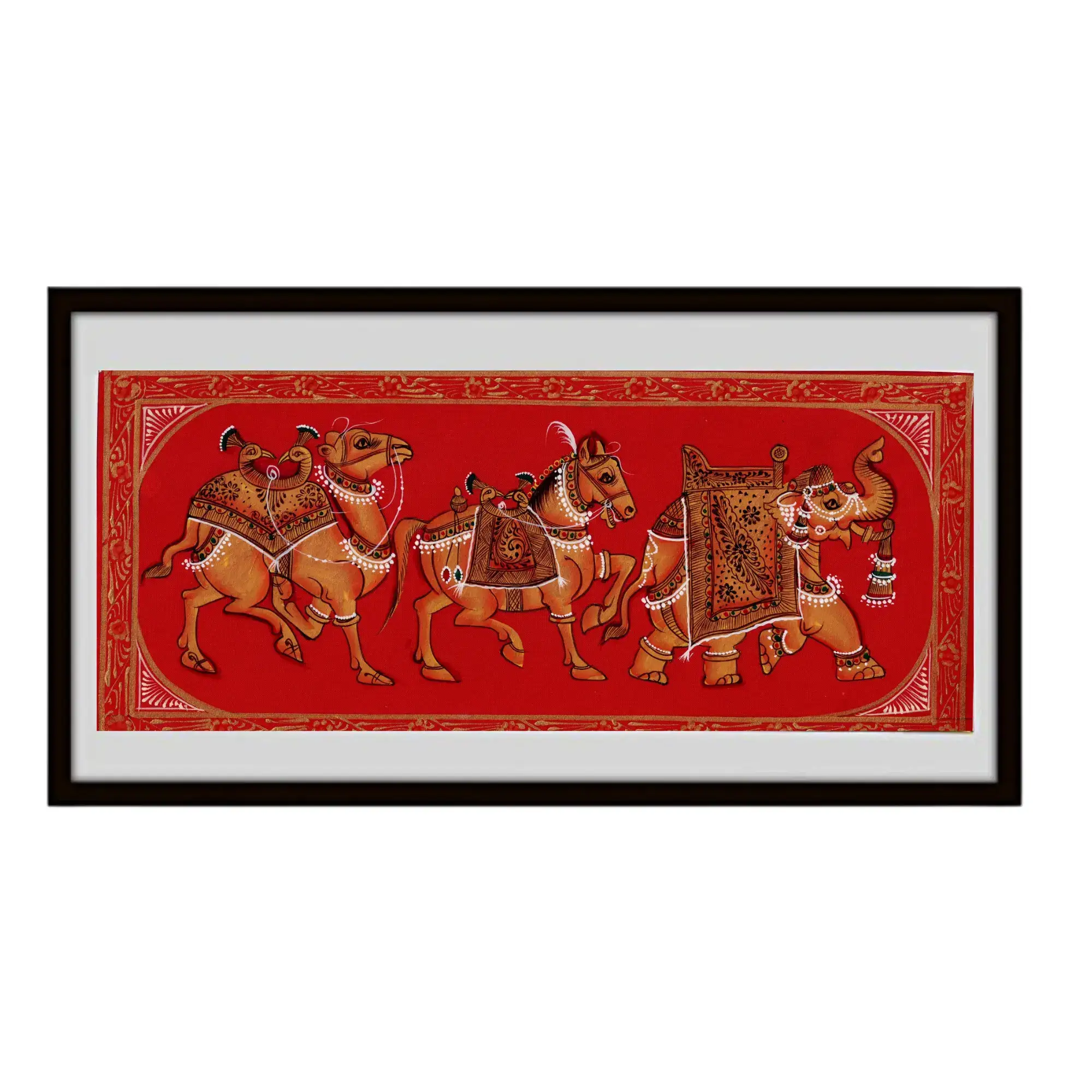
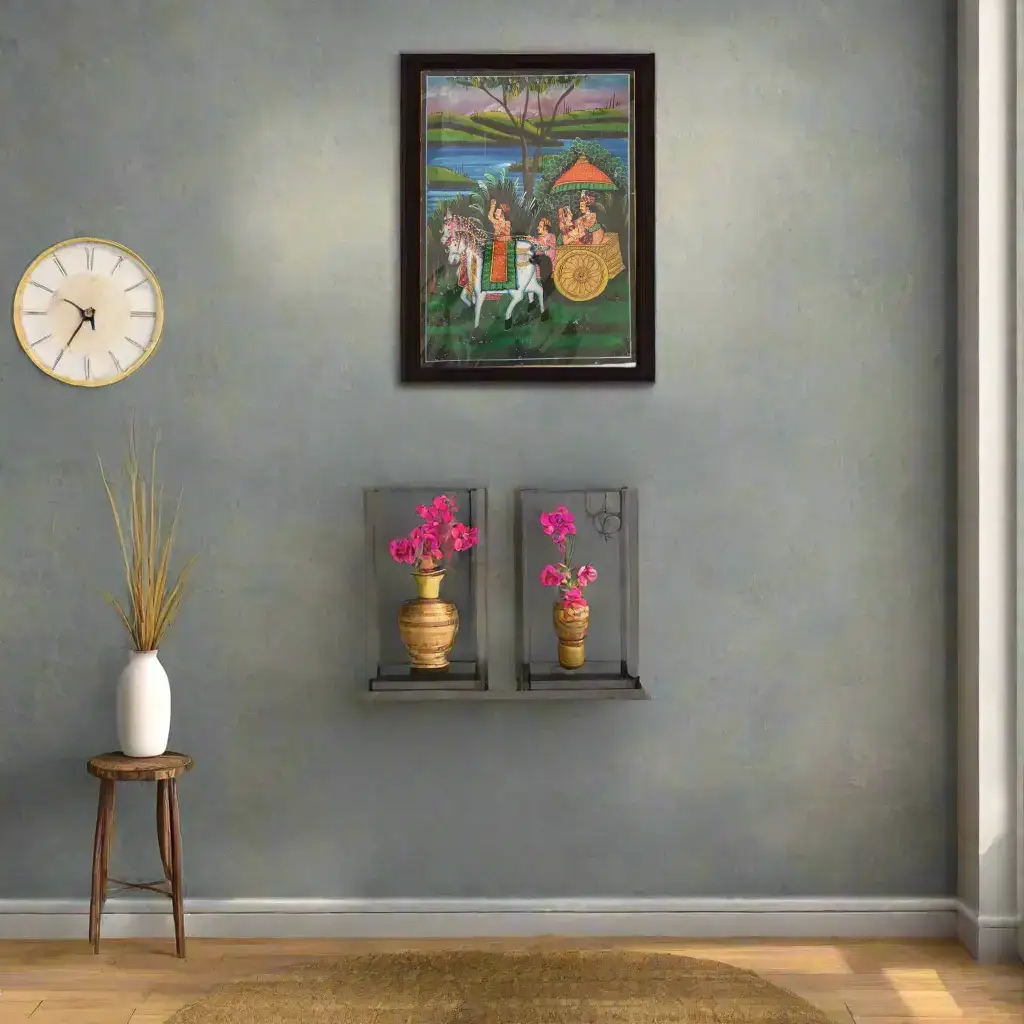
A Royal Couple in the Charito Miniature Painting
A Royal Couple in the Charito Miniature Painting: An Exquisite Art Form
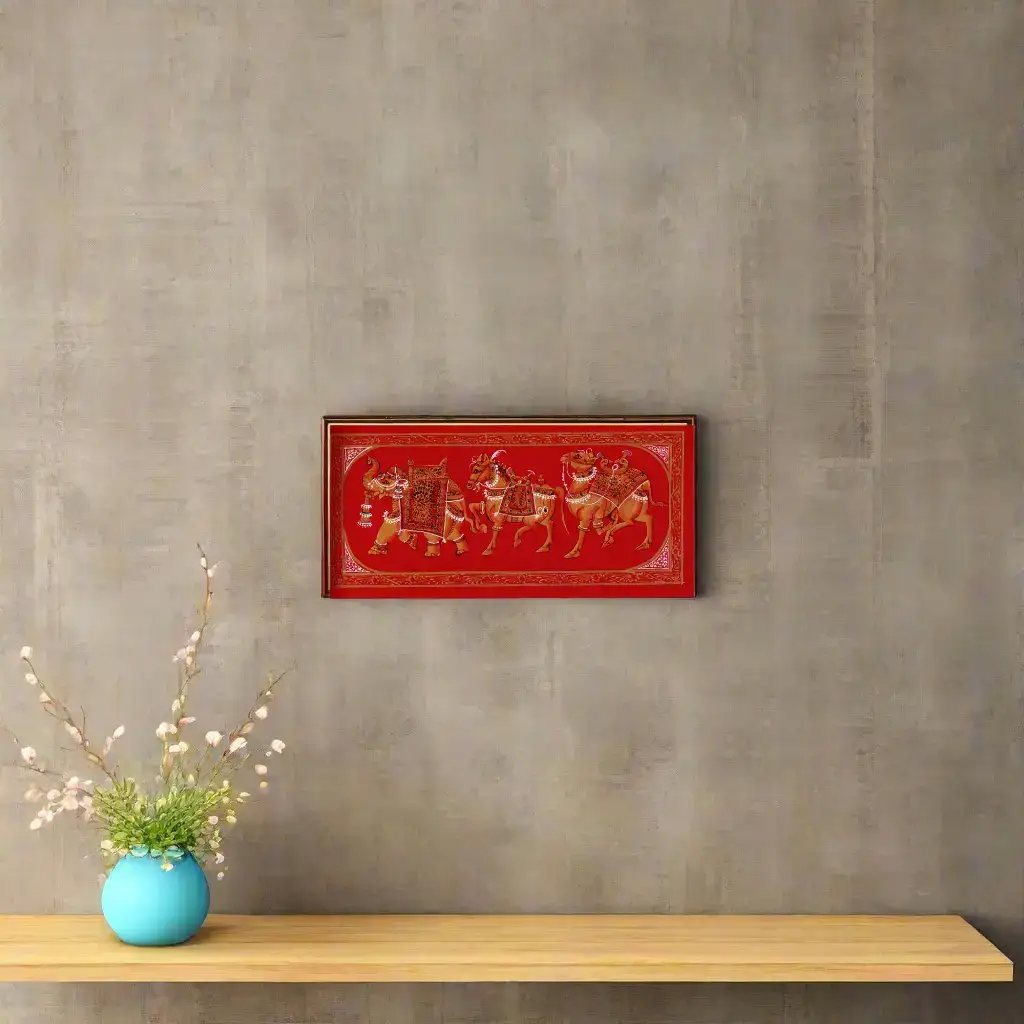
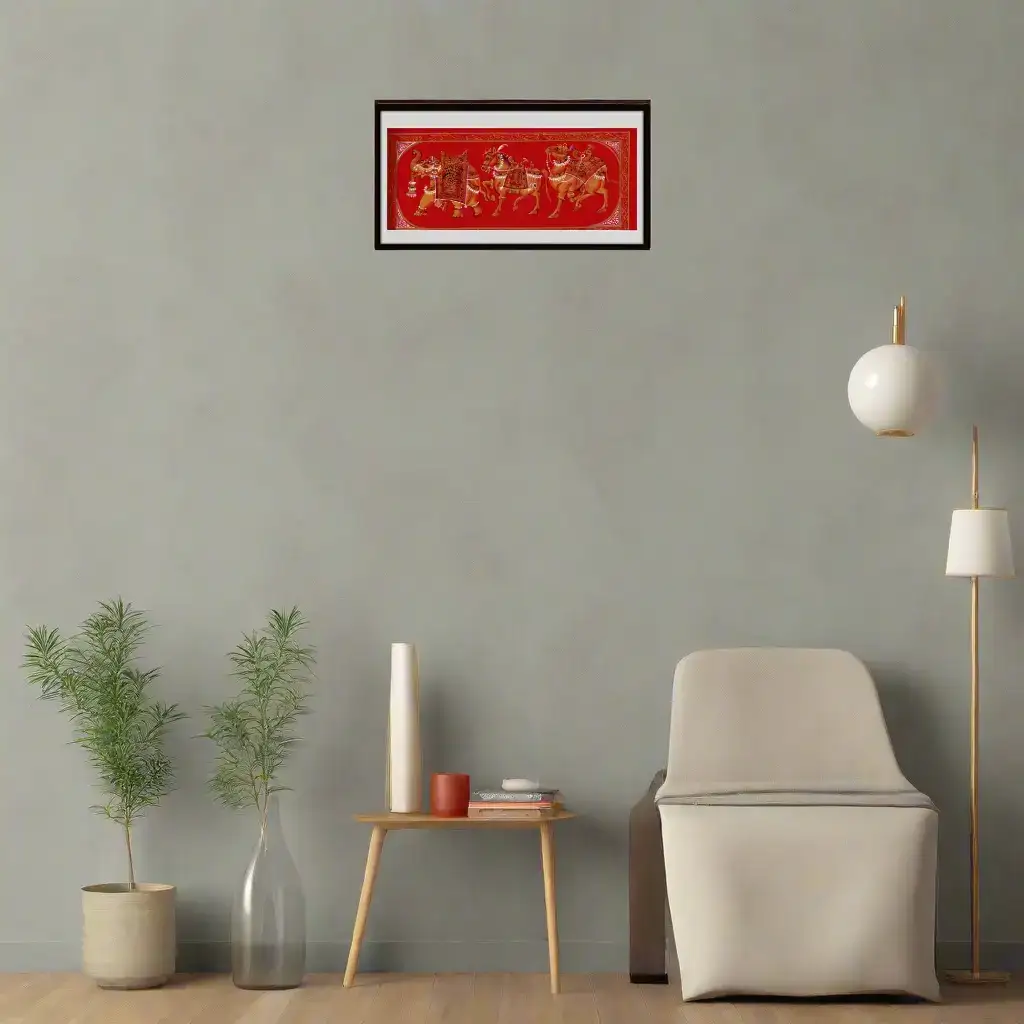
The chariot miniature painting titled "A Royal Couple in the Charito" is a stunning example of Rajasthani art. It celebrates the royal heritage with vibrant colors and intricate detailing. This painting showcases the timeless beauty of Indian miniature art that flourished in Rajasthan’s royal courts from the 16th century onwards. Deeply rooted in tradition, it captures themes of mythology, love stories, and royal life.
Renowned for its bold lines and bright pigments, this artwork uses natural dyes created from minerals and precious stones. These traditional materials give the painting a luminous and lasting quality. Measuring 17" high by 13" wide, this miniature painting highlights the exquisite craftsmanship of skilled artisans. The Royal couple in chariot artwork symbolizes majesty, power, and elegance through its detailed portrayal of a royal procession.
The Cultural and Artistic Significance of Chariot Miniature Painting
The chariot miniature painting genre holds a special place in Indian art history. It symbolizes the royal journey and ceremonious processions that marked princely grandeur. Such paintings often depict the Maharaja and Maharani riding in beautifully decorated chariots, reflecting the splendor of their reign. This style is part of the broader tradition of miniature paintings showing royal life and celebrations.
These artworks fall under the category of royal life miniature painting, where scenes from court life, religious events, and historical victories are celebrated. The intricate detailing in the costumes and architecture further emphasizes the regal atmosphere. The royal chariot painting stands as a tribute to India’s rich heritage, immortalizing the traditions of royal pageantry.
Distinct Schools of Rajasthani Miniature Painting
The art form represented by this chariot miniature painting is divided into several schools, each with its unique characteristics. Notable among these are Mewar, Marwar, Bundi, Kota, Kishangarh, Bikaner, and Jaipur. These schools developed distinct styles focusing on different themes found in royal and folk culture.
For instance, the Kishangarh school is best known for its romantic depictions of Radha and Krishna. It is famous for the iconic "Bani Thani" figure, symbolizing beauty and elegance. Meanwhile, the Mewar style often portrays court scenes, heroic tales, and religious iconography in detail. Bundi and Kota schools highlight lush landscapes and dynamic hunting scenes, adding a diverse dimension to the miniature painting tradition.
Technique and Materials Used in Chariot Miniature Painting
The creation of the Maharaja Maharani chariot miniature art involves meticulous hand-painting techniques. Artisans use fine brushes made from squirrel hair, allowing for intricate and delicate strokes. The pigments are naturally sourced from minerals, vegetables, and precious stones, ensuring vibrant and archival colors.
The surface for painting is usually handmade paper or cloth, carefully prepared to hold the pigments and detailing better. Traditional methods carried forward over centuries are followed strictly, preserving the authenticity of this precious art form. The blend of natural color and skilled craftsmanship results in paintings that are both visually striking and culturally significant.
Symbolism and Themes in Royal Chariot Paintings
The themes in such chariot miniature paintings are rich with symbolism. The royal couple seated in the chariot represents authority, dignity, and the divine right to rule. The ornate chariot, pulled by horses or elephants, emphasizes the majesty of the procession. These paintings often celebrate victory, festivity, and the splendor of princely courts.
The depiction goes beyond mere portraiture to capture the essence of royal life and its ceremonial importance. They provide a window into India’s historical and cultural grandeur. The harmony between the figures, architecture, and landscapes reflects the unity of the kingdom under the royal patronage.
Mughal Style Influence on Royal Procession Art
This painting shows influences from the Mughal miniature style known for elegance, rich ornamentation, and fine brushwork. The Mughal style royal procession art brought in detailed architecture and balanced compositions that merged seamlessly with Rajasthani traditions. This blending created unique pieces that narrate majestic royal journeys.
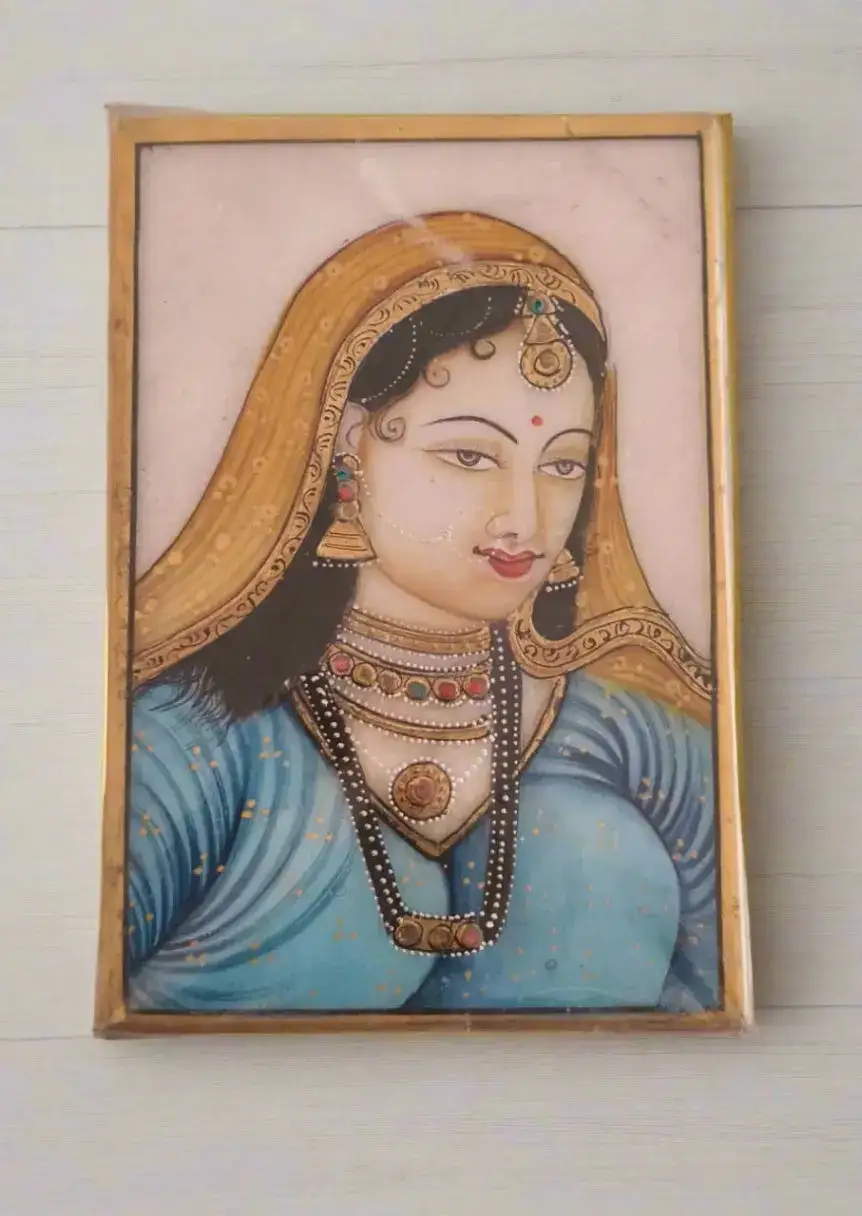
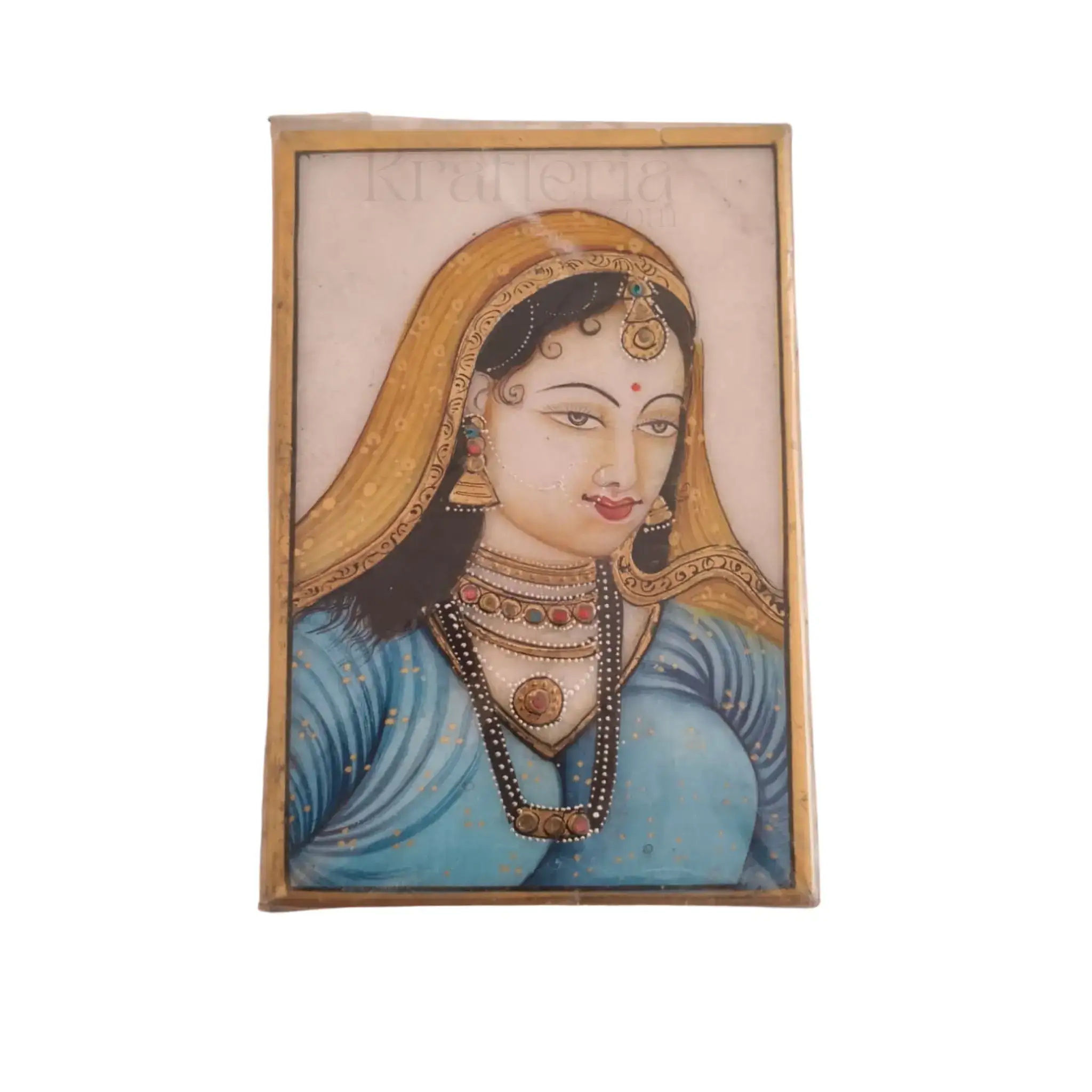
The miniature nature of the work allows artists to highlight minute details such as jewelry, fabric patterns, and facial expressions. Each element plays a role in telling the story of the royal procession and its importance in historical context. Such art pieces are treasured collectibles and are valued for their cultural authenticity and exquisite artistry.
Product Information
Product Information
Shipping & Returns
Shipping & Returns
Description
A Royal Couple in the Charito Miniature Painting: An Exquisite Art Form
The chariot miniature painting titled "A Royal Couple in the Charito" is a stunning example of Rajasthani art. It celebrates the royal heritage with vibrant colors and intricate detailing. This painting showcases the timeless beauty of Indian miniature art that flourished in Rajasthan’s royal courts from the 16th century onwards. Deeply rooted in tradition, it captures themes of mythology, love stories, and royal life.
Renowned for its bold lines and bright pigments, this artwork uses natural dyes created from minerals and precious stones. These traditional materials give the painting a luminous and lasting quality. Measuring 17" high by 13" wide, this miniature painting highlights the exquisite craftsmanship of skilled artisans. The Royal couple in chariot artwork symbolizes majesty, power, and elegance through its detailed portrayal of a royal procession.
The Cultural and Artistic Significance of Chariot Miniature Painting
The chariot miniature painting genre holds a special place in Indian art history. It symbolizes the royal journey and ceremonious processions that marked princely grandeur. Such paintings often depict the Maharaja and Maharani riding in beautifully decorated chariots, reflecting the splendor of their reign. This style is part of the broader tradition of miniature paintings showing royal life and celebrations.
These artworks fall under the category of royal life miniature painting, where scenes from court life, religious events, and historical victories are celebrated. The intricate detailing in the costumes and architecture further emphasizes the regal atmosphere. The royal chariot painting stands as a tribute to India’s rich heritage, immortalizing the traditions of royal pageantry.
Distinct Schools of Rajasthani Miniature Painting
The art form represented by this chariot miniature painting is divided into several schools, each with its unique characteristics. Notable among these are Mewar, Marwar, Bundi, Kota, Kishangarh, Bikaner, and Jaipur. These schools developed distinct styles focusing on different themes found in royal and folk culture.
For instance, the Kishangarh school is best known for its romantic depictions of Radha and Krishna. It is famous for the iconic "Bani Thani" figure, symbolizing beauty and elegance. Meanwhile, the Mewar style often portrays court scenes, heroic tales, and religious iconography in detail. Bundi and Kota schools highlight lush landscapes and dynamic hunting scenes, adding a diverse dimension to the miniature painting tradition.
Technique and Materials Used in Chariot Miniature Painting
The creation of the Maharaja Maharani chariot miniature art involves meticulous hand-painting techniques. Artisans use fine brushes made from squirrel hair, allowing for intricate and delicate strokes. The pigments are naturally sourced from minerals, vegetables, and precious stones, ensuring vibrant and archival colors.
The surface for painting is usually handmade paper or cloth, carefully prepared to hold the pigments and detailing better. Traditional methods carried forward over centuries are followed strictly, preserving the authenticity of this precious art form. The blend of natural color and skilled craftsmanship results in paintings that are both visually striking and culturally significant.
Symbolism and Themes in Royal Chariot Paintings
The themes in such chariot miniature paintings are rich with symbolism. The royal couple seated in the chariot represents authority, dignity, and the divine right to rule. The ornate chariot, pulled by horses or elephants, emphasizes the majesty of the procession. These paintings often celebrate victory, festivity, and the splendor of princely courts.
The depiction goes beyond mere portraiture to capture the essence of royal life and its ceremonial importance. They provide a window into India’s historical and cultural grandeur. The harmony between the figures, architecture, and landscapes reflects the unity of the kingdom under the royal patronage.
Mughal Style Influence on Royal Procession Art
This painting shows influences from the Mughal miniature style known for elegance, rich ornamentation, and fine brushwork. The Mughal style royal procession art brought in detailed architecture and balanced compositions that merged seamlessly with Rajasthani traditions. This blending created unique pieces that narrate majestic royal journeys.
The miniature nature of the work allows artists to highlight minute details such as jewelry, fabric patterns, and facial expressions. Each element plays a role in telling the story of the royal procession and its importance in historical context. Such art pieces are treasured collectibles and are valued for their cultural authenticity and exquisite artistry.