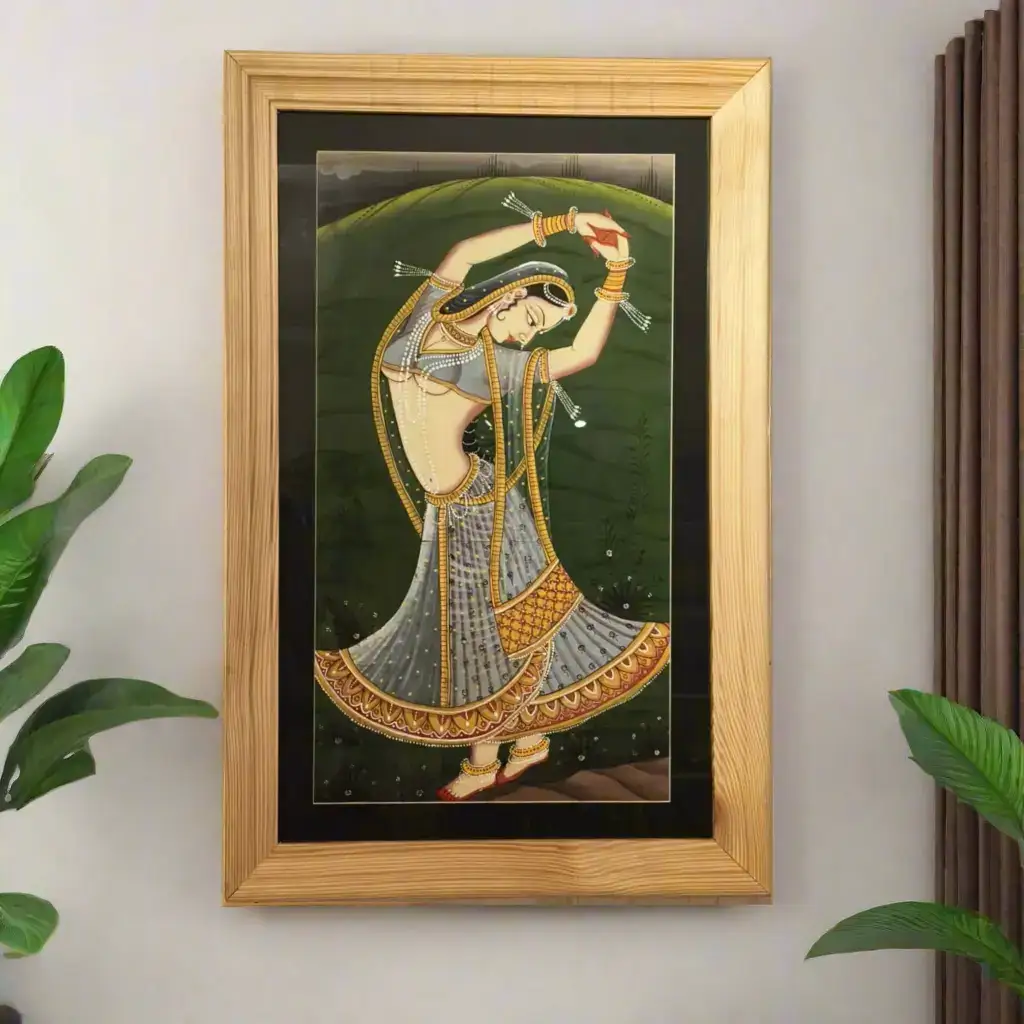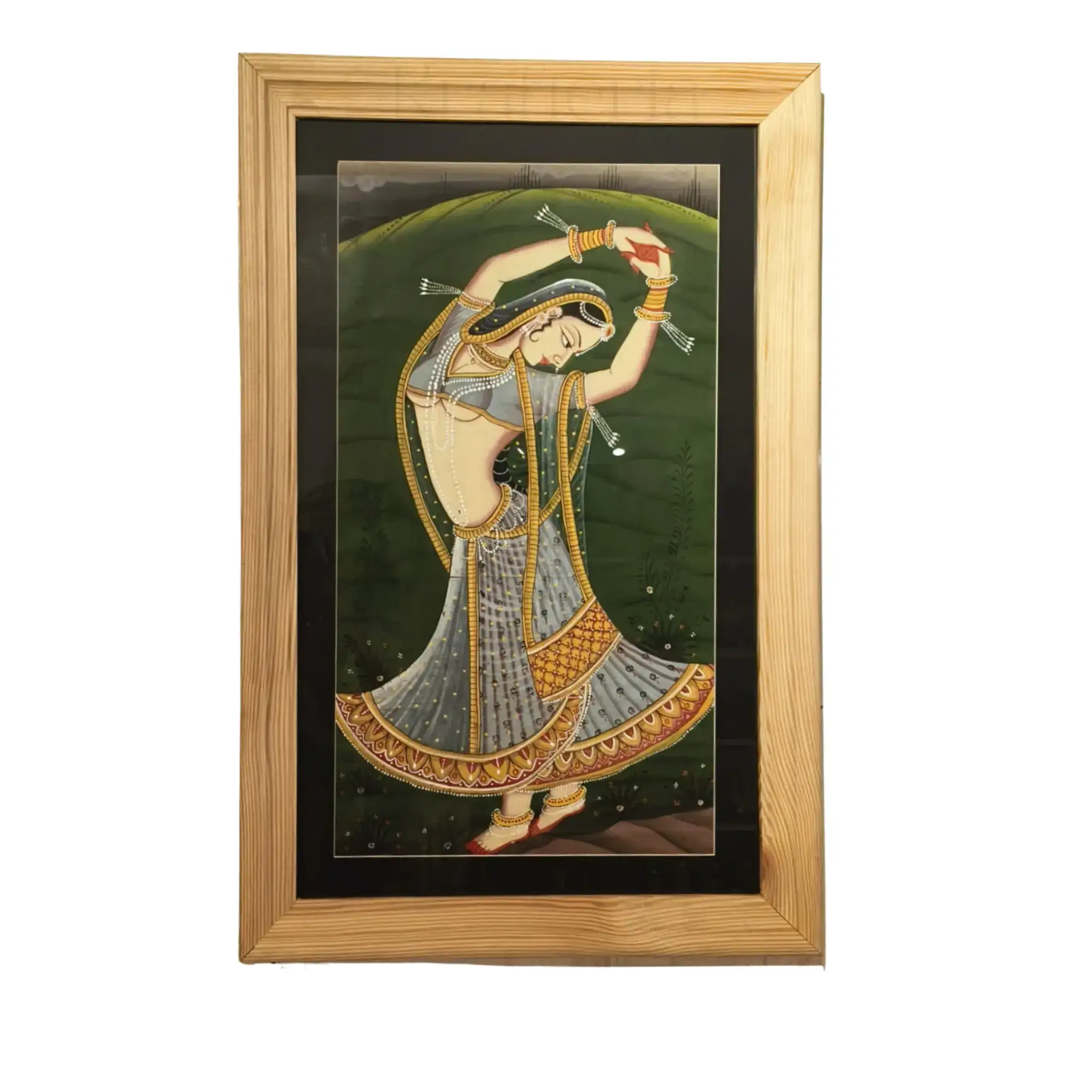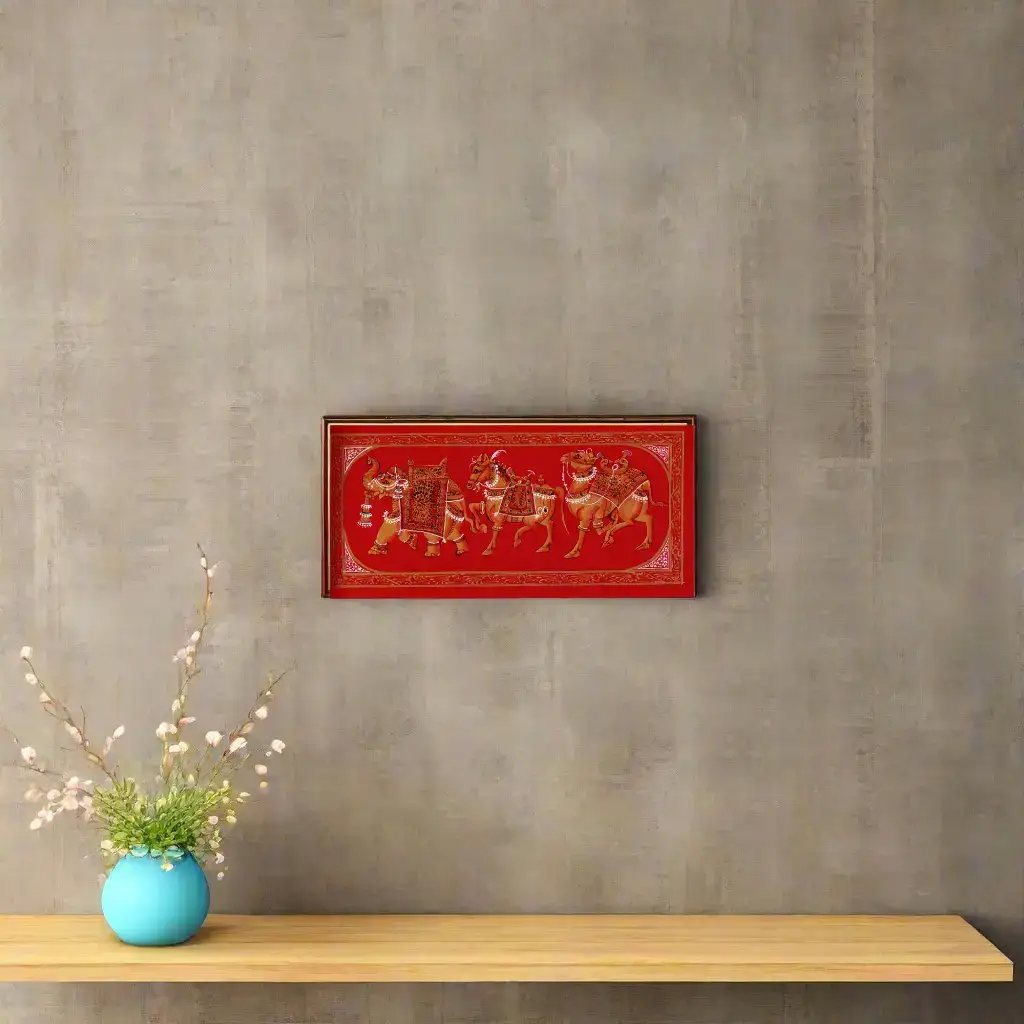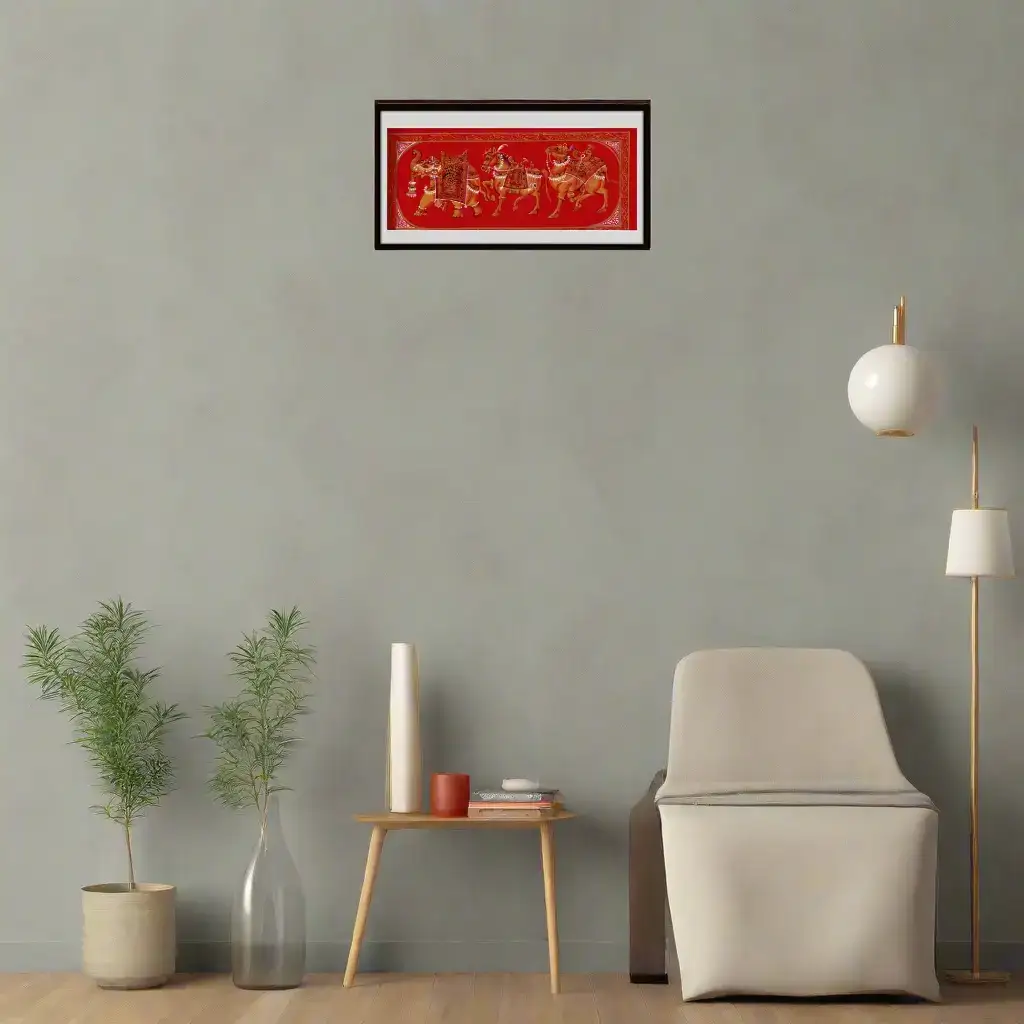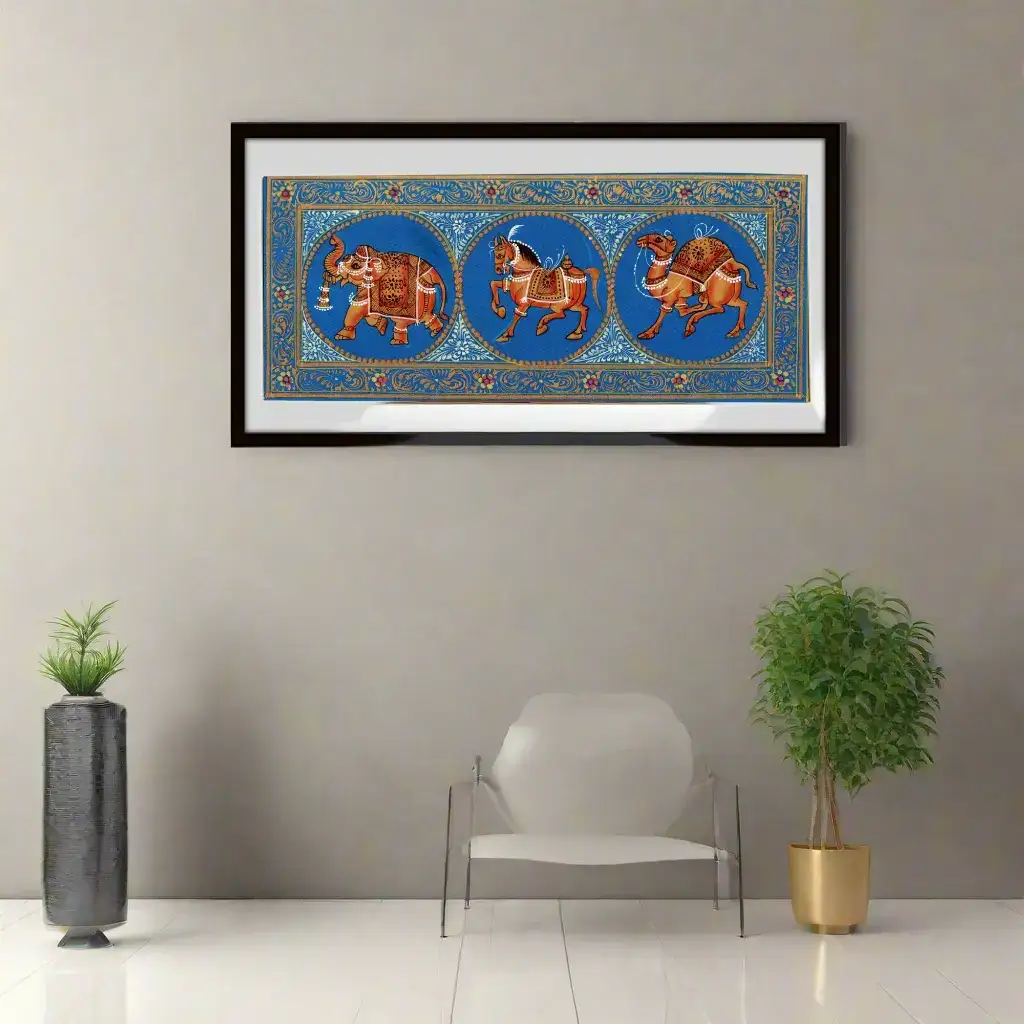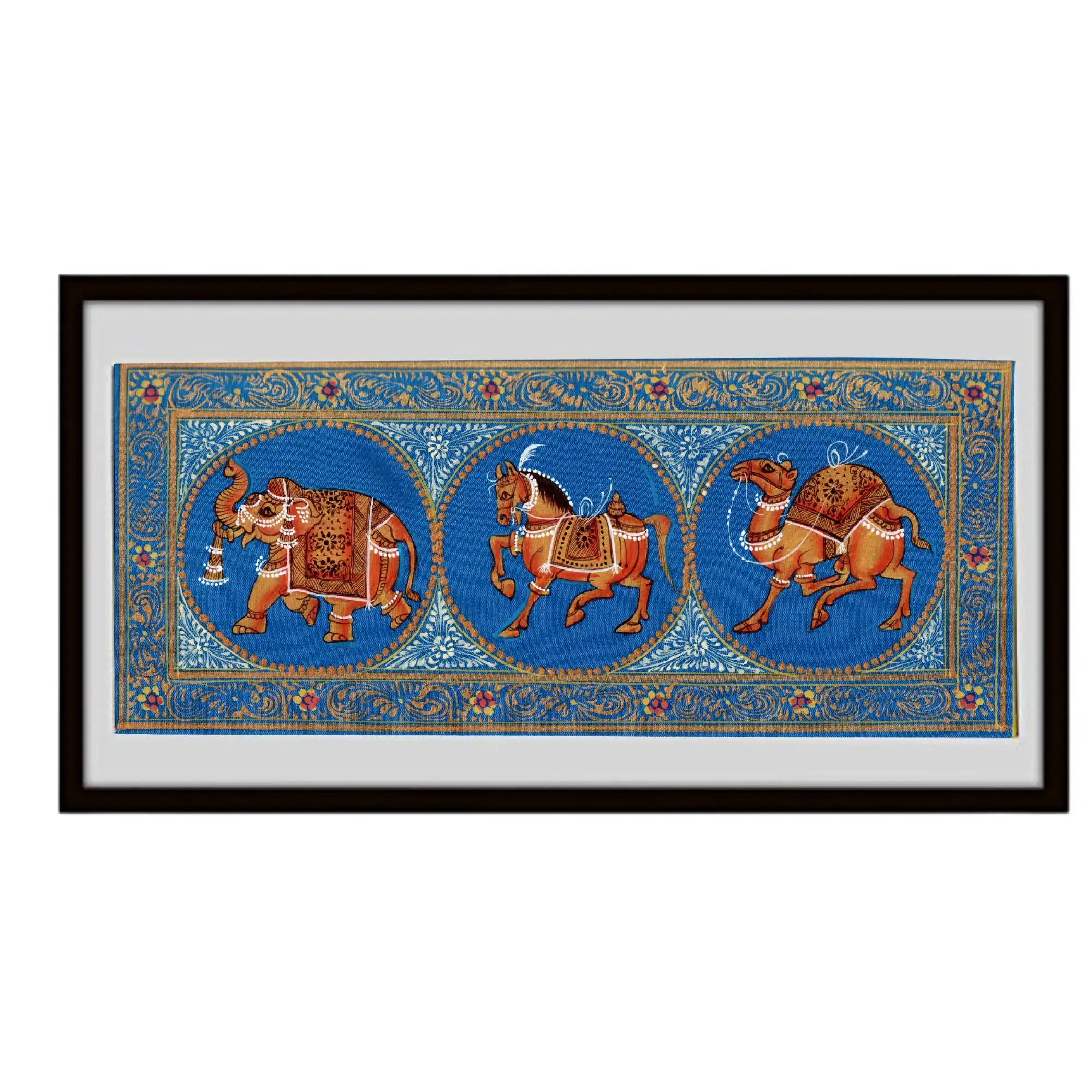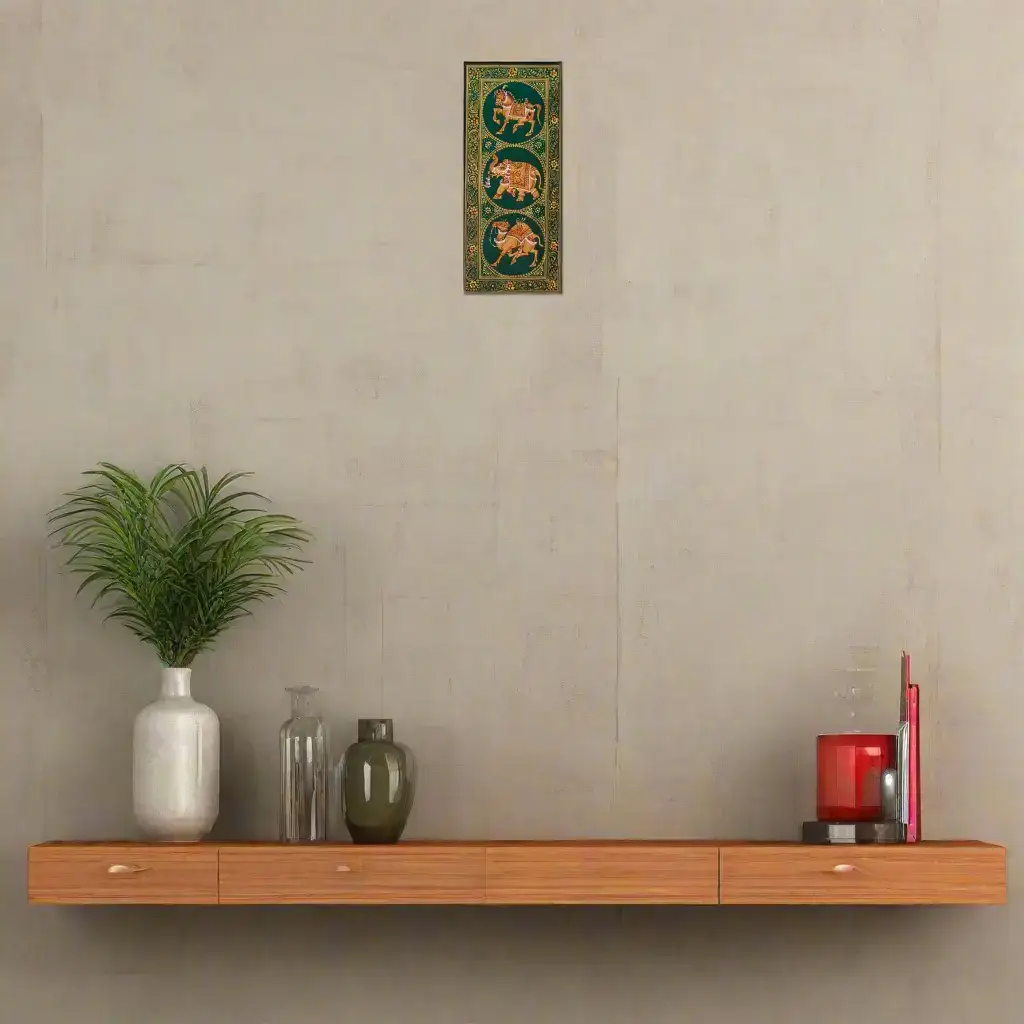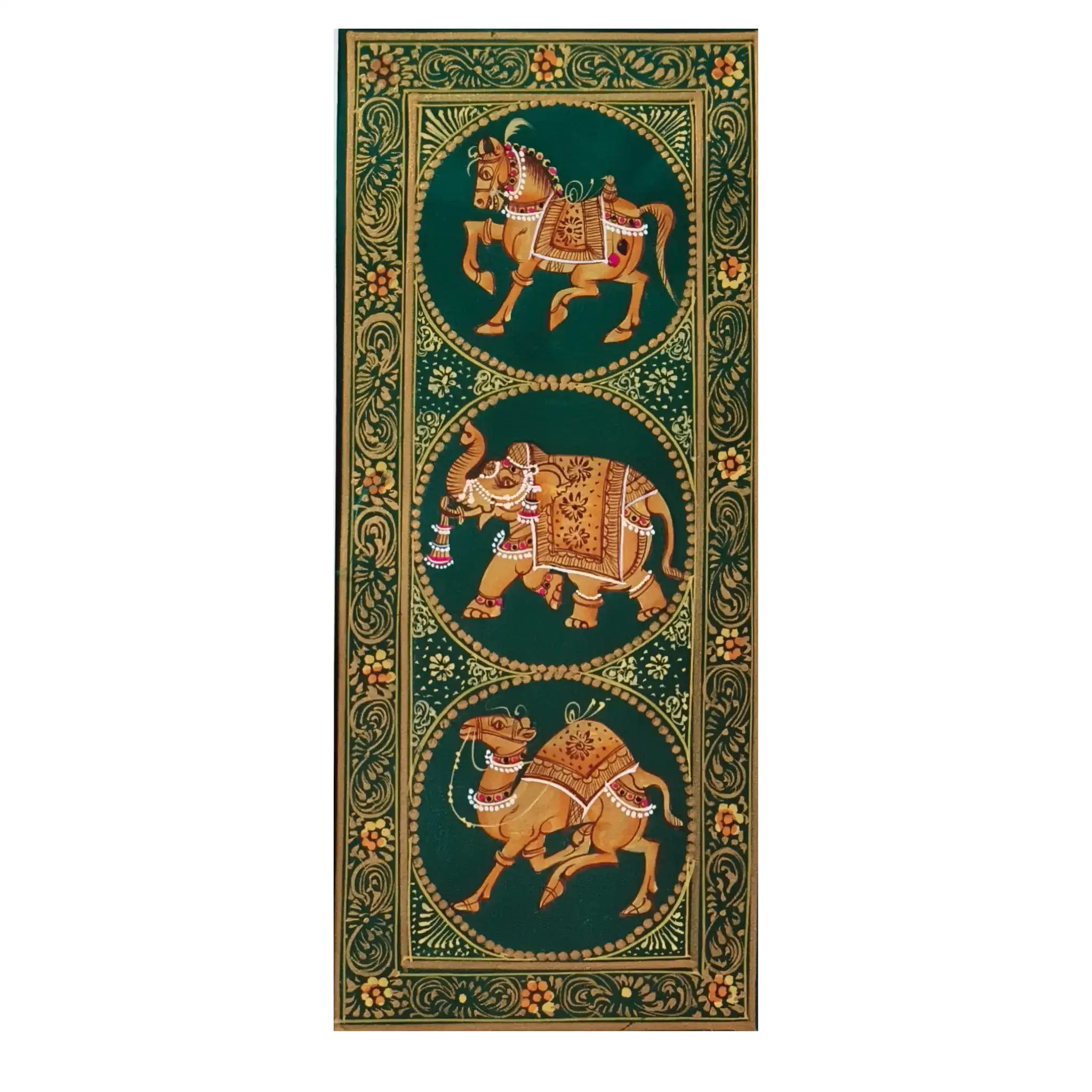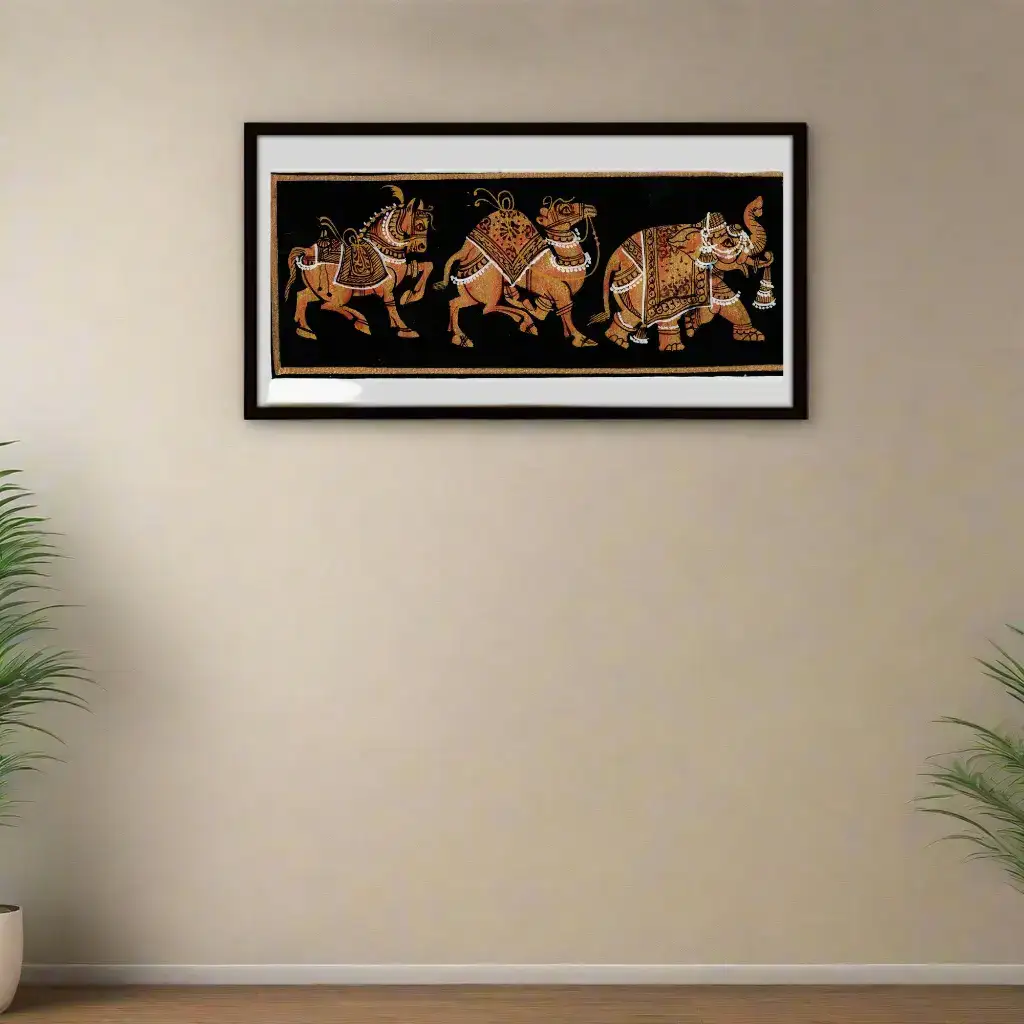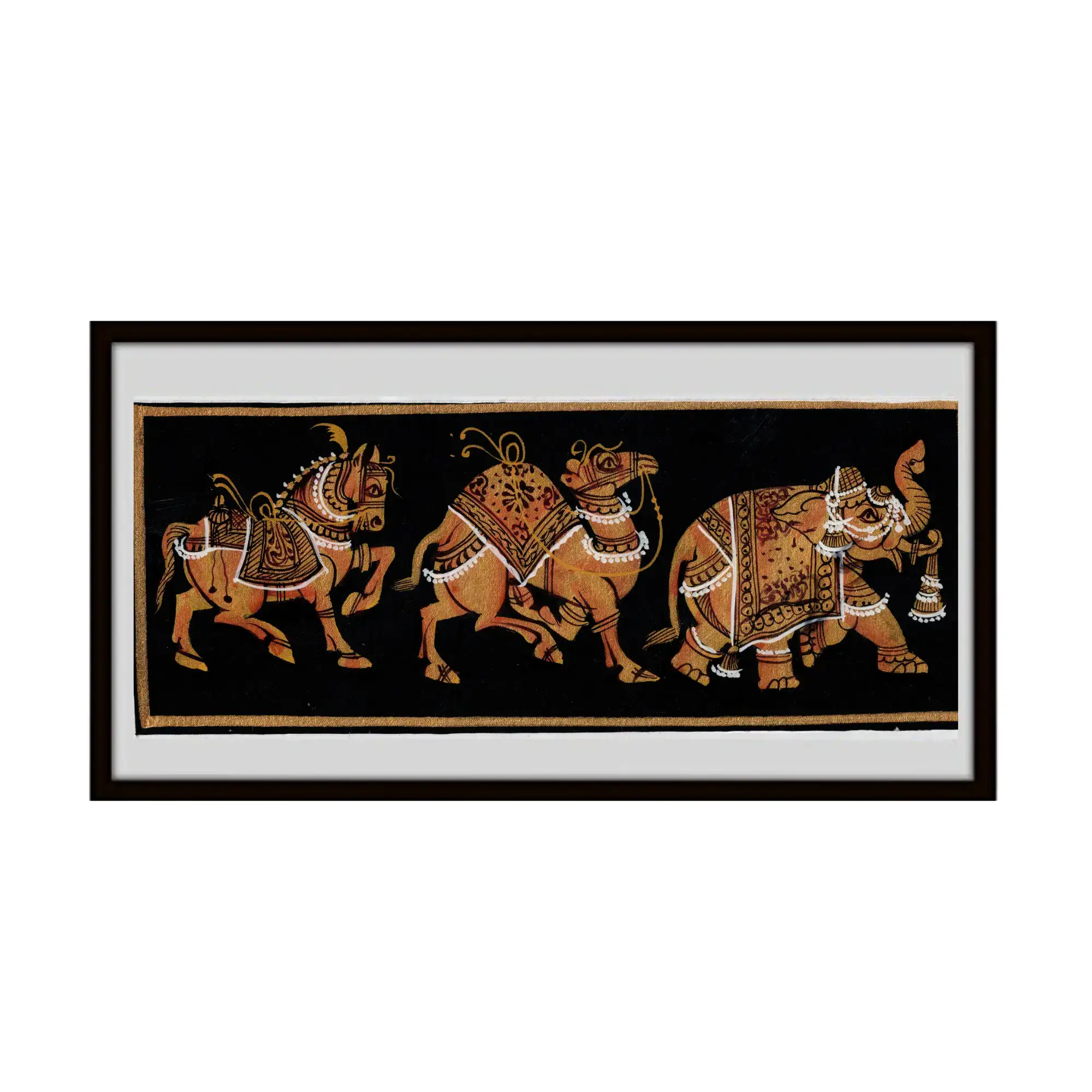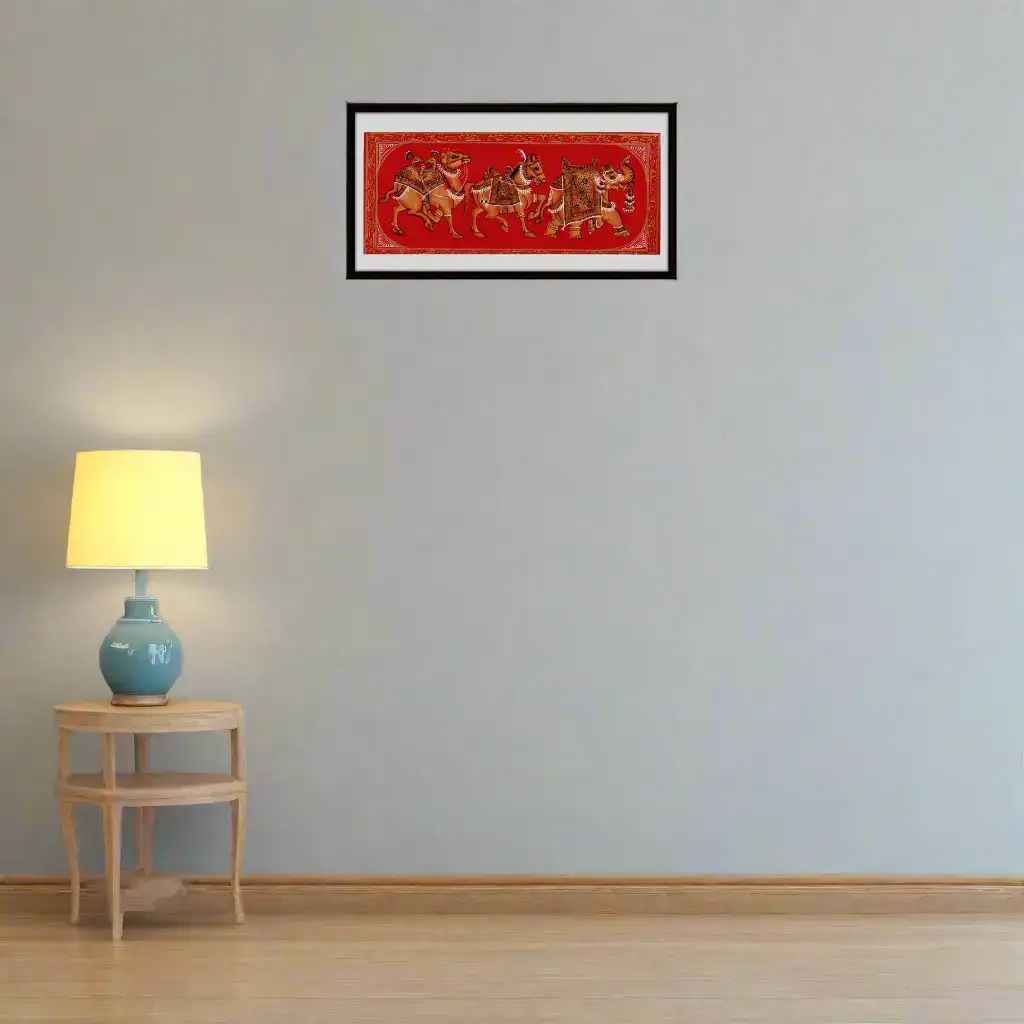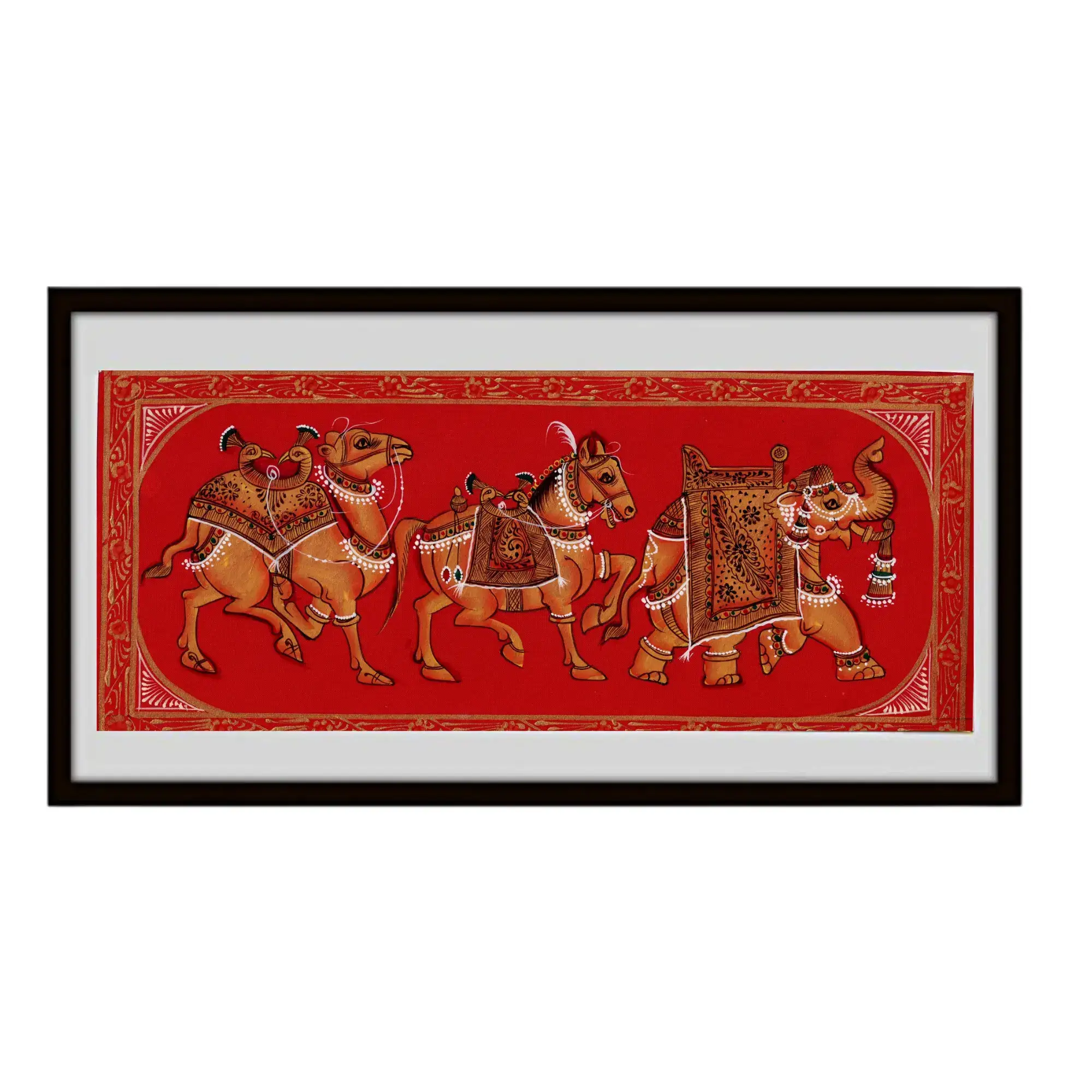
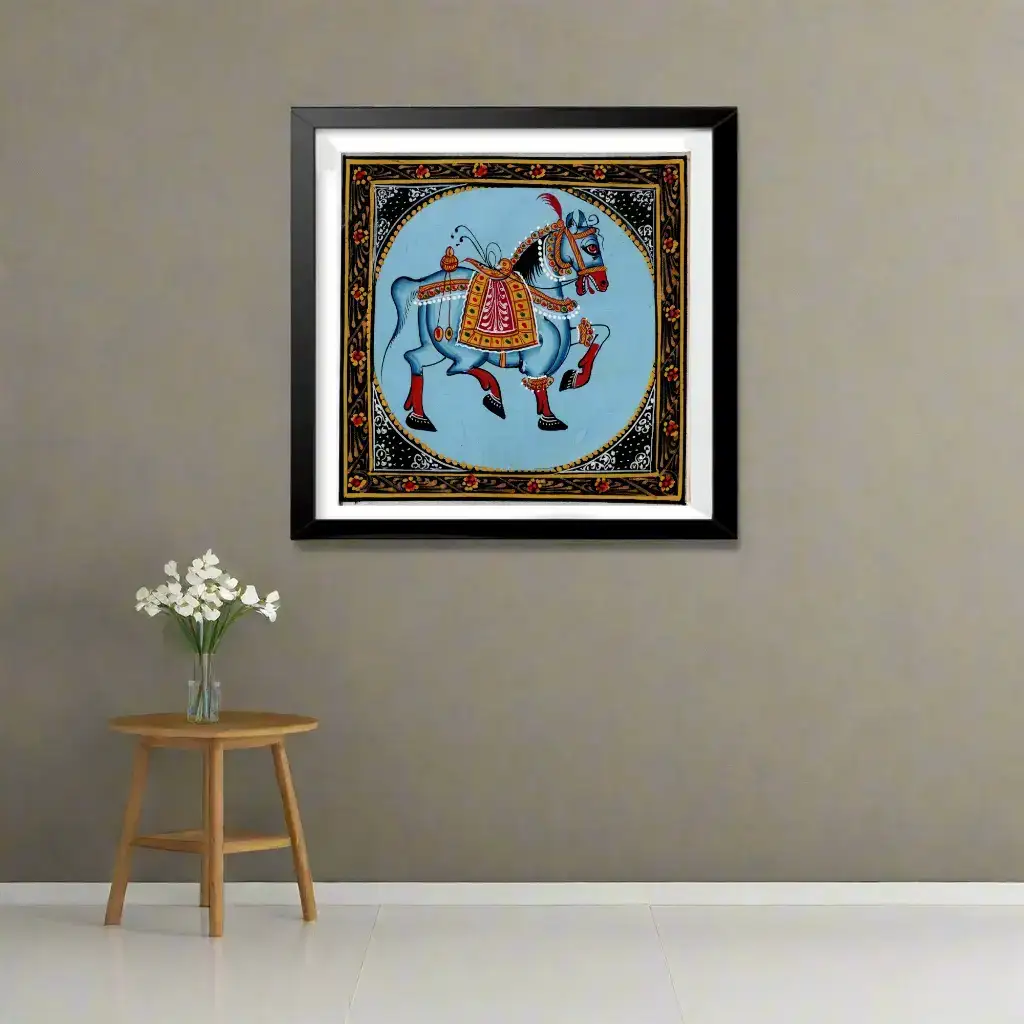
The Ceremonial Blue Steed Miniature Painting – Grace in Motion
The Ceremonial Blue Steed Miniature Painting – Grace in Motion
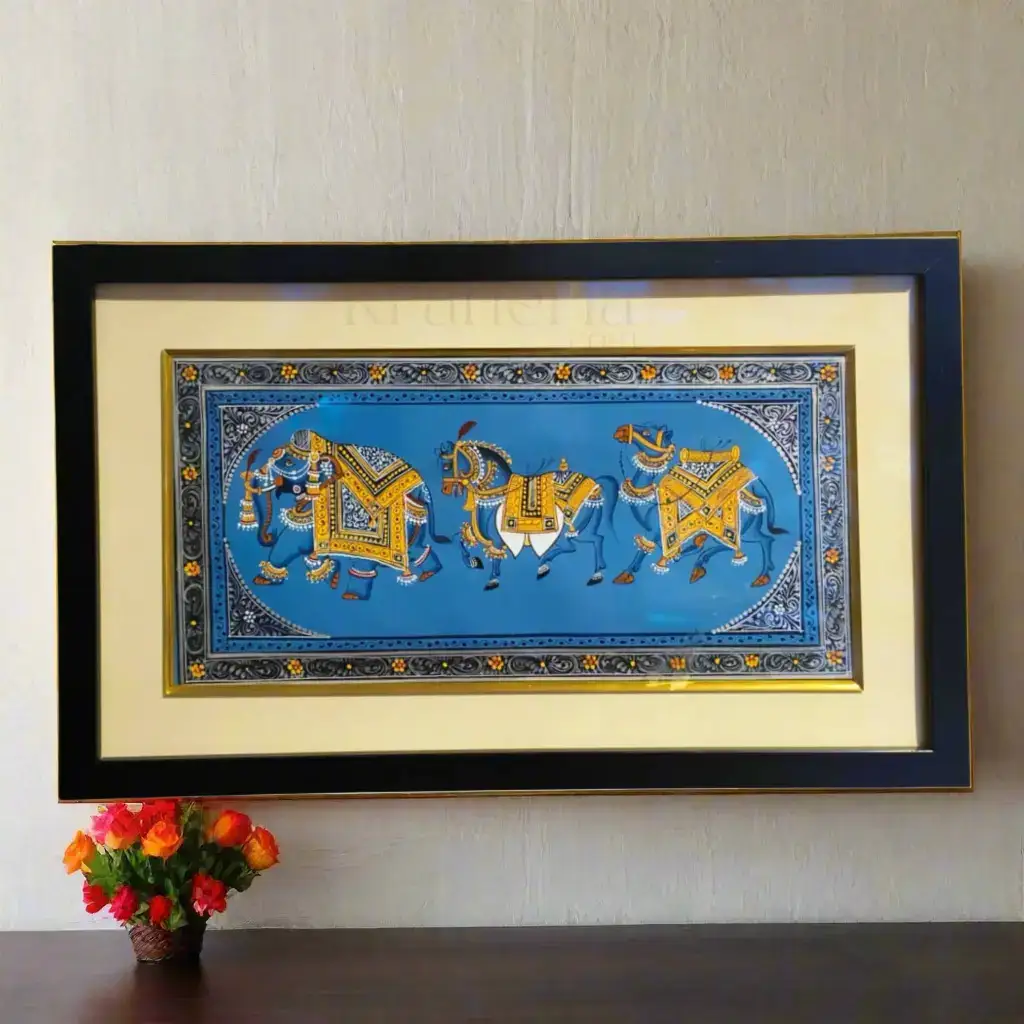
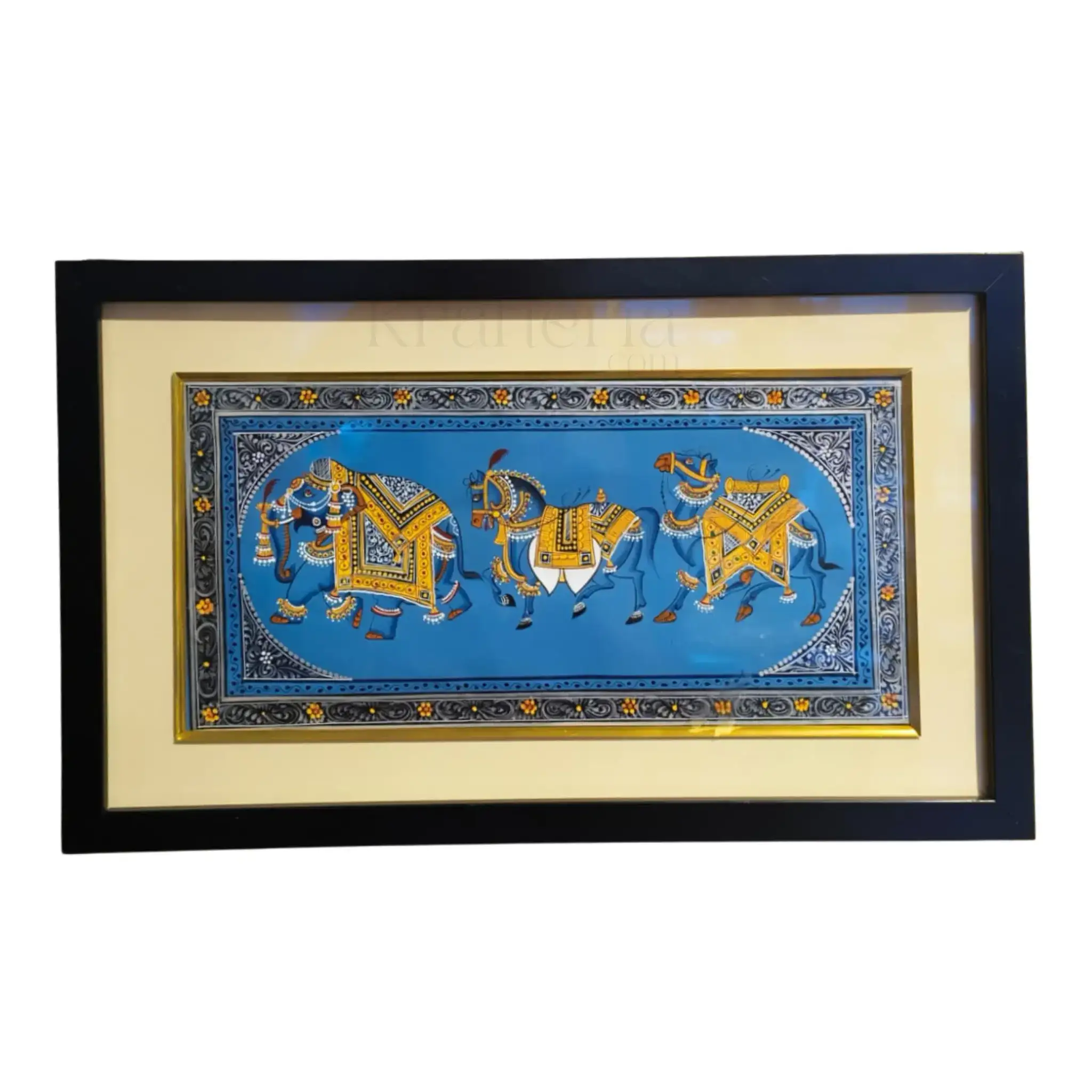
Blue Steed miniature painting is a vibrant and rich style of Indian miniature art. It flourished in the royal courts of Rajasthan starting in the 16th century. This art form is deeply rooted in Indian traditions and vividly showcases mythology, epics, love stories, royal life, and folk culture. Known for bold lines and bright colors, these paintings captivate viewers with intricate details and timeless charm. Artists use natural dyes and pigments sourced from minerals, vegetables, and precious stones. These materials create a lasting, luminous quality that highlights the regal spirit and cultural heritage. Every brush stroke illustrates historical richness and artistic brilliance that continues to inspire.
Regional Styles and Schools of Blue Steed Miniature Painting
The tradition includes several distinct schools: Mewar, Marwar, Bundi, Kota, Kishangarh, Bikaner, and Jaipur. Each school has a unique style and focuses on particular subjects. Kishangarh is famous for romantic depictions of Radha and Krishna, especially the iconic Bani Thani figure. Mewar paintings often portray court scenes, heroic tales, and religious themes. Bundi and Kota schools highlight lush landscapes and royal hunting scenes. These themes reflect the grandeur of royal court life. The diversity adds depth and richness, offering unique storytelling and strong visual appeal cherished by art lovers worldwide.
Royal Horse Miniature Painting and Its Influence
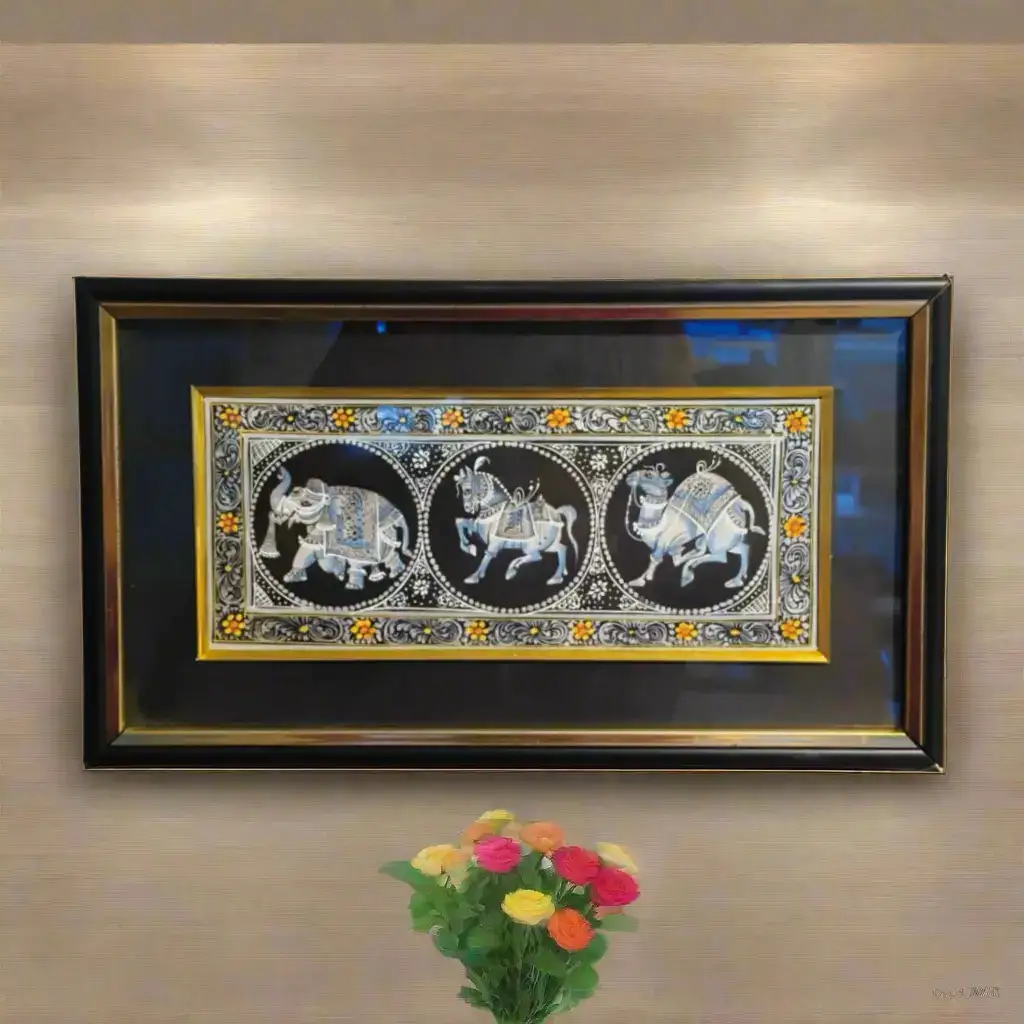
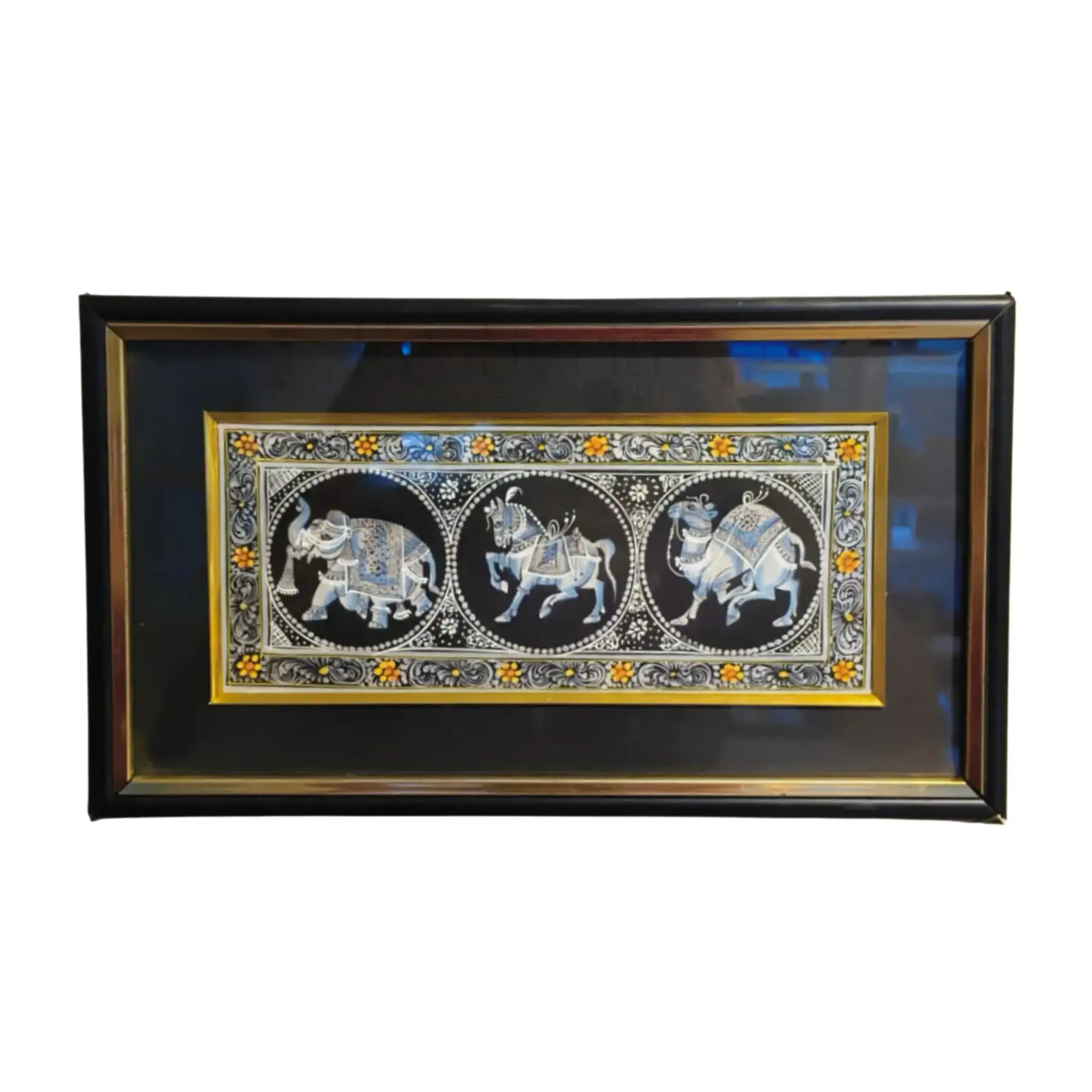
Royal horse miniature painting complements this heritage by highlighting the nobility, strength, and grace of royal horses. These artworks symbolize power and prestige in royal courts and royal traditions. Artists depict meticulous details that bring each majestic horse to life. They emphasize noble traits, elegant posture, and refined expressions of the horses. This genre is vital in Rajasthan’s heritage of horse miniature art. Together, these forms narrate a full story of regal power and cultural richness, celebrating the elegance and grandeur of horses in royal tradition and Indian history.
The Essence of Horse Miniature Art
Horse miniature art reflects a profound appreciation for the role horses played in Indian history. Skilled artists carefully depict every muscle, contour, and expression with precision. These artworks reveal royal birthing rituals, elaborate saddlery, and ceremonial uses of horses. Attention to such details captures the strong bond between rider and steed. This connection is celebrated in royal ceremonies, battles, and festivities. Combined with Blue Steed miniature painting, it tells an engaging story of cultural and historical importance. It transports the viewer to an age when horses were central to nobility and tradition.
The Legacy and Artistic Brilliance of Blue Steed Miniature Painting
The legacy of the Blue Steed miniature painting style is an enduring symbol of Rajasthan’s extraordinary artistic brilliance. It continues to inspire modern artists who blend tradition with innovation. The unique combination of vivid colors, fine lines, and rich narratives keeps this style highly cherished worldwide. Alongside royal horse miniature painting and horse miniature art, it tells a vibrant cultural saga spanning generations. Its charm captivates art lovers across the globe, preserving the royal spirit through lasting artistic expressions. This tradition showcases the incredible craftsmanship and cultural depth of Rajasthan’s artistic heritage.
- Blue Steed miniature uses natural pigments that ensure enduring color and vibrancy.
- The distinct schools offer varied styles, thematic focus, and cultural depth to the artworks.
- Royal horse miniature painting highlights the strength, elegance, and noble traits of regal horses in detail.
- Horse miniature art emphasizes skilled artistry, tradition, and profound respect for horses in royal culture.
The Blue Steed painting exemplifies a radiant celebration of India’s rich artistic past. It blends mythology, history, and ethnic traditions magnificently. This style uses bold composition to bring royal court stories and folk culture alive. Artists remain dedicated to natural materials, ensuring the paintings’ luminous quality and longevity. The use of mineral and vegetable pigments results in vibrant, lasting hues that uniquely express the regal spirit. Collectors and art lovers deeply appreciate these enduring qualities.
The diverse schools of miniature painting reflect Rajasthan’s vast cultural landscape. Each school’s distinctive style offers viewers a different lens on royal and folk narratives. From romantic legends to heroic court scenes, the stories unfold richly through artistic detail. For instance, Kishangarh’s romantic themes contrast with Bundi’s lush landscape depictions. These varied interpretations provide a multi-dimensional artistic experience. Together they preserve the legacy of Rajasthan’s miniature painting tradition with remarkable depth and beauty.
In royal courts, royal horse miniature painting held a special place. Horses embodied strength, nobility, and grace. Artists infused these qualities into each depiction with elaborate saddlery and regal poses. The paintings capture ceremonial importance and the powerful bond between horse and rider. This genre elevates the role of horses within royal symbolism. Consequently, it carries forward traditions of honor, respect, and admiration for these noble creatures. Complementing horse miniature art, it enriches the cultural tapestry of Rajasthan’s painting heritage.
Horse miniature art stands out for its detailed representation of horses in action and ceremony. Skilled artists focus on anatomy, movement, and expression. The artworks tell stories about royal birth rituals and battlefield valor. This careful attention highlights the deep historic connection between humans and horses. Together with the Steed miniature painting style, the art form evokes a timeless narrative of loyalty, elegance, and cultural prestige. These vibrant paintings invite viewers into a world where horses signify tradition, power, and beauty.
Original: $9.67
-70%$9.67
$2.90Product Information
Product Information
Shipping & Returns
Shipping & Returns
Description
The Ceremonial Blue Steed Miniature Painting – Grace in Motion
Blue Steed miniature painting is a vibrant and rich style of Indian miniature art. It flourished in the royal courts of Rajasthan starting in the 16th century. This art form is deeply rooted in Indian traditions and vividly showcases mythology, epics, love stories, royal life, and folk culture. Known for bold lines and bright colors, these paintings captivate viewers with intricate details and timeless charm. Artists use natural dyes and pigments sourced from minerals, vegetables, and precious stones. These materials create a lasting, luminous quality that highlights the regal spirit and cultural heritage. Every brush stroke illustrates historical richness and artistic brilliance that continues to inspire.
Regional Styles and Schools of Blue Steed Miniature Painting
The tradition includes several distinct schools: Mewar, Marwar, Bundi, Kota, Kishangarh, Bikaner, and Jaipur. Each school has a unique style and focuses on particular subjects. Kishangarh is famous for romantic depictions of Radha and Krishna, especially the iconic Bani Thani figure. Mewar paintings often portray court scenes, heroic tales, and religious themes. Bundi and Kota schools highlight lush landscapes and royal hunting scenes. These themes reflect the grandeur of royal court life. The diversity adds depth and richness, offering unique storytelling and strong visual appeal cherished by art lovers worldwide.
Royal Horse Miniature Painting and Its Influence
Royal horse miniature painting complements this heritage by highlighting the nobility, strength, and grace of royal horses. These artworks symbolize power and prestige in royal courts and royal traditions. Artists depict meticulous details that bring each majestic horse to life. They emphasize noble traits, elegant posture, and refined expressions of the horses. This genre is vital in Rajasthan’s heritage of horse miniature art. Together, these forms narrate a full story of regal power and cultural richness, celebrating the elegance and grandeur of horses in royal tradition and Indian history.
The Essence of Horse Miniature Art
Horse miniature art reflects a profound appreciation for the role horses played in Indian history. Skilled artists carefully depict every muscle, contour, and expression with precision. These artworks reveal royal birthing rituals, elaborate saddlery, and ceremonial uses of horses. Attention to such details captures the strong bond between rider and steed. This connection is celebrated in royal ceremonies, battles, and festivities. Combined with Blue Steed miniature painting, it tells an engaging story of cultural and historical importance. It transports the viewer to an age when horses were central to nobility and tradition.
The Legacy and Artistic Brilliance of Blue Steed Miniature Painting
The legacy of the Blue Steed miniature painting style is an enduring symbol of Rajasthan’s extraordinary artistic brilliance. It continues to inspire modern artists who blend tradition with innovation. The unique combination of vivid colors, fine lines, and rich narratives keeps this style highly cherished worldwide. Alongside royal horse miniature painting and horse miniature art, it tells a vibrant cultural saga spanning generations. Its charm captivates art lovers across the globe, preserving the royal spirit through lasting artistic expressions. This tradition showcases the incredible craftsmanship and cultural depth of Rajasthan’s artistic heritage.
- Blue Steed miniature uses natural pigments that ensure enduring color and vibrancy.
- The distinct schools offer varied styles, thematic focus, and cultural depth to the artworks.
- Royal horse miniature painting highlights the strength, elegance, and noble traits of regal horses in detail.
- Horse miniature art emphasizes skilled artistry, tradition, and profound respect for horses in royal culture.
The Blue Steed painting exemplifies a radiant celebration of India’s rich artistic past. It blends mythology, history, and ethnic traditions magnificently. This style uses bold composition to bring royal court stories and folk culture alive. Artists remain dedicated to natural materials, ensuring the paintings’ luminous quality and longevity. The use of mineral and vegetable pigments results in vibrant, lasting hues that uniquely express the regal spirit. Collectors and art lovers deeply appreciate these enduring qualities.
The diverse schools of miniature painting reflect Rajasthan’s vast cultural landscape. Each school’s distinctive style offers viewers a different lens on royal and folk narratives. From romantic legends to heroic court scenes, the stories unfold richly through artistic detail. For instance, Kishangarh’s romantic themes contrast with Bundi’s lush landscape depictions. These varied interpretations provide a multi-dimensional artistic experience. Together they preserve the legacy of Rajasthan’s miniature painting tradition with remarkable depth and beauty.
In royal courts, royal horse miniature painting held a special place. Horses embodied strength, nobility, and grace. Artists infused these qualities into each depiction with elaborate saddlery and regal poses. The paintings capture ceremonial importance and the powerful bond between horse and rider. This genre elevates the role of horses within royal symbolism. Consequently, it carries forward traditions of honor, respect, and admiration for these noble creatures. Complementing horse miniature art, it enriches the cultural tapestry of Rajasthan’s painting heritage.
Horse miniature art stands out for its detailed representation of horses in action and ceremony. Skilled artists focus on anatomy, movement, and expression. The artworks tell stories about royal birth rituals and battlefield valor. This careful attention highlights the deep historic connection between humans and horses. Together with the Steed miniature painting style, the art form evokes a timeless narrative of loyalty, elegance, and cultural prestige. These vibrant paintings invite viewers into a world where horses signify tradition, power, and beauty.