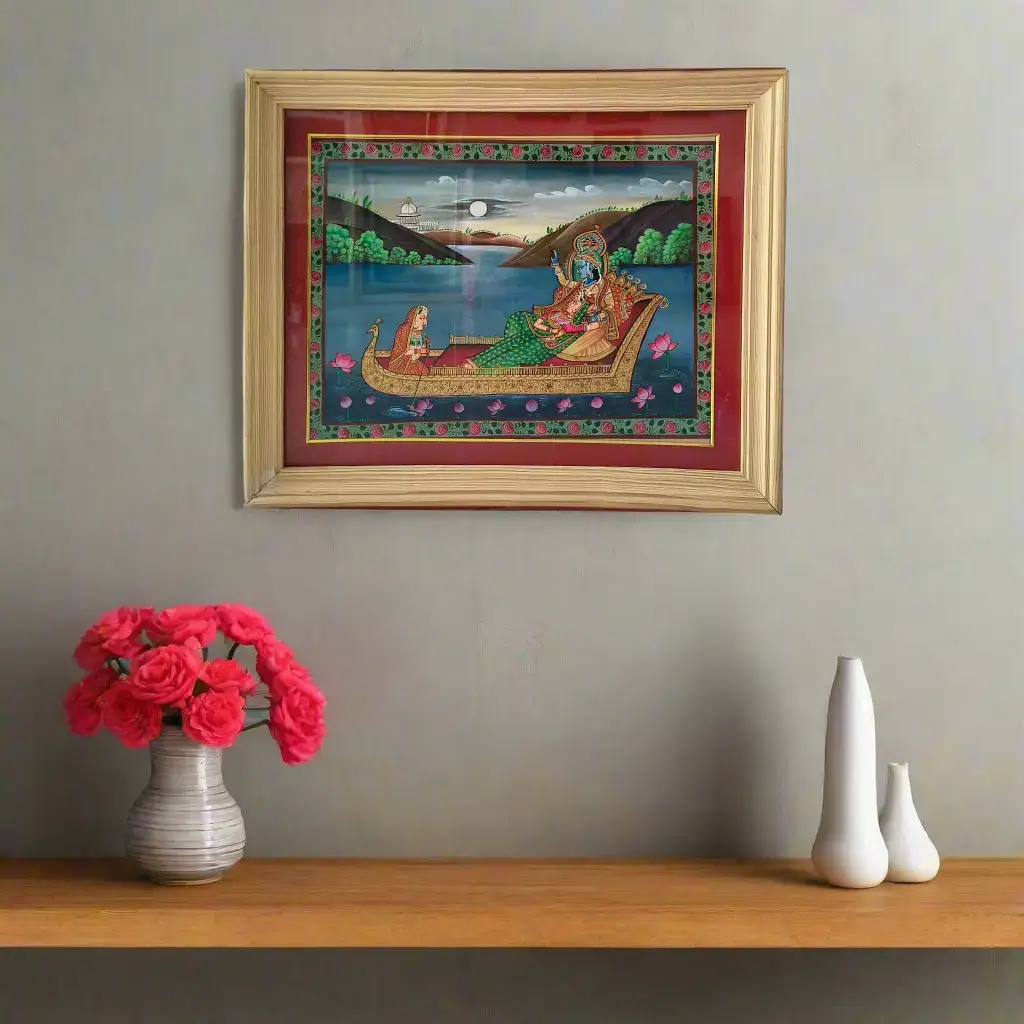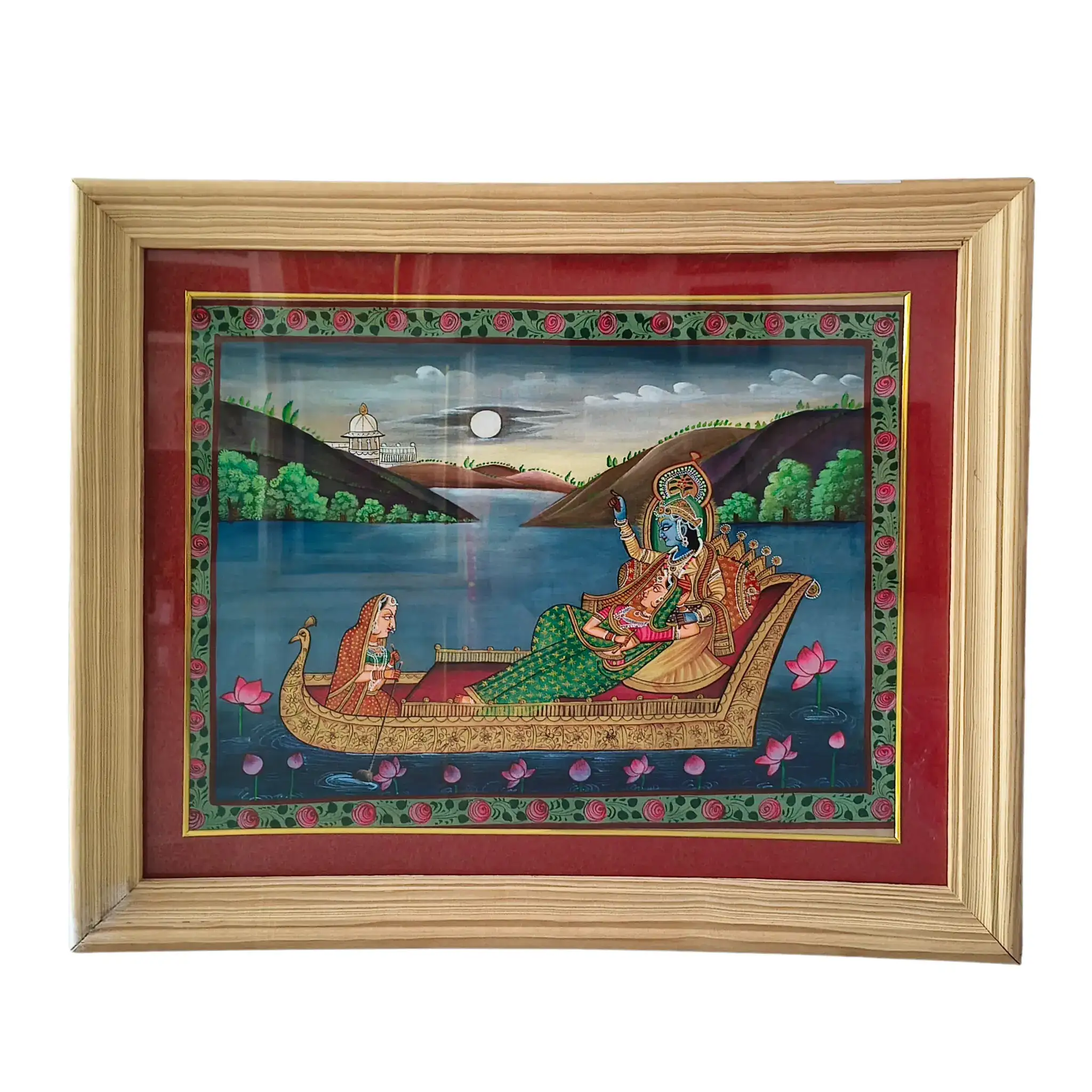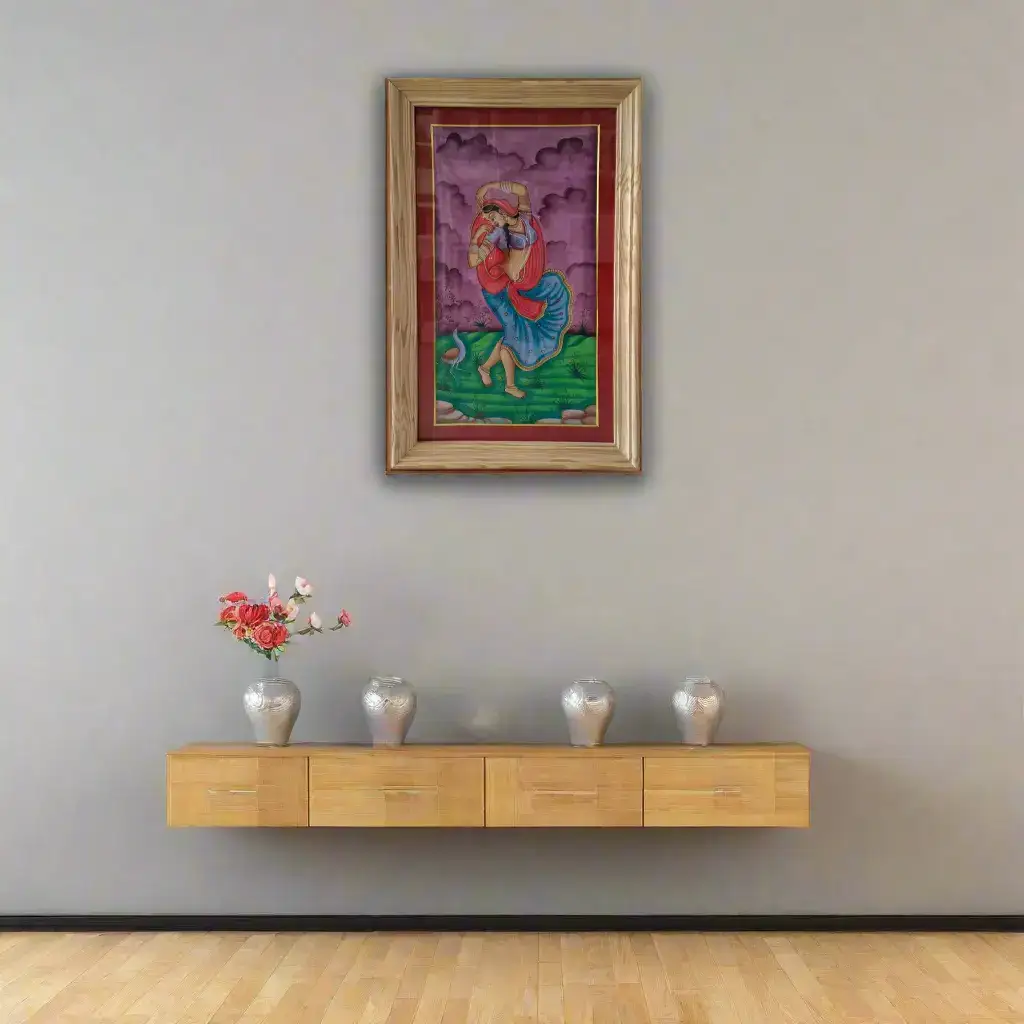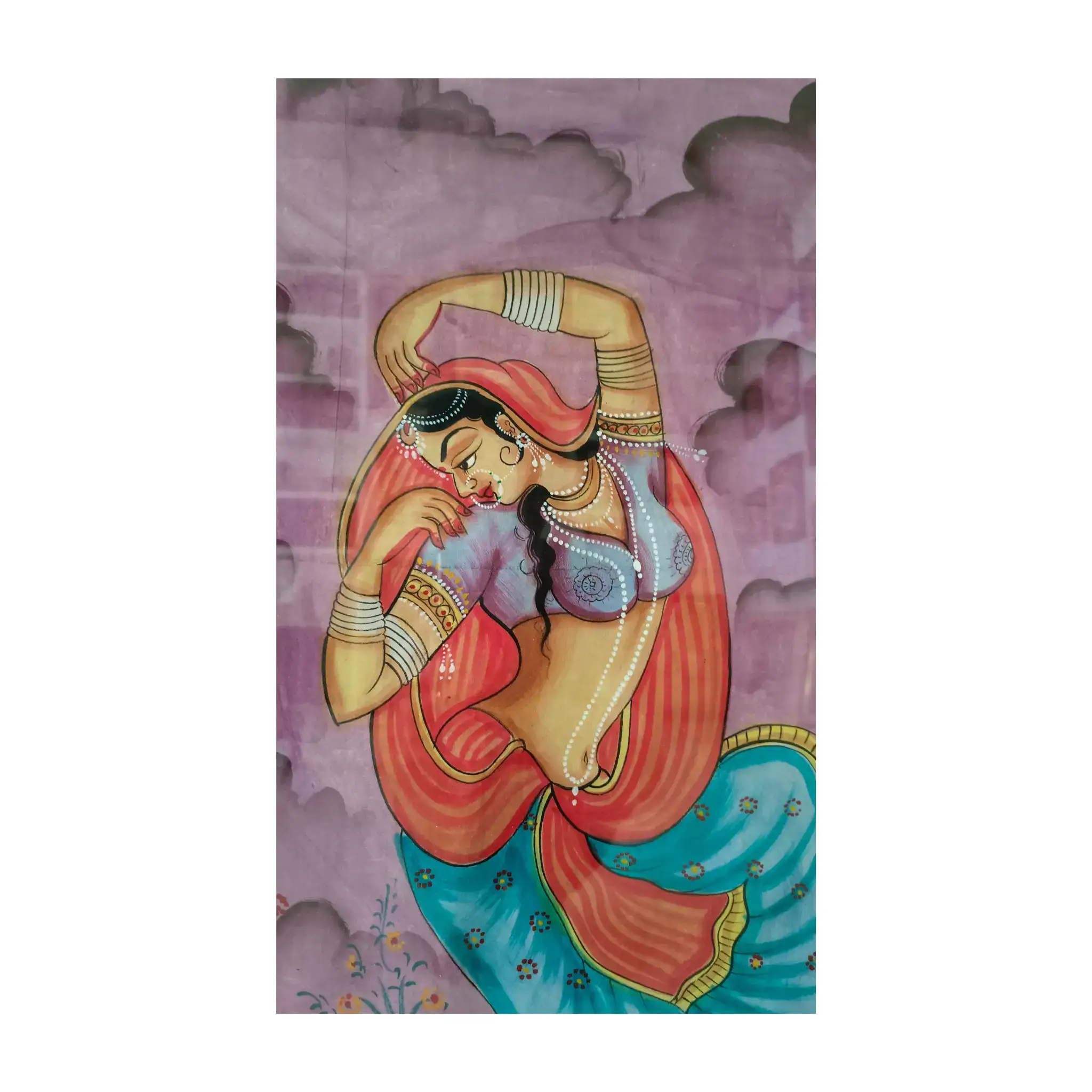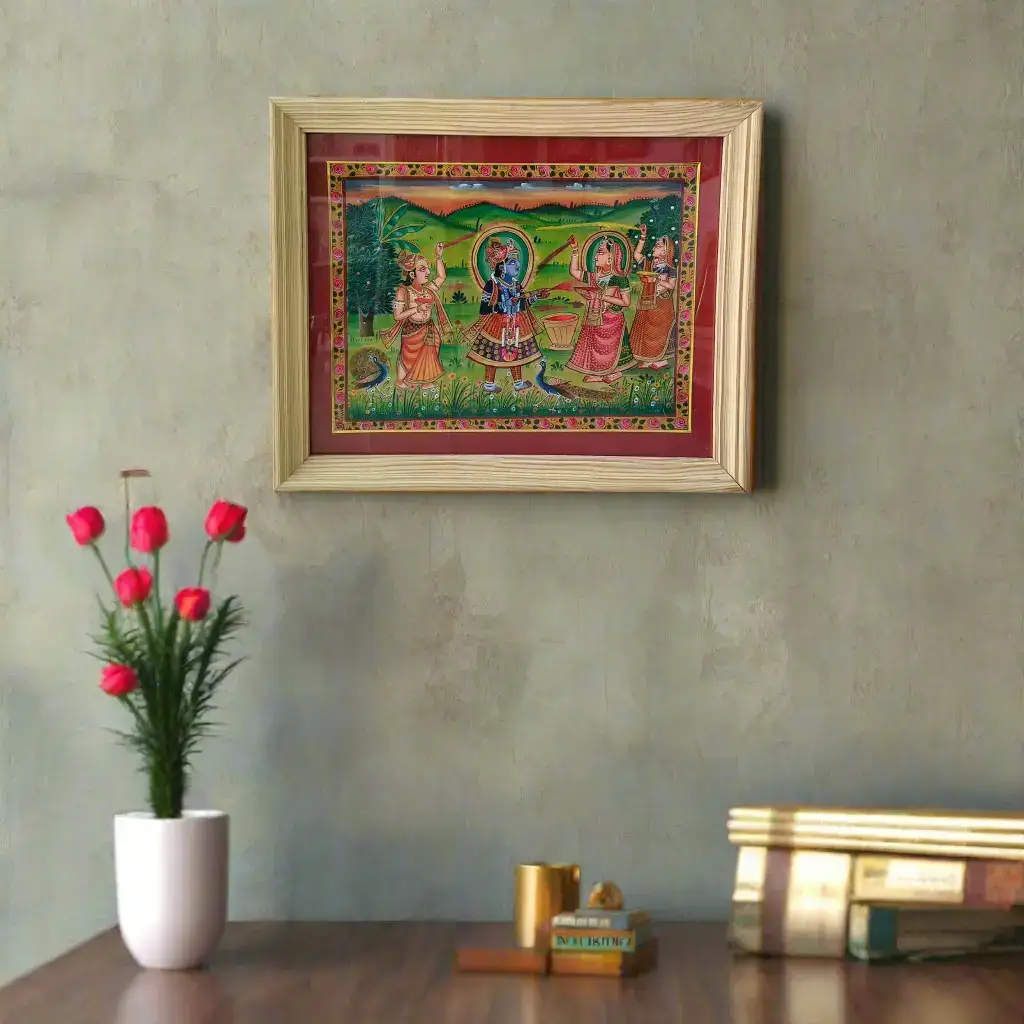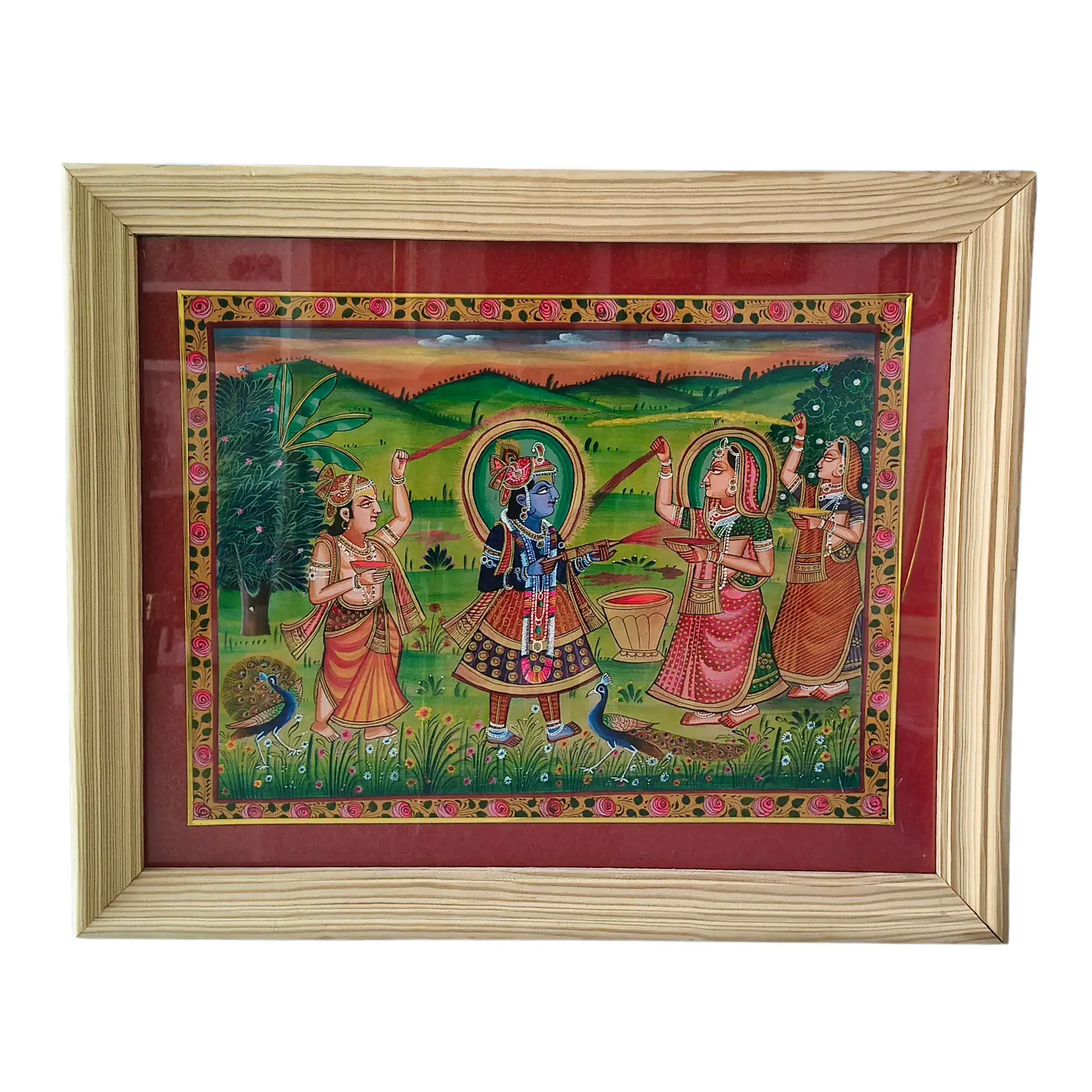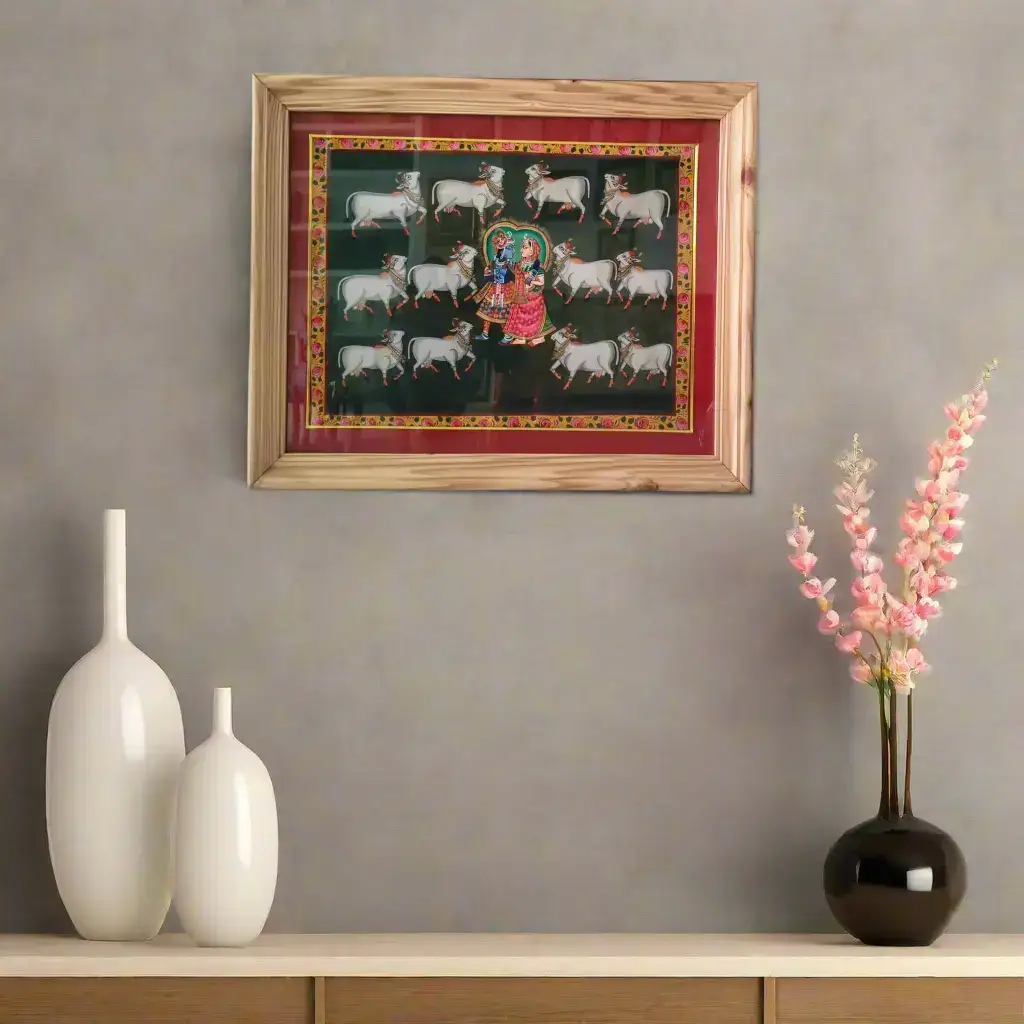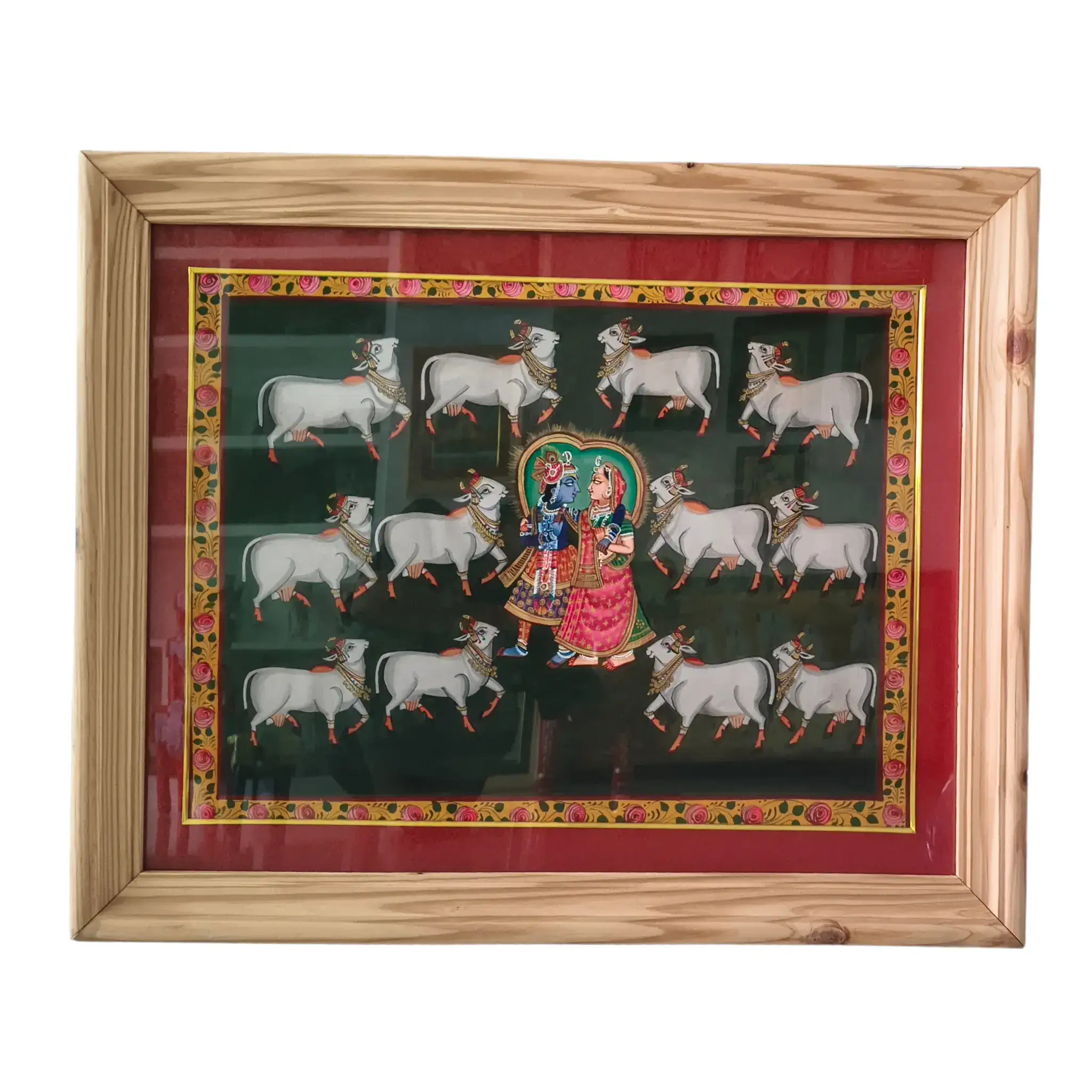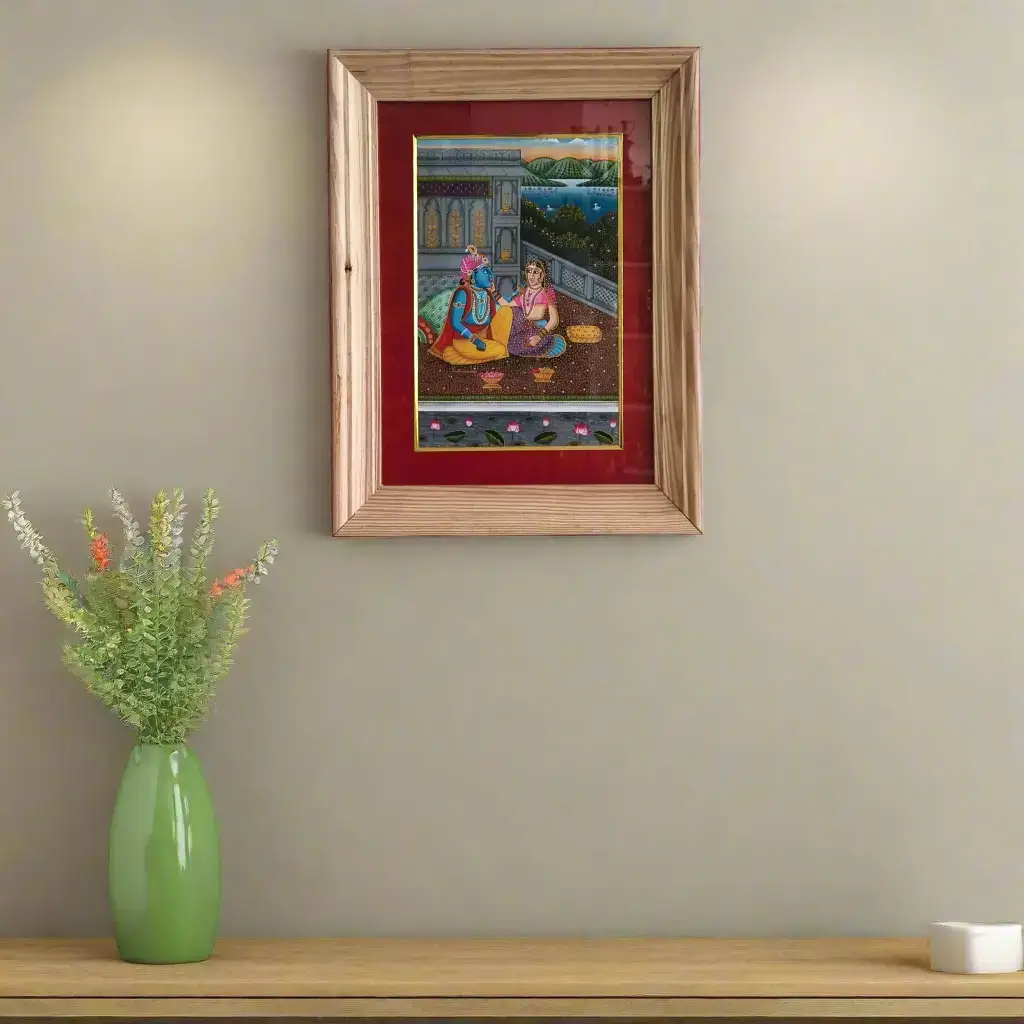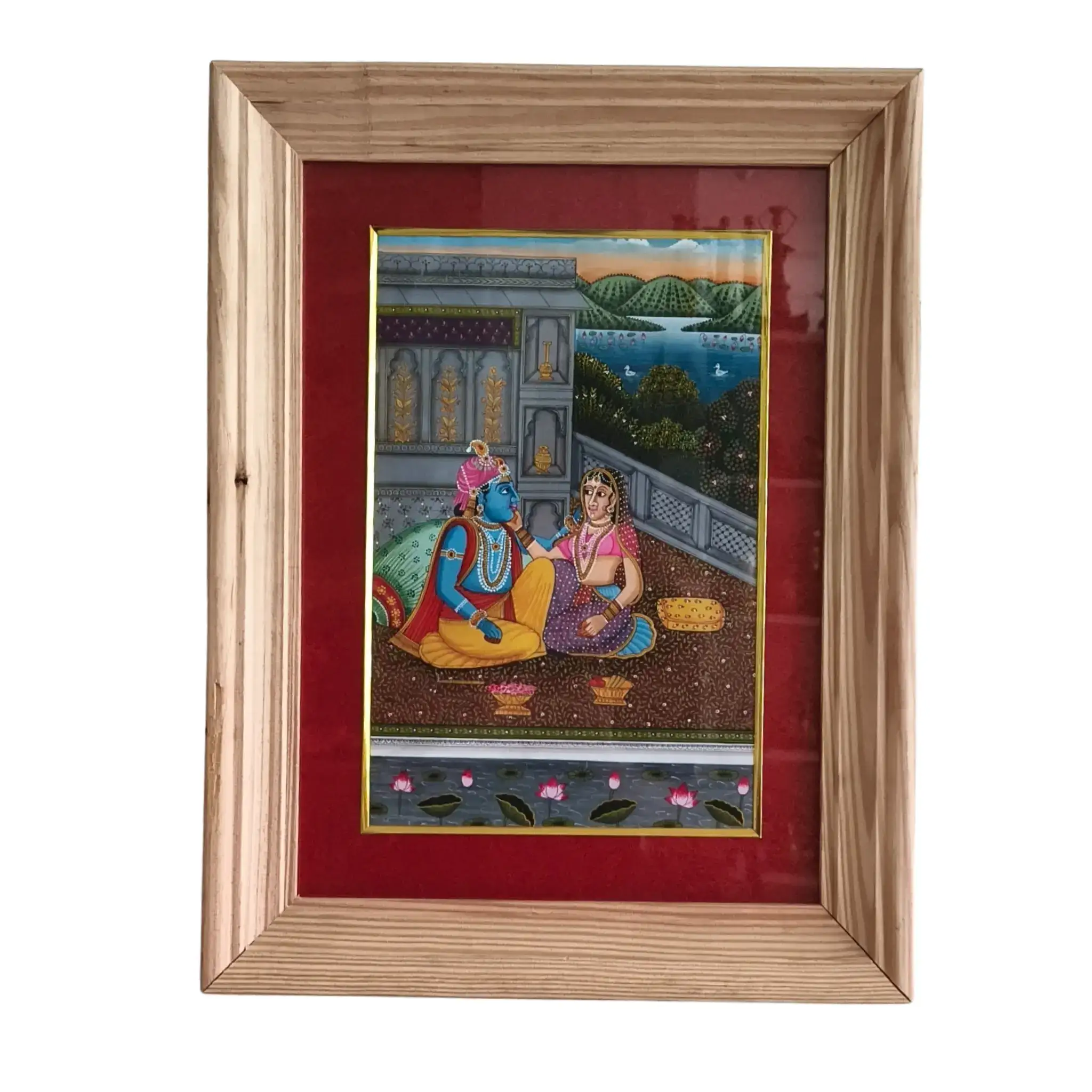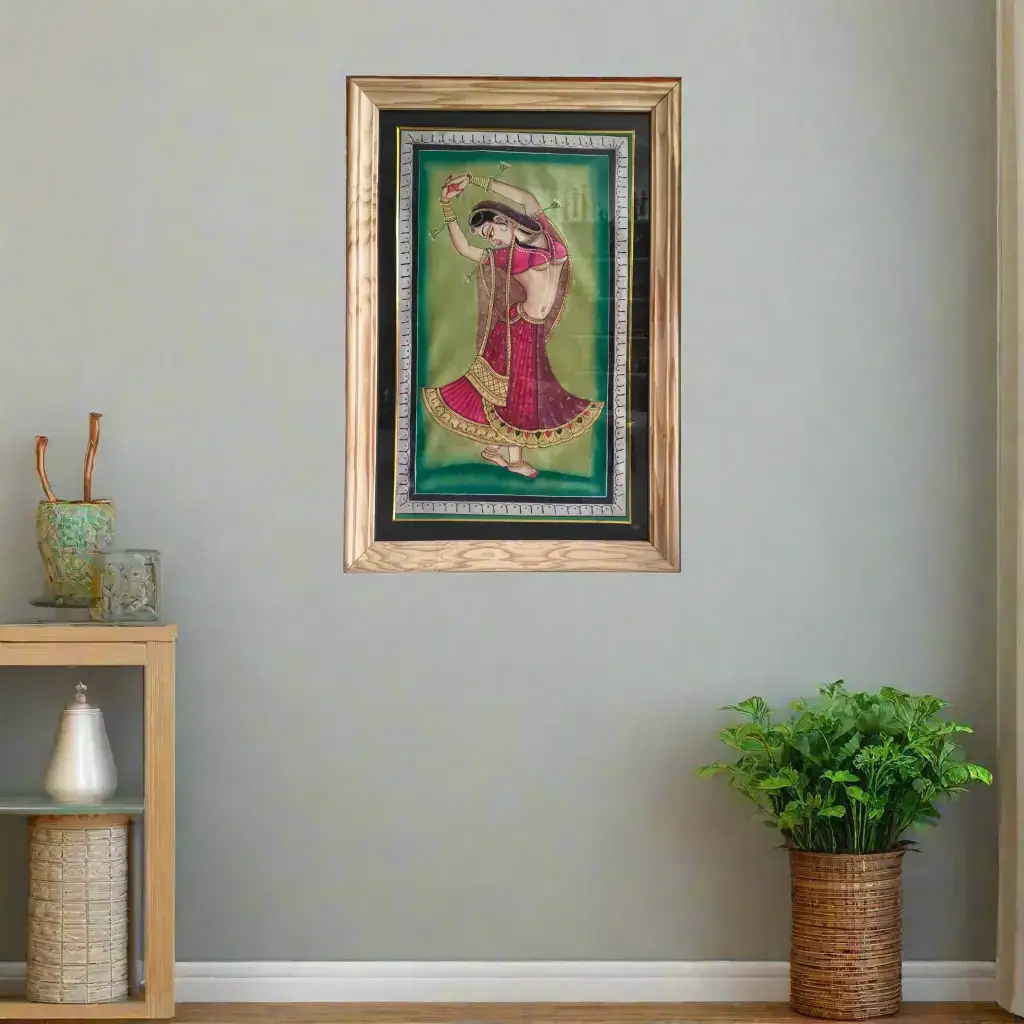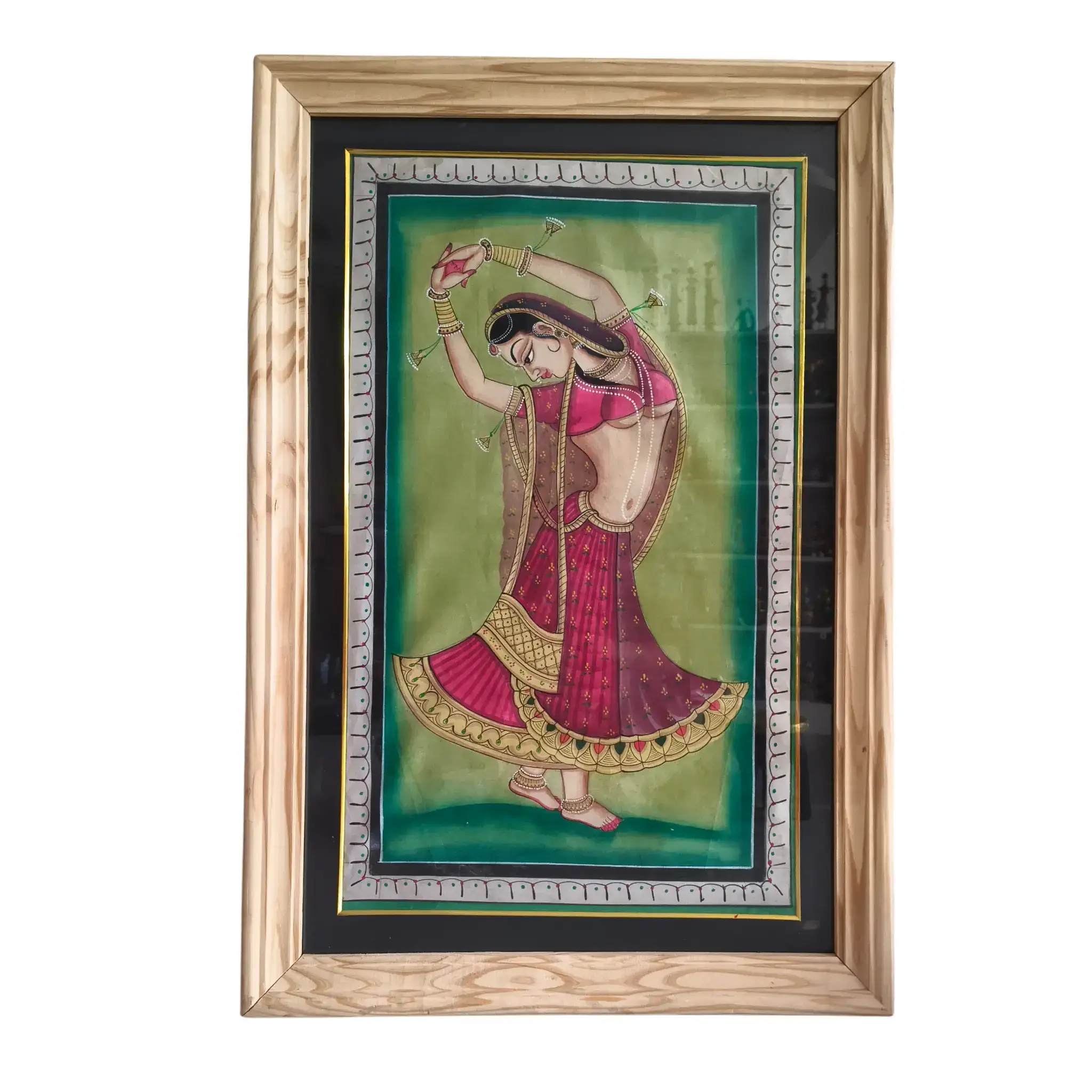
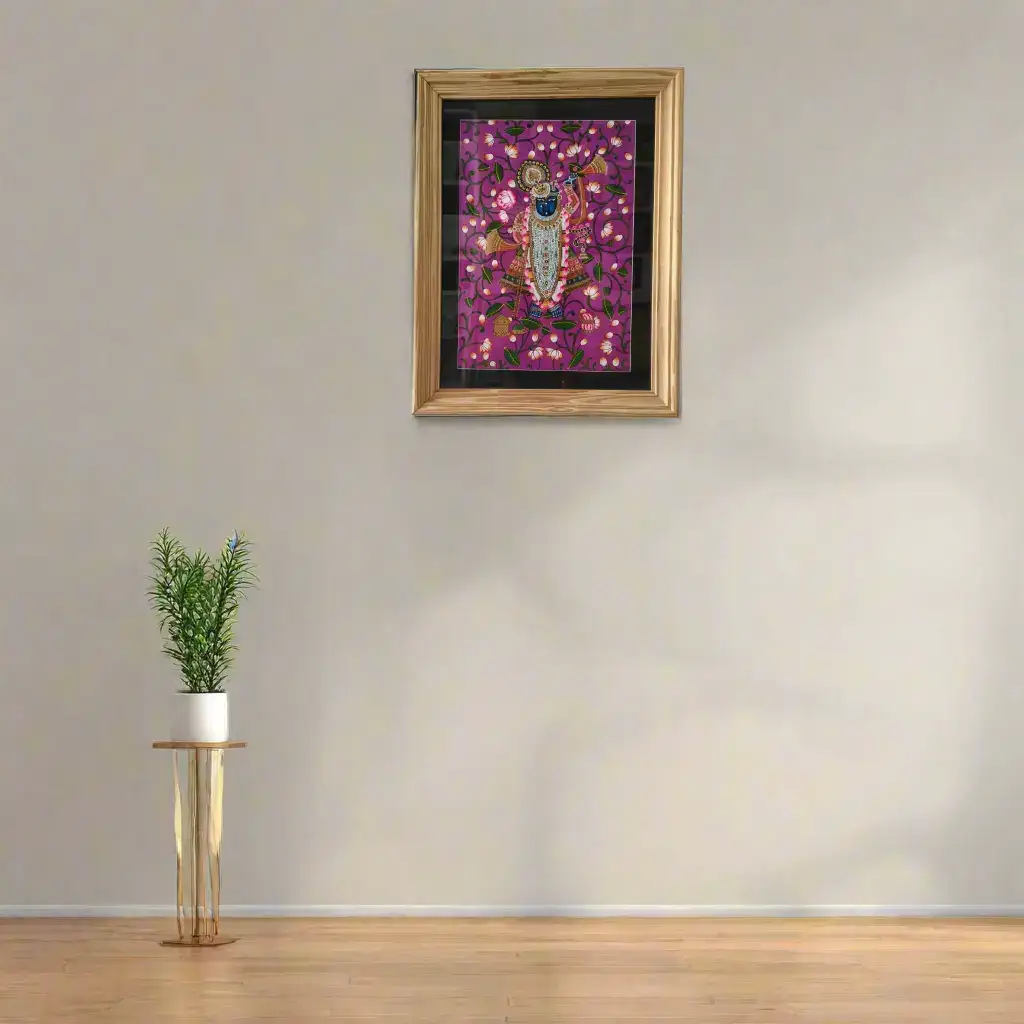
Lord Jagannath in a Lotus Grove Painting
Lord Jagannath painting in a Lotus Grove Painting
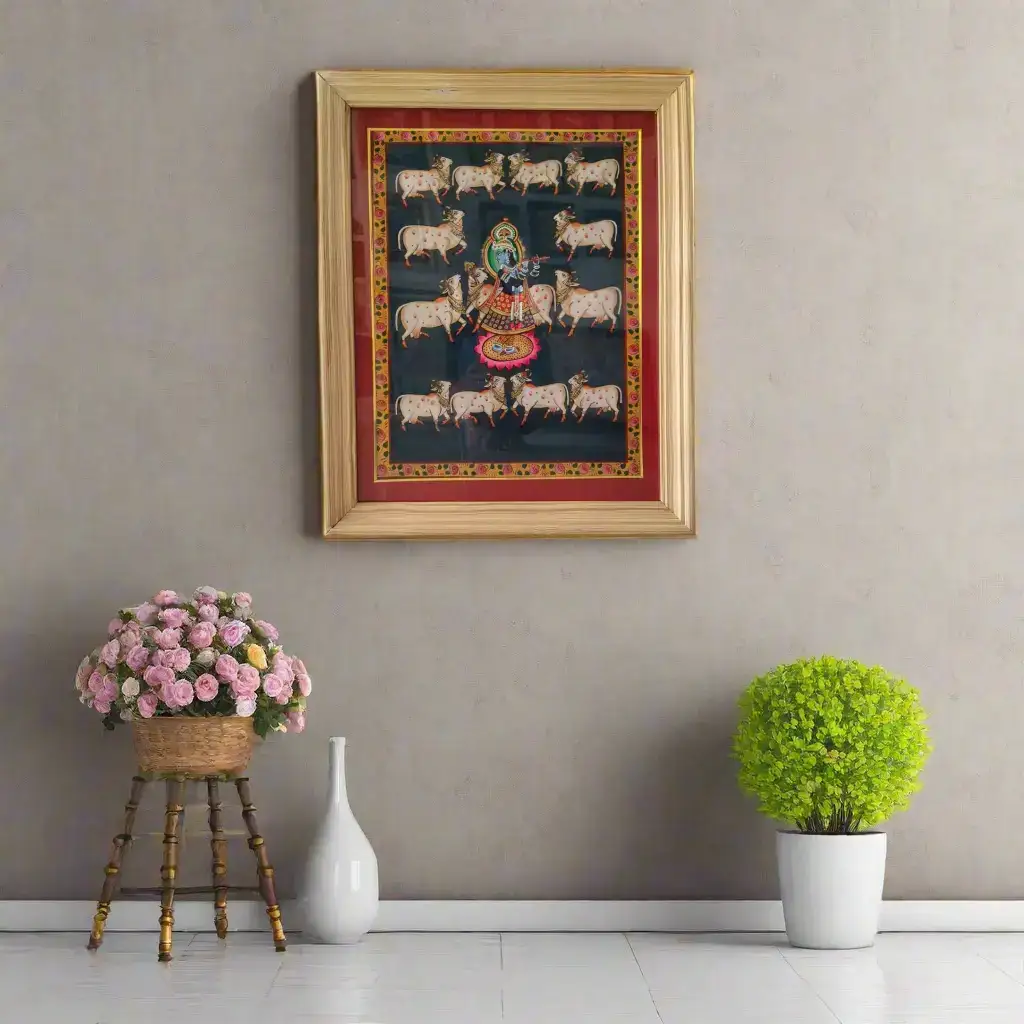
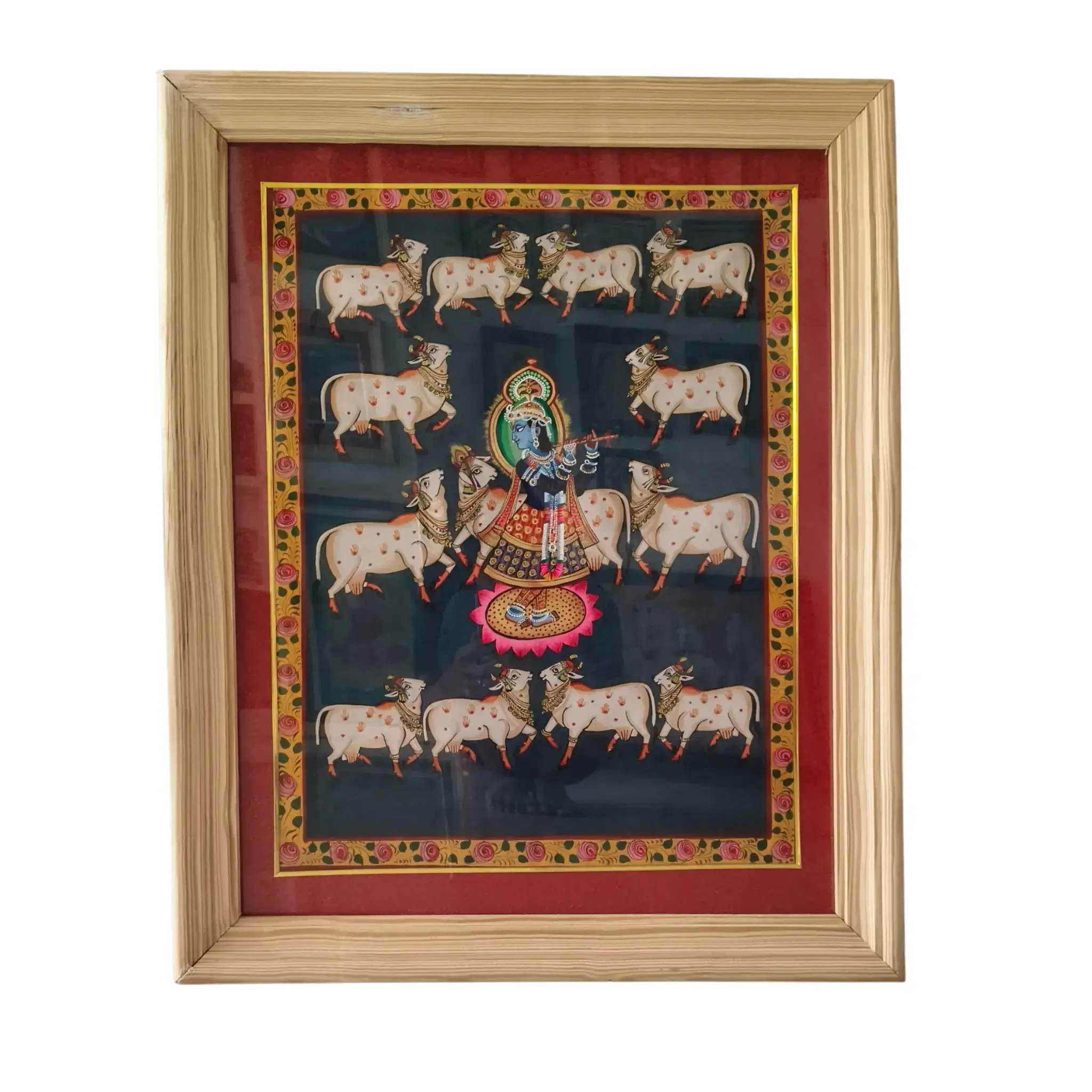
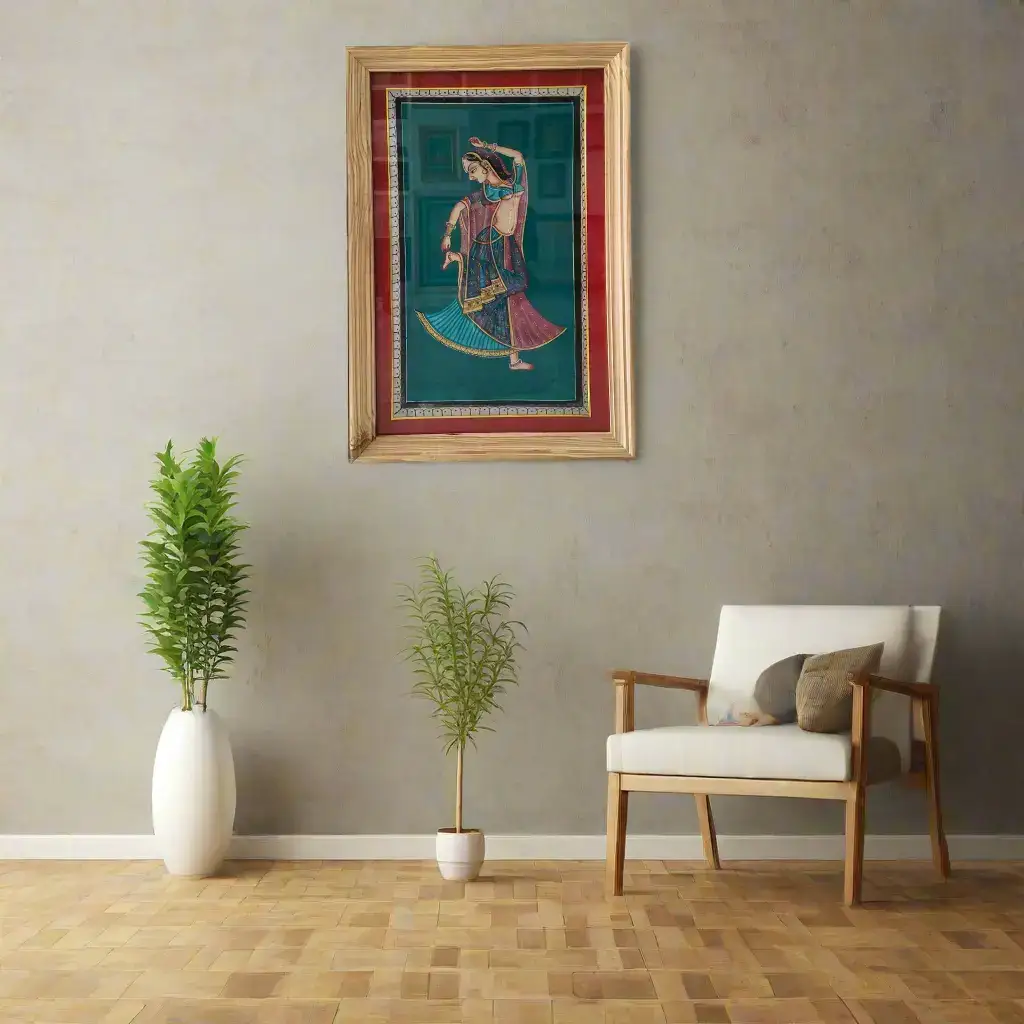
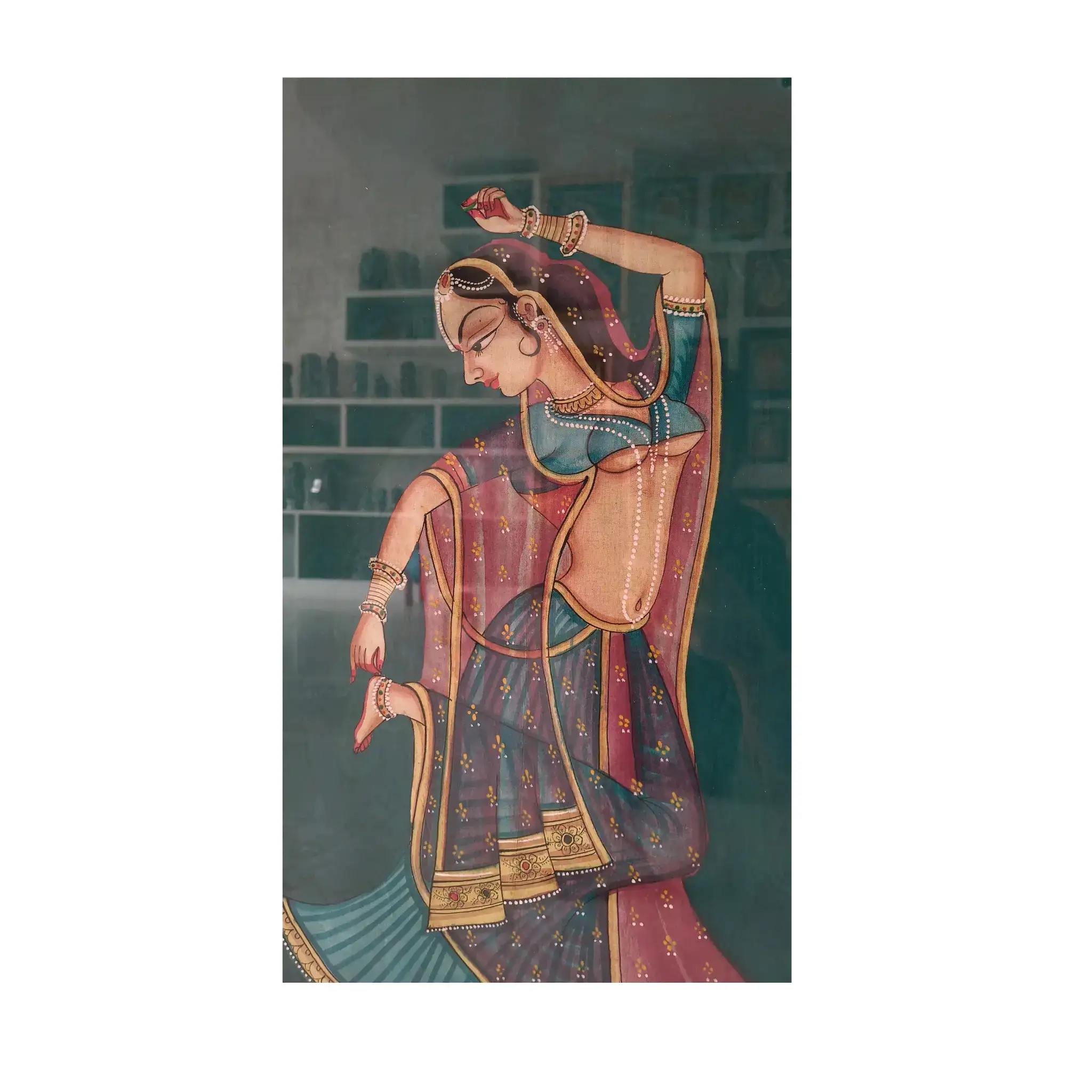
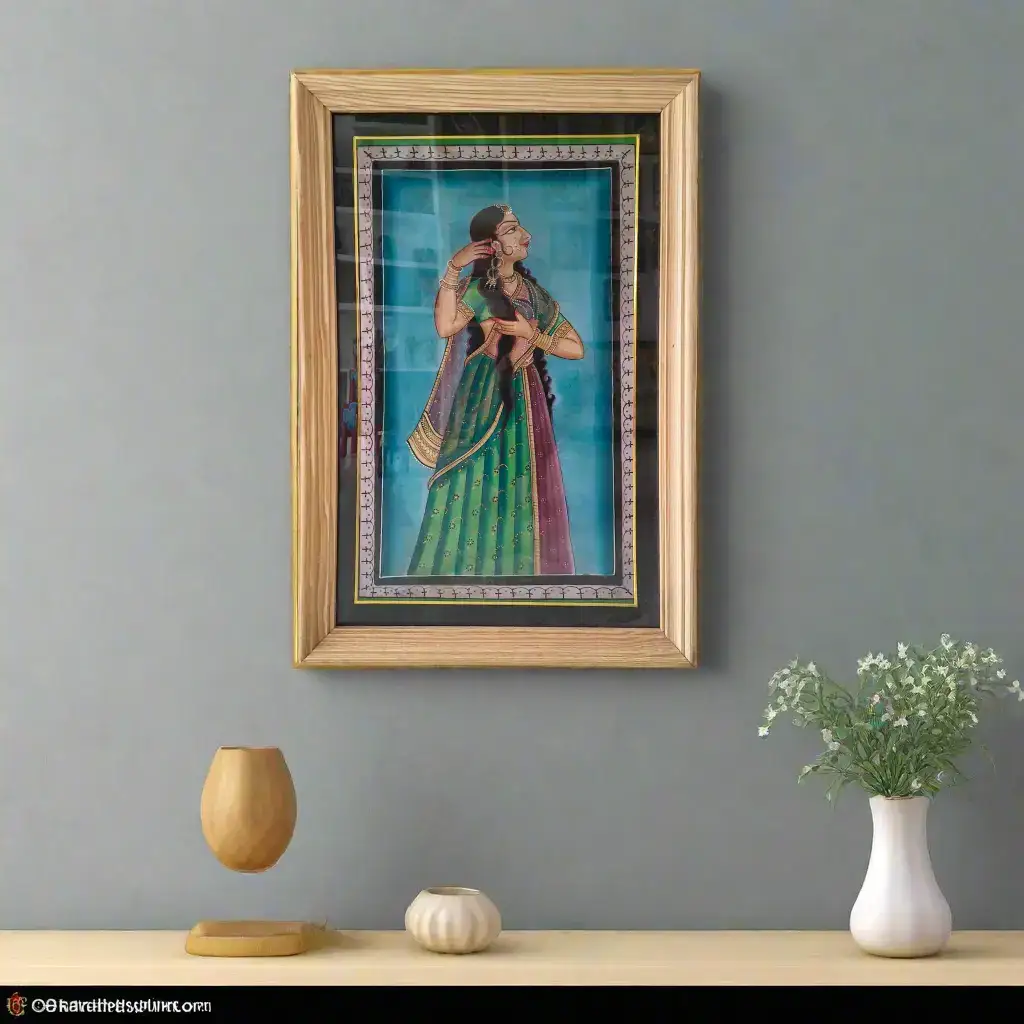
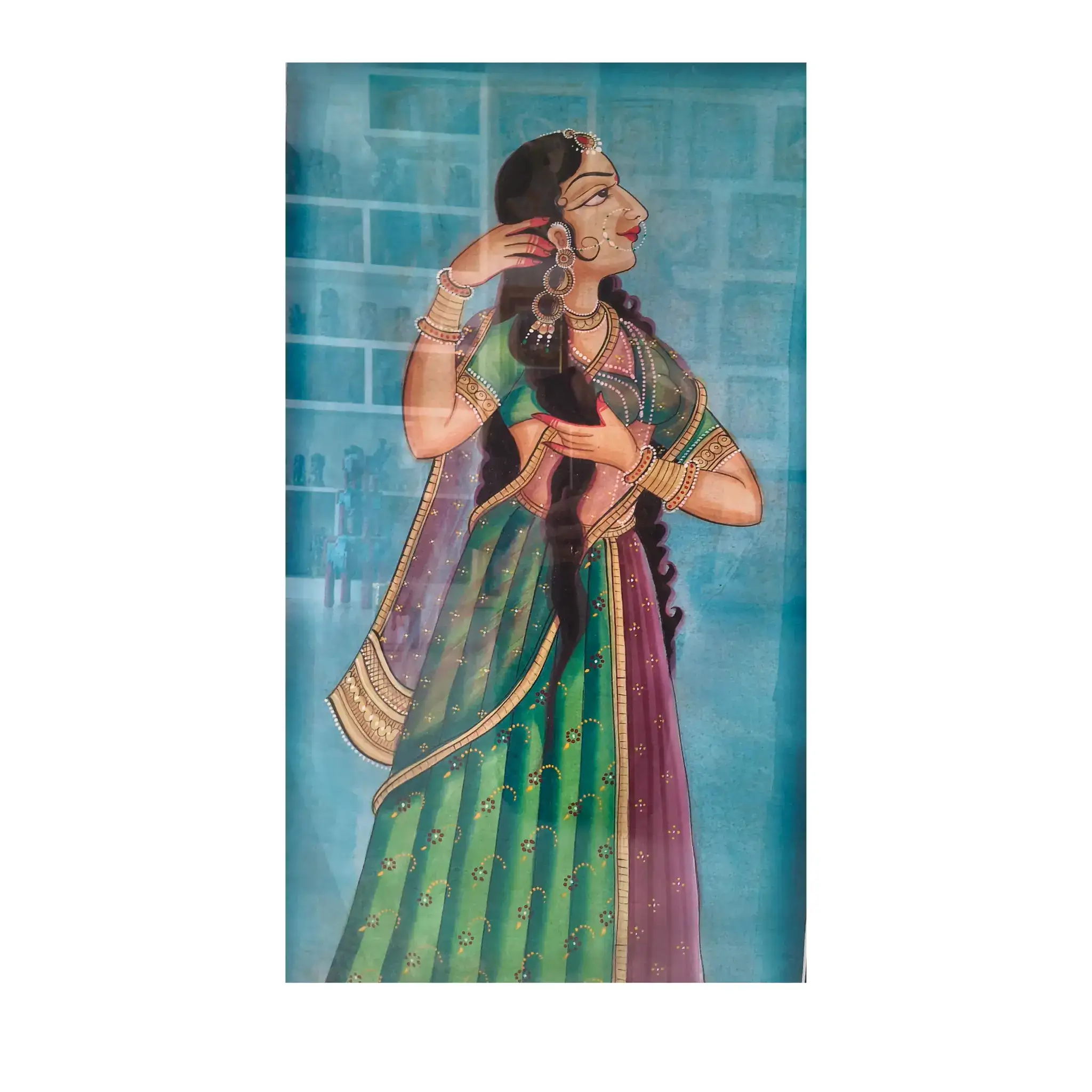
Lord Jagannath painting in a Lotus Grove Painting Rajasthani Painting is a rich and vibrant style of Indian miniature painting. It flourished in the royal courts of Rajasthan from the 16th century onwards. Deeply rooted in Indian traditions, this art form portrays themes of mythology, epics, love stories, royal life, and folk culture. The paintings are known for their bold lines, bright colors, and intricate detailing. Natural dyes and pigments made from minerals, vegetables, and precious stones were traditionally used, imparting a lasting and luminous quality. The Lord Jagannath painting tradition continues to captivate with its spiritual and artistic expression.
This Rajasthani style is a fascinating blend of devotion and craftsmanship. Artists employ meticulous techniques to create visually stunning works. Each painting tells a story, connecting the viewer with centuries-old cultural heritage. The vibrant colors and symbolic motifs engage audiences across generations. This style remains a celebrated facet of Indian art today.
Schools of Rajasthani Miniature Painting
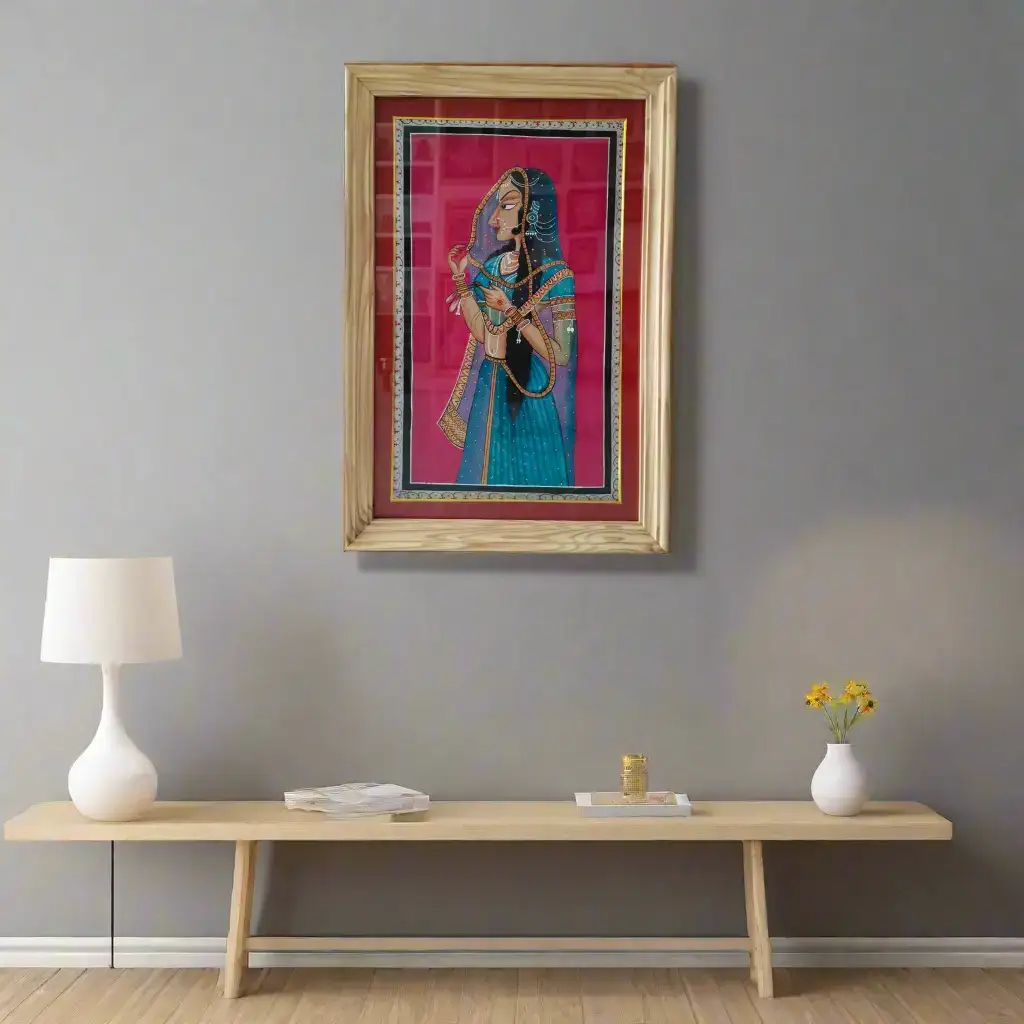
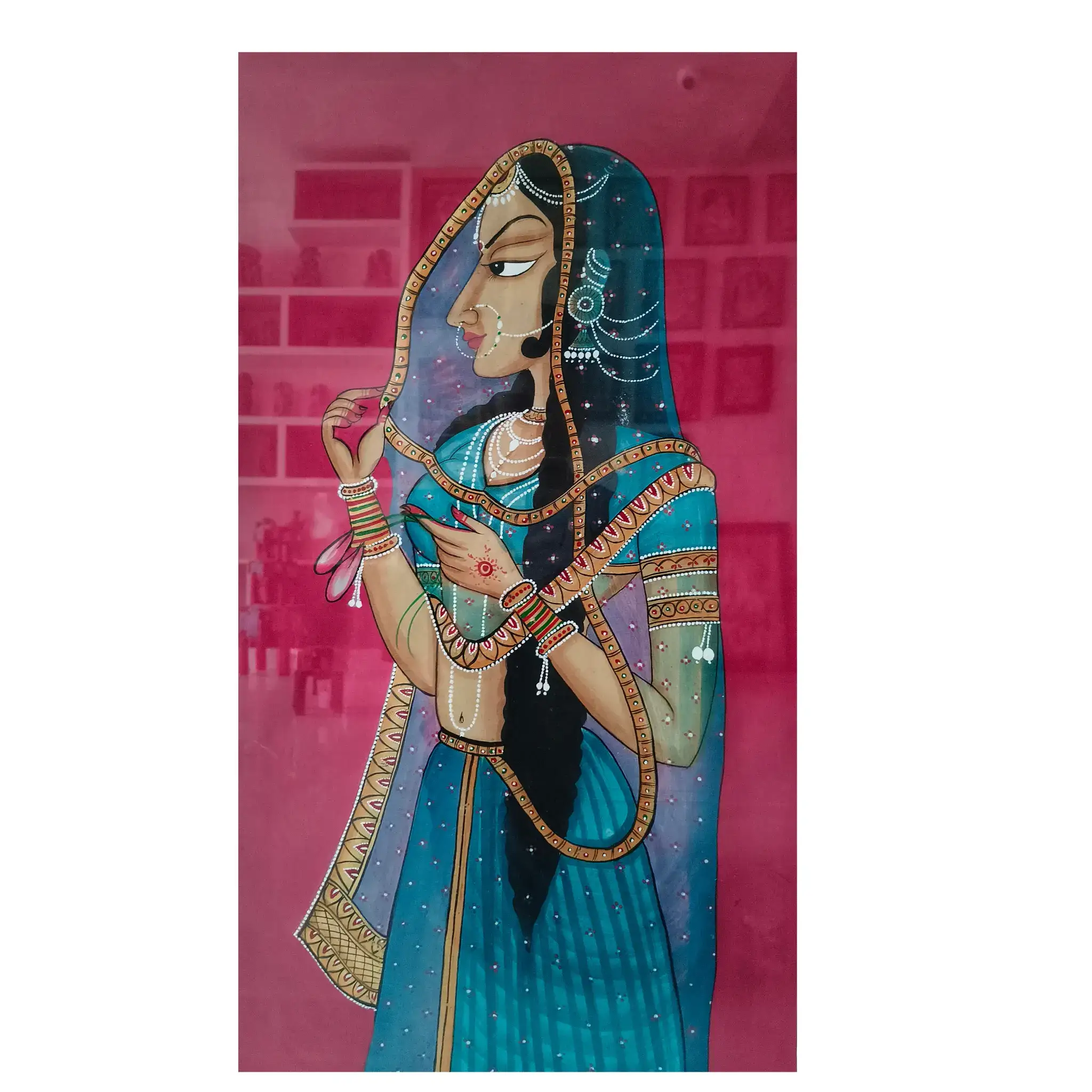
This art form is divided into several schools, including Mewar, Marwar, Bundi, Kota, Kishangarh, Bikaner, and Jaipur. Each school has its distinct style and subject focus. Kishangarh is famous for its romantic portrayal of Radha and Krishna, with the iconic image of Bani Thani admired worldwide.
Mewar paintings often depict court scenes, heroic tales, and religious themes. Bundi and Kota paintings are well known for lush landscapes and hunting scenes. These schools highlight the diverse facets of Rajasthan’s history and environment. The influence of Lord Jagannath wall art can be seen in some regional styles, blending vivid storytelling and devotion.
Lord Jagannath painting: Symbolism and Themes
The Lord Jagannath painting style highlights strong religious symbolism and spiritual narratives. These works vividly depict Lord Jagannath, capturing his divine essence with bold colors and intricate details. Rath Yatra Jagannath artwork, an important subgenre, celebrates the famous chariot festival with dramatic visuals and dynamic compositions.
Artists utilize precise miniature artwork techniques to add fine detail and depth. The use of colors represents emotions and divine attributes like compassion, strength, and purity. Intricate patterns emphasize sacred stories and elevate the spiritual value of each piece. These artistic choices make every Lord Jagannath artwork uniquely meaningful and visually stunning.
Jagannath miniature artwork: Cultural Significance
Jagannath miniature artwork reveals the cultural depth of the community’s faith and mythology. The iconography often features the three main deities – Jagannath, Balabhadra, and Subhadra – in full celebratory scenes. Lord Jagannath wall art pieces are not just religious symbols. They are vibrant cultural artifacts that inspire worshippers and art lovers alike.
The blend of devotion and brilliant craftsmanship assures these paintings a cherished place in Indian art history. They connect contemporary viewers with ancient spiritual traditions. Through each brushstroke, the paintings express faith, cultural pride, and artistic excellence. This tradition enriches the world of devotional art immensely.
Evolution and Contemporary Importance of Lord Jagannath Art
Understanding the Lord Jagannath paintings requires appreciation of its artistic and cultural journey. The style evolved from early miniature artwork traditions into various contemporary adaptations. Rath Yatra Jagannath artwork captures the festive spirit of the chariot festival with vibrant energy and movement.
Meanwhile, Lotus Grove Paintings preserve intimate depictions of the deity surrounded by nature’s beauty. Lord Jagannath wall art in various forms and sizes remains popular in temples, homes, and galleries worldwide. This rich heritage ensures that the Jagannath painting tradition continues to thrive and inspire people everywhere.
The painting style’s longevity stems from its ability to blend spiritual reverence with artistic innovation. Each piece is a bridge between history and modern expression. As a result, collectors and devotees treasure these paintings for their cultural and emotional significance. The Jagannath painting remains a timeless symbol of devotion and artistic mastery.
Product Information
Product Information
Shipping & Returns
Shipping & Returns
Description
Lord Jagannath painting in a Lotus Grove Painting
Lord Jagannath painting in a Lotus Grove Painting Rajasthani Painting is a rich and vibrant style of Indian miniature painting. It flourished in the royal courts of Rajasthan from the 16th century onwards. Deeply rooted in Indian traditions, this art form portrays themes of mythology, epics, love stories, royal life, and folk culture. The paintings are known for their bold lines, bright colors, and intricate detailing. Natural dyes and pigments made from minerals, vegetables, and precious stones were traditionally used, imparting a lasting and luminous quality. The Lord Jagannath painting tradition continues to captivate with its spiritual and artistic expression.
This Rajasthani style is a fascinating blend of devotion and craftsmanship. Artists employ meticulous techniques to create visually stunning works. Each painting tells a story, connecting the viewer with centuries-old cultural heritage. The vibrant colors and symbolic motifs engage audiences across generations. This style remains a celebrated facet of Indian art today.
Schools of Rajasthani Miniature Painting
This art form is divided into several schools, including Mewar, Marwar, Bundi, Kota, Kishangarh, Bikaner, and Jaipur. Each school has its distinct style and subject focus. Kishangarh is famous for its romantic portrayal of Radha and Krishna, with the iconic image of Bani Thani admired worldwide.
Mewar paintings often depict court scenes, heroic tales, and religious themes. Bundi and Kota paintings are well known for lush landscapes and hunting scenes. These schools highlight the diverse facets of Rajasthan’s history and environment. The influence of Lord Jagannath wall art can be seen in some regional styles, blending vivid storytelling and devotion.
Lord Jagannath painting: Symbolism and Themes
The Lord Jagannath painting style highlights strong religious symbolism and spiritual narratives. These works vividly depict Lord Jagannath, capturing his divine essence with bold colors and intricate details. Rath Yatra Jagannath artwork, an important subgenre, celebrates the famous chariot festival with dramatic visuals and dynamic compositions.
Artists utilize precise miniature artwork techniques to add fine detail and depth. The use of colors represents emotions and divine attributes like compassion, strength, and purity. Intricate patterns emphasize sacred stories and elevate the spiritual value of each piece. These artistic choices make every Lord Jagannath artwork uniquely meaningful and visually stunning.
Jagannath miniature artwork: Cultural Significance
Jagannath miniature artwork reveals the cultural depth of the community’s faith and mythology. The iconography often features the three main deities – Jagannath, Balabhadra, and Subhadra – in full celebratory scenes. Lord Jagannath wall art pieces are not just religious symbols. They are vibrant cultural artifacts that inspire worshippers and art lovers alike.
The blend of devotion and brilliant craftsmanship assures these paintings a cherished place in Indian art history. They connect contemporary viewers with ancient spiritual traditions. Through each brushstroke, the paintings express faith, cultural pride, and artistic excellence. This tradition enriches the world of devotional art immensely.
Evolution and Contemporary Importance of Lord Jagannath Art
Understanding the Lord Jagannath paintings requires appreciation of its artistic and cultural journey. The style evolved from early miniature artwork traditions into various contemporary adaptations. Rath Yatra Jagannath artwork captures the festive spirit of the chariot festival with vibrant energy and movement.
Meanwhile, Lotus Grove Paintings preserve intimate depictions of the deity surrounded by nature’s beauty. Lord Jagannath wall art in various forms and sizes remains popular in temples, homes, and galleries worldwide. This rich heritage ensures that the Jagannath painting tradition continues to thrive and inspire people everywhere.
The painting style’s longevity stems from its ability to blend spiritual reverence with artistic innovation. Each piece is a bridge between history and modern expression. As a result, collectors and devotees treasure these paintings for their cultural and emotional significance. The Jagannath painting remains a timeless symbol of devotion and artistic mastery.