Sacred Wooden Inlay – Mahabharata Kurukshetra Chariot Scene
Wooden Inlay Mahabharata – Sacred Kurukshetra Chariot Scene
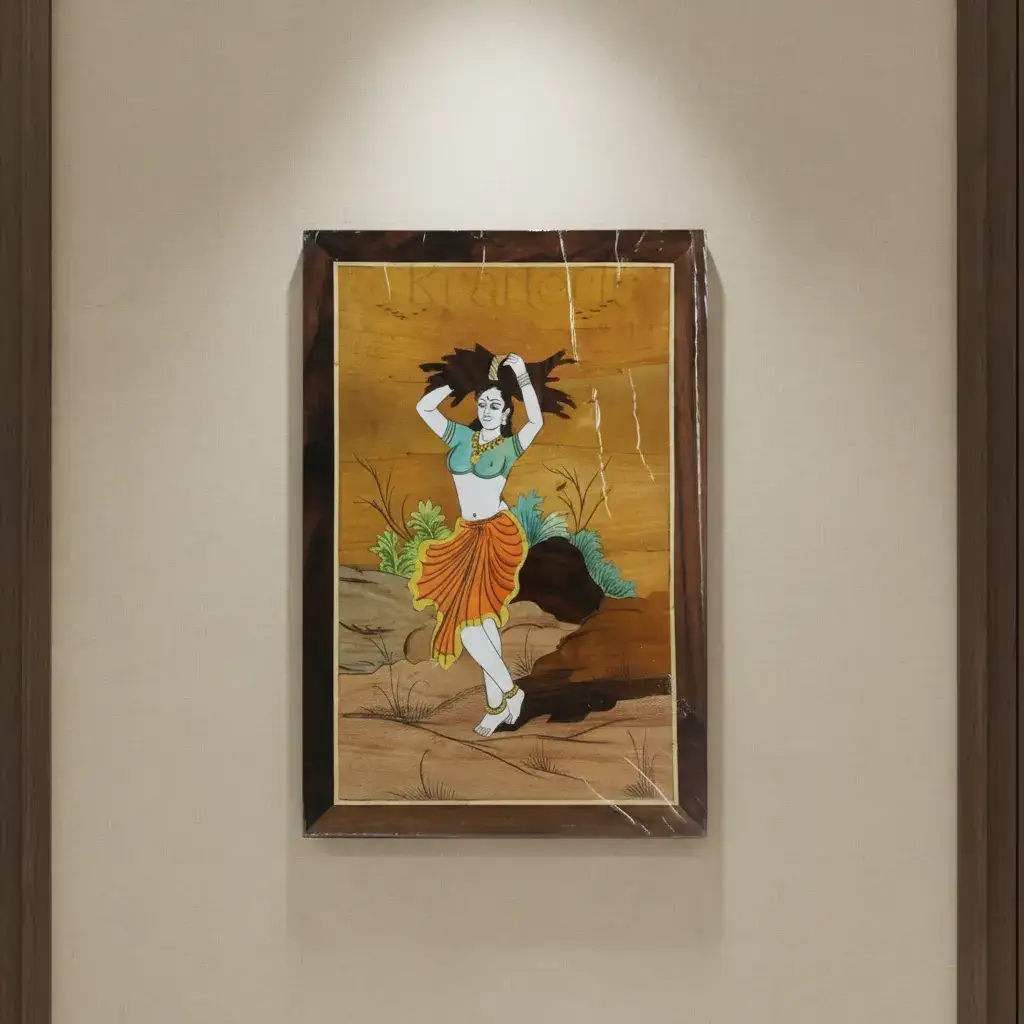
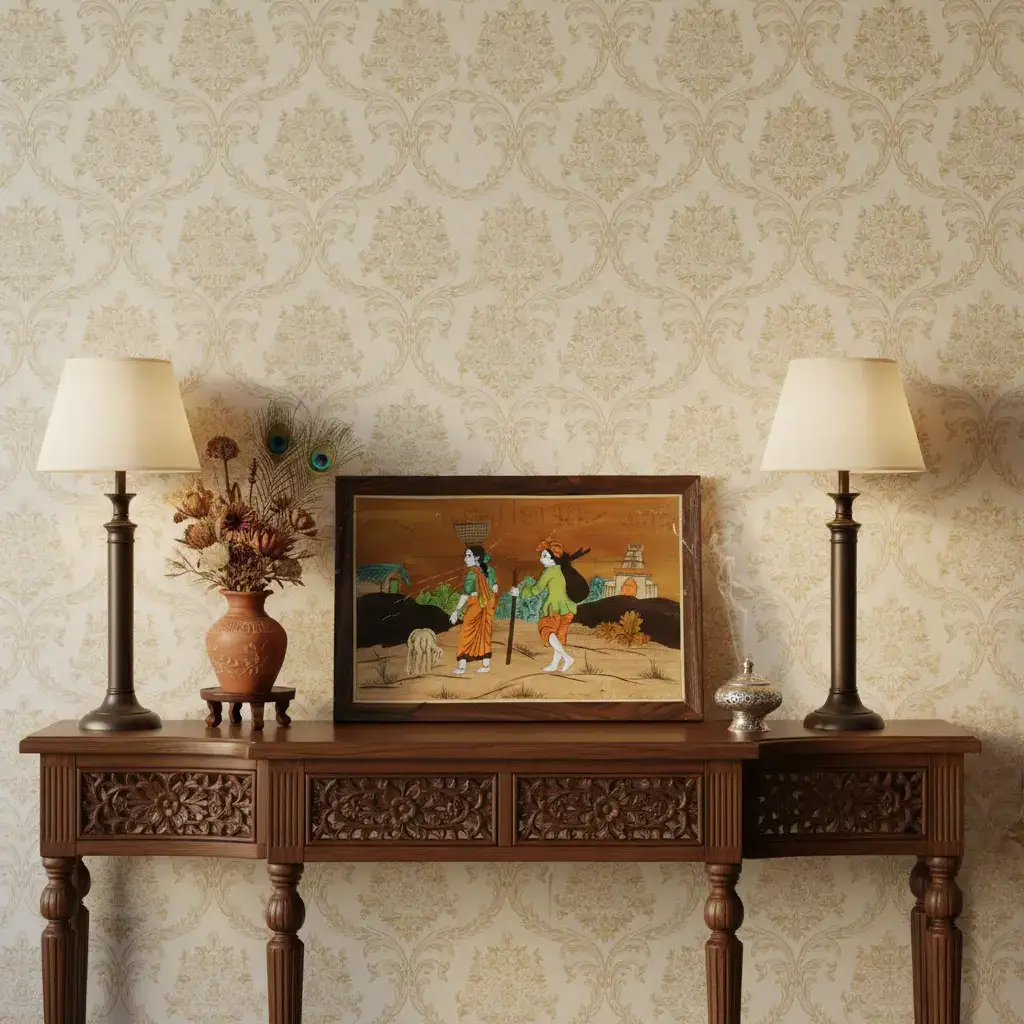
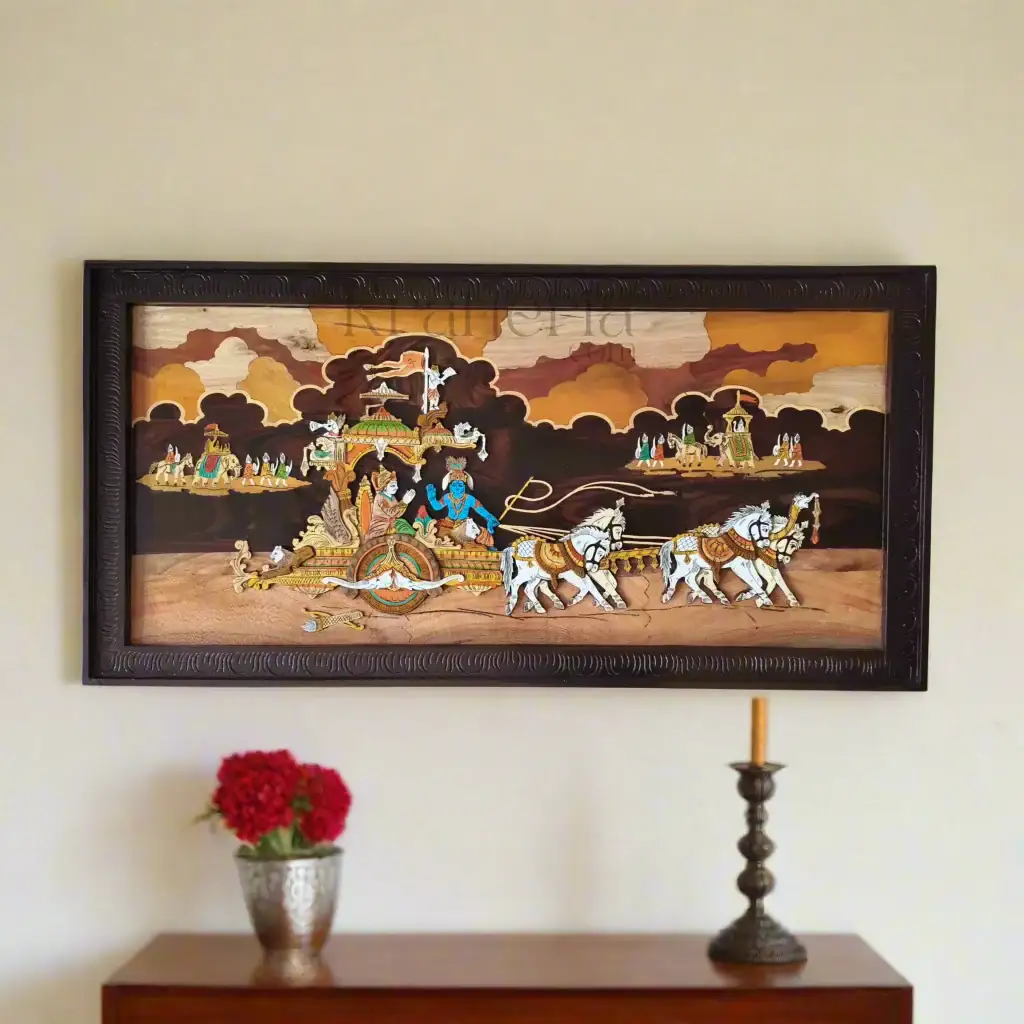
The Wooden inlay Mahabharata artwork is a mesmerizing and vivid portrayal of the divine moment when Lord Krishna guides Arjuna on the battlefield. This masterpiece captures the intense spirit and profound meaning of the epic Kurukshetra war. Crafted with exceptional precision, it reflects the deep spiritual symbolism embedded in the Mahabharata.
Every detail—from the divine chariot to the spirited horses—is carved and inlaid with exemplary care. This showcases the unmatched skills of the artisans and their devotion to this sacred craft. The liveliness in this depiction emphasizes the timeless message of dharma and righteous action.
This beautiful piece of Krishna Arjuna chariot wall art stands as a perfect blend of traditional craftsmanship and artistic finesse. The celebrated Mysore rosewood inlay technique adds unique texture and contrast, making the artwork truly special. It is ideal for devotees and collectors who appreciate meaningful storytelling through art.
Besides being a stunning décor addition, this masterpiece also serves as a sacred gift for spiritual and cultural spaces. It carries deep cultural and religious significance, making it a treasured possession for art lovers worldwide.
Historical Legacy of Wooden Inlay Mahabharata
The Wooden inlay Mahabharata craft is one of Karnataka’s oldest and most esteemed art forms. Its roots extend back several centuries, deeply entwined with the region’s rich cultural heritage. This art form evolved over time and was influenced by Persian aesthetics.
These influences combined to create intricate and stunning designs that artisans have preserved through generations. During the rule of pioneers like Tipu Sultan and the Wodeyar dynasty, this craft enjoyed royal patronage and flourished remarkably.
By the 18th century, artisans in Srirangapatna perfected the skill of embedding finely carved wooden pieces into polished rosewood bases. This era is widely regarded as the golden age of this craft, marking a high point in artistry and technique.
The Mysore Maharajas further enhanced its grandeur by commissioning elaborate inlay works. These included luxurious materials such as ivory alongside rosewood inlays. Many of these ornate creations adorned the Mysore Palace, boosting the fame of Mahabharata wall hanging artworks across the globe.
Today, these exquisite pieces remain treasured cultural treasures for collectors and art lovers who value historical craftsmanship and deep spiritual narratives.
The Art Form: Wooden Inlay Mahabharata Craftsmanship
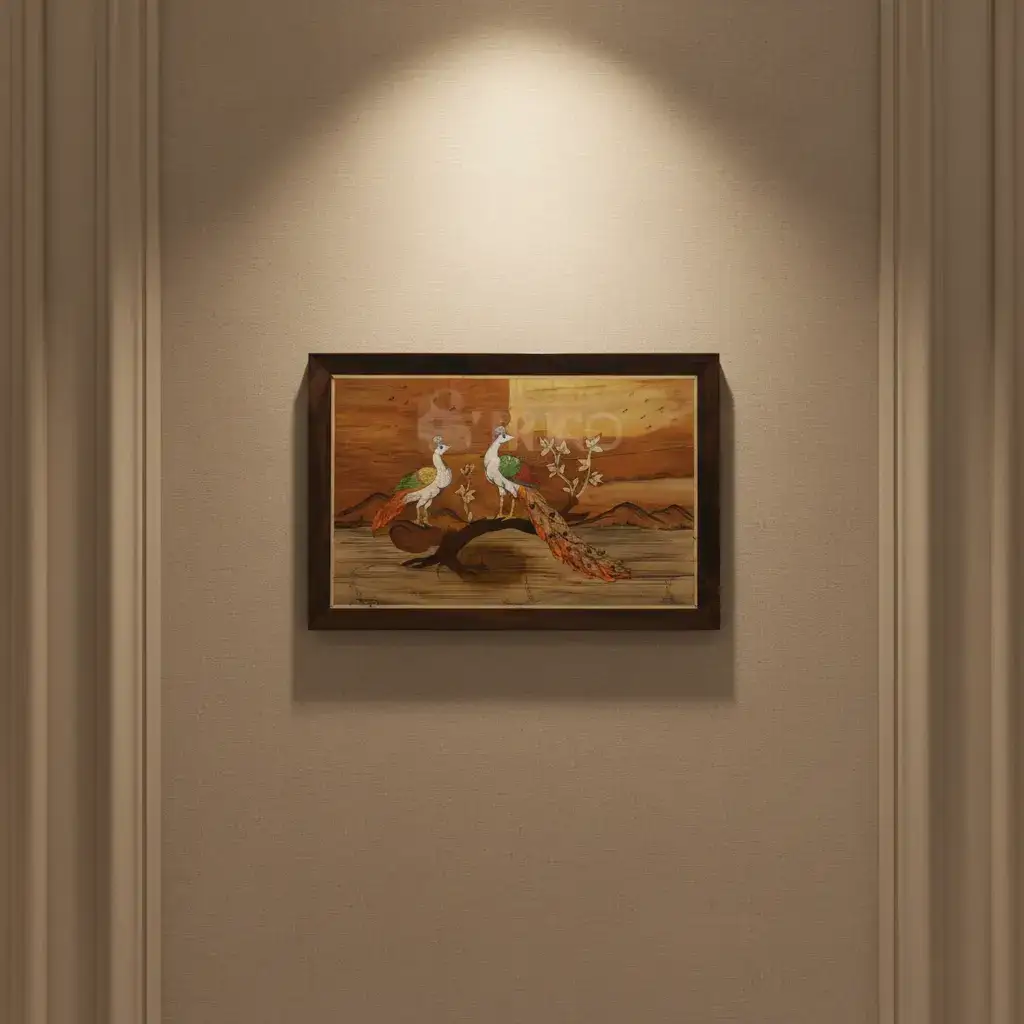
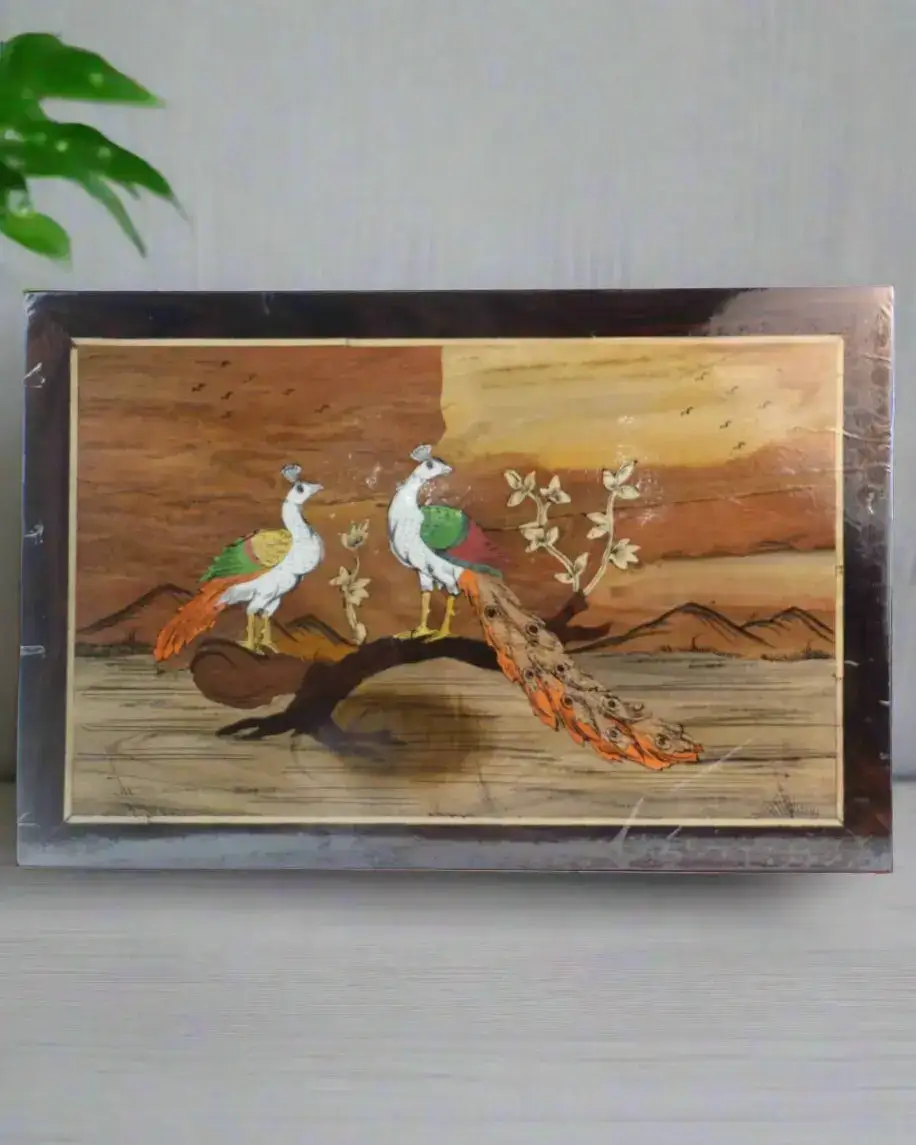
Wooden Mahabharata involves intricate craftsmanship where finely carved pieces of colored wood are embedded into a polished rosewood background. The artisans traditionally incorporated ivory to increase the richness and intricacy of each piece.
Skilled hand tools are used to shape every element with precision, exhibiting great passion and expertise. This results in lifelike figures and fluid patterns that bring epic scenes to life dynamically.
The Kurukshetra chariot wooden wall art price reflects the rarity and artistic value of these refined creations. The chariot scene, showcasing the divine roles of Lord Krishna and Arjuna, emphasizes movement, spirituality, and artistic brilliance through layered wood tones.
The craftsmanship not only highlights the visual appeal but also conveys the deep stories and spiritual significance of the Mahabharata. This art form is a true celebration of cultural heritage, combining skill with soulful storytelling.
Modern Significance of Wooden Inlay Mahabharata
Today, the Wooden inlay art form continues to flourish globally, admired for its cultural depth and detailed craftsmanship. It has earned protection through a Geographical Indication (GI) tag, safeguarding its authenticity and traditional techniques.
This protection ensures the legacy of the craft remains preserved for future generations. Modern artisans pay homage to this heritage by creating various decorative pieces including heritage furniture and religious panels.
They bring forward the timeless elegance of the Krishna Arjuna chariot wall art, which consistently draws attention from art collectors and spiritual communities worldwide. These works are often showcased in exhibitions that celebrate the rich cultural history they embody.
The continued appreciation of this craft supports local artisan communities and inspires new generations to uphold the tradition. Owning a Mahabharata wall hanging is more than just acquiring an art piece; it’s a tribute to preserving cultural heritage and spiritual values.
The blend of historical legacy, spirituality, and craftsmanship makes each creation profoundly valuable and meaningful. This artwork is not only artistic but also a sacred symbol of dharma passed down through centuries.
Product Information
Product Information
Shipping & Returns
Shipping & Returns
Description
Wooden Inlay Mahabharata – Sacred Kurukshetra Chariot Scene
The Wooden inlay Mahabharata artwork is a mesmerizing and vivid portrayal of the divine moment when Lord Krishna guides Arjuna on the battlefield. This masterpiece captures the intense spirit and profound meaning of the epic Kurukshetra war. Crafted with exceptional precision, it reflects the deep spiritual symbolism embedded in the Mahabharata.
Every detail—from the divine chariot to the spirited horses—is carved and inlaid with exemplary care. This showcases the unmatched skills of the artisans and their devotion to this sacred craft. The liveliness in this depiction emphasizes the timeless message of dharma and righteous action.
This beautiful piece of Krishna Arjuna chariot wall art stands as a perfect blend of traditional craftsmanship and artistic finesse. The celebrated Mysore rosewood inlay technique adds unique texture and contrast, making the artwork truly special. It is ideal for devotees and collectors who appreciate meaningful storytelling through art.
Besides being a stunning décor addition, this masterpiece also serves as a sacred gift for spiritual and cultural spaces. It carries deep cultural and religious significance, making it a treasured possession for art lovers worldwide.
Historical Legacy of Wooden Inlay Mahabharata
The Wooden inlay Mahabharata craft is one of Karnataka’s oldest and most esteemed art forms. Its roots extend back several centuries, deeply entwined with the region’s rich cultural heritage. This art form evolved over time and was influenced by Persian aesthetics.
These influences combined to create intricate and stunning designs that artisans have preserved through generations. During the rule of pioneers like Tipu Sultan and the Wodeyar dynasty, this craft enjoyed royal patronage and flourished remarkably.
By the 18th century, artisans in Srirangapatna perfected the skill of embedding finely carved wooden pieces into polished rosewood bases. This era is widely regarded as the golden age of this craft, marking a high point in artistry and technique.
The Mysore Maharajas further enhanced its grandeur by commissioning elaborate inlay works. These included luxurious materials such as ivory alongside rosewood inlays. Many of these ornate creations adorned the Mysore Palace, boosting the fame of Mahabharata wall hanging artworks across the globe.
Today, these exquisite pieces remain treasured cultural treasures for collectors and art lovers who value historical craftsmanship and deep spiritual narratives.
The Art Form: Wooden Inlay Mahabharata Craftsmanship
Wooden Mahabharata involves intricate craftsmanship where finely carved pieces of colored wood are embedded into a polished rosewood background. The artisans traditionally incorporated ivory to increase the richness and intricacy of each piece.
Skilled hand tools are used to shape every element with precision, exhibiting great passion and expertise. This results in lifelike figures and fluid patterns that bring epic scenes to life dynamically.
The Kurukshetra chariot wooden wall art price reflects the rarity and artistic value of these refined creations. The chariot scene, showcasing the divine roles of Lord Krishna and Arjuna, emphasizes movement, spirituality, and artistic brilliance through layered wood tones.
The craftsmanship not only highlights the visual appeal but also conveys the deep stories and spiritual significance of the Mahabharata. This art form is a true celebration of cultural heritage, combining skill with soulful storytelling.
Modern Significance of Wooden Inlay Mahabharata
Today, the Wooden inlay art form continues to flourish globally, admired for its cultural depth and detailed craftsmanship. It has earned protection through a Geographical Indication (GI) tag, safeguarding its authenticity and traditional techniques.
This protection ensures the legacy of the craft remains preserved for future generations. Modern artisans pay homage to this heritage by creating various decorative pieces including heritage furniture and religious panels.
They bring forward the timeless elegance of the Krishna Arjuna chariot wall art, which consistently draws attention from art collectors and spiritual communities worldwide. These works are often showcased in exhibitions that celebrate the rich cultural history they embody.
The continued appreciation of this craft supports local artisan communities and inspires new generations to uphold the tradition. Owning a Mahabharata wall hanging is more than just acquiring an art piece; it’s a tribute to preserving cultural heritage and spiritual values.
The blend of historical legacy, spirituality, and craftsmanship makes each creation profoundly valuable and meaningful. This artwork is not only artistic but also a sacred symbol of dharma passed down through centuries.