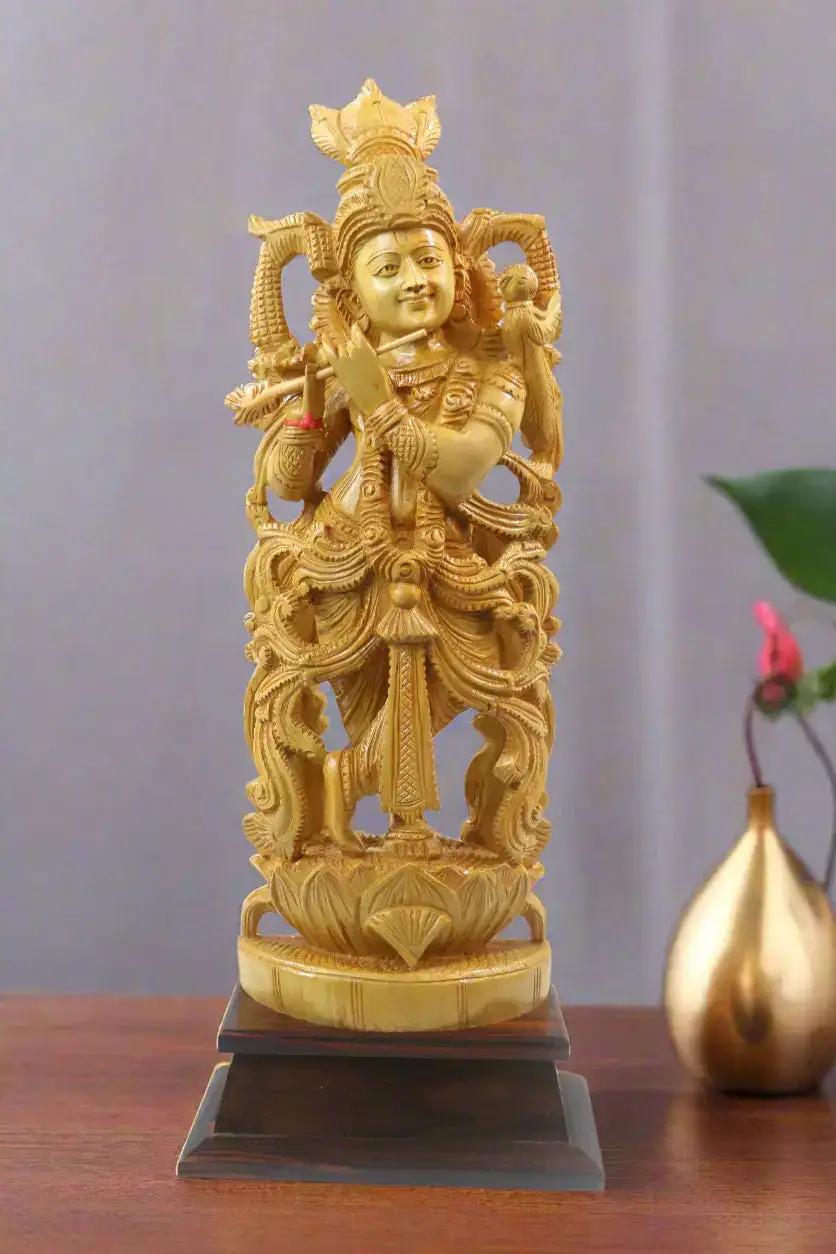
Traditional Shrinathji Pichwai Painting - Krishna with Gopis, Cows, and Peacocks
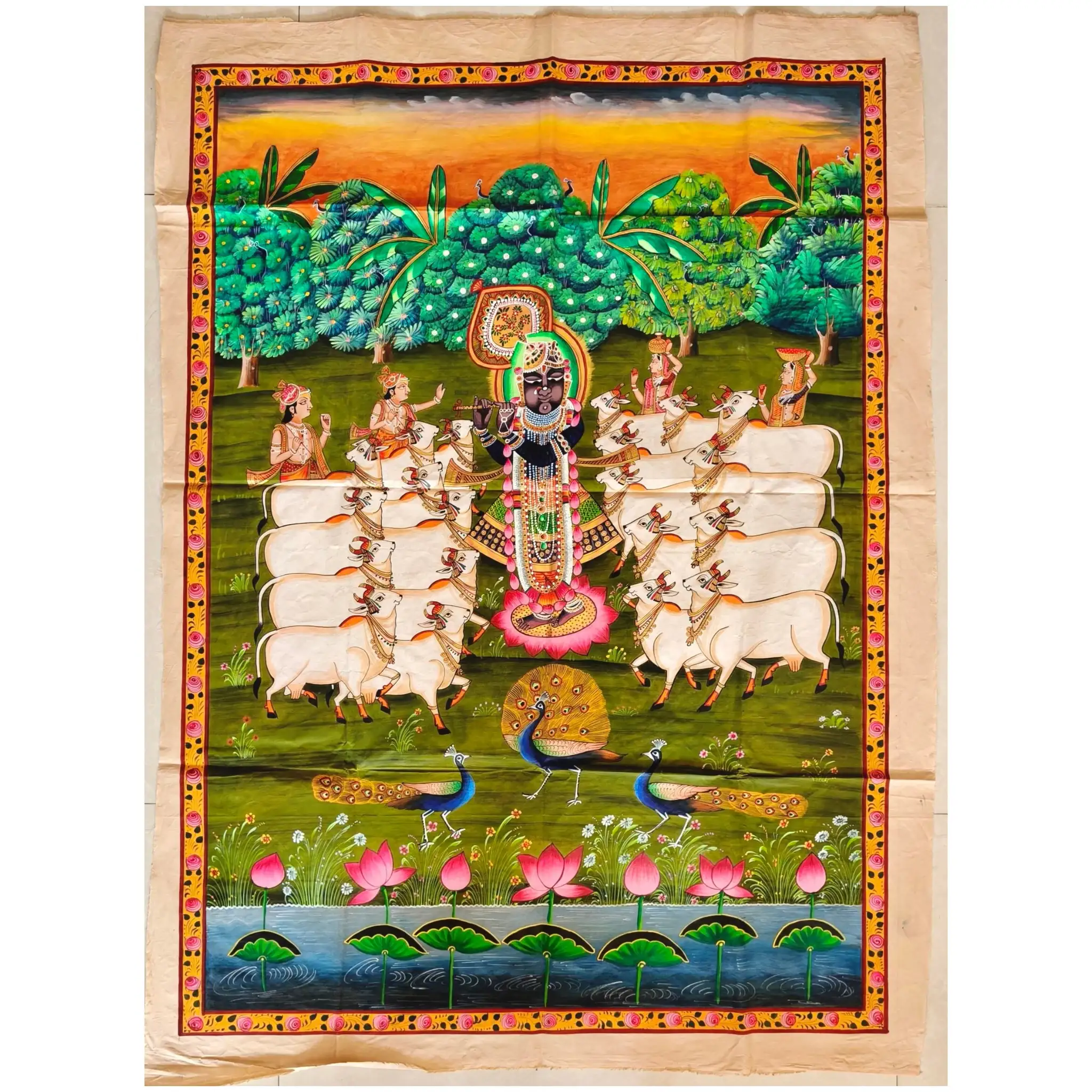
Traditional Shrinathji Pichwai Painting - Krishna with Gopis, Cows, and Peacocks
Rajasthani Traditional Shrinathji Pichwai painting is a highly esteemed style of Indian miniature painting. It flourished in the royal courts of Rajasthan from the 16th century onwards. This exquisite and historic art form reflects profound Indian cultural and religious roots, preserving a rich heritage.
The artworks vividly portray themes drawn from mythology, epics, royal life, folk culture, and timeless love stories. Each painting captivates the viewer with bold outlines, vibrant colors, and intricate detailing. These elements collectively offer a rich visual experience cherished globally by art enthusiasts and collectors.
Artists traditionally create Shrinathji Pichwai painting using natural dyes and minerals. These include vegetable pigments and precious stones. Such materials lend the artwork a luminous quality that endures for centuries. The radiant colors continue to mesmerize collectors and devotees across generations.
Distinct Schools of Shrinathji Pichwai Painting
The tradition of Shrinathji Pichwai painting comprises several unique schools, each emphasizing different styles and thematic focuses. Well-known schools include Mewar, Marwar, Bundi, Kota, Kishangarh, Bikaner, and Jaipur. Together, they enrich the diversity and depth of Krishna Pichwai art.
The Kishangarh school is especially famous for its romantic and graceful portrayals of Radha and Krishna. It produced the iconic Bani Thani image, a celebrated masterpiece. In contrast, Mewar paintings primarily depict royal court scenes, heroic legends, and devotional subjects, highlighting a different artistic tradition.
Bundi and Kota schools excel in presenting lush landscapes and vivid hunting scenes. Each school’s distinctive approach provides cultural richness and highlights the importance of this precious artistic legacy. These styles collectively help preserve the significance of Pichwai painting for future generations.
Distinct Features of Lord Krishna Pichwai Painting
Lord Krishna Pichwai painting is admired for its devotional and elaborate compositions. This art form typically features Lord Krishna surrounded by loving gopis, sacred cows, and majestic peacocks. The imagery vividly illustrates key moments from Krishna’s spiritual journey and life.
The art beautifully blends spiritual depth with elegant visual appeal. Natural pigments used in this style ensure that the colors remain vivid, bright, and durable over time. This skilled craftsmanship inspires religious devotion and gains artistic appreciation worldwide.
Furthermore, Vaishnav wall art for northeast direction traditionally uses Pichwai paintings in Indian homes. Such placement is believed to bring peace, prosperity, and positive energy into households. Thus, these artworks offer a perfect combination of spiritual meaning and aesthetic beauty.
The Cultural Significance of Shrinathji Painting Krishna with Gopis
The Shrinathji painting Krishna with gopis holds deep sacred and cultural importance. These paintings depict the divine Lord Krishna alongside his devoted gopis in serene natural settings. The scenes narrate divine pastimes and symbolize the close spiritual connection between Krishna and his followers.
Each brushstroke conveys messages of love, devotion, and spiritual wisdom. This timeless tradition motivates not only modern artists but also collectors around the world. It preserves a vital cultural legacy that connects contemporary audiences with India’s rich heritage and religious traditions.
Artistic and Spiritual Value of Shrinathji Painting
Owning a Pichwai painting today represents more than just possession of art. It embodies faith, history, and cultural values. The paintings’ intricate details, radiant hues, and spiritual themes leave lasting impressions on viewers and devotees alike.
Collectors and followers of Vaishnavism highly prize authentic pieces for their religious and aesthetic significance. This delicate art form harmoniously combines devotional spirit with expert craftsmanship. Each painting becomes a cherished possession that symbolizes spiritual abundance and artistic excellence.
The lasting charm of Krishna Pichwai art strengthens admiration worldwide. This art form remains an enduring expression of tradition, devotion, and skill, continuously inspiring everyone who appreciates it.
Original: $322.76
-70%$322.76
$96.83Product Information
Product Information
Shipping & Returns
Shipping & Returns
Description
Traditional Shrinathji Pichwai Painting - Krishna with Gopis, Cows, and Peacocks
Rajasthani Traditional Shrinathji Pichwai painting is a highly esteemed style of Indian miniature painting. It flourished in the royal courts of Rajasthan from the 16th century onwards. This exquisite and historic art form reflects profound Indian cultural and religious roots, preserving a rich heritage.
The artworks vividly portray themes drawn from mythology, epics, royal life, folk culture, and timeless love stories. Each painting captivates the viewer with bold outlines, vibrant colors, and intricate detailing. These elements collectively offer a rich visual experience cherished globally by art enthusiasts and collectors.
Artists traditionally create Shrinathji Pichwai painting using natural dyes and minerals. These include vegetable pigments and precious stones. Such materials lend the artwork a luminous quality that endures for centuries. The radiant colors continue to mesmerize collectors and devotees across generations.
Distinct Schools of Shrinathji Pichwai Painting
The tradition of Shrinathji Pichwai painting comprises several unique schools, each emphasizing different styles and thematic focuses. Well-known schools include Mewar, Marwar, Bundi, Kota, Kishangarh, Bikaner, and Jaipur. Together, they enrich the diversity and depth of Krishna Pichwai art.
The Kishangarh school is especially famous for its romantic and graceful portrayals of Radha and Krishna. It produced the iconic Bani Thani image, a celebrated masterpiece. In contrast, Mewar paintings primarily depict royal court scenes, heroic legends, and devotional subjects, highlighting a different artistic tradition.
Bundi and Kota schools excel in presenting lush landscapes and vivid hunting scenes. Each school’s distinctive approach provides cultural richness and highlights the importance of this precious artistic legacy. These styles collectively help preserve the significance of Pichwai painting for future generations.
Distinct Features of Lord Krishna Pichwai Painting
Lord Krishna Pichwai painting is admired for its devotional and elaborate compositions. This art form typically features Lord Krishna surrounded by loving gopis, sacred cows, and majestic peacocks. The imagery vividly illustrates key moments from Krishna’s spiritual journey and life.
The art beautifully blends spiritual depth with elegant visual appeal. Natural pigments used in this style ensure that the colors remain vivid, bright, and durable over time. This skilled craftsmanship inspires religious devotion and gains artistic appreciation worldwide.
Furthermore, Vaishnav wall art for northeast direction traditionally uses Pichwai paintings in Indian homes. Such placement is believed to bring peace, prosperity, and positive energy into households. Thus, these artworks offer a perfect combination of spiritual meaning and aesthetic beauty.
The Cultural Significance of Shrinathji Painting Krishna with Gopis
The Shrinathji painting Krishna with gopis holds deep sacred and cultural importance. These paintings depict the divine Lord Krishna alongside his devoted gopis in serene natural settings. The scenes narrate divine pastimes and symbolize the close spiritual connection between Krishna and his followers.
Each brushstroke conveys messages of love, devotion, and spiritual wisdom. This timeless tradition motivates not only modern artists but also collectors around the world. It preserves a vital cultural legacy that connects contemporary audiences with India’s rich heritage and religious traditions.
Artistic and Spiritual Value of Shrinathji Painting
Owning a Pichwai painting today represents more than just possession of art. It embodies faith, history, and cultural values. The paintings’ intricate details, radiant hues, and spiritual themes leave lasting impressions on viewers and devotees alike.
Collectors and followers of Vaishnavism highly prize authentic pieces for their religious and aesthetic significance. This delicate art form harmoniously combines devotional spirit with expert craftsmanship. Each painting becomes a cherished possession that symbolizes spiritual abundance and artistic excellence.
The lasting charm of Krishna Pichwai art strengthens admiration worldwide. This art form remains an enduring expression of tradition, devotion, and skill, continuously inspiring everyone who appreciates it.