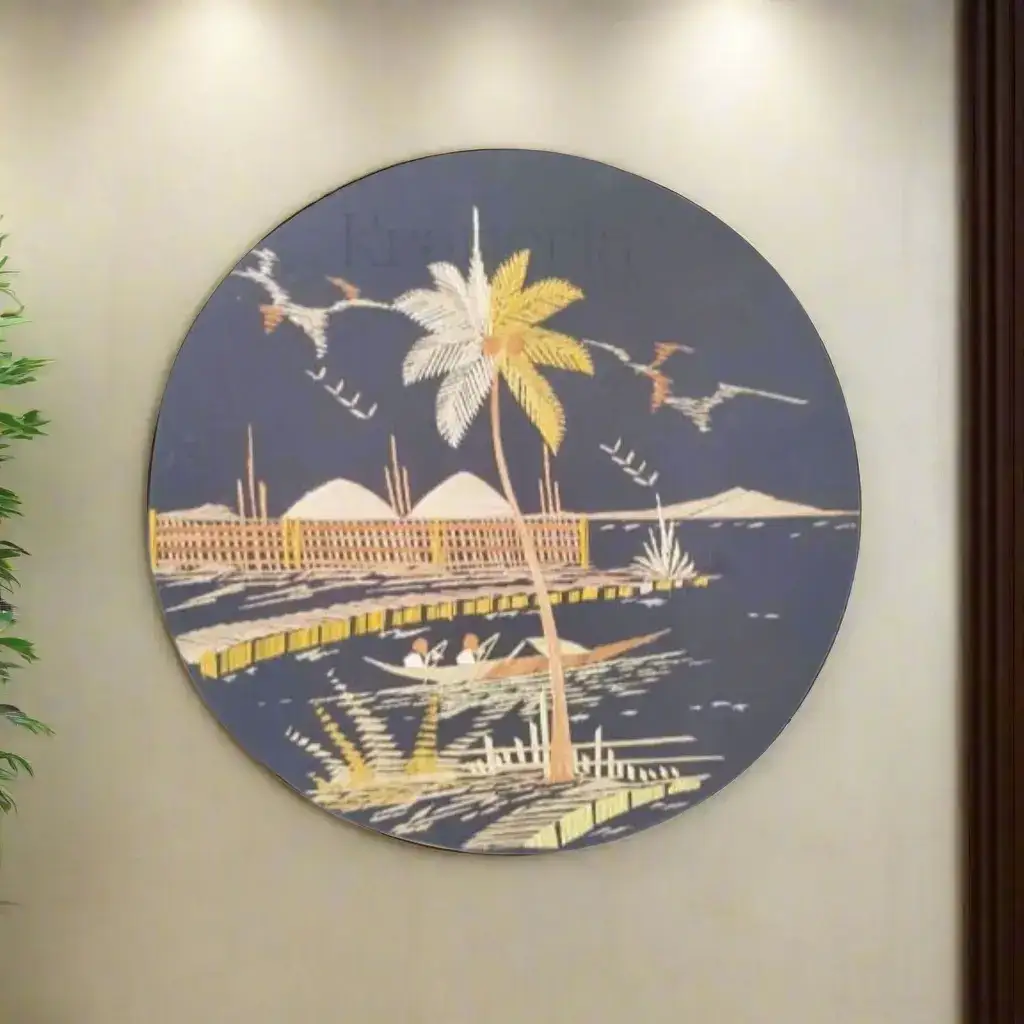
Tropical Beachfront with Boats and Palm Tree Rice Straw Art
Tropical Beachfront with Boats and Palm Tree - Kerala Rice Straw Art
Beachfront with Boats and Palm Tree Kerala Rice Straw Artwork is a unique and intricate form of handicraft. It beautifully creates images and designs using dried rice straw. This art form is deeply rooted in Kerala's agrarian culture. Kerala is known for its staple crop, rice, and its by-products are creatively repurposed into art. The craft mainly features natural straw shades, though some artists use dyes for added vibrancy.
The Art of Rice Straw Art
Art requires skilled artisans who skillfully cut, shape, and paste thin strips of straw onto a base. This forms detailed images portraying Kerala’s landscapes, temples, animals, and even Kathakali dancers. The straw's natural sheen and golden hue give the artwork a subtle, elegant glow. The craftsmanship reflects the cultural heritage of Kerala and highlights the beauty of paddy fields, which is why this art is often linked to paddy art traditions.
Traditional Craftsmanship and Cultural Heritage
This eco-friendly craft needs immense patience, precision, and creativity to complete. Each piece can take days or even weeks, depending on its complexity. Passed down through generations, this form of Kerala art is a testament to the sustainable living practices of the region. It shows a deep reverence for nature and the environment. The use of rice straw, an agricultural by-product, emphasizes a zero-waste philosophy ingrained in the traditions of Kerala artisans.
Features of the Kerala Art Work
The rice straw depicts scenes from village life, including serene beachfronts with boats and palm trees. Artisans emphasize capturing the calm and natural beauty of these landscapes. The craft involves handling delicate materials carefully to maintain an authentic texture. The natural earthy tones of the rice straw offer every artwork a unique look and feel.
Connection to Paddy Art and Kerala Art
Rice Straw in Kerala shares many similarities with paddy art. Both involve the creative use of rice or its by-products to produce visually captivating designs. However, rice straw focuses more on intricate marquetry with straw strips on a base, while paddy art often refers to large field-based designs. Together, they represent the rich tradition of kerala art, centered around agriculture and nature, that celebrates the region's culture through eco-friendly mediums.
Materials and Process
- Natural rice straw is the primary raw material used.
- A sturdy wooden or MDF base supports the artwork.
- Natural adhesives help attach the strips securely.
- A protective frame often encases the finished piece to preserve it.
All of these materials are sustainably sourced to support eco-conscious art practices. The detailed cutting, shaping, and layering of straw requires precision and creativity from the artisans. These tasks are performed in several steps, ensuring each strand is carefully placed for maximum visual appeal and texture.
Why Choose Rice Straw Art?
Straw Art is unique because it uses by-products from agriculture, giving an eco-friendly twist to art. Each piece varies due to the natural texture and color variations of the straw. This means no two artworks are exactly alike. The art requires no artificial colors, relying on the natural straw hues for beauty and vibrancy. This adds authenticity and one-of-a-kind charm to every creation.
Popular Subjects in Rice Straw
Popular themes include Kerala’s tropical beachfronts, boats on calm waters, and graceful palm trees. Artists also depict cultural icons such as temples, village scenes, animals, and traditional dances. These subjects evoke a sense of nostalgia and cultural pride. They are perfect for anyone who appreciates the finer details of kerala art and traditional craftsmanship.
Ideal for Eco-Friendly Home Decor
This rice art piece is an excellent addition to any home or office. It brings warmth and calmness to living rooms, bedrooms, hallways, or tropical-themed spaces. Its natural aesthetic connects the interior to an eco-conscious lifestyle. The artwork not only decorates but also tells a story of sustainable creativity.
Product Information
Product Information
Shipping & Returns
Shipping & Returns
Description
Tropical Beachfront with Boats and Palm Tree - Kerala Rice Straw Art
Beachfront with Boats and Palm Tree Kerala Rice Straw Artwork is a unique and intricate form of handicraft. It beautifully creates images and designs using dried rice straw. This art form is deeply rooted in Kerala's agrarian culture. Kerala is known for its staple crop, rice, and its by-products are creatively repurposed into art. The craft mainly features natural straw shades, though some artists use dyes for added vibrancy.
The Art of Rice Straw Art
Art requires skilled artisans who skillfully cut, shape, and paste thin strips of straw onto a base. This forms detailed images portraying Kerala’s landscapes, temples, animals, and even Kathakali dancers. The straw's natural sheen and golden hue give the artwork a subtle, elegant glow. The craftsmanship reflects the cultural heritage of Kerala and highlights the beauty of paddy fields, which is why this art is often linked to paddy art traditions.
Traditional Craftsmanship and Cultural Heritage
This eco-friendly craft needs immense patience, precision, and creativity to complete. Each piece can take days or even weeks, depending on its complexity. Passed down through generations, this form of Kerala art is a testament to the sustainable living practices of the region. It shows a deep reverence for nature and the environment. The use of rice straw, an agricultural by-product, emphasizes a zero-waste philosophy ingrained in the traditions of Kerala artisans.
Features of the Kerala Art Work
The rice straw depicts scenes from village life, including serene beachfronts with boats and palm trees. Artisans emphasize capturing the calm and natural beauty of these landscapes. The craft involves handling delicate materials carefully to maintain an authentic texture. The natural earthy tones of the rice straw offer every artwork a unique look and feel.
Connection to Paddy Art and Kerala Art
Rice Straw in Kerala shares many similarities with paddy art. Both involve the creative use of rice or its by-products to produce visually captivating designs. However, rice straw focuses more on intricate marquetry with straw strips on a base, while paddy art often refers to large field-based designs. Together, they represent the rich tradition of kerala art, centered around agriculture and nature, that celebrates the region's culture through eco-friendly mediums.
Materials and Process
- Natural rice straw is the primary raw material used.
- A sturdy wooden or MDF base supports the artwork.
- Natural adhesives help attach the strips securely.
- A protective frame often encases the finished piece to preserve it.
All of these materials are sustainably sourced to support eco-conscious art practices. The detailed cutting, shaping, and layering of straw requires precision and creativity from the artisans. These tasks are performed in several steps, ensuring each strand is carefully placed for maximum visual appeal and texture.
Why Choose Rice Straw Art?
Straw Art is unique because it uses by-products from agriculture, giving an eco-friendly twist to art. Each piece varies due to the natural texture and color variations of the straw. This means no two artworks are exactly alike. The art requires no artificial colors, relying on the natural straw hues for beauty and vibrancy. This adds authenticity and one-of-a-kind charm to every creation.
Popular Subjects in Rice Straw
Popular themes include Kerala’s tropical beachfronts, boats on calm waters, and graceful palm trees. Artists also depict cultural icons such as temples, village scenes, animals, and traditional dances. These subjects evoke a sense of nostalgia and cultural pride. They are perfect for anyone who appreciates the finer details of kerala art and traditional craftsmanship.
Ideal for Eco-Friendly Home Decor
This rice art piece is an excellent addition to any home or office. It brings warmth and calmness to living rooms, bedrooms, hallways, or tropical-themed spaces. Its natural aesthetic connects the interior to an eco-conscious lifestyle. The artwork not only decorates but also tells a story of sustainable creativity.