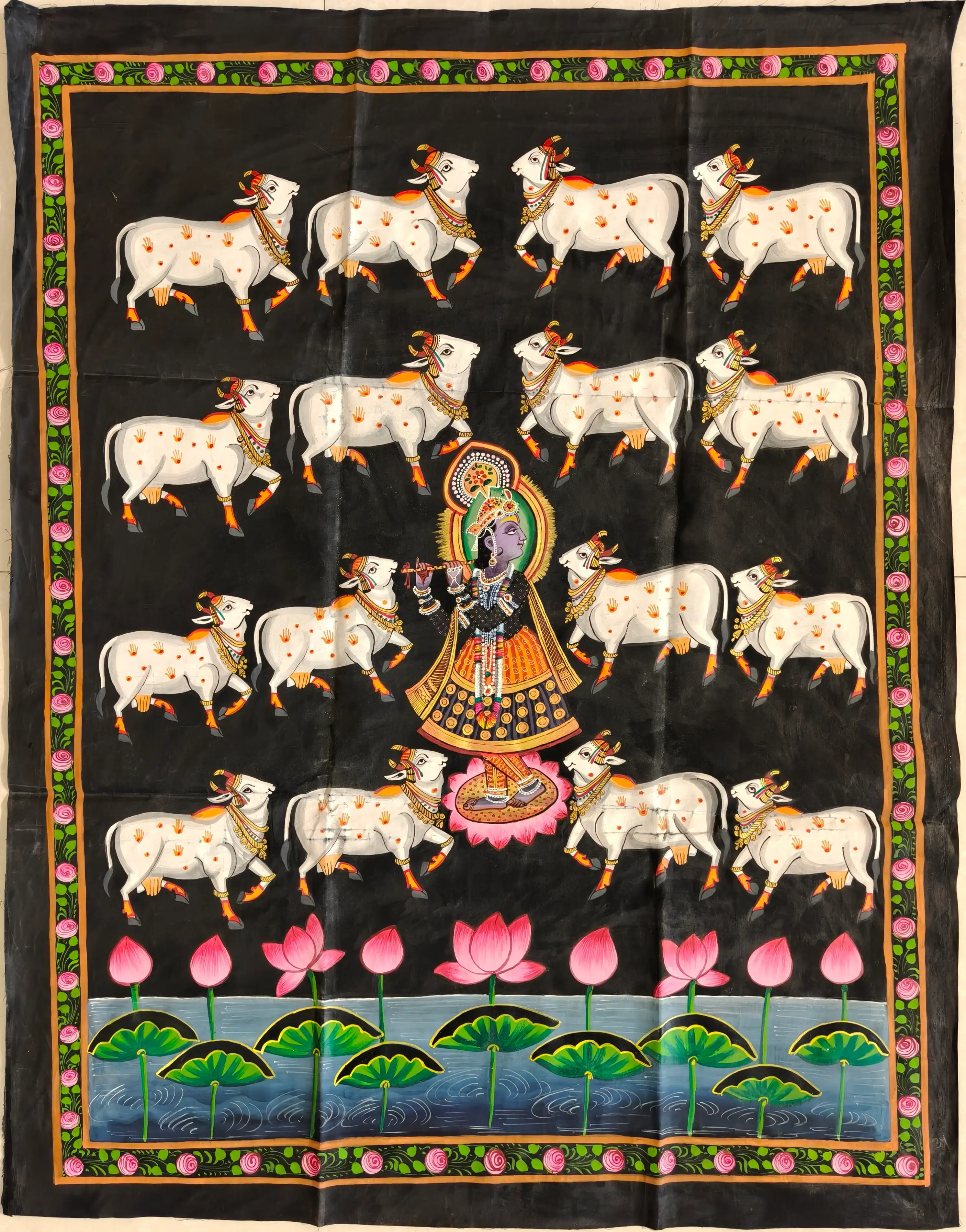
Traditional Shrinathji Pichwai Painting - Lord Krishna with Cows and Lotus Pond
Traditional Krishna Pichwai Art - Lord Krishna with Cows and Lotus Pond
Rajasthani Traditional Shrinathji Pichwai Painting is a vibrant and intricate Indian miniature painting style. Originating in the royal courts of Rajasthan from the 16th century onwards, this form of art has deep historical significance. Each painting beautifully portrays mythology, epics, royal life, love stories, and folk culture with a unique blend of bold lines and bright colors. The traditional technique involves natural dyes and pigments made from minerals, vegetables, and precious stones. This gives the Shrinathji Pichwai painting with cows a luminous and lasting appeal that has been admired for centuries.Krishna Pichwai Art.
Overview of Krishna Pichwai Art
Krishna art is a stunning representation of Lord Krishna, often depicted playing his flute surrounded by cows. This art holds religious and cultural importance, especially among followers of the Nathdwara tradition. Artists take great care to depict Krishna’s divine persona with rich embellishments and exquisite detailing. The paintings are hand-crafted and often used as Shrinathji wall art in temples and homes to invoke spiritual blessings.
The Distinct Schools of Pichwai Painting for Temple Décor
This art form is divided into several regional schools, each with its own distinct style and subject matter. The major schools include Mewar, Marwar, Bundi, Kota, Kishangarh, Bikaner, and Jaipur. These schools contribute to the diversity and richness of Pichwai painting for temple décor.
- Kishangarh: This school is renowned for its romantic portrayals of Radha and Krishna, such as the iconic Bani Thani painting.
- Mewar: Mewar paintings typically depict court scenes, heroic tales, and religious themes with intricate detailing.
- Bundi and Kota: These schools focus on lush landscapes, hunting scenes, and other narrative-rich visuals that complete the Krishna Pichwai art story.
Artistic Techniques and Materials
Crafting a Shrinathji Pichwai painting with cows requires precision, skill, and patience. The use of natural mineral pigments and vegetable dyes ensures vivid colors that do not fade easily. Artists employ fine handmade brushes to achieve intricate patterns and delicate textures. This traditional process gives each artwork a unique charm and authenticity that machine-made prints cannot replicate.
The artworks are usually painted on cloth or specially prepared paper bases. The attention to detail extends to the jewelry, textiles, and expressions of Lord Krishna and the cows, enhancing the spiritual and artistic value of each piece. This dedication to traditional craftsmanship makes Pichwai art for wedding gift a perfect choice for cultural and religious celebrations.
Symbolism in Pichwai Art
In these beautiful paintings, Lord Krishna is often shown as Shrinathji, the divine cowherd, surrounded by sacred cows. The cows symbolize nourishment, prosperity, and sacred devotion. Krishna’s flute represents divine music that enchants the world and calms minds. The lotus pond, often depicted at the bottom of the paintings, stands for purity, spiritual awakening, and divine beauty.
This rich symbolism amplifies the spiritual and aesthetic significance of the Shrinathji Pichwai painting with cows, making it beloved by devotees and art lovers alike. The artwork serves both as a decorative piece and as a cultural icon in religious ceremonies and temple décor.
Uses and Cultural Importance
Krishna Pichwai art has been an essential part of temple décor for centuries. It enhances the ambiance of shrines dedicated to Lord Krishna, bringing a sense of divine presence. Many families and collectors also display Shrinathji wall art in their homes to invite blessings and positive energy.
Moreover, Pichwai art for wedding gift has gained popularity due to its cultural significance and exquisite craftsmanship. Gifting such a painting symbolizes blessings for prosperity, love, and spiritual growth for the newlyweds.
Why Choose Krishna Art?
Choosing a Pichwai art piece offers a blend of traditional aesthetics, spiritual significance, and fine craftsmanship. This art form preserves ancient Indian miniature painting techniques with modern reverence. Whether you seek a unique religious artifact or an elegant decorative element, this type of Pichwai painting is a perfect fit.
The historical roots and the artistic richness provide collectors and devotees alike with a timeless masterpiece. The vibrant colors, intricate details, and meaningful themes in Krishna Pichwai art ensure it remains relevant and treasured through generations.
Original: $430.35
-70%$430.35
$129.10Product Information
Product Information
Shipping & Returns
Shipping & Returns
Description
Traditional Krishna Pichwai Art - Lord Krishna with Cows and Lotus Pond
Rajasthani Traditional Shrinathji Pichwai Painting is a vibrant and intricate Indian miniature painting style. Originating in the royal courts of Rajasthan from the 16th century onwards, this form of art has deep historical significance. Each painting beautifully portrays mythology, epics, royal life, love stories, and folk culture with a unique blend of bold lines and bright colors. The traditional technique involves natural dyes and pigments made from minerals, vegetables, and precious stones. This gives the Shrinathji Pichwai painting with cows a luminous and lasting appeal that has been admired for centuries.Krishna Pichwai Art.
Overview of Krishna Pichwai Art
Krishna art is a stunning representation of Lord Krishna, often depicted playing his flute surrounded by cows. This art holds religious and cultural importance, especially among followers of the Nathdwara tradition. Artists take great care to depict Krishna’s divine persona with rich embellishments and exquisite detailing. The paintings are hand-crafted and often used as Shrinathji wall art in temples and homes to invoke spiritual blessings.
The Distinct Schools of Pichwai Painting for Temple Décor
This art form is divided into several regional schools, each with its own distinct style and subject matter. The major schools include Mewar, Marwar, Bundi, Kota, Kishangarh, Bikaner, and Jaipur. These schools contribute to the diversity and richness of Pichwai painting for temple décor.
- Kishangarh: This school is renowned for its romantic portrayals of Radha and Krishna, such as the iconic Bani Thani painting.
- Mewar: Mewar paintings typically depict court scenes, heroic tales, and religious themes with intricate detailing.
- Bundi and Kota: These schools focus on lush landscapes, hunting scenes, and other narrative-rich visuals that complete the Krishna Pichwai art story.
Artistic Techniques and Materials
Crafting a Shrinathji Pichwai painting with cows requires precision, skill, and patience. The use of natural mineral pigments and vegetable dyes ensures vivid colors that do not fade easily. Artists employ fine handmade brushes to achieve intricate patterns and delicate textures. This traditional process gives each artwork a unique charm and authenticity that machine-made prints cannot replicate.
The artworks are usually painted on cloth or specially prepared paper bases. The attention to detail extends to the jewelry, textiles, and expressions of Lord Krishna and the cows, enhancing the spiritual and artistic value of each piece. This dedication to traditional craftsmanship makes Pichwai art for wedding gift a perfect choice for cultural and religious celebrations.
Symbolism in Pichwai Art
In these beautiful paintings, Lord Krishna is often shown as Shrinathji, the divine cowherd, surrounded by sacred cows. The cows symbolize nourishment, prosperity, and sacred devotion. Krishna’s flute represents divine music that enchants the world and calms minds. The lotus pond, often depicted at the bottom of the paintings, stands for purity, spiritual awakening, and divine beauty.
This rich symbolism amplifies the spiritual and aesthetic significance of the Shrinathji Pichwai painting with cows, making it beloved by devotees and art lovers alike. The artwork serves both as a decorative piece and as a cultural icon in religious ceremonies and temple décor.
Uses and Cultural Importance
Krishna Pichwai art has been an essential part of temple décor for centuries. It enhances the ambiance of shrines dedicated to Lord Krishna, bringing a sense of divine presence. Many families and collectors also display Shrinathji wall art in their homes to invite blessings and positive energy.
Moreover, Pichwai art for wedding gift has gained popularity due to its cultural significance and exquisite craftsmanship. Gifting such a painting symbolizes blessings for prosperity, love, and spiritual growth for the newlyweds.
Why Choose Krishna Art?
Choosing a Pichwai art piece offers a blend of traditional aesthetics, spiritual significance, and fine craftsmanship. This art form preserves ancient Indian miniature painting techniques with modern reverence. Whether you seek a unique religious artifact or an elegant decorative element, this type of Pichwai painting is a perfect fit.
The historical roots and the artistic richness provide collectors and devotees alike with a timeless masterpiece. The vibrant colors, intricate details, and meaningful themes in Krishna Pichwai art ensure it remains relevant and treasured through generations.