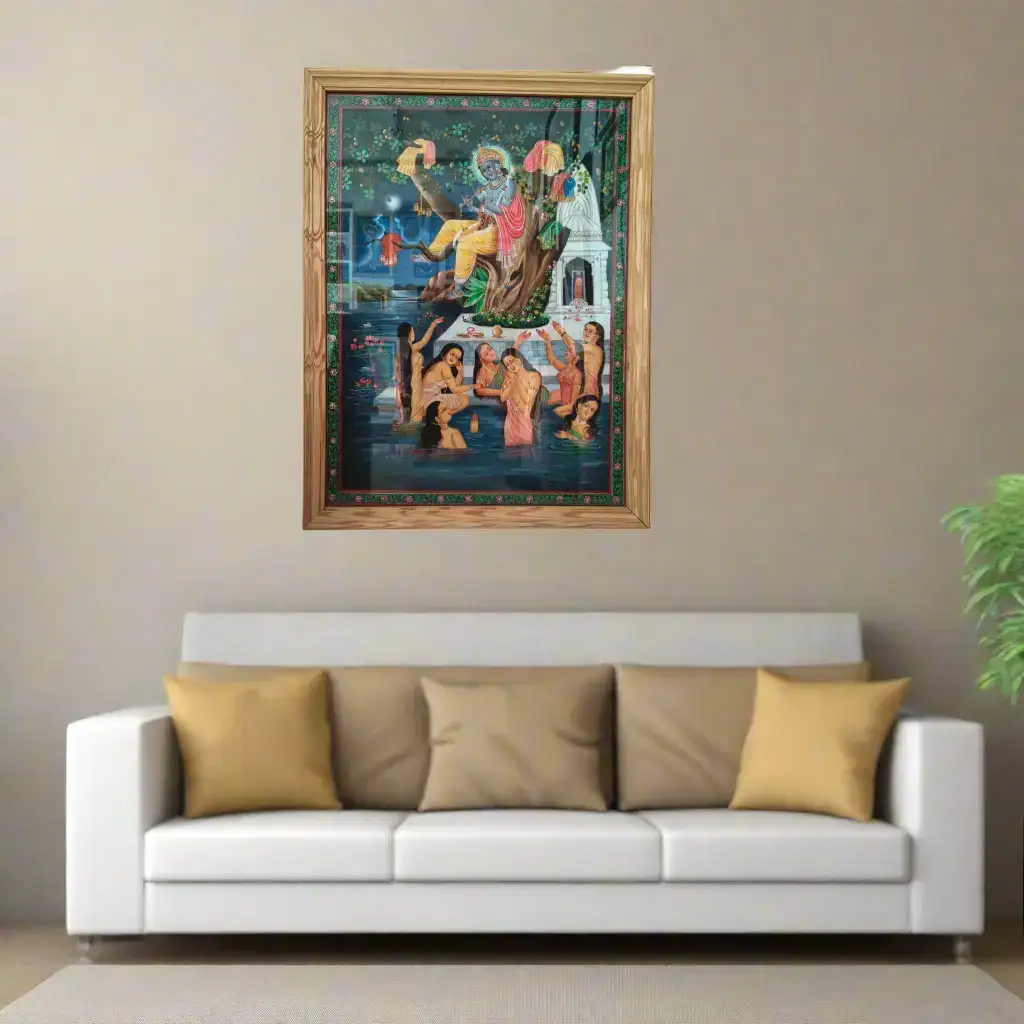
Vastra Haran Miniature Painting - Lord Krishna and Gopikas at the Yamuna
Vastra Haran Miniature Painting - Lord Krishna and Gopikas at the Yamuna
Vastra Haran Miniature Painting Rajasthani Painting is a rich and vibrant Indian art form that flourished in the royal courts of Rajasthan from the 16th century onwards. This style is deeply rooted in Indian traditions and expresses a variety of themes and emotions inspired by history and mythology. Among these, the Krishna and Gopikas painting stands out as a symbolic and artistic treasure.
The Vastra Haran miniature painting beautifully portrays mythology, epics, love stories, royal life, and folk culture. Bold lines, bright colors, and intricate details bring this exquisite art to life. Artists traditionally use natural dyes and pigments made from minerals, vegetables, and precious stones, which give the artwork a lasting and luminous quality.
Understanding the Significance of Krishna and Gopikas Painting
This painting captures a divine episode from Krishna Leela, symbolizing spiritual surrender and playful love. In this Vastra Haran miniature painting, Lord Krishna is shown taking garments from the Gopikas while they bathe in the sacred Yamuna River. This act signifies purity, love, and deep devotion in Indian mythology and spiritual traditions.
This particular scene from the Yamuna river Krishna painting tradition has inspired generations of artists, especially in Rajasthani and Pahari schools. The vibrant colors, delicate forms, and detailed facial expressions create a devotional work of exceptional beauty and cultural significance.
The Artistic Schools and Styles in Vastra Haran Miniature Painting
Indian miniature painting encompasses several schools, each contributing a unique style and thematic focus. The Vastra Haran miniature painting belongs to these rich artistic traditions and showcases diversity in visual storytelling and craftsmanship.
The major schools include Mewar, Marwar, Bundi, Kota, Kishangarh, Bikaner, and Jaipur. Every school highlights specific themes, color choices, and painting techniques.
- Mewar: Known for portraying court scenes, heroic tales, and religious subjects with strong lines and rich colors.
- Marwar: Celebrated for vibrant colors and detailed backgrounds, often depicting royal life and festive occasions.
- Bundi and Kota: Specialize in lush landscapes and hunting scenes, characterized by subtle color transitions.
- Kishangarh: Famous for romantic themes, especially beautiful portrayals of Radha and Krishna, such as the iconic Bani Thani.
- Bikaner and Jaipur: Known for refined landscapes and intricate borders, heavily influenced by Mughal painting techniques.
Krishna and Gopikas Painting: A Spiritual and Cultural Masterpiece
The Krishna and Gopikas painting masterfully reflects the divine interaction between Lord Krishna and his devotees. The Vastra Haran miniature painting captures these moments with unparalleled skill. Through this art, viewers experience a connection to spirituality, deep mythology, and India’s rich cultural heritage.
This artwork exemplifies the essence of Krishna Vastra Haran art, a critical segment of the Krishna Leela miniature painting tradition. It conveys profound meanings of ego surrender and unconditional love for God, making it a symbol of devotion and spiritual expression.
Materials and Techniques Used in Vastra Haran Miniature Painting
Artists of this exquisite tradition use natural pigments derived from minerals, vegetables, and precious stones. These materials ensure the longevity and brilliance of the Krishna and Gopikas art. Meticulous brushwork is applied to add intricate details, enriching every figure’s emotional depth and vibrancy.
The artworks are painted on archival-quality paper or cloth, preserving these masterpieces for generations. The use of multicolor floral schemes enhances the visual appeal and brings out the thematic beauty of Krishna Leela miniature paintings.
Symbolism in Krishna Vastra Haran Art
The Vastra Haran miniature painting is both a highly artistic creation and a powerful spiritual symbol. The depiction of the garment-stealing act illustrates the divine interaction between the soul and God. This scene encourages principles of ego surrender, divine grace, and pure love.
Art lovers and connoisseurs deeply appreciate this devotional artwork for its cultural richness and spiritual narrative. The sacred Yamuna River serves as a crucial and holy backdrop in the Yamuna river Krishna painting, emphasizing the importance of nature in spiritual stories.
Why Choose This Krishna and Gopika Painting?
This Vastra Haran miniature painting is not just an artistic work but a material and spiritual treasure. Owning it means embracing the rich Indian heritage and timeless devotional art. It is an outstanding example of Radha Krishna devotional artwork that blends mythology with artistic elegance.
Displaying this painting in your home adds charm and a thoughtful spiritual ambiance. The bright colors and detailed craftsmanship emotionally and visually captivate all who see it, making it a meaningful addition to any space.
Product Information
Product Information
Shipping & Returns
Shipping & Returns
Description
Vastra Haran Miniature Painting - Lord Krishna and Gopikas at the Yamuna
Vastra Haran Miniature Painting Rajasthani Painting is a rich and vibrant Indian art form that flourished in the royal courts of Rajasthan from the 16th century onwards. This style is deeply rooted in Indian traditions and expresses a variety of themes and emotions inspired by history and mythology. Among these, the Krishna and Gopikas painting stands out as a symbolic and artistic treasure.
The Vastra Haran miniature painting beautifully portrays mythology, epics, love stories, royal life, and folk culture. Bold lines, bright colors, and intricate details bring this exquisite art to life. Artists traditionally use natural dyes and pigments made from minerals, vegetables, and precious stones, which give the artwork a lasting and luminous quality.
Understanding the Significance of Krishna and Gopikas Painting
This painting captures a divine episode from Krishna Leela, symbolizing spiritual surrender and playful love. In this Vastra Haran miniature painting, Lord Krishna is shown taking garments from the Gopikas while they bathe in the sacred Yamuna River. This act signifies purity, love, and deep devotion in Indian mythology and spiritual traditions.
This particular scene from the Yamuna river Krishna painting tradition has inspired generations of artists, especially in Rajasthani and Pahari schools. The vibrant colors, delicate forms, and detailed facial expressions create a devotional work of exceptional beauty and cultural significance.
The Artistic Schools and Styles in Vastra Haran Miniature Painting
Indian miniature painting encompasses several schools, each contributing a unique style and thematic focus. The Vastra Haran miniature painting belongs to these rich artistic traditions and showcases diversity in visual storytelling and craftsmanship.
The major schools include Mewar, Marwar, Bundi, Kota, Kishangarh, Bikaner, and Jaipur. Every school highlights specific themes, color choices, and painting techniques.
- Mewar: Known for portraying court scenes, heroic tales, and religious subjects with strong lines and rich colors.
- Marwar: Celebrated for vibrant colors and detailed backgrounds, often depicting royal life and festive occasions.
- Bundi and Kota: Specialize in lush landscapes and hunting scenes, characterized by subtle color transitions.
- Kishangarh: Famous for romantic themes, especially beautiful portrayals of Radha and Krishna, such as the iconic Bani Thani.
- Bikaner and Jaipur: Known for refined landscapes and intricate borders, heavily influenced by Mughal painting techniques.
Krishna and Gopikas Painting: A Spiritual and Cultural Masterpiece
The Krishna and Gopikas painting masterfully reflects the divine interaction between Lord Krishna and his devotees. The Vastra Haran miniature painting captures these moments with unparalleled skill. Through this art, viewers experience a connection to spirituality, deep mythology, and India’s rich cultural heritage.
This artwork exemplifies the essence of Krishna Vastra Haran art, a critical segment of the Krishna Leela miniature painting tradition. It conveys profound meanings of ego surrender and unconditional love for God, making it a symbol of devotion and spiritual expression.
Materials and Techniques Used in Vastra Haran Miniature Painting
Artists of this exquisite tradition use natural pigments derived from minerals, vegetables, and precious stones. These materials ensure the longevity and brilliance of the Krishna and Gopikas art. Meticulous brushwork is applied to add intricate details, enriching every figure’s emotional depth and vibrancy.
The artworks are painted on archival-quality paper or cloth, preserving these masterpieces for generations. The use of multicolor floral schemes enhances the visual appeal and brings out the thematic beauty of Krishna Leela miniature paintings.
Symbolism in Krishna Vastra Haran Art
The Vastra Haran miniature painting is both a highly artistic creation and a powerful spiritual symbol. The depiction of the garment-stealing act illustrates the divine interaction between the soul and God. This scene encourages principles of ego surrender, divine grace, and pure love.
Art lovers and connoisseurs deeply appreciate this devotional artwork for its cultural richness and spiritual narrative. The sacred Yamuna River serves as a crucial and holy backdrop in the Yamuna river Krishna painting, emphasizing the importance of nature in spiritual stories.
Why Choose This Krishna and Gopika Painting?
This Vastra Haran miniature painting is not just an artistic work but a material and spiritual treasure. Owning it means embracing the rich Indian heritage and timeless devotional art. It is an outstanding example of Radha Krishna devotional artwork that blends mythology with artistic elegance.
Displaying this painting in your home adds charm and a thoughtful spiritual ambiance. The bright colors and detailed craftsmanship emotionally and visually captivate all who see it, making it a meaningful addition to any space.