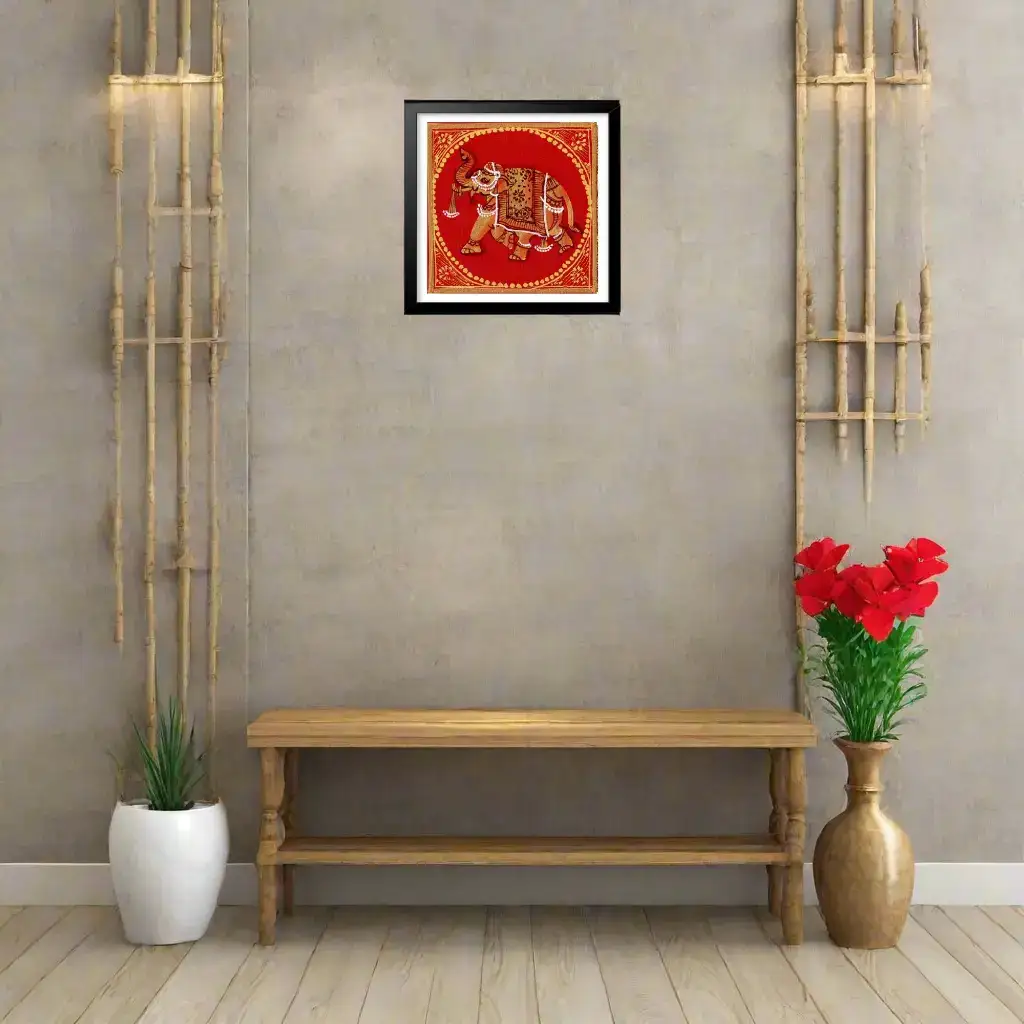
Sacred Elephant of Eternal Wisdom Painting
Sacred Elephant of Eternal Wisdom Painting
The Elephant of Eternal Wisdom Painting Rajasthani Painting represents a rich and vibrant style of Indian miniature painting. This art form flourished in the royal courts of Rajasthan starting from the 16th century. It is deeply rooted in Indian traditions and culture, showcasing themes from mythology, epics, royal life, love stories, and folk culture. The paintings are well-known for their bold lines, bright colors, and intricate detailing that make them visually stunning.
Natural dyes and pigments, carefully made from minerals, vegetables, and precious stones, give these paintings a lasting and luminous quality. This traditional method ensures that the artwork maintains its beauty and vibrancy over many years. The vivid colors and meticulous craftsmanship highlight the uniqueness of this form of watercolor painting.
Historical Background and Significance
The elephant is a significant symbol in Indian culture and spirituality. It embodies wisdom, strength, and divine protection. The elephant painting genre captures this symbolism with exceptional precision and artistic expression. Each piece tells a story deeply connected to Indian heritage and spirituality.
Rajasthani elephant miniature art is especially notable for the way it portrays elephants in ceremonial and sacred contexts. These paintings often depict elephants adorned with intricate decorations and royal embellishments, demonstrating the importance of these majestic animals in Indian royalty and mythology. The elephant miniature painting tradition preserves these values through detailed and colorful imagery.
The Distinct Schools of Rajasthan Paintings
This artistic tradition is diverse and is divided into several renowned schools. These include Mewar, Marwar, Bundi, Kota, Kishangarh, Bikaner, and Jaipur. Each school has its own unique style, subjects, and aesthetic approach to painting. The variety enriches the overall legacy of Rajasthani miniature art, making it a treasure trove for art lovers.
- Mewar: Focuses on court scenes, heroic tales, and religious themes. The artwork from this school is often bold and expressive.
- Marwar: Known for its vivid landscapes and historical depictions, Marwar paintings often capture the essence of royal grandeur.
- Bundi and Kota: Famous for lush landscapes, nature scenes, and hunting expeditions, these styles bring attention to the environment around royal life.
- Kishangarh: Renowned for its delicate and romantic depiction of Radha and Krishna, Kishangarh’s painting style is soft, fluid, and emotionally expressive. The iconic Bani Thani image is a highlight.
- Bikaner: Combines both Mughal and Rajasthani influences, with detailed portraits and richly decorated compositions.
- Jaipur: Balances traditional and contemporary themes, known for vibrant colors and artistic innovation.
Elephant Painting in Various Schools
Within these schools, the depiction of elephants varies greatly but always retains significance. The elephant painting is depicted with regal grace and spiritual symbolism. Artists use a combination of bright colors and detailed brushwork to capture the character of the elephant. This attention to detail makes the elephant a focal point in many compositions.
The tradition of Rajasthani elephant miniature art ensures that the elephant is portrayed with symbolic elements such as ornaments, ceremonial garlands, and royal harnesses. These highlight the animal’s importance and its revered status in Indian culture.
Artistic Techniques and Materials
The art of Rajasthani miniature paintings, including the elephant painting, uses traditional techniques. Fine brushes are employed to create elaborate, delicate details that draw the viewer’s attention. The craftsmanship is meticulous, requiring patience and skill to apply natural pigments precisely.
Natural pigments from minerals and vegetables give each painting its distinctive color palette. These natural materials create softer tones and ensure the artwork remains vibrant through time. Handmade Wasli paper is often the medium, prized for its durability and smooth surface that complements the fine watercolor painting techniques.
Why Choose This Sacred Elephant art?
This painting is not only a piece of art but also a spiritual object. It brings the symbolism of eternal wisdom, divine strength, and cultural heritage into your home or office. The sacred elephant stands as a symbol of good fortune and protection, making it an ideal centerpiece for décor or a thoughtful gift.
Collectors and admirers of Indian art recognize the value of owning an authentic piece that reflects centuries-old traditions. The elephant paintings connects historical artistry with modern appreciation, a beautiful blend for any art enthusiast.
Product Information
Product Information
Shipping & Returns
Shipping & Returns
Description
Sacred Elephant of Eternal Wisdom Painting
The Elephant of Eternal Wisdom Painting Rajasthani Painting represents a rich and vibrant style of Indian miniature painting. This art form flourished in the royal courts of Rajasthan starting from the 16th century. It is deeply rooted in Indian traditions and culture, showcasing themes from mythology, epics, royal life, love stories, and folk culture. The paintings are well-known for their bold lines, bright colors, and intricate detailing that make them visually stunning.
Natural dyes and pigments, carefully made from minerals, vegetables, and precious stones, give these paintings a lasting and luminous quality. This traditional method ensures that the artwork maintains its beauty and vibrancy over many years. The vivid colors and meticulous craftsmanship highlight the uniqueness of this form of watercolor painting.
Historical Background and Significance
The elephant is a significant symbol in Indian culture and spirituality. It embodies wisdom, strength, and divine protection. The elephant painting genre captures this symbolism with exceptional precision and artistic expression. Each piece tells a story deeply connected to Indian heritage and spirituality.
Rajasthani elephant miniature art is especially notable for the way it portrays elephants in ceremonial and sacred contexts. These paintings often depict elephants adorned with intricate decorations and royal embellishments, demonstrating the importance of these majestic animals in Indian royalty and mythology. The elephant miniature painting tradition preserves these values through detailed and colorful imagery.
The Distinct Schools of Rajasthan Paintings
This artistic tradition is diverse and is divided into several renowned schools. These include Mewar, Marwar, Bundi, Kota, Kishangarh, Bikaner, and Jaipur. Each school has its own unique style, subjects, and aesthetic approach to painting. The variety enriches the overall legacy of Rajasthani miniature art, making it a treasure trove for art lovers.
- Mewar: Focuses on court scenes, heroic tales, and religious themes. The artwork from this school is often bold and expressive.
- Marwar: Known for its vivid landscapes and historical depictions, Marwar paintings often capture the essence of royal grandeur.
- Bundi and Kota: Famous for lush landscapes, nature scenes, and hunting expeditions, these styles bring attention to the environment around royal life.
- Kishangarh: Renowned for its delicate and romantic depiction of Radha and Krishna, Kishangarh’s painting style is soft, fluid, and emotionally expressive. The iconic Bani Thani image is a highlight.
- Bikaner: Combines both Mughal and Rajasthani influences, with detailed portraits and richly decorated compositions.
- Jaipur: Balances traditional and contemporary themes, known for vibrant colors and artistic innovation.
Elephant Painting in Various Schools
Within these schools, the depiction of elephants varies greatly but always retains significance. The elephant painting is depicted with regal grace and spiritual symbolism. Artists use a combination of bright colors and detailed brushwork to capture the character of the elephant. This attention to detail makes the elephant a focal point in many compositions.
The tradition of Rajasthani elephant miniature art ensures that the elephant is portrayed with symbolic elements such as ornaments, ceremonial garlands, and royal harnesses. These highlight the animal’s importance and its revered status in Indian culture.
Artistic Techniques and Materials
The art of Rajasthani miniature paintings, including the elephant painting, uses traditional techniques. Fine brushes are employed to create elaborate, delicate details that draw the viewer’s attention. The craftsmanship is meticulous, requiring patience and skill to apply natural pigments precisely.
Natural pigments from minerals and vegetables give each painting its distinctive color palette. These natural materials create softer tones and ensure the artwork remains vibrant through time. Handmade Wasli paper is often the medium, prized for its durability and smooth surface that complements the fine watercolor painting techniques.
Why Choose This Sacred Elephant art?
This painting is not only a piece of art but also a spiritual object. It brings the symbolism of eternal wisdom, divine strength, and cultural heritage into your home or office. The sacred elephant stands as a symbol of good fortune and protection, making it an ideal centerpiece for décor or a thoughtful gift.
Collectors and admirers of Indian art recognize the value of owning an authentic piece that reflects centuries-old traditions. The elephant paintings connects historical artistry with modern appreciation, a beautiful blend for any art enthusiast.