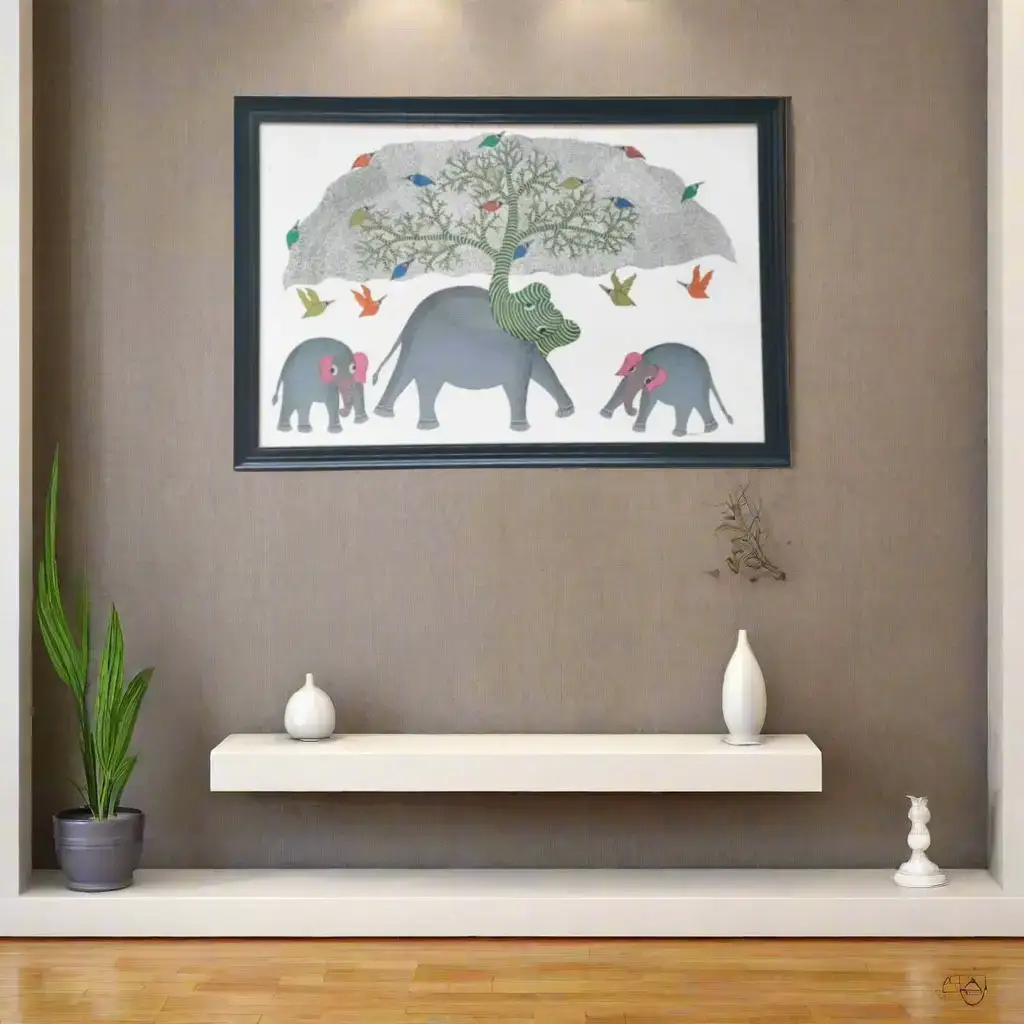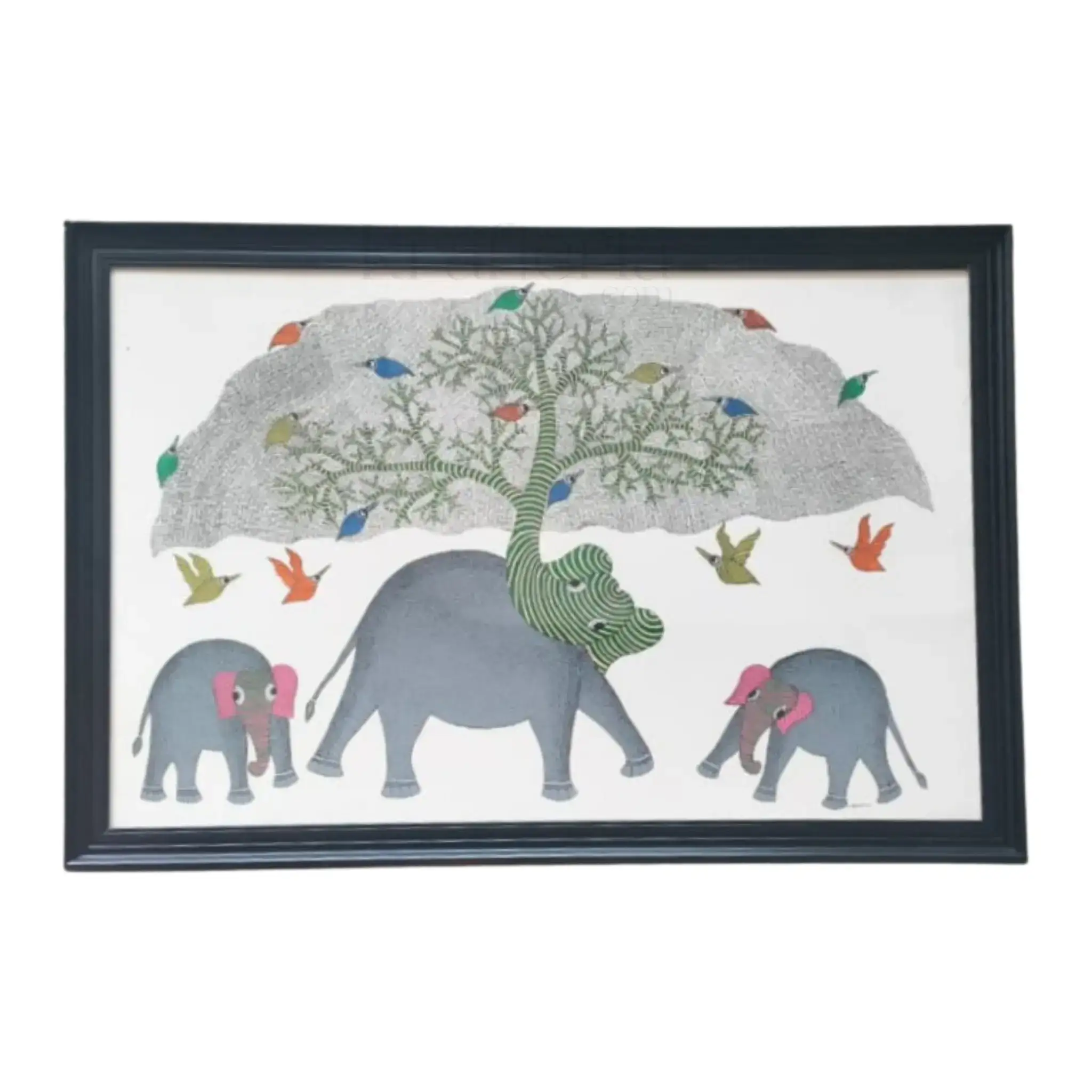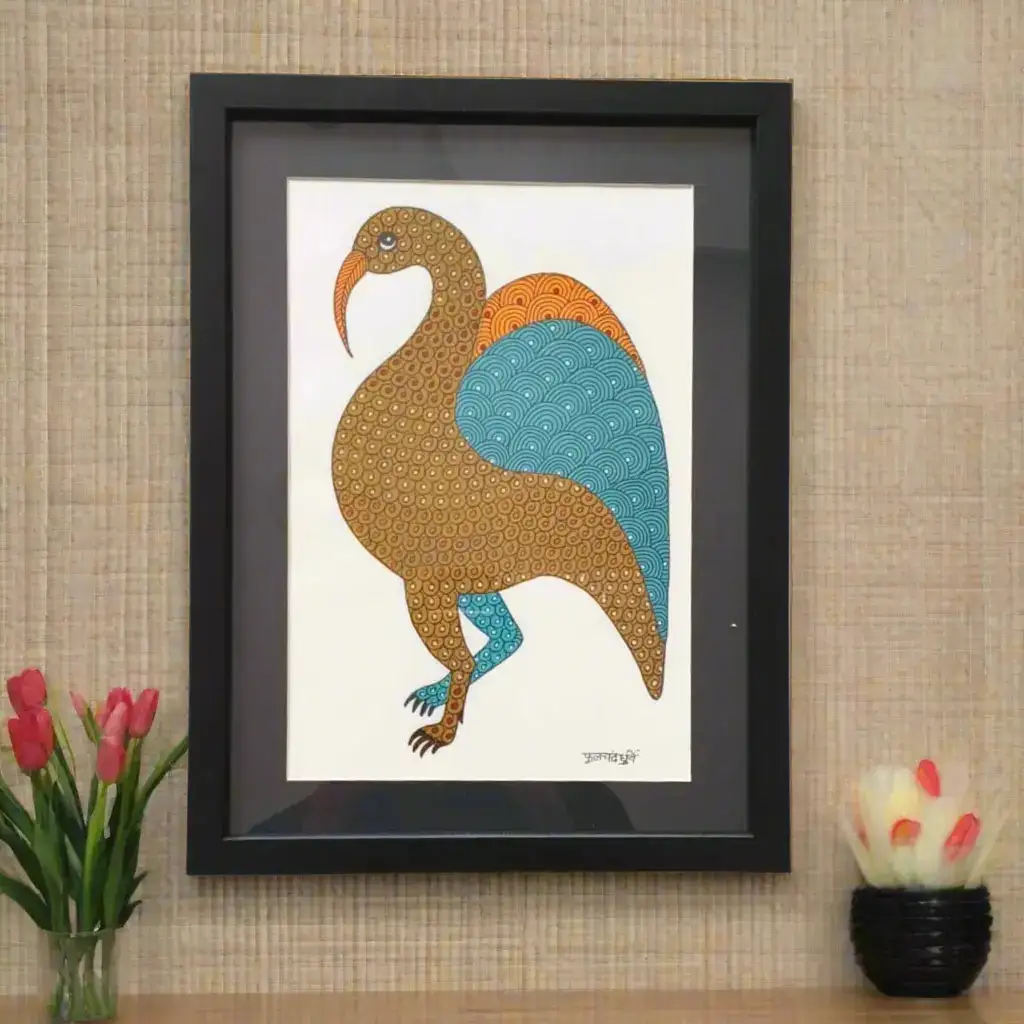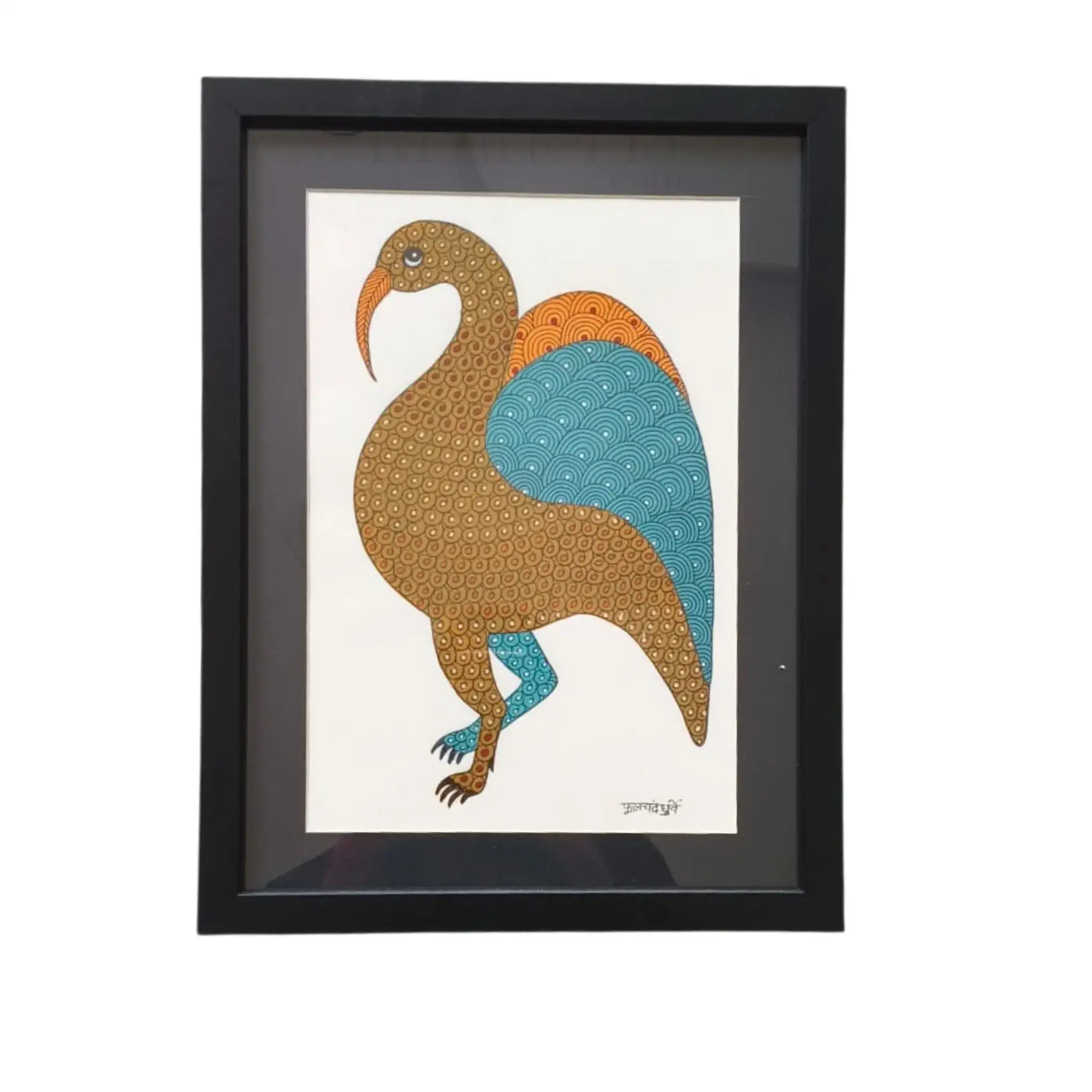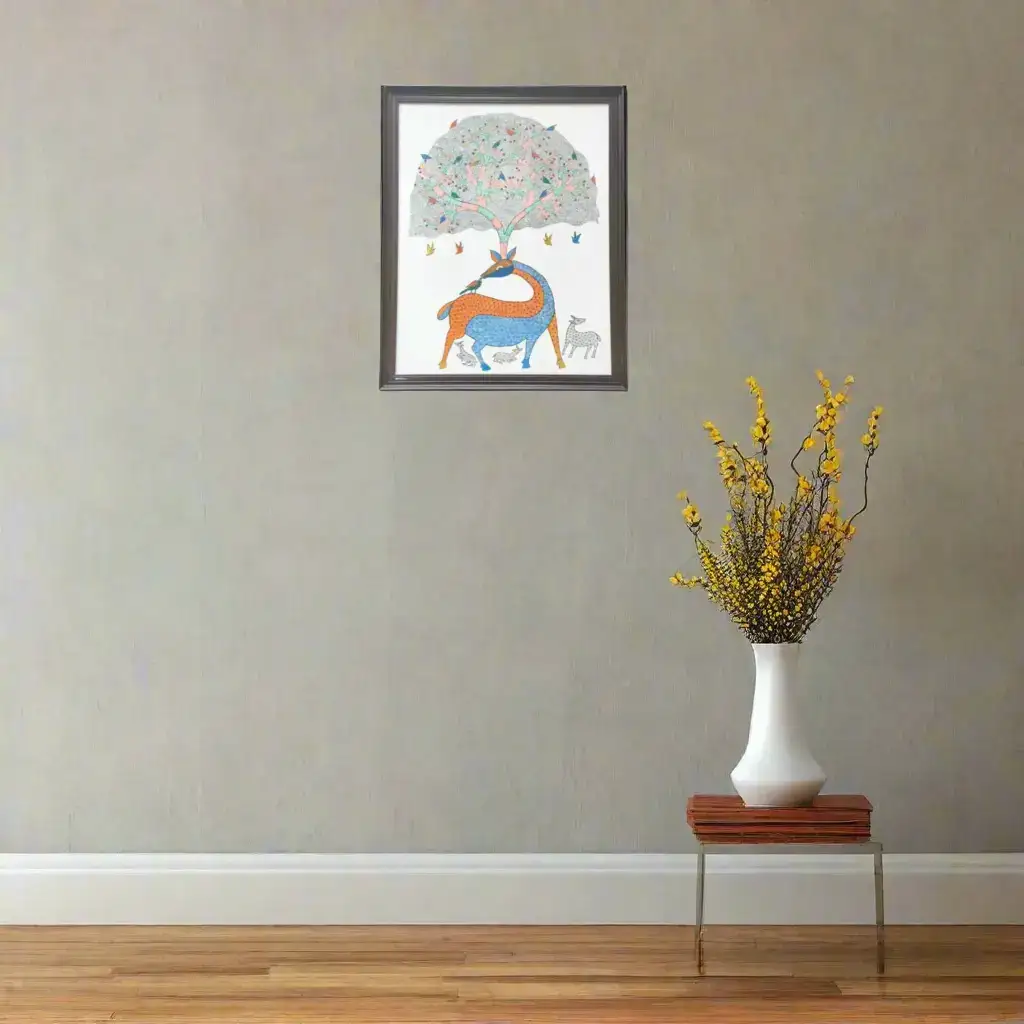
Tree of Life with Deer and Birds Gond Painting
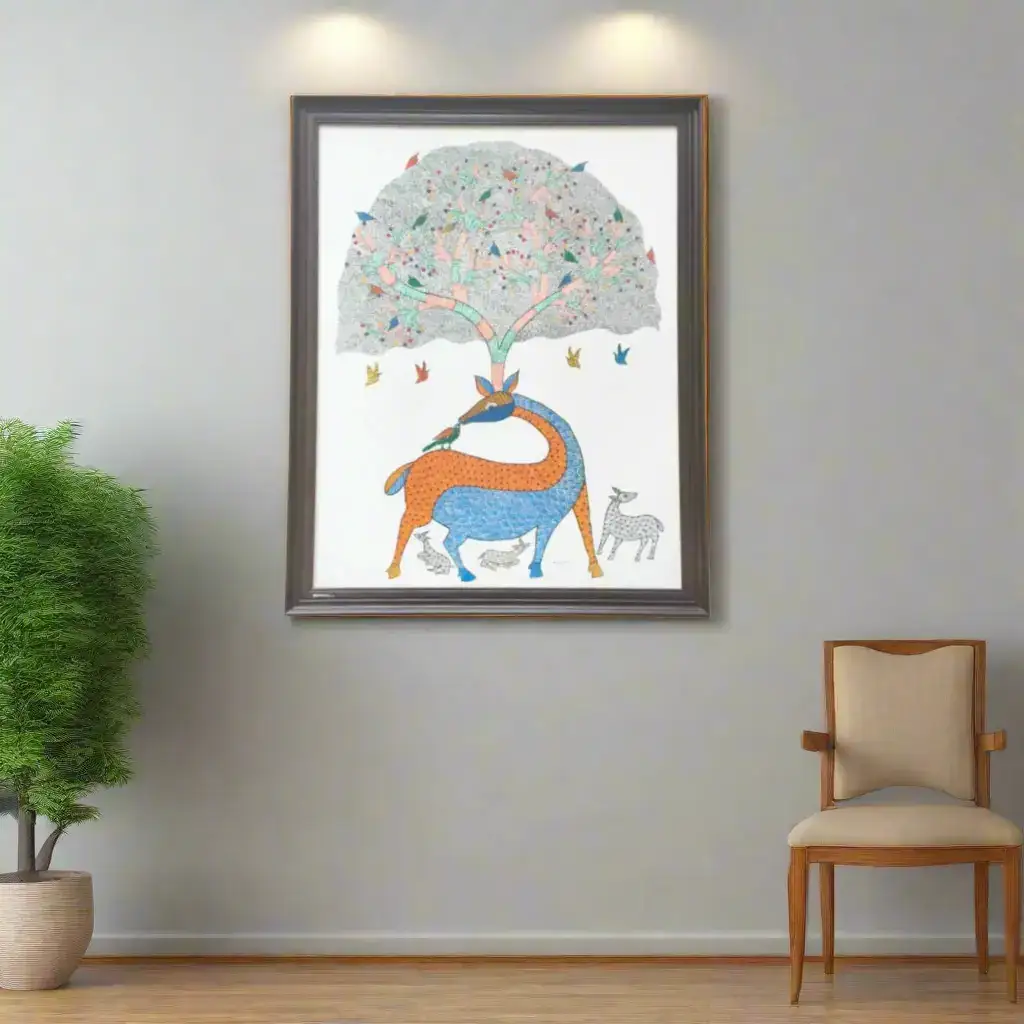
Deer and Birds Gond Painting: Tree of Life with Tribal Art
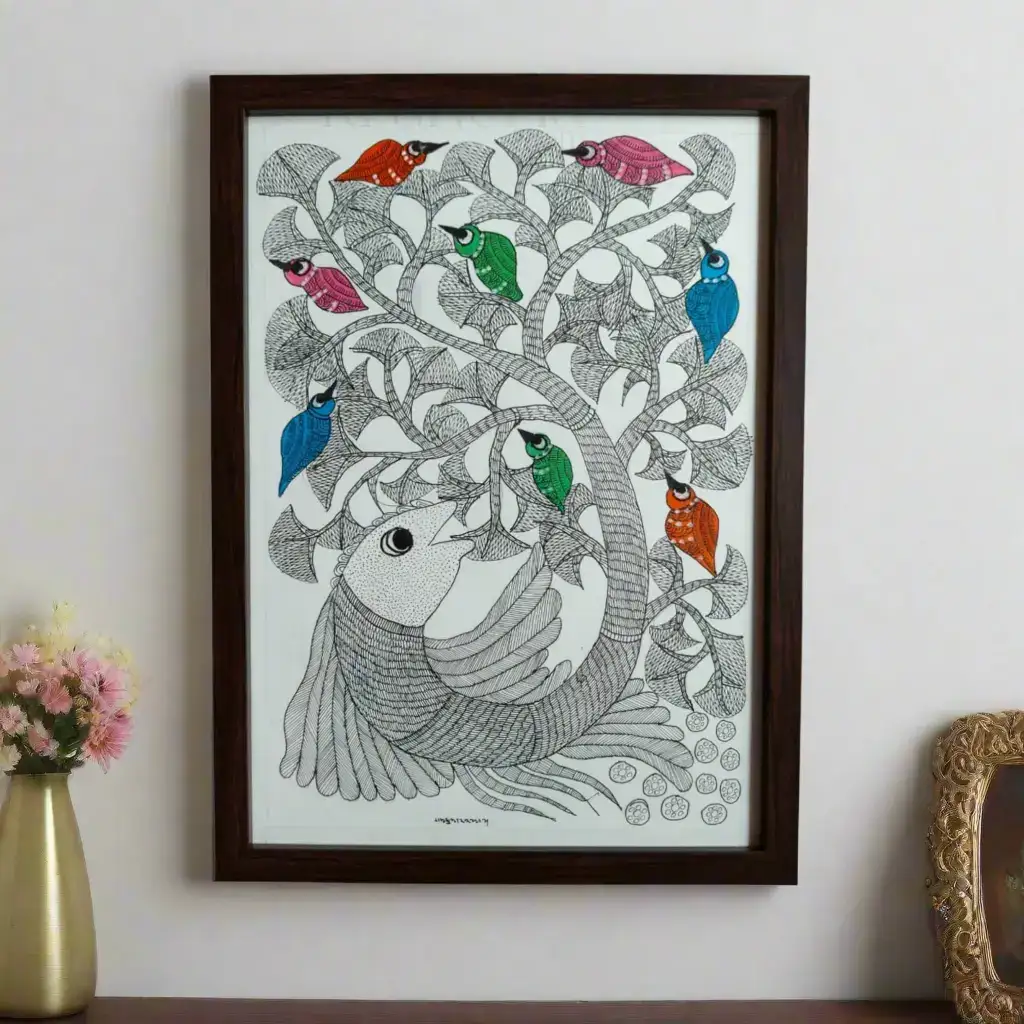
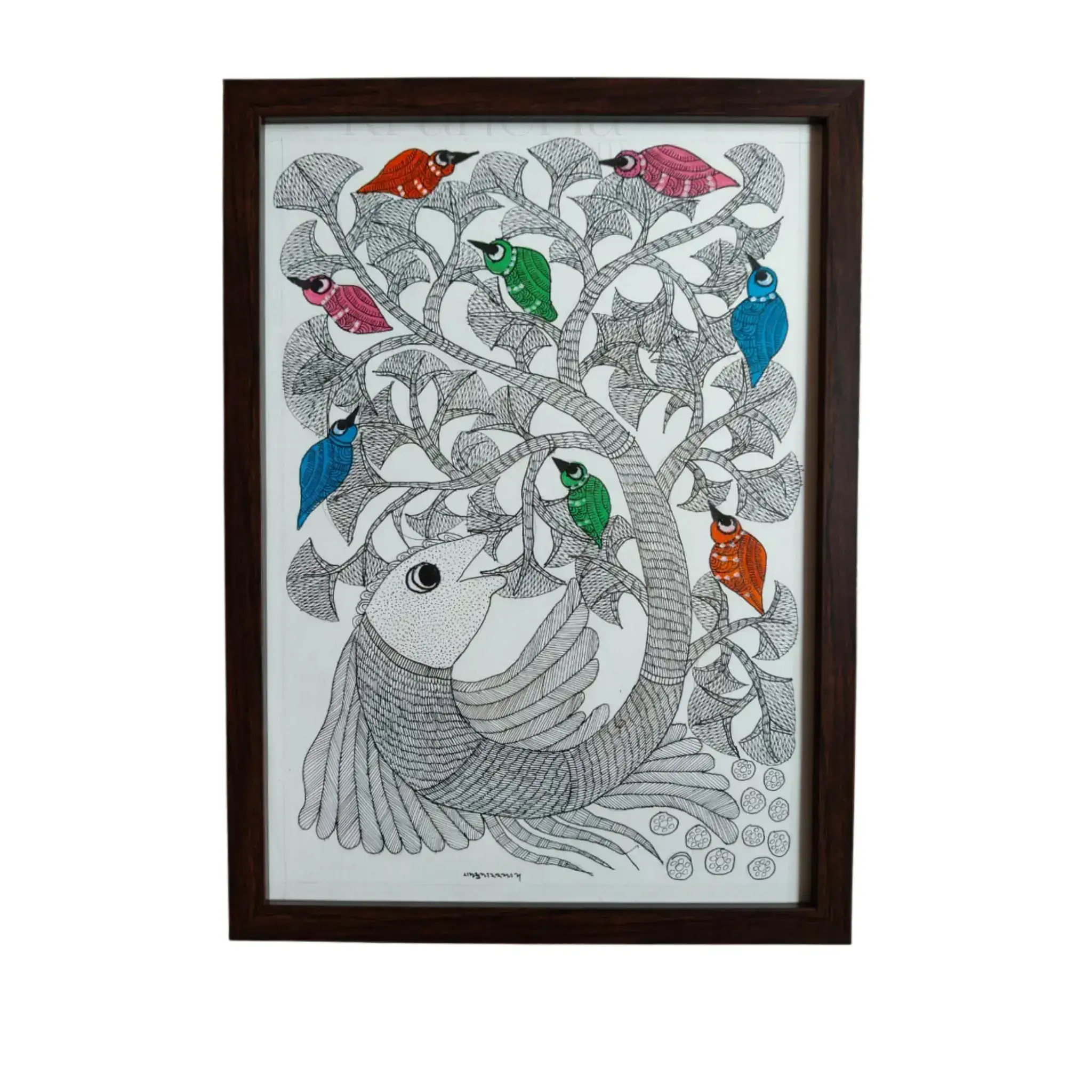
Deer and Birds Gond Painting is a vibrant and intricate form of tribal painting. It originates from the Gond tribe, one of central India’s largest indigenous communities. This traditional art is especially concentrated in the Dindori district of Madhya Pradesh. Originally used for wall and floor decorations during festivals, Gond art has evolved into a celebrated contemporary folk expression. Its development highlights the importance of preserving tribal culture and heritage.
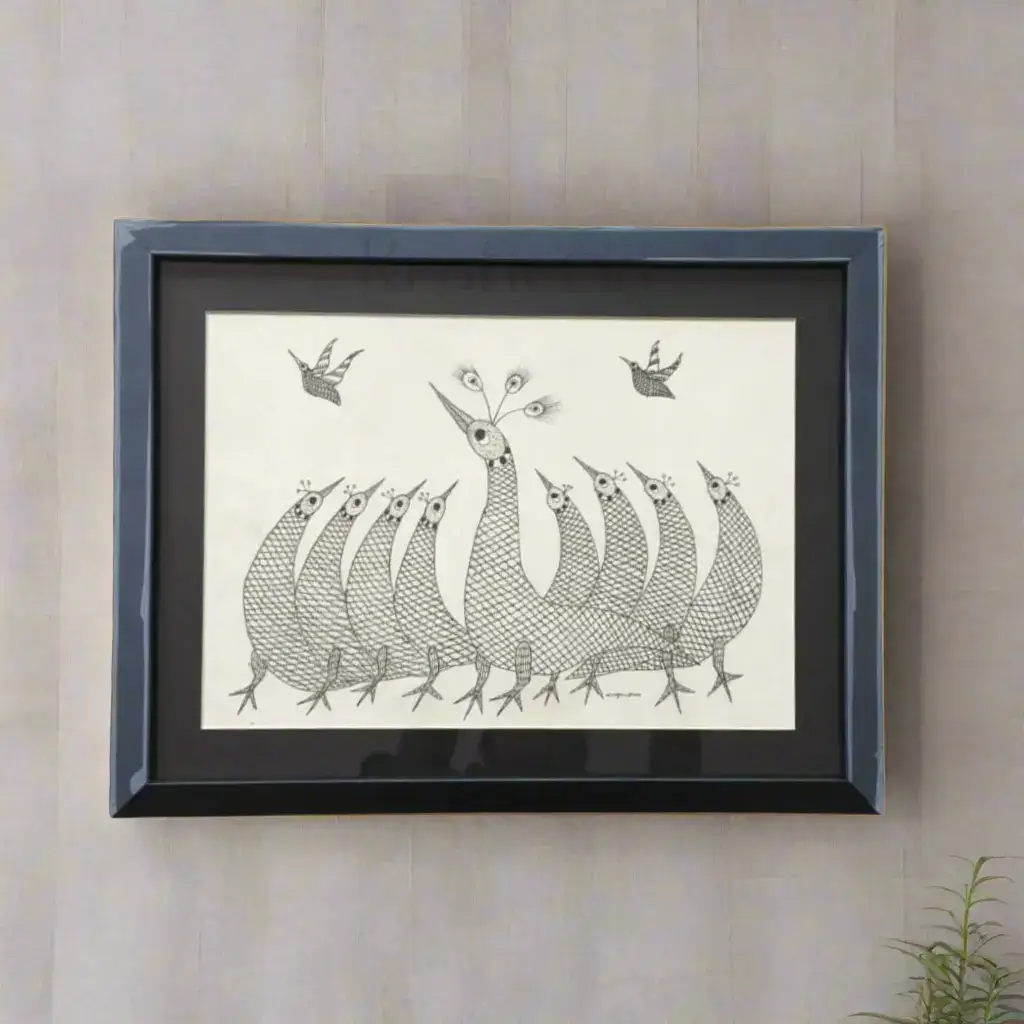
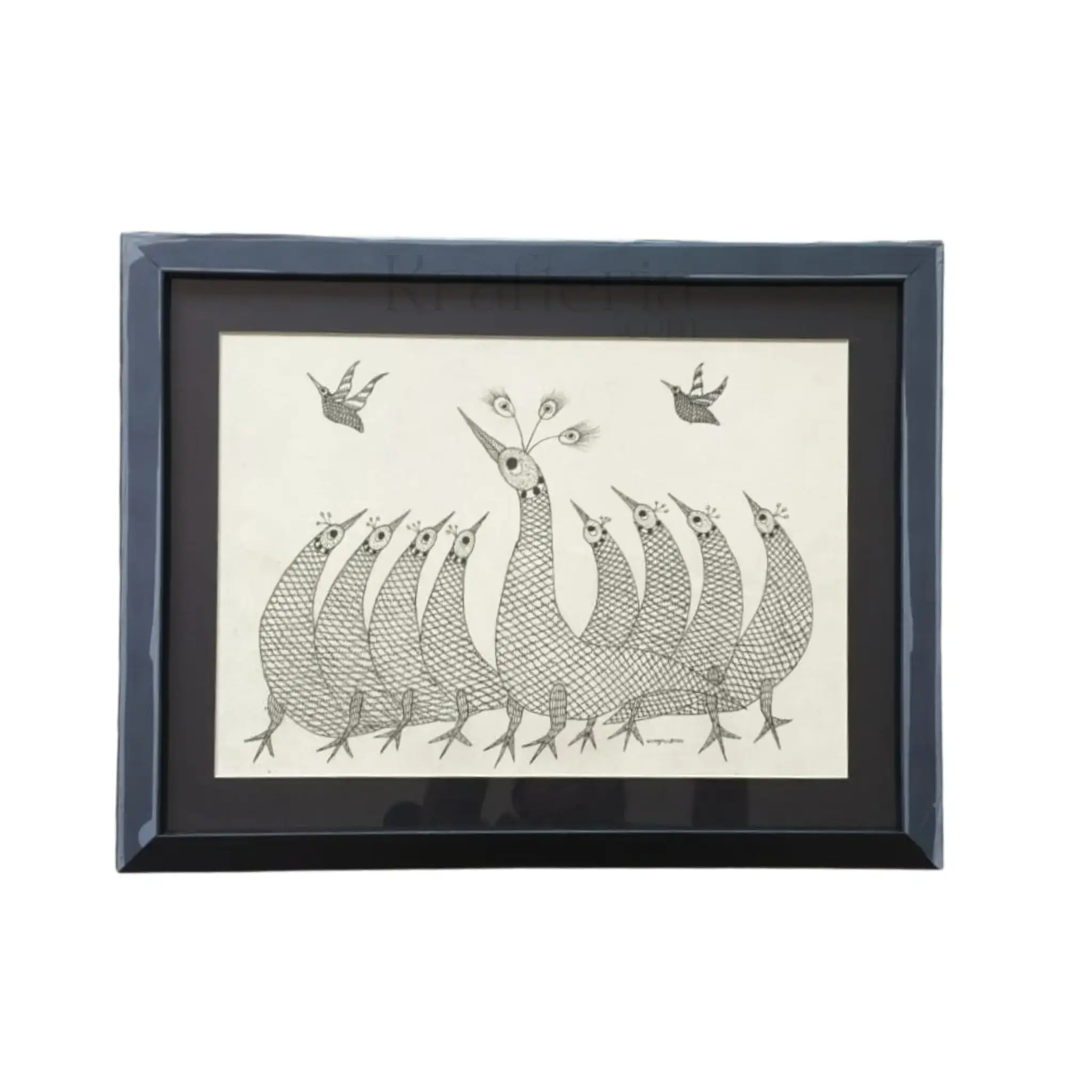
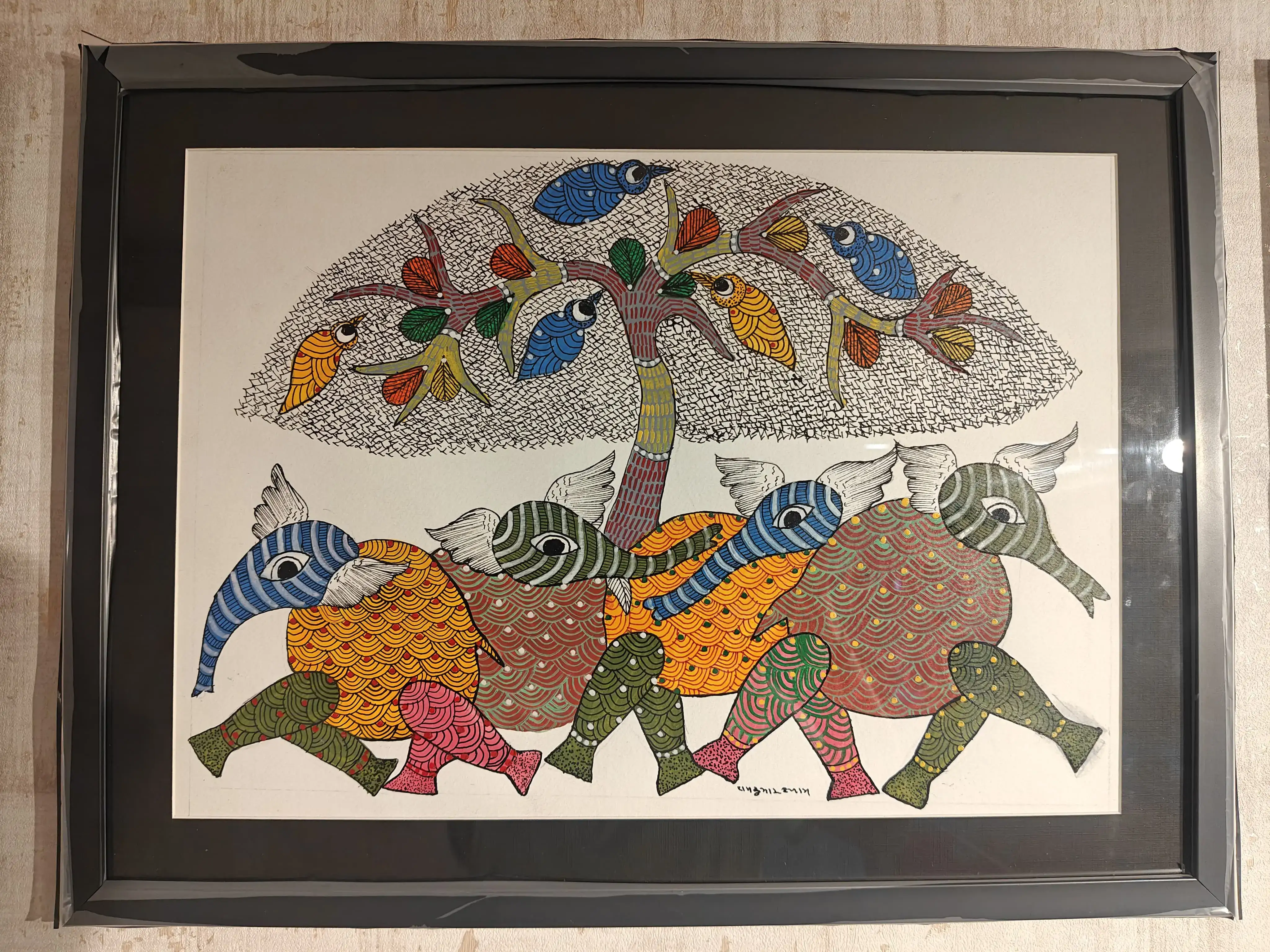
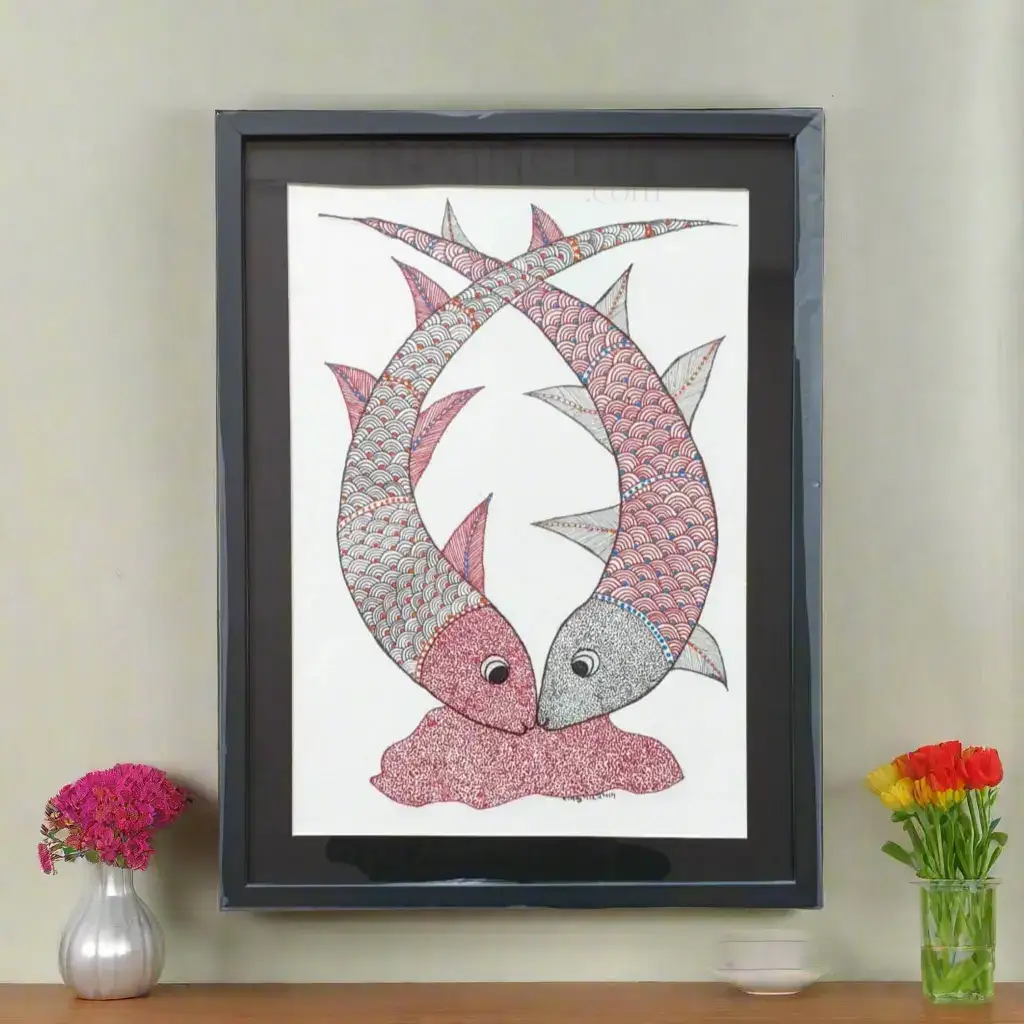
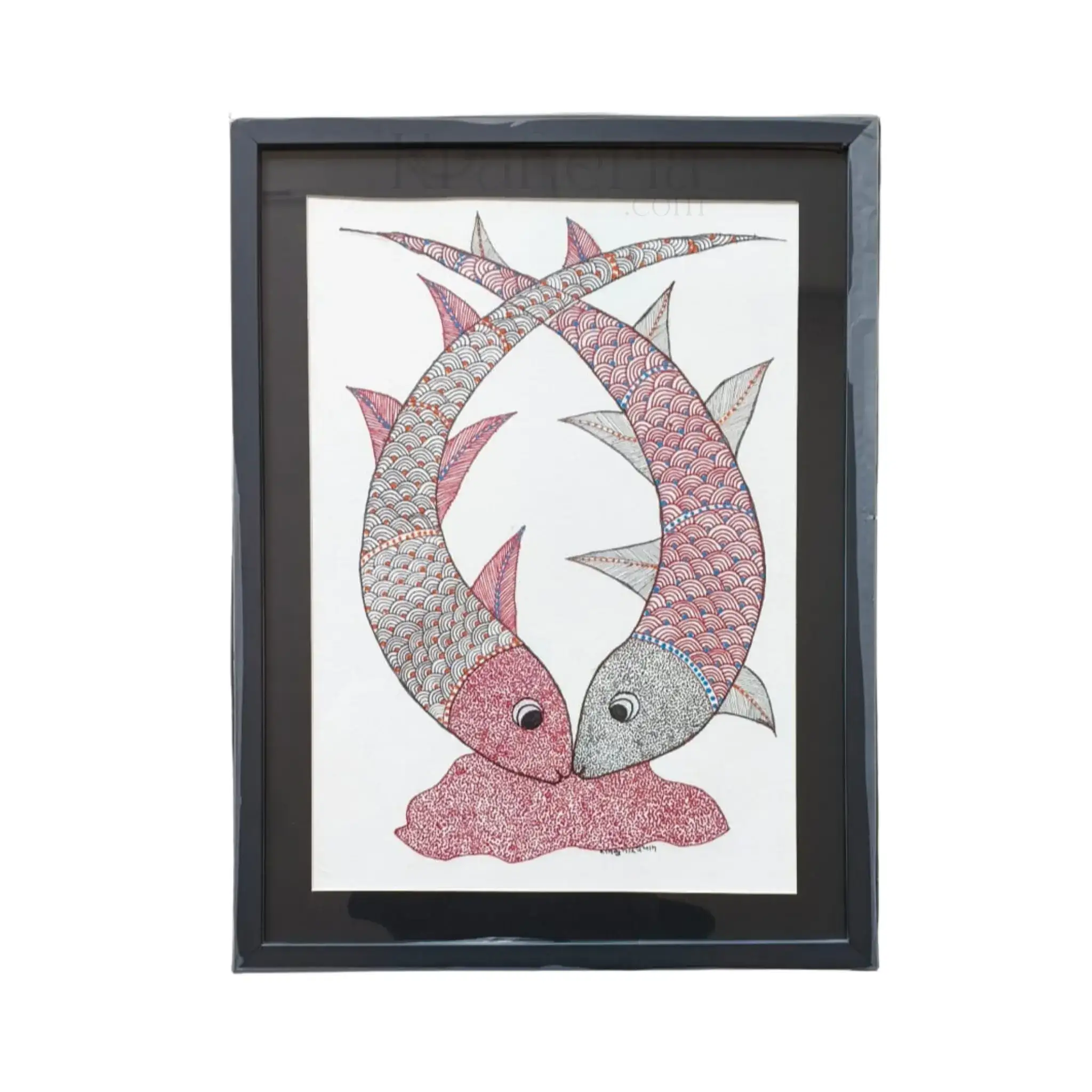
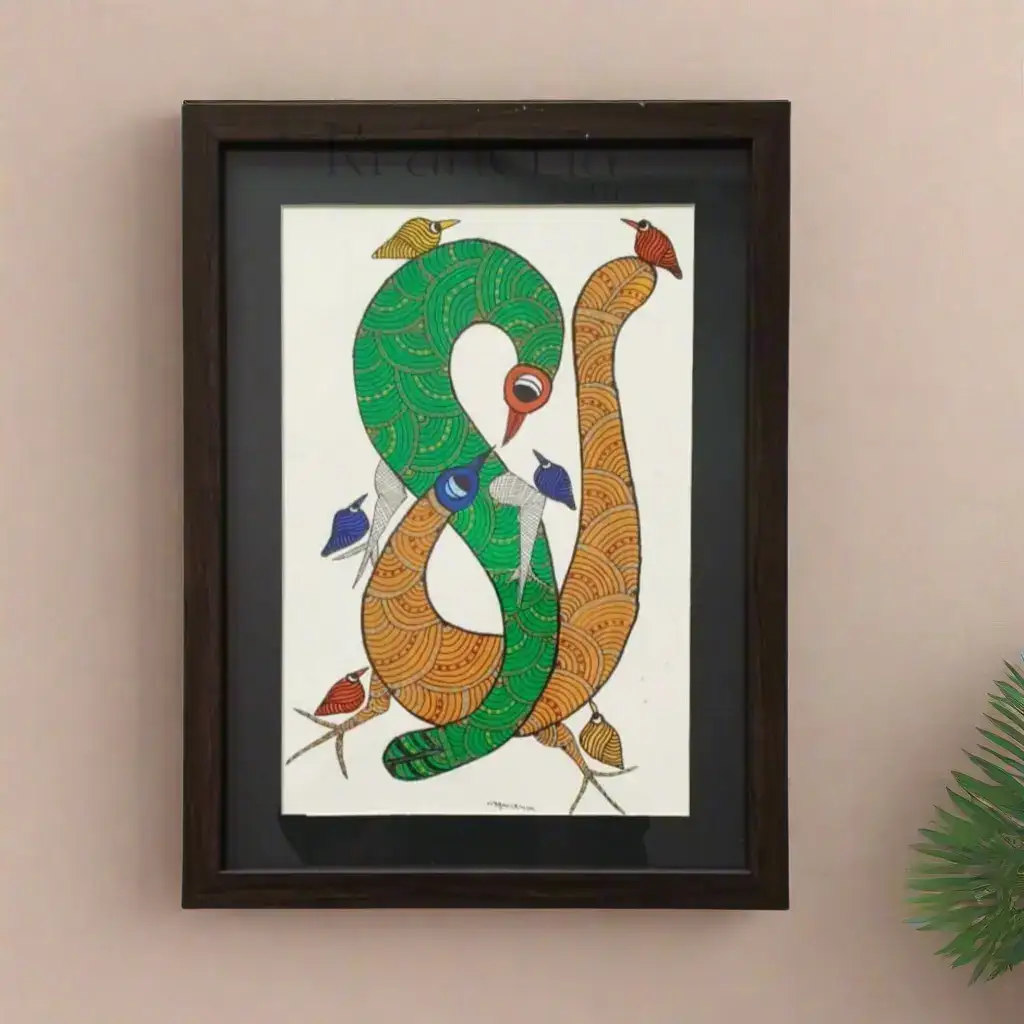
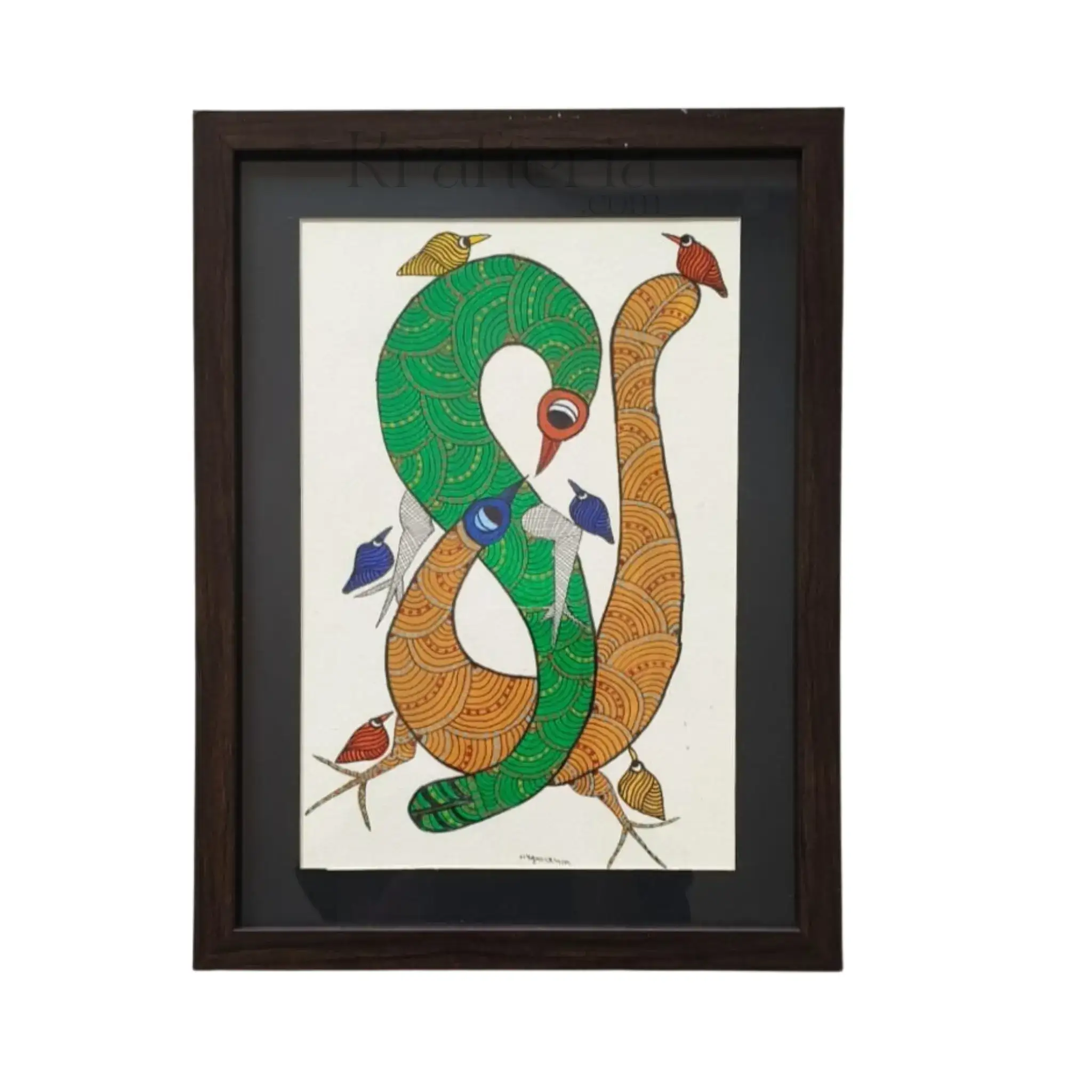
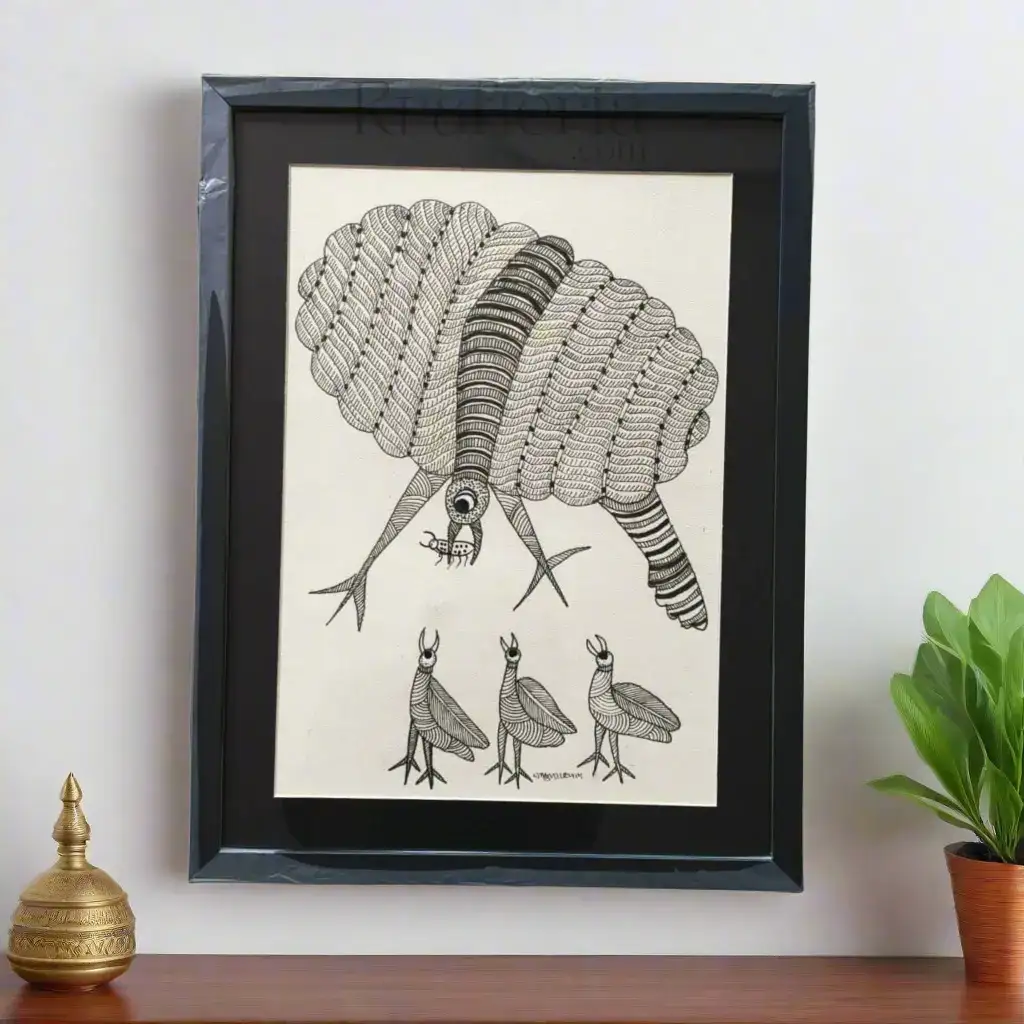
Gond paintings are known for their use of vivid colors, intricate dots, fine lines, and rhythmic patterns. These artistic elements beautifully capture themes from nature, folklore, tribal deities, and daily rural life. Common motifs include tigers, birds, trees, fish, and mythological tales. This art serves as a spiritual connection between the Gond people and their environment, through a deep cultural narrative.
Exploring Tribal Tree Life Wall Art and Related Traditions
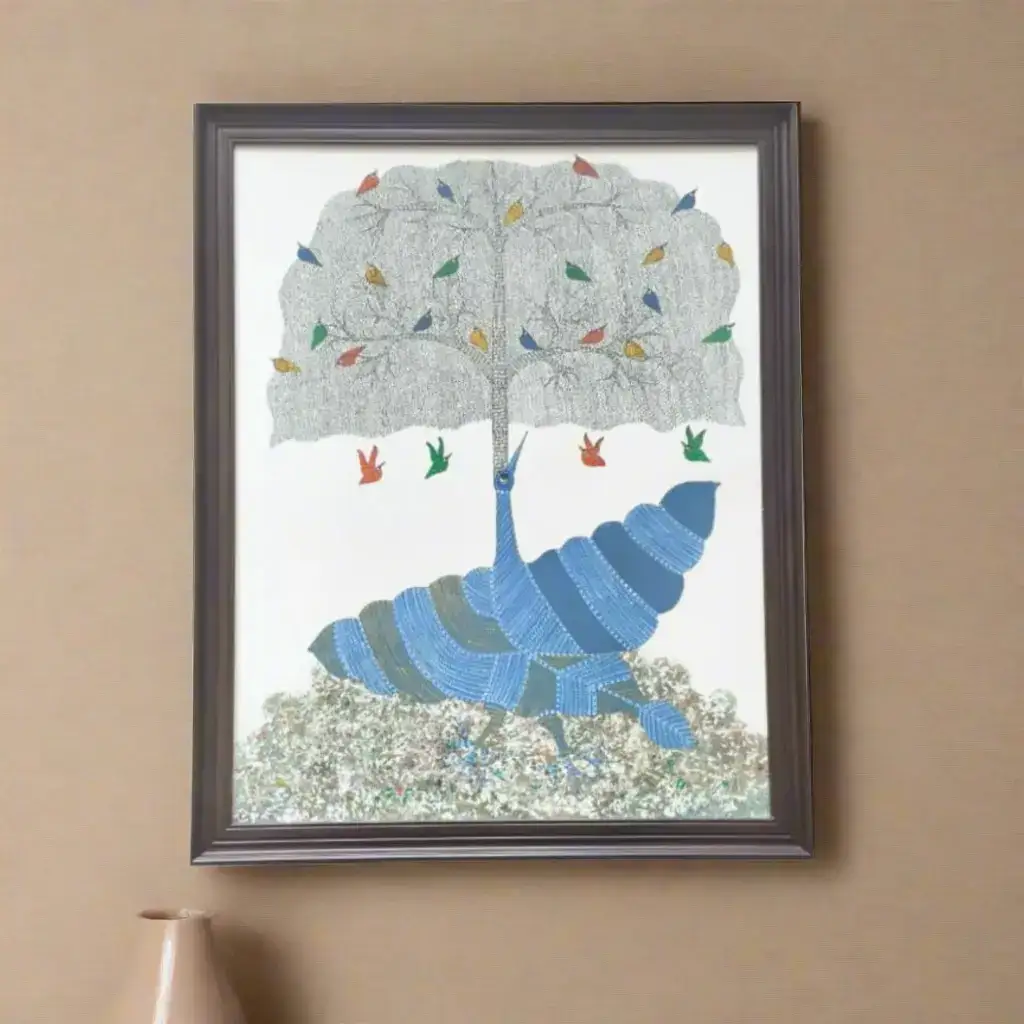
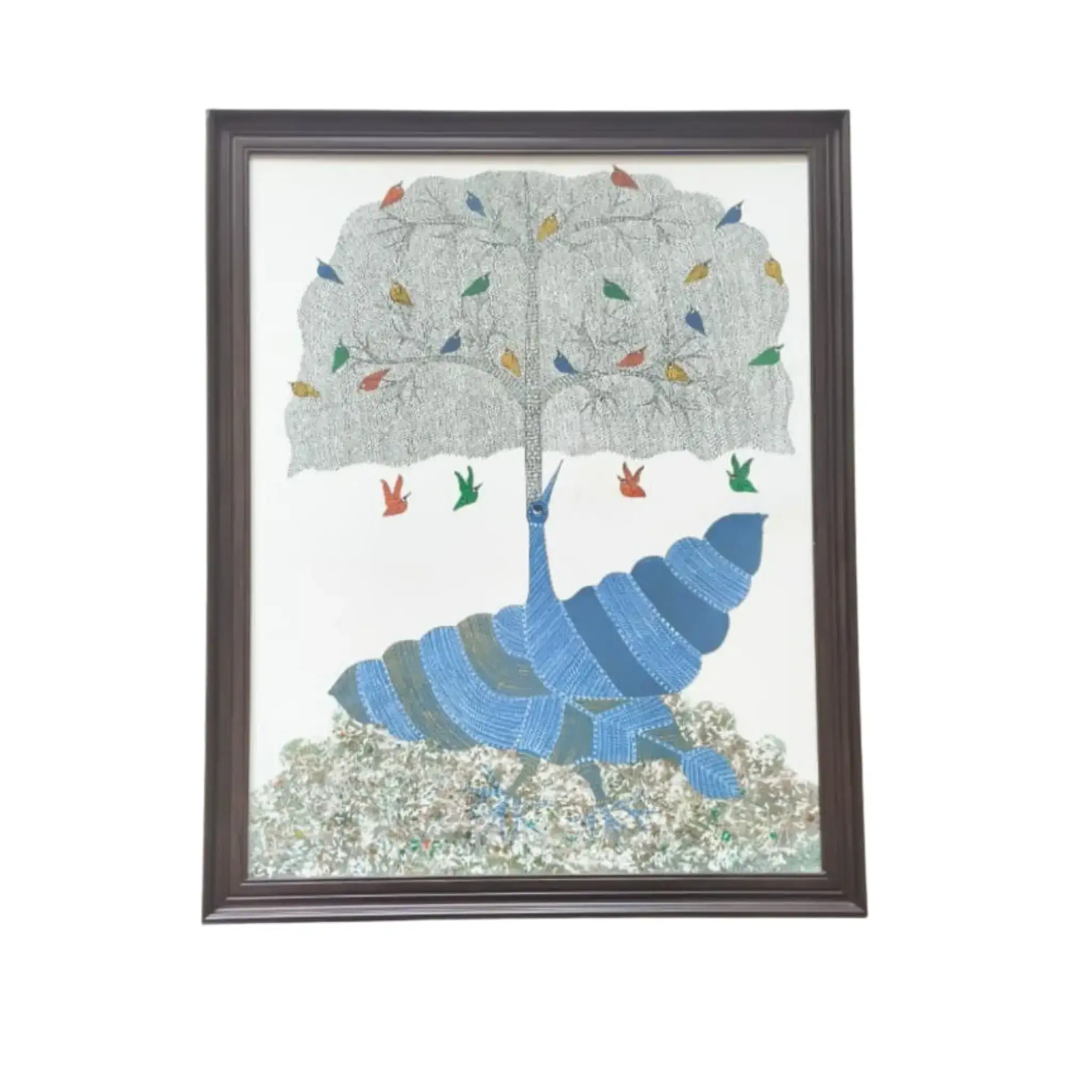
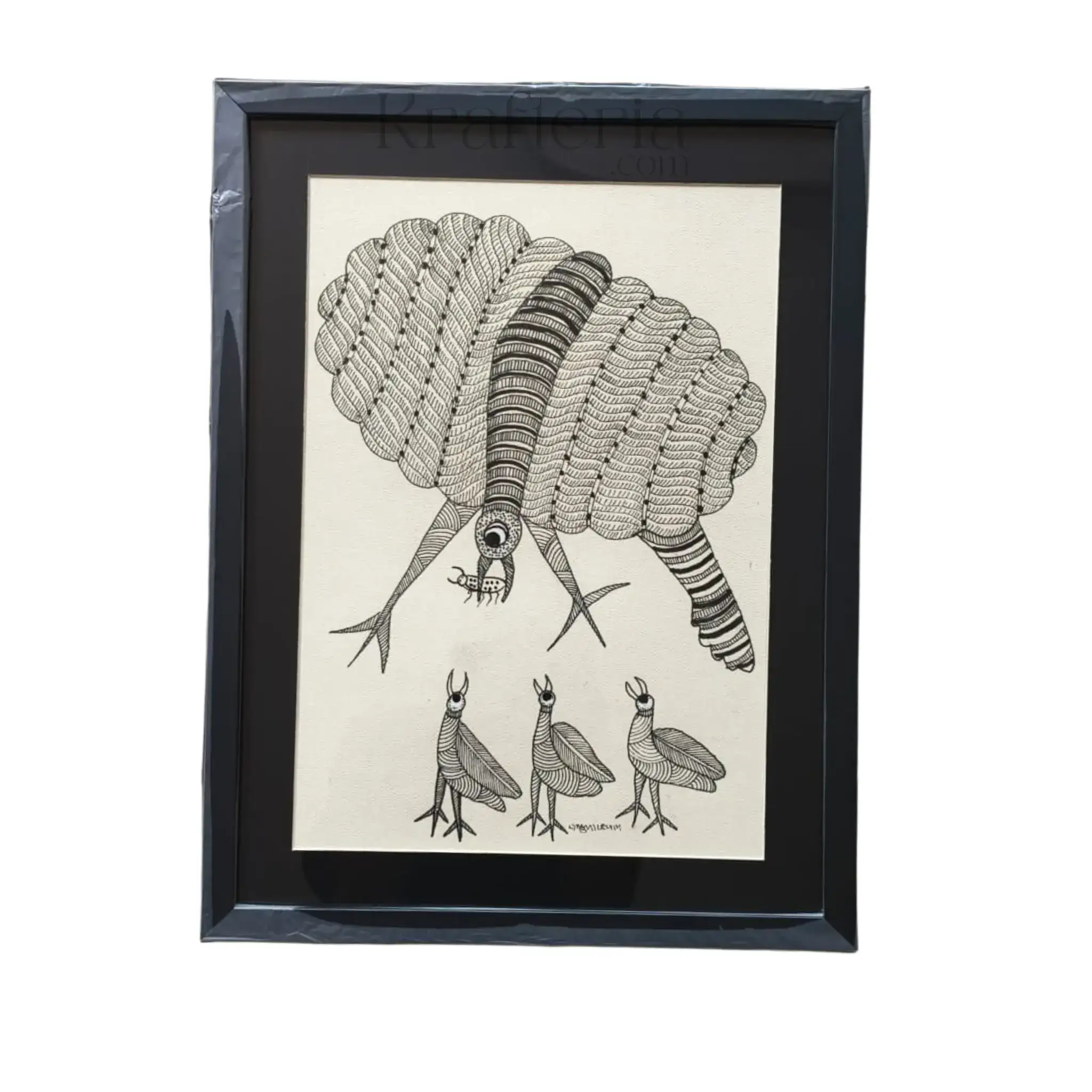
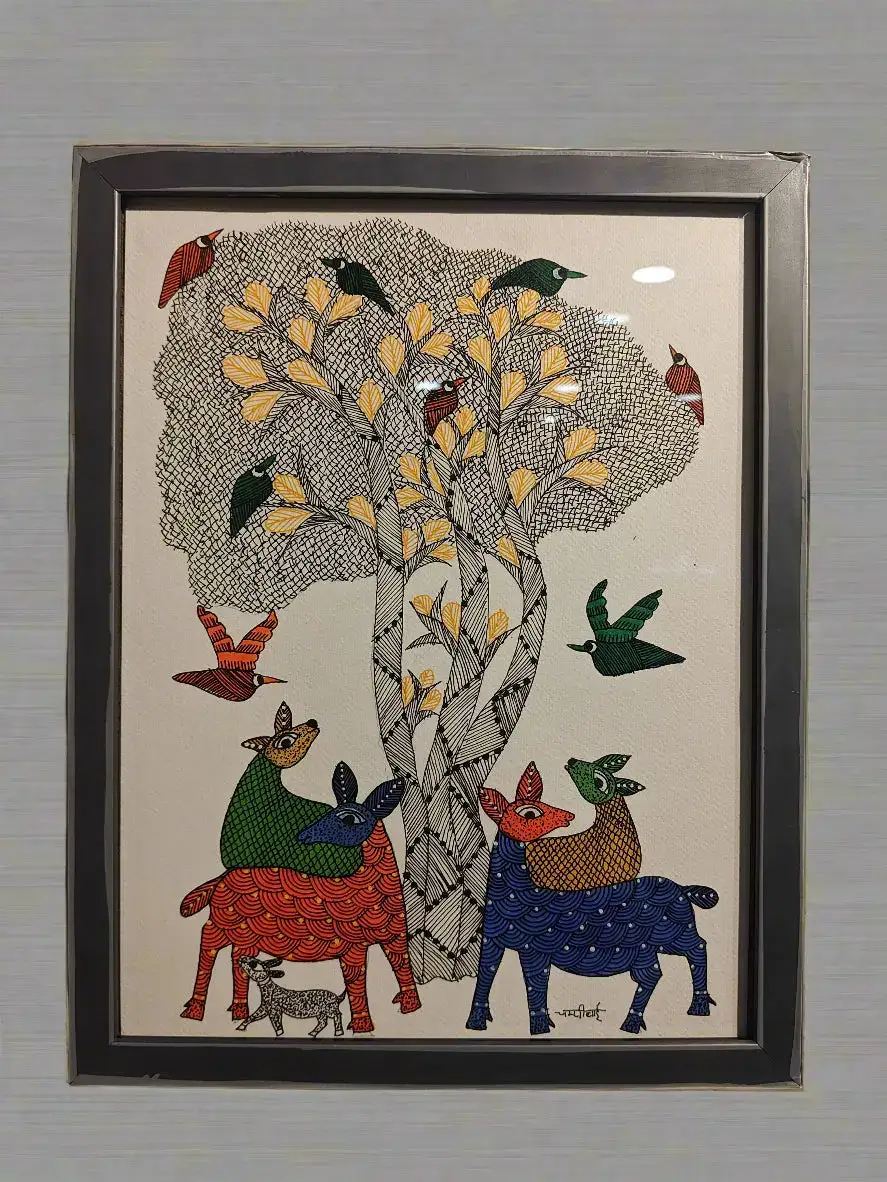
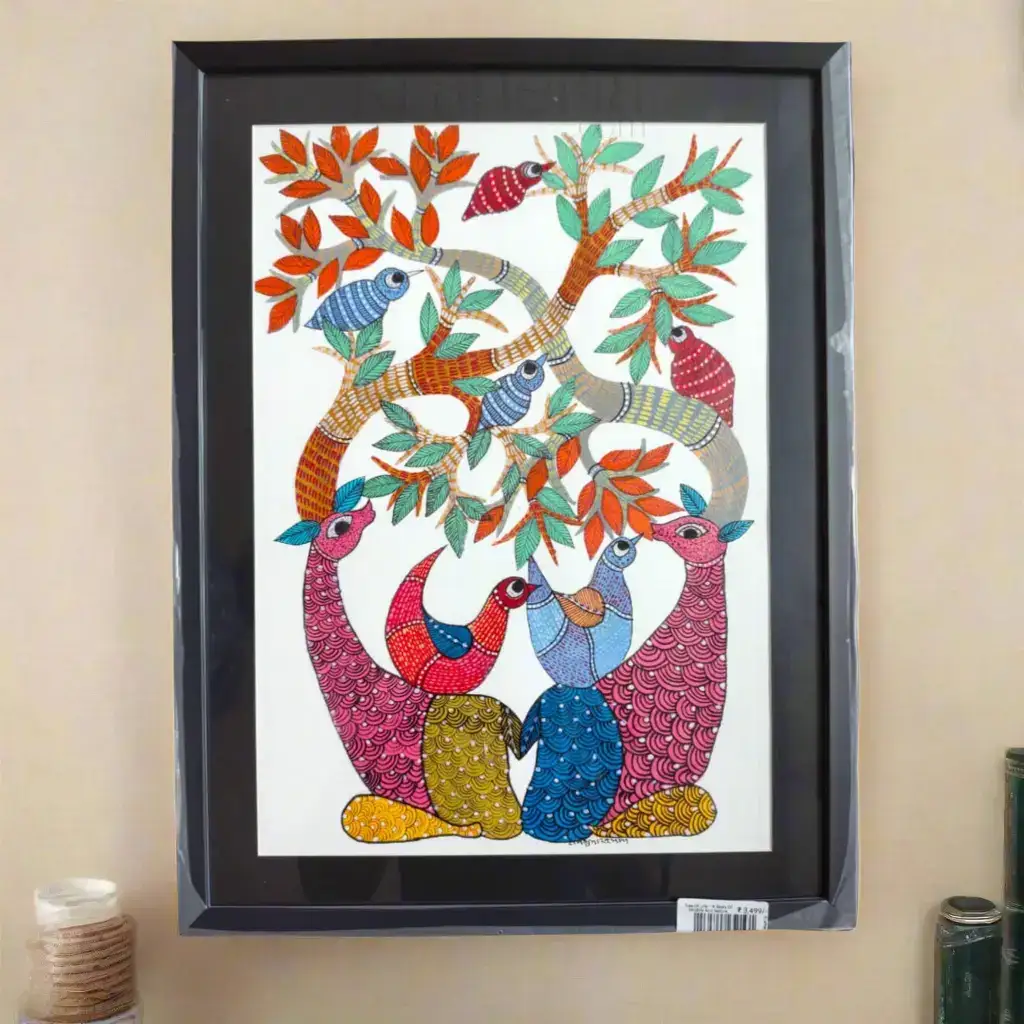
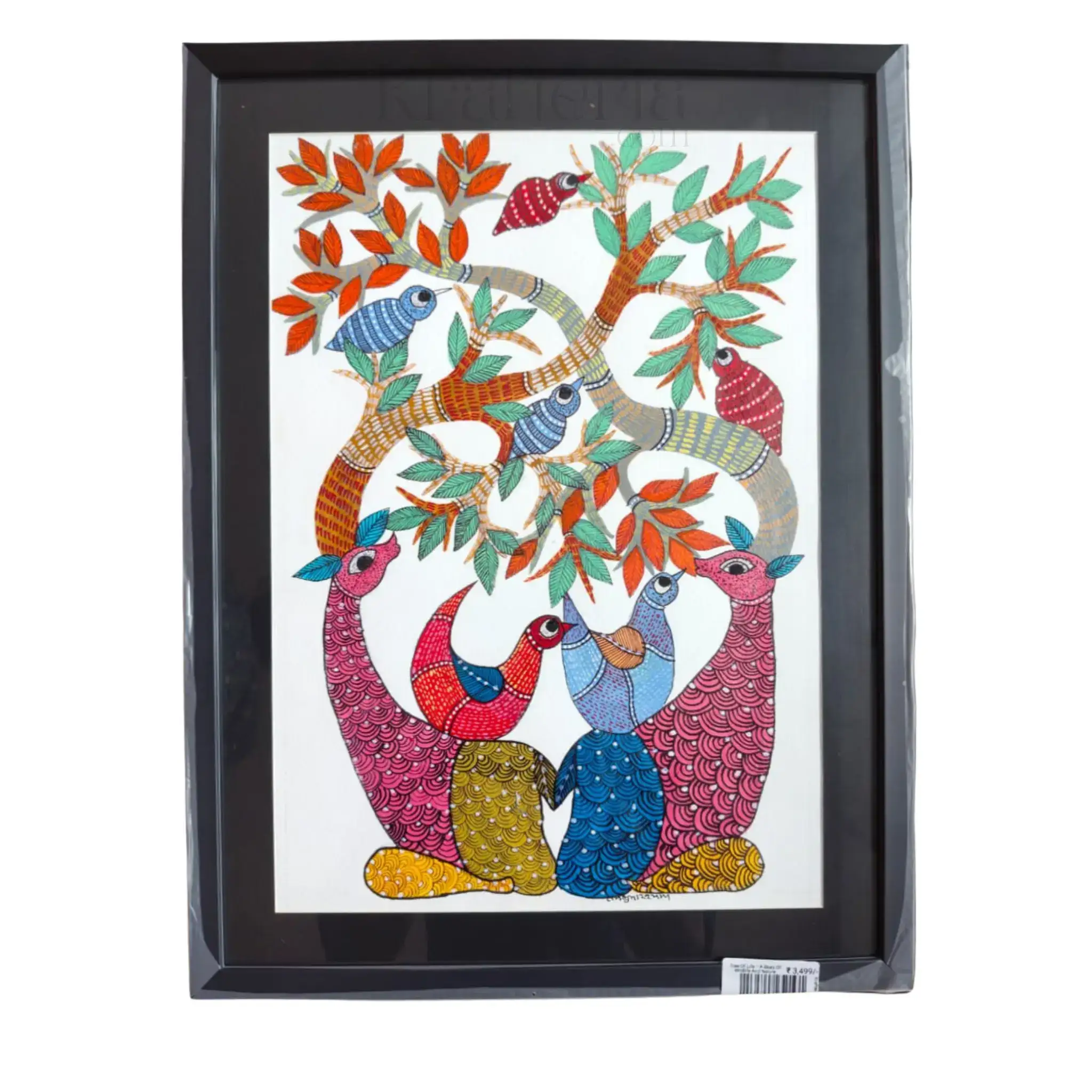
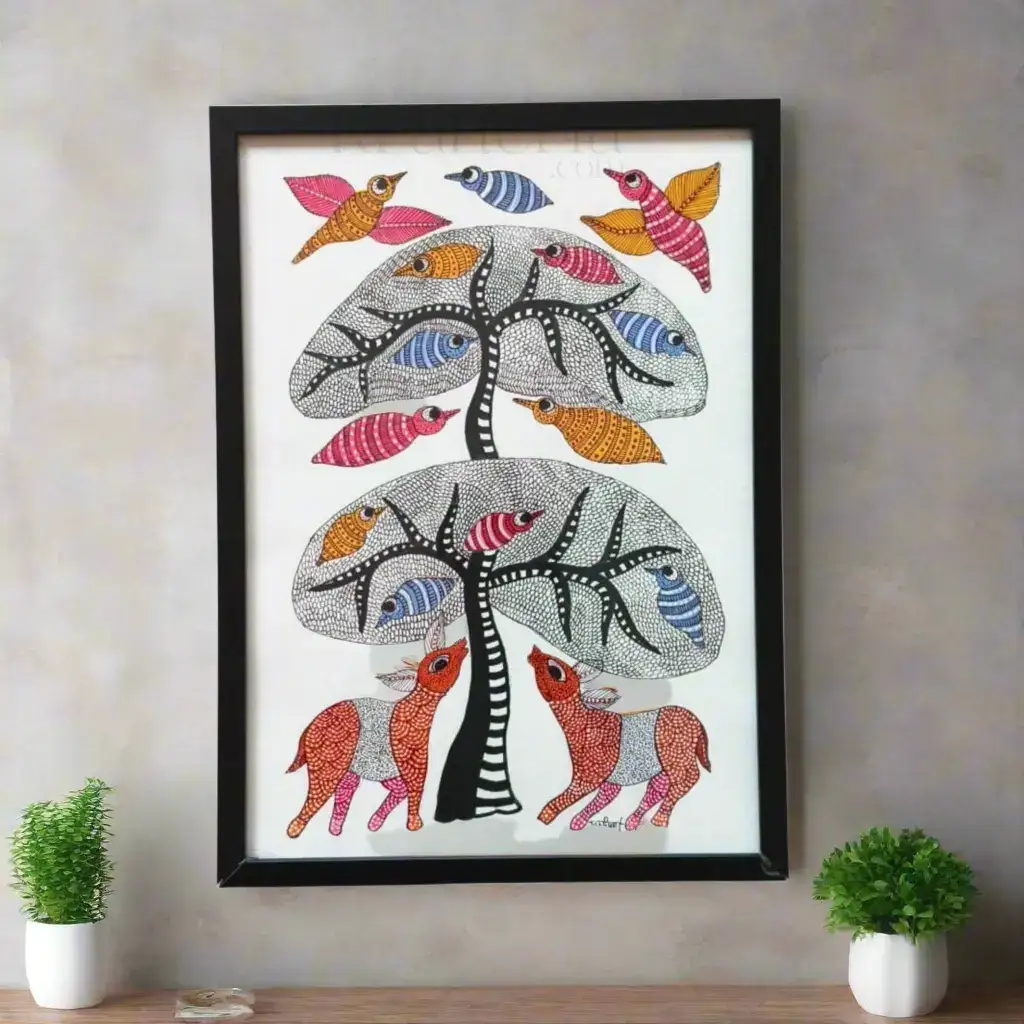
Deer and Birds Gond Painting stands as an excellent example of tribal tree life wall art. It reflects nature and tribal mythology with intricate details. The themes rely heavily on local flora and fauna and symbolize harmony in the ecosystem. Also known as Tree of life Gond painting, these artworks are often featured as Gond folk art home decor. Their detailed visuals invite storytellers to preserve and share ancient legends, making them valuable as both art and cultural records.
Traditionally, the pigments used were natural and sourced from plants, soil, and charcoal. However, modern artists use acrylic and commercial paints on paper and fabric to ensure longevity. Each piece is unique, narrating specific stories from Gond folklore and nature. This narrative element makes the painting a significant form of Gond nature storytelling art.
The style also belongs to the broader tradition of Indian tribal forest painting. It draws inspiration from the forest life surrounding Gond villages. The visual language, though complex, remains accessible through repeated dots and fine lines that craft rhythmic patterns. These elements add spiritual depth and enhance the beauty of every painting.
Symbolism and Artistic Value of Gond Art Deer and Birds
The Deer and Birds in Gond paintings symbolize peace, harmony, and the interconnectedness of life. The Tree life tribal artwork motif represents growth, continuity, and creation. Each painting intricately weaves depictions of wildlife and natural cycles. It connects viewers with the tribal ecosystem and highlights nature’s rhythm. This symbolism is what helps maintain the rich cultural identity of the Gond tribe.
Nature inspired Gond painting pieces, such as those depicting deer and birds, are sought after by collectors and art lovers. Their detailed portrayal of wildlife conveys spiritual harmony and respect for nature. These works are treasured for their artistic merit and storytelling qualities, making them timeless.
The Enduring Legacy of Deer and Birds Gond Paintings
Gond art is far more than decoration. It carries a strong cultural narrative that has been passed down through skilled artists over generations. For many tribal artists, it is both their livelihood and identity. Today, this art form is internationally recognized for its rich symbolism and appealing aesthetic. People choose Gond folk art home decor to add vibrant history and meaning to their living spaces.
Deer and Birds Gond Paintings continues to inspire new generations. It ensures the preservation of traditional stories and beliefs through visual storytelling. As a form of Gond nature storytelling art, it fosters appreciation for the tribe’s close bond with nature and tribal life.
The artwork is unique with each creation telling a specific tale. From forests to home walls, these paintings spread messages of coexistence and respect for the environment. Embraced globally, they enhance awareness about indigenous art forms and cultural heritage.
Original: $43.03
-70%$43.03
$12.91Product Information
Product Information
Shipping & Returns
Shipping & Returns
Description
Deer and Birds Gond Painting: Tree of Life with Tribal Art
Deer and Birds Gond Painting is a vibrant and intricate form of tribal painting. It originates from the Gond tribe, one of central India’s largest indigenous communities. This traditional art is especially concentrated in the Dindori district of Madhya Pradesh. Originally used for wall and floor decorations during festivals, Gond art has evolved into a celebrated contemporary folk expression. Its development highlights the importance of preserving tribal culture and heritage.
Gond paintings are known for their use of vivid colors, intricate dots, fine lines, and rhythmic patterns. These artistic elements beautifully capture themes from nature, folklore, tribal deities, and daily rural life. Common motifs include tigers, birds, trees, fish, and mythological tales. This art serves as a spiritual connection between the Gond people and their environment, through a deep cultural narrative.
Exploring Tribal Tree Life Wall Art and Related Traditions
Deer and Birds Gond Painting stands as an excellent example of tribal tree life wall art. It reflects nature and tribal mythology with intricate details. The themes rely heavily on local flora and fauna and symbolize harmony in the ecosystem. Also known as Tree of life Gond painting, these artworks are often featured as Gond folk art home decor. Their detailed visuals invite storytellers to preserve and share ancient legends, making them valuable as both art and cultural records.
Traditionally, the pigments used were natural and sourced from plants, soil, and charcoal. However, modern artists use acrylic and commercial paints on paper and fabric to ensure longevity. Each piece is unique, narrating specific stories from Gond folklore and nature. This narrative element makes the painting a significant form of Gond nature storytelling art.
The style also belongs to the broader tradition of Indian tribal forest painting. It draws inspiration from the forest life surrounding Gond villages. The visual language, though complex, remains accessible through repeated dots and fine lines that craft rhythmic patterns. These elements add spiritual depth and enhance the beauty of every painting.
Symbolism and Artistic Value of Gond Art Deer and Birds
The Deer and Birds in Gond paintings symbolize peace, harmony, and the interconnectedness of life. The Tree life tribal artwork motif represents growth, continuity, and creation. Each painting intricately weaves depictions of wildlife and natural cycles. It connects viewers with the tribal ecosystem and highlights nature’s rhythm. This symbolism is what helps maintain the rich cultural identity of the Gond tribe.
Nature inspired Gond painting pieces, such as those depicting deer and birds, are sought after by collectors and art lovers. Their detailed portrayal of wildlife conveys spiritual harmony and respect for nature. These works are treasured for their artistic merit and storytelling qualities, making them timeless.
The Enduring Legacy of Deer and Birds Gond Paintings
Gond art is far more than decoration. It carries a strong cultural narrative that has been passed down through skilled artists over generations. For many tribal artists, it is both their livelihood and identity. Today, this art form is internationally recognized for its rich symbolism and appealing aesthetic. People choose Gond folk art home decor to add vibrant history and meaning to their living spaces.
Deer and Birds Gond Paintings continues to inspire new generations. It ensures the preservation of traditional stories and beliefs through visual storytelling. As a form of Gond nature storytelling art, it fosters appreciation for the tribe’s close bond with nature and tribal life.
The artwork is unique with each creation telling a specific tale. From forests to home walls, these paintings spread messages of coexistence and respect for the environment. Embraced globally, they enhance awareness about indigenous art forms and cultural heritage.