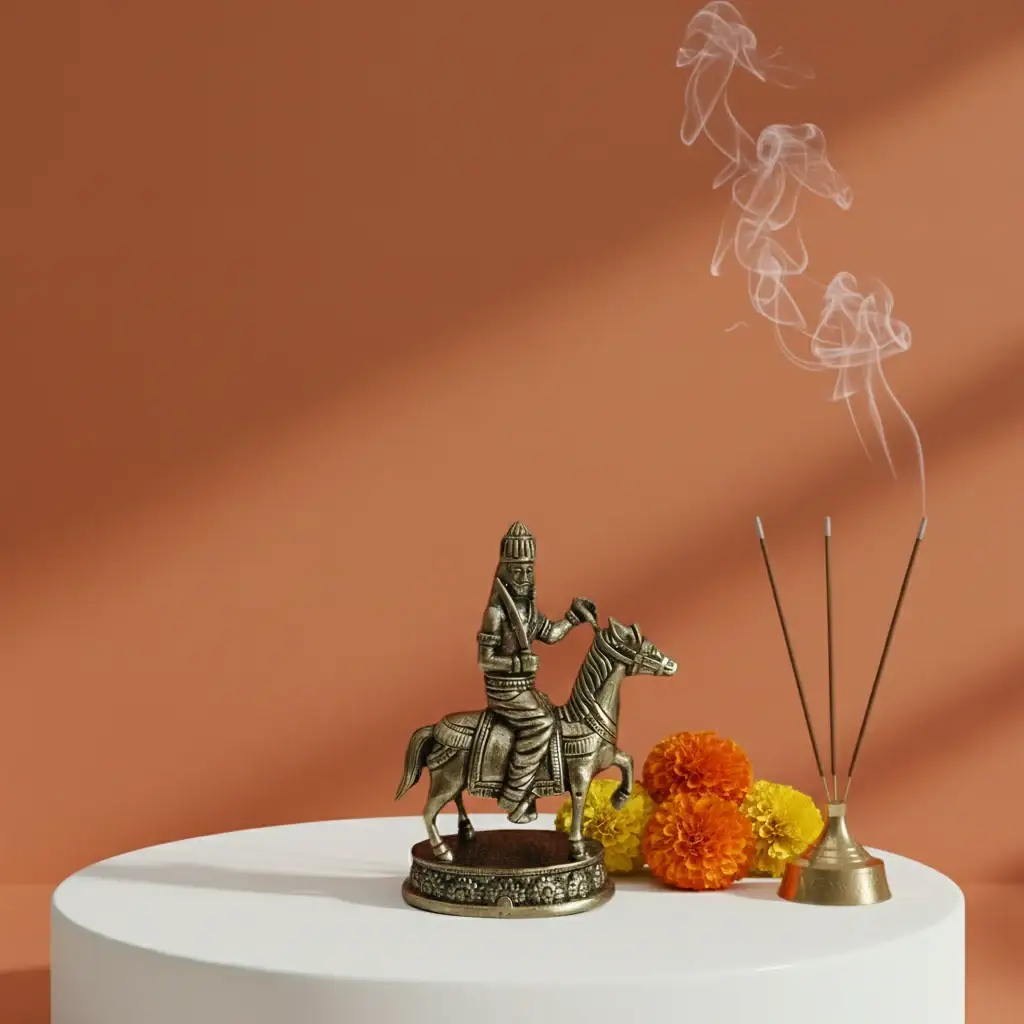
Brass Equestrian Warrior Idol - Lord Khandoba or Kalki Avatar with Sword
Brass Equestrian Warrior Idol: Lord Khandoba or Kalki Avatar with Sword
Aligarh is a historic city in Uttar Pradesh, known for its exceptional brass craftsmanship and lock-making tradition. The region's art of metalwork dates back to the 18th century, flourishing during the Mughal and early British eras. Skilled artisans in Aligarh expertly alloy copper and zinc to create brass. They mold this brass into locks, utensils, ornamental pieces, and idols. Among these precious items, the Brass Equestrian Warrior Idol holds a special place, embodying both artistic finesse and cultural heritage.
The long history of Aligarh’s brass artisans reflects their commitment to quality and tradition. These artisans balance preserving ancient methods with exploring innovative designs. The Equestrian Warrior Idol is a testament to this delicate harmony between heritage and modern creativity. Their work has evolved from purely practical brassware to decorative masterpieces that captivate collectors and enthusiasts worldwide.
This brass warrior idol honors legendary figures like Lord Khandoba or the Kalki Avatar, revered deeply in local spirituality. It not only showcases artistic skill but also illustrates profound cultural values. The evolution of Equestrian Warrior statues from simple craft to symbolic art form captures this transformation perfectly.
Crafting Process of Equestrian Warrior Idol
The crafting begins by melting brass sheets or scrap metal at extremely high temperatures until molten. This molten brass is poured into carefully prepared sand or clay molds to form the basic shape of the idol. After the metal cools and hardens, each statue undergoes meticulous hand finishing to refine details and smooth surfaces.
Artisans file, engrave, and polish the brass to highlight intricate features. Traditional techniques such as chasing and embossing add texture and ornamental patterns. The designs often take inspiration from Mughal floral patterns, geometric borders, and traditional Indian iconography. This artistic combination gives the Equestrian Warrior Idol a radiant golden sheen that symbolizes prosperity and dedication.
Significance of Brass Equestrian Warrior Idol in Aligarh's Brass Heritage
Aligarh’s Equestrian Warrior statues occupy an important place in the region's cultural and religious landscape. These statues depict Lord Khandoba or the Kalki Avatar mounted on horseback, wielding swords that stand for bravery and protection. The craftsmanship reflects a blend of mythological significance and artistic skill.
Such Equestrian Warrior Sculptures are commonly displayed in homes and temples as both decorative and spiritual icons. The statues’ detailed depiction of warrior costumes, weapons, and the horses’ features demonstrates the artisan’s passion and masterful expertise. These idols inspire devotion and embody faith for many families.
Traditional and Modern Techniques in Creating Brass Idols
Aligarh brass craftsmen combine age-old traditional methods with modern tools to improve their creations. Techniques like chasing and embossing bring depth and tactile texture to the idol’s surface. Finely applied hand engraving further enhances the delicate details of each piece.
Modern polishing devices bring out a brilliant golden shine in every Equestrian Warrior Idol. After casting, artisans dedicate substantial care to the final hand finishing. This process lends each warrior idol a unique character and strength, making it highly sought after in both local and international markets.
Brass Craftsmanship and Cultural Symbolism
The significance of Aligarh’s brass work extends beyond its visual appeal. The Equestrian Warrior Idol carries rich cultural and religious symbolism. It connects observers to the ancient stories and beliefs surrounding Lord Khandoba or the Kalki Avatar. These idols play a central role during festivals and rituals, standing as emblems of valor and protection.
The artisans’ meticulous attention to the armor, weapons, and equine forms exemplifies their superior skills. Such craftsmanship helps preserve regional mythology through tangible artwork. The Equestrian Warrior Idol For Home has become a cherished heirloom for many, celebrating the enduring brass tradition of Aligarh.
Original: $10.75
-70%$10.75
$3.23Product Information
Product Information
Shipping & Returns
Shipping & Returns
Description
Brass Equestrian Warrior Idol: Lord Khandoba or Kalki Avatar with Sword
Aligarh is a historic city in Uttar Pradesh, known for its exceptional brass craftsmanship and lock-making tradition. The region's art of metalwork dates back to the 18th century, flourishing during the Mughal and early British eras. Skilled artisans in Aligarh expertly alloy copper and zinc to create brass. They mold this brass into locks, utensils, ornamental pieces, and idols. Among these precious items, the Brass Equestrian Warrior Idol holds a special place, embodying both artistic finesse and cultural heritage.
The long history of Aligarh’s brass artisans reflects their commitment to quality and tradition. These artisans balance preserving ancient methods with exploring innovative designs. The Equestrian Warrior Idol is a testament to this delicate harmony between heritage and modern creativity. Their work has evolved from purely practical brassware to decorative masterpieces that captivate collectors and enthusiasts worldwide.
This brass warrior idol honors legendary figures like Lord Khandoba or the Kalki Avatar, revered deeply in local spirituality. It not only showcases artistic skill but also illustrates profound cultural values. The evolution of Equestrian Warrior statues from simple craft to symbolic art form captures this transformation perfectly.
Crafting Process of Equestrian Warrior Idol
The crafting begins by melting brass sheets or scrap metal at extremely high temperatures until molten. This molten brass is poured into carefully prepared sand or clay molds to form the basic shape of the idol. After the metal cools and hardens, each statue undergoes meticulous hand finishing to refine details and smooth surfaces.
Artisans file, engrave, and polish the brass to highlight intricate features. Traditional techniques such as chasing and embossing add texture and ornamental patterns. The designs often take inspiration from Mughal floral patterns, geometric borders, and traditional Indian iconography. This artistic combination gives the Equestrian Warrior Idol a radiant golden sheen that symbolizes prosperity and dedication.
Significance of Brass Equestrian Warrior Idol in Aligarh's Brass Heritage
Aligarh’s Equestrian Warrior statues occupy an important place in the region's cultural and religious landscape. These statues depict Lord Khandoba or the Kalki Avatar mounted on horseback, wielding swords that stand for bravery and protection. The craftsmanship reflects a blend of mythological significance and artistic skill.
Such Equestrian Warrior Sculptures are commonly displayed in homes and temples as both decorative and spiritual icons. The statues’ detailed depiction of warrior costumes, weapons, and the horses’ features demonstrates the artisan’s passion and masterful expertise. These idols inspire devotion and embody faith for many families.
Traditional and Modern Techniques in Creating Brass Idols
Aligarh brass craftsmen combine age-old traditional methods with modern tools to improve their creations. Techniques like chasing and embossing bring depth and tactile texture to the idol’s surface. Finely applied hand engraving further enhances the delicate details of each piece.
Modern polishing devices bring out a brilliant golden shine in every Equestrian Warrior Idol. After casting, artisans dedicate substantial care to the final hand finishing. This process lends each warrior idol a unique character and strength, making it highly sought after in both local and international markets.
Brass Craftsmanship and Cultural Symbolism
The significance of Aligarh’s brass work extends beyond its visual appeal. The Equestrian Warrior Idol carries rich cultural and religious symbolism. It connects observers to the ancient stories and beliefs surrounding Lord Khandoba or the Kalki Avatar. These idols play a central role during festivals and rituals, standing as emblems of valor and protection.
The artisans’ meticulous attention to the armor, weapons, and equine forms exemplifies their superior skills. Such craftsmanship helps preserve regional mythology through tangible artwork. The Equestrian Warrior Idol For Home has become a cherished heirloom for many, celebrating the enduring brass tradition of Aligarh.