Brass Divine Feet (Paduka) Statues Pair | Auspicious Lakshmi/Vishnu Charan Padukalu for Pooja
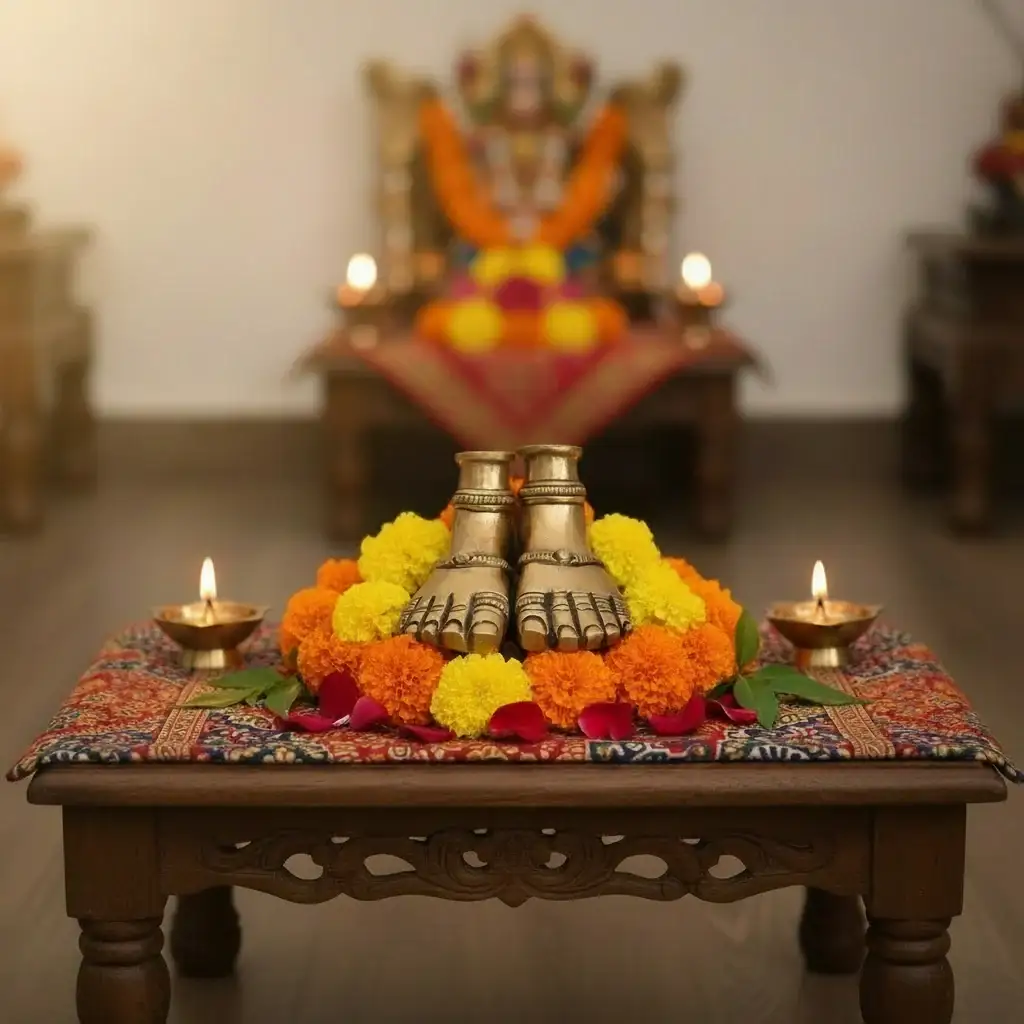
Brass Divine Feet (Paduka) Statues Pair | Auspicious Lakshmi/Vishnu Charan Padukalu for Pooja
Brass Divine Feet (Paduka) Statues Pair | Auspicious Lakshmi/Vishnu Charan Padukalu for Pooja
Aligarh, a historic city in Uttar Pradesh, holds a distinguished place on India’s artistic and industrial map for its brass craftsmanship and lock-making tradition. The history of brasswork here dates back to the 18th century. During the Mughal and early British periods, Aligarh flourished as a major hub for metal art and engineering. Skilled artisans mastered alloying copper and zinc to create brass. They expertly molded brass into locks, utensils, idols, and ornamental pieces with remarkable finesse. The Brass Divine Feet (Paduka) are an exquisite representation of this legacy.
Over the years, the brass industry in Aligarh evolved from crafting purely functional hardware into intricate decorative artifacts, religious figures, and creative pieces for home décor. These creations reflect artistic skill and mechanical precision. Among these treasured items, the traditional Indian brass paduka hold special cultural and spiritual significance. They are especially revered in many homes and temples, symbolizing faith and devotion.
Creating these statues involves melting brass sheets or scrap metal. This molten brass is poured into sand or clay molds to form the basic shape. Skilled artisans carefully hand-finish each piece with filing, engraving, and polishing. Many craftsmen use traditional chasing and embossing methods to enrich the surface with detailed motifs. The designs are often inspired by Mughal floral patterns, geometric borders, and traditional Indian iconography. The golden, lustrous hue of Aligarh brassware symbolizes prosperity and excellent workmanship.
Artistry Behind Brass Divine Paduka
The distinctive craftsmanship showcases the devotion and skill of Aligarh’s master artisans. These figures inspire deep spiritual feelings during rituals and pooja ceremonies. The brass charan paduka are considered highly auspicious, especially revered in homes and temples. Their detailed embossing reflects an age-old artistry passed down through generations of craftsmen and devotees alike.
Choosing paduka for pooja room setups adds spiritual elegance and reverence to the space. These divine feet are not merely decorative; they symbolize sacred connections to the divine. The traditional Indian brass paduka stand as powerful reminders of faith and surrender. This unique blend of spiritual significance and artisanal excellence makes them exceptional for both use and display.
Applications of Brass Charan Paduka
The brass charan paduka have versatile applications beyond their religious importance. They serve as central pieces at various religious ceremonies and enhance decorative displays. Their vibrant finish and intricate motifs make them excellent choices for gifting.
Many people prefer brass paduka for gifting because of their durability and symbolic value. These items hold cultural and spiritual relevance across diverse occasions. The presence of brass divine feet (paduka) offers a unique blend of tradition, spirituality, and artistic beauty. They enrich homes and devotional spaces alike, adding a sacred sense of heritage.
Traditional Indian Brass Paduka for Devotional Spaces
Traditional Indian brass paduka hold a revered position in many households. As devotional artifacts, they combine religious significance with skilled craftsmanship. Their creation follows a labor-intensive casting and finishing process, showcasing India’s rich heritage.
In brass paduka for pooja room, brass paduka play both decorative and spiritual roles. They foster a peaceful and sacred ambiance, making devotional spaces more serene. Choosing brass divine feet (paduka) enhances the sanctity and aesthetic appeal of these sacred corners. These cherished items are admired not only by devotees but also collectors who appreciate fine craftsmanship and cultural depth.
In summary, Aligarh’s distinct style combines history, culture, and artistry. Brass Divine Paduka remain culturally important and artistically outstanding. They represent a vibrant tradition, alive and evolving. Their presence in pooja settings enriches the spiritual atmosphere, embodying divine blessings and artistic tradition. These statues are admired by devotees worldwide, symbolizing faith and devotion in tangible form.
Product Information
Product Information
Shipping & Returns
Shipping & Returns
Description
Brass Divine Feet (Paduka) Statues Pair | Auspicious Lakshmi/Vishnu Charan Padukalu for Pooja
Aligarh, a historic city in Uttar Pradesh, holds a distinguished place on India’s artistic and industrial map for its brass craftsmanship and lock-making tradition. The history of brasswork here dates back to the 18th century. During the Mughal and early British periods, Aligarh flourished as a major hub for metal art and engineering. Skilled artisans mastered alloying copper and zinc to create brass. They expertly molded brass into locks, utensils, idols, and ornamental pieces with remarkable finesse. The Brass Divine Feet (Paduka) are an exquisite representation of this legacy.
Over the years, the brass industry in Aligarh evolved from crafting purely functional hardware into intricate decorative artifacts, religious figures, and creative pieces for home décor. These creations reflect artistic skill and mechanical precision. Among these treasured items, the traditional Indian brass paduka hold special cultural and spiritual significance. They are especially revered in many homes and temples, symbolizing faith and devotion.
Creating these statues involves melting brass sheets or scrap metal. This molten brass is poured into sand or clay molds to form the basic shape. Skilled artisans carefully hand-finish each piece with filing, engraving, and polishing. Many craftsmen use traditional chasing and embossing methods to enrich the surface with detailed motifs. The designs are often inspired by Mughal floral patterns, geometric borders, and traditional Indian iconography. The golden, lustrous hue of Aligarh brassware symbolizes prosperity and excellent workmanship.
Artistry Behind Brass Divine Paduka
The distinctive craftsmanship showcases the devotion and skill of Aligarh’s master artisans. These figures inspire deep spiritual feelings during rituals and pooja ceremonies. The brass charan paduka are considered highly auspicious, especially revered in homes and temples. Their detailed embossing reflects an age-old artistry passed down through generations of craftsmen and devotees alike.
Choosing paduka for pooja room setups adds spiritual elegance and reverence to the space. These divine feet are not merely decorative; they symbolize sacred connections to the divine. The traditional Indian brass paduka stand as powerful reminders of faith and surrender. This unique blend of spiritual significance and artisanal excellence makes them exceptional for both use and display.
Applications of Brass Charan Paduka
The brass charan paduka have versatile applications beyond their religious importance. They serve as central pieces at various religious ceremonies and enhance decorative displays. Their vibrant finish and intricate motifs make them excellent choices for gifting.
Many people prefer brass paduka for gifting because of their durability and symbolic value. These items hold cultural and spiritual relevance across diverse occasions. The presence of brass divine feet (paduka) offers a unique blend of tradition, spirituality, and artistic beauty. They enrich homes and devotional spaces alike, adding a sacred sense of heritage.
Traditional Indian Brass Paduka for Devotional Spaces
Traditional Indian brass paduka hold a revered position in many households. As devotional artifacts, they combine religious significance with skilled craftsmanship. Their creation follows a labor-intensive casting and finishing process, showcasing India’s rich heritage.
In brass paduka for pooja room, brass paduka play both decorative and spiritual roles. They foster a peaceful and sacred ambiance, making devotional spaces more serene. Choosing brass divine feet (paduka) enhances the sanctity and aesthetic appeal of these sacred corners. These cherished items are admired not only by devotees but also collectors who appreciate fine craftsmanship and cultural depth.
In summary, Aligarh’s distinct style combines history, culture, and artistry. Brass Divine Paduka remain culturally important and artistically outstanding. They represent a vibrant tradition, alive and evolving. Their presence in pooja settings enriches the spiritual atmosphere, embodying divine blessings and artistic tradition. These statues are admired by devotees worldwide, symbolizing faith and devotion in tangible form.