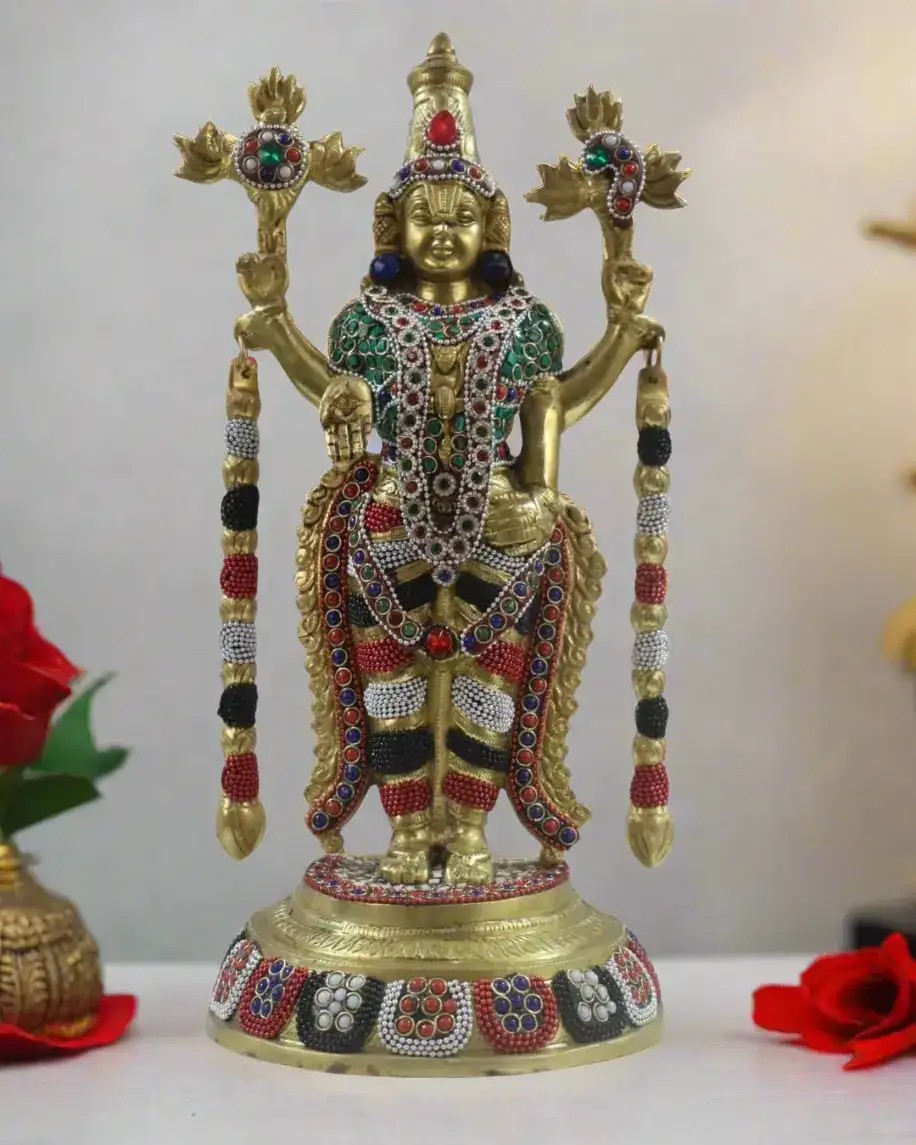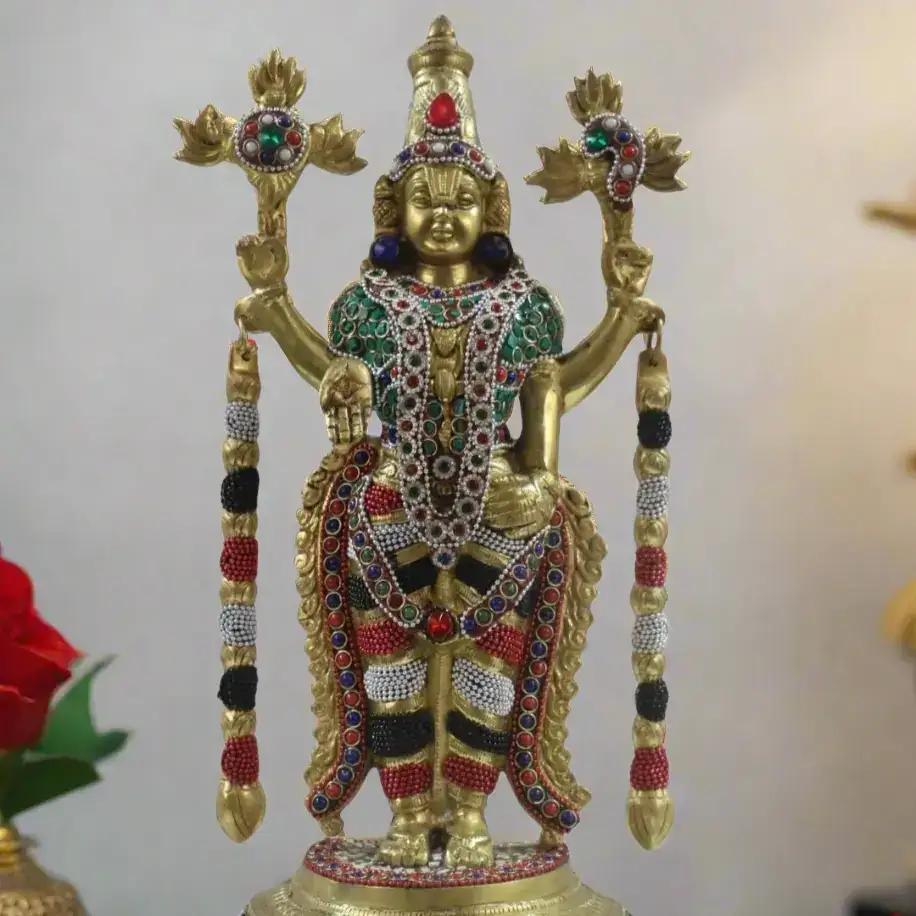
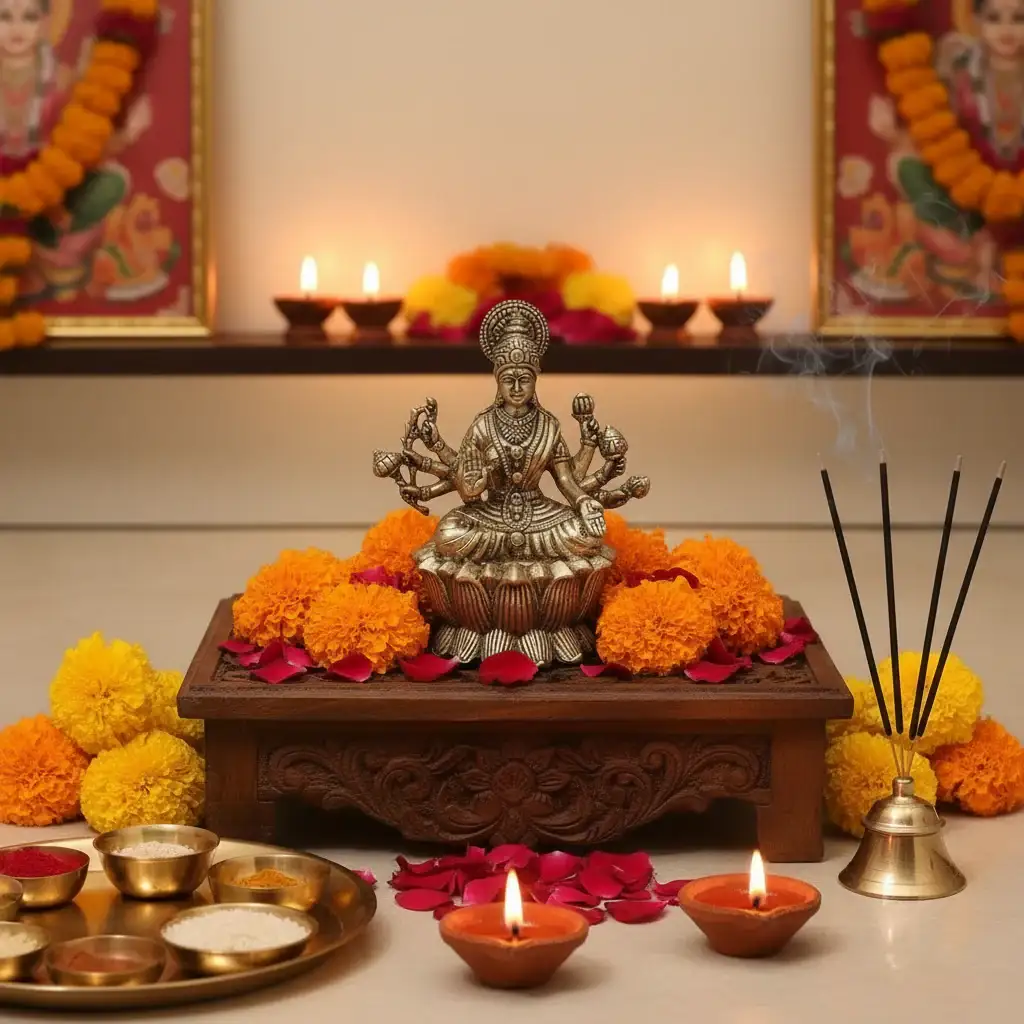
Brass Ashta Lakshmi Idol Seated on Lotus - Eight-Armed Goddess
Brass Ashta Lakshmi Idol Seated on Lotus - Eight-Armed Goddess
Aligarh, a historic city in Uttar Pradesh, is renowned for its exemplary brass craftsmanship and lock-making tradition. This cultural treasure has shaped India’s artistic and industrial map for centuries. Brasswork in Aligarh dates back to the 18th century, thriving during the Mughal and early British periods. During this era, Aligarh became a major center for metal art and engineering. The Brass Ashta Lakshmi Idol is a fine example of this rich heritage.
The artisans of Aligarh mastered the alloying process of copper and zinc to create brass. They skillfully molded this material into various items such as locks, utensils, idols, and ornamental pieces. Over time, the brass industry here expanded its scope beyond purely functional creations. Intricate decorative artifacts, including the Ashta Lakshmi brass murti, religious figures, and home décor items, became prominent. These items reflect both artistic finesse and mechanical precision, making them highly sought-after collectibles.
The Rich History Behind the Brass Ashta Lakshmi Idols
The Brass Ashta Lakshmi Statue carries deep cultural and spiritual significance. This artifact is strongly tied to Aligarh's long-standing brass craftsmanship tradition. The city's artisans have passed down their skills through many generations, preserving ancient techniques. The idol's design is not only a representation of devotion but also a testament to the evolving art form. It perfectly blends aesthetic beauty with symbolic meaning, drawing admiration from devotees and art lovers alike.
The city's brass industry has continuously adapted its practices to stay relevant. It combines traditional methods with modern innovations. This blend helps produce high-quality idols like the Ashta Lakshmi Idol, which are prized both domestically and internationally for their craftsmanship and detail.
Artisanal Process of Creating the Lakshmi Seated on Lotus Brass Idol
The crafting process for the Lakshmi seated on lotus brass begins with melting brass sheets or scrap metal. The molten brass is poured into sand or clay molds that shape the basic form. After casting, artisans meticulously hand-finish each piece by filing, engraving, and polishing.
Traditional techniques such as chasing and embossing are also used to add intricate surface textures and designs. Many motifs draw inspiration from Mughal floral patterns, geometric borders, and traditional Indian iconography. The attention to detail highlights the high level of craftsmanship involved in creating the Lakshmi seated on lotus brass figure.
The lustrous golden hue of Aligarh brassware adds to the idol’s charm. It symbolizes prosperity and skillful artistry, a reason these pieces are highly valued. Collectors and devotees appreciate both the material quality and artistic heritage embodied in the Brass Ashta Lakshmi pooja idol.
Symbolism and Cultural Importance
The Brass Ashta Lakshmi statue is more than a decorative artifact. It represents the eight forms of Goddess Lakshmi, each symbolizing different types of wealth and prosperity. The idol is typically depicted seated gracefully on a lotus, which symbolizes purity and spiritual awakening. This posture indicates detachment from negativity while living in abundance.
Such symbolism underlines the idol's importance in many homes and pooja rooms. It serves as a beacon of spiritual blessing and success. The detailed craftsmanship and meaningful representation make it an essential religious figure for devotees.
Why Choose an Authentic Brass Ashta Lakshmi Idols from Aligarh?
Authenticity and quality are paramount when selecting an Ashta Lakshmi idol for home. Aligarh’s rich history in brasswork guarantees an original and finely crafted product. Skilled artisans use time-tested techniques combined with personal artistry to produce each piece. These factors ensure the idol embodies cultural significance and enduring beauty.
Furthermore, the idol’s intricate designs and golden sheen add elegance to any setting. Whether used for worship, gifting, or décor, the Brass Ashta Lakshmi Idol offers a meaningful and visually stunning presence. Its provenance from Aligarh provides assurance of genuine craftsmanship and respected tradition.
Preservation of Traditional Techniques in Modern Times
Despite technological advances, many artisans in Aligarh still rely on age-old methods. Hand-engraving, chasing, and polishing remain vital to producing high-quality brass idols. This dedication preserves the link between past and present craftsmanship, ensuring the ongoing legacy of these artistic creations.
The continued use of traditional molds and design motifs ensures each Brass Ashta Lakshmi Idol is unique. This personal touch comes from generations of expertise and passion for brass art. The result is an idol that beautifully balances heritage, art, and spirituality.
Market Value and Global Appeal of the Ashta Lakshmi Idol
Aligarh brassware, including the Ashta Lakshmi Idol, enjoys high demand within India and abroad. Collectors value the combination of artistic excellence and mechanical precision. International markets appreciate the idol’s rich history and cultural symbolism. This broad appeal makes it a highly regarded piece for spiritual decorators and brassware enthusiasts.
In summary, the Ashta Lakshmi Idol from Aligarh is a blend of craftsmanship, tradition, and spiritual significance. Its detailed production process, cultural relevance, and aesthetic beauty ensure it remains a treasured artifact for all.
Original: $11.82
-70%$11.82
$3.55Product Information
Product Information
Shipping & Returns
Shipping & Returns
Description
Brass Ashta Lakshmi Idol Seated on Lotus - Eight-Armed Goddess
Aligarh, a historic city in Uttar Pradesh, is renowned for its exemplary brass craftsmanship and lock-making tradition. This cultural treasure has shaped India’s artistic and industrial map for centuries. Brasswork in Aligarh dates back to the 18th century, thriving during the Mughal and early British periods. During this era, Aligarh became a major center for metal art and engineering. The Brass Ashta Lakshmi Idol is a fine example of this rich heritage.
The artisans of Aligarh mastered the alloying process of copper and zinc to create brass. They skillfully molded this material into various items such as locks, utensils, idols, and ornamental pieces. Over time, the brass industry here expanded its scope beyond purely functional creations. Intricate decorative artifacts, including the Ashta Lakshmi brass murti, religious figures, and home décor items, became prominent. These items reflect both artistic finesse and mechanical precision, making them highly sought-after collectibles.
The Rich History Behind the Brass Ashta Lakshmi Idols
The Brass Ashta Lakshmi Statue carries deep cultural and spiritual significance. This artifact is strongly tied to Aligarh's long-standing brass craftsmanship tradition. The city's artisans have passed down their skills through many generations, preserving ancient techniques. The idol's design is not only a representation of devotion but also a testament to the evolving art form. It perfectly blends aesthetic beauty with symbolic meaning, drawing admiration from devotees and art lovers alike.
The city's brass industry has continuously adapted its practices to stay relevant. It combines traditional methods with modern innovations. This blend helps produce high-quality idols like the Ashta Lakshmi Idol, which are prized both domestically and internationally for their craftsmanship and detail.
Artisanal Process of Creating the Lakshmi Seated on Lotus Brass Idol
The crafting process for the Lakshmi seated on lotus brass begins with melting brass sheets or scrap metal. The molten brass is poured into sand or clay molds that shape the basic form. After casting, artisans meticulously hand-finish each piece by filing, engraving, and polishing.
Traditional techniques such as chasing and embossing are also used to add intricate surface textures and designs. Many motifs draw inspiration from Mughal floral patterns, geometric borders, and traditional Indian iconography. The attention to detail highlights the high level of craftsmanship involved in creating the Lakshmi seated on lotus brass figure.
The lustrous golden hue of Aligarh brassware adds to the idol’s charm. It symbolizes prosperity and skillful artistry, a reason these pieces are highly valued. Collectors and devotees appreciate both the material quality and artistic heritage embodied in the Brass Ashta Lakshmi pooja idol.
Symbolism and Cultural Importance
The Brass Ashta Lakshmi statue is more than a decorative artifact. It represents the eight forms of Goddess Lakshmi, each symbolizing different types of wealth and prosperity. The idol is typically depicted seated gracefully on a lotus, which symbolizes purity and spiritual awakening. This posture indicates detachment from negativity while living in abundance.
Such symbolism underlines the idol's importance in many homes and pooja rooms. It serves as a beacon of spiritual blessing and success. The detailed craftsmanship and meaningful representation make it an essential religious figure for devotees.
Why Choose an Authentic Brass Ashta Lakshmi Idols from Aligarh?
Authenticity and quality are paramount when selecting an Ashta Lakshmi idol for home. Aligarh’s rich history in brasswork guarantees an original and finely crafted product. Skilled artisans use time-tested techniques combined with personal artistry to produce each piece. These factors ensure the idol embodies cultural significance and enduring beauty.
Furthermore, the idol’s intricate designs and golden sheen add elegance to any setting. Whether used for worship, gifting, or décor, the Brass Ashta Lakshmi Idol offers a meaningful and visually stunning presence. Its provenance from Aligarh provides assurance of genuine craftsmanship and respected tradition.
Preservation of Traditional Techniques in Modern Times
Despite technological advances, many artisans in Aligarh still rely on age-old methods. Hand-engraving, chasing, and polishing remain vital to producing high-quality brass idols. This dedication preserves the link between past and present craftsmanship, ensuring the ongoing legacy of these artistic creations.
The continued use of traditional molds and design motifs ensures each Brass Ashta Lakshmi Idol is unique. This personal touch comes from generations of expertise and passion for brass art. The result is an idol that beautifully balances heritage, art, and spirituality.
Market Value and Global Appeal of the Ashta Lakshmi Idol
Aligarh brassware, including the Ashta Lakshmi Idol, enjoys high demand within India and abroad. Collectors value the combination of artistic excellence and mechanical precision. International markets appreciate the idol’s rich history and cultural symbolism. This broad appeal makes it a highly regarded piece for spiritual decorators and brassware enthusiasts.
In summary, the Ashta Lakshmi Idol from Aligarh is a blend of craftsmanship, tradition, and spiritual significance. Its detailed production process, cultural relevance, and aesthetic beauty ensure it remains a treasured artifact for all.